

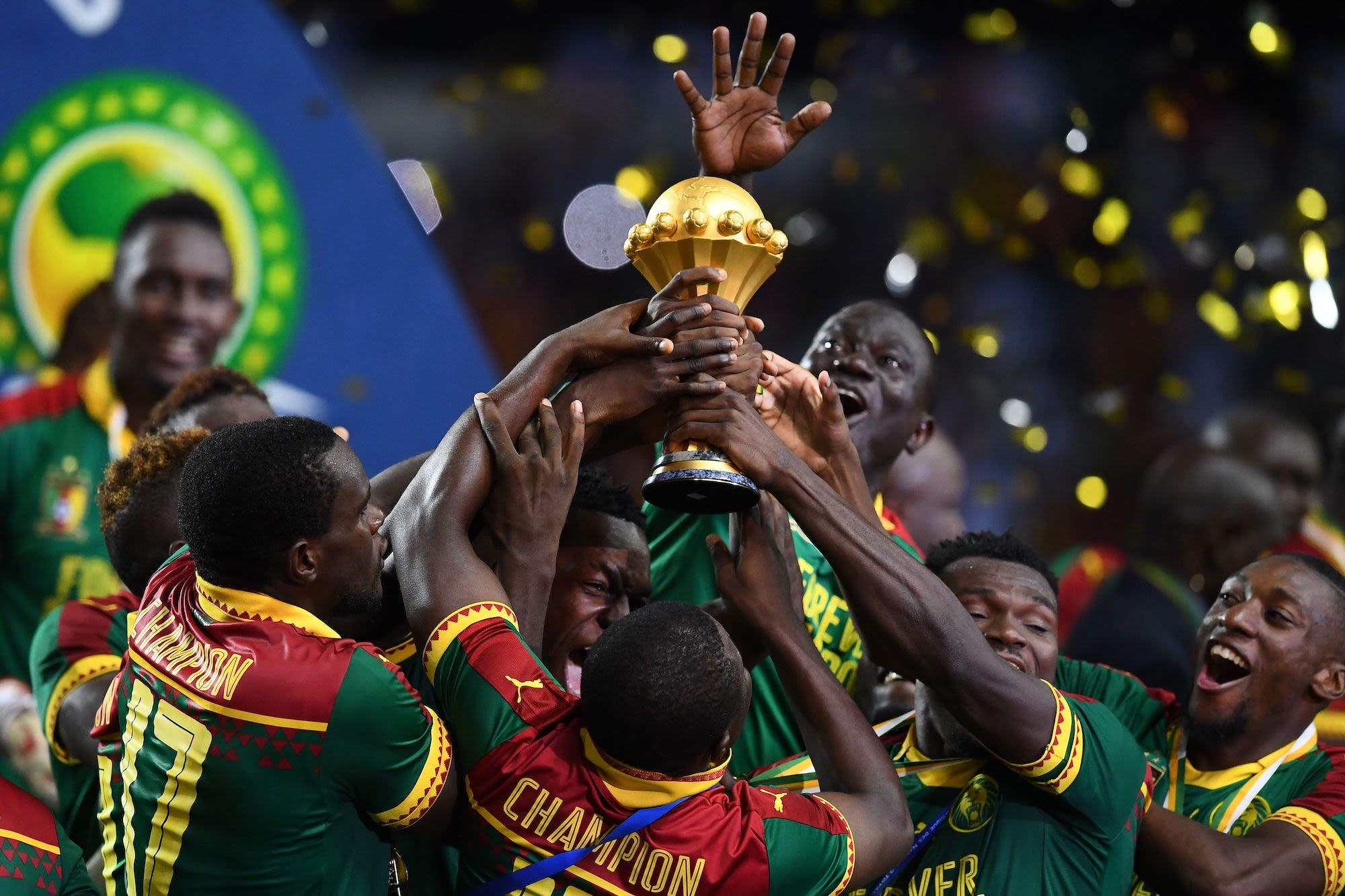

Words by Ben Jackson | Published 05.12.2025In December 2025, the next edition of the African Cup of Nations will kick off in Morocco. For the first time since 1988 the tournament will return to the North African country, despite a handful of attempts to do so in the previous decade. During that time, Morocco have turned themselves into one of the top teams in the world, but a second AFCON title has eluded them for a long time. 1976 was the last time the Atlas Lions lifted the trophy, yet as hosts in 2025, it feels like the perfect time for them to pick up number two. However, having delved into the history of the tournament as part of my book on the story of the competition, AFCON has always been, and will hopefully always be, unpredictable.
Apart from Greece in 2004, I cannot recall a European Championship or World Cup where a winner has been completely unpredictable. There have been a few moments of course, but in contrast, AFCON consistently delivers shocks. The tournament pits world class players from top European leagues against lesser-known names from teams that football fans from elsewhere in the world have never heard of. When Riyad Mahrez and his star-studded Algerian side were held to a 0-0 draw by Sierra Leone, goalkeeper Mohamed Nbalie Kamara was playing his football in Sierra Leone for East End Lions.
The title of my book described the tournament as ‘underappreciated’, but a second descriptor that is just as apt would be unpredictable. Yes, the giants of Egypt, Nigeria and Cameroon have won plenty of tournaments in their time, each with some great players in their ranks. However, some household names of recent years, such as Mohammed Salah, have never lifted the trophy. Time is running out for the Egyptian magician, and he wouldn’t be the only great player to have missed out on winning the tournament.

Hervé Renard watches on during Côte d'Ivoire v Algeria, AFCON 2015.
Photo Credit: Ben Sutherland
Outside of the ‘giants’, other big names in African football have continuously failed to make the grade. As someone born in the mid-90s and who really got into football in the 2000s, I had taken Senegal as being a major African force for granted. Senegal had only qualified for three AFCONs before 1990. The 2002 World Cup was a huge turning point for the West African side, yet at AFCON they kept falling short. That same year, Aliou Cisse missed a decisive penalty as they lost out to fellow Francophone nation Cameroon in the final in Mali. In 2021, Cisse led the side to redemption as head coach by beating Egypt on penalties in Cameroon.
Tunisia are another side who continuously come up short at AFCON. The side have become somewhat regular attendees at World Cups, but their AFCON trophy cabinet only holds one cup, won in 2004 on home soil. The Lions of Carthage have not missed a single edition of the tournament since returning as hosts in 1994. They’ve made two finals in that time, winning one and losing one in 1996.
That loss came in one of my favourite tournaments to have researched; the 1996 edition in South Africa. The hosts returned after years of exclusion due to the policy of apartheid. South Africa had been a founding member of the tournament, but never made it to the pitch in 1957 because of their desire not to send a mixed team to Sudan. Ethiopia, Sudan and Egypt kicked them out, and they remained in the footballing wilderness for many years. Dr Peter Alegi’s book Laduma!; Soccer Politics and Society in South Africa is a wonderful read on the story of South African football. That tournament victory in 1996 was Bafana Bafana’s debut tournament. They followed it up with a second place in 1998 and third in 2000. It appears that under Hugo Broos, the side are becoming a force in African football once again and could be the unpredictable winners of the 2025 edition.
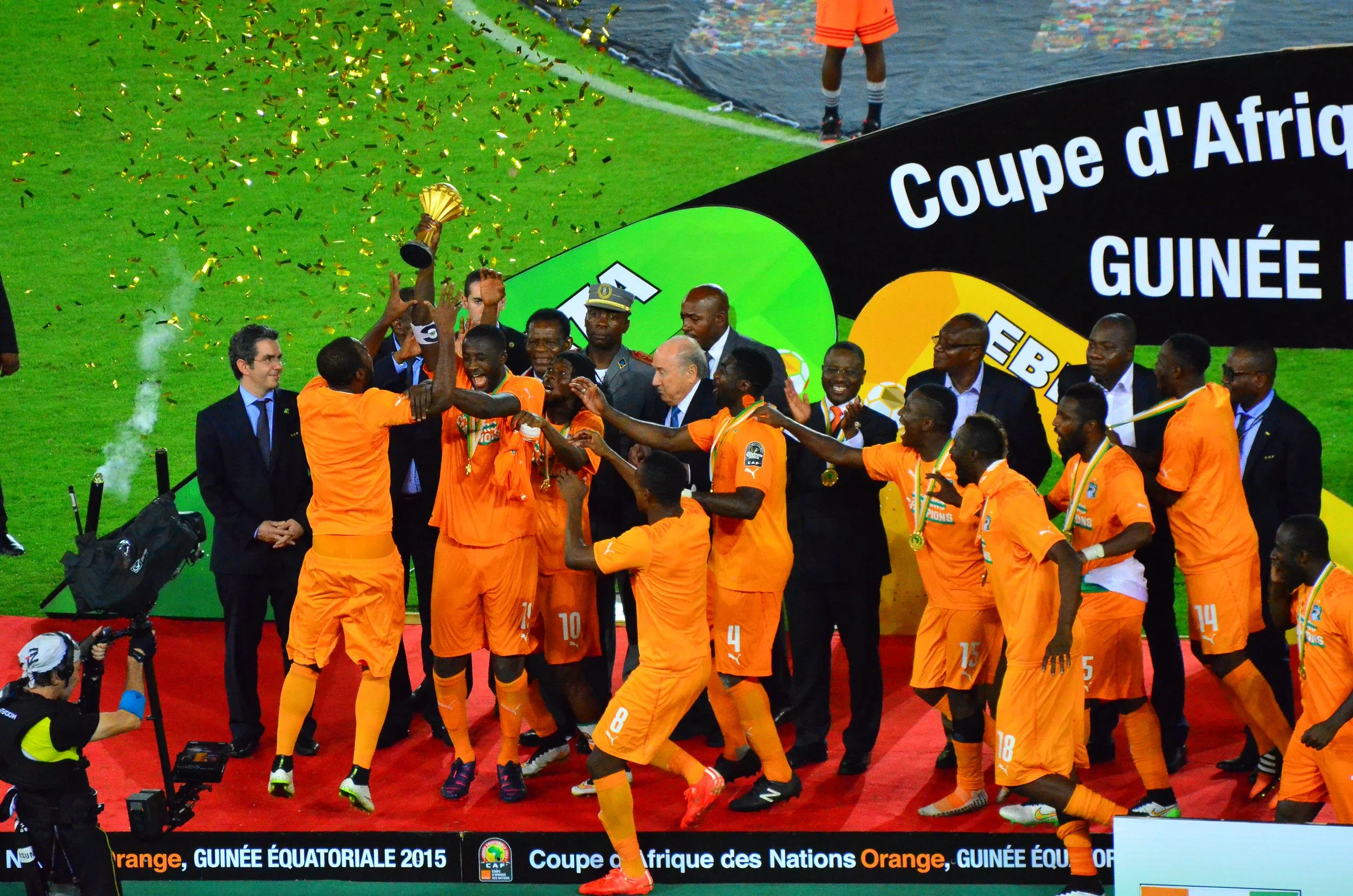
Côte d'Ivoire celebrate winning AFCON 2015.
Photo Credit: WikiMedia Commons
Zambia’s victory in 2012 will also live long in the memory. That victory, outside of the Republic of Congo’s 1968 triumph, is the biggest surprise win of any AFCON tournament. Under Hervé Renard, Chipolopolo came out of nowhere to beat the Cote d’Ivoire’s golden generation in the final. The victory took place in Gabon, the scene of a horrific air disaster that saw the great Zambian side of the early 1990s lose many of its players. That side could arguably have delivered Zambia their first trophy and a World Cup appearance long before 2012. However, one of the few survivors in Kalusha Bwalya was acting President of the Zambian FA at the time and was there to witness the victory.
In the past, very few African players made the move to Europe. AFCON would boast a number of sides that had purely domestic-based players. Things have certainly changed in years gone by, and now many teams will be stacked full of top European based talent. In 2025, it is likely that only Egypt and South Africa will bring mainly domestic-based squads. Ten of the 24 teams competing in Morocco have won AFCON in the past.
One of these will join Egypt and South Africa in bringing a squad made up of domestic players, but they are unlikely to be considered contenders. It would be the most unpredictable outcome of all if Sudan, despite the pain and turmoil the country has experienced in the last few decades, were to lift their second title in January. Sudan was one of the founding members of the tournament and hosted the inaugural competition in 1957. Their only victory came in 1970, with the greatest Sudanese footballer of all time Nasr Eddin Abbas, more commonly known as Jaksa, leading the way. Jaksa had chances to leave Sudan for Boca Juniors and Bayern Munich but remained with Al-Hilal for many years. Sadly, due to the ongoing civil war and genocide in Sudan, many of the top clubs have had to play elsewhere on the continent. After competing in Mauritania last season, Al-Hilal will be joining the Rwandan Premier League during the current season.
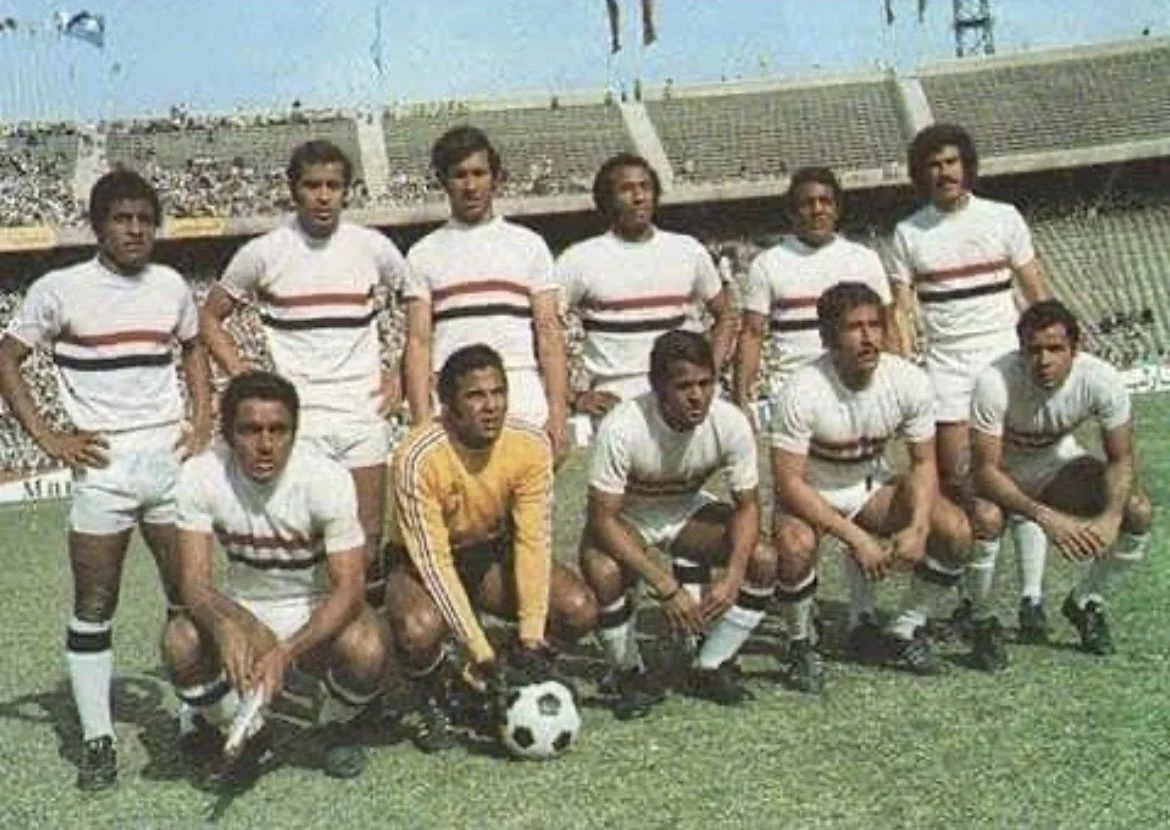
Egypt National Team squad photo, 1974.
Photo Credit: WikiMedia Commons
If 2025 has half of the drama of the 2023 edition, it will be an entertaining December and January for fans of African football. Last time out, hosts Cote d’Ivoire sacked their head coach Jean-Louis Gasset midway through the tournament and handed the reigns to the inexperienced Emerse Faé. He guided the side to the final, where they beat Nigeria in an entertaining final in Abidjan. Gasset was not the first head coach to be sacked midway through a tournament, and 2025 might see more added to the list.
Last time Morocco hosted, Cameroon were the victors as they overcame Nigeria. The 1980s saw those two sides battle it out on numerous occasions, with the Indomitable Lions coming out on top against the Super Eagles twice. Both narrowly missed out on World Cup qualification, so will want to prove a point in Morocco. The Super Eagles have more star power compared to a Cameroon side that look a far cry from the great teams of the 1980s and early 2000s.
Morocco will be favourites when the tournament kicks off in Rabat on the 21st of December. However, AFCON is never a foregone conclusion. The tournament is unpredictable and is far too often underappreciated. This is slowly changing, and hopefully the 2025 edition can be another chance for African football to show the world what a great tournament the African Cup of Nations is.

A spectator celebrates during AFCON 2023.
Photo Credit: Antony Blinken