

Words by Tommy Potter | Published 15.07.2026Generations of Scottish football fans have routinely been left disappointed by the exploits of the national team. From France 1998 until Euro 2020 (played in 2021 due to the COVID pandemic) Scotland didn’t qualify for a single major tournament.
There were, of course, near misses - who can forget the last-minute heartbreak against Italy in ‘07 - but, ultimately, every single qualifying campaign left fans bereft as stale mediocrity became a staple of the national game.
Even now, as Scotland have qualified for the 2 most recent Euros, and now, finally, a World Cup, no one actually expects the team to compete in the latter stages of these competitions.
It wasn't always like this, though. In decades gone by, Scotland have been considered genuine contenders. This might sound bizarre for anyone who’s only recollection of supporting Scotland was the 2000’s and 2010’s, but it’s true.
This was the case ahead of the 1978 World Cup in Argentina. Scotland had an array of undeniably talented players and some bona fide world class stars. Not only that, but they had a confidence that is unrecognisable to modern fans.
Manager Ally MacLeod even went as far as to say that they’d win the tournament. Such grandiose proclamations are usually reserved for our English neighbours, but MacLeod was happy to fan the hype flames - and the fans lapped it up.
Before taking the national job, MacLeod had success with Ayr United in the lower leagues, before winning a League Cup with Aberdeen, who were a newly emerging force in Scottish football.
He was a likeable manager, who was sometimes prone to acts of bravado - when he introduced himself to the Scotland team he said: “I’m Ally MacLeod and I’m a winner”. Self-confidence is admirable (something we’re maybe not great at appreciating in Scotland), but it has to be backed up, which MacLeod did. Initially, at least.
His confidence wasn’t entirely misplaced, either: in the year leading up to the World Cup, Scotland had recently won the Home Nations Championship that concluded in 1977, and with the likes of Kenny Dalgleish, Graeme Souness, and Joe Jordan, they had plenty of talent at their disposal.
Having taken over the team in May ‘77, Scotland were already half way through World cup qualification. A loss to the defending European champions, Czechoslovakia, and a home win against a handy Welsh side left their place at Argentina ‘78 in the balance.
MacLeod quickly set about allaying any fears as Scotland beat the Czechs, and Wales again, in the return fixtures. Scotland may have gone on to lose to England in that season's Home Nations Championship, but they still had the last laugh; Scotland had qualified for 2 successive World Cups, something that England had failed to do.
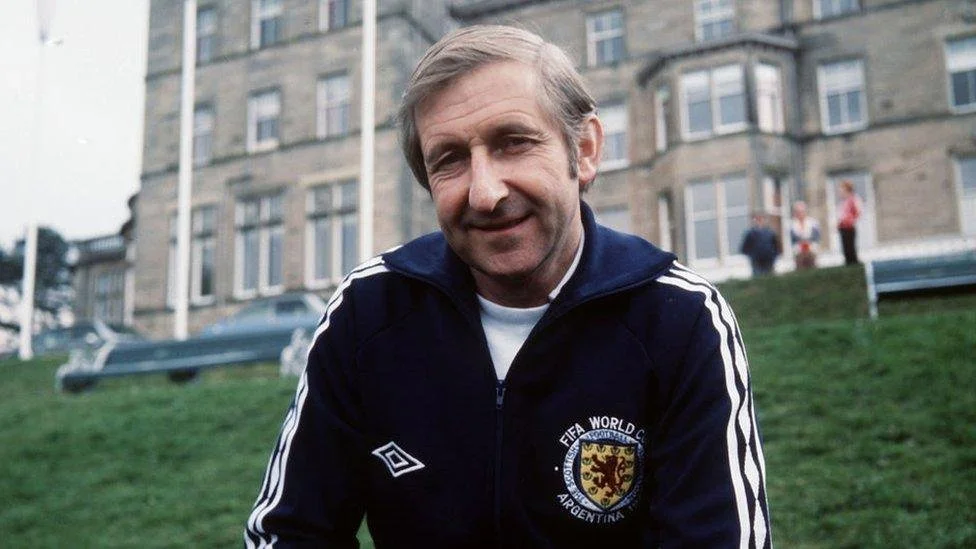
Ally MacLeod, Scotland's manager for the 1978 World Cup.
Photo Credit: BBC News
Neither England, Wales, nor Northern Ireland qualified for Argentina ‘78, making Scotland the United Kingdom's sole representative. And without England in particular, the eyes of the British media turned north across the border.
As the tournament drew closer, World Cup fever grew to a maniacal level: jerseys were selling faster than they could be made; MacLeod was appearing in bizarre carpet adverts; comedian Andy Cameron made a truly awful song called Ally’s Army that echoed the growing sentiment that Scotland would indeed win the World Cup. Everything was getting a bit silly.
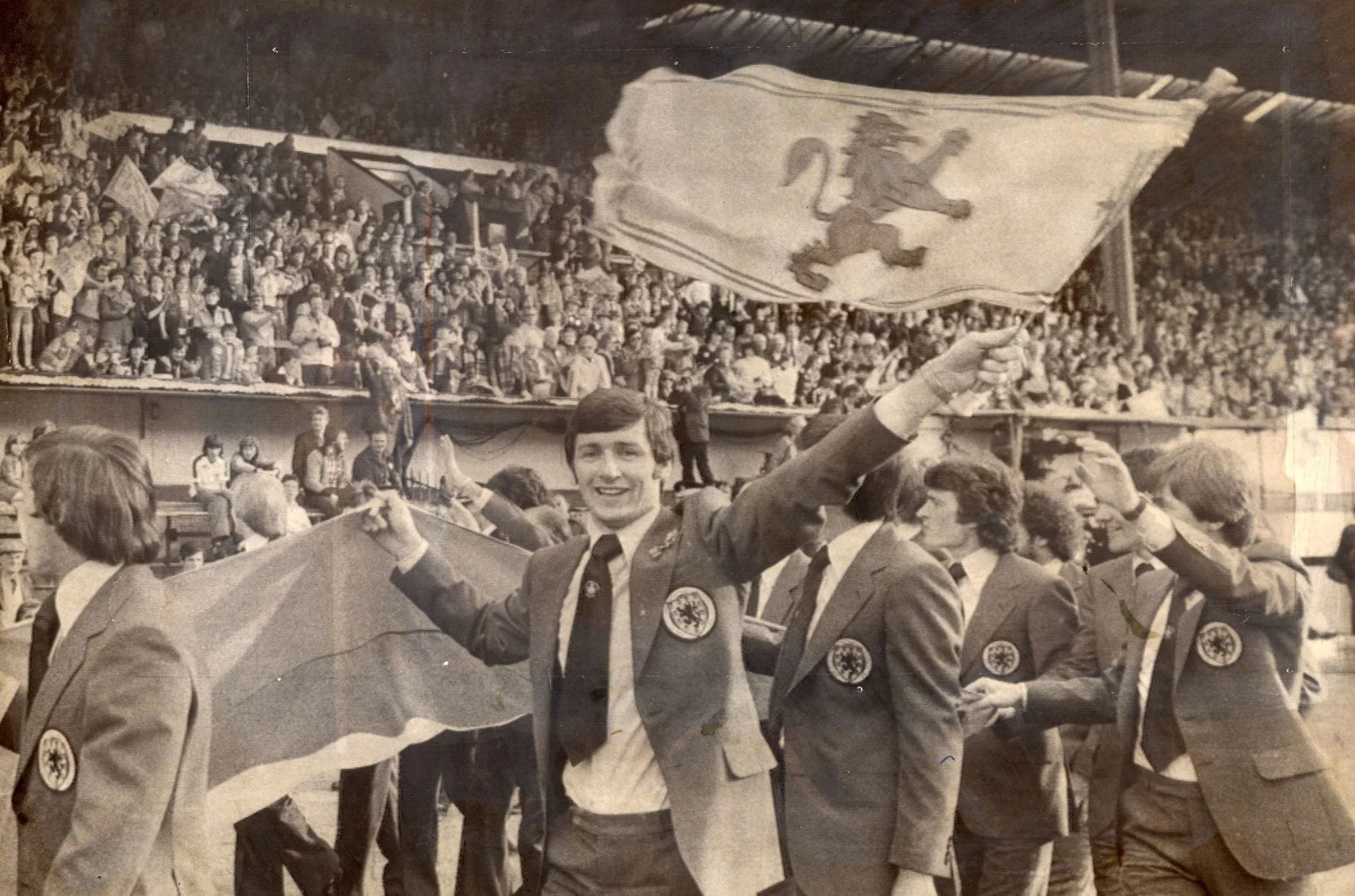
Before the team left Scottish shores on their presumptive journey to win the Jules Rimet trophy, a farewell at Hampden was arranged. 22,000 fans arrived at the home of Scottish football to give the players a rousing send off.
Fans displayed banners and flags showing messages such as: ‘Argentina Here We Come’ and ‘Argentina. We came, we saw, we conquered’. Ally MacLeod did little to dampen the rampant hubris on show when he informed the frenzied crowd: “You can mark down 25th June 1978 as the day Scottish football conquers the world”. Humility was at a premium in Hampden that day.
Unsurprisingly, the fans, so keen to win a World Cup of their own after England’s 1966 success, were completely swept up in the excitement. International travel in the late 70’s wasn’t quite up to the same standards as it is today, and it was also prohibitively expensive.
Such things weren’t going to stand in the way of many Scotland fans, though. By hook or by crook the tartan clad hordes, armed with their kilts and bad haircuts (remember, it was the 70’s), would be there to cheer on the boys in navy blue.
The stories of how fans made it to Argentina have become the stuff of legend: some fans, with only a map of South America to hand, landed in Trinidad & Tobago (they wrongly assumed it was part of the continent), before taking a combination of buses and trains from Venezuela all the way to Argentina; there were fans who sold businesses to be there; a couple of fans even took a job painting a ship as it sailed across the Atlantic to secure their passage. Delusional? Most likely. Dedicated? Absolutely.
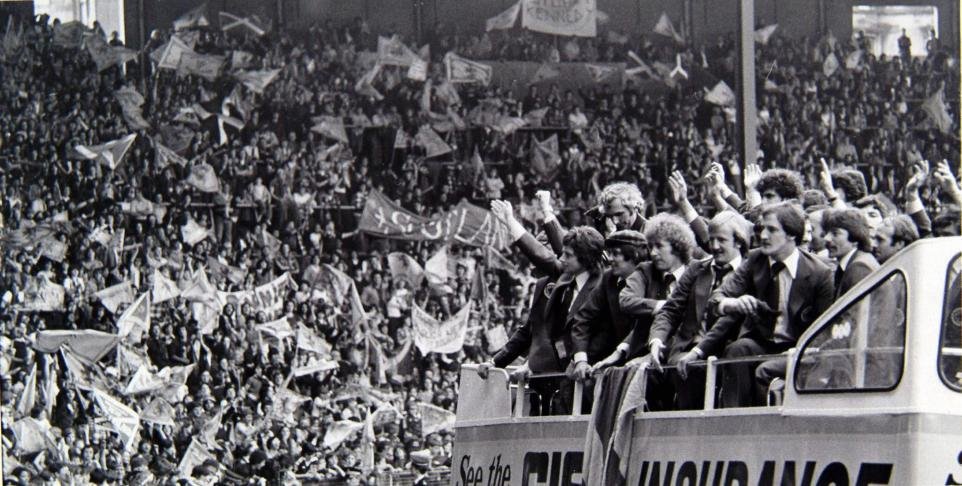
Scotland were sent off from Hampden Park in style.
Photo Credit: The Herald
The Scotland team may have had a smoother journey to Argentina than the fans, but it wasn’t without hiccups. The SFA had booked the squad into a hotel in the town of Alta Gracia, supposedly only 20 minutes from Cordoba.
As the bus climbed the hill towards the hotel, it broke down, forcing some of the players to get off and push - it was a sign of the turbulence that was awaiting them.
When the players and staff finally arrived at the hotel they found it still under construction; the pool was empty of water, and the beds were free of mattresses. Then there was the training ‘pitch’: a bobbly, arid mess, that was far closer to a farmers field than anything you’d want to kick a ball about on.
Early sessions inevitably led to ankle injuries. Naturally, the SFA had chosen to base the squad in a town that didn’t have any fully functioning medical facilities, forcing any unfortunate players to take an hour bus journey to Cordoba. The whole arrangement was a shambles.
The fans weren’t privy to any of this, and were blissfully soaking up the Argentinian hospitality as the first game against Peru approached. None of the fans were particularly knowledgeable about Peru, and even though they were South American champions at the time, there was an assumption that they’d be no match for Scotland's talent.
The lack of Peruvian football knowledge was somewhat understandable from the fans in a pre-internet age, but less so from Ally MacLeod who adopted a laissez-faire attitude towards preparing for the Peruvians: “We’ll let them do the worrying”.
The pre-tournament hubris was beginning to look like outright arrogance.
With a preparation week of rolled ankles, poor sleep, and no tactical insights under their belt, Scotland arrived in Cordoba to face Peru in the first group game. Initially, things went well for Scotland as Joe Jordan gave the travelling fans an early opportunity to celebrate when he opened the scoring on 14 minutes.
That was as good as it got for the men wearing navy, though. They looked lacklustre and allowed the Peruvians to grow in confidence; a confidence that paid off when they equalised 2 minutes before half-time.
Rather than regroup at the interval, things went from bad to worse as a quickfire double from Teofimo Cubillas in the 71st and 77th minute saw Scotland staring down the barrel of a shock defeat. The lack of planning was stark; players weren’t sure who they were meant to be marking; everyone was unaware of who was taking Peru’s set-pieces; and worst of all the danger men were left unchecked.
If certain people had done their homework, they might have realised that Teofimo Cubillas was one of the finest attacking midfielders of his generation, something that Bruce Rioch found out the hard way, as the Peruvian maestro had him on strings throughout the 90 minutes.
It was a chastening defeat for Scotland. There wasn’t much need to panic, though. Football minnows Iran were up next, which would be straight forward enough - surely there was no way Scotland would make the same fatal errors. All the players needed was time to process what had happened without any distractions or drama.
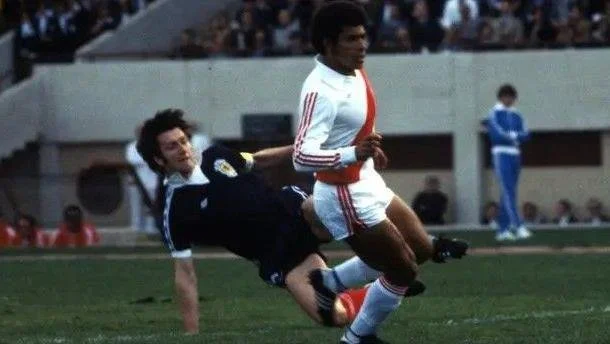
Bruce Rioch against Peru in 1978. He would later say in an interview he shouldn't have played that match.
Photo Credit: SNS Group
In the immediate aftermath of the shock defeat, midfielder Willie Johnston was subjected to a routine drugs test. Having completed the test without a second thought, Johnston joined the rest of the squad for the journey back to the hotel and the ensuing post-mortem.
3 hours after the whistle blew in Cordoba, the players were at a reception hosted by the British Embassy when members of the press attempted to talk to Johnston regarding some ‘reports’ they’d been hearing.
In fairness to MacLeod, he stepped in to aid the confused Johnston by removing the said journalists from their company. Despite these efforts to protect him, it didn’t take long for news of what these ‘reports’ were about to circulate: Johnston had failed a drugs test.
In the 70’s, far less was known about ‘performance enhancing drugs’ compared to the modern era. Rumours of what Willie Johnston had taken, and the effects that the drugs were said to have had on him, began to grow wildly.
The Scottish public had farcical notions, perpetuated by the tabloid press, that the drugs had somehow enabled Johnston to obtain supernatural abilities. Of course, the reality is far more mundane.
What Johnston had taken was something called reactivan, a drug developed to treat fatigue, lethargy, and a lack of concentration.
Johnston claimed he’d bought it over the counter and had used it in the past to help him recover after games, and had no idea it was banned.
But banned it was. FIFA expelled Johnston from continuing at the tournament, and he was sent home in disgrace to face the baying public. He would later say those 10 days he spent in Argentina were the worst in an otherwise enjoyable career.
The knives were out for the rest of the squad after the incident; more and more tabloid journalists and paparazzi were snooping around the team hotel in desperate attempts to get a whiff of anything controversial.
Wild, exaggerated, and outright false headlines appeared in the red tops back home. If Scotland were hoping for days of quiet contemplation and time to rectify some wrongs ahead of their critically important game against Iran they were sorely mistaken.
In the build-up to Iran the attitude appeared to be ‘well, surely it can’t happen twice’. It can, and it did. Obviously, the drama surrounding the Johnston incident did Scotland no favours, but the lack of planning and preparation was stark once again.
Scotland were well below par, but managed to take the lead thanks to an own goal from Andranik Eskandarian just before half-time.
They may have been in the lead, but the performance was a dreadful one, and Iran got their equaliser just after the half-hour mark. The game petered out, and so did Scotland’s World Cup dream.
The reaction to the Peru defeat was one of disbelief. Against Iran, however, pure rage flowed from the stands and newspaper columns. So much had been promised ahead of the tournament, and now, barring a miracle, Scotland would be exiting at the very first hurdle.
The fans who’d travelled all those miles to watch the travesty unfold firsthand were most vociferous in their condemnation of the players and managers. Enraged fans waited as the Scotland players got on the bus to return to camp, and let them know in no uncertain terms exactly what they thought about their performance.
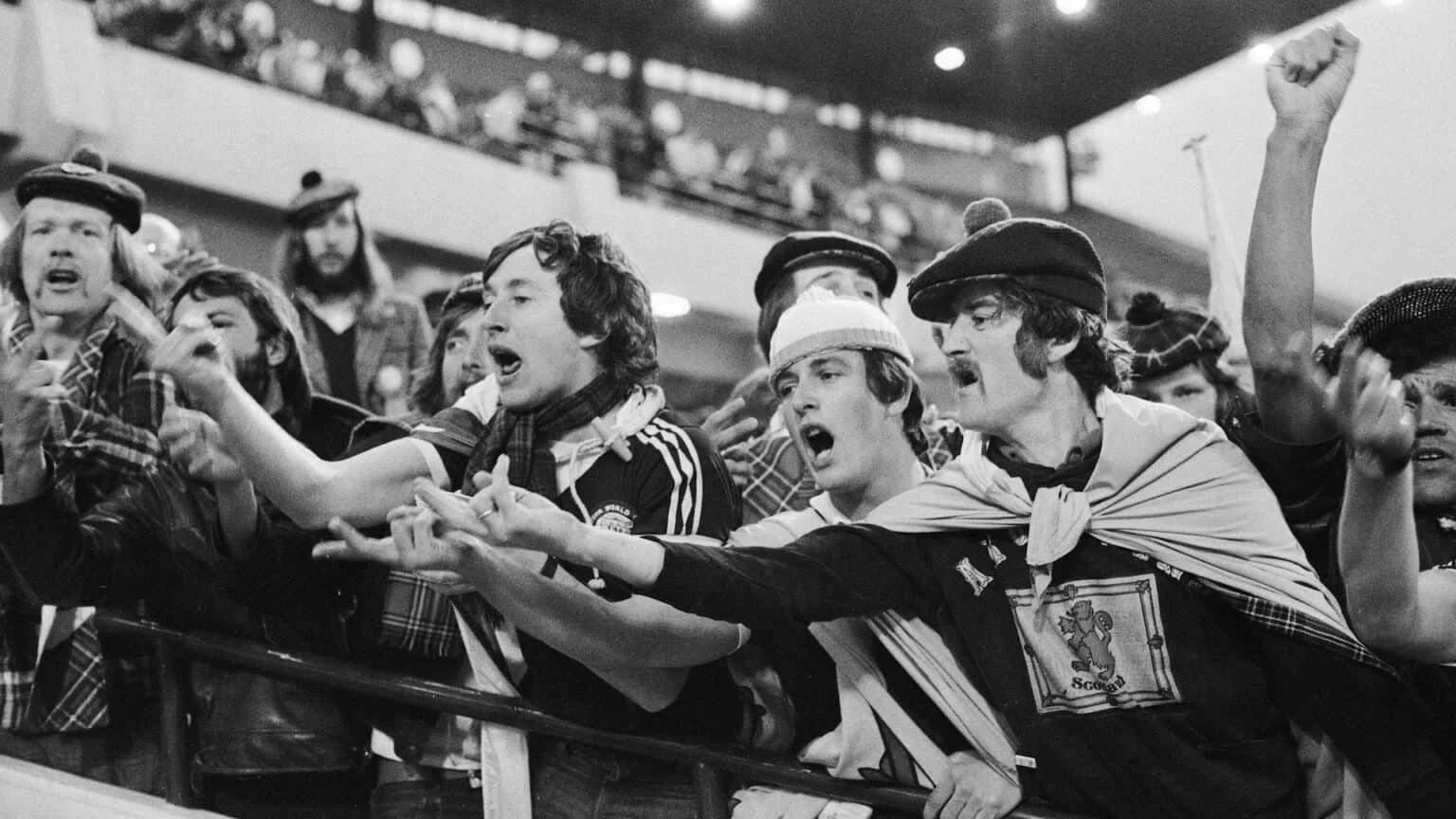
Many photographs from Argentina '78 show the extent of Scotland fan's anger toward the national team.
Photo Credit: The Square Ball
Nowadays, drawing with Iran would hardly be the cause of such a vitriolic outpouring (in fact, it’d probably seem as a good result depending on the context), but this was the 70’s, and, even if somewhat naively, the assumption was that they were a team worthy of little thought.
While little was also known of Peru, they were at least from a continent known for great football. Iran? Not so much.
A point didn’t completely extinguish Scotland’s hopes of progressing, but with the Dutch looming in the final group game, absolutely no one gave them a hope of qualifying.
The Netherlands were the runners-up in 1974, and were again amongst the favourites in 1978. Despite Johan Cruyff missing due to his recent retirement from international football (years later Cruyff would reveal that a horrific home invasion and kidnapping attempt at his home in Barcelona was the real reason behind his early retirement), the Dutch were still a formidable outfit containing the likes of Johan Neeskens, Johnny Rep, and the Van de Kerkhof twins.
To reach the 2nd round, Scotland needed to win by 3 clear goals. A tough ask to say the least.
After the Iran travesty, MacLeod revamped his starting 11 by making 4 changes: Stuart Kennedy and Tom Forsyth were brought into defence at the expense of Sandy Jardine and Kenny Burns; in midfield the much-maligned captain, Bruce Rioch, returned; and Graeme Souness' inclusion added some much needed steel.
At Mendoza’s Estadio Ciudad de Mendoza, Scotland started the game with an intensity that had been desperately lacking from their previous 2 games; within the first 15 minutes they had hit the woodwork and had 2 goals disallowed, one for offside and the other for a foul by Dalglish.
Scotland then had a penalty shout waved away shortly after. They were on top, but needed to make their dominance count.
When playing teams like The Netherlands, chances have to be taken with ruthless efficiency. Missed opportunities can be quickly punished; which is exactly what happened. Stuart Kennedy was caught cold in possession by Rensenbrink who poked the ball away from the defender allowing Rep to race towards Rough in the Scotland goal.
In a desperate attempt to redeem his error, Kennedy clumsily brought down Rep as he rounded Rough. The referee had no choice. Penalty.
Rensenbrink converted the resulting spot-kick. It was a real gut punch for Scotland, who had been playing so well up until that point.
Thankfully, they showed character (again, something that was severely lacking in those opening 2 games), and got their just reward as Kenny Dalglish scored the equaliser right before half-time. It rejuvenated Scotland, and set them up for a thrilling second half.
Scotland came flying out the blocks after half-time, and immediately gave the fans cause for optimism.
This time it was the Dutch’s turn to give away a clumsy penalty when Souness was bundled over in the box. Archie Gemmill stepped up and converted to put Scotland 2-1 ahead. Belief seemed to course through Scotland like a Mexican wave.
Scotland now needed 2 goals to qualify at the expense of their opponents. What came next was the defining moment for Scotland at the world cup. A moment that would become immortalised for generations to come.
When the ball broke to Archie Gemmill near the edge of the Dutch box, he would need only 6 touches to write himself into World Cup folklore.
The first touch saw him evade the first attempted slide tackle, the next 2 allowed him to take the ball past an oncoming defender, his 4th saw him nutmeg another lunging Dutch player, his 5th allowed him the opportunity to open his body, and the 6th was a sumptuous lob over the the ‘keeper who stretched himself out towards Gemmill’s feet. 6 touches, 1 incredible solo goal.
Scotland now only needed 1 more goal to take them through. But, of course, in true Scotland style, the belief was short-lived. Minutes after Gemmill’s wonder goal, Holland scored a fine goal of their own when Johnny Rep thundered one in from outside Scotland's box.
It was another sickener for Scotland, and this time they couldn’t recover. The fans roared them on but they just couldn’t find any more juice in the tank. Eventually, the referee blew his whistle to end the game and Scotland’s World Cup dream along with it.
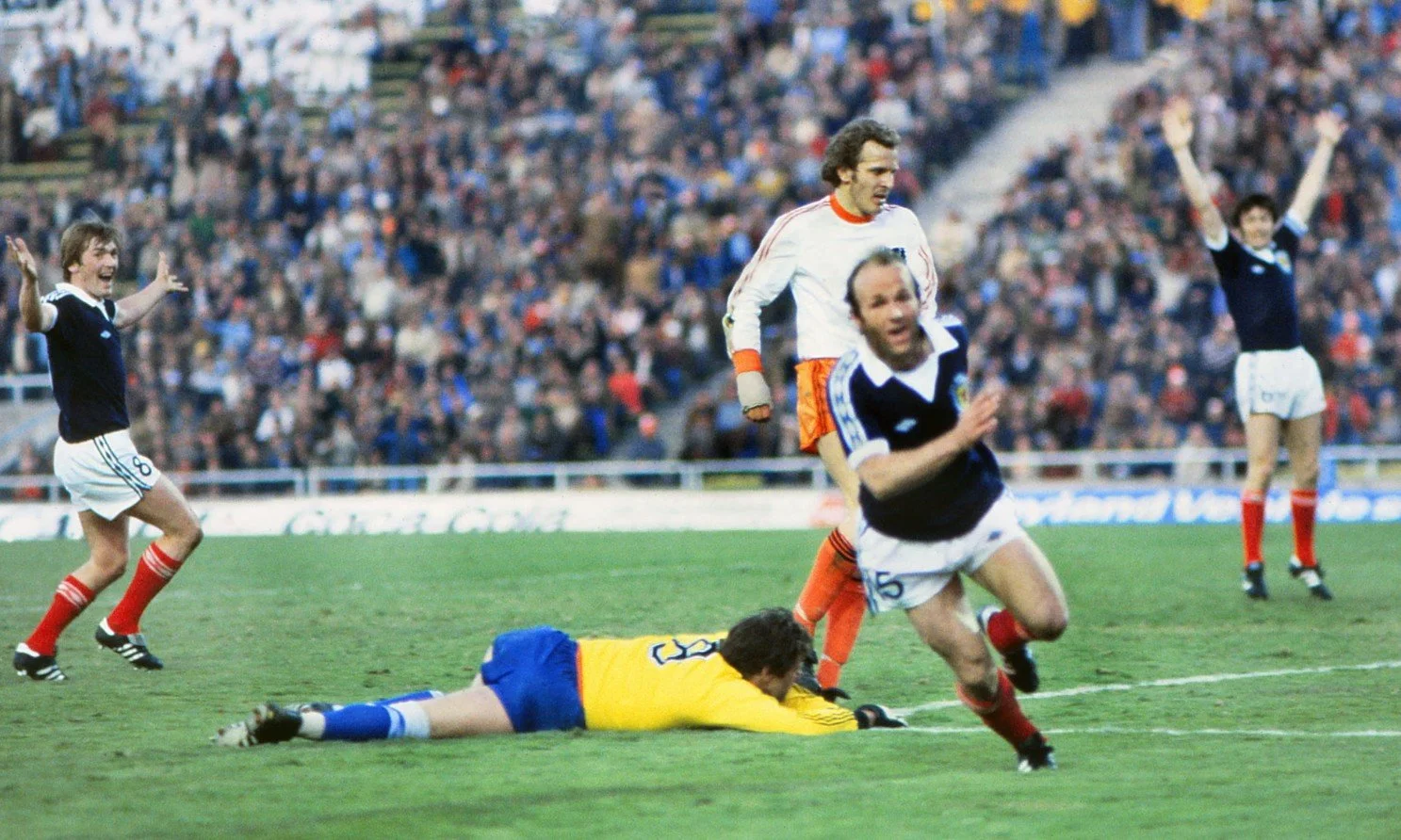
Archie Gemmill's goal against the Netherlands was voted the greatest ever Scotland goal in history.
Photo Credit: The Guardian
In the immediate aftermath, MacLeod shouldered the blame himself, and bemoaned the earlier performances. There was still that hint of that MacLeod optimism, though, as he suggested that: "If we’d played like that from the beginning, we would have won the competition.”
It was a piece of pointless speculation. Scotland hadn’t played like that, and now they were going home.
When the players arrived back in Scotland, the mood was far more sombre than the one they’d encountered upon their departure. The team arrived back with little to no fanfare, ready to face the awaiting inquest.
MacLeod just about survived, as an SFA motion to dismiss him somehow failed to garner the required votes.
Still, he only managed 1 more game for Scotland before deciding to accept the managerial position at 2nd division Ayr United. Quite a climb down from managing at the World Cup, but it was clear that the whole ordeal had taken a lot out of him.
MacLeod wasn’t the only one to arrive back in Scotland with his reputation shot to pieces. Bruce Rioch, seen as a symbol of MacLeod’s unwillingness to evolve the team, never played for Scotland again.
Willie Johnston's international career ended with the drug scandal, and his controversy-laden club career saw him meander between the UK and Canada without ever regaining his previous form.
As The Guardian wrote it was “one of the most reckless, hopeless, needlessly farcical failures in the entire history of the World Cup”.
It's hard to disagree with that assessment, but at least the Holland game and Archie Gemmill’s goal meant it was a glorious, burning crash of a failure, rather than the limp abject failure Scotland fans became so accustomed to until very recently.
The 1978 world cup was seen as the end of an era for Scotland as the pool of top-class players grew shallow, but over the last 6 years things feel like they’ve changed. Scotland have now qualified for the last 2 European championships, and the current World Cup in 2026.
However, if Scotland are going to shake their under-dog status (a status that is often self-appointed) and progress past the ‘just happy to be here mentality’ something deeper needs to change.
There is no shame in losing to Morocco and Brazil, but the manner was very disappointing. Scotland are not a squad of part-time also-rans; yes, they are limited in some areas, but there is talent within the ranks - talent that is regularly under-utilised.
Can anyone really argue that Scotland performed beyond, or even up to, the sum of their parts? Whoever comes in next will have to continue Steve Clarke's work of actually getting us to major tournaments, whilst overseeing a change in self-perception. Hardly an easy task to undertake.
Perhaps a dose of Ally MacLeod-esque self-belief wouldn’t be such a bad thing?