

Words by Christos Kazantzoglou | Published 27.05.2026Some clubs carry trophies. Others carry silences. Bayern Munich, now one of the most powerful football club in the world, belongs to both categories.
Behind the image of the perfect football machine, behind the silverware, the commercial confidence, and the carefully cultivated sense of superiority, there is a far more complex story: its relationship with its Jewish founders and officials, its stance toward Nazism, its acts of compromise, its moments of courage, and the decades of discomfort that followed.
Bayern Munich was founded on February 27, 1900, in an urban, educated, and cosmopolitan environment. Among its founders were Jewish members. That is not a minor detail. In the club’s early years, people with strong educational backgrounds, international experience, and financial means played a major role in its development.
The club was born with elements of openness, though not necessarily with what we would today call a liberal political identity. It was deeply rooted in Munich’s middle and upper bourgeois society, with strong respect for monarchy, nation, and military values.
This is crucial in understanding Bayern’s story. Bayern was not an anti-Nazi club in the modern sense, but neither was it originally a Nazi institution. During the Weimar Republic, its ranks included Social Democrats, conservatives, nationalists, Jewish businessmen, right-wing radicals, and many people who simply cared about football. In simple terms: it reflected German society before its collapse.
The man most closely associated with Bayern’s rise was Kurt Landauer. A Jewish businessman, former player, and highly capable administrator, he became club president and led Bayern into a period of remarkable growth. Under his leadership, Bayern modernized rapidly.
Crowds grew, revenues increased, coaches became more professional, and players began to be treated in ways that resembled early professionalism.
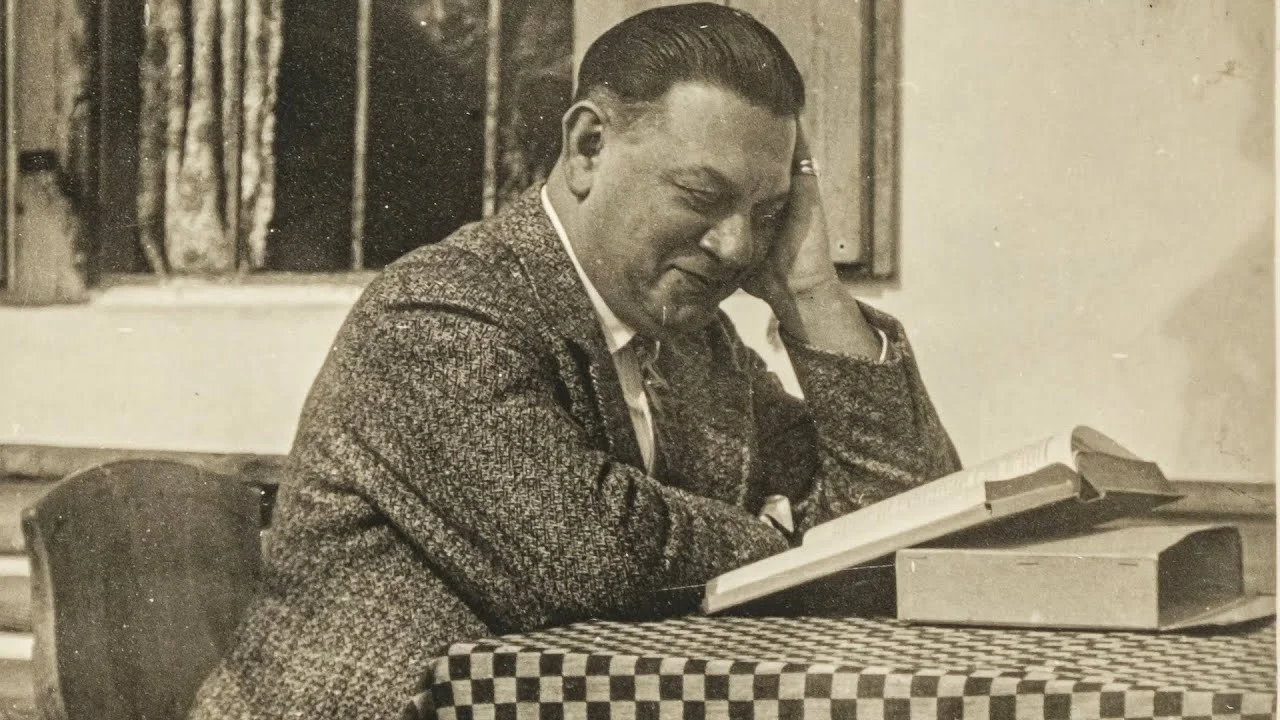
Kurt Landauer, one of the men behind Bayern's early success.
Photo Credit: Jüdisches Museum München
In 1932 came the breakthrough: Bayern won its first German championship. Landauer was president. Richard “Little” Dombi, also of Jewish origin, was the coach. For the club, that victory became a founding myth. For history, it became a tragic irony. Just a few months later, Hitler came to power.
The change was immediate. On March 22, 1933, Landauer resigned as president. For decades afterward, official club language would vaguely refer to “political and racial reasons.” The truth was much harsher: a Jewish president had no place in Hitler’s Germany. Dombi soon left for Switzerland. Many Jewish members and officials were pushed out or chose to leave.
This is where the difficult part begins. For years, an image was cultivated of Bayern as an almost resistant “Jewish club,” persecuted by the Nazi regime. The truth is more uncomfortable.
Yes, Bayern had a strong Jewish presence before 1933. Around ten percent of its members were Jewish. Yes, it was closely associated with Landauer and Dombi. Yes, Nazi circles viewed it with suspicion as a “Jewish” or overly bourgeois club. But Bayern itself did not stand against the regime as an institution.
In April 1933, the club reorganized itself according to the Nazi Führerprinzip, the principle of absolute leadership. Just days earlier, it had signed the so-called Stuttgart Declaration along with other major South German clubs—an antisemitic statement expressing loyalty to the new regime and announcing the exclusion of Jewish members.
In 1935, Bayern introduced an Aryan clause into its constitution. At first, there were exceptions for longtime members and First World War veterans. A few months later, those exceptions were removed.
This cannot be softened. Bayern participated in the adaptation of German football to Nazism. Not necessarily because everyone involved was a fanatical Nazi. But because some were, others agreed politically, others were afraid, others chose convenience, and many simply looked after their own interests. The result matters: like many other clubs, Bayern functioned within the system.
Recent historical research by Gregor Hofmann weakens the simplistic image of Bayern as a victim of the Nazi regime. There is no convincing evidence that the regime systematically damaged the club because of its Jewish past.
On the contrary, there were local Nazi officials who supported it. Munich’s city administration helped in certain player-related matters, and Nazi officials regularly attended matches. Mayor Karl Fiehler visited Bayern’s international games, and the Nazi newspaper Völkischer Beobachter often treated the club with local patriotic goodwill.
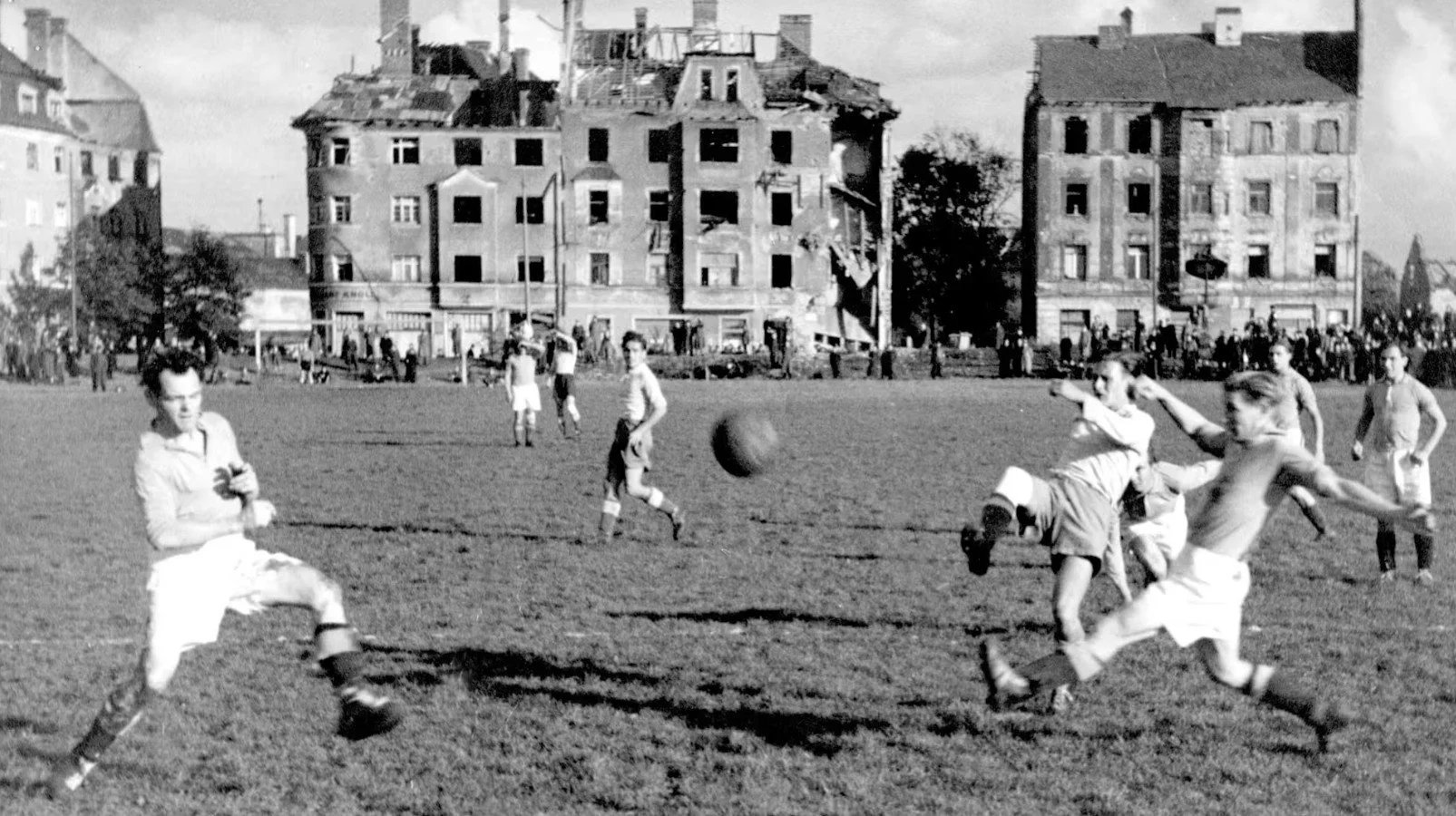
Hitler's Nazi regime permeated every aspect of life in Germany, including football.
Photo Credit: Bayern Munich
Even more revealing are the findings regarding Bayern’s members and officials. In a sample of 119 individuals—club officials, players from the 1932 championship team, and regular players between 1933 and 1945—around 35 percent were members of the Nazi Party at some point. Among club leadership, the number was even higher, around 53 percent. In plain terms, the line between Bayern and the Nazi regime was far less clear than postwar memory would later suggest.
There were figures with deep involvement in the regime. Josef Kellner, club president from 1938 to 1943, was a Nazi Party member and an important administrator in the Sudetenland, involved in systems of repression against Czechs and Jews.
Theodor Slipek, responsible for ideological education within the club, worked for the SS. Other officials held roles in Nazi institutions, party courts, or in the management of property confiscated from Jewish citizens.
And yet, the story does not end there. Because within the same Bayern there were also acts of personal courage. Siegfried Herrmann, the first club leader after Landauer’s resignation, implemented the new authoritarian structure, but appears in some cases to have resisted the most extreme antisemites inside the club.
Franz Herzing remained a friend to Landauer until his escape in 1939. Social Democrat Willy Buisson, who opposed the Nazis, went into exile, joined the resistance, and was executed in 1940 for alleged treason.
There are also the smaller symbolic stories that later became part of Bayern’s anti-Nazi memory. Winger Willy Simetsreiter had his photograph taken with Jesse Owens at the 1936 Berlin Olympics, at a time when the African American athlete had become a nightmare for Nazi propaganda. Sigmund Haringer reportedly described a Nazi flag parade as “children’s theater,” risking serious consequences. Conny Heidkamp and his wife hid Bayern’s silverware when other clubs were donating metal for the war effort.
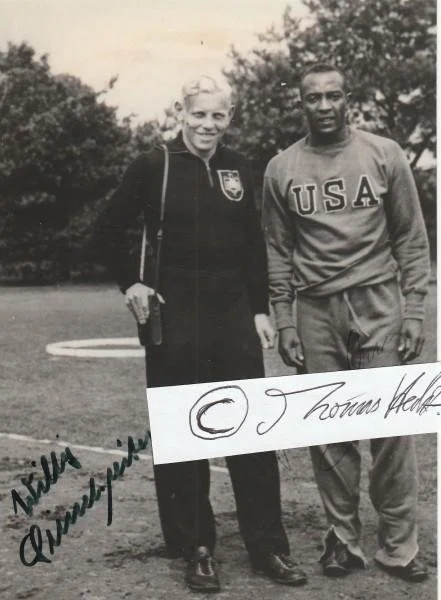
Willy Simetsreiter pictured with Jesse Owens.
Photo Credit: AbeBooks
The most famous moment took place in Zurich in 1943. Bayern traveled to Switzerland for a friendly match. The exiled Landauer was in the stands. The Gestapo had forbidden the delegation from contacting him. When the players saw him, they stopped and saluted him. It was a moment of enormous emotional weight. It did not overthrow the regime, and it did not save the world, but it mattered. In an era when even a gesture could be dangerous, some players chose to remember the man who had built their club.
Landauer himself had lived through horror. After resigning, he was arrested and sent to Dachau concentration camp. He was released after 33 days, likely because he had served as a decorated soldier in the First World War. But he could no longer live safely in Germany. He fled to Switzerland. Members of his family were murdered by the Nazis. Of Bayern’s more than 100 former Jewish members, at least 27 were murdered and four took their own lives.
For the Jewish members of the club, being separated from Bayern was not just a sporting issue. It was one of the first steps toward social isolation. A football club is not just a team. It is friendship, recognition, routine, identity and community. When Jewish members were excluded, they did not just lose access to a sports institution—they lost another part of public life.
During the war, Bayern continued to function. Despite bombings, the collapse of normal life, and enormous hardship, the club showed remarkable resilience. It organized youth and reserve matches, found ways to keep playing, adapted to destroyed stadiums, and used guest players made available through wartime regulations. In 1944 and 1945, Bayern won regional Gauliga titles, although the level and conditions were incomparable to the prewar period.
Munich had become a city of ruins. The Grünwalder Straße stadium had been damaged by bombing, and the club offices and part of its archive were destroyed in 1944. Matches were played in alternative venues. And yet, thousands of spectators still attended football games. It was entertainment, escape, survival.
But here too there was a darker side: in some cases, prisoners of war were used for labor such as clearing snow from stadiums. This was how the Nazi “people’s community” worked—some enjoyed fragments of normality because others were forced to serve.
After the war, Landauer returned to Munich. In 1947, he became Bayern president once again. His return is powerful on its own. A man who had been expelled, imprisoned, exiled, and had lost family members came back to the country that had rejected him and took responsibility for rebuilding his club. He remained president until 1951. Today, he is regarded as the longest-serving and perhaps most important early president in Bayern’s history.
His contribution was enormous. He insisted on financial responsibility, youth development, organization, international vision, and forms of professionalism that at the time were considered almost radical. It is no coincidence that Karl-Heinz Rummenigge later called him “the father of modern Bayern.” The sad irony is that for decades, the club almost forgot him.
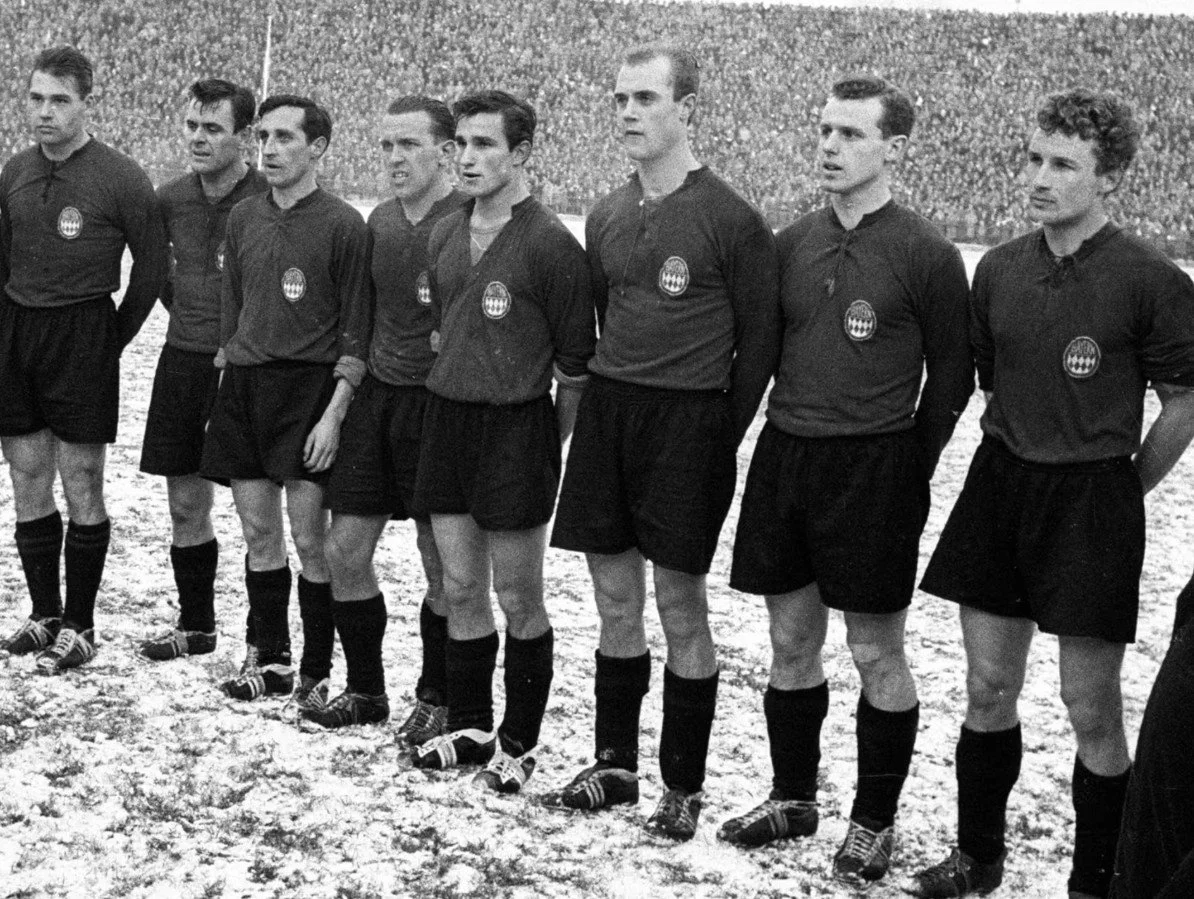
Landnauer's post-war reconstruction of Bayern paved the way for the club's 1957 DFB-Pokal Cup win.
Photo Credit: Bayern Munich
Postwar Germany did not want to look in the mirror immediately, and Bayern was no exception. In official club publications, the Jewish past was often mentioned only in vague terms. The word “Jew” was carefully avoided.
Persecution was described as “political events” or something that had simply happened. Club officials answered questions by saying they “had not been alive at the time.” Others later admitted they feared “negative reactions” if the club openly emphasized its Jewish roots. Put simply: they chose silence.
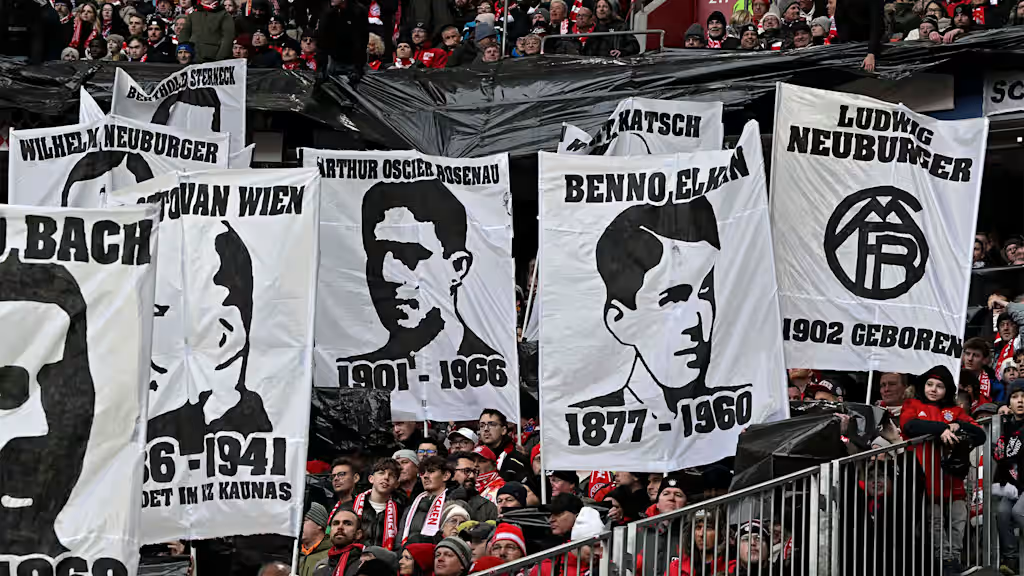
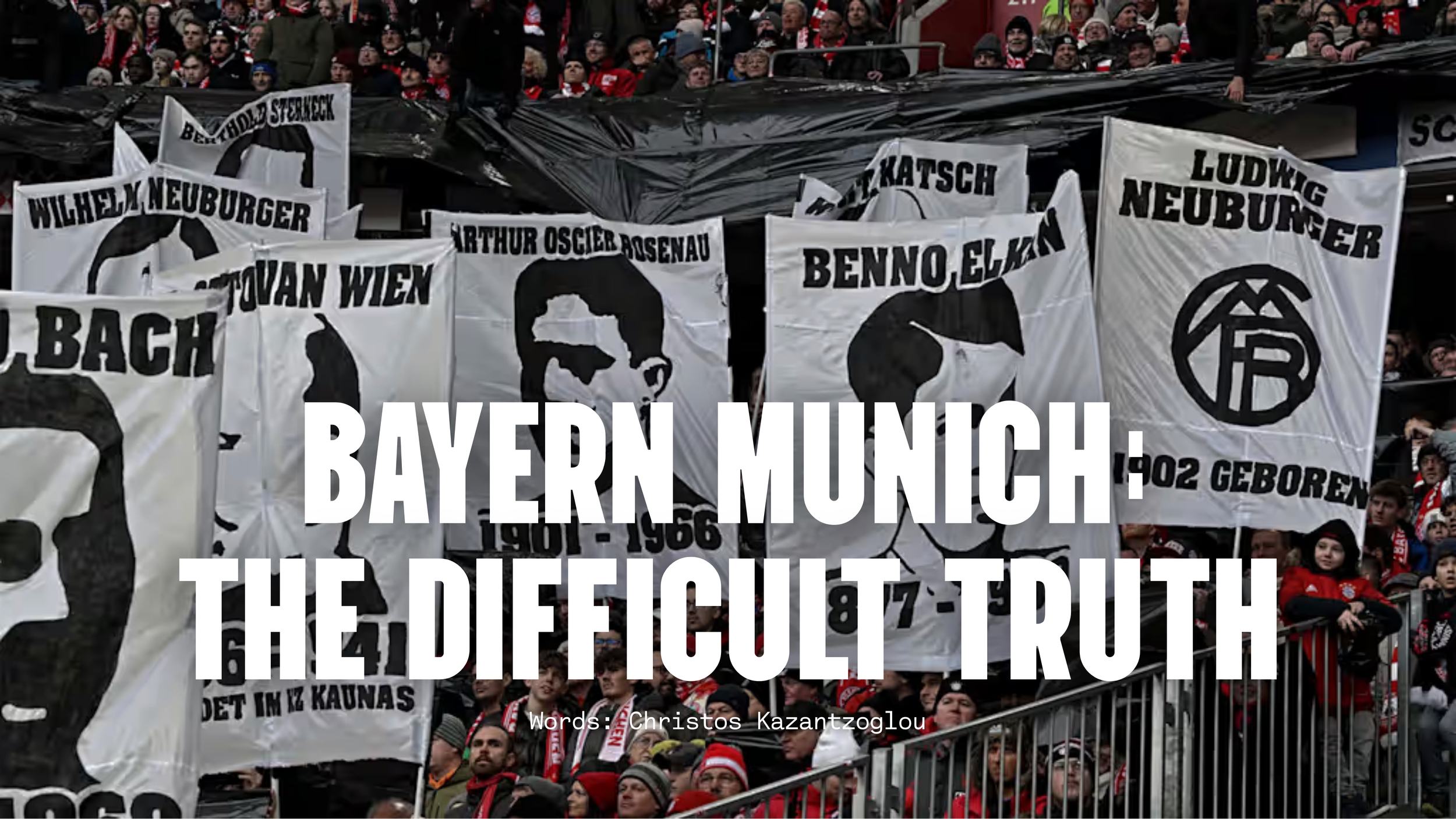
Change came slowly, and largely from the fans. Bayern’s Ultras were among the first to bring Landauer’s name back from oblivion. Banners with his image appeared in the stands. Memorial tournaments were organized in his name. His story began to be told again. A newspaper article about his nephew, Uri Siegel, in the early 2000s gave new momentum to the public discussion. Books, films, articles, and academic research followed.
In 2010, Bayern financially supported the construction of a pitch for the Jewish amateur club TSV Maccabi Munich, which was named after Kurt Landauer. The club museum at the Allianz Arena finally gave proper space to his story. Bayern began to publicly embrace what it had kept in the shadows for decades.
But this also creates a danger: replacing old silence with a convenient myth. The myth says Bayern was the Jewish, anti-Nazi club that resisted. Historical reality says something more complicated: Bayern had significant Jewish roots, lost important people to Nazism, and witnessed acts of courage—but it also adapted, excluded Jews, had Nazis in leadership, and operated within the regime. It is less heroic, but it is far more honest.
And perhaps that is exactly why it matters more. Because history is not a marketing campaign. It does not exist to make a brand look better. It exists to show what people do when they have choices. Some at Bayern chose adaptation. Some chose careerism. Some chose complicity. Some chose silence. Some—fewer, but real—chose friendship, dignity, or resistance.
Bayern was not unique. It resembled many other German clubs of the time. That does not excuse it. It places it in reality. German football was not an innocent refuge outside politics. It was part of society, and society was poisoned by Nazism. The stadiums, the boardrooms, the newspapers, the fans, the players—no one lived in a vacuum.
Today, the fact that shirts, scarves, and banners bearing Landauer’s name appear in the Allianz Arena matters. Not because it erases the past. It does not. But because it shows that memory can return, even after decades. And when it returns, it usually knocks hard.
The story of Bayern and Nazism is ultimately a story about how institutions remember, forget, and remember again. It is the story of a club built partly by Jews, made successful by a Jewish president, adapted to the regime that socially destroyed him, forgot him after the war, and eventually restored him to the center of its own narrative.
Kurt Landauer does not need canonization. He needs recognition. And Bayern does not need either demonization or whitewashing. It needs truth. Because great clubs are judged not only by the trophies in their cabinets, but also by whether they have the courage to face the shadows behind them.
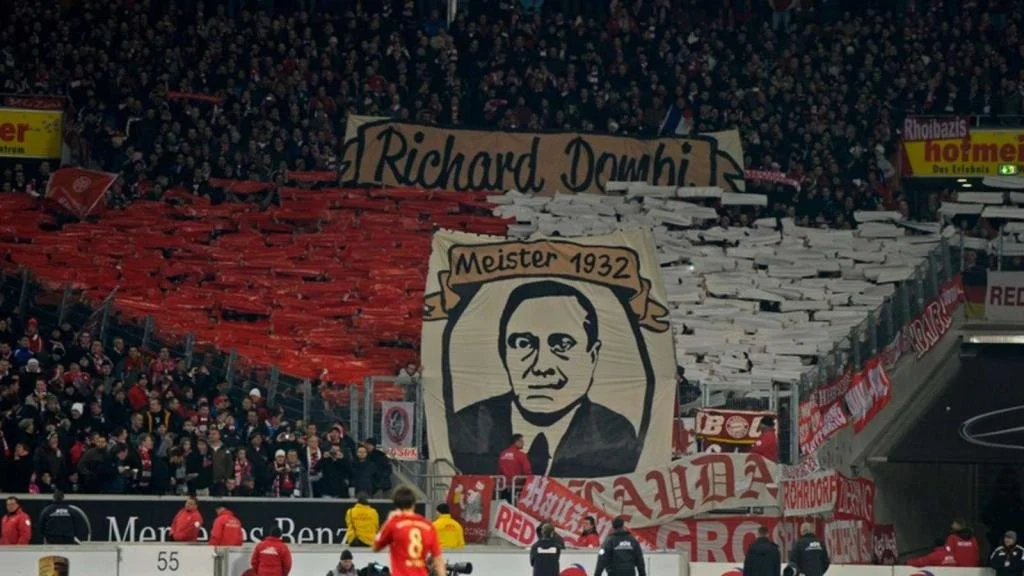
Richard Dombi, another influential Jewish figure from Bayern's past, is remembered in tifo by supporters.
Photo Credit: Biografien