

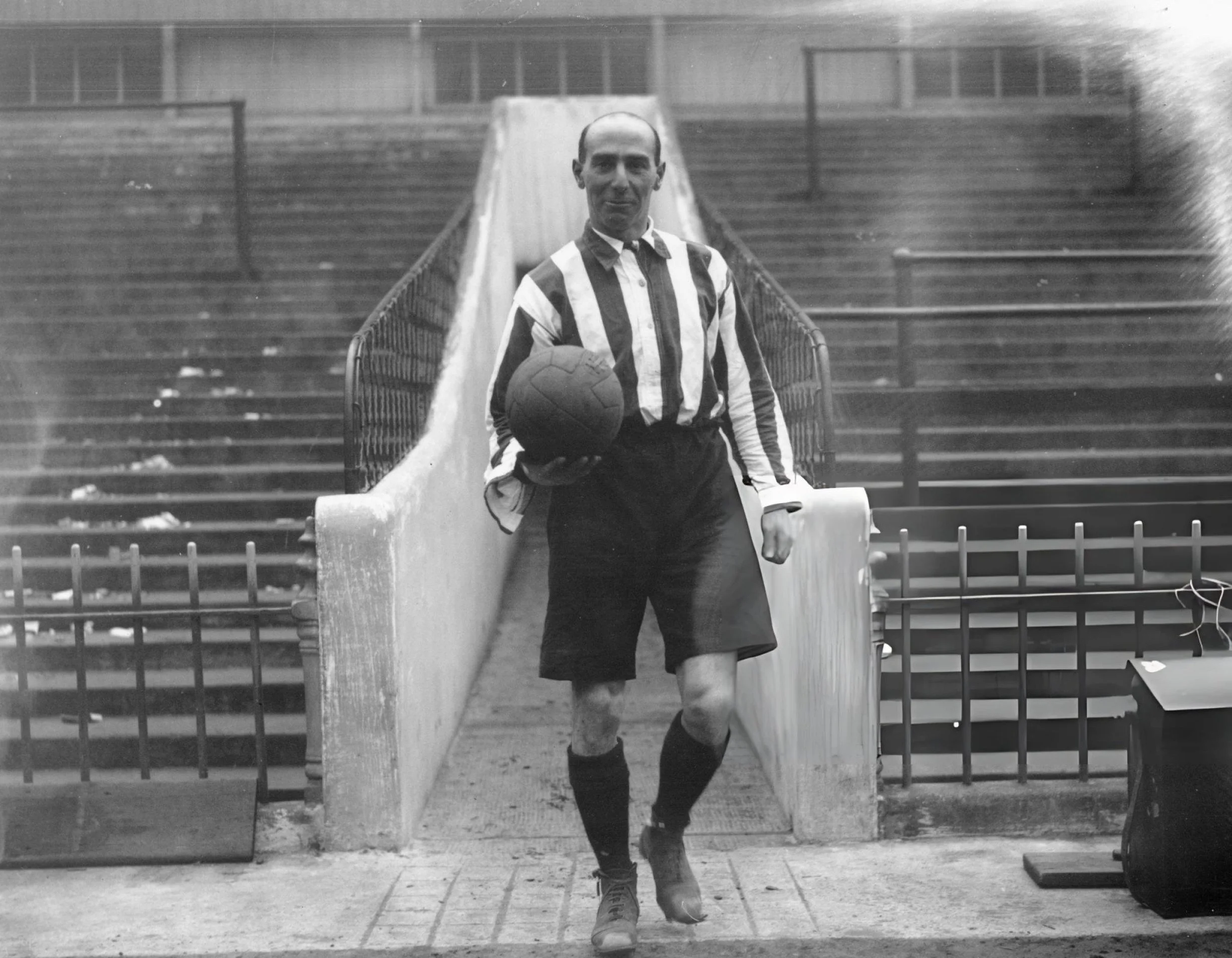
Words by David Moen | Published 19.12.2025Who was the first Irishman to captain an FA-Cup winning side?
This is a question that I have heard asked at various football table quizzes I have attended throughout the years and each time the answer given was Johnny Carey of Manchester United in 1948. All due respect to Johnny and Manchester United, but twenty-three years earlier Donegal-born Billy Gillespie captained Sheffield United to victory over Cardiff City.
Billy Gillespie was born in Kerrykeel, Co. Donegal on 6 August 1891. The son of a policeman, he made a name for himself in local junior football ranks and was quickly signed up by the Derry side Institute when he was 17. It was to be the start of an outstanding career for Billy both on the club and international front. He moved across the channel where his long stint in Yorkshire started at Leeds City in 1910, before he signed on the dotted line at Bramall Lane-based Sheffield for the local United side. It would be a match made in heaven as he would spend 20 years with the Blades, amassing over 130 goals in nearly 500 games as he went on to prove himself as one of the outstanding Irish players of all time.
The Donegal native suffered heartbreak; he missed the Blades’ FA Cup triumph in 1915 as he was out with a broken leg. But ten years later on 25th April 1925 Billy Gillespie captained the Blades to victory in the final against Cardiff City at Wembley Stadium. The scribes of the day were impressed;
“Sheffield United played wonderfully well but special praise is due to Gillespie, the man who waves a wand and whose influence has played such a vital part in United’s capture of the Cup.”
To date this is still Sheffield United's last major honour.
He even played his part in BBC Radio history – On January 22, 1927, the BBC broadcast a league match for the very first time – a game between Arsenal and Sheffield United. Gillespie scored United’s goal in a 1-1 draw at Highbury.
The Blades captain was equally influential for his country, scoring two goals on his international debut against England in 1913 as the Irish defeated England for the very first time in front of 30,000 people in Belfast. This was a period where Ireland international players were drawn from both sides of the border. He repeated the feat the year after, notching another two against the English as the Irish destroyed the Three Lions at Ayresome Park, Middlesbrough. The Boys in Green ran out 3-0 winners as they secured the Home International Championship for the first time with Gillespie scoring four times in the tournament.
Gillespie was a constant thorn in the side of the English; seven of his thirteen international goals came against England. That haul was an Irish record, which stood until 2004 when David Healy took his international total to fourteen goals. In total, Gillespie would win 25 Irish caps.
In 1932 Gillespie returned to Ireland to take over as manager of then Irish League side Derry City. As part of the deal taking him back to Ireland, Gillespie took a red and white team strip with him and Derry City adopted the colours, the candy stripes that we see them wear today. He led Derry City to two City Cup triumphs and on four successive occasions they finished runners up in the Irish League. When Gillespie left Derry City in 1941 he relocated to Bexley in Kent, where he died a month short of his 90th birthday in July 1981.
Thankfully his exploits were not forgotten in his homeland, and in 2013 the village of Kerrykeel unveiled a plaque in honour of one of it’s greatest sons, as members of Billy’s family as well as dignitaries from Sheffield United, Derry City, the FAI and the IFA gathered to pay homage to a man who deserves to be mentioned as one of the greatest Irish players of all time.
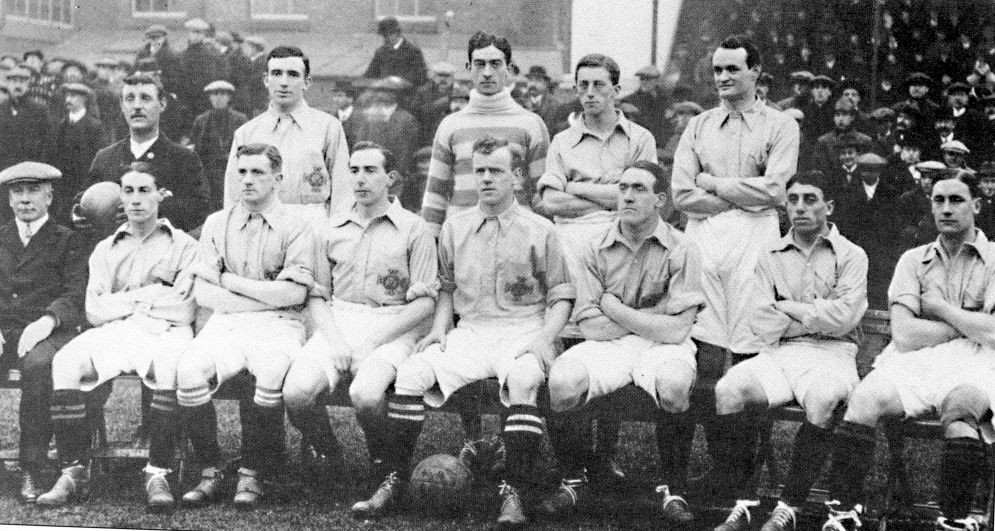
The Ireland squad who faced Wales in the British Home Championship, 1914. Billy Gillespie is 4th in from the left.
Photo Credit: WikiMedia Commons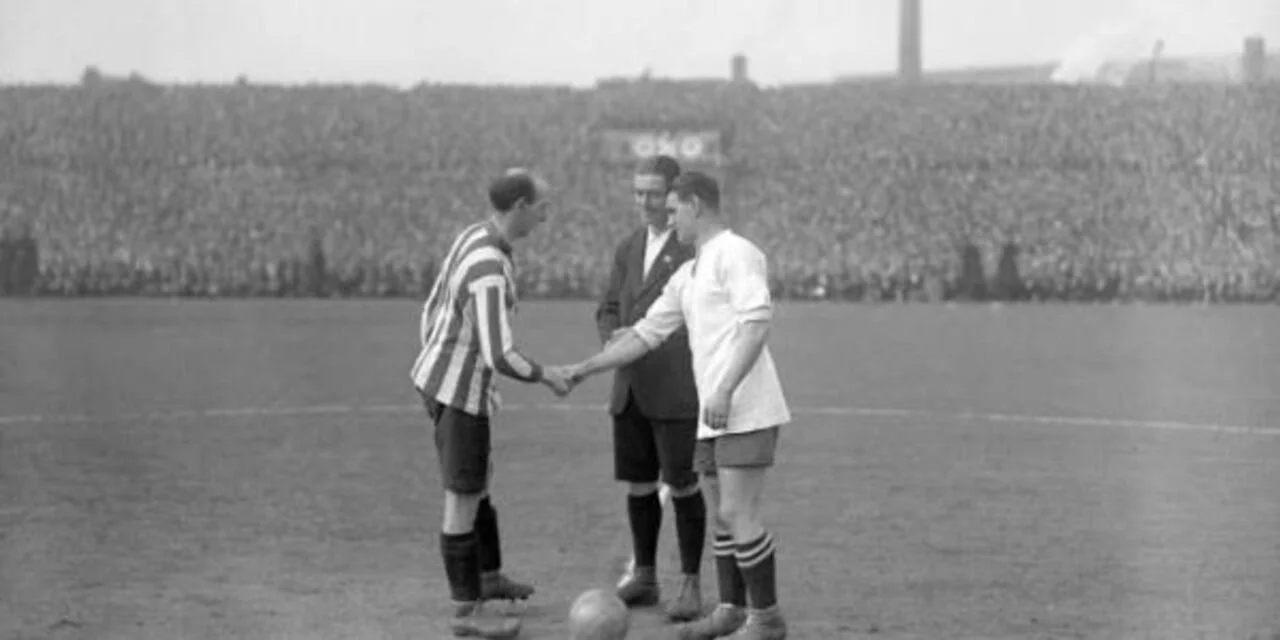
Billy Gillespie (left) shakes hands with Cardiff captain Fred Keenor before the 1925 FA Cup Final.
Photo Credit: Irish Examiner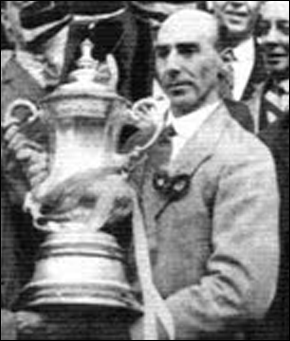
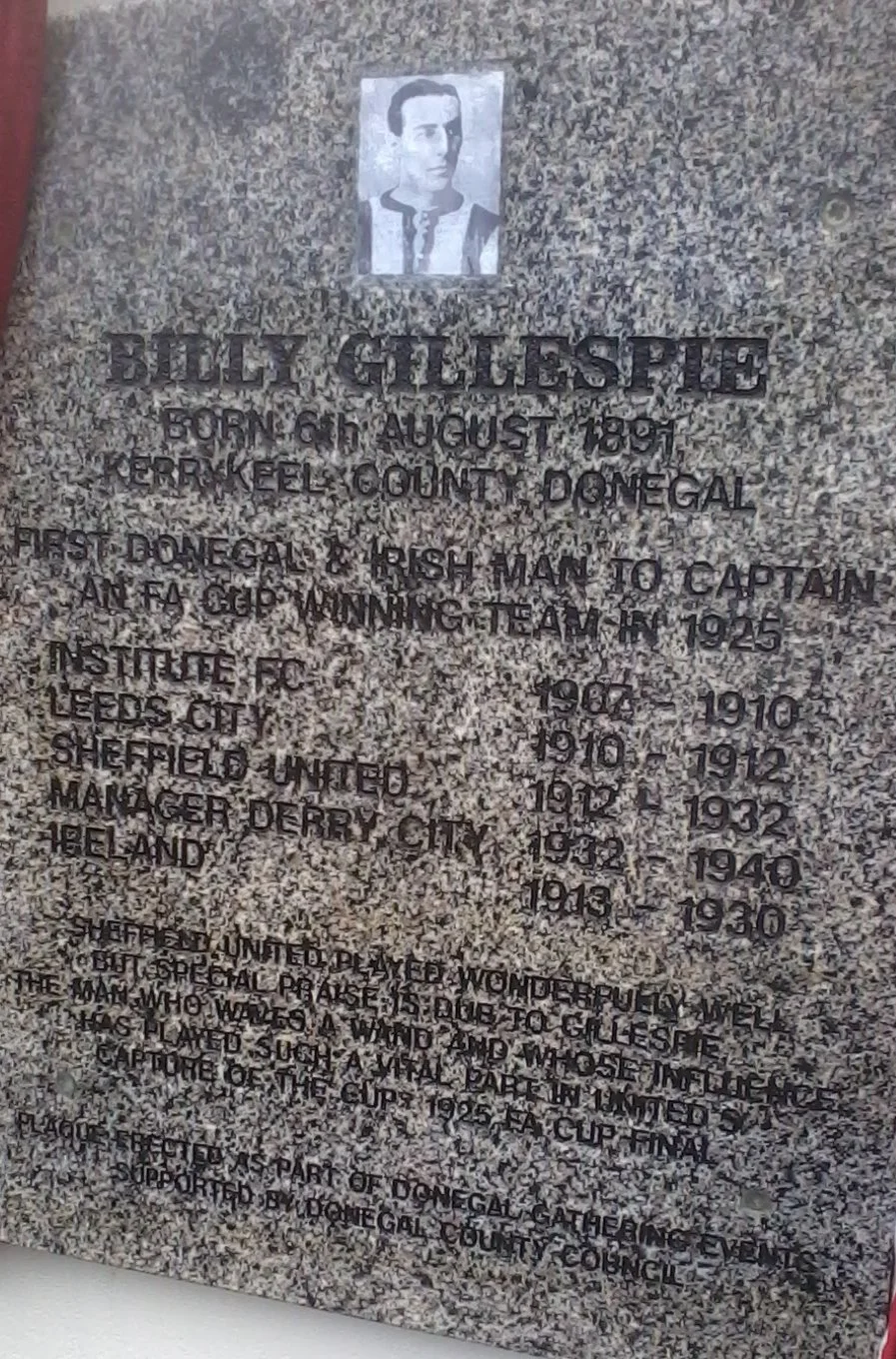
Left: Billy Gillespie with the FA Cup. Right: The plaque erected in honour of Billy Gillespie in Kerrykeel, Co. Donegal.
Photo Credit: David Moen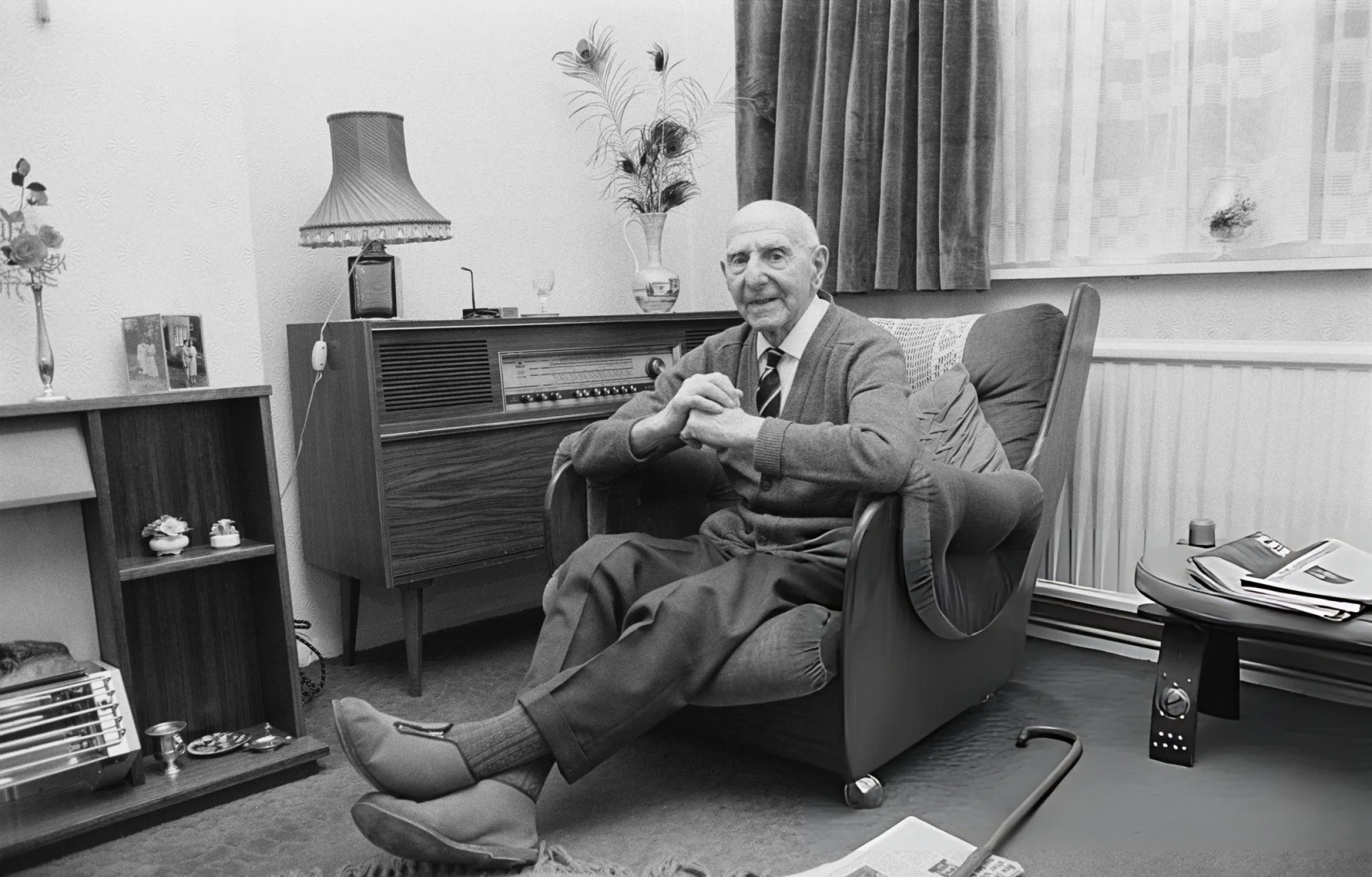
Billy Gillespie (left) at home, December 1980.
Photo Credit: Getty Images