

Words by Ben Cook | Published 22.07.2026In 1930, thirteen nations took part in the inaugural FIFA Football World Cup, hosted in Uruguay. At the time the tournament was a pioneering event, marking football’s movement to a professional sport that distinguishes itself from the Olympics.
FIFA president Jules Rimet envisioned the competition not as a commercial spectacle, but as an international celebration of a rapidly growing and globally popular sport.
At a time when Europe was still recovering from the devastation of the First World War and the financial crisis, the World Cup was intended to unite nations through football rather than politics. Nearly a century later, that idea seems increasingly invisible in the modern tournament.
By 2034, the World Cup will have transformed from a 13-team competition into a 48-team global entertainment powerhouse hosted in Saudi Arabia. In the space of just over one hundred years, the tournament has evolved into the most commercially valuable and politically influential sporting event on earth.
Since 2018, the World Cup has been hosted in Russia, Qatar, and soon Saudi Arabia and the United States; states that have all faced criticism over human rights, political repression and corruption. Yet rather than damaging FIFA’s product, these tournaments showcased the extraordinary modern value of hosting the World Cup. For governments seeking international recognition and influence, football’s magnum opus has become the ultimate tool of image improvement.
This process is called “sportswashing”: the use of sport by states, corporations and political actors to improve reputations, distract from controversy and gain legitimacy through association with popular sporting institutions.
We see it all over football: PSG are owned by Qatar, the Saudi Public Investment Fund own Newcastle FC, and until recently Russian energy company Gazprom were the official sponsor of the UEFA Champions League. Although football is by no means the only sport guilty of this, its global reach, emotional power and enormous audience make it uniquely attractive to states seeking legitimacy on the international stage.
However, it is important not to reduce this argument to a Eurocentric narrative which portrays football as “pure” before being corrupted by wealthy non-European states. The game has always been political, international and deeply connected to money.
Rimet intentionally pushed for the inaugural World Cup to be held outside Europe because he believed football belonged to the world, not merely its traditional powers. The rise of professionalism in the early twentieth century had already transformed football from an amateur pastime into a commercial enterprise long before middle eastern money entered the picture.
If anything, the modern era may simply represent the logical conclusion of trends embedded within FIFA since its earliest iterations.
Officially, FIFA presents itself as a non-profit organisation (I know, but they actually do say this) devoted to the development of global football. In reality, the World Cup now generates billions in broadcasting, sponsorship and commercial revenue for FIFA while serving as one of the most powerful geopolitical platforms in modern sport.
FIFA’s personal broadcasting, advertising and ticket sale revenues have risen 230%, 367% and 1126% respectively since 2006. The question is no longer whether football and politics mix, but whether the World Cup can still genuinely represent international unity in an age where hosting rights are inseparable from wealth, influence and state power.
So, how did we get here?
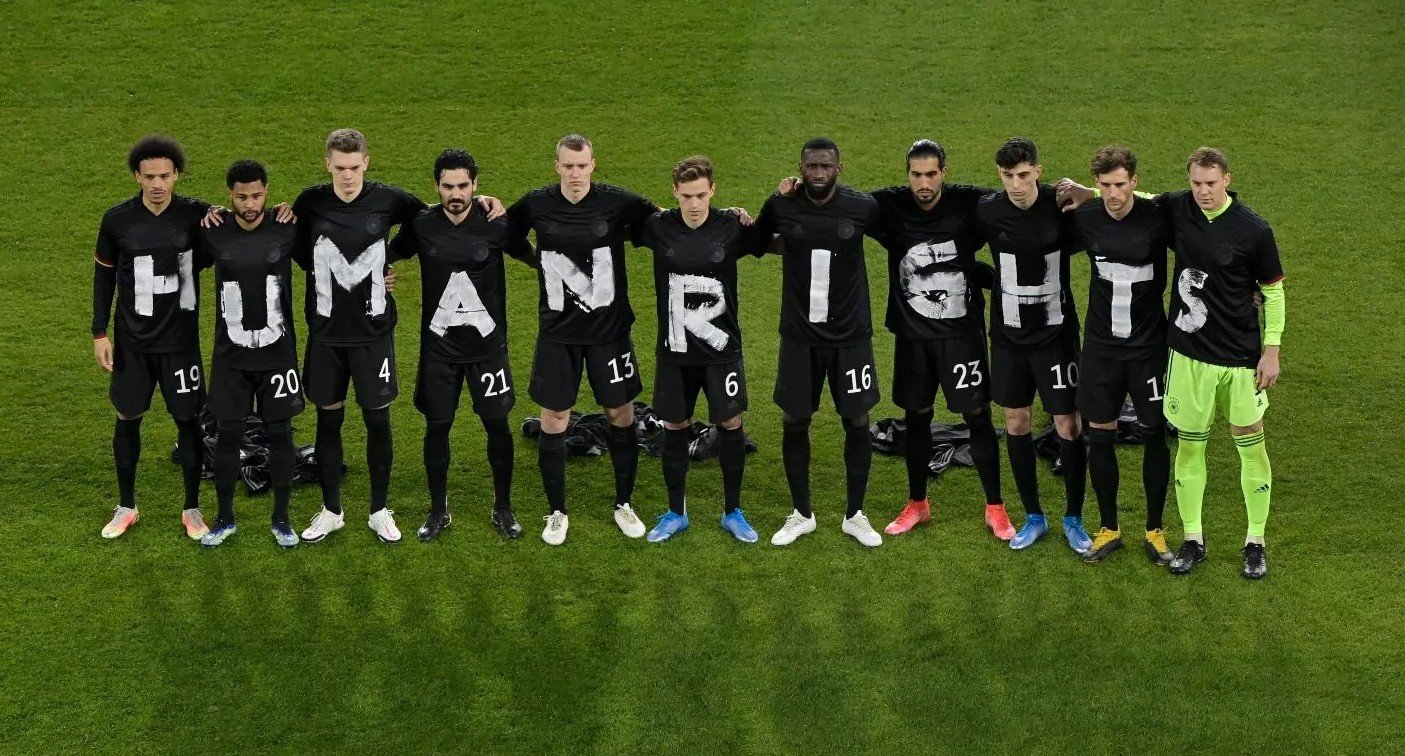
Qatar 2022 saw players, associations and governments call for the World Cup to be boycotted.
Photo Credit: ESPN
The origins of the World Cup were rooted not in wealth, corporate sponsorship or geopolitical ambition, but rather in a belief that football could become the world’s first truly global sport. In the late 19th and early 20th centuries football spread rapidly; and matches between nations became increasingly common.
International fixtures such as England v Scotland in the 1870s demonstrated the growing appeal of football beyond local club competitions, while South American countries such as Uruguay and Argentina quickly developed passionate football cultures of their own. By the early 20th century, football had become capable of transcending borders and cultural boundaries.
In 1904, officials from a handful of European football associations came together to create FIFA. The association was created as a nonprofit governing body designed to manage international competition and codify the rules of the sport.
Although initially run by European nations, FIFA quickly turned their attention internationally. The Olympics provided football with its first truly global stage, and tournaments during the 1924 and 1928 Olympic Games attracted an enormous amount of interest.
However, Olympic football remained restricted by amateur regulations, preventing many professional players from competing. This tension reflected a wider transformation taking place across global sport.
Football was evolving from an amateur game into a professional mass spectacle that was capable of attracting huge crowds and generating significant revenue. FIFA increasingly recognised that football required its own independent international competition.
The driving force behind this vision was Jules Rimet, the French FIFA president who would later have the World Cup trophy named after him. Rimet believed football possessed a unique ability to foster international cooperation during a period that politically was marked by nationalism, instability and the lingering effects of the First World War.
Inspired by the unifying power of the Olympic Games, he envisioned an international football tournament that could stand alone to bring nations together through sport. Unlike many sporting competitions at the time, the proposed tournament would not simply be a European championship with invited guests. Rimet wanted football to become the first genuinely global game.
This new drive and vision was the reason behind FIFA’s decision to award the hosting rights to the first World Cup to Uruguay. This choice was symbolic as much as it was practical or meritocratic.
Uruguay undoubtably deserved it after winning gold n the Olympics in ’24 and ’28, yet their deeply embedded footballing identity and the centenary of their independence from colonial rule were arguably more influential factors.
Choosing a South American nation to host over a European one was a deliberate demonstration of FIFA’s aim to ensure the World Cup did not become another Eurocentric sporting event. The decision challenged ideas of
European ownership over the sport and reinforced its global reach.
Although Uruguay did provide a logistical problem for many European nations, who amidst the Great Depression struggled to find the money to travel across the Atlantic to South America.
This led to many countries withdrawing and ultimately led to only four European sides competing in the tournament, England not being one of them. This meant the inaugural World Cup was comprised of thirteen nations from three continents.
This shows how the 1930 tournament represented more than just a football tournament. Countries separated by oceans, that had recently been at war with each other, overcame their cultural differences and came together in a way that during the First World War would have seemed impossible.
It is hard to overestimate what a culturally significant historical moment this really was, it established a blueprint for modern sport and showed that football truly could unite the world.
However, the first tournament did contain early warning signs for the future we are currently in. The international appeal, emotional significance and ability to attract attention were exactly what later made the World Cup so politically and commercially valuable.
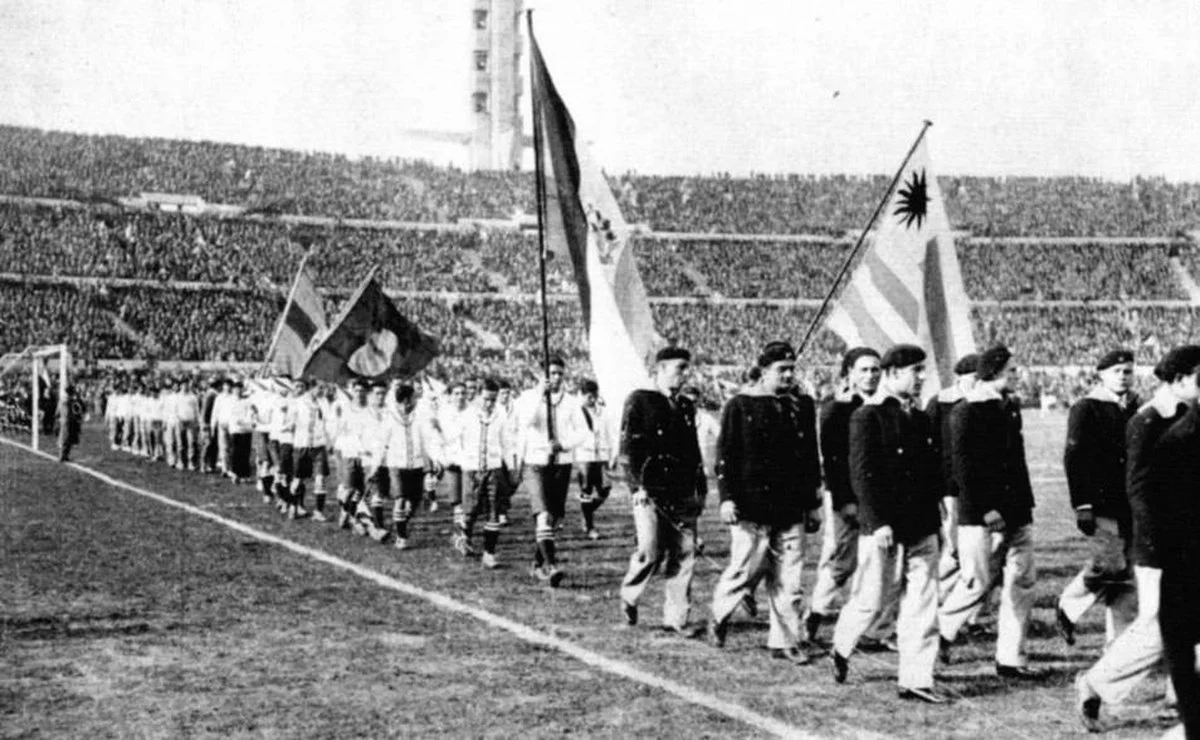
Uruguay understood the historic and cultural weight of hosting the first World Cup.
Photo Credit: Getty
If the origins of the World Cup were shaped by visions of international cooperation and unity, the modern tournament is shaped by corruption. This transformation cannot be narrowed down to a single person (as much as I’d like to pin it all on one or two people) or event, it is the culmination of a gradual shift of general football culture, mixed with officials who were more than willing to turn a blind eye to red flags.
At the heart of this transition is Sepp Blatter, FIFA president from 1988 to 2016, whose reign became synonymous with a prioritisation of money over integrity. As the World Cup expanded into the most watched sporting event in history, hosting rights, sponsorships and broadcasting deals became exponentially more lucrative.
FIFA having total control over all of these decisions gave them an extraordinary amount of power inside and outside of the sport. In 2006 FIFA announced that the host nation of the tournament would no longer receive the ticketing revenue for matches, thus further centralising financial power.
The World Cup increasingly represented a commercial opportunity rather than a sporting one, as income and brand exposure became as important as score lines.
This commercialisation coincided with the advent of state-owned football clubs such as the afore mentioned PSG and also Manchester City being used as vehicles for soft power from gulf states.
Although arguably FIFA didn’t just follow this trend, they instigated it. From tactical innovation to technological advancements, football often leads where other sports follow - being the richest sport globally by a distance it is able to trailblaze and break barriers earlier than other sports.
The awarding of the 2018 and 2022 World Cups to Russia and Qatar arguably signalled to the rest of the sport that integrity and history was now for sale to the highest bidder.
Although Chelsea and Manchester City’s takeovers proceeded the 2010 awarding, it is clear that FIFA had legitimised much of the new state-backed sportswashing we see today across sport, such as LIV Golf and Ryiadh Season.
The clearest exposure of FIFA’s corruption came in 2015, as seven FIFA officials were arrested in Zurich following a multi-year investigation led by the FBI. This represented a historic moment in football as what many believed already was confirmed, FIFA had been taking bribes.
The arrested officials were accused of taking $150m worth of bribes in connection with FIFA run competitions.
The investigation included allegations involving some of FIFA’s biggest commercial partners. For example, it was alleged that Nike had paid over $40m in bribes to secure the exclusive kit rights for the Brazilian national team.
Additionally, there was strong evidence to suggest that the awarding of the 2010 World Cup to South Africa and the FIFA presidential elections that year were subject to heavy bribery and extortion. It was also revealed that in 2010 United Kingdom’s Prince William and Prime Minister David Cameron met with FIFA Vice-President Jack Warner to discuss vote-trading for England’s bid to host the 2018 tournament.
Moreover, in 2011 a former Qatari Football Association official claimed that she had be told to give over $1.5m in payments to African FAs to secure votes to host the 2022 World Cup.
She did later retract these allegations, claiming she made them up for “media attention”; only to go back on her word again once in FBI protected custody. She claimed that she was forced to say that she had made up the bribes after her safety was threatened. FIFA, class act as always.
I actually don’t have time to go into all the revelations from this case, but I implore anyone reading to read into it themselves, it’s somehow worse than whatever you’re imagining.
The scale of the scandal was unprecedented, of the 44 people eventually indicted, 43 either pled guilty or were convicted - the 44th remains a fugitive to this day. The investigation did not simply expose individual corruption; it shattered the illusion that FIFA’s problems could be blamed on a few “bad actors.”
Instead, it revealed a governing structure in which immense financial power, political influence, and weak accountability had combined to create a culture where corruption could flourish for decades.
By the 2010s the World Cup had morphed from the greatest sporting event on earth, to the most valuable commercial asset in sport - and one increasingly dictated by revenue maximisation and corruption rather that the principles upon which it was founded.

FBI agents take evidence of corruption from FIFA's headquarters in Zurich, 2015.
Photo Credit: ABC News
In 2010, FIFA awarded the hosting rights to the 2018 World Cup to Russia, a country known for political violence, corruption and social intolerance. FIFA immediately received numerous complaints from various women’s and LGBTQ+ fan groups expressing concern over the safety of female and queer fans in Russia.
Amnesty International wrote a letter to FIFA in 2016 in which they strongly suggested that the tournament was not safe for female fans. They cited investigations which report that over 30,000 women a year in Russia are either killed or sold into slavery by men - and that female tourists were among those most vulnerable to kidnapping and sex trafficking.
Additionally, in 2013 Russia outlawed the promotion of “nontraditional family values”, effectively making any sort of public acknowledgement or support of queer lifestyles illegal.
This is one example of a heavily evidenced homophobic culture in which gay football fans are not safe. In response to this, FIFA and the Russian FA introduced a “safe space” for LGBTQ+ fans in St Petersburg, this space was the first of its kind at a World Cup and seemed to be a genuine step in the right direction from FIFA, showing how football can break down barriers and spearhead social change. The space was shut down by local government officials the day before the tournament began.
Moreover, many human rights groups and NGOs saw Russia’s annexation of Crimea as a war crime and believed that FIFA allowing them to host the largest sporting event in the world was an effective cosign of a clear breach in international law.
FIFA’s response to these concerns was firstly to outright refuse to reconsider Russia as hosts. However, in 2017 they did adopt a formal human rights policy, closely aligned to the UN Guiding Principles on Business and Human Rights and acknowledging that they had a responsibility beyond sport.
And as you can guess, they upheld this policy unilaterally and there has never been a human rights concern at a FIFA tournament since, the end.
(Insert Frank Lampard smiling then serious face meme), no but seriously, I doubt this policy has been so much as glanced at since 2017. One thing you must remember about FIFA is that first and foremost it is a propaganda machine.
Since the Blatter days their sole purpose has been to maximise its revenue and keep their PR as positive as possible; tough to see why Infantino and Trump get along so well.
These issues did not end in Russia. In 2010 FIFA also awarded the hosting rights for the 2022 tournament to Qatar. Now, this is when I feel it’s important to address a criticism often given to the viewpoint I am taking.
It is often said, mostly by FIFA spokespeople, that my point of view is Eurocentric and small minded. That by criticising “growing the game” I am effectively gatekeeping football to Europe and South America, and that FIFA are making football more globally accessible by hosting the World Cup in new continents. In response to this, I would say that FIFA are mightily lucky that the places that the game needs to be grown into also happen to be petro-states willing to offer officials millions of dollars for the privilege.
Back to Qatar. It is a small, largely oil-funded nation in the middle east, ruled by the Al Thani family since the 19th century. Its main sports historically are camel racing and falconry, not football.
In fact, only 1 of Qatar’s starting 11 in their opening game was born in the country. However, this shocking lack of footballing history and heritage is not the main issue with the 2022 tournament.
Firstly, in Qatar homosexuality is not only illegal, but punishable by death for
Muslims and Qatari nationals. Moreover, women in Qatar require “male guardianship” in order to marry, travel abroad, access healthcare and receive legal advice.
This just confirms beyond any unreasonable doubt that FIFA’s morals are for sale, the safety of fans and the general movement of social acceptance that seemed almost a given in 21st century football was in fact for sale.
Furthermore, there is another human rights issue that arises with the 2022 World Cup, the stadiums. Between 2010 and 2022, seven of the eight host stadiums were built from scratch, with the eighth being significantly renovated.
Given the cost of hosting a tournament in a country with no sporting infrastructure was already high (let’s not forget all those bribes the Qataris had to pay too), the hosts looked to cut costs in stadium construction.
This meant acquiring cheap labour. Now, we are getting into the weeds here as there are extremely varying reports on how much the builders were being paid. On the one hand, you have independent career journalists using empirical evidence such as verified payslips which show workers being paid as little as $140 per month; on the other hand, the Qatari royal family claims workers earned $4,300 per month plus food and housing.
Tough to know who to believe. Regardless of this, it was proven before the tournament that many builders and construction workers had their passports confiscated and were not paid at all until they left. There’s a word for this, slavery.
So, upon hearing that Qatar was using modern slaves to maximise their profit from a sporting event broadcast across the world, what did FIFA do? I’m sure by now you can guess that the answer is absolutely nothing.
The issue with this isn’t necessarily state involvement, it’s that countries that need to spend billions of dollars improving their public image, are usually doing some morally indefensible things, such as killing journalists or murdering political rivals.
And when organisations such as FIFA take the game we love, and sell it to these states, our game becomes a front for some of the most evil people on the planet. That’s how we end up with a man who threatens genocide on innocent populations being handed a “FIFA Peace Prize” - because governing bodies turn a blind eye. This is where football is now.
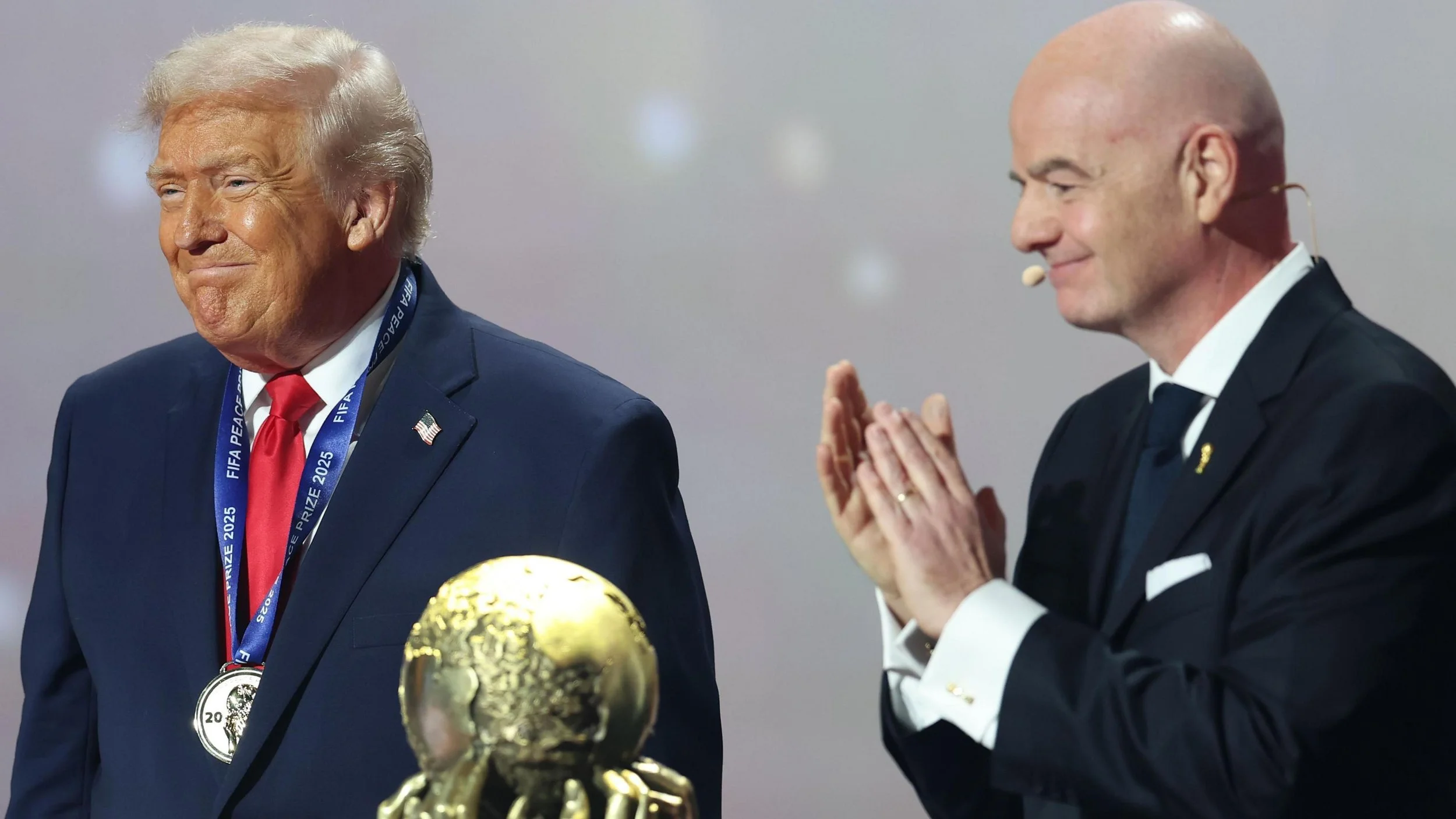
Donald Trump was named the inaugural winner of the FIFA Peace Prize.
Photo Credit: BBC
In writing this article, I was lucky enough to interview Johnny Kay, the co-owner of football media brand VERSUS who are responsible for written and digital media concerning football, fashion, music and lifestyle.
For this section on the responsibility of brands in the current state of the World Cup and football I will be focusing on his words.
VERSUS put out a statement in late 2025 detailing what they referred to as the “historic embarrassment” of FIFA handing US President Donald Trump their inaugural peace prize and said, “For anyone still clinging to the fantasy that ‘football isn’t political’, let this be your final wake up call”.
It was not only refreshing to hear such a significant voice in the modern game speak out so clearly, but also impactful and resonant. It is hard for us as fans to have our voices heard, especially when the people we are shouting at have their ears covered by hands dripping with blood and oil.
Kay and I both agreed that more brands should follow in VERSUS footsteps and speak up for fans.
As I’ve touched on, fans from around the world feel disillusioned with modern football and have no realistic way of being listened to. This is an issue across the board, we see fans protesting their clubs’ owners in every league in every country across the world.
I would go as far to argue that having their voices ignored is the biggest grievance of modern football fans. We get VAR when we don’t want it, they extend the UCL to swindle us for more money, they sell our club to foreign investors who have never been to our cities, they make us travel to places we are not safe in to support our teams - it’s not good enough.
The only power fans have to cause change is to completely withdraw; don’t go to games, don’t buy a shirt and most of all don’t pay for Sky Sports. When speaking to Kay, he expressed his belief that expecting this is asking too much of fans; football is all that a lot of people have and it’s their only time to forget about their problems.
We both agreed that the nation is never rocking like it is when England are going deep into a tournament, and this is the last thing football can afford to lose.
So, what can be done? Kay believes that the responsibility to uphold morals in football lands at the feet of brands; he spoke very candidly and openly about his own internal battle between wanting to grow the business he loves and standing up for what he believes is right.
He was very clear that brands that partner with FIFA and other corrupt footballing bodies are complicit in the moral abominations I’ve detailed. I would take this a step further and encourage fans to try and steer away from brands that partner with FIFA and the World Cup this summer.
I’m aware this article has been very doom and gloom, and that reading this probably hasn’t caused a whole lot of World Cup fever. I would like to clarify I will be watching and supporting England proudly this summer.
I asked Kay to give a message of hope to fans that are feeling disconnected from the tournament and potentially not as excited as they have been before.
His message was an uplifting one of unity and excitement, reminding us all that those moments in the pubs, living rooms and fan parks truly are the best of this great nation, and no one can steal our game while we still have that.
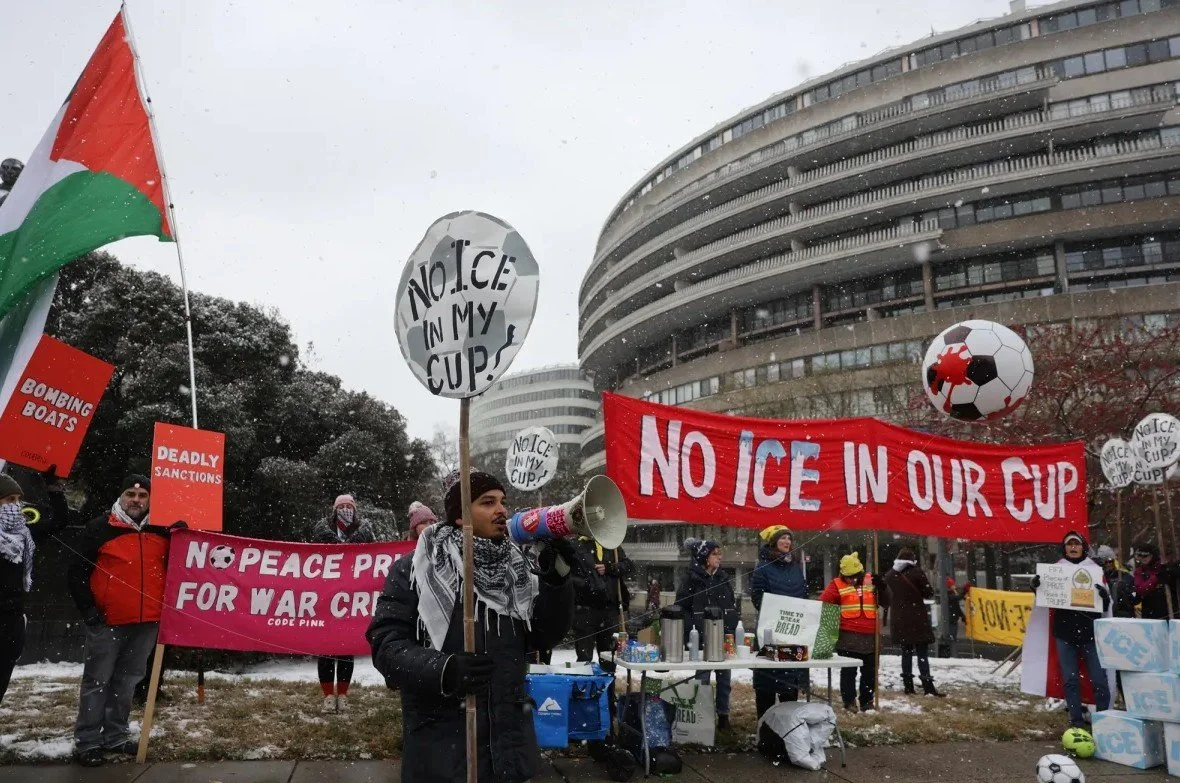
Protests surrounding the issues of World Cup 2026 have been widespread in the United States.
Photo Credit: The American Prospect
To conclude, the tragedy of the modern World Cup is not that we’ve failed to “keep politics out of football” (by far the phrase that winds me up the most), it has always been political. The real tragedy comes from the values once associated with the tournament - openness, unity, cooperation, acceptance, culture and joy - now feel like a discarded afterthought, replaced with money, reputation and state power.
What began in Uruguay in 1930 as a bold attempt to bring nations together through sport has evolved into the most powerful branding exercise in global entertainment. The World Cup has always given us tear-jerking moments, elation and unmatchable joy; just now it also gives us scandal, human rights abuses and billion-dollar political agendas.
And yet, despite everything I’ve detailed in this article, football still matters. That is exactly why organisations like FIFA are able to wield such extraordinary power in the first place. No other cultural institution can command the same emotional investment as football.
Governments understand this. Corporations understand this. FIFA understands this better than anyone. The World Cup is valuable because people care about it more than almost anything else.
Billions of people across the world tune in not because they support sportswashing and corruption, but because football still possesses an ability to create collective emotion and identity that can’t be found anywhere else.
This is why fans are so angry. Not because football is changing, its always changed, from the day of back-passes and no offsides to “contact with consequence” somehow being part of our daily vernacular.
We’re angry because with every tournament awarded to a petro-state, with every corruption scandal, we feel like the game that belongs to us is being taken away. The commercialisation of football has created a situation where supporters provide the culture, passion and, most importantly, money while governing bodies and investors extract the value.
And yet we still have reasons to be optimistic, the response from brands, independent media companies and supporters themselves demonstrates that football’s moral direction is not entirely controlled from the top down.
Voices such as Johnny Kay and VERSUS show that there is still space within modern football culture to challenge corruption and demand accountability. Fans are more politically aware than ever before, and the idea that “football isn’t political” becomes harder to sustain with every tournament cycle. That awareness matters because the image FIFA sells depends entirely on public participation. Without fans, there is no spectacle to market.
That is the contradiction at the centre of the modern World Cup. Even as FIFA hijack our game and multinational corporations try to use it for political and commercial gain, the sport itself still belongs to normal people.
The elation when Harry Maguire nods one in from a corner and the pub explodes, celebrating covered in beer with people you’ve never met before and feeling the whole stadium hold its breath as the ball sails through the air cannot be manufactured by sponsors or bought by governments.
Those moments are the real football, and they are as powerful now as they were in 1930.
Jules Rimet imagined football as a force to unite the world. In many ways he was right, but in hindsight maybe he was too right.