

Words by Jonee | Published 25.02.2026The connection between English football and Portuguese football is a tapestry woven from centuries of shared history, cultural exchange, and sporting evolution. Long before football became the global language it is today, England and Portugal had already forged what is widely recognised as the oldest continuous alliance in the world, formalised in 1373 and renewed by the Treaty of Windsor in 1386, an agreement of mutual cooperation and shared purpose that has endured through wars, dynastic upheavals, and the ebb and flow of empires.
Centuries later, long after the battlefield had given way to other arenas of influence, the beautiful gam emerged.
Football in England developed in the 19th century out of a branching network of local folk games, school rules, and codified competitions, culminating in the creation of the Football Association in 1863. From that foundation sprang leagues, clubs, and a culture of professional competition that quickly became a social institution. This was a game where physicality, tempo, collective effort, and a visceral connection between fans and their local teams became defining characteristics.
Across the southern edge of continental Europe, Portugal’s football story unfolded in parallel, shaped as much by its geography and social structure as by English influence. Football arrived in Portuguese port cities in the late 19th century through British merchants, sailors, and students returning from education in England, sparking the formation of clubs such as Sport Lisboa e Benfica, Sporting Clube de Portugal, and Futebol Clube do Porto, which would come to dominate the Portuguese domestic game.
For much of the 20th century, Portuguese football existed in a parallel world to its English counterpart. It had its own traditions, rivalries, and stars, but for external observers and practitioners the interaction between the two countries’ football cultures was limited. That began to change gradually as the European game matured and international competition brought clubs into contact across borders. Portuguese teams competing in the European Cup (later the UEFA Champions League) and other continental competitions faced English champions and began to forge a reputation for technical proficiency and tactical intelligence.
One of the earliest and most famous crossroads for Portuguese and English club football occurred on 29 May 1968, when Benfica faced Manchester United in the European Cup final at Wemble. Benfica, already a force in European competition with two European Cup triumphs earlier in the decade, took the field against Manchester United, themselves a club rebuilding following the Munich air disaster of 1958. The match drew over 92,000 spectators, and pitted two footballing traditions against one another on the biggest stage. Manchester United won 4-1 after extra time, becoming the first English side to claim Europe’s premier club trophy and energising the European ambition of English football while cementing Benfica’s global reputation as one of the continent’s most respected sides.
That match was a moment that showcased how the tactical, technical style associated with Portuguese clubs could both challenge and enrich the English perception of the game. Benfica’s presence in multiple European finals of that era signalled that Portuguese football was capable of competing at the highest level, and its encounters with English opposition laid early groundwork for a footballing dialogue that would intensify in the decades to come.
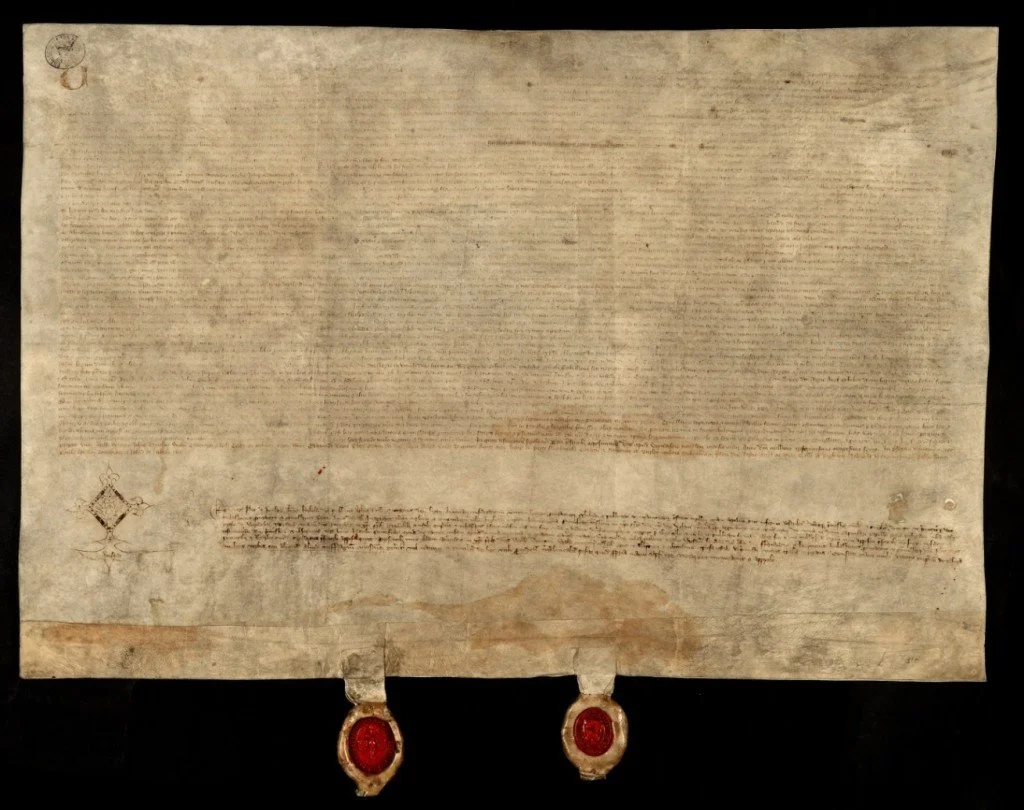
The Treaty of Windsor, signed on May 9, 1386, which established the Anglo-Portuguese alliance.
Photo Credit: Gov.uk
While clubs met occasionally on the continental stage, a deeper and more sustained connection began to take shape in the late 20th century as players and managers crossed the channel. Portuguese football’s internal focus on youth development — a necessity borne out of financial limitations — meant that it honed a distinct approach to coaching fundamentals: technique, intelligence on the ball, and tactical flexibility.
English football, long characterised by its own set of values — physical readiness, tempo, and direct play — began to open up in the 1990s with the advent of the Premier League and the massive expansion of television revenue. The league’s growing financial power coincided with regulatory changes that made it easier for foreign players to play in England, prompting a new era of international recruitment that would see Portuguese talent enter the English game in increasing numbers.
Early Portuguese arrivals were not numerous, and they often had to adapt quickly to the unique demands of English football. Luis Boa Morte became one of the first Portuguese players to make a sustained impact in England when he signed for Arsenal in 1997 and later starred at Fulham. Boa Morte’s work rate, pace and commitment exemplified the adaptability required of foreign players in the Premier League, but his success also signalled a broader shift: English clubs were beginning to value the technical and tactical qualities Portuguese players brought with them, not just their athletic attributes.
Other players such as the legendary Paulo Futre, who signed for West Ham in 1996, Sérgio Pinto at Bradford City in 1995, Luís Cavaco at Stockport County in 1996, former FC Porto player Rui Neves at Darlington in 1995, and Fernando Nelson at Aston Villa in 1996, among others, made the journey into English football across its various levels. While many of these players struggled to adapt and did not enjoy long or successful spells, their presence nevertheless marked an important opening of the door. Collectively, they helped normalise the idea of Portuguese players in the English game and laid the groundwork for future generations to showcase their talent in England.
The transformative figure in this movement was Cristiano Ronaldo. When Manchester United signed the teenage winger from Sporting CP in 2003, few could have imagined the superstar he would become. In England, Ronaldo refined his physical conditioning and tactical sense, transforming into one of the most complete players of his generation.
His impact went beyond goals and trophies; he embodied a blend of technical innovation and relentless professionalism that challenged English clubs to expand their recruitment horizons and rethink how they developed wide attackers and creative forwards. Ronaldo’s success encouraged English clubs to look more seriously at Portuguese talent, knowing that the technical refinement cultivated in the Portuguese system could translate into success in the rigours of the English game.
Ronaldo was followed by a generation of Portuguese players who established themselves in England and helped shift perceptions of what the league valued. Nani’s creativity and flair at Manchester United delighted supporters, while defenders like Ricardo Carvalho at Chelsea demonstrated that positional intelligence and tactical discipline could flourish in the physically demanding Premier League.
Carvalho, in particular, challenged stereotypes about defending in England, blending anticipation and composure to become one of the most respected centre-backs in the league. Bruno Fernandes’ arrival at Manchester United years later provided a different dimension; his vision, goal threat, and leadership transformed his team’s midfield dynamics and highlighted the importance of tactical sophistication and creative orchestration in the modern game. Wolves became a natural landing spot for several Portuguese talents — Rui Patrício, João Moutinho, and later Diogo Jota — further deepening the Portuguese imprint on English football.
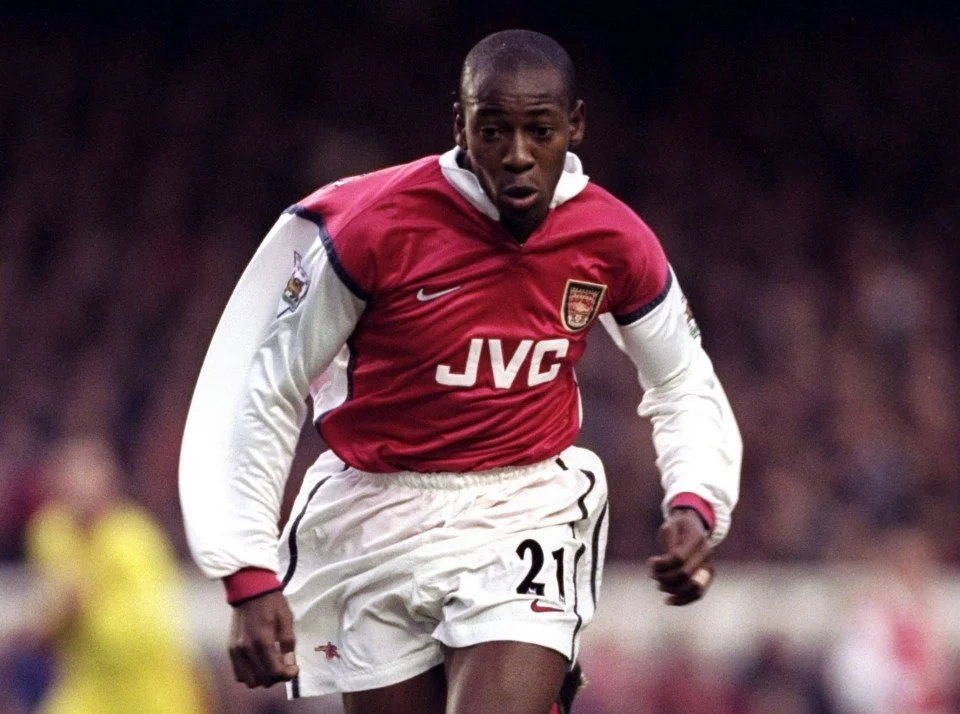
Luís Boa Morte during his time at Arsenal.
Photo Credit: TalkSport
This movement of players was matched by an equally important movement of ideas through managerial influence. English managers, such as Randolph Septimus Galloway, have had a long and meaningful impact on the Portuguese game.
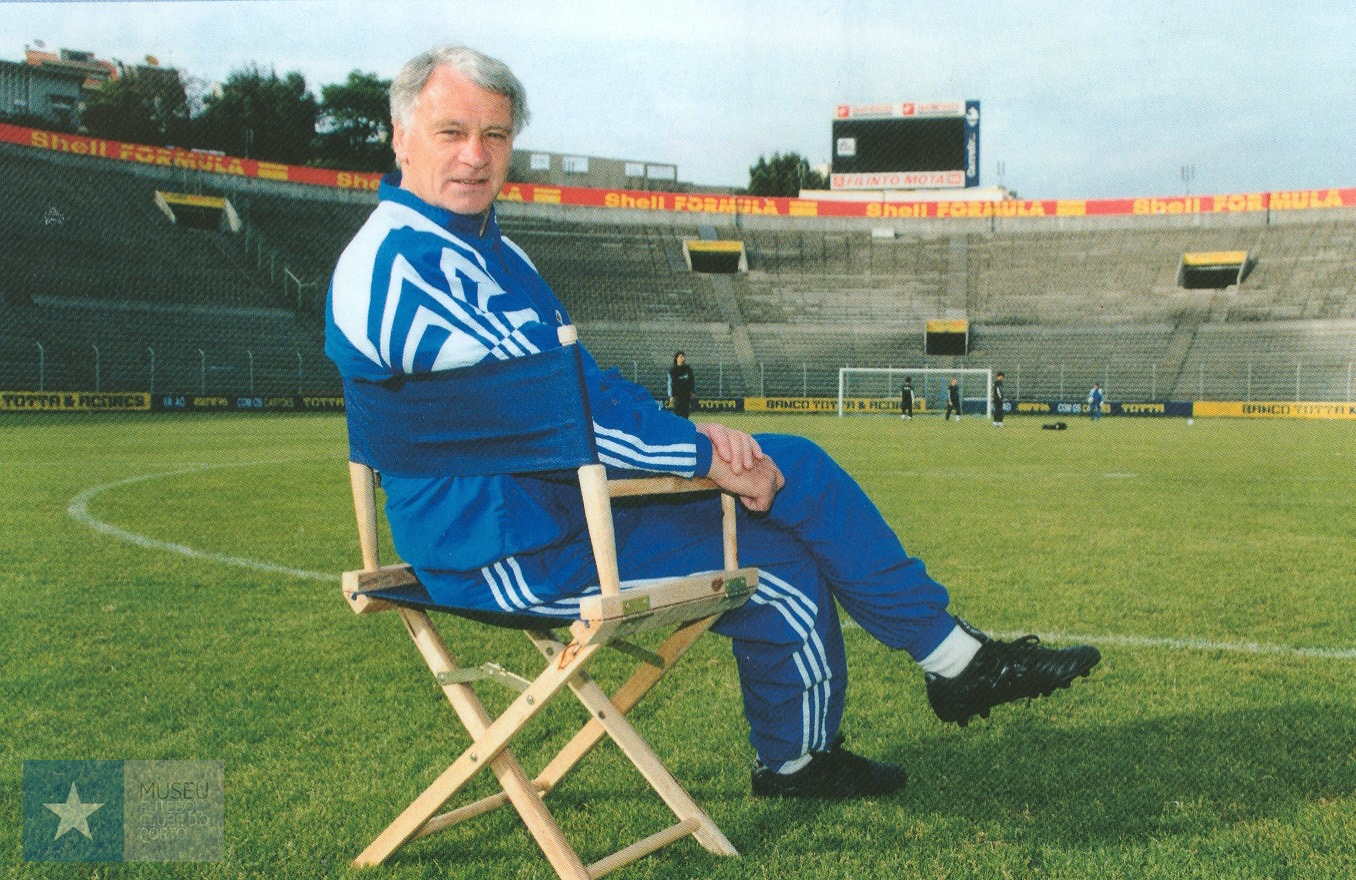
In 1992, Sir Bobby Robson, one of England’s most respected footballing figures, took up a managerial role in Portugal that would have far-reaching consequences. Robson arrived at Sporting Clube de Portugal with a mandate to revitalise the club’s fortunes. Though his time at Sporting was cut short by a controversial dismissal, he was quickly hired by Futebol Clube do Porto, where his impact was profound. Robson brought with him a wealth of experience from the English game and continental coaching, and he adapted this to the Portuguese context with remarkable success. At Porto, he won successive league titles and domestic trophies and led the club to the latter stages of the Champions League, endearing himself to the supporters and earning recognition through the emphatic wins his side produced.
More importantly, he brought with him young assistants — most notably José Mourinho — who would go on to define an era of Portuguese coaching excellence.
Mourinho’s own story is inseparable from that period in Portugal. Introduced to professional football at Sporting through his association with Robson — initially as a translator and then as an assistant — Mourinho absorbed lessons about preparation, tactical nuance, and man-management that would underpin his rise to become one of the most influential managers of his generation. Robson’s mentorship helped Mourinho navigate early coaching challenges and instilled in him an appreciation for meticulous preparation — a trait that would later define his approach at clubs across Europe.
Mourinho’s subsequent success was a watershed moment for how English football thought about management and strategy. It wasn’t just that Portuguese managers were succeeding abroad, but that they were reshaping tactical conversation in England itself.
Mourinho’s influence in England extended beyond tactics to the very psychology of competition. His insistence on preparation, opponent analysis, and strategic adaptability challenged the traditional English emphasis on physicality and instinct, showing that tactical nuance and psychological readiness were equally crucial. His success at Chelsea — winning back-to-back Premier League titles — forced rival managers to broaden their tactical toolkits, encouraging investment in analysis, training methodology, and match planning.
The exchange was not one way. English influence also permeated Portuguese football structures, particularly in coaching education and club organisation. Portuguese coaches increasingly sought formal qualifications, studying training methodologies that blended English strengths in physical preparation with continental tactical learning. This cross-pollination shaped a generation of Portuguese managers whose styles blended structure with creative player utilisation — a synthesis that became a hallmark of Portuguese football education.
Encounters between English and Portuguese clubs on European stages have also enriched this mutual evolution. Beyond the 1968 European Cup final, English and Portuguese teams met repeatedly across UEFA competition’s history. English clubs like Liverpool, Tottenham, and Newcastle have faced Benfica, Porto, and Sporting in key European nights, exposing players, coaches, and supporters alike to varied tactical landscapes — sometimes producing surprising results and often prompting reassessment of assumptions.
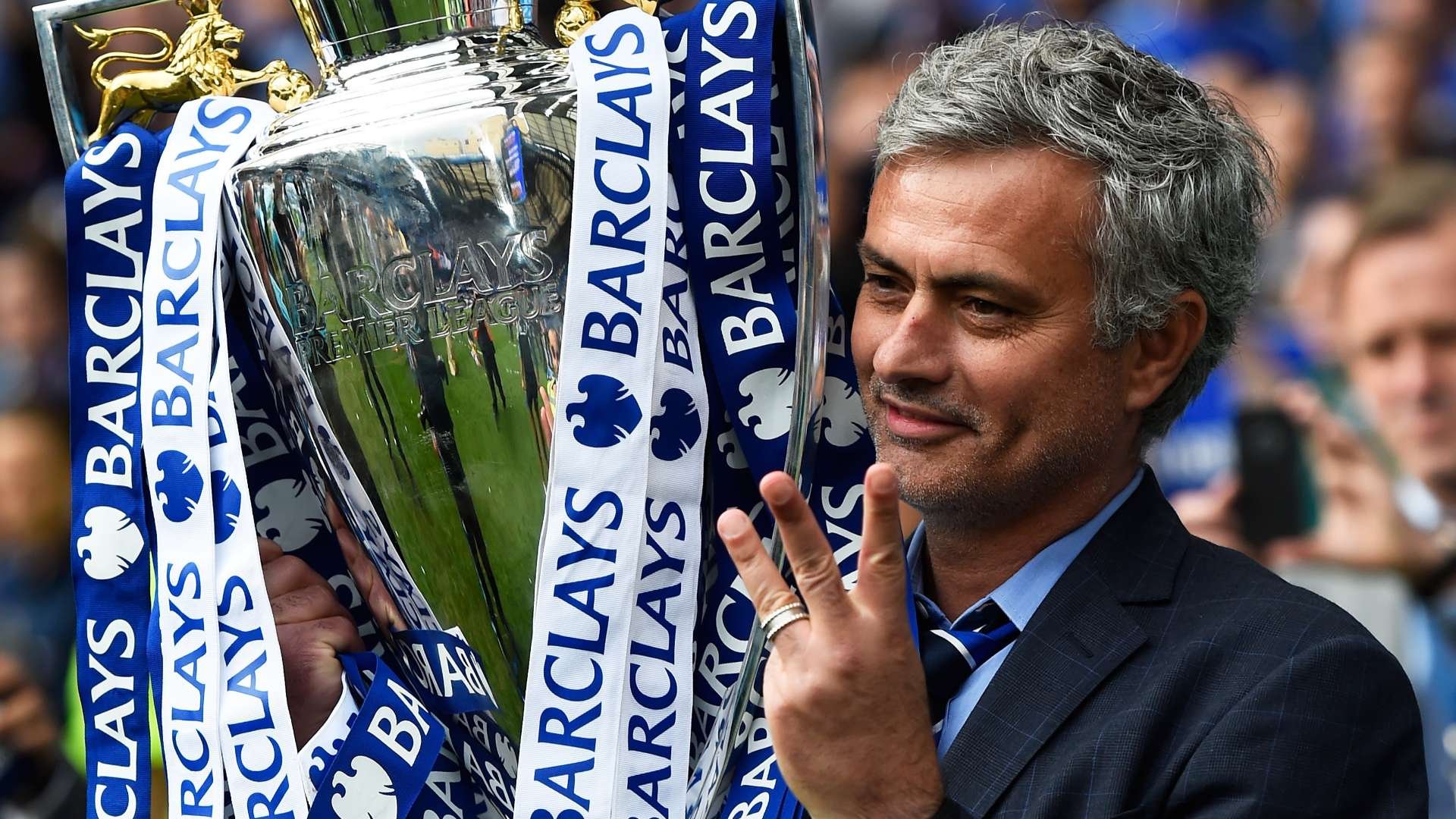
José Mourinho has lifted the Premier League title three times - all with Chelsea.
Photo Credit: The Independent
Football matches between Portuguese and English clubs are embedded with history, with many encounters acquiring an identity of their own over time. Benfica faced English opposition regularly during their European Cup runs in the 1960s. Sporting CP, in their two European Cup final campaigns, also encountered English teams along the way, facing Middlesbrough, Manchester United and Newcastle.
FC Porto, meanwhile, have enjoyed a long and often dramatic history against English opposition, with memorable nights including a 2–1 victory over Manchester United in 2004, alongside numerous high-profile encounters in the latter stages of the Champions League against clubs such as Liverpool, Arsenal and Chelsea.
These encounters, however, are by no means exclusive to Portugal’s so-called “Big Three”. Several other Portuguese clubs have had the opportunity to test themselves against English opposition across different European competitions.
Académica faced Manchester City in 1970, while Belenenses played Wolves in 1973. Boavista encountered both Liverpool and Manchester United during the 2001–02 European season, while Marítimo of Madeira faced Leeds United in 1998 and 2001 before meeting Newcastle in 2012. Nacional took on Birmingham City in 2011, while Paços de Ferreira were drawn against Spurs in 2021, recording a famous 1-0 victory at home.
Braga, in particular, have built an extensive European history against English clubs, facing West Bromwich Albion, Spurs, Bolton, Portsmouth, Arsenal, Liverpool, Birmingham, Manchester United, Wolves and Leicester. Vitória de Guimarães likewise have played against Southampton, Aston Villa, Bolton, Portsmouth and Arsenal, while Vitória de Setúbal have encountered Newcastle, Liverpool, Leeds and Spurs.
While the overall balance of results has generally favoured the English sides, Portuguese clubs have, over the years, recorded a number of significant and memorable outcomes. These performances have repeatedly demonstrated that tactical organisation, technical quality and strategic intelligence can challenge — and at times overcome — opponents with greater financial resources and physical advantages.
Beyond elite competition, a lesser-known but historically significant facet of the exchange is the presence of English players in Portuguese football. As early as the 1920s, Englishmen such as Norman Hall plied their trade in Portugal.
Hall, an English forward, spent nine seasons with FC Porto, scoring prolifically and contributing to early championships in the Portuguese system — a rare example of English participation in Portuguese league football at a time when such moves were almost unheard of. It would take many decades before another English player, Danny Loader, made a first-team appearance for Porto in the modern era, scoring shortly after his debut, nearly a century after Hall’s pioneering footsteps.
In the modern era, English footballers have appeared more regularly in Portugal, with clubs like Sporting CP historically featuring foreign players from England including defenders such as Eric Dier and forwards such as Tony Sealy.
These flows of talent mirror reciprocal movement in the other direction. Portuguese players have found success in England at every level, from the top tier with the Premier League to lower divisions where technical ability and professional discipline have aided player adaptation and career longevity.
Portuguese internationals have helped elevate team performance, embodied versatile tactical roles, and contributed to the broader cosmopolitan identity of English football.
The influence of English football culture on Portuguese fans and communities should not be underestimated either. English football’s global broadcasting and cultural reach exposed Portuguese supporters to the Premier League’s intensity and spectacle from an early stage, fostering a generation of fans whose expectations and appreciation for different styles were shaped by watching English competition.
Simultaneously, Portuguese supporters watching English clubs grew familiar with Portuguese players and managers succeeding abroad, deepening cultural affinity and mutual recognition.
Within Portugal, the domestic rivalries that define local football culture — such as the Lisbon derby between Benfica and Sporting, and the enduring contest between Porto and its rivals from Lisbon — have their own deep roots and colourful histories, yet they have also interacted indirectly with English football history through shared tactical evolution and European competition.
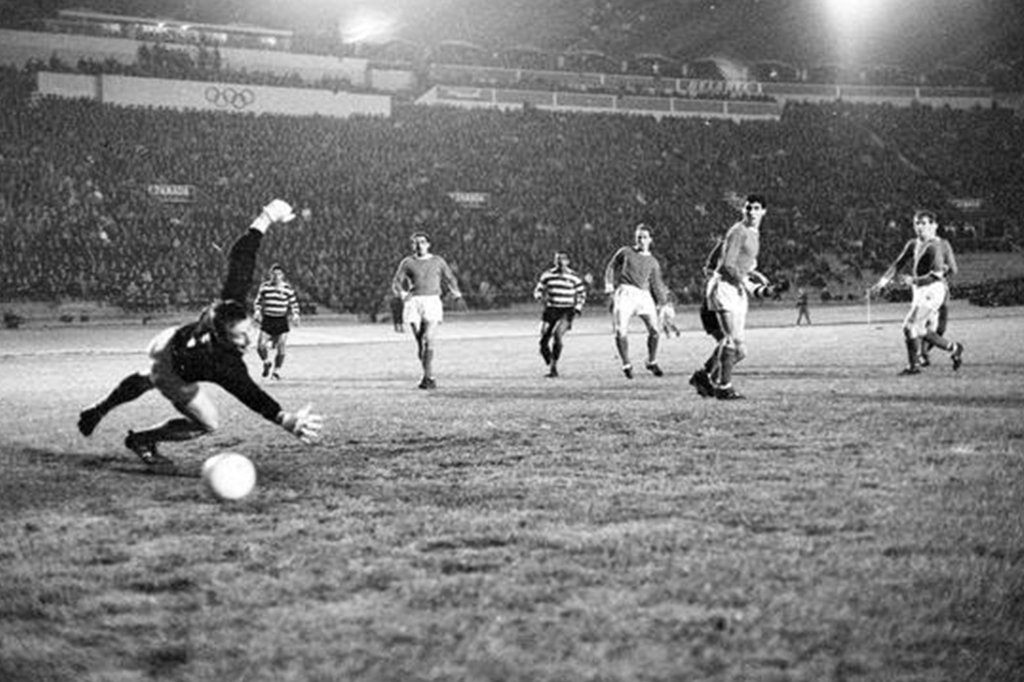
Sporting CP won the Cup Winners' Cup in 1964.
Photo Credit: ZeroZero.pt
Today, the connection between English and Portuguese football continues to evolve. Portuguese players remain integral to Premier League squads, contributing leadership, creativity, and technical diversity. Meanwhile, English clubs increasingly scout, recruit, and develop talent with an eye toward the Portuguese model of education — one that emphasises not just athleticism but cognitive engagement with the game. Young Portuguese prospects are regularly linked with English clubs long before they make senior moves, evidence of a scouting infrastructure that now views Portugal as fertile ground for future stars.
The story of English football and Portuguese football is not simply about the transplantation of individual players or the success of a managerial prodigy. It is about the evolution of philosophy, the exchange of ideas across cultures, and the shared recognition that football’s richness comes from dialogue as much as competition. From the grand stages of European finals to the grassroots development of youth talent, the interaction between these two footballing traditions has been formative for both. What began with historical treaties of cooperation centuries ago now finds contemporary expression on pitches from Lisbon to London, where the legacy of shared ambition and mutual respect continues to shape the beautiful game.
Yet the story of English football’s influence on Portuguese football — and vice versa — does not rest merely on the highest-profile names and stories. It also unfolds in the lesser-known but equally influential currents: the oft-forgotten English managers who plied their trade in Portugal, the experiments and missteps that marked early cross-channel ventures, and the increasing presence of Portuguese players across all levels of the English game.
Long before the Premier League became a global brand and the Portuguese league a talent incubator with international reach, English managers were already exploring opportunities on the Iberian Peninsula. One of the earliest examples is Arthur “Artur” John, an English coach who worked in Portugal in the 1920s and 1930s. John managed Vitória de Setúbal for six seasons, winning local championships and establishing himself as a respected figure in Portuguese football circles. His success there led to his appointment at Benfica in 1929, where he guided the club to its first national title in the Campeonato de Portugal in 1930, ending a decade-long wait for silverware. The following year, he successfully defended that title, defeating FC Porto 3–0. John later managed Sporting CP, becoming the last manager to cross directly between Portugal’s two Lisbon giants for over eight decades. His early role in Portuguese football illustrates that cross-cultural exchange was present from near the dawn of the professional era, long before globalisation made such moves commonplace.
In subsequent decades English managers continued to leave their mark. Jimmy Hagan is perhaps the most celebrated of them. After a successful managerial career in England with Peterborough and West Brom, Hagan took the helm at Benfica in 1970. His tenure at Benfica remains legendary; over three seasons he led the club to three consecutive Primeira Liga titles and a Portuguese Cup, becoming the first manager in Portugal to win a league championship without defeat.
Under Hagan, Benfica scored over 100 goals in a season, and legendary forward Eusébio became Europe’s top scorer with 40 goals during one of those campaigns. Hagan’s meticulous fitness programmes, strict discipline, and rigorous training were seen as unusually demanding in Portugal at the time, and although some players initially struggled with his methods, the results spoke for themselves. His influence helped raise the professional standards within Portuguese football during a formative period for the league.
Later in the 1970s and 1980s another English figure, John Mortimore, also made his mark across the Iberian footballing divide. A centre-half by trade who had enjoyed a long-playing career in the English game, Mortimore transitioned into management and eventually took charge of Benfica across two separate spells. At Benfica he won multiple Primeira Liga titles (1976–77 and 1986–87) and back-to-back Taça de Portugal victories, cementing his reputation as one of the most successful foreign managers in the club’s history. Mortimore also had stints at Belenenses and briefly at Southampton in England as joint caretaker manager, encapsulating the truly binational nature of his career.
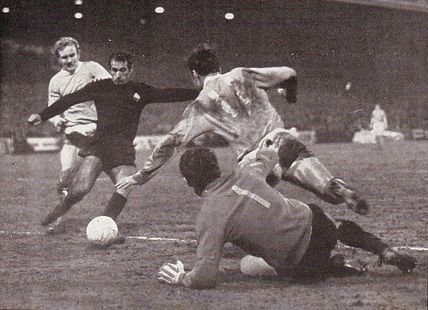
Manchester City v Academica De Coimbra, European Cup Winners Cup 3rd Round 2nd Leg, 1969/70.
Photo Credit: City 'Til I Die
Other English coaches plied their trade in Portugal with varying degrees of success. But Randolph Galloway, Ted Smith, Arthur John (as noted earlier), and Jimmy Hagan contributed significantly to the Portuguese game in the mid-20th century, bringing English training methods, tactical frameworks, and work cultures into environments that were simultaneously embracing continental stylistic influences. Many of these managers helped lay the groundwork for later generations of coaches — including Portuguese coaches who would in turn export their ideas back into England.
One of the more curious and high-profile Scottish managerial experiments in Portugal occurred in the late 1990s with Graeme Souness at Benfica. Souness was appointed to lead Benfica in 1997 amid a period of internal turmoil at the club.
Determined to instil what he saw as “British grit” into the Portuguese giants, Souness brought a contingent of British players with him: defenders and midfielders such as Scott Minto, Mark Pembridge, Steve Harkness, Michael Thomas and Gary Charles, as well as forwards like Brian Deane. Some of these players had profiles in England — Deane in particular having scored the first ever Premier League goal — but the experiment as a whole failed to meet expectations. While Deane’s work rate and goals often sparked moments of joy for supporters, many of the other signings struggled to adapt to the technical and tactical nuances of Portuguese football, and Souness’s tenure saw Benfica fail to challenge for the league title, leading to his dismissal after less than two years in charge. This episode remains a cautionary tale: ideas that work in one context cannot simply be transplanted without consideration for local stylistic norms, player development cultures, and tactical expectations.
This theme of adaptation — the necessity of understanding context — returns in many places in the broader English-Portuguese football relationship. On the pitch, memorable confrontations between English and Portuguese clubs provided rich competitive contact long before players and managers crossed leagues in large numbers. Besides the iconic 1968 European Cup final between Benfica and Manchester United, there have been countless other knock-on effects of those continental battles. English clubs learned from tactical innovations encountered in Portuguese and wider continental play, while Portuguese teams gained insight into the physical intensity and structural organisation that defined English football. These encounters helped normalise the idea that footballing excellence could be realised through a blend of styles rather than adherence to any single tradition, shaping coaching education and strategic thinking in both countries.
During the late 20th and early 21st centuries, the movement of Portuguese players into English football became increasingly systematic. While it began with the breakthrough examples of players like Luís Boa Morte — the first Portuguese player to sign for Arsenal in 1997 and a member of their Premier League and FA Cup double-winning squad that same season — it soon grew to encompass a broad diaspora of talent across the English football pyramid. Boa Morte’s Premier League success in England helped challenge preconceptions about Portuguese players in the English game; he proved that technical skill and creative instinct could be harnessed effectively alongside physical intensity. From that point onward, the list of Portuguese talent in England expanded significantly.
Ricardo Carvalho, Paulo Ferreira, Nani, Bruno Fernandes, Rui Patrício, Diogo Jota, Bernardo Silva, Rúben Dias, Ruben Neves, João Moutinho, José Fonte, João Cancelo, Pedro Neto – to name a few - and many others have made their mark in the English game, collectively shaping the modern Premier League and Championship landscapes. Many have earned 75+ appearances in the Premier League, a milestone that reflects not only individual quality but sustained adaptation to one of the most competitive environments in world football.
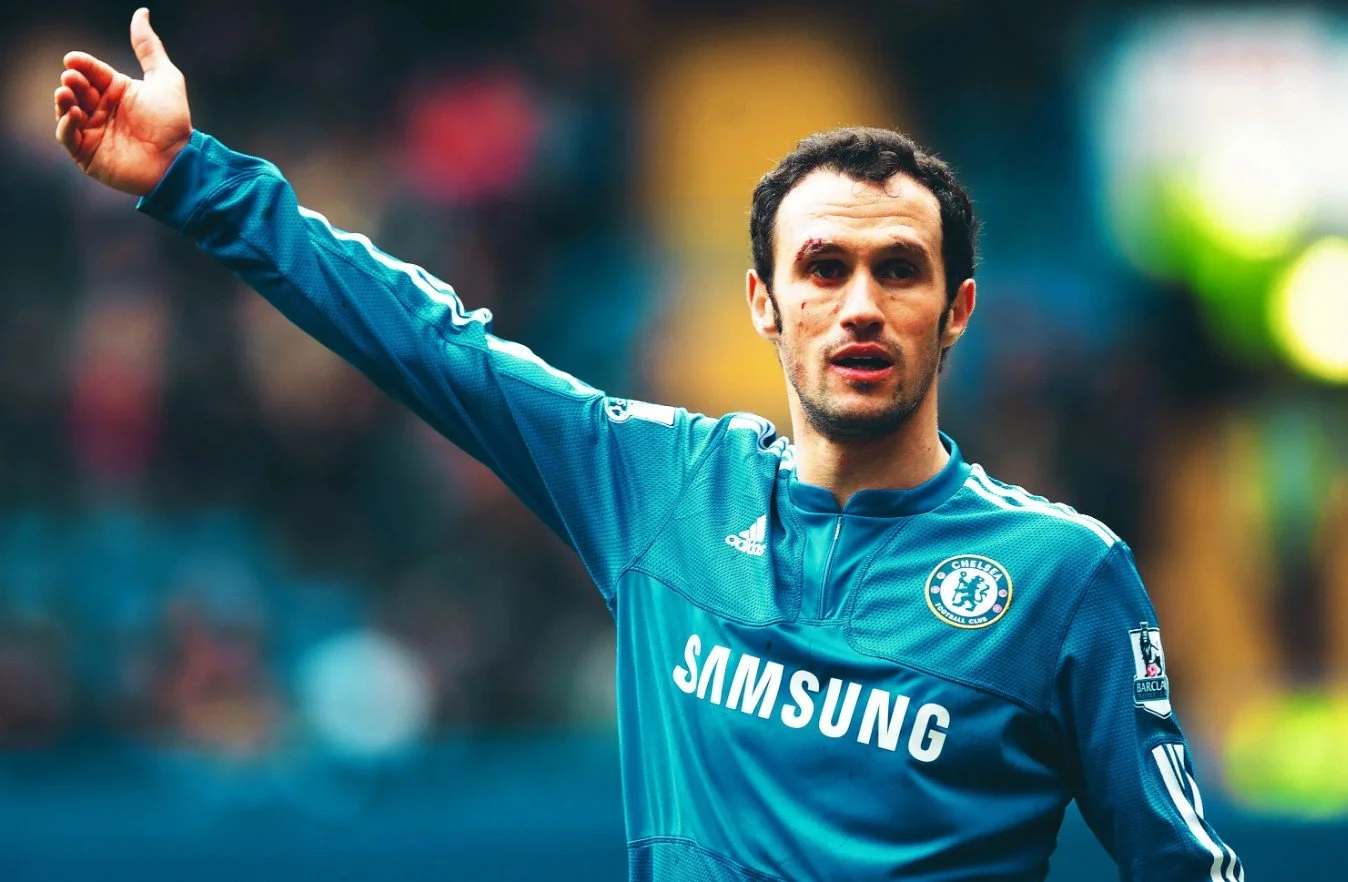
Ricardo Carvalho during his time at Chelsea.
Photo Credit: These Football Times
Portuguese managerial influence in England has likewise continued into the 21st century, with figures such as André Villas-Boas and Marco Silva extending the tradition of Portuguese coaches testing themselves in the English context. Villas-Boas, who previously won domestic trebles with Porto and made his mark in Europe with Porto’s surprise run to the Champions League semi-finals, became manager of Chelsea in 2011. He later managed Spurs, where his tactical approaches — focusing on high pressing, structured build-up play, and zonal strategic organisation — reflected contemporary continental influences being absorbed into English football. Marco Silva, another Portuguese coach, also managed in England with Hull, Watford and Everton.
In recent years, the managerial movement has continued in new forms. Rúben Amorim, one of the most successful Portuguese managers of his generation, took the bold step of joining Manchester, before suffering challenging results and ongoing pressure to adapt, which lead to his firing.
At the same time that Portuguese coaches tested themselves in England, English interests in Portugal have also evolved. Portuguese academies — particularly Sporting CP’s famed youth development system — have attracted international attention not only for the systemic methods that enable consistent discovery and cultivation of future stars. Their work in building a national scouting network and internal development department helped Sporting’s academy serve as a model for international recruitment and training systems, producing numerous players who would go on to impact leagues across Europe.
As football has globalised, the interaction between England and Portugal has grown increasingly multifaceted. Portuguese players and coaches contribute to English clubs not solely for prestige or financial gain but because the structural qualities of English football — its pace, competitiveness, and tactical diversity — provide a proving ground that elevates talent and ideas. At the same time, English clubs and coaches have learned from Portuguese tactical nimbleness and commitment to technical refinement, incorporating elements of continental thinking into structures once defined primarily by power and tempo.
This bilateral evolution is emblematic of modern football’s interconnected world: clubs in both countries operate within a global marketplace of talent and ideas, yet this exchange between England and Portugal remains distinctive in its depth, history, and cultural resonance. From the early English managers who helped shape Portuguese club football in the 1920s to the contemporary Portuguese exponents coaching and playing at the highest levels of the Premier League; from iconic European battles like the 1968 European Cup final to the subtler influence of academy scouts and tactical educators; from the mixed experiment of a British contingent at Benfica under Souness to the serene consistency of Sporting’s youth graduates, the narrative is one of mutual growth, adaptation and ongoing dialogue.
The footballing relationship between England and Portugal is not a simple story of one tradition dominating another. It is, instead, a long-running collaboration — rooted in centuries-old diplomatic ties — that has enriched both football cultures. In a sport increasingly shaped by global flows of capital, players, and ideas, the English-Portuguese connection stands out for its reciprocity: English football has gained strategic depth, technical refinement, and tactical diversity from Portuguese influence; Portuguese football has gained scale, visibility, and competitive challenge through engagement with English structures. This contemporary alliance, rooted in respect and shared ambition, continues to evolve — and it remains among the most compelling threads in the global tapestry of the beautiful game.