

Words by Dave Proudlove | Published 31.07.2026On damp Liverpool mornings, the old Littlewoods headquarters on Edge Lane still looks like a monument to another Britain. Even now – long after the clerks have gone, the coupon-checkers vanished and the great pools empire have faded into memory – the vast white Art Deco edifice carries an eerie grandeur. For decades it stood like a secular cathedral of hope. Thousands streamed through its doors each week to process the dreams of millions.
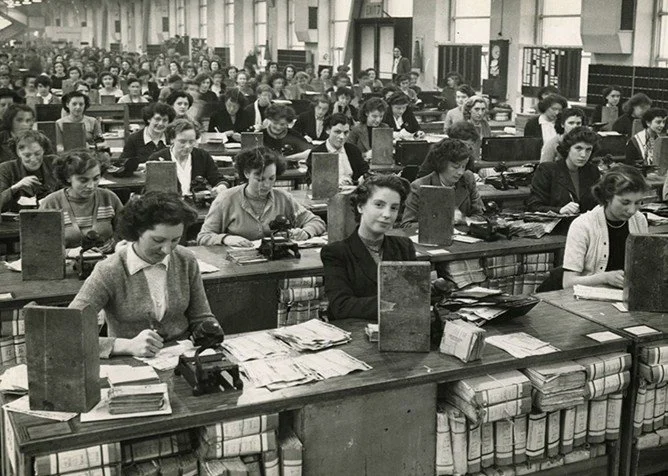
Inside, there had once been noise everywhere: the clatter of sorting machines, the hum of teleprinters, the rustle of coupons arriving in bulging mail sacks from every corner of Britain. Men in brown coats and women at long rows of desks checked score draws and permutations while outside, buses rolled past carrying workers home from factories, docks and warehouses. Somewhere in those endless piles of paper, someone’s life might be about to change forever.
The football pools were never merely gambling; they were aspiration written in biro on cheap paper. They belonged to a world of tea urns, football results on the radio, and Saturday afternoons structured around the classified scores. They belonged to the working-class imagination of 20th century Britain, and no company embodied that culture more completely than Littlewoods.
For much of the century, the pools represented possibility itself.
The story begins with Sir John Moores, one of the most influential businessmen in modern British history. Born in Liverpool in 1896, Moores left school young and worked a succession of jobs before serving during the First World War.
Like many entrepreneurs of his generation, he possessed both relentless drive and ambition, and an instinctive understanding of ordinary people.
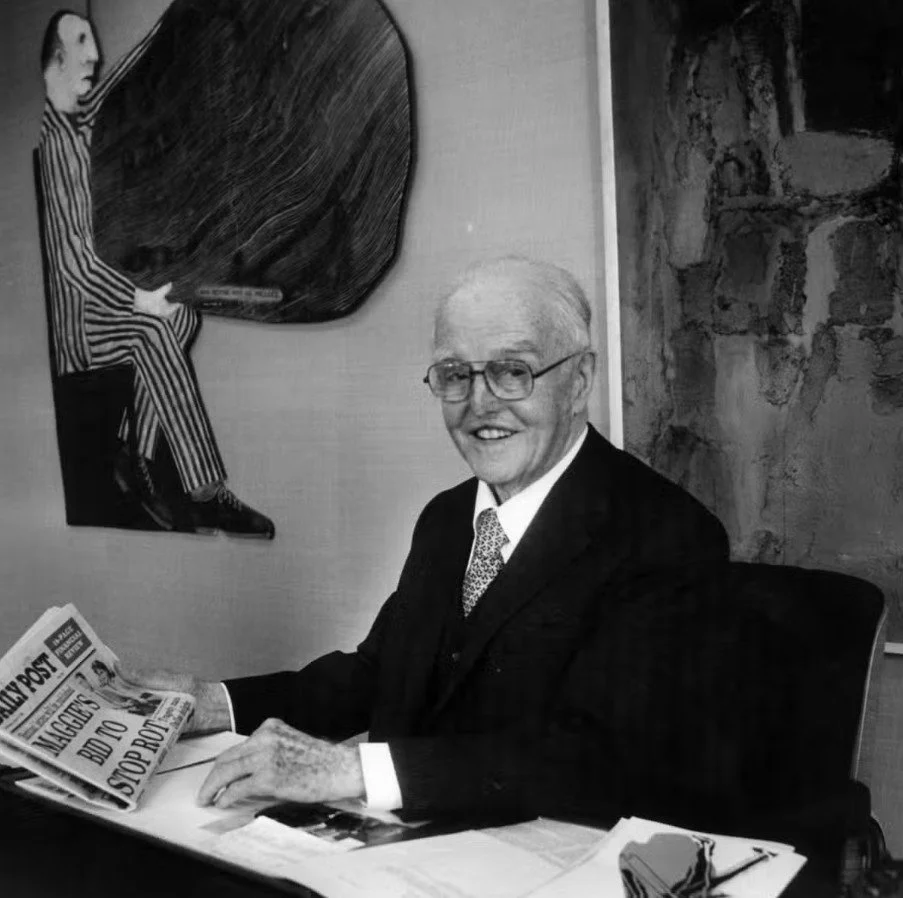
Sir John Moores.
Photo Credit: Mirrorpix
In 1923, Moores and a small group of partners launched what became Littlewoods Pools from a small office in Liverpool. The idea was deceptively simple: players would predict football results – especially score draws – and winnings would be shared from the pooled stakes.
The first coupons – some 4,000 – were handed out outside Old Trafford before a Manchester United fixture.
However, the business almost collapsed immediately. The first season lost money, and Moores’ partners got cold feet and suggested that the venture be abandoned.
Yet Moores persisted, borrowing money from family to buy his partners’ shares before refining the system. Soon the business began to grow, and by the late 1920s, Littlewoods had become one of Britain’s great gambling phenomena, and Moores had become a millionaire.
But Moores was more than a betting entrepreneur; he was also a pioneer of modern retailing. Recognising that the pools database offered access to millions of households – an early example of data harvesting – he launched a mail-order catalogue business in the 1930s.
Women who collected catalogue orders from neighbours became the backbone of a new consumer economy. Littlewoods subsequently expanded into High Street stores and eventually became one of Europe’s largest private companies.
However, the football pools did not achieve popularity without controversy. In their early years they faced fierce opposition from politicians, religious leaders and sections of the press who regarded gambling as a moral danger to working-class families.
Critics argued that the pools encouraged false hope among the poor and undermined financial discipline during economically precarious times.
As a result, Sir John Moores himself became a target for official scrutiny. In the 1920s and 1930s, pools companies operated in a legally ambiguous environment, exploiting loopholes in Britain’s gaming laws.
Authorities repeatedly attempted to suppress the industry, and Moores faced prosecutions connected to the operation and promotion of the pools. The most serious efforts centred on whether the competitions constituted illegal betting or unlawful lotteries. Moores proved remarkably resilient though, and rather than retreat or conform, Littlewoods adapted constantly to changes in regulation, refining its coupon systems and legal structures to survive repeated challenges.
Public appetite for the pools also made outright prohibition politically difficult. Millions of ordinary Britons were already participating by the interwar years, and the popularity of the competitions increasingly outpaced official resistance.
The tension reflected a broader divide within British society. To many establishment figures, gambling represented moral decline; to many working class players, the pools represented one of the few accessible chances of economic advancement.
In time, public enthusiasm effectively overwhelmed official hostility. By the post-war era, the football pools had become not a marginal vice but a national institution, and this is central to Moores’ achievement: he transformed an activity once viewed with suspicion and semi-illegality into one of the most recognisable and socially embedded leisure industries in Britain.
From the 1930s meanwhile, Littlewoods became inseparable from Liverpool itself. The company’s enormous Edge Lane Art Deco headquarters – built by Scottish architect Gerald de Courcy Fraser and described by Pevsner as “all square, yet still classically committed” – dominated Liverpool’s L7 neighbourhood physically and psychologically.
The building was unlike anything else in Britain. Vast, modernist and highly mechanised, it processed astonishing quantities of data before the digital age arrived. Thousands worked there, many from the surrounding districts.
For Liverpool families, a job at Littlewoods represented stability and status. Entire generations passed through its departments. The company funded sports, social clubs and charitable initiatives. It became part of the city’s civic fabric.
During the Second World War, Littlewoods’ vast complex took on an importance far beyond football coupons and mail-order catalogues. The site was requisitioned by the British government for war administration and logistics.
The sheer scale and modernity of the Littlewoods operation made it invaluable during the war effort. The company’s enormous clerical and distribution systems were adapted to support national needs, and many employees joined the armed forces or wartime industries.
Liverpool was one of the most heavily bombed places outside London because of its crucial Atlantic port, and Edge Lane sat within a landscape shaped by blackout curtains, rationing and nightly air-raid sirens. In this context, the Littlewoods became a reassuring presence, helping absorb the emotional weight of the conflict.
When later generations walked through its endless corridors, they were moving through a place deeply connected not only to football, community and commerce, but to Britain’s wartime story.
By the mid-20th century, Liverpool was shaped by several giant institutions: the docks, the football clubs, the Catholic Church and employers like Littlewoods. The pools money circulating through the city supported jobs far beyond gambling itself.
The headquarters also represented a fascinating contradiction. Football pools relied on working class dreams, but Littlewoods operated with industrial-scale efficiency. It was both intimate and enormous.
Every handwritten coupon belonged to a real household and real lives somewhere in Britain; yet inside the Edge Lane building, those millions of private hopes became statistics and dividends.
At its height, Littlewoods employed tens of thousands of people and became woven into the economic life of Liverpool. The company sponsored football competitions, supported charities and shaped the city’s identity almost as much as the docks or the football clubs themselves.
Moores also became deeply associated with Everton FC, serving as chairman and benefactor. His wealth transformed not only retail and gambling but also football culture, and in Liverpool, his name carried enormous influence.
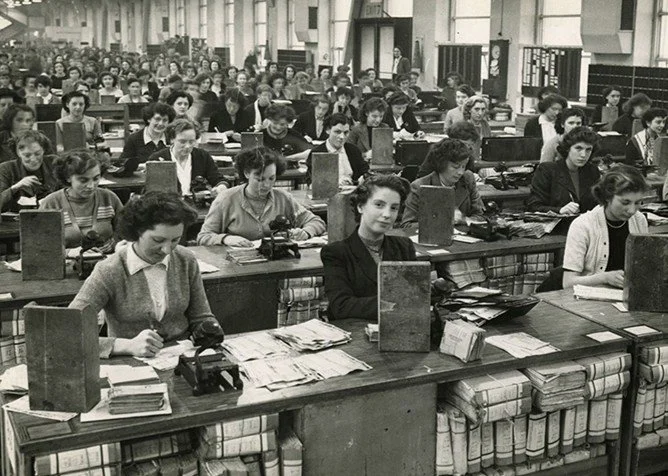
Littlewoods coupon checkers at work.
Photo Credit: YM Liverpool
Although the pools industry had fierce critics, Sir John Moores consistently attempted to present Littlewoods as a socially responsible business rooted in working class communities.
Through the Moores family and associated foundations, substantial sums were donated to medical research, education, sport and the arts, and Moores became one of Britain’s most important philanthropists.
He funded hospitals, university projects and youth initiatives, while the Littlewoods organisation itself regularly supported local charities and civic causes in Liverpool. The company sponsored sporting competitions and community events across the country, helping to embed itself not merely as a gambling enterprise but as part of Britain’s social fabric.
In Liverpool especially, Littlewoods developed a paternalistic reputation familiar from many large 20th century employers. The staff sports clubs, social societies and charitable drives reinforced the sense that the company was a civic institution as much as a business. For many employees, working at Littlewoods meant belonging to a vast extended community.
Yet his greatest legacy may have been psychological rather than physical or financial. At Edge Lane Sir John Moores built football’s dreams factory, and Littlewoods sold hope in affordable weekly instalments.
To understand the football pools, it helps to understand Britain before the National Lottery was launched, before online betting, and before instant wealth became normalised by television game shows.
For millions of working class families, money was tight and opportunities limited. The pools offered a tiny chance of escape for a few pence a week. Unlike horse racing or bookmakers – still regarded suspiciously in some communities – the pools entered the home quietly. Coupons sat beside the television guide and shopping lists.
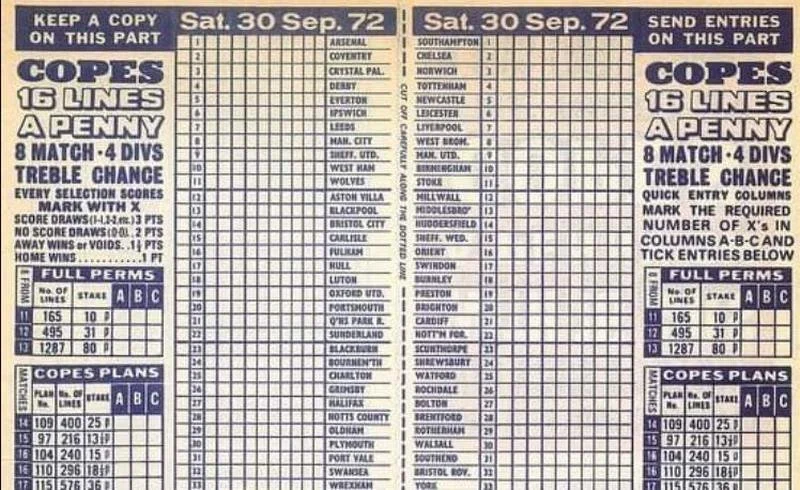
The coupon – a route to realising hopes and dreams for millions.
Photo Credit: Window Through Time
Each week, players filled in lines predicting score draws from the Saturday football fixtures. The mathematics behind the system could become obsessive. Some players used ‘perms’ and complicated probability calculations; others relied on instinct, lucky numbers or family rituals.
The great pools companies – Littlewoods, Vernons and Zetters – became household names. Doorstep collectors – ‘the coupon man’ – travelled street-by-street gathering coupons and stakes.
In many neighbourhoods, the pools collector knew more gossip than the local priest. This weekly ritual merged perfectly with British football culture. Saturday afternoons revolved around results broadcasts and the reading of classified scores. Families listened anxiously to radio updates while hoping for elusive score draws.
When winter weather destroyed fixtures during the freezing winter of 1963, national anxiety over postponed matches became so intense that the famous ‘Pools Panel’ was created to adjudicate results artificially. It sounds absurd now, but at the time millions cared passionately.
The pools generated their own language and folklore. ‘Eight score draws’ became shorthand for unimaginable, life-changing luck. The phrase ‘doing the pools’ entered everyday language.
And then there were the side competitions, like ‘Spot the Ball’ which was launched in the 1970s.
Big wins became celebrated as examples of how the pools could transform the fortunes of everyday people, and no pools winner became more famous – or sadly, more tragic – than Viv Nicholson.
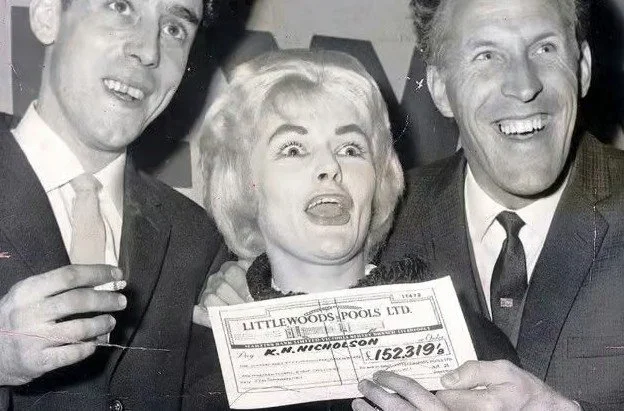
Viv Nicholson and her husband Keith received their pools win cheque from Bruce Forsyth.
Photo Credit: Yorkshire Post
In 1961, Viv and her husband Keith won £152,319 on the Littlewoods pools, an extraordinary sum at the time, and worth several million pounds today. Asked by reporters what she intended to do with the money, Viv delivered one of the most famous lines in British tabloid history:
“Spend, spend, spend.”
The phrase captured the spirit of a changing Britain. Post-war austerity was fading. The country was on the brink of economic renewal fired by Wilson’s ‘white heat of technology.’ Consumer culture was expanding. And suddenly ordinary people could imagine luxury, glamour and excess.
On the back of their pools win, the Nicholsons became media sensations. Their lives spiralled through spending sprees, tax problems, tragedy and public scrutiny. Keith died in a car crash in 1965, and much of the fortune disappeared.
Yet Viv remained part of British popular culture for decades. Her story inspired the musical ‘Spend, Spend, Spend’, which helped preserve the mythology of the pools era, while the Smiths used an image of her standing alone on a deserted terraced street on the sleeve of their single ‘Heaven Knows I’m Miserable Now’, the band’s fascination with northern working class life, faded glamour and tabloid melancholy resonated strongly with stories like Nicholson’s.
Viv Nicholson became emblematic of exactly the sort of tragic fame and northern mythos that haunted the Smiths’ work.
In many ways, Nicholson symbolised both the promise and danger of sudden prosperity. The pools could liberate people financially, but they could also thrust ordinary families into unforgiving publicity.
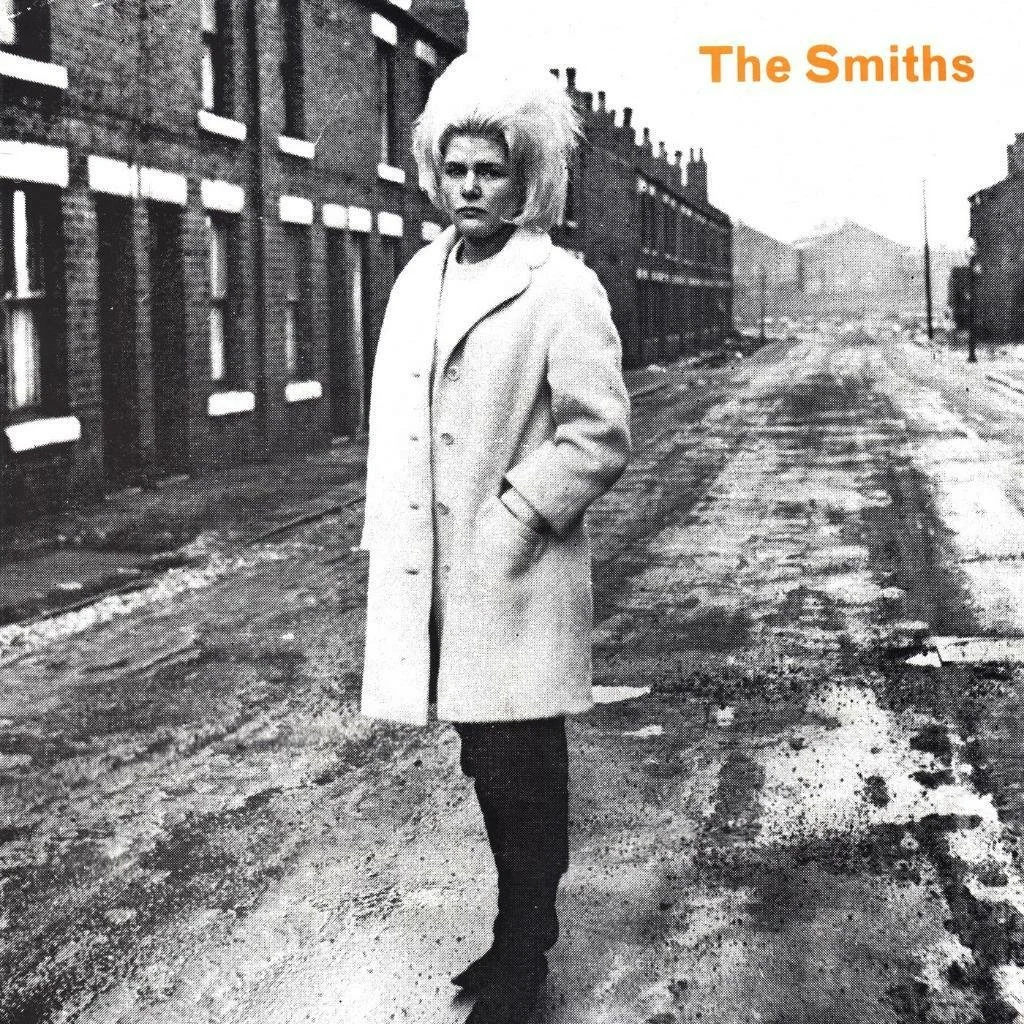
Viv Nicholson on the sleeve to ‘Heaven Knows I’m Miserable Now’ by the Smiths.
Photo Credit: Discogs
Yet despite cautionary tales, the dream endured.
Today, it can be difficult to grasp how culturally dominant the pools once were. At their peak, around 15m people played regularly. The pools occupied the same emotional territory later filled by lottery tickets and reality television talent shows: they offered the fantasy that ordinary life might suddenly be transformed. But the pools were also distinctively communal.
Families completed coupons together. Workplace syndicates became miniature social institutions. Friends debated permutations in pubs and factories, and pools gossip spread through streets and workplaces every Monday morning.
The pools sat comfortably within football culture because football itself remained rooted in working class identity and culture. Before the Premier League era and the Sky TV money, football clubs represented local communities more directly. Pools coupons reflected that geography. Results mattered emotionally and financially.
Many stories survive of modest wins changing lives in practical ways: paying off mortgages, buying cars, funding holidays or enabling retirement. Recollections today still describe grandparents winning enough to buy homes or set up businesses. And for poorer households especially, even small prizes could transform circumstances.
The pools also helped normalise low-stakes gambling within mainstream British culture. Because it was linked to football and family rituals, it often appeared more respectable than bookmakers, and that respectability mattered enormously.
The decline of the football pools began slowly and then all at once.
Television changed entertainment habits, while legal betting shops expanded gambling options after the 1960s. But the true catastrophe for the pools arrived in 1994 with the launch of National Lottery.
The National Lottery fundamentally altered Britain’s gambling culture. It offered larger jackpots, simpler rules and instant nationwide visibility through televised draws. Compared with the lottery, the pools suddenly looked complicated and old-fashioned.
Understanding score draws required football knowledge and patience. Lottery tickets demanded almost no effort, while the difference in jackpots was devastating. Lottery wins rapidly dwarfed pools dividends, and younger generations gravitated toward scratchcards, and later online betting.
As a result, participation in the pools collapsed.
However, the pools companies attempted to adapt. They modernised branding, expanded online games and revived ‘Spot the Ball’ digitally.
But the social side that sustained the pools – doorstep collectors, paper coupons and the old Saturday rituals – was vanishing. And at the same time, football itself changed dramatically.
The creation of the Premier League in 1992 saw English football gentrified, monetised on a grand scale, and transformed into a global entertainment product.
Local loyalty increasingly coexisted with international television audiences, billionaire ownership and round-the-clock betting markets, while social media placed football into a right now realm, breeding a different kind of football culture. The old pools belonged to slower and simpler times.
And as the pools weakened, so too did Littlewoods itself. The company had diversified successfully for decades through catalogues and retail stores, but competition intensified in the late 20th century.
Consumer habits changed. Mail-order retail struggled against new shopping models, and eventually online commerce. Littlewoods stores began disappearing from British High Streets as out-of-town retailing dominated. The empire contracted steadily.
In 2000, the Moores family sold the pools business. Mergers followed as Littlewoods, Vernons and Zetters were consolidated under newer ownership structures. The old rivalries faded into corporate restructuring.
Meanwhile, the Edge Lane headquarters had emptied, closing in November 1994, with the remaining staff and operations moved elsewhere, and the iconic building stood abandoned for years. Its decline carried enormous symbolic weight in Liverpool. The building had represented employment, ambition and civic confidence. Seeing it derelict felt like witnessing the crumbling of a culture.
But even after the magic pools had faded and the Edge Lane headquarters had slid into decline, it still retained an almost mythic status in Liverpool because it represented several eras simultaneously: interwar ambition, wartime endurance, post-war prosperity and eventual industrial decline. Few buildings capture 20th century Liverpool so completely.
In 2018, shortly after plans were announced by so-called social impact developer Capital & Centric to transform the site into a Pinewood Studios for the North – a different kind of dreams factory – a major fire engulfed the old place.
Images of flames tearing through the abandoned building spread nationally. For many Liverpudlians, the fire seemed almost unbearably emblematic: the destruction of a monument to 20th century working class Liverpool.
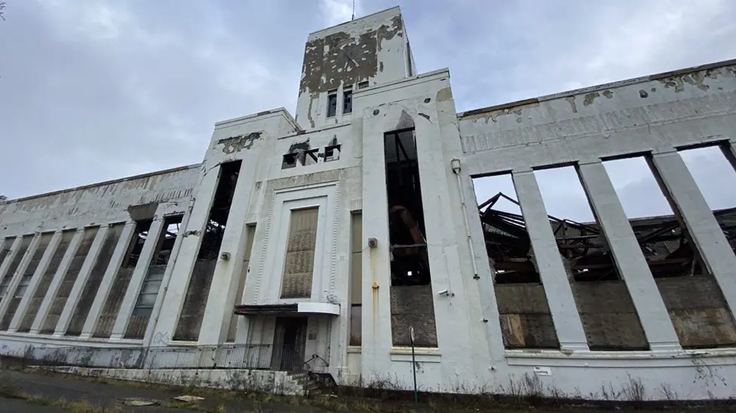
After the fire – the shell of the Littlewoods Headquarters.
Photo Credit: BBC News
Yet even in ruin, the building retained its emotional power.
The football pools survive today in a much reduced, modernised form, but they no longer occupy the centre of British life. And yet their cultural afterlife remains surprisingly strong.
Older generations still speak nostalgically about coupons, score draws and the ‘coupon man.’ Television comedies referenced the pools constantly. They appeared in films, sitcoms and music hall routines.
The pools also helped shape British attitudes toward luck, aspiration and class. Unlike elite gambling culture associated with casinos or racecourses, the pools belonged to ordinary streets and terraced houses.
Winning was imagined not as aristocratic luxury but practical transformation: a new semi-detached house, a caravan, foreign holidays, security for children. There was something deeply democratic about it.
The pools also reflected Britain’s regional identities. Football clubs represented industrial towns and cities; the pools transformed those loyalties into personal participation on a national stage. Millions of people experienced football not only as spectators but as dreamers.
And even the disappointment became ritualised. Countless players spent decades filling in coupons without major success. Yet they continued anyway because participation itself mattered. Hope became habitual.
But the social world that sustained the pools has largely disappeared. The old doorstep collectors are gone. Families rarely gather around listening to the classified football results. Gambling itself has become faster, more individualised and more technologically sophisticated.
Modern sports betting apps provide instant odds on everything from throw-ins to yellow cards. Against that environment, the old pools can seem quaint. Yet their legacy endures in several important ways.
Firstly, the pools helped establish mass-participation gambling in Britain while maintaining a specifically communal character. People gambled socially rather than in isolation.
Secondly, they reinforced football’s place at the centre of British cultural life. Long before fantasy football or online betting, the pools connected millions emotionally and financially to the weekly rhythms of the game.
Thirdly, they remain a crucial chapter in the story of working class Britain. The pools reflected an era when aspiration travelled through local institutions – football clubs, factories, catalogue companies and neighbourhood networks.
And finally, they left behind powerful myths.
The image of the Littlewoods building on Liverpool’s Edge Lane still evokes something larger than commerce. It recalls a time when millions believed that a pencilled coupon might liberate them from routine, debt or drudgery.
The pools represented fantasy made ordinary, the possibility that astonishing fortune could arrive through the post on a grey Monday morning.
In that sense, the football pools occupy a unique place in British history. They were never merely about gambling. They were about longing, community and imagination.
And somewhere in Britain, even now, there are still people checking the results, still hoping for eight score draws, still believing that their numbers might finally come up.