

Words by Mark Moran | Published 05.09.2026On a brisk Tuesday night in April 1997, buoyant Kilkenny City supporters streamed into the stands of Buckley Park.
Their club stood on the cusp of a coveted first-ever promotion to the League of Ireland Premier Division.
Defenders Brendan Rea and John Power threw themselves into tackles as chants rang around the stands.
A tenacious performance against arch-rivals Waterford earned the precious point required. The stadium felt alive, and for a fleeting moment, football had a foothold in Ireland’s hurling heartland.
A little over a decade later, the Park gates were padlocked. The ground stood silent under grey skies. The Black Cats were gone, reduced to a faint footnote.
That glorious night was thirty years in the making. Founded in 1966 as EMFA – a portmanteau of Emmet Street and Fatima Place – the club embodied the essence of local football.
A group of Kilkenny CBS schoolboys formed the club during a free period in a James’s Street classroom, inspired by the exploits of Bobby Charlton and Eusébio during that summer’s World Cup.
Huddled around a desk, they had no money but boundless belief.
One of those schoolboys, Jimmy Rhatigan, served as secretary and general manager. His devotion to the club would last four decades.
“One of our friends was the manager,” recalled Rhatigan, “so we always made the team.”
Students played alongside teachers; co-founder and historian Gerry Moran recalls addressing his maths teacher Tony Henderson as “sir” on the pitch. They trained diligently on the green in Fatima Place.
The hurling community took an ecumenical approach to its new competitor.
Kilkenny legend Ollie Walsh saw three of his sons play for EMFA; most notably Ollie Jr., who earned underage caps for Ireland and had trials at Chelsea. His brother Billy would later manage the nascent club.
EMFA rose rapidly through the junior leagues under Donie Butler. Their early years were spent at Tennypark, little more than a rough six-acre patch of grass on the city outskirts.
But by 1979, EMFA volunteers had secured a loan, purchased the land for £16,000 from farmer Mick Murphy, and built Buckley Park, named for club president Marty Buckley.
The club wrote a letter to every English League team in a wishful appeal for financial support. Northampton Town replied that it was more likely that Kilkenny would have surplus funds to lend the Cobblers.
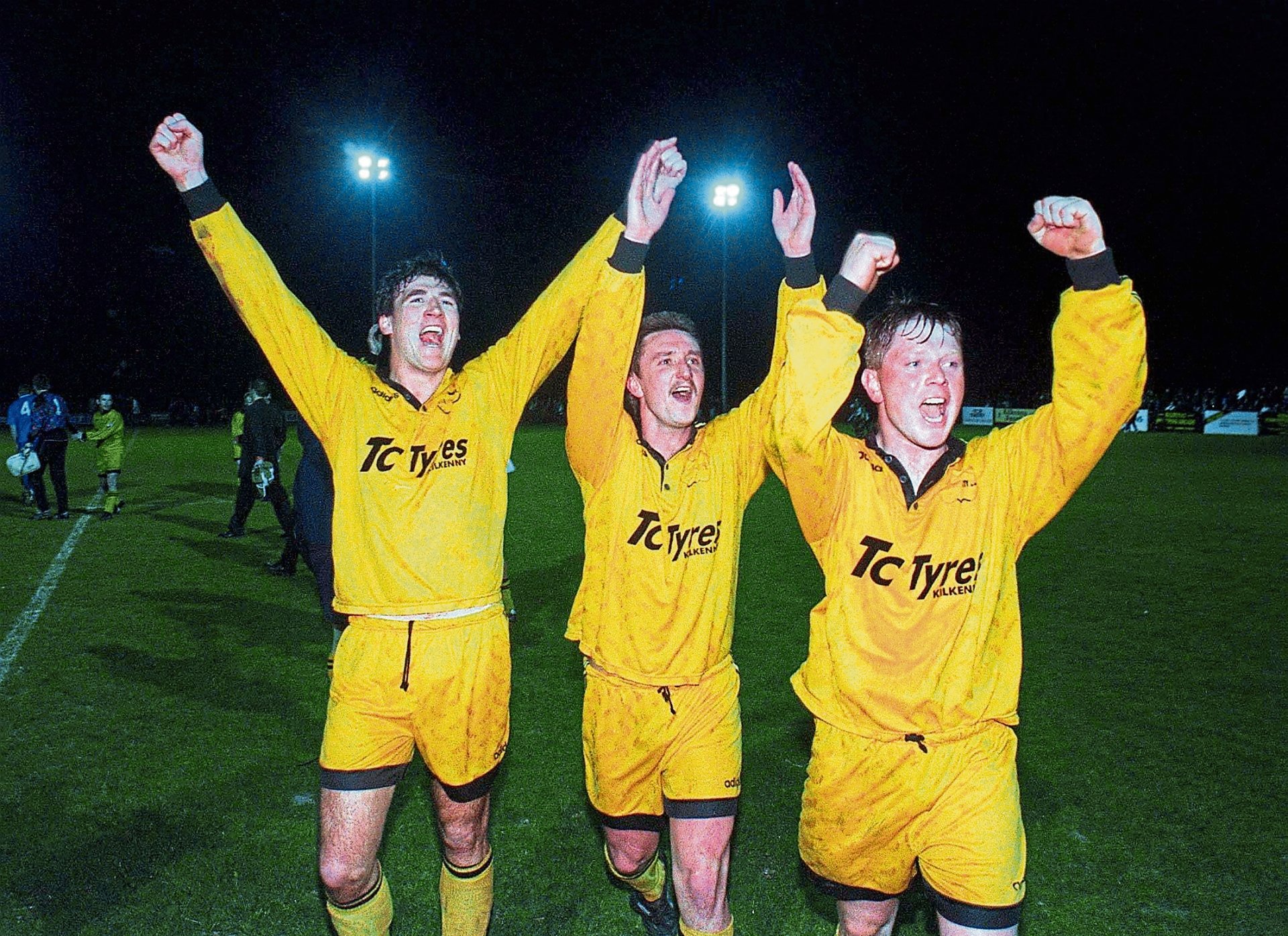
Pascal Keane, and Richie Hale celebrating their promotion to the top flight after a victory at Buckley Park in 1997..
Photo Credit: Kilkenny People Sport
EMFA dominated local leagues and began producing several underage Irish internationals, earning second-tier League of Ireland status in 1985. Their opening League game against Derry City drew a respectable crowd of 3,000.
The debut was an eclectic affair, marked by the attendance of Northern Ireland peace advocate John Hume and the chance to win a hamper of fruit at half-time.
The arrival of League football lit the spark for a “rollercoaster”, as Rhatigan described it. Devoted Kilkenny fans traversed the country in support of their team. These away trips defined the club’s unvarnished identity, as the players shared cramped train carriages with supporters.
Jimmy Donnelly, who played across four separate stints for the club, once returned from the bathroom to find that Waterford fans had stuffed his kit bag full of vodka and adult magazines.
A £3,000 loss in Kilkenny’s inaugural season demanded a gambit. Rhatigan reached out to Ken Bates – an acquaintance made through the Kilkenny wedding of Bates’ son, Richard – and lined up a glamour friendly against Chelsea.
The city organised a week-long festival around the match, with everything from disco nights to pipe band performances.
An 8-1 defeat to the Blues did little to dampen enthusiasm, with stars Pat Nevin and Kerry Dixon on the scoresheet. Even with Kilkenny trailing by seven, Vinny McCarthy’s long-range strike was met with euphoria.
The following year, the Cats tasted success, defeating Finn Harps 4-2 to claim the First Division Shield. Paul McGee’s brace that day was an early highlight in a nomadic career that later led him to Wimbledon’s infamous Crazy Gang.
EMFA’s colours were initially white, as every schoolboy owned a plain white t-shirt. Hoping to capitalise on the colour match, goalkeeper John Cleere reached out to Leeds manager Don Revie asking for jerseys.
He never received a reply. Cleere’s brother Billy also guarded the goal for the Cats, where he kept a comb handy to tidy his hair during games.
The club colours later became claret and blue. By the late 1980s, however, the team had adopted black and amber to align with Kilkenny’s iconic Gaelic games identity. The club hierarchy sought to capture the hearts of a public devoted to Pat Henderson’s more glamorous hurling warriors.
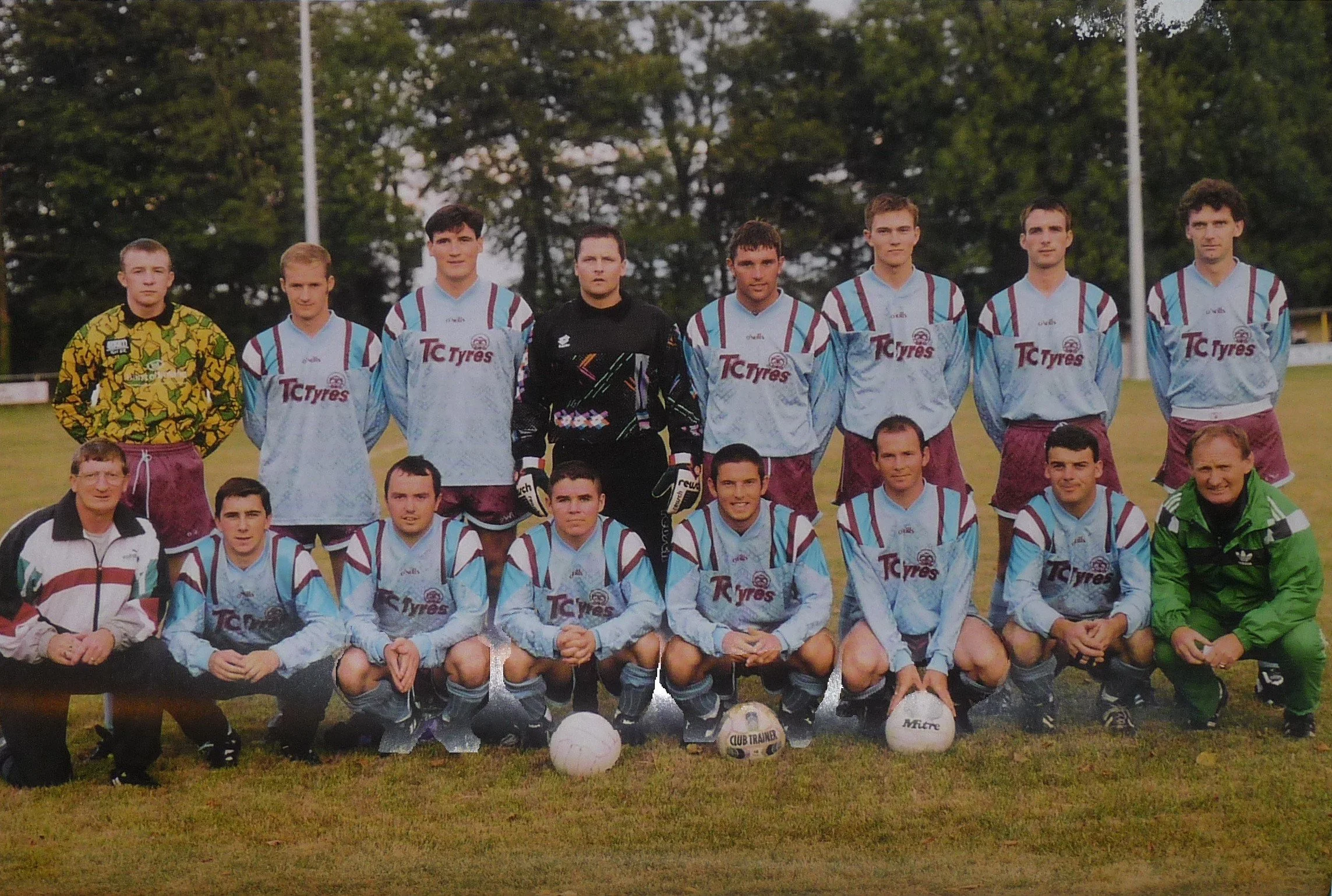
Kilkenny City squad photo.
Photo Credit: @shirtsvskins_ie on X
Successful local businessman Tom “TC” Cantwell brought sharp business acumen and generous funding to club operations. In 1989, local sportswriter Enda McEvoy began producing a fanzine titled Every Man a Football Artist, in tribute to the club’s original name.
Copies of the cult favourite are on display today at the National Library of Ireland. The same year, a 2-0 victory over Cobh at Buckley Park ensured that Roy Keane’s senior football debut ended in defeat.
Attendances surged as children were granted free entry, and in 1991 – now renamed Kilkenny City – the club seized its moment. A thrilling FAI Cup run under Joe McGrath captured local imagination, drawing 6,500 fans from the medieval streets to Buckley Park for a semi-final against giants Shamrock Rovers.
They lost by a single goal, but the occasion proved Kilkenny could be a football city, at least for a day.
That momentum quickly stalled. This was not for a lack of trying on new manager John Cleary’s part – he went so far as to doctor Owen Heary’s birth certificate to make the full-back eligible for senior football.
But by 1995, Kilkenny City held the ignominious title of having the worst league record in European football. Bryan Murphy recalled that he was perhaps the busiest goalkeeper on the continent.
The spark was rekindled in the 1996-97 season. Having already secured promotion days earlier, a team assembled by League icon Alfie Hale clinched the second-tier title against St. Francis.
John Power headed the only goal of the game to secure Kilkenny’s first piece of silverware in a decade.
Supporters travelled around the country on the team bus, through biting winter gales and sweltering August afternoons. The club’s footprint occasionally stretched far beyond the Southeast.
One Japanese pilgrim, Maiko Higashino, flew all the way from Tokyo to watch Kilkenny take on Galway – simply to use up expiring air miles. She remains, by all accounts, the only person ever to take a long-haul flight to a Kilkenny City match.
Those halcyon days also saw support from Brian Cody, who would later become the greatest hurling manager of all time. DJ Carey – a chequered character nonetheless regarded by many as the most skilful hurler to ever grace the game – made a playing appearance against Waterford.
‘The Dodger’, as Carey is known, even briefly flirted with Hale’s offer of a permanent move to football. Soon after, Kilkenny gave a debut to star young striker Michael Reddy, who would go on to play for Sunderland in the Premier League.
But as often befalls clubs that soar too high, the top flight proved unforgiving. Players were discouraged by paltry earnings of less than €100 per game.
Performances declined and costs spiralled, as promised sponsorships and financial support failed to materialise. Kilkenny were relegated after a single season.
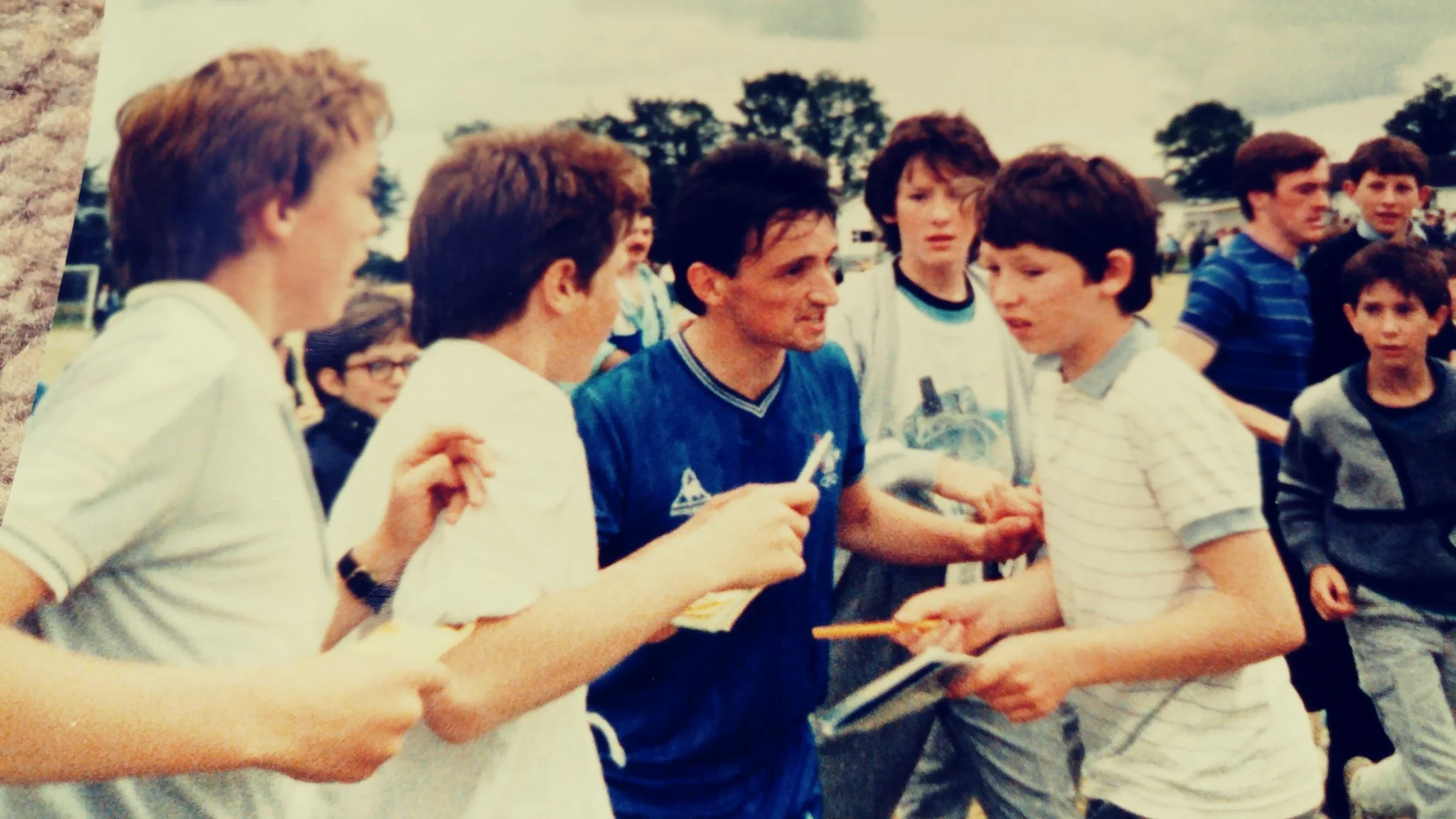
Pat Nevin during Chelsea's friendly in Kilkenny.
Photo Credit: @nmber48 on X
In 1999, the managerial reins were handed to Pat Byrne. Two decades earlier, Byrne was nutmegging Franz Beckenbauer and partying with Mick Jagger as a star of Philadelphia’s NASL franchise.
Now, he was tasked with steering Kilkenny through the gritty, rain-slicked battlegrounds of the First Division. He delivered promotion at the very first attempt.
The team’s rivalry with Waterford reached fever pitch in the early 2000s. In the 2000 promotion playoff, a heroic display from Kilkenny goalkeeper Robert Forde – capped with a dramatic penalty save – sent the Cats into the top division at the Blues’ expense.
Two years later, tensions boiled over into the notorious ‘Battle of Buckley Park’, an all-out brawl where Waterford manager Jimmy McGeough and Kilkenny defender David Whittle exchanged blows. Kilkenny finished the match with just eight men.
The following years were marked by decline. Kilkenny flitted between divisions, never regaining momentum.
The board cycled through four managers in one season. Assembling a squad with players hailing from as far afield as Florida, Curaçao, and Equatorial Guinea proved futile. Crowds dwindled to the low hundreds.
On many days, home fans were outnumbered. Rhatigan’s health declined. Despite substantial stadium redevelopment and an ephemeral onpitch revival in 2005, Buckley Park grew eerily quiet.
The club retained a small but ardent following. For a dedicated core, Kilkenny City offered something no Premier League giant could: community spirit.
Yet in our hurling-mad city of 30,000 with scant footballing tradition, the numbers simply did not add up. Kilkenny City played their final League of Ireland match in 2007, falling to Finn Harps.
In January 2008, Kilkenny City quietly withdrew from the League after twenty-two seasons. A statement cited poor results, meagre crowds, and unsustainable costs. The FAI accepted their resignation without protest. No replacement would emerge from the city.
For the players, the end was brutally sudden. Winger Barry Ryan only discovered the club’s demise via Teletext.
“I’ll never forget that Sunday,” Rhatigan recalled. “I remember being on RTÉ One, and I had to tell them it was all over. [They were] the hardest words I ever said. It was heartbreaking.”
For over a decade, Buckley Park lay dormant. The pitch grew patchy, fencing rusted, and paint peeled. The seeds of its revival were sown in 2017, when a phoenix club, CK United, began taking steps to resurrect football on the banks of the Nore.
Life returned to the ground in 2023, when volunteers from junior side Castlewarren Celtic restored the venue to host home games there.
Meanwhile, following steady growth at underage level, CK United announced last December that they would field a senior team in the national league’s third tier.
Tom O’Connor – previously of Shamrock Rovers, Wexford, and Bray – was appointed as manager to lead the team back to the promised land.
Chairman Peter Harvey and sporting director Shane Dunphy emphasise that the successor club remains deeply indebted to Rhatigan.
Next season, after nineteen years, senior football will return to Buckley Park. The return to their beloved home ground is a source of tremendous pride for Kilkenny football fans. The city has earned a place in the national structure.
After all, the infrastructure remains, as do the memories. Jim Leahy scoring their first ever league goal in 1985.
The frantic injury-time double to beat Galway 3-2 in 1997. Ben Whelehan’s 95th minute winner over Waterford at Christmas in 2001.
They will not return as Kilkenny City. The name is gone, the debt cleared, and the club’s registration void.
But in spirit, Kilkenny City will rise again. The club will be driven by the same aspiration: to anchor football in the Marble City.
With EMFA’s sixtieth anniversary upon us, CK United have provided a new spark. Once more, children in Kilkenny might dream not only of Croke Park, but of scoring triumphant winners before a jubilant Buckley faithful.
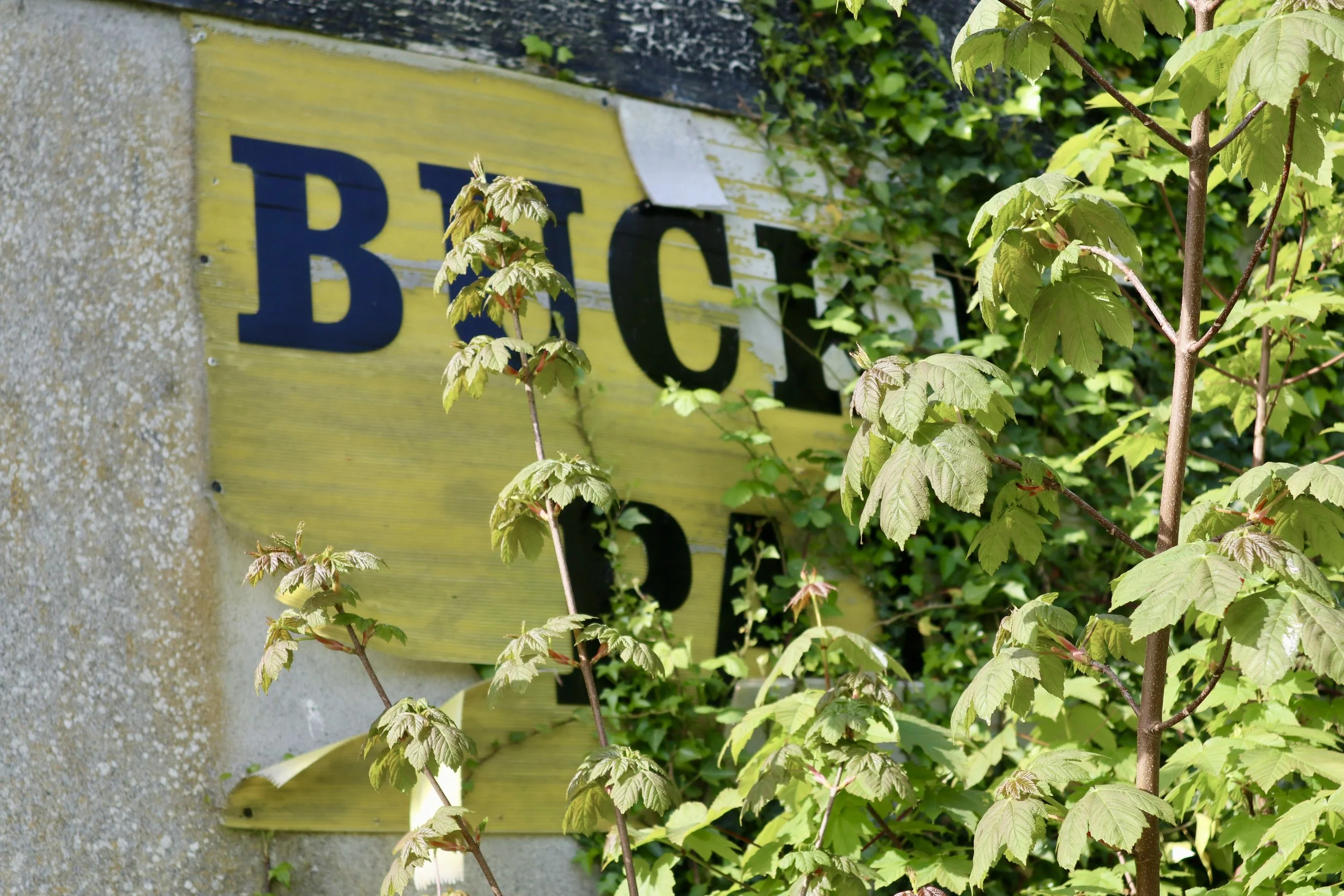
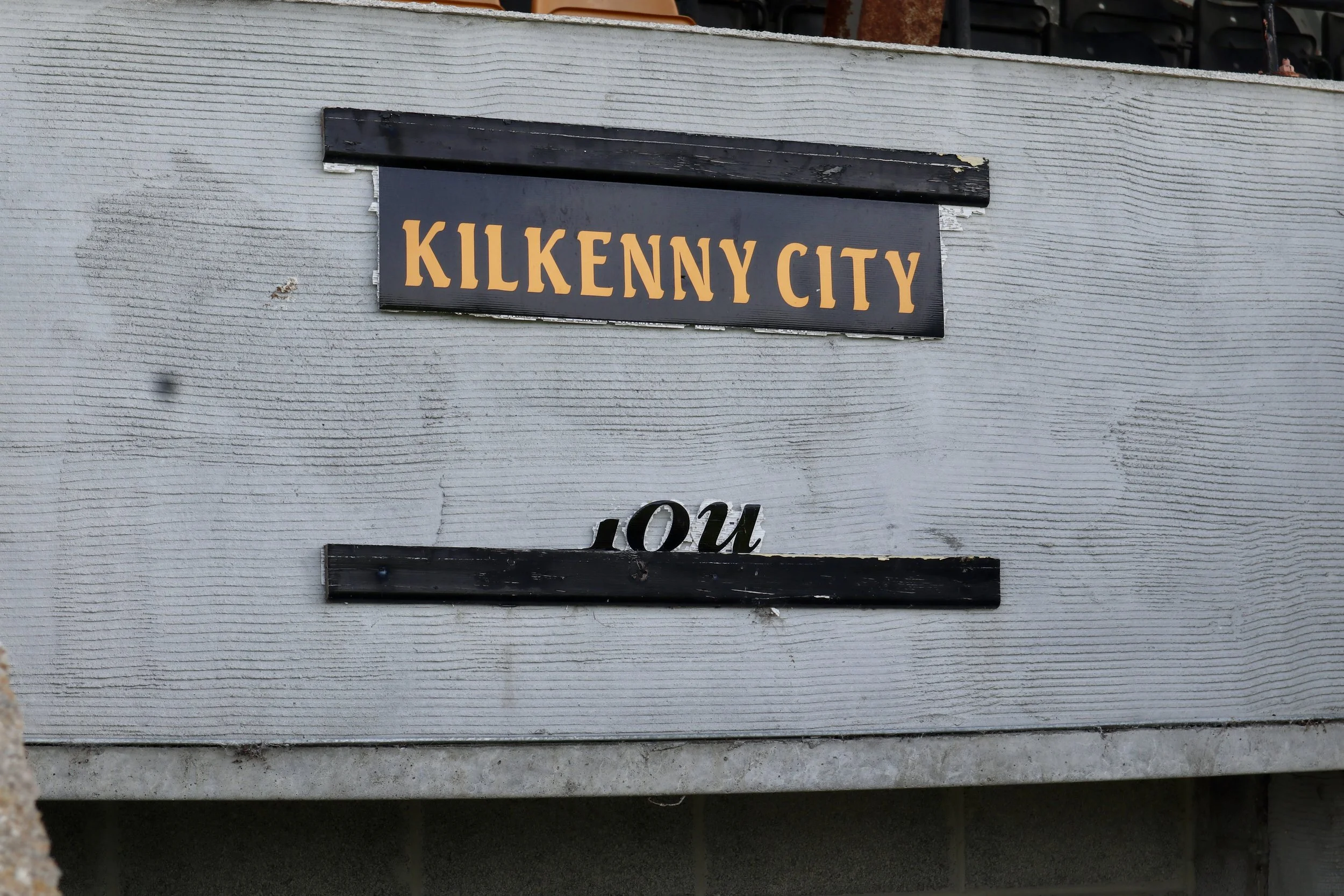
The sign at Buckley Park in the modern day.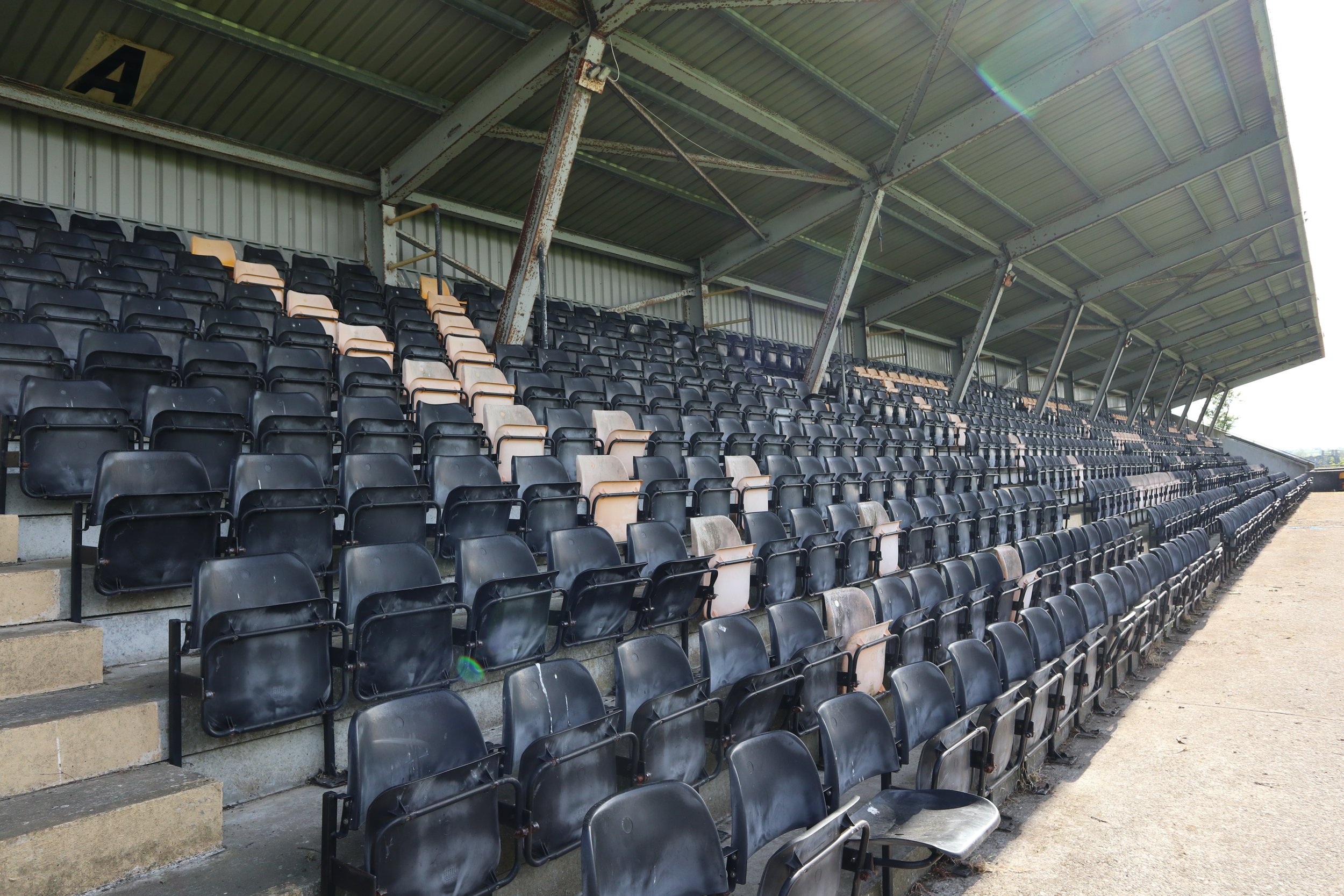
The City End Stand at Buckley Park.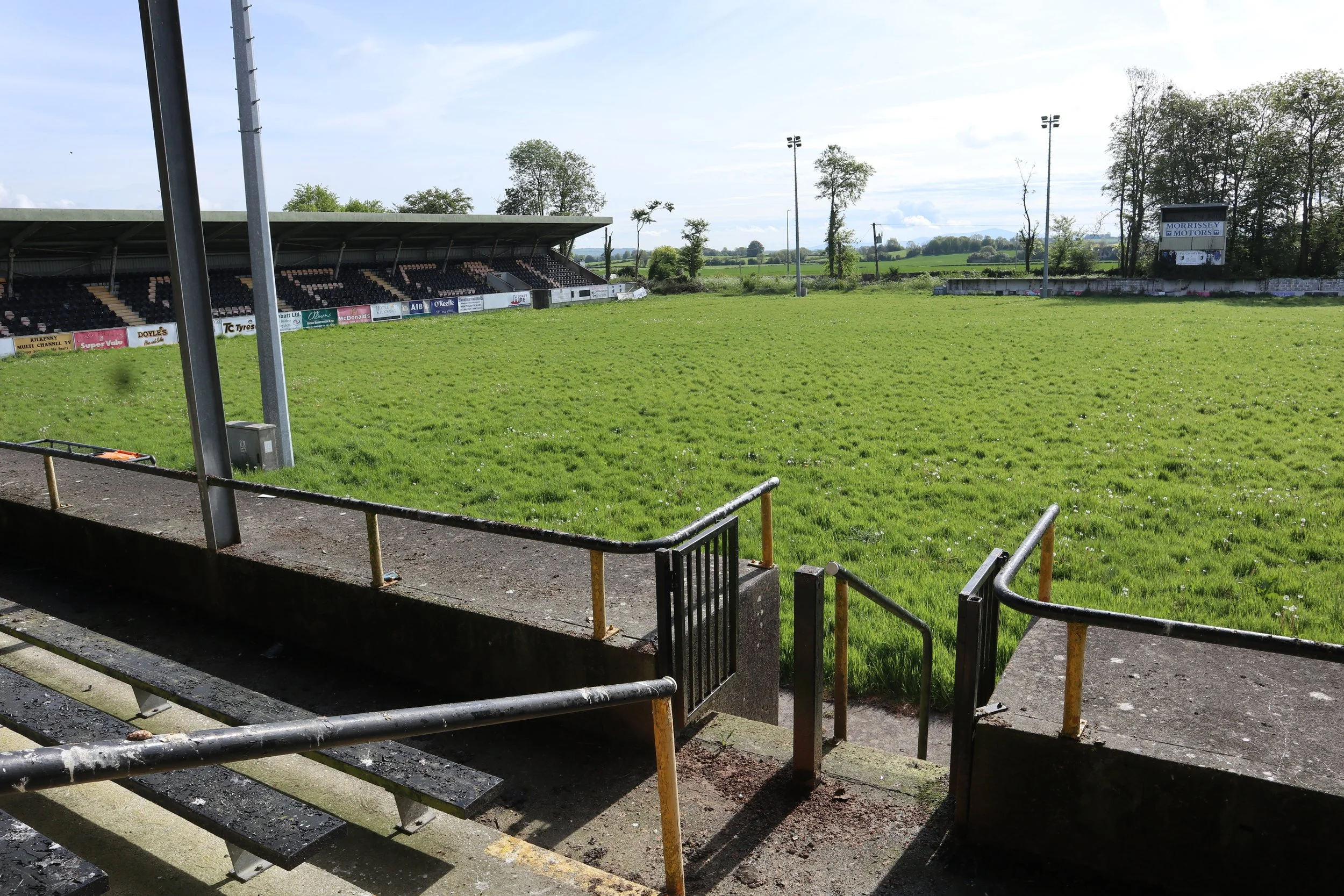
View from Tennypark House Stand.