

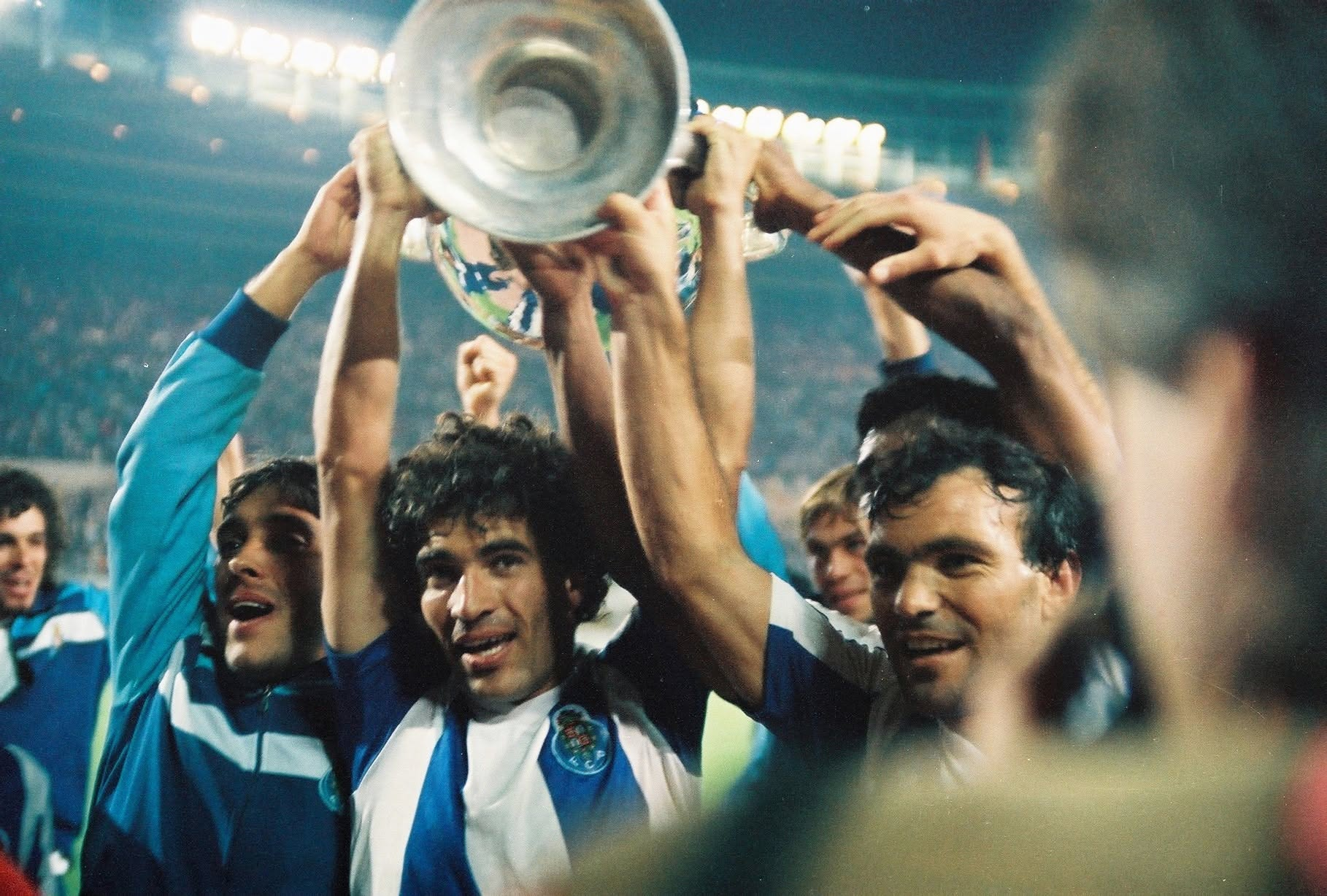
Words by Jonee | Published 19.08.2026Football has been running itself for more than a hundred years, with its rules and habits, its people and clubs, supporters and stadiums, TV shows and radio, and nowadays with social media and streaming, constantly changing and adapting to the world around it.
But what has maintained its place since day one is the legacies, regardless of winning or not in the most recent years. Once your club wins a trophy, it will never stop being a winner. Those are the rules. I didn’t make them.
We tend to live in the present and kind of ignore what came before us, it’s just something that we naturally do, and football is no different in that regard.
We all follow our own clubs, admire others, and perhaps even despise some, all part of the process of being a football fan, but sometimes I wonder whether we have become so obsessed with the present that we have forgotten how much of the game we love today was built by people, clubs and players who are no longer here, and by teams that, in some cases, we barely talk about anymore.
Football has become a permanent conversation, with no real beginning and no real end, because there is always another match, another transfer, another manager, another argument, another television programme, another social media post and another opinion waiting for us, and perhaps that is one of the reasons why the past can become so easily forgotten.
We move so quickly from one thing to another that yesterday’s great team can become last week’s news, and last week’s news can become almost irrelevant before the next round of fixtures has even started.
Yet football is not only about what is happening now.
A football club is not only the players currently wearing its shirt, the manager currently sitting on its bench, the owner currently signing the cheques or the position it occupies in the table.
A club is everything that came before it as well, every generation of players, every supporter who walked through the turnstiles, every stadium that was filled, every trophy that was lifted, every European night that became part of the club’s mythology, and every story that was passed from one generation to another.
That, to me, is what legacy is.
I am an FC Porto supporter, a die-hard supporter if I may say so. So, what I’m about to write rings all sorts of bells with me, my club, but also a few clubs that I admire, clubs that I may have very little in common with as a supporter but that I can still recognise as important pieces of the European football puzzle.
And perhaps that distinction is important.
You do not need to support a club to respect its history, and you certainly do not need to like a club to understand its importance
As football supporters, we are naturally tribal, we choose our colours, our badges, our stadiums, our heroes and our enemies, but that tribalism should not stop us from recognising greatness when it belongs to somebody else.
I know this because one of the clubs I am about to talk about is SL Benfica, and I am not a fan at all.
But history is history. And their history is enormous.
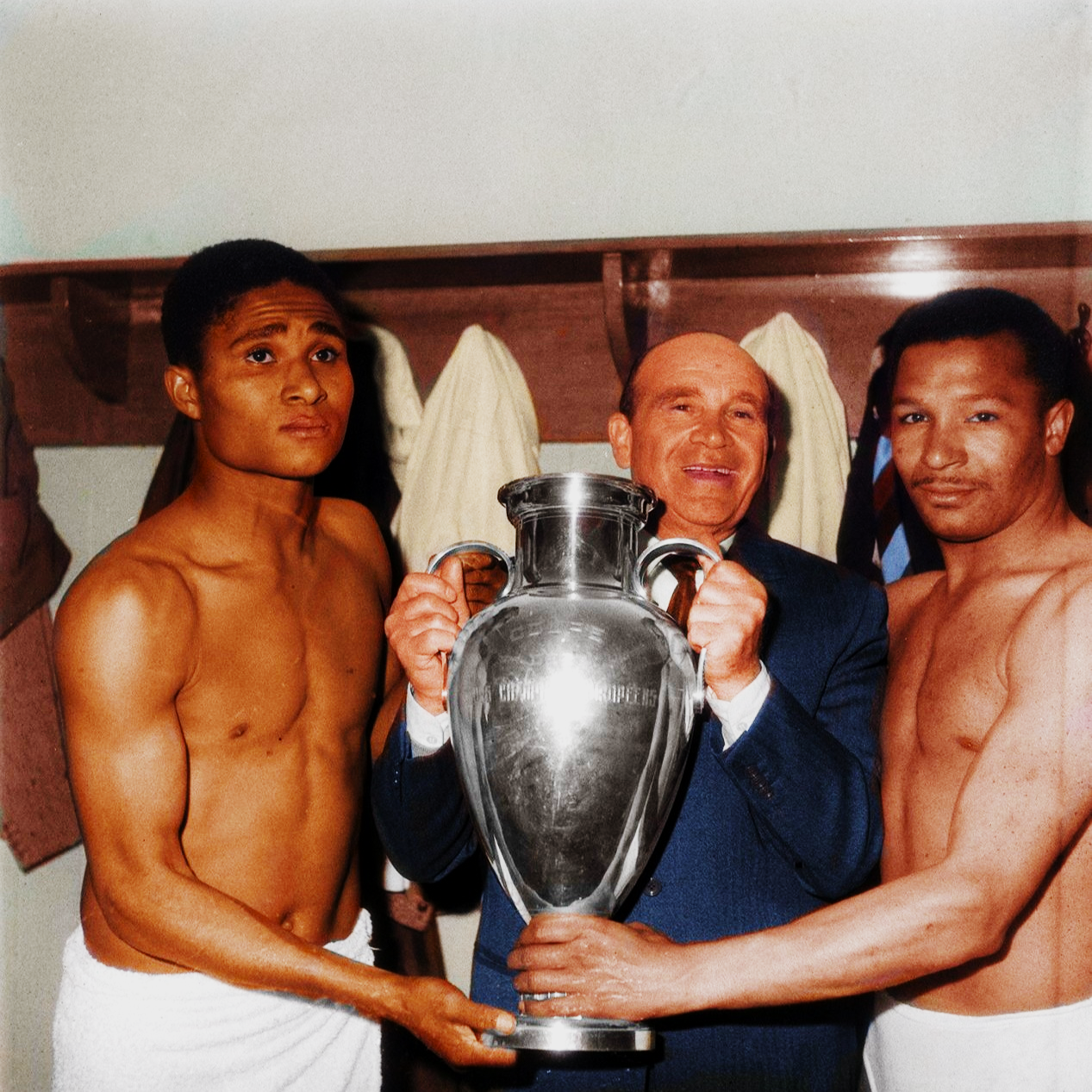
Benfica were the first club from Portugal to win the European Cup, and last claimed the trophy in 1962.
Photo Credit: Old Days Football
Money or financial power has turned our game upside down, with constant transfer records being broken, discussions about selling a part of our World Cup or clubs being bought by billionaires. Money is all around and there is no avoiding that point.
Football has always needed money, of course, and I am not going to pretend that the sport was somehow completely innocent or pure before the arrival of the modern billionaire owner, because clubs have always needed investment, players have always been paid, stadiums have always cost money and the business side of football has existed for as long as professional football itself.
The difference is the scale of it, and the way financial power has changed the competitive landscape of European football.
There is now an enormous difference between being a wealthy club and being one of the clubs operating at the very top of the financial pyramid, and that difference has consequences that go far beyond a transfer fee.
It affects who you can sign, who you can keep, who you can replace, the depth of your squad, the quality of your facilities, the size of your commercial operation and, ultimately, the number of times you can afford to fail before trying again.
But there is one thing money will never be able to buy, and that is legacy.
Sure, if you are a rich club nowadays and you win enough, in thirty to forty years, all that winning will undoubtedly become legacy as well, because history will eventually transform present success into something that future generations will remember, but for now, a legacy is still a decisive side of a club’s presence in our game.
You cannot buy a European Cup that was won before you existed.
You cannot buy the memory of a night that happened decades ago.
You cannot buy the feeling that a supporter had when his club lifted a trophy for the first time.
You can buy the player, you can buy the stadium, you can buy the sponsorship, you can buy the television exposure, but you cannot go backwards in time and purchase history.
And that is precisely why I think legacy has become even more important in the modern game.
Because when money starts to become the dominant language of football, legacy becomes one of the few things that cannot be reduced to a financial figure.
We look at the Champions League, and what once was a competition where, in theory, every season the participating clubs, or at least a big group of them, could fancy themselves as a favourite or a possible winner, but money has changed the circumstances and, let’s face it, only a handful of clubs stand an honest chance of winning the trophy.
Now, you could say that the most powerful clubs, regardless of money, have always risen to the top in the Champions League, and that is true, because Real Madrid, Milan, Bayern, Liverpool and the other traditional giants were not created by the modern financial system, and their historical success predates the modern era by decades.
But if I may offer a simple rebuttal; between 1986 and 2004, we had clubs like FC Porto, Ajax, Steaua, PSV, Marseille and Red Star winning it, so there were enough opportunities for us to have surprise winners, and not simply surprise semi-finalists or surprise quarter-finalists, but actual European champions.
That difference matters.
There is something fundamentally different about a competition when a club from outside the established financial elite can dream about winning it and, more importantly, actually do so.
Steaua Bucuresti won in 1986.
FC Porto won in 1987.
PSV won in 1988.
Red Star won in 1991.
Marseille won in 1993.
Ajax won in 1995.
And then my FC Porto won again in 2004.
Those victories did not all happen under identical circumstances, and the football world of 1986 was not the football world of 2004, but they all have something in common: they remind us that European football was capable of producing champions from a much broader range of countries and football cultures.
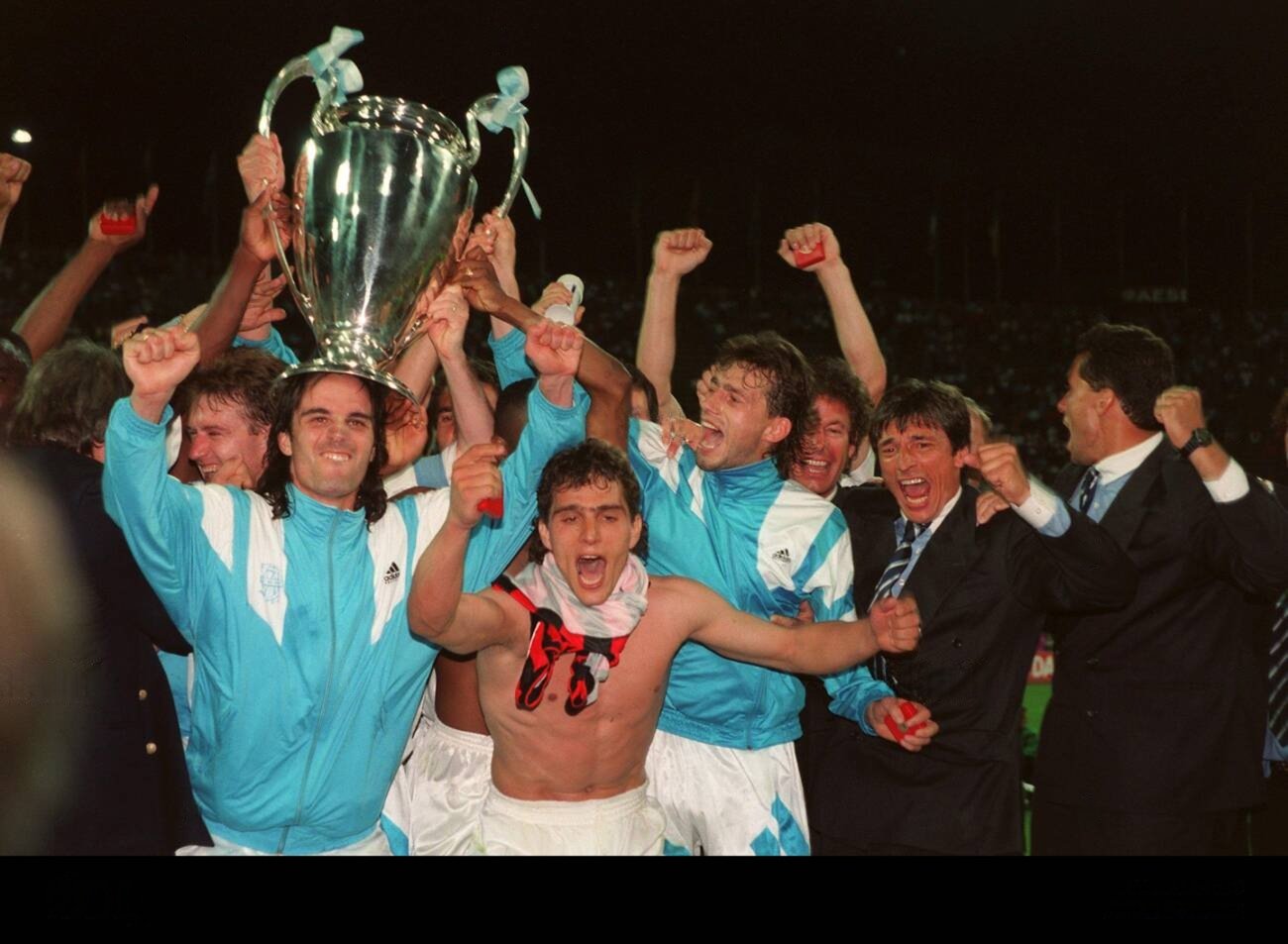
Marseille were the first winners of the newlry-branded Champions League in 1993.
Photo Credit: The 42
FC Porto won the Champions League in 2004. My goodness, it’s almost scary to think that it’s been 22 years already, and Porto remains the last winner from outside Europe’s Big Five leagues.
That is an extraordinary fact in itself, particularly because it has now been more than two decades since a club from outside England, Spain, Italy, Germany or France lifted the trophy.
And this is where the financial argument becomes difficult to ignore.
I am not saying that every season should have a different winner, because that would be ridiculous, and I am not saying that the richest clubs should not be allowed to win, because if they are the best team on the pitch then they deserve the trophy.
What I am saying is that the possibility of something unexpected happening is part of what makes football so compelling, and when the economic structure of the game makes those possibilities increasingly rare, something is inevitably lost.
The Champions League needs its giants, but it also needs the memory of the clubs that once challenged them.
Legacies matter, and we should all do a better job when talking about the likes of Ajax, Celtic, Steaua, FC Porto, Red Star, PSV, SL Benfica and Feyenoord, because although they won in different times, they were the ones who have been able to stand tall and face these giants, and more amazingly, beat them in their own arena.
There is something almost permanent about winning the European Cup.
A club can go through years of decline afterwards, it can lose its best players, it can struggle financially, it can fail to qualify for Europe, it can become a shadow of the team that once conquered the continent, but the trophy remains in the history books, and nobody can take it away.
That is the beauty of football.
You can argue about a club’s current level, you can argue about whether its best days are behind it, you can argue about whether it deserves to be considered a European giant today, but you cannot argue with the fact that it once was.
Once your club wins a trophy, it will never stop being a winner.
Those are the rules. I didn’t make them.
And perhaps that is why the idea of legacy is so important to supporters of clubs that are no longer at the very top. History gives you something that the present cannot always provide, particularly when you know that your club is competing against opponents with resources that are simply not available to you.
It gives you proof.
Proof that your club has been there before. Proof that your badge has been on the biggest stage. Proof that, once upon a time, the impossible was possible.
We look at Celtic FC nowadays, and probably most of us don’t see them as a giant, not in a European sense, but it wasn’t long ago that Celtic was rivalling the big English clubs for signings, their stadium is still sacred ground, the atmosphere there being a mixture of magical and mystical.
Yes, their best years when it comes to European competitions are most likely behind them, but it’s still Celtic. They were the first British club to win the Champions League, European Cup at the time, in 1967, and that alone is enough to put some respect into their name.
Even if you forget it. And we do forget these things.
We look at the current Celtic team, their recent Champions League campaigns, the current squad and the current level of competition, and we judge them according to those things.
But the history of Celtic does not disappear simply because the club is not regularly competing with Real Madrid or Bayern Munich in the later stages of the competition.
The Lisbon Lions still happened. Celtic still won the European Cup.
They remain the first British club to do it, and their victory belongs to the history of the competition just as much as the victories of Real Madrid or Milan.
For supporters, those moments become more than football results. They become family stories.
Someone who was there tells someone who was not, and then that person tells someone else, and eventually a match from 1967 can still have meaning to somebody who was not even born when it happened.
That is one of the strange and wonderful things about football, because very few sports allow history to become so personal.
A trophy can become an inheritance. A player can become a family legend.
A stadium can become a place that people feel they know before they have ever visited it. And that is what legacy does.
It turns something that happened once into something that can continue happening in the imagination of supporters for generations.
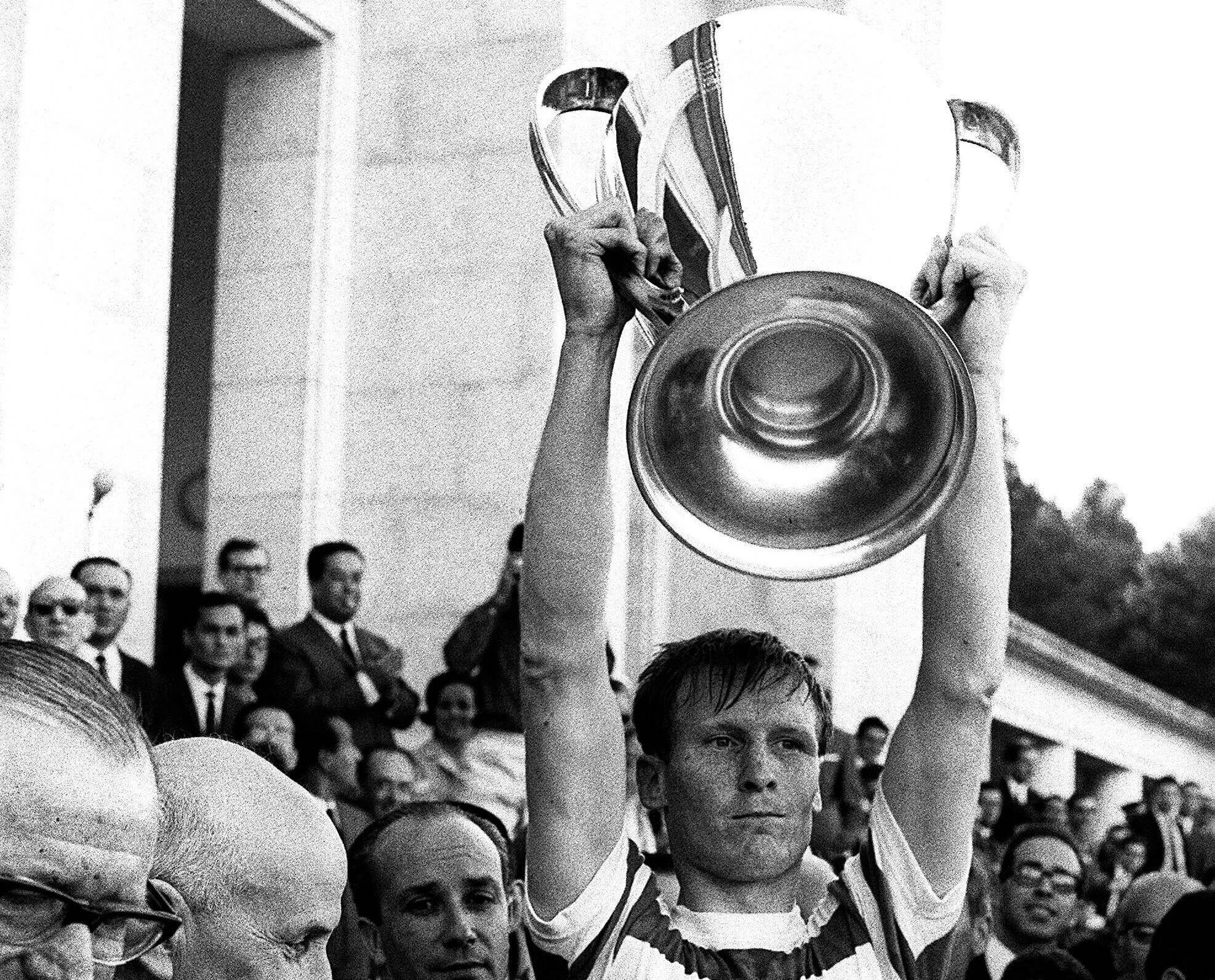
Captain Billy McNeill lifts the European Cup following Celtic's victory of Inter Milan in Lisbon.
Photo Credit: The Guardian
Steaua Bucuresti was the only club from Eastern Europe (we can argue about Red Star’s location later) to reach the pinnacle of European Football, and if we think about those wondrous teams by Dynamo Kyiv, especially during the 1980s, the more special it becomes what Steaua managed to achieve.
The club ended up fading away with the fall of the Berlin Wall, and later on due to economic and political reasons, but their achievement deserves to be honoured.
The 1986 European Cup final is one of those moments that becomes more remarkable the further we move away from it, because Steaua faced Barcelona in Seville and won the final on penalties after a goalless match, with Helmuth Duckadam becoming the central figure by saving all four of Barcelona’s penalties.
That is not merely an unusual result.
It is one of those nights that becomes almost impossible to reproduce because of the circumstances surrounding it, and because the story itself becomes larger than the ninety minutes.
Steaua were European champions. A club from Romania had reached the summit of European football and defeated Barcelona to get there.
And then, as football so often does, the world around the club changed.
The political landscape of Eastern Europe changed dramatically, the economic realities changed with it, and the football landscape changed as well, meaning that the conditions that had allowed clubs from that part of Europe to compete at the very highest level became increasingly difficult to reproduce.
But none of that changes 1986.
That achievement remains.
That is why I think we need to be careful when we talk about clubs that have fallen away from the European elite, because falling away from the top does not erase what happened when they were there.
SL Benfica, which I’m not a fan at all, is also a huge legacy club, with two European Cup trophies won in the 1960s, when they were the FIRST team to finally break the hold that Real Madrid had, and still has, over the competition, to which they added another incredible five finals throughout three different decades.
The names Eusebio or Coluna should be in everyone’s memory when the discussion is the Champions League.
They might be my rival club, but their history is paramount to the history of the competition. And this is where football rivalry and football history have to be separated, at least for a moment.
I can dislike Benfica as a Porto supporter, I can celebrate when they lose, I can enjoy the rivalry and everything that comes with it, but none of that changes what Benfica achieved in European football.
The early 1960s Benfica teams belong to the history of the European Cup, and Eusebio in particular became one of the defining figures of that era.
Their victories in 1961 and 1962 ended Real Madrid’s initial domination of the competition after five consecutive titles, and that alone tells you the scale of what Benfica achieved.
They did not simply win a trophy. They interrupted a dynasty.
And perhaps that is another part of legacy that we sometimes overlook, because history is not only about how many trophies you have, but about what your victories meant at the time.
There are victories that add another trophy to a cabinet, and there are victories that change the direction of a competition.
Benfica’s European story belongs in the second category.
Red Star from Belgrade won the European Cup back in 1991, showcasing a flair and skill that was well-known by anyone who followed Yugoslavia and their games.
The Balkans might just be one of the most amazing places on Earth when it comes to producing sporting talent.
Look at the NBA, or handball, and they can truly find talented youngsters anywhere they look, with football being no different in that regard.
Red Star ended up being the pinnacle of the Balkans at a club level, winning the European Cup in 1991 after a goalless final against Marseille and a 5–3 victory on penalties. A massive hug to Savicevic, someone I’ve had the pleasure of meeting and a true legend of the game.
There is something particularly beautiful about that Red Star story because it sits at the end of an era, both in football and in European history more generally, and only months later the political landscape of Yugoslavia would begin to change in ways that would have enormous consequences far beyond football.
But again, the trophy remains. That is what we keep coming back to.
The world around a football club can change almost beyond recognition, but a European Cup victory does not change with it.
It remains exactly what it was. A victory. A European championship. A night when a club reached the very top. And when supporters look back at those moments, they are not necessarily thinking about modern financial structures or UEFA coefficients or transfer valuations; they are thinking about their players, their stadium, their friends, their families and what it felt like to see their club become European champion.
That is legacy.
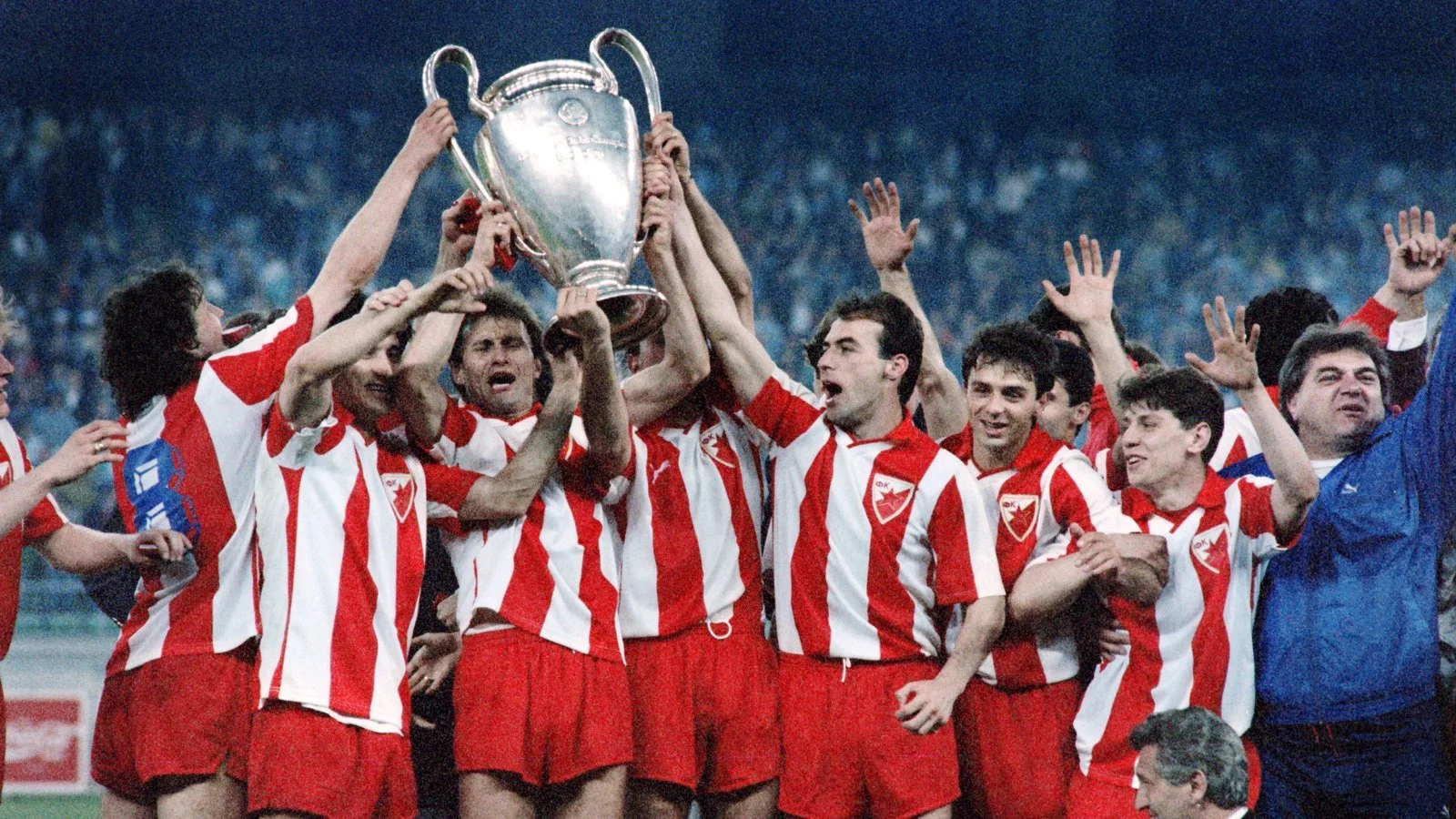
Red Star Belgrade won the European Cup in 1991.
Photo Credit: NY Times
Then we have the Dutch teams, always famous for attacking football, for an all-out approach to our game, and their clubs have had their share of success in the biggest competition, with PSV and Feyenoord winning one trophy each. Both historical achievements that should be treasured forever.
And no, I’m not forgetting Ajax, but like I said at the beginning, we all have clubs we support and clubs we admire, and Ajax is in that category.
Feyenoord’s European Cup victory came in 1970, while PSV won in 1988, and both remain among the relatively small number of clubs from outside the traditional financial powers of modern European football to have won the competition.
There is something about Dutch football that has always felt slightly different to me, particularly in the way the country’s clubs have contributed to the identity of European football, not only through trophies but through ideas, styles and generations of players.
The Netherlands has produced an extraordinary amount of football talent relative to its size, and clubs such as Ajax, PSV and Feyenoord have repeatedly been important stages in the development of that talent.
But PSV and Feyenoord deserve to be mentioned on their own terms.
Their European Cup victories were not simply part of Ajax’s story or part of Dutch football in general; they were their own achievements, their own nights, their own generations and their own pieces of history.
And that matters because legacy is not something that should be distributed according to who is currently fashionable.
A trophy won fifty years ago is still a trophy. A European Cup won in 1970 or 1988 is still a European Cup.
Ajax, winner of four European Cups and Champions League titles, with finals played across different decades, showcasing their staying power within the Elite of European Football.
Their first wins were in the 1970s, and although plenty has been written about them, sadly I wasn’t alive back then, so I prefer to give a special mention to their win in 1995, with a team filled with youngsters and a positive attitude towards the game.
Some of my most important football memories as a pre-teen are related to this Ajax team and its players, who I then followed for the rest of their careers, from van der Sar to Litmanen, the de Boer twins, Seedorf and Davids, Kluivert, etc.
This special group of players reminded everyone that Ajax was a special club and its legacy an ever-evolving part.
And perhaps this is where the idea of legacy becomes more personal.
I wasn’t alive for Ajax’s first great European triumphs, so those victories exist for me in a different way, through photographs, stories, old footage and the names of players who became almost mythical before I had any chance of seeing them play.
But 1995 was different. That team was part of my football life.
It was something I could see happening, something I could watch and follow, and the players were young enough that, as a pre-teen, there was a sense that they might remain there forever.
Of course they didn’t. Football never allows that.
Players move on, careers develop, managers leave, clubs change, generations disappear and new ones take their place, but the memory of that team remains precisely because it became attached to a particular moment in my own life. And I suspect that is how football history works for most supporters.
There is always a moment when history stops being something you read about and becomes something you experienced.
For some people it might be a World Cup. For others it might be a European Cup final. For others it might simply be the first time their father took them to the stadium.
For me, Ajax in 1995 was part of that process.
The players became names I followed for years afterwards, and eventually their careers became part of my understanding of football itself.
Van der Sar, Litmanen, the de Boer twins, Seedorf, Davids, Kluivert and the rest of that generation were not simply Ajax players anymore; they became part of my football memories.
And that is why legacy is not static. It evolves with every generation.
The same club can mean something completely different to a supporter born in 1960 and to another supporter born in 1990, but they can still both feel that they belong to the same history.
That is one of the great powers of a football club.
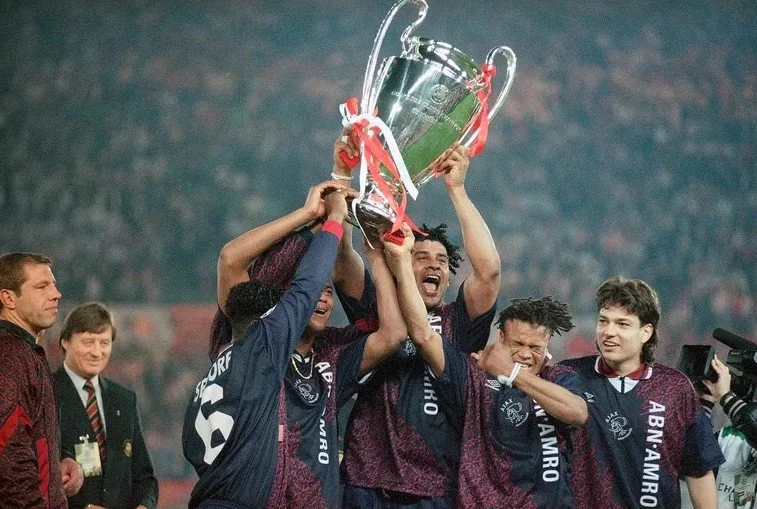
Ajax's last European trophy came in 1995.
Photo Credit: Seattle Times
Ultimately, we inherit football.
Nobody starts with a completely empty understanding of the game.
Someone introduces us to a club, someone tells us who the rivals are, someone shows us an old shirt, someone explains why a particular player is important, someone tells us about a match that happened before we were born, and slowly all those stories become part of our own understanding of what the club means.
The funny thing is that eventually we begin telling those stories ourselves.
The supporter who once listened to his father talk about a great team becomes the father talking to his own child about another great team.
The photographs become older. The shirts become vintage. The players become legends.
And the match that was once simply a football match becomes part of the mythology of the club.
That is why I struggle with the idea that football should be understood only through the present.
The present is important, obviously, but it is temporary. Legacy is what remains after the present has disappeared.
Like I’ve mentioned before, it is quite easy for us to focus just on what is happening nowadays, but these legacies need to be protected and remembered.
The Champions League wouldn’t exist without these clubs, without the things they’ve achieved, no matter how long ago it was.
And when I say protected, I don’t mean that we should freeze football in time or pretend that the game should never change, because that would be impossible and, frankly, undesirable.
Football should evolve. The rules evolve. The tactics evolve. The stadiums evolve. The broadcasting evolves. The players evolve. The supporters evolve.
Even the meaning of being a supporter evolves. But evolution should not require forgetting.
That is where I think we have got something wrong.
We have become very good at documenting everything and, somehow, very bad at remembering it.
We have endless footage, endless statistics, endless archives and endless conversations, but because there is always something new arriving, we can still lose sight of the significance of what came before.
A club that was once European champion becomes a club that “used to be good”.
A legendary player becomes an old name. A historic final becomes a clip on social media.
And perhaps that is unavoidable, but I don’t think it is something we should accept without question.
Because the moment we stop caring about history, football becomes much easier to sell as nothing more than a product.
And football is more than a product. At least it should be.
There is another reason why these legacies matter, and that is because they give hope to everyone who supports a club that does not have the financial power of the biggest European giants.
If your club is not Manchester City, Real Madrid, Bayern Munich, Barcelona, Liverpool, Paris Saint-Germain or one of the other clubs operating at the highest financial level, what exactly are you supposed to believe in?
You cannot always believe that your club will simply spend its way out of trouble. You cannot assume that every great player will stay. You cannot assume that every promising youngster will still be wearing your shirt five years later.
You cannot assume that you can replace a €100 million player with another €100 million player. You have to believe in something else. You have to believe in your club. And sometimes that belief comes from history.
You look at the trophy cabinet and remember that your club has already done it. Maybe it was thirty years ago. Maybe it was fifty. It does not matter.
It happened. That is enough to keep the dream alive. Because football needs dreams.
It needs supporters to believe that something extraordinary might happen, even when the financial calculations suggest otherwise.
If we remove that possibility completely, we remove part of the emotional reason people watch football in the first place.
I understand why the giants are the giants. Real Madrid have their history. AC Milan have theirs. Liverpool have theirs. The great English clubs have built extraordinary European histories, and the financial power of modern football has only reinforced the importance of many of them.
But the history of European football is not exclusively theirs. That is my point. The Champions League is not a private museum belonging to the richest clubs.
Its history belongs to Celtic, Benfica, Feyenoord, Ajax, PSV, Steaua, Red Star and Porto as well. It belongs to every club that lifted the trophy. And perhaps even more importantly, it belongs to the supporters who made those victories meaningful.
A trophy without supporters is simply an object. A trophy with generations of people behind it becomes something else. It becomes a symbol. It becomes a story. It becomes part of a city, a country, a family, an identity.
That is why a club’s legacy cannot be measured purely by the number of trophies it has won. The trophies matter enormously, obviously, but what happens around them matters too.
“Flying” from Amsterdam to Porto, allow me to indulge in my very own club, my sweet, sweet FC Porto, a proud two-time winner of the European Cup and Champions League, in 1987 and 2004.
A club that has a record that should be the talk of the town, with the most wins against clubs from the Big 5 leagues since the European Cup rebranded as Champions League, by a considerable margin I must add, showing time and time again that even if winning the competition is not a realistic proposition anymore, FC Porto is still the club that will put up more of a fight against these economic powerhouses, and that is a massive reason to be proud.
Yes, you win the trophies, but we will throw some bloody punches along the way. That is the Porto way.
And perhaps there is no better place to finish this argument than with Porto, because my own club represents so much of what I have been trying to describe.
Porto has won the European Cup twice, once in 1987 and again in 2004, with seventeen years between the two victories, and those two teams came from very different football worlds.
The 1987 side defeated Bayern Munich 2–1 in Vienna, coming from behind to win the final, while the 2004 team defeated Monaco 3–0 in Gelsenkirchen under José Mourinho.
Those two victories are obviously the centrepieces of Porto’s European legacy, but I think the story is bigger than the trophies themselves. It is about the way Porto has repeatedly had to compete.
It is about the reality of being a club from Portugal in a European football economy where the financial resources available to the Premier League, La Liga, Serie A, Bundesliga and Ligue 1 clubs can be dramatically different from those available to clubs outside those leagues.
It is about finding players before they become stars, developing them, giving them a stage and then, inevitably, watching many of them leave.
It is about rebuilding. It is about doing it again, and again.
That does not mean Porto is a permanent underdog, because it would be disrespectful to the club’s history to describe it simply that way, but it does mean that the club has had to find ways of competing with opponents whose economic circumstances are very different.
And that is precisely why 2004 remains such an important part of the argument.
Porto’s 2004 victory remains the last time a club from outside the Big Five leagues won the Champions League, and it also remains the last time a Champions League final featured a club from outside those five leagues.
Twenty-two years later, that fact feels increasingly remarkable. It also makes that victory feel increasingly valuable. At the time, perhaps we did not fully understand what was happening.
We were simply enjoying Porto. We were watching Mourinho. We were watching Deco, Ricardo Carvalho, Maniche, Costinha, Carlos Alberto, Jorge Costa, Vítor Baía and all the others.
We were watching a team that believed it could win. But looking back now, with the financial landscape of European football having developed the way it has, the achievement takes on another dimension.
It was not simply that Porto won the Champions League. It was that Porto won it from outside the financial centre of European football, and nobody has managed to repeat that achievement since.
That is legacy.
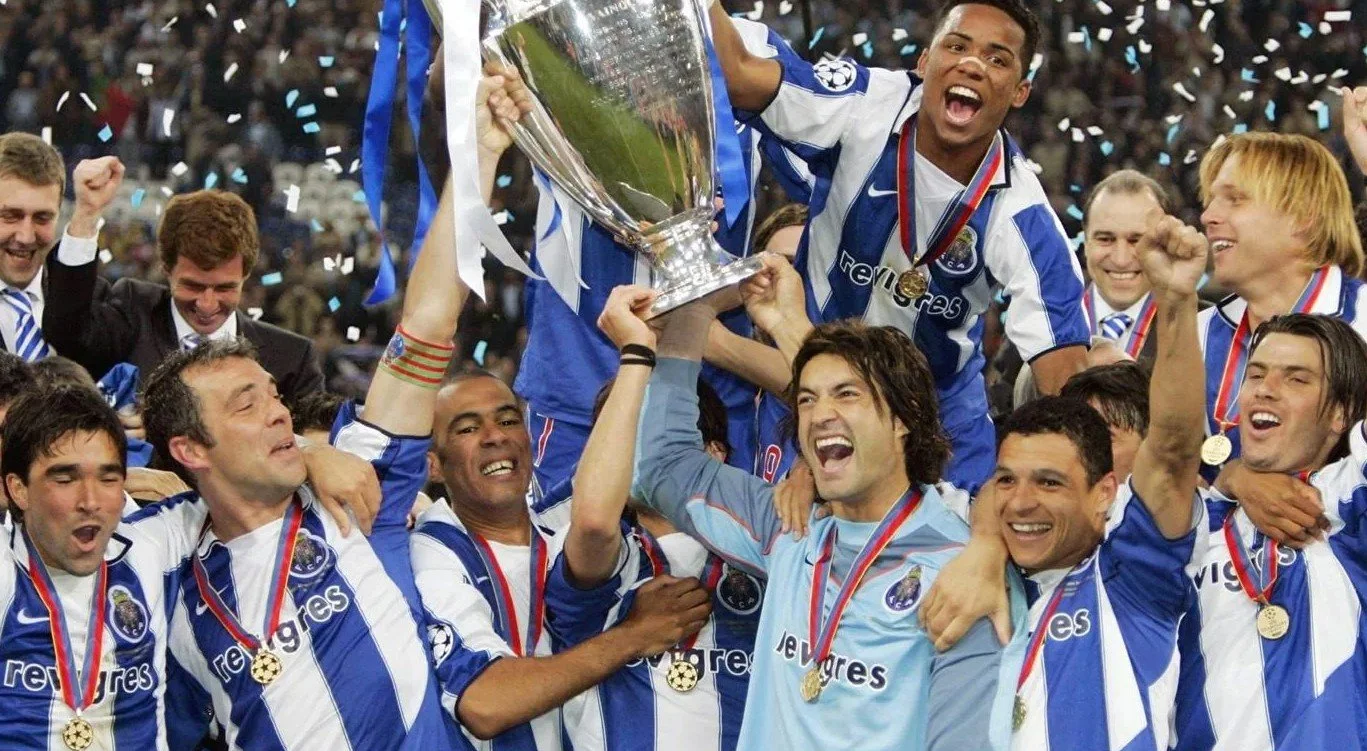
Porto are the last club outside of the 'Big 5' leagues to win the Champions League.
Photo Credit: UEFA
This is also why I find it frustrating when the current financial power of clubs becomes the only measure of their importance. If Porto is not expected to win the Champions League today, does that somehow make 2004 less important? Of course not.
Does it make 1987 less important? Of course not. The current reality and the historical reality can exist at the same time.
Porto can be a club that faces an enormous financial disadvantage against certain European opponents and still be a club that has won the biggest trophy in European club football twice.
Those two statements do not contradict one another. In fact, they make each other more interesting. The same applies to Ajax, Celtic or PSV. Their current position does not erase their historical position.
And perhaps that is the point I most want people to understand; a club can fall, a club can struggle, a club can disappear from the European spotlight, a club can go decades without winning anything of real significance.
But if it has already reached the top, it will always have that. Nobody can take it away. We should all do a better job of remembering. Not because the past was necessarily better, because that is a different argument and one that I am not trying to make, but because the past gives the present context.
Without the past, the Champions League is simply a competition. With the past, it becomes a story.
A competition that has been won by Real Madrid fifteen times, by Milan seven times, by Liverpool and Bayern six times, by Ajax four times, and by clubs such as Porto and Benfica twice, and by Celtic, Feyenoord, PSV, Steaua and Red Star once, is telling us something about the history of European football that cannot be understood if we only look at the current season.
Those numbers are not just numbers. They are chapters. Some clubs wrote entire eras. Others wrote one unforgettable page. But they all belong in the same book.
And that is why I think we should be careful with the way we talk about clubs that have fallen away from the European elite. We can say that they are no longer giants. We can say that their best years are behind them.
We can say that their financial situation makes another European triumph unlikely. All of those things might be true. But we should never say that their history no longer matters. Because history does not work that way.
Ultimately, a football club is a collection of memories. Some are shared by millions of people. Some belong to a few thousand. Some belong to one family. Some belong to one person. But they all matter. A supporter can remember a goal that happened thirty years ago with more emotion than a match that happened last weekend.
A person can wear a shirt from an old team and feel connected to a period they never experienced. A stadium can be rebuilt and yet remain sacred because of everything that happened on the ground before it. A player can retire and still be sung about. A trophy can sit behind glass for decades and still make somebody emotional.
That is football. And that is why legacy matters.
We are not simply supporting a team of eleven players. We are supporting everything that came before those eleven players, the generations who built the club into what it became.
And eventually, whether we like it or not, we become part of that history too.
That is why the legacies of Ajax, Celtic, Steaua, Porto, Red Star, PSV, Benfica and Feyenoord deserve to be remembered, because they represent something that modern football desperately needs to retain: the idea that history matters even when the present has moved somewhere else.
The Champions League wouldn’t exist without these clubs, without the things they’ve achieved, no matter how long ago it was.
No matter how much football changes, the past remains.