Words by Adrián Morales | Published 09.10.2026It may sound like a cliché, but Red Bull has undoubtedly put Leipzig on the map of modern European football.
In the last five years, RB Leipzig has claimed more domestic trophies than Hamburg, Schalke 04, and Borussia Mönchengladbach combined over two decades. They have also become a regular attendee in the Champions League, even reaching the semi-finals on one occasion.
However, long before the energy drinks giant arrived, two entities with glorious pasts and a fierce rivalry coexisted in Leipzig: BSG Chemie Leipzig and 1. FC Lokomotive Leipzig.
The history of both clubs is defined by substantial differences but also by striking parallelisms.
“During the East German era, it was common for sports institutions to be tied to state-owned, public industrial conglomerates. In our case, it was Lacke und Farben (paints and varnishes), the chemical industry from which our name 'Chemie' originates”.
These are the words of Stefan Schilde, press officer for BSG Chemie Leipzig.
“After the fall of Berlin’s Wall, these conglomerates dissolved or passed into private hands. Many teams took the opportunity to rebrand and distance themselves from their Soviet past.
The club went for FC Sachsen Leipzig (Saxony, a German region), loosely inspired by FC Bayern Munich, although fans kept chanting 'Chemie' and bringing the old banners to the stands.”
The reunification of Germany left scars as well as massive financial gaps between the East and the West, leading many Eastern clubs into insolvency. But, financial issues were not the only challenges facing the club.
“FC Sachsen Leipzig struggled heavily to remain economically viable.
Back then, the authorities backed us as the city's main representative and forcibly moved us to the Zentralstadion, a massive stadium for over 50,000 people.
Playing in a stadium that never felt like home, financial instability, poor results, along with political infighting among our own fanbase triggered a very complicated situation.
As a result, a group of supporters decided to unilaterally found Chemie Leipzig in 1997, primarily to protect the name and crest and also prevent Sachsen Leipzig from taking credit for that legacy.”
This new Chemie Leipzig, the rightful successor to the club that was twice crowned East Germany champion and represented the city across Europe, was forced to start from scratch at the bottom of German football, in the twelfth tier.
Both entities, Sachsen and Chemie, coexisted for years. While Chemie steadily climbed back up the divisions, Sachsen could not escape its financial issues and finally disappeared in 2011.
“There were attempts to merge both clubs between 2008 and 2011, but it was simply not possible.”
Adding further complexity, many fans still refused to recognize this Chemie Leipzig as the legitimate successor. A group of supporters subsequently founded another club, SG Leipzig-Leutzsch, as a tribute to their home neighborhood.
“We ended up sharing the same stadium for several seasons, with all the troubles and additional difficulties that entailed. It was an absolute non-sense situation.”
This newly minted club was not even close to reach a certain success, leaving Chemie Leipzig as the sole survivor of this entire mess.
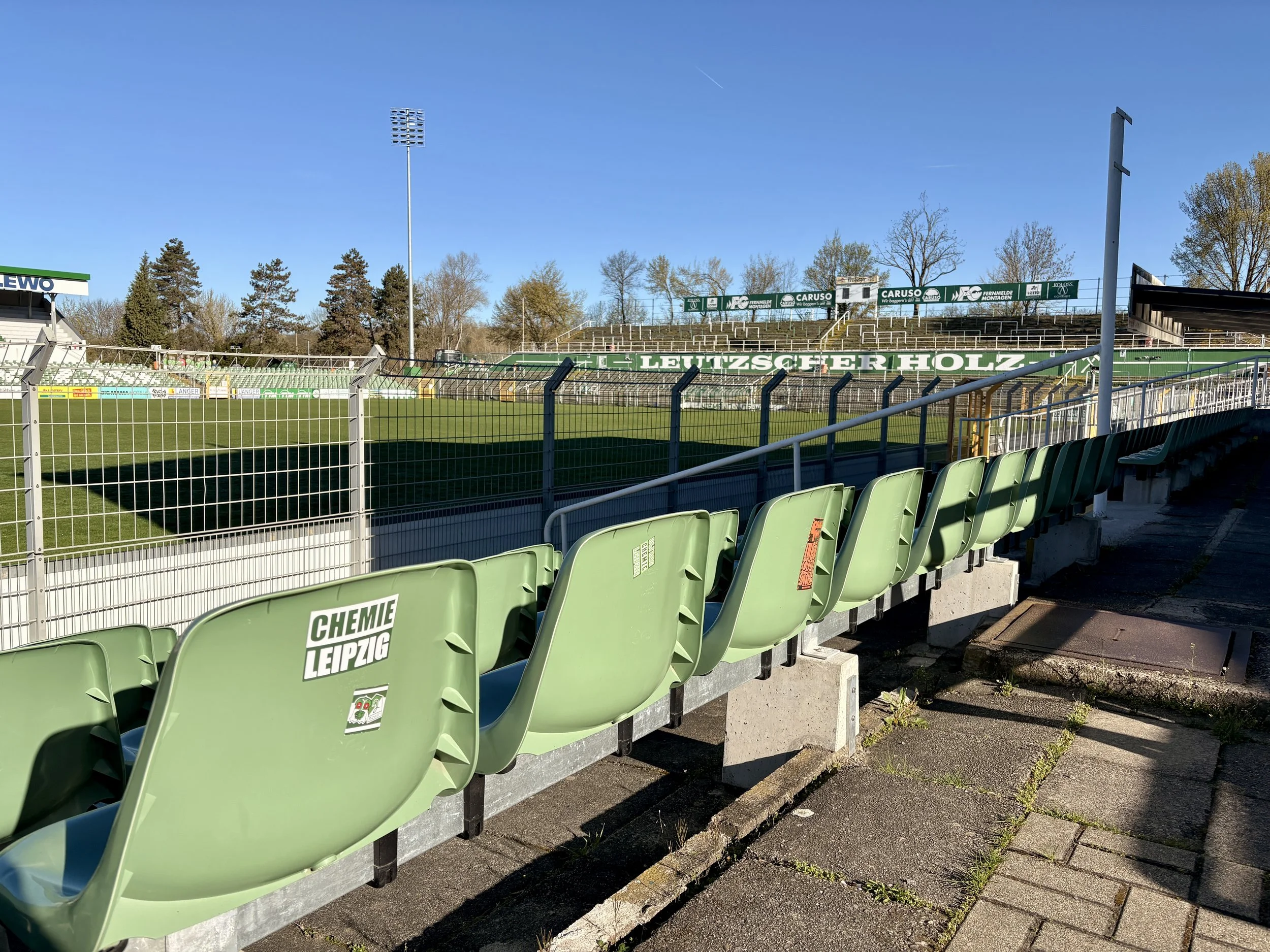
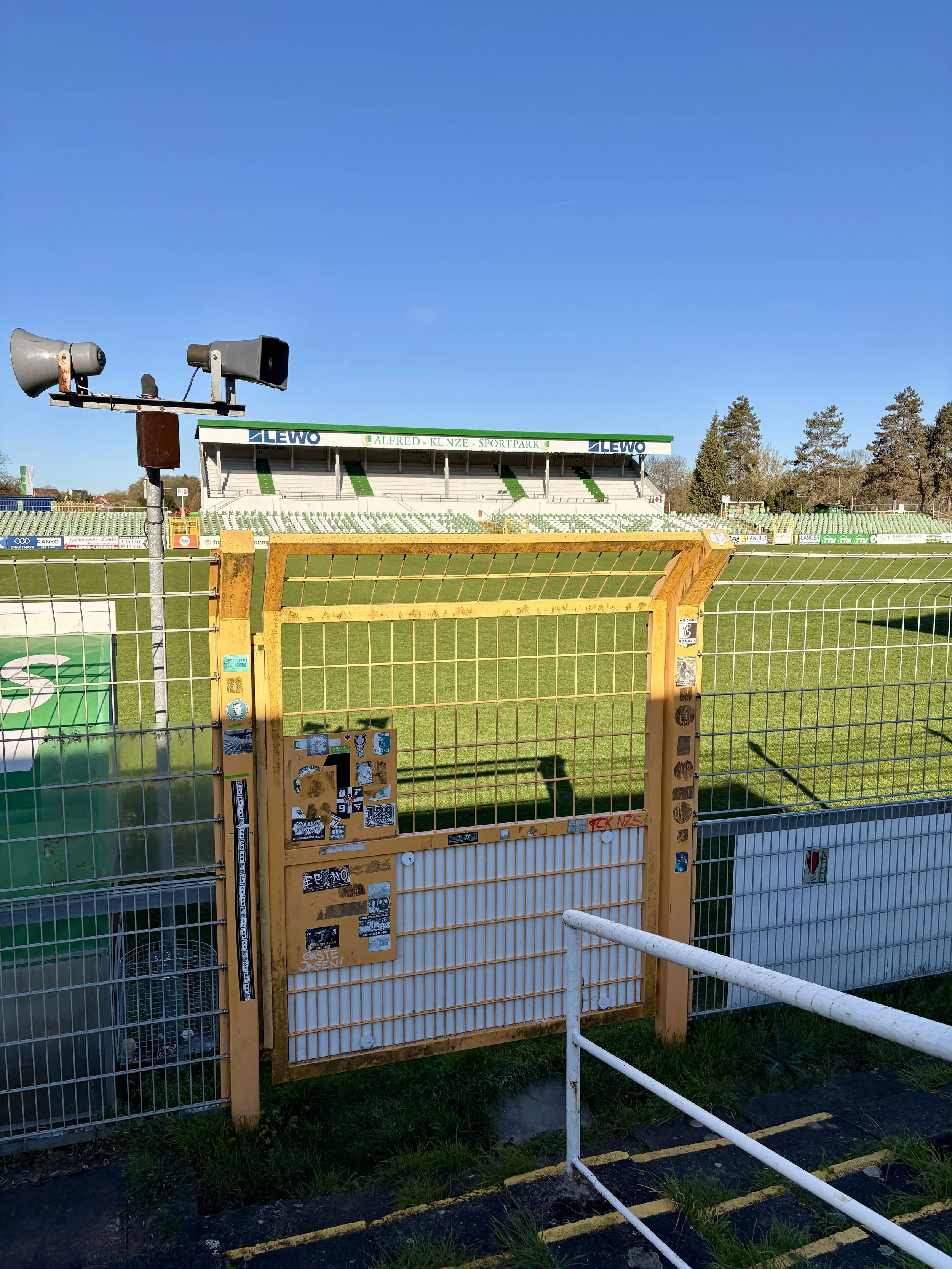
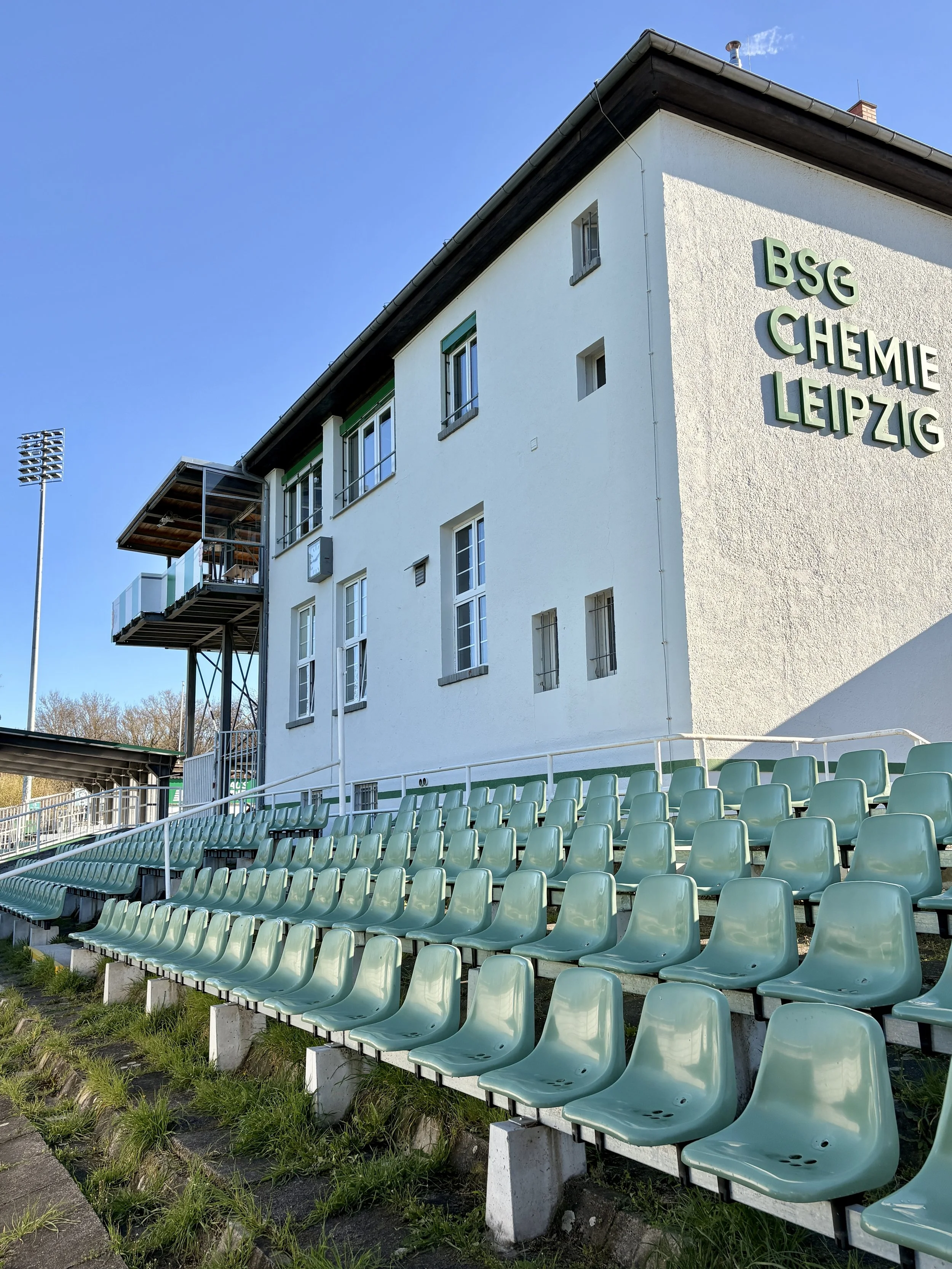
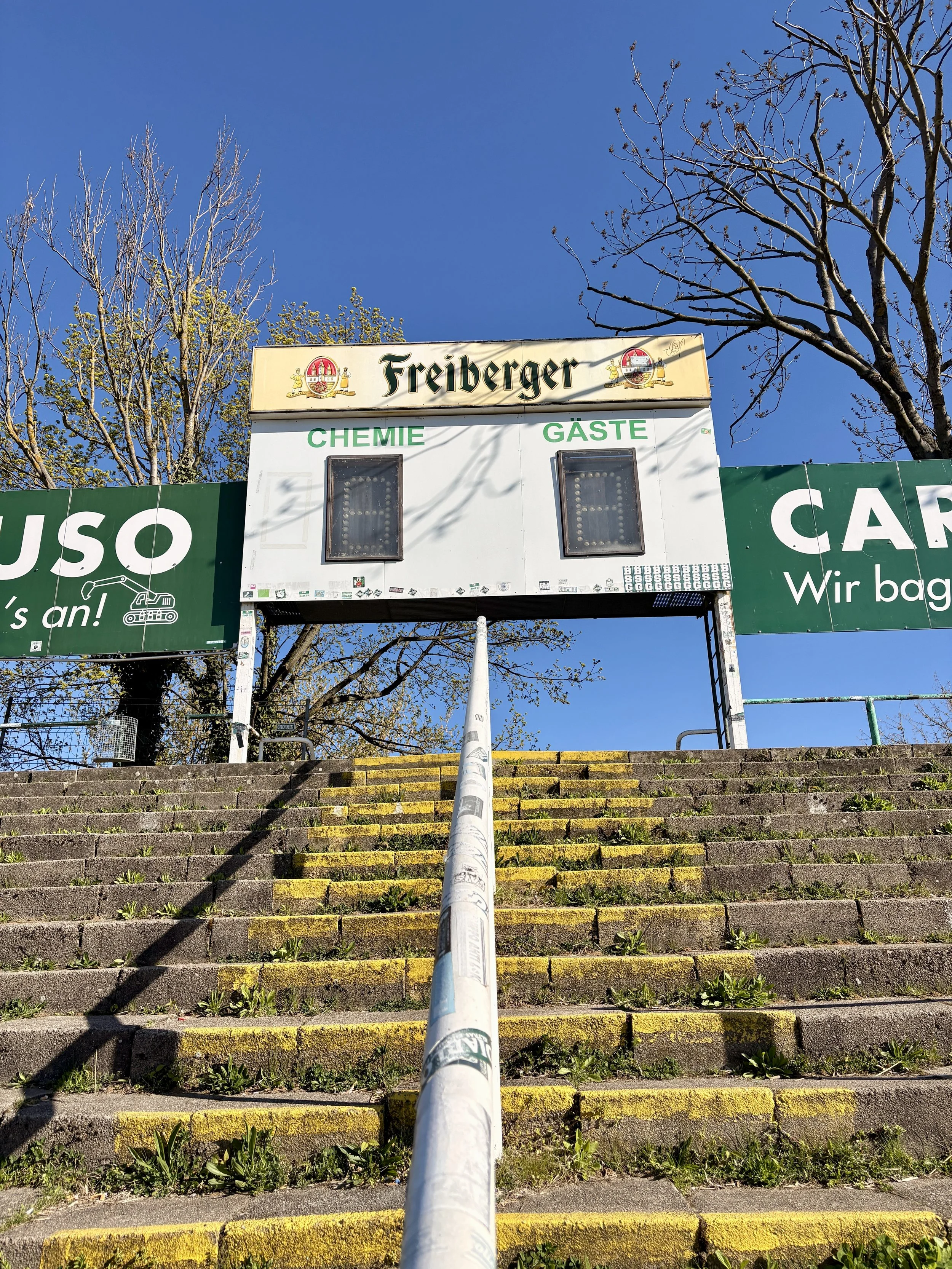
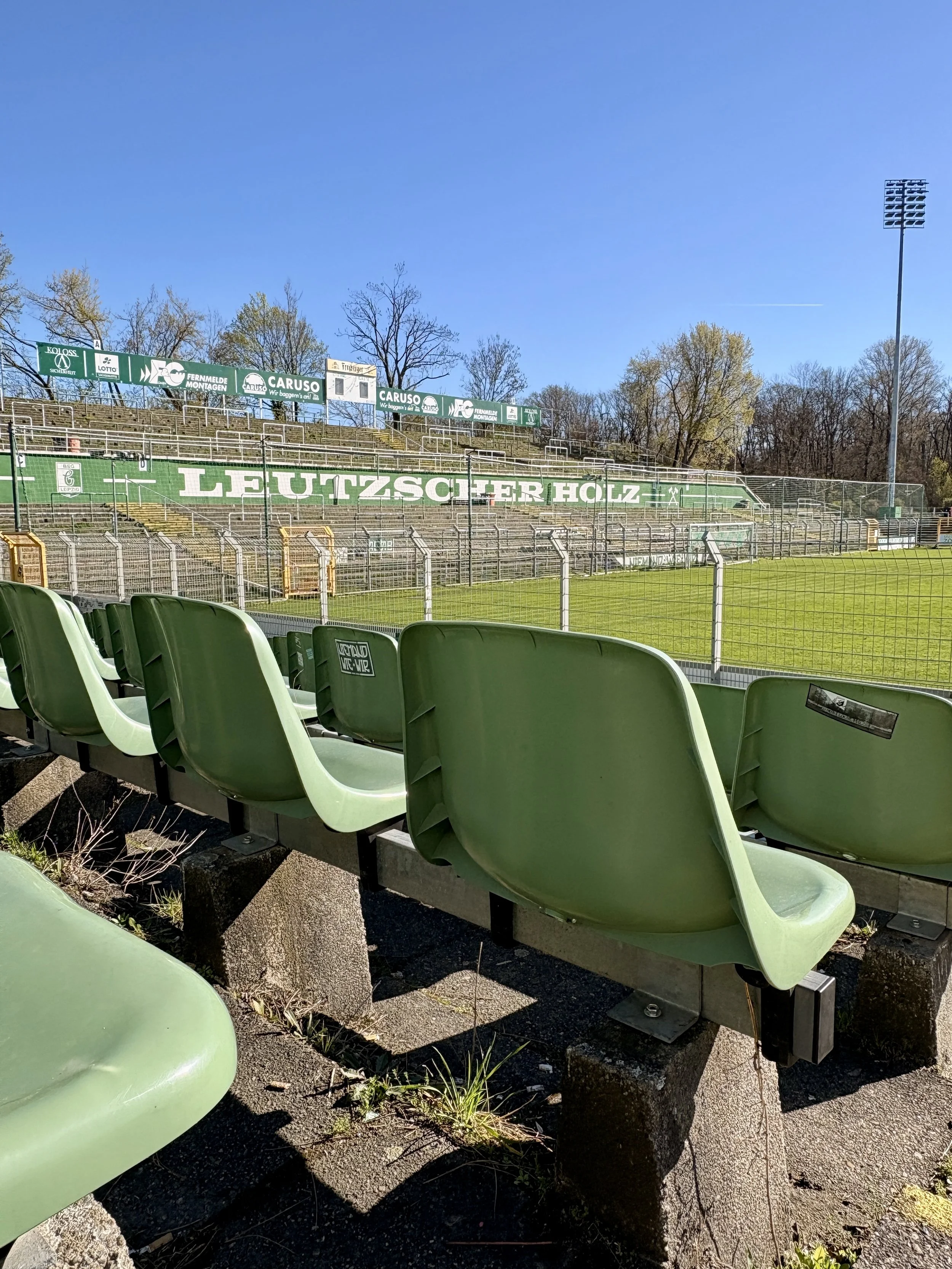
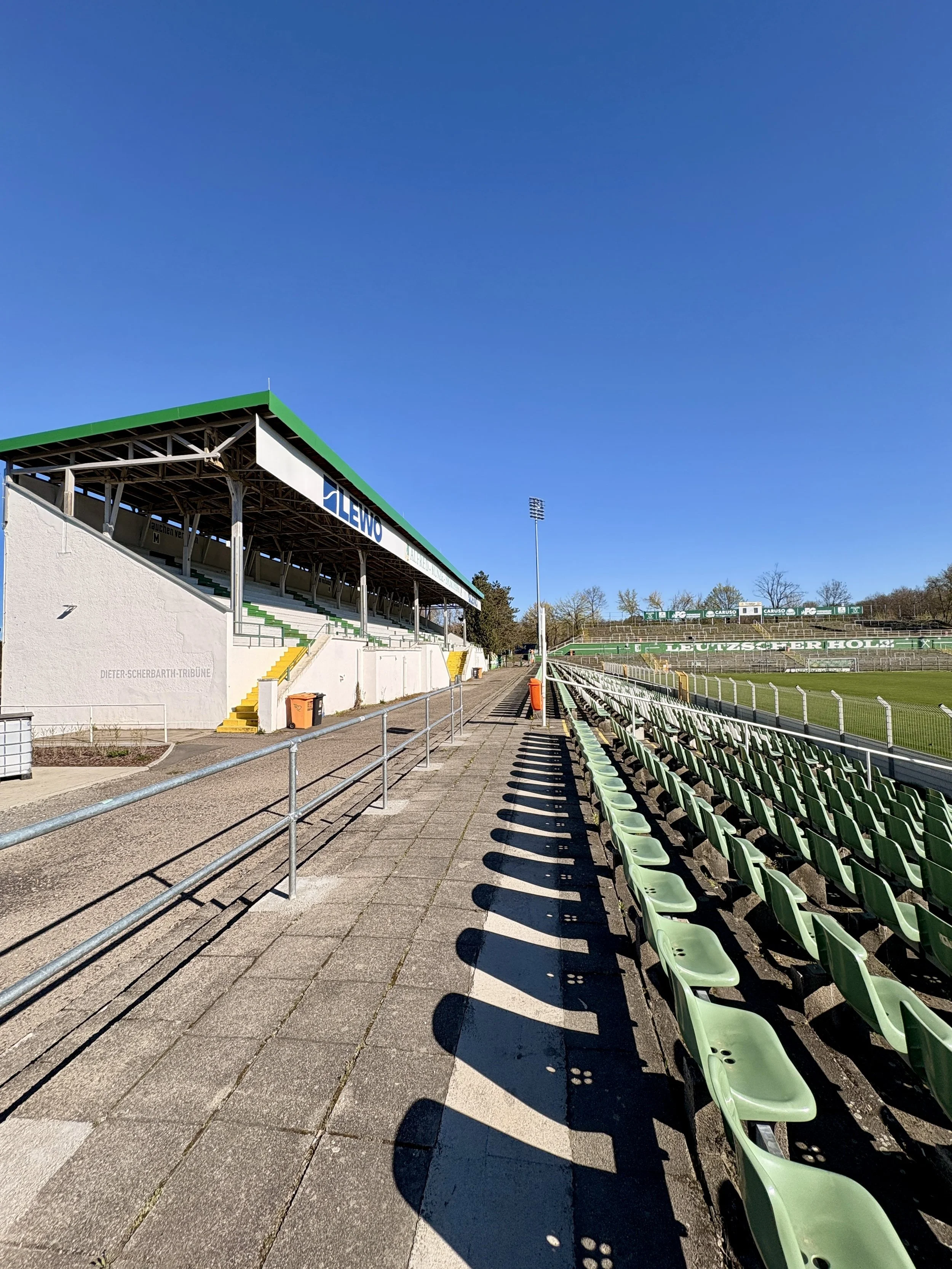
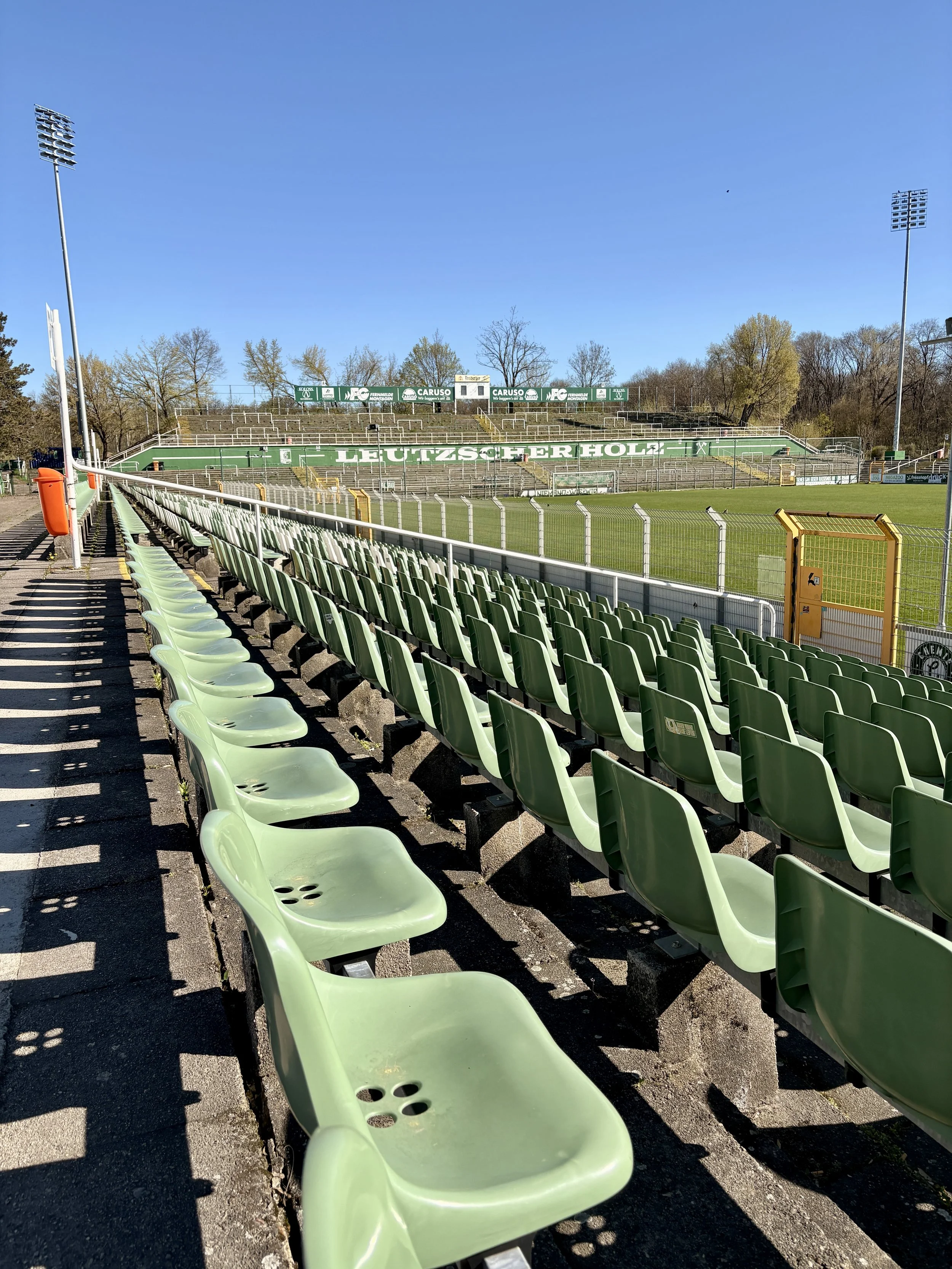
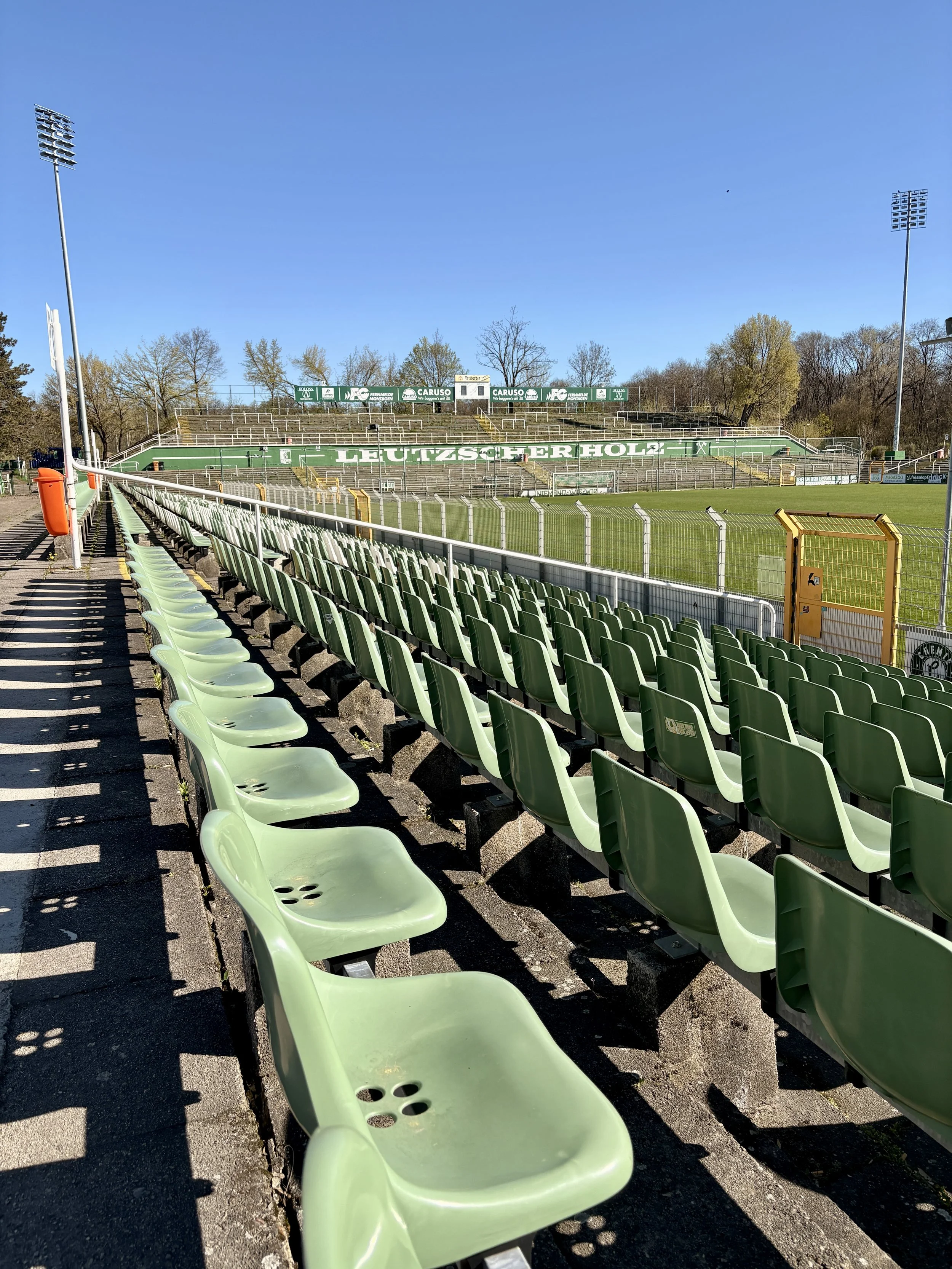
Seats at Alfred-Kunze-Sportpark, home of BSG Chemie Leipzig.
Photo Credit: Patricia León Pérez
Lokomotive Leipzig’s roots go much deeper, tracing back to 1893 in the district of Probstheida. Carsten Muschalle, the club’s press officer, explained:
“Though its original name was VfB Leipzig, the club was so dominant at the time that, within a few years, our current stadium was built around its success.
Back then, it was one of the biggest clubs in the country.”
Between 1903 and 1913, the club won three national league titles and finished as runners-up three times. After lifting its last trophy before the WWII broke out, the 1936 German Cup, the club’s situation became increasingly complicated.
Unlike Chemie, during the East German era, the country’s Sportpolitik decided to turn VfB Leipzig into the region’s flagship team by signing top players from rival teams.
“Like many other clubs in Chemnitz, Cottbus, or Aue, we were forced to change our name. We went then from VfB Leipzig to Lokomotive Leipzig in 1966, linked to the state railway conglomerate.”
Although they never won an East German league title, they claimed the cup four times and had a regular presence in European competitions.
Those continental appearances left unforgettable memories for fans, including the 1987 European Cup Winners' Cup final in Athens, which they lost to Ajax Amsterdam.
Following reunification, further changes followed:
“The debate resurfaced over whether to keep the Soviet-era name. For sponsorship matters, for instance, it could be tricky, so the club’s members voted to come back to their roots, renaming the club VfB Leipzig.”
Just like their neighbors, the club fell on hard financial times. After two insolvencies, the last one in 2004, several members decided to refound Lokomotive Leipzig to safeguard the club’s historic legacy.
“Similar to Chemie, we had to re-start in the twelfth division while coexisting with VfB Leipzig a few tiers above.”
Finally, in 2021, VfB officially dissolved, and its entire history and legacy were formally transferred to Lokomotive.
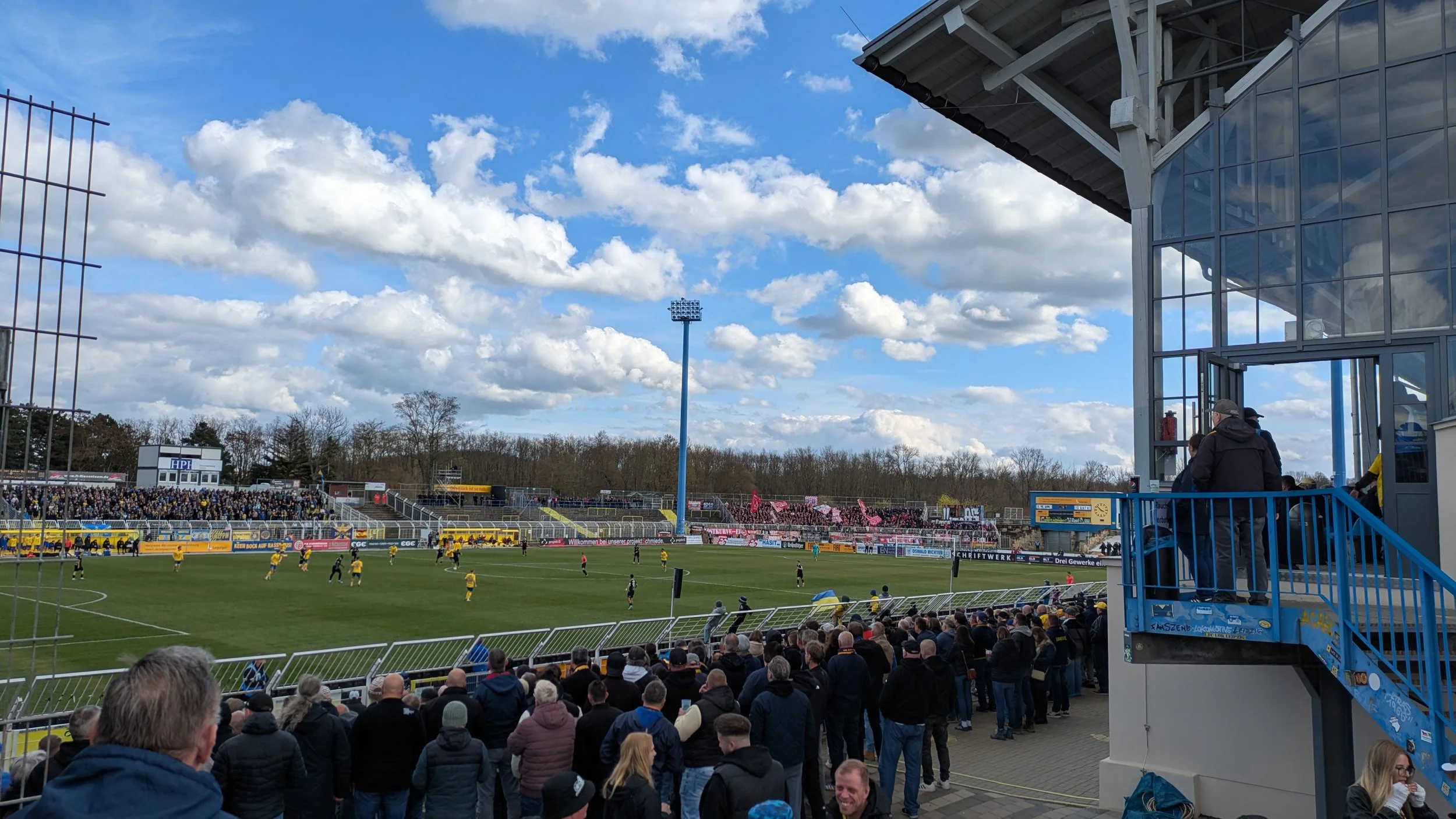
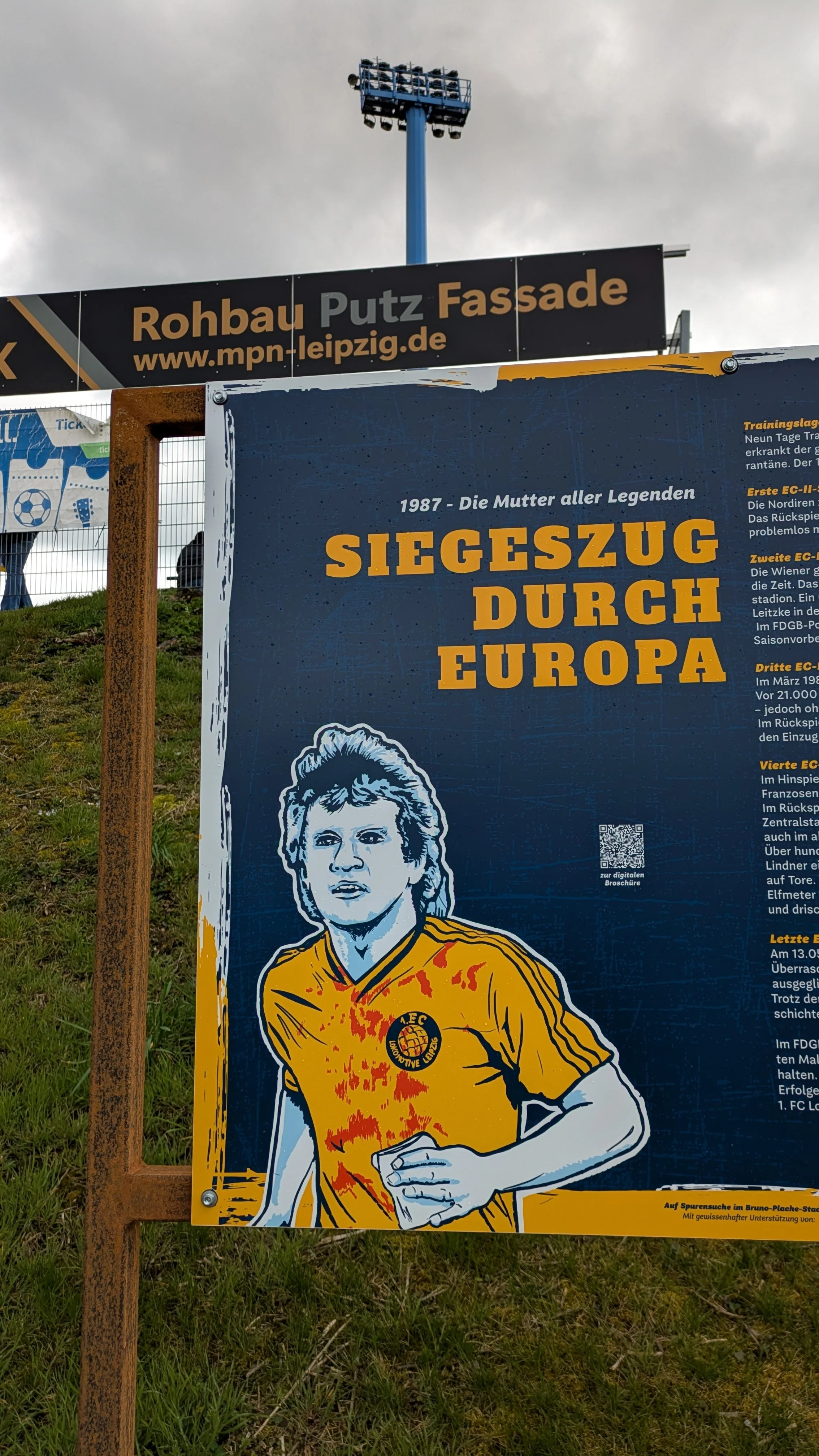
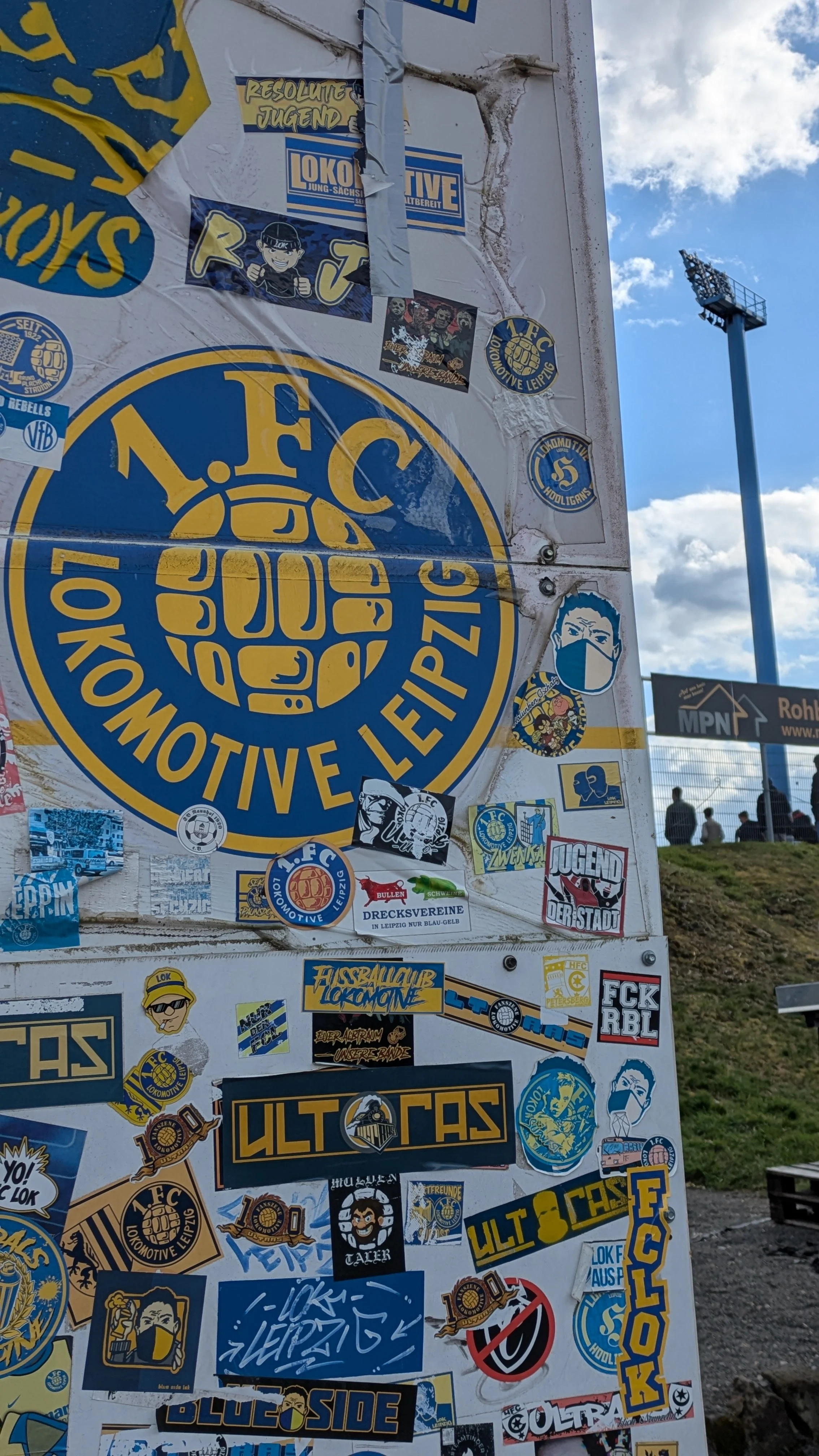
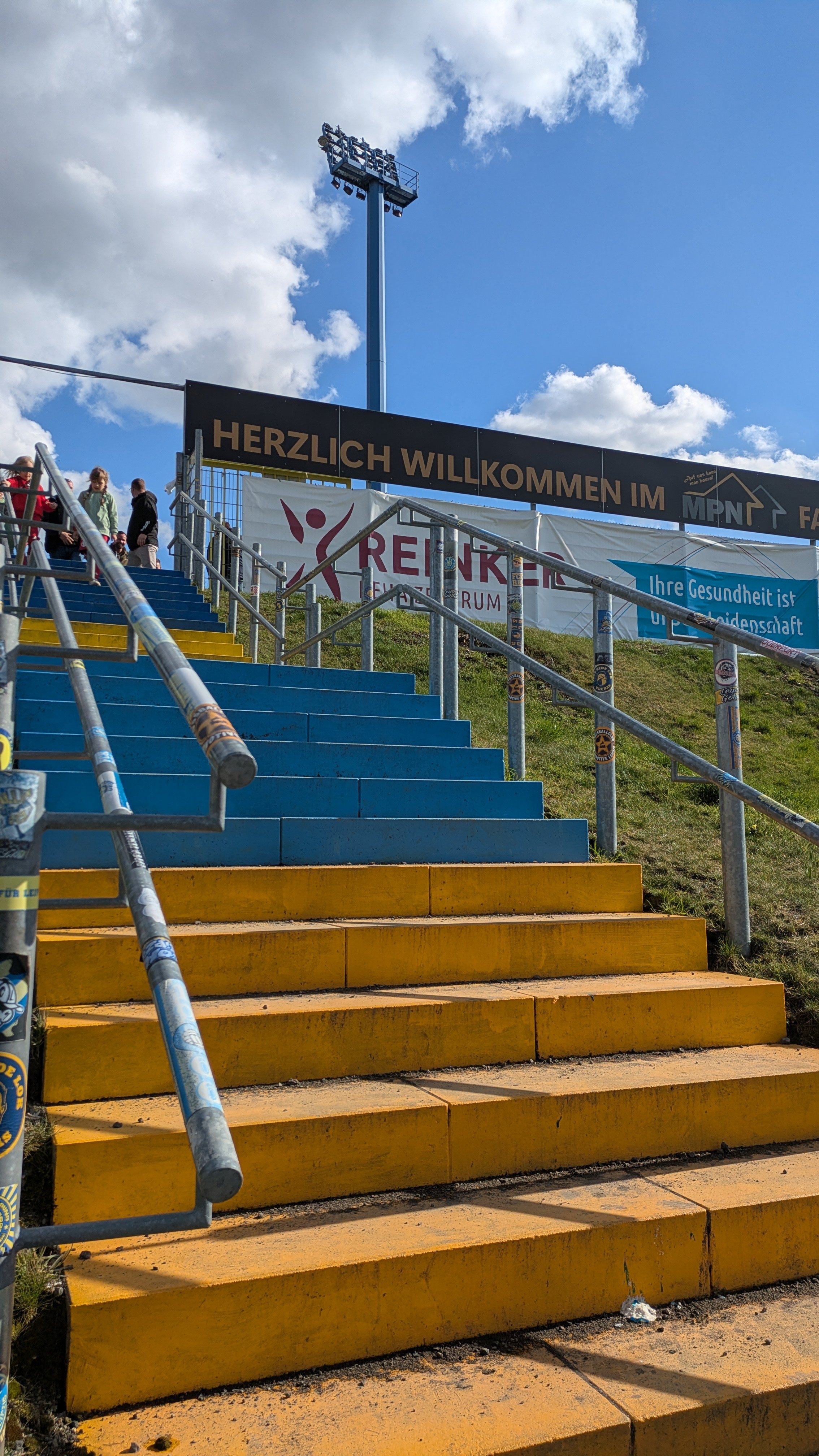
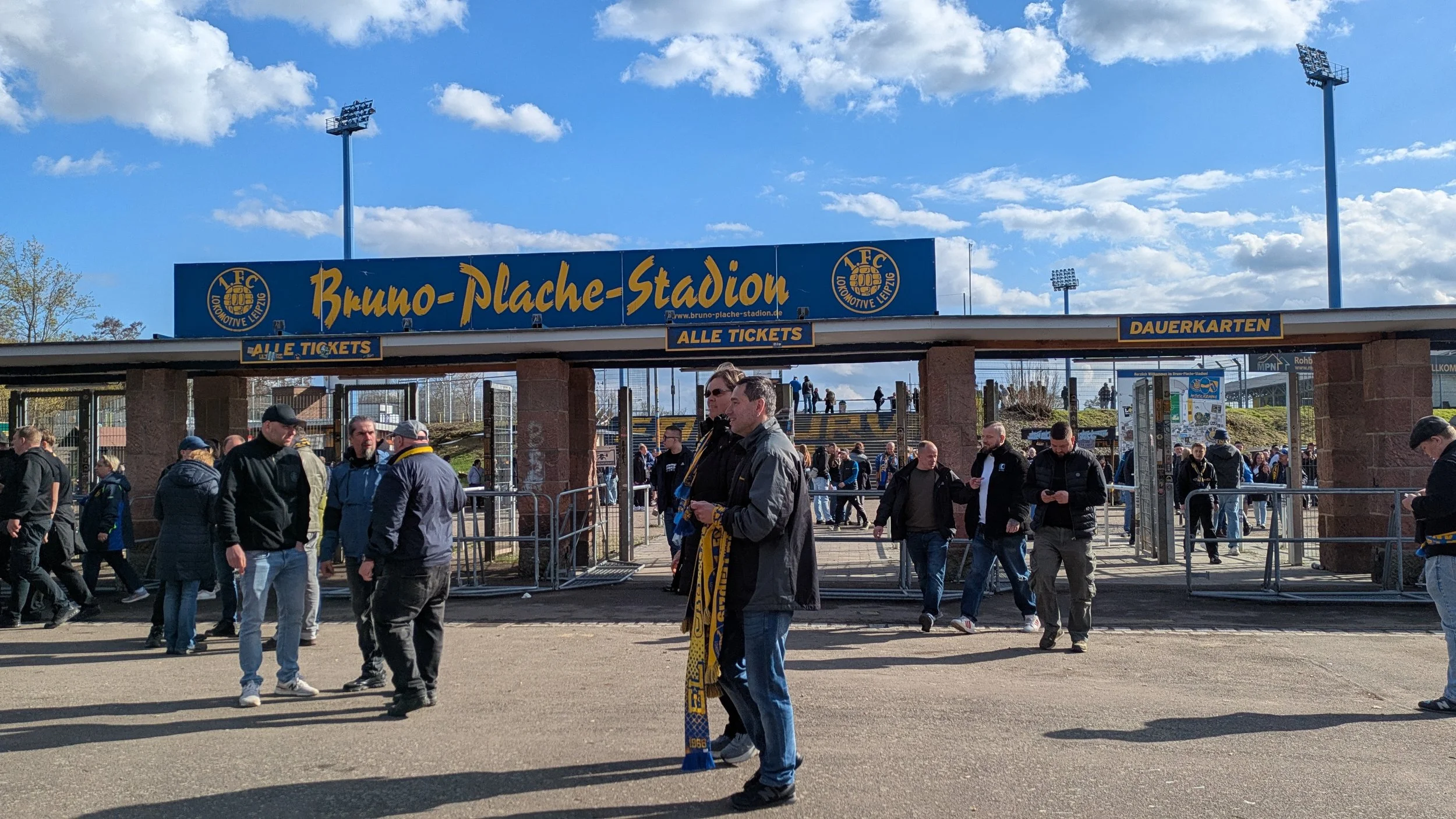
Bruno-Plache-Stadion, home of Lokomotive Leipzig.
Photo Credit: Patricia León Pérez
Matches between the two sides during the eighties, particularly after the reunification, frequently ended up into extreme violence.
“It wasn’t uncommon to see mounted police charge onto the pitch to separate the ultras.”
Chemie’s press officer adds a nuance:
“Much of the media makes bizarre claims, even suggesting that you're risking your life unless you go to RB Leipzig, stating you'll face serious trouble here or at Lok's stadium.
Sure, isolated brawls and minor clashes can happen at derby games, but it's not systematic. And, believe me, it's nowhere near the scale it was thirty or forty years ago.”
His counterpart in Probstheida agrees:
“At a club level, we keep a cordial relationship. Especially ahead of derby days, we hold regular security meetings to ensure everything runs smoothly.
Of course, there's a lot of raw emotion on the fans during these games, but the atmosphere nowadays is a world away from the eighties.”
Politics on the terraces also play a crucial role in this rivalry. The majority of Lokomotive’s ultras lean toward the far right, whereas Chemie’s fanbase sits on the opposite end of the spectrum.
On the tram ride to the Bruno-Plache-Stadion to watch Lok take on Rot-Weiß Erfurt, antisemitic and racist chants making explicit references to Auschwitz were clearly audible.
However, these came from isolated individuals and were by no means joined in by the wider crowd riding and hopping on the tram.
“I trust what you say and if it happened like that, is of course completely unacceptable. We stand against racism and any kind of verbal violence.
We run workshops with employees, players, and interested fans to raise awareness about the dangers of the far right.
Having said that, from our position, we can’t change entirely the society. If anything like that happens inside the stadium, you can be 100% sure that appropriate disciplinary and legal actions will be taken.”
Stefan Schilde seconds his counterpart's statements:
“For a significant portion of the ultras, political diversity plays a major role. But even without those political differences, the rivalry would still be intense between us purely for historical reasons.”
Chemie is also a club with a strong community spirit. Groups of fans regularly organize clean-up days at the Alfred-Kunze-Sportpark.
“We operate on a modest budget with very few paid staff. If we had to outsource cleaning and maintenance, our budget would be really shaking.
Supporters know this, so they don't hesitate to roll up their sleeves and help out by scrubbing seats or pulling weeds.”
But there has also been great support beyond manual labour. One of the club’s long-standing wishes was to install floodlights at their stadium, an upgrade that eventually became a strict requirement for playing in the Regionalliga (Germany’s fourth tier).
“The city council wasn't particularly helpful. It was the fans themselves who organized all kinds of fundraising ideas and crowdfundings, from collecting plastic cup deposits to auctioning off artwork,” Schilde explains.
The biggest boost, however, came from former player Benjamin Schmidt, better known as "Benniez."
“In his free time, he tried to get into rap music. He was actually quite good, so he decided to release an album and donate most of the proceeds to the floodlight crowdfunding campaign.”
His album, Flutlicht (floodlight), came out in 2019 and is sold exclusively through the Chemie Leipzig fanshop.
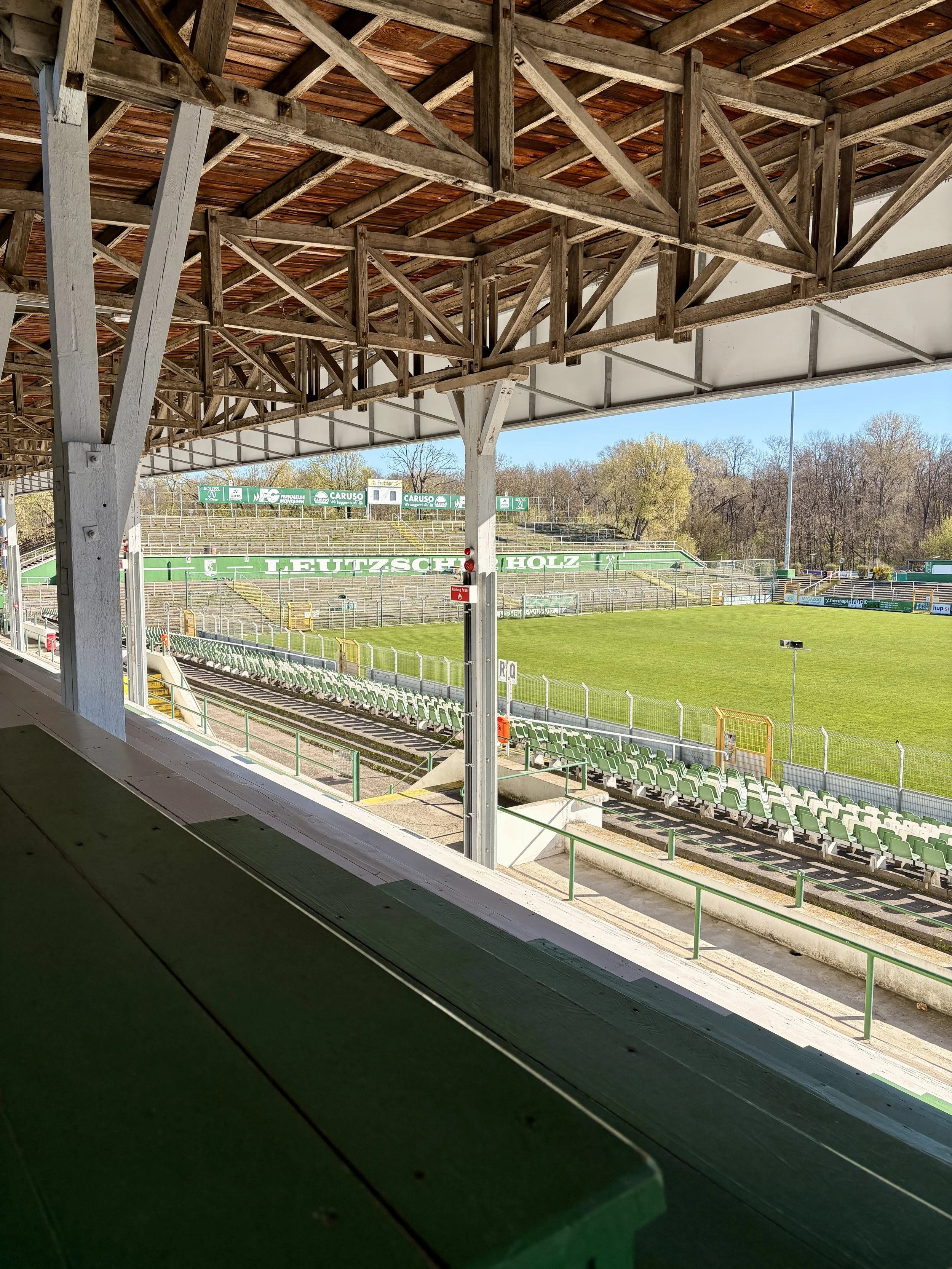
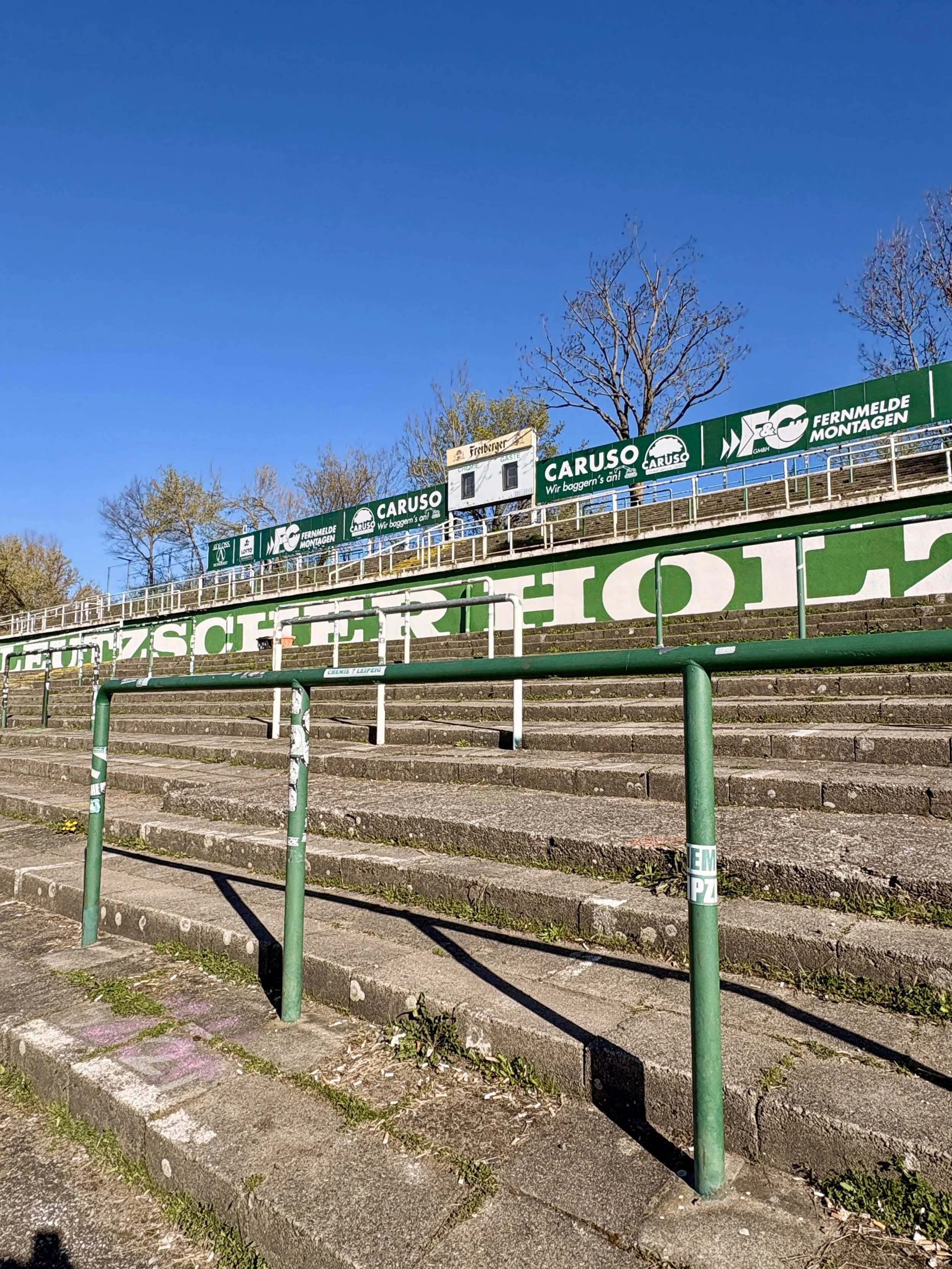
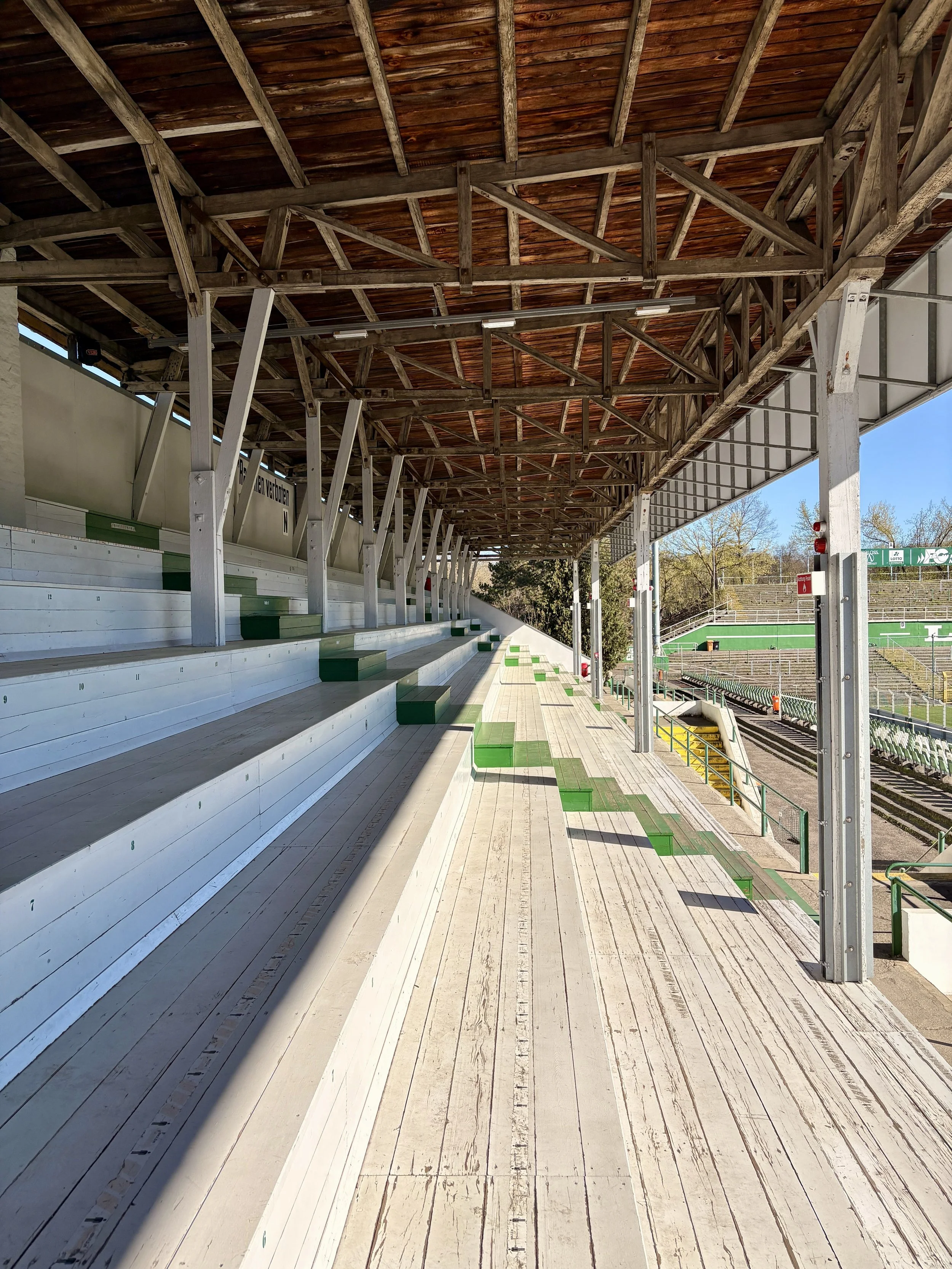
In the stands at Chemie Leipzig.
Photo Credit: Patricia León Pérez
The only thing both clubs currently share is their distance from the current flagship team in the Saxon city.
Twenty years ago, Red Bull was searching for a major city with a rich football history whose local club had fallen on hard times. The plan was simple: acquire a license, rebrand the identity around the energy drink, and establish a regular and decent presence in the Bundesliga and European competitions as quickly as possible. They initially approached Fortuna Düsseldorf, but the proposal fell through.
“After a few rejections, Leipzig seemed like the ideal target, thus they tried their luck with FC Sachsen Leipzig,” Schilde recalls. “The fans were open to a potential sponsorship deal, but taking over the club’s identity was an absolute no-go.”
The energy drink company decided then to buy the license and league rights of SSV Markranstädt, a modest club from a small town just outside Leipzig.
“They signed a lot of young players from FC Sachsen Leipzig to boost their meteoric rise”.
Of the two traditional fanbases, it was Lokomotive’s supporters who led the fiercest anti-RB campaigns and cherished the most hostility toward the brand.
“Although it's true that some fans occasionally go to watch RB Leipzig, especially for high-profile Champions League or Bundesliga games,” Muschalle admits.
“I acknowledge that a few supporters left Sachsen for RB, but they are a small minority,” says Schilde.
“They were probably Bayern or Dortmund fans at the beginning. Back in East Germany days, it was common to support a Western team on the other side of the Iron Curtain anyway.
However, we certainly can't complain about the loyalty of our fans.”
Heidrun Hofmann, Chemie’s accountant and a supporter for over fifty years, echoes that feeling:
“It’s rare for us not to sell out all the tickets. We love Chemie, even if we might root for another club for various reasons.
In my case, it’s Schalke 04. My husband supports FC Augsburg.”
The current massive difference in level between RasenBallsport Leipzig and the two traditional sides means that calling it a "rivalry" is just purely in the theory; in practice, their relationship is strictly cordial and polite.
“They used to sign our standout youth players, but if those kids don't break into the first team, they return to Lokomotive, often more mature and technically better than they would have achieved in our facilities. It's a mutually beneficial setup,” Muschalle reasons.
His counterpart at Chemie adds:
“As a club, we never fostered anti-RB sentiment. In fact, there's plenty of communication between us, especially at an academy level. Relations are cordial. Our niche in the football landscape and our perspective is crystal clear: we stand for authenticity, tradition, and fan culture. Our only true rival is Lokomotive.”
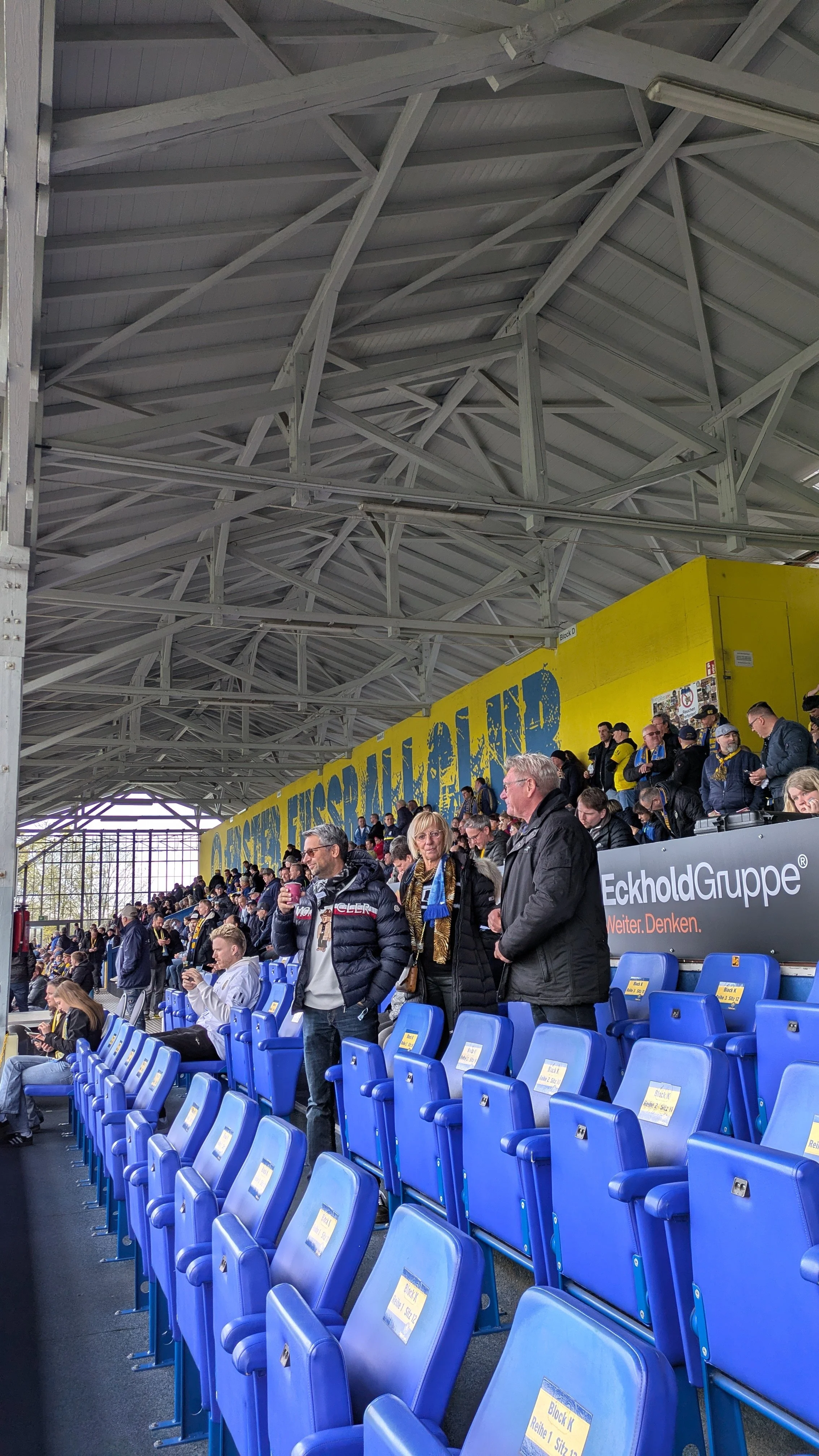
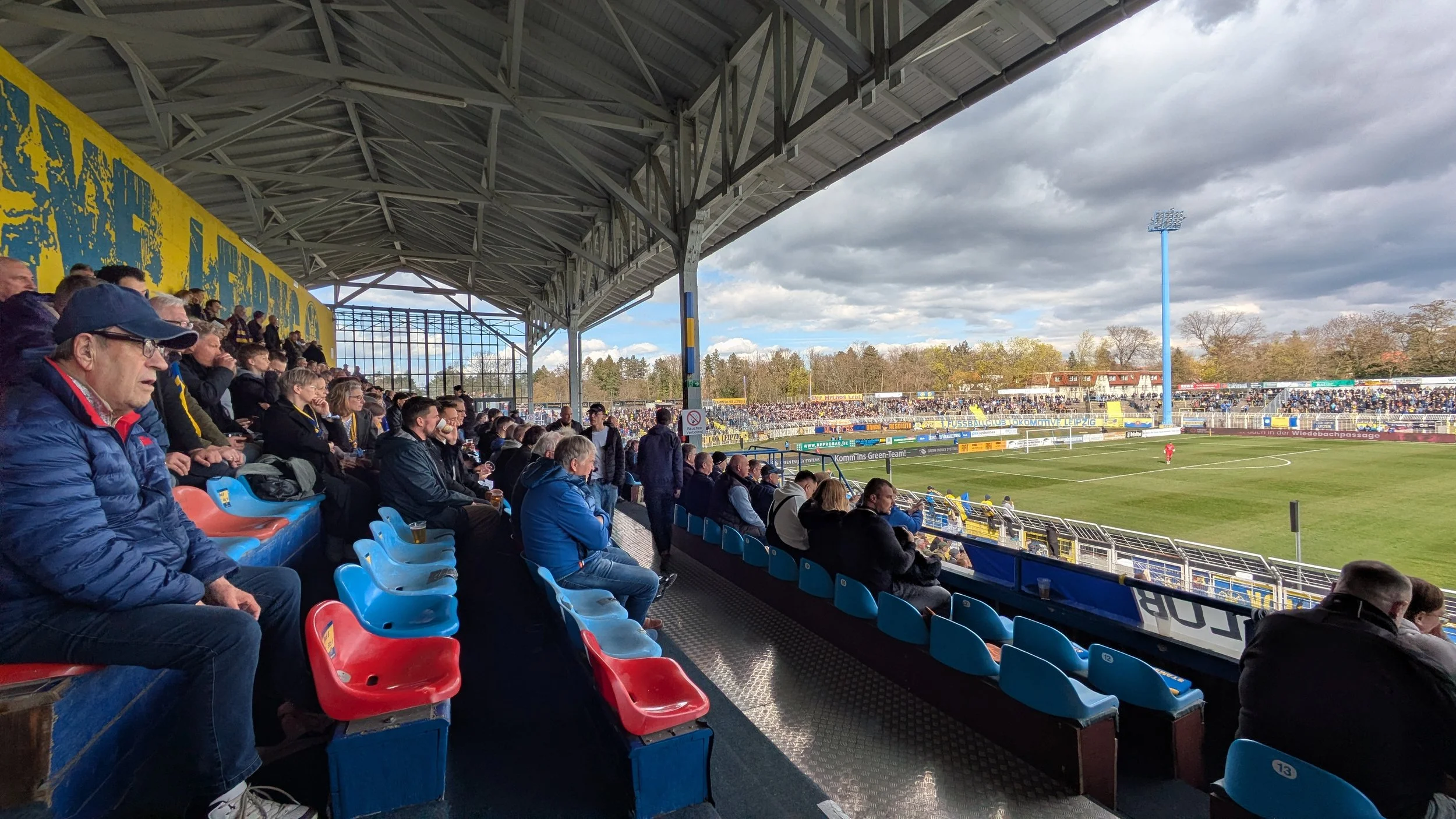
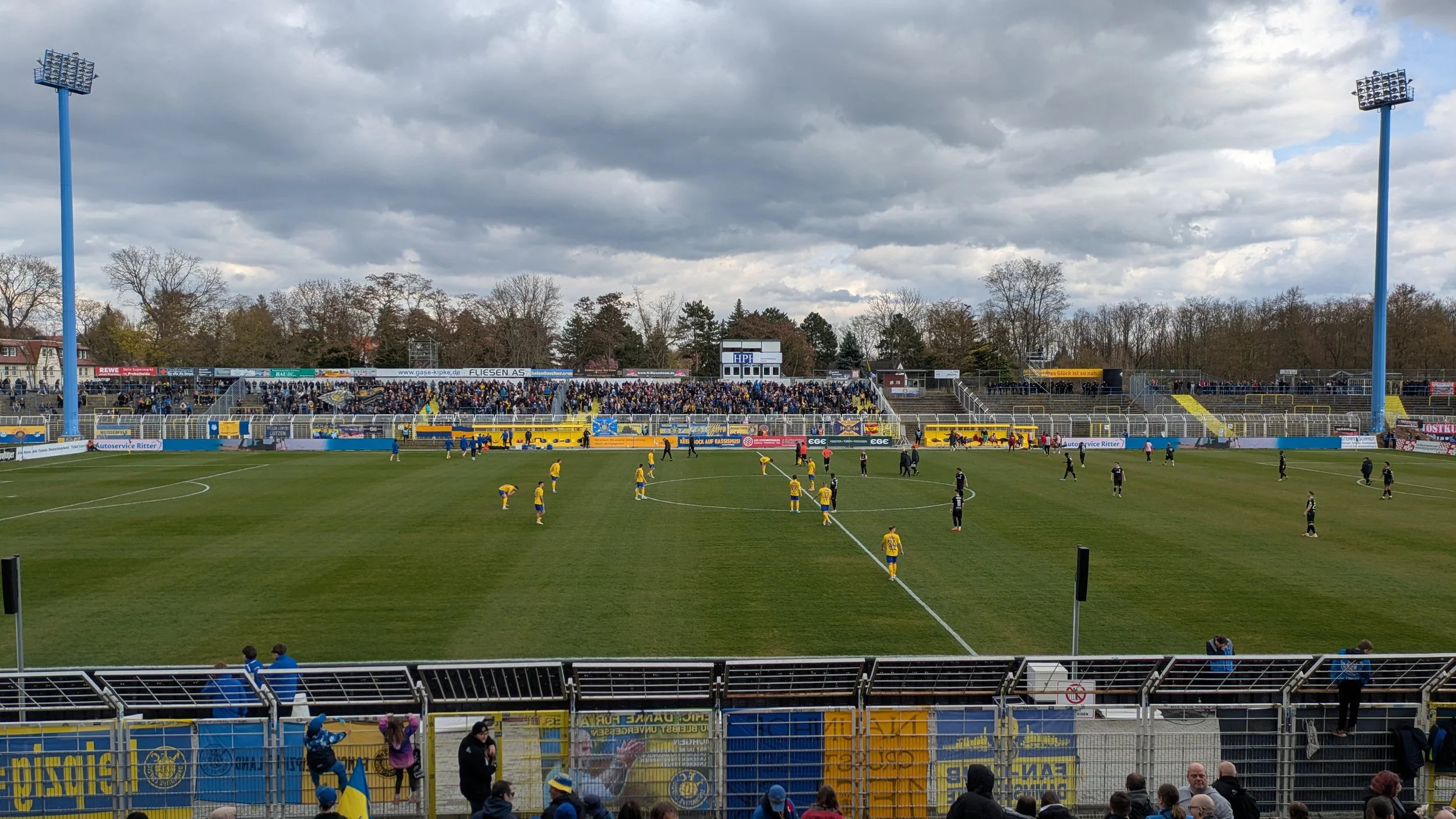
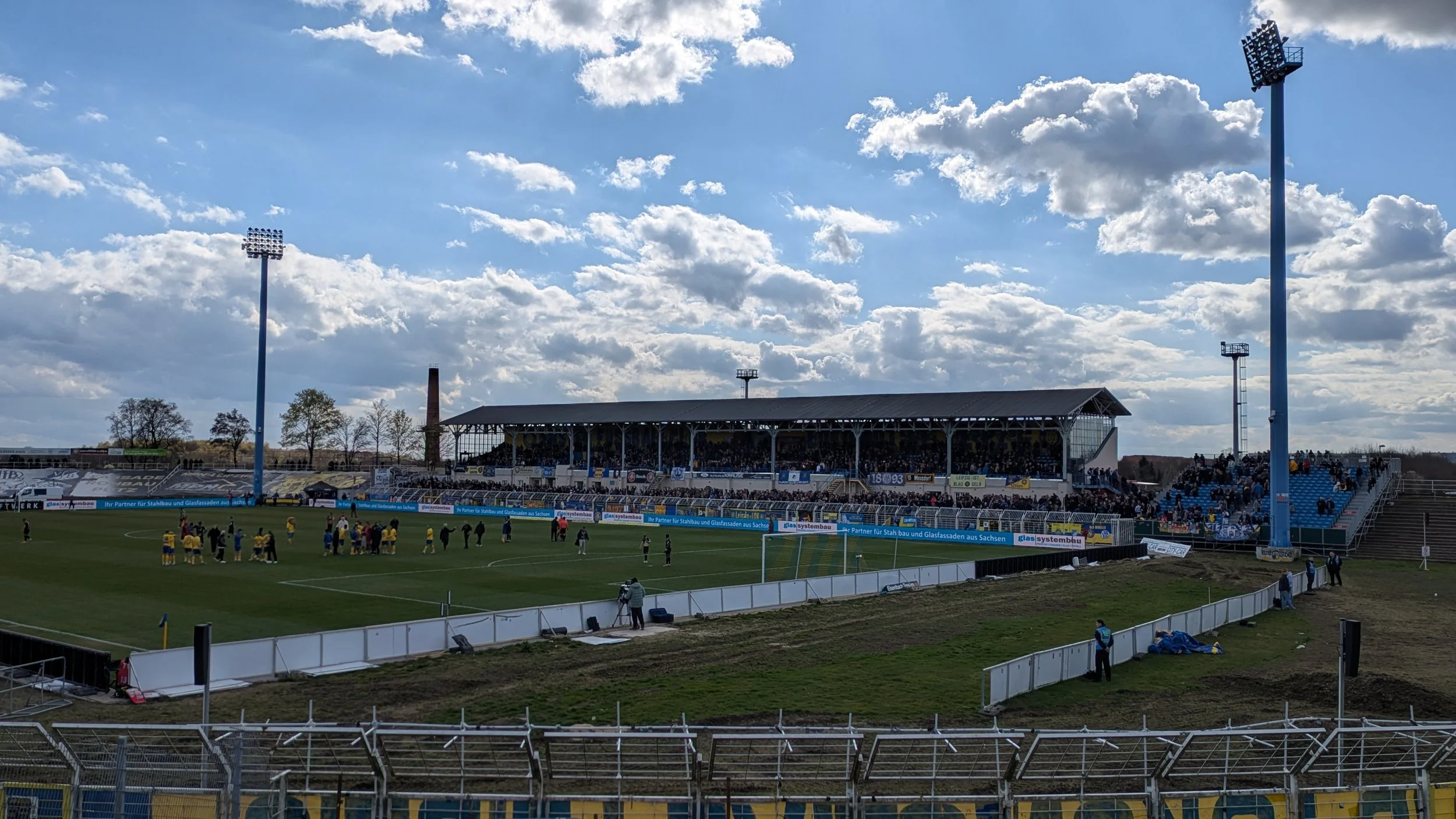
Supporters take in the match at Lok.
Photo Credit: Patricia León Pérez
Leaving lower-league football behind to reach RB Leipzig’s current level is no easy task.
Lokomotive has come closest to breaking through. The German promotion system creates a severe bottleneck right below 3. Liga (the third division). Four teams are relegated from the third tier, but five Regionalliga divisions are set up directly below it. Only the champions of each division earn the right to push for promotion, which makes promoting exceptionally tough.
At the start of every season, it is determined which three regional champions get direct promotion and which two must face each other in a nerve-wracking two-legged playoff. Therefore, winning your league group does not guarantee a promotion.
Lokomotive has suffered this exact fate three times in the last seven years, most recently this past season. The playoff fixture against Würzburger Kickers, the Bavarian Regionalliga champions, ended in defeat.
The same heartbreak occurred in 2024/2025 when they lost in extra time to TSV Havelse, and again in 2019/2020 against SC Verl.
“It's completely unfair,” Muschalle says passionately. “Even after winning your league over a long season, you still face a 50% chance of not being promoted. Everything you earned on the pitch over dozens of matchdays can be lost just by missing a single playoff match. It’s deeply unfair.”
Schilde also shares this view, despite the rivalry:
“Whatever our differences are, it is fair to say that Lokomotive deserved promotion in those years. The Regionalliga system is simply unfair to everyone involved.”
Chemie and Lok have a ways to go before the reach the heights of RB Leipzig.
But, as long as they exist, football in Leipzig will exist beyond Red Bull.
Images by Patricia León Pérez.