

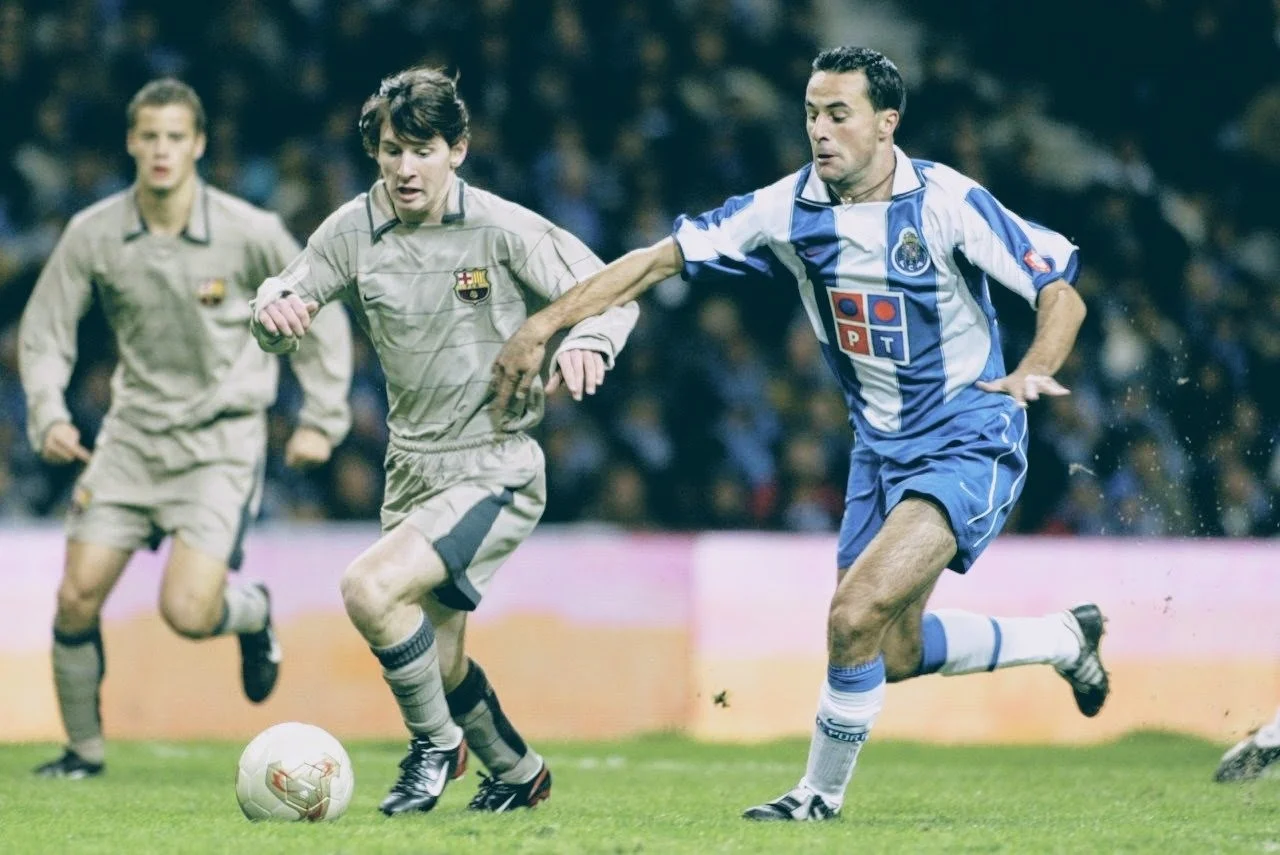
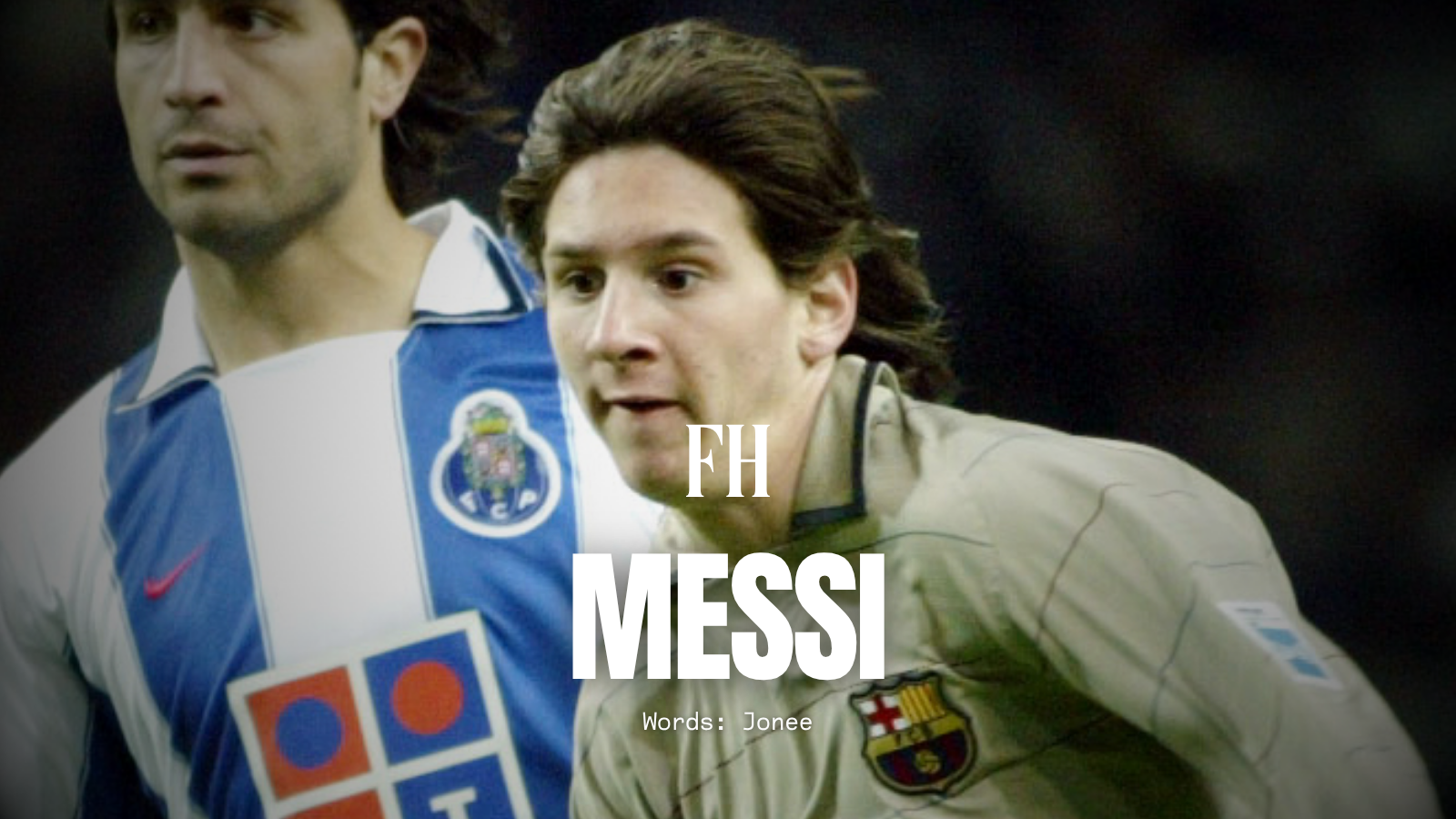
Words by Jonee | Published 16.10.2026On the 16th of November back in 2003, a friendly took place to celebrate the inauguration of Estádio do Dragão between FC Porto and FC Barcelona.
It ended up being one of the most important games in football history, almost casually. Some of you might be wondering why.
Well, that’s easy to explain: it was Messi’s first appearance at senior level, and we all know what would happen over the following 23 years.
Being an FC Porto supporter, I was lucky enough to be there, although my reasons for it had nothing to do with Messi or even Barcelona itself. No, I was there to celebrate my club’s new home.
It’s funny how, looking back on that game, one has to realise that on one side was the soon-to-be Champions League winner, and on the other side Barcelona and, above all, a diminutive youngster called Messi, who would become their biggest legend and take them to heights the club had never celebrated.
Tittle did we know that the youngster called Messi would soon reach the top and, two decades later, still be there, in more ways than one.
I will not claim ownership of the earliest opinion that Messi was the best player ever, but I did realise quite early in his career that something very special was brewing in Catalunya and Argentina.
I’ve loved Argentinian players since my earliest days of fandom, with legends like Maradona occupying centre stage, but also greats like Fernando Redondo, Juan Román Riquelme (still my favourite player), Ariel Ortega, Pablo Aimar, Verón, and later on Lucho González or Javier Zanetti, to name just a few.
A mix of skill and passion, of love for the game and that grit that is so closely associated with players from La Albiceleste. To love Argentinian football is to love life itself. They are a reflection of our own existence, with their intense living of our game; look at any Argentinian side, and it’s easy to see that football means more than just a game. It’s a matter of pride, of national identity.
Most European clubs’ supporters will be able to tell you amazing stories about “their” Argentinian players. That’s just how they roll.
Growing up, and being close to friends of the family who had lived in Argentina, there were always stories about the great derbies, the passion, the fire of those games, the players in them and the supporters around them. So, as you can imagine, being young and in love with football meant that the Argentinian way of doing our game would always grow deep inside my soul.
Our generation grew up worse off in terms of football greats. Not that we didn’t have any superstars but the previous generations had Pelé, Cruyff, Beckenbauer and Maradona to throw into the conversation of best player ever, while ours had some “bad luck” when it came to our candidate for the throne.
Growing up, there were two players above everyone else: the majestic Zidane and the eternal prince Ronaldo. Different styles, but both absolutely wonderful to watch. Zidane was ballet with a pinch of heavy metal here and there, a maestro with a mean streak, capable of controlling the ball in such a manner that it felt like the ball was hypnotised by Zidane.
Ronaldo was punk rock all the way: fast, powerful, capable of the most unbelievable turns and twists, with immense dribbling ability and physical prowess. They were our “candidates” for a while, and what great names to throw into the throne race, but let’s face it, not really at the level of Pelé and Maradona.
Messi didn’t start right away as if he were the king of football. Oh no, he had to wait his turn, because in Barcelona lived a player called Ronaldinho, one of the most amazing players we have ever seen, capable of the most impossible dribbles you will ever see.
Messi learned under his wing, until he was ready to grab the steering wheel of FC Barcelona. That side, where young Messi was learning, won the Champions League in 2006, in a team with greats of our game like the aforementioned Ronaldinho, Eto’o and Deco. Proven winners, stars of our game, at the peak of their powers.
Sitting on the fringes of this great Barça side were youngsters like Messi, Iniesta and Xavi; the next great Barcelona side was already the understudy. Destiny wanted Messi learning with the best, so he could then rise to the very top of our game.
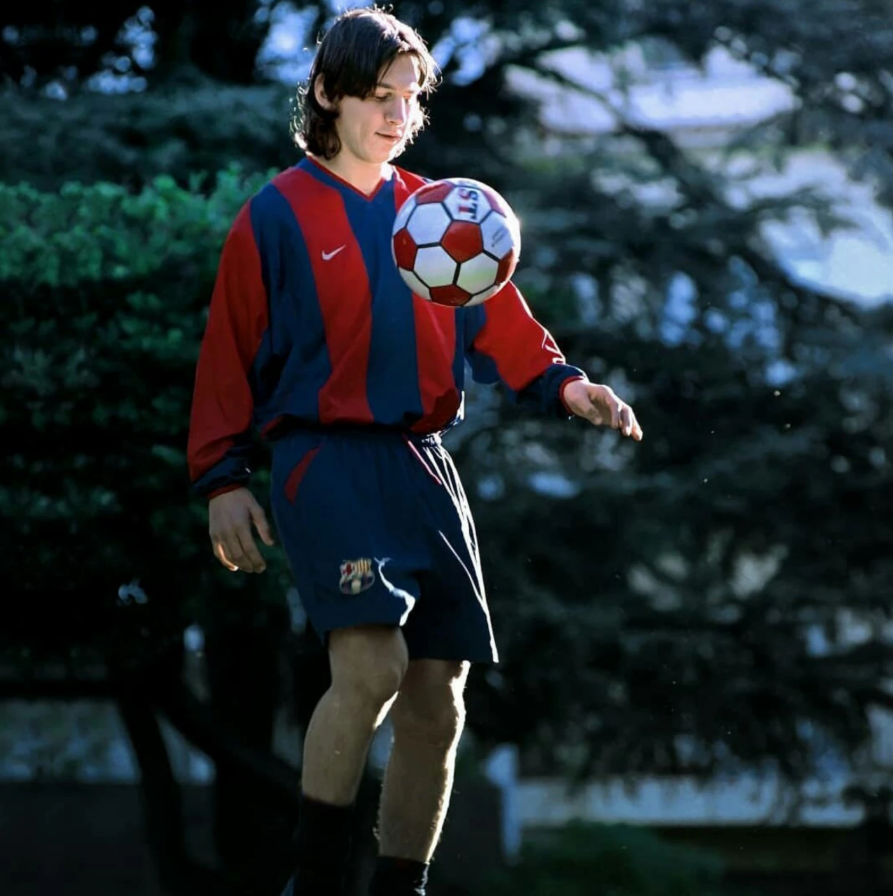
A young Lionel Messi at La Masia, Barcelona's academy.
Photo Credit: News 18
I’ve said many times that the Copa América final Argentina lost in 2007 is the turning point in terms of bringing to light that young Messi needed to take the next step and become a truly world-class player.
Messi and his Argentina were love at first sight, but it wasn’t the case between him and the Argentinian supporters. After all, to many of them, Messi was almost a foreign player, someone who left the country still very young and never played for an Argentinian side, so although he belonged to them, he didn’t really feel like he was one of them.
Not all profound love stories start in a magical way. Messi and Argentina were one of those instances. With disappointments and losses, and finals lost against (in theory, at least) weaker sides, which only led to more disgruntled supporters, but also to Messi himself, who was quite open about feeling like he wasn’t good enough to give Argentina the joys they wanted and deserved.
Throughout the years, Messi battled it out against all sorts of opponents, from teams on the pitch to doubts outside it.
Football can be a really cruel mistress, and Messi saw the unjust side of it: 16 years of football for his national team, with no success in terms of competitions, losing the World Cup final in 2014 and the Copa América finals in 2007, 2015 and 2016.
Losing those three consecutive finals between 2014 and 2016 made him retire from international football, such was the pain he felt about it.
Luckily, for the Argentinians, but also for us football fans worldwide, they managed to convince him to return to the national side.
It’s funny: Messi made himself a footballer at FC Barcelona, turning himself into the best player in the world, with several Ballon d’Or triumphs — in fact six of those (a record) — and hundreds of goals and assists, and many more wonderful, beautiful and magical plays along the way, making him the absolute best player of our times.
But, in yet another demonstration that football likes to operate in strange ways, it’s only after he leaves his dear Barcelona that his luck, when it comes to his beloved Argentina, finally changes.
Almost as if the gods of football had decided that at Barcelona he would win everything at club level, but national glory would remain elusive. In the summer of 2021, Messi makes the move to the Paris SG side, a move that not many fans “liked” or approved, for all sorts of reasons, in a conversation that is too long to be had in this article.
And the funny thing is, once he makes that move, his fortunes with La Albiceleste change completely. What followed a very good, albeit not fantastic, run with PSG was the Copa América triumph in 2021 (finally breaking that curse of three consecutive finals lost in the competition) and, above all else, the dream scenario of becoming world champion after winning the World Cup in 2022 in Qatar.
Ask any player: nothing compares to winning titles with their national side. It’s the ultimate glory for any of them, and at the very top of that sits the World Cup.
And yet, if you were watching that night in Lusail, religion is almost too clean a word for it. Football doesn’t do clean. It does nerves, and sweat, and a stadium that feels like it might split down the middle.
Argentina was ahead, and they were good value for it, Messi from the spot and then Di María with that run that seemed to go on forever, the sort of goal you rewind because your eyes don’t quite trust it the first time.
Then France, and Mbappé, arrived in the space of two minutes and the whole thing turned into something else. Two goals, just like that, and suddenly the fairytale had a villain, or at least a rival worthy of the last page. Extra time came, Messi put them ahead again, Mbappé answered again, and there we were, penalties, the same door that had shut on him in 2015 and 2016, the same cruel mistress pulling up a chair.
I remember sitting there thinking about 2016. Not the match, exactly. The face. The boy who had carried them, missed the first penalty against Chile, and then told the world he was done, that he had given all he could and it still wasn’t enough.
Sixty-odd days later they had talked him back, and thank God they did, because if that retirement had stuck, none of this exists. No Copa in the Maracanã, no night in Qatar, no conversation about the throne that actually ends. In the shoot-out he stepped up first, because of course he did, and he scored, and Montiel scored the last one, and the penalty that had haunted him for six years finally changed sides. Four-two.
France, with a hat-trick from Mbappé, still went home without the cup. That’s football for you. It will let you be perfect and still lose, and it will let you suffer for sixteen years and then hand you the thing in the most dramatic way it can find.
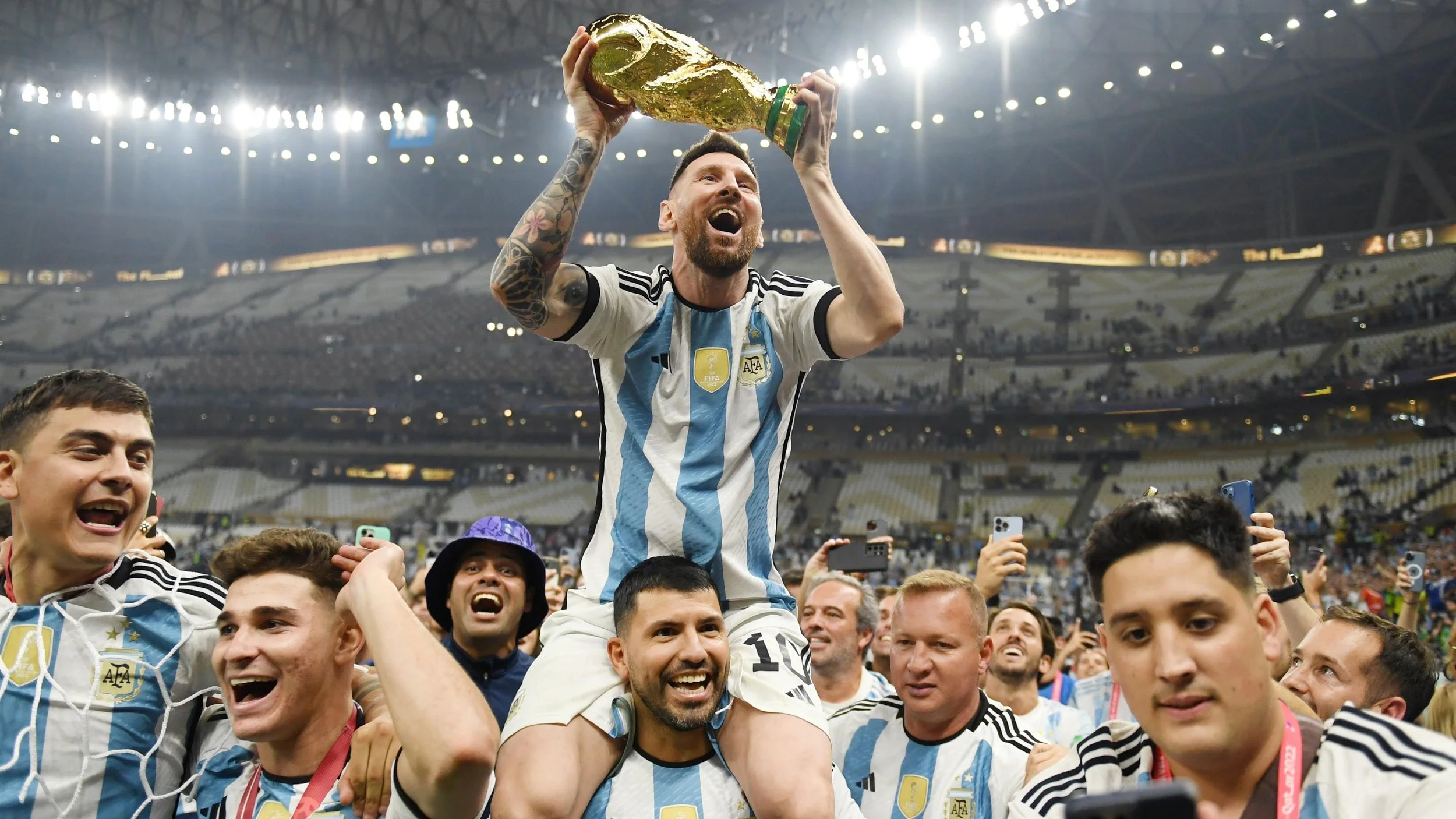
Messi finally achieved his dream of winning the World Cup at Qatar 2022.
Photo Credit: The Sporting News
What people forget, or maybe choose not to say out loud, is that the supporters who had doubted him were in that stadium too, and in every living room from Rosario to the ends of the earth.
The same country that had looked at him for years and seen a foreigner, a Barcelona player on loan to the national team, was now crying into a sky-blue-and-white shirt with his name on the back. Not all profound love stories start in a magical way.
Some of them start with suspicion, and finals lost to sides that, on paper, had no business being there, and a captain who kept coming back anyway. By the time he lifted that trophy, the argument was over. Not the silly one, the one we have on the internet. The real one. The one between a player and his people.
And here is the part that still makes me smile. It didn’t stop. Football refused to close the book in Qatar just because the chapter was perfect. In the summer of 2022, before the World Cup, they had already beaten Italy at Wembley in the Finalissima, 3-0, a trophy nobody grows up dreaming about and everybody was glad to see in those hands.
Then, in 2023, the Ballon d’Or came again, the eighth, the one that belonged to the World Cup year even if the calendar of these awards never quite lines up with the heart. Six had been the record when he left Barcelona. Eight is the number now.
The club chapter after Paris was never going to look like the Camp Nou years, and it didn’t. Inter Miami, from the summer of 2023, was a different temperature. Easier nights, smaller stadiums, a league still introducing itself to the world.
Some people sneered. I didn’t. A man who has given you twenty years at the very top is allowed to play where his body and his family can breathe. And still, even there, the pause before the pass was the same, the left foot still deciding things a second before anyone else in the postcode had noticed there was a decision to make.
Time came for Messi and found him awkward to deal with. Slower, yes. Less of the punk-rock burst. The brain, though, the cruel little brain that saw the picture before the picture existed, stayed.
Then came the summer of 2024, and another final, because Argentina in this era seemed to live in them. Colombia, in Miami, a match that kicked off late and felt, from the outside, slightly cursed.
Messi went down, the ankle gone, and he watched the extra time from the bench with his face in his hands, the old fear back for an hour: that the story might still find a way to hurt him. Lautaro Martínez scored in the 112th minute, ran to that bench, and Argentina had a 1-0 and a sixteenth Copa América.
He didn’t lift it the way he had lifted Qatar. He didn’t need to. The point had been made years before. This one was just the country refusing to let go of the feeling.
Which brings us, strangely, to the last few weeks. I started these lines in my head years ago, on a night in Porto that I thought was about a stadium. I am finishing them in a week when he has just played his last game for Argentina at the Monumental im a friendly against Benin that was never going to be about Benin.
They called it the last tango, which is exactly the sort of thing Argentina would call it. More than 85,000 in there, the city lit up in those two colours, and Messi, 39 years old, 208 caps, played the full ninety.
Otamendi, leaving with him after seventeen years side by side, headed in the first from his corner. Nico Paz, one of the kids who will have to live with the shirt now, got the second. Then a penalty, the 126th goal, 3-0, and a drone show in the Buenos Aires sky.
He told them he would stay forever if it were up to him, because playing for that team was the most beautiful thing that could happen to a footballer. I believe him. You don’t say that, not like that, after the years he had, unless it is true.
Two and a half months before that goodbye, the last World Cup had ended the other way. A final, again, because of course it was a final, and Spain, 1-0, in New Jersey. He left that one in tears, with little of the magic, an ageing champion who had emptied himself getting there.
It would have been a lie to pretend the film only has the scenes we like. The 2007 final against Brazil, 3-0 in Venezuela, the Germany game in 2014, the two nights against Chile, the ankle in Miami, the loss this summer: they all sit in the same career as Lusail. That is the deal. You don’t get the triumph without the rest of it. He knew that better than any of us.
People will ask, now that the Argentina chapter is actually closed, where he sits. I said at the beginning that I will not claim ownership of the earliest opinion. I still won’t. Pelé exists, and Maradona exists, and they existed in worlds with different defences, different balls, different ways of being kicked.
Comparing across eras is a mug’s game, and also the game we all play, so we might as well be honest about it. What I will say is this. No player I have watched, and I have watched a few, has bent a match to his will for as long as he did, in as many different ways.
Zidane on his night he was untouchable, but the night ended. Ronaldo was unbelievable, and then the body betrayed the song.
Messi was something quieter and, in the end, more frightening. A man who could win you a final with a dribble, or with a pass you only understood on the replay, or by standing over a free-kick and making the wall feel silly. Twenty years at the top.
The line I wrote earlier, that no great player stays there throughout a career, still feels true. He is the exception that proves it, not the rule that kills it.
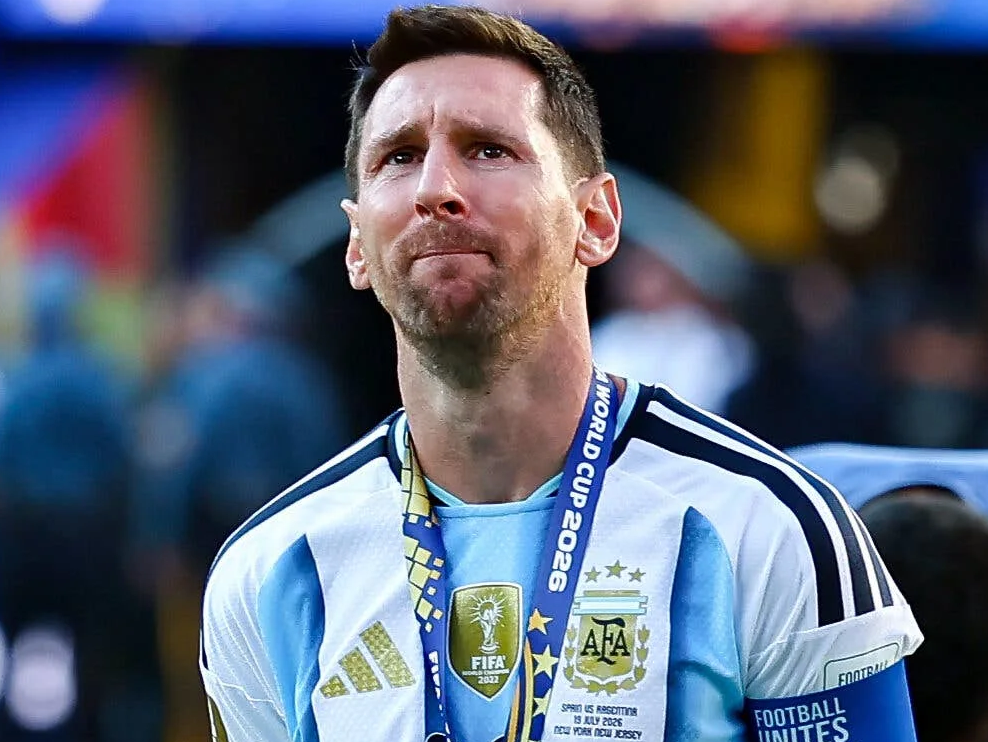
Messi bid farwell to Argentina and retired from international football on Wednesday 7 October 2026.
Photo Credit: Yahoo
And the Barcelona thing, because I can’t leave it. He learned under Ronaldinho, on a side that won the Champions League in 2006 with Deco and Eto’o, while he was still the understudy. He missed that final. The ones he didn’t miss, in 2009, 2011 and 2015, he bent out of shape, two of them against Manchester United, Rome and then Wembley.
Ten leagues. A goal record at the club that still looks like a misprint. The steering wheel he took from Ronaldinho, he never really gave back, not until the club itself, for reasons of money and rules and the slow death of a dynasty, could not keep him. Leaving the Camp Nou broke something in a lot of people who love that shirt. It did not break him.
If anything, the national team, the thing that had been the wound, became the healing. Strange ways. I told you.
For me, though, it still begins in the Dragão. 16 November 2003. We had opened the new house, the old Antas already a memory, and Barcelona had come for the party. Mourinho’s Porto, the side that would win the Champions League the following May, against a Rijkaard team missing half its internationals.
We won 2-0. Derlei from the spot, then Almeida. Around 50,000 of us, there for the concrete and the badge and the feeling of a club putting down new roots. In the 71st minute, or thereabouts, a kid came on for Fernando Navarro. Number 14, because that was the shirt they had, not because anyone was trying to be clever about Cruyff.
Sixteen years, four months and a bit. Nuno, our Nuno, denied him. He had a moment where the pass was on and he took it instead of the shot. We all went home happy. Porto had won the inauguration.
The pitch, if I’m honest, wasn’t even very good. Within a few months we were back at the Antas for a spell, while they fixed the turf. History, on the night, was the stadium.
That’s the joke football plays on you. You think you know what you’re looking at. A friendly. A celebration. A diminutive youngster on a heavy pitch, in a shirt a size too big, against a team that was about to conquer Europe.
Some of you, reading this, were not born. Some of you were in other stadiums, supporting other sides, and Messi was not yet a word you said at dinner. I was lucky enough to be there, and I didn’t know either.
My reasons had nothing to do with him. Looking back, that feels exactly right. The great moments in this game are rarely announced. They slip on in the 71st minute, while you’re still singing about your new home, and twenty-three years later you realise the unbeaten constant wasn’t time at all.
It was him. Lionel Messi. Still there, in more ways than one, until Tuesday night in Buenos Aires, when even he was allowed to stop.
I still love the Argentinian way of doing our game. The derbies I was told about as a kid, the fire, the pride, the sense that a match is a matter of who you are and not just what the table says.
Riquelme is still my favourite player, and I won’t apologise for it, because love doesn’t do audits. But Messi became the one who explained that love to the rest of the world.
Skill and grit, in the same body, for long enough that a generation which thought it had missed out on Pelé and Maradona found it had been watching the answer since a Wednesday night in Porto. We just didn’t know the question yet.
So, if you ask me why that friendly game matters, that’s the answer. Not because of the score. Not because Barcelona were missing players, or Porto were brilliant, or anyone played the game of their life.
It matters because a porter, a door, a stadium opening its eyes, accidentally let the future walk through it for twenty minutes. And the future, in that quiet, slightly bow-legged way of his, stayed for the rest of our football lives.
Gracias por todo.