

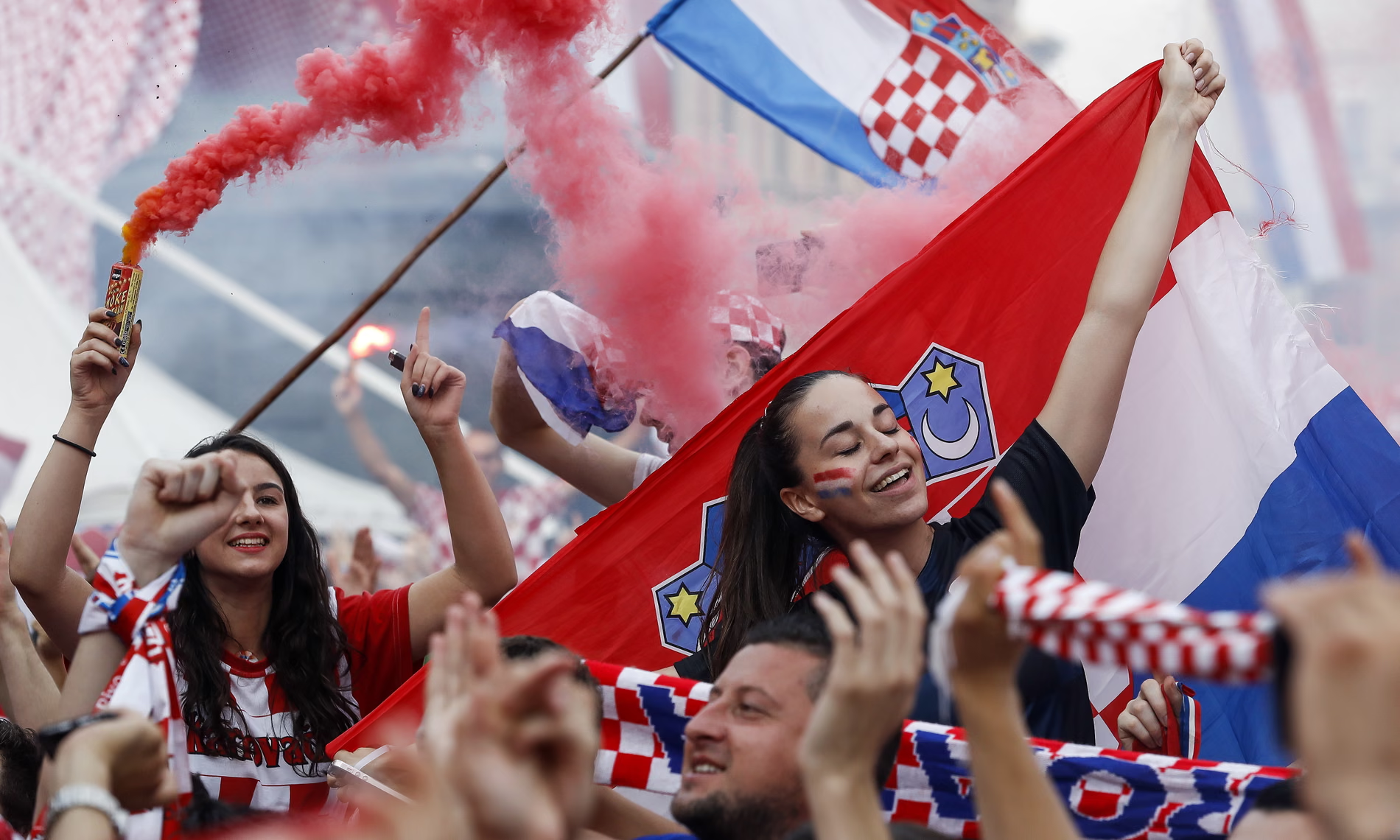
Words by Jonee | Published 07.03.2026In the summer of 2018, a nation of just over four million people captured the imagination of the footballing world. Against the backdrop of global giants, historic powers, and nations with far greater resources, Croatia embarked on one of the most compelling runs in World Cup history. By the time the tournament reached its climax at the Luzhniki Stadium in Moscow, the Croatian national team had achieved something extraordinary: they had reached the final of the 2018 FIFA World Cup.
Their journey was not merely a sporting success. It was a story deeply intertwined with history, national identity, and the emotional power of football. Croatia’s run in 2018 resonated far beyond the pitch, reminding the world that football is capable of producing narratives that speak to heritage, resilience, and collective dreams.
For Croatia, football has always carried meanings that extend beyond the game itself. As a relatively young nation-state, Croatia’s modern political identity emerged only in the early 1990s following the breakup of Yugoslavia. The years that followed were marked by conflict, uncertainty, and the difficult process of establishing a new national identity. In that context, sport—and football in particular—became an important platform through which the country could present itself to the world.
The Croatian national team’s early successes played a key role in this process. Their remarkable third-place finish at the 1998 FIFA World Cup in France announced the arrival of Croatia as a footballing nation. Led by players such as Davor Šuker and Zvonimir Boban, Croatia’s campaign that tournament quickly became part of the nations’ sporting folklore.
Yet even that historic achievement did not fully prepare the world for what would happen twenty years later in Russia.

Members of the Croatia squad from the 1998 World Cup in France.
Photo Credit: Reuters
The 2018 Croatian team entered the tournament with talent and experience but without the expectations typically attached to football’s global superpowers. Their squad included players competing at the highest levels of European club football, yet Croatia itself remained a relatively small country with limited resources compared to traditional football giants. This contrast between scale and ambition became central to the story of their tournament, ultimately.
The heartbeat of the team was captain Luka Modrić. Widely admired for his creativity and leadership, Modrić embodied the resilience that defined the Croatian squad. Born during a turbulent period in the country’s history, he had experienced the consequences of conflict during his childhood. Stories of his early life, including time spent as a refugee during the Croatian War of Independence, became part of the broader narrative that surrounded Croatia’s rise in the tournament.
By the time the World Cup began, Modrić had already established himself as one of the finest midfielders of his generation. His success with Real Madrid had brought him multiple European titles, but the World Cup offered something different: the chance to represent the hopes of an entire nation.
Croatia’s group-stage performances immediately suggested that the team possessed both quality and confidence. Victories over Argentina, Nigeria, and Iceland allowed Croatia to progress through the opening phase with remarkable momentum. Their 3–0 victory against Argentina, in particular, sent a clear message that Croatia was capable of competing with the world’s elite.
Yet the most remarkable aspect of Croatia’s tournament was not merely the results they achieved but the manner in which they achieved them.
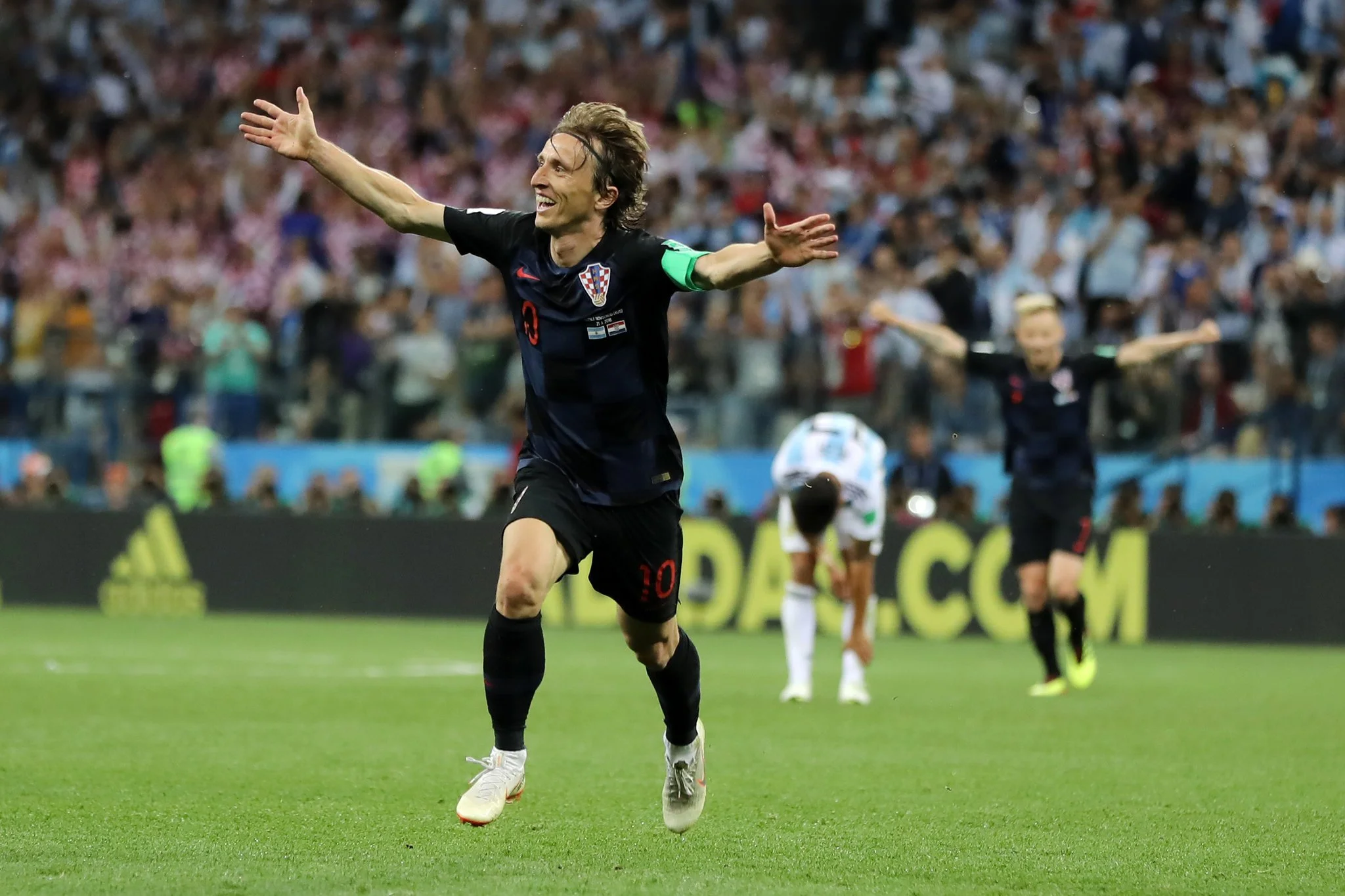
Luka Modrić celebrates during Croatia's 3-0 win over Argentina.
Photo Credit: The Guardian
As the knockout stages began, Croatia found themselves repeatedly pushed to the limits of endurance. Their round-of-16 match against Denmark became the first of several dramatic encounters. The match ultimately went to a penalty shootout, where Croatia’s goalkeeper Danijel Subašić produced crucial saves that secured the team’s progress.
A similar drama unfolded in the quarterfinal against the hosts, Russia. Playing in front of a zealous home crowd, Russia pushed Croatia through another exhausting contest that once again ended with penalties. Once again Subašić emerged as a hero, guiding Croatia into the semifinals.
These matches tested the team’s physical and emotional resilience. By the time Croatia reached the semifinal stage, they had already played significantly more minutes than most of their opponenets. Yet the players continued to display a remarkable determination that captured the admiration of supporters around the world.
Their semifinal opponent was England, who were enjoying themselves at this World Cup. When England took the lead early in the match, many observers assumed that Croatia’s extraordinary run might finally come to an end. Instead, Croatia produced one of the most memorable comebacks in modern World Cup history.
Goals from Ivan Perišić and Mario Mandžukić secured a dramatic 2–1 victory after extra time. The result sent Croatia into its first ever World Cup final, triggering scenes of celebration across the country.
For Croatians, the achievement carried immense emotional significance. The team’s success had united the nation in a shared moment of pride. Streets filled with supporters wearing the country’s distinctive red-and-white checkered shirts.
Football had once again become a powerful expression of national identity.
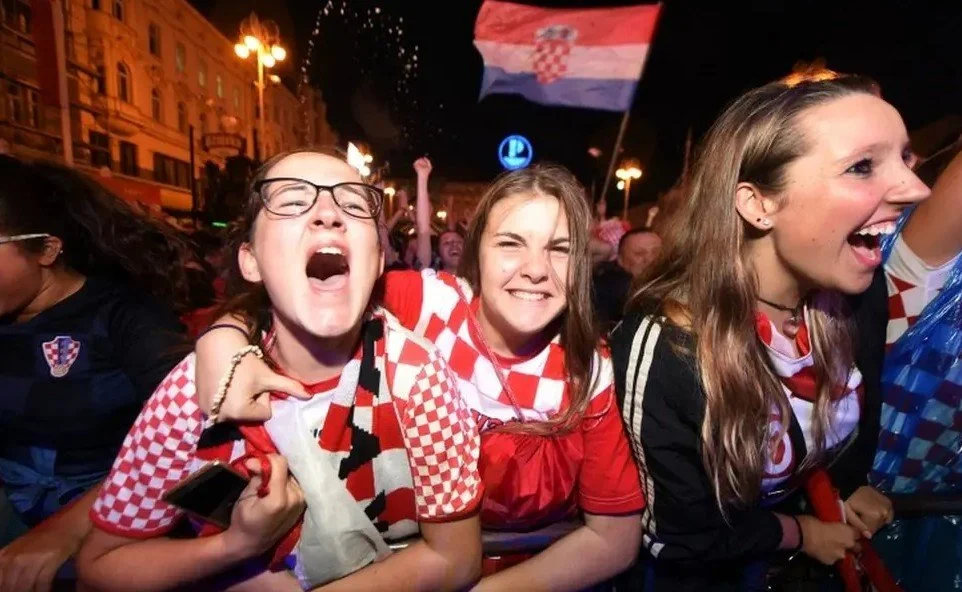
Croatia fans celebrate after beating England.
Photo Credit: BBC News
The journey to the final also resonated with Croatia’s diaspora communities around the world. Croatian supporters celebrated the team’s success as a symbol of connection to their homeland. For many emigrants and their descendants, the national team represented a cultural bridge linking them to Croatia’s history and heritage.
The final itself would present Croatia with their greatest challenge yet. Waiting for them in Moscow was France, who boasted a formidale squad filled with world-class talent and depth. France had already won the World Cup once before, in 1998, and entered the match as favourites.
Despite the odds, Croatia approached the final with the same courage and determination that had defined their tournament. When the teams walked onto the pitch at the Luzhniki Stadium, millions of Croatian supporters watched with a mixture of pride and disbelief. For a country of Croatia’s size, reaching the World Cup final represented an extraordinary achievement.
The match itself proved dramatic and unpredictable. Although France ultimately secured a 4–2 victory, Croatia’s performance earned widespread respect. The players refused to retreat into caution or resignation, continuing to play with ambition even when trailing. For many observers, the result mattered less than the journey that had brought Croatia to that stage.
By the end of the tournament, Luka Modrić was awarded the Golden Ball as the competition’s best player. The honor reflected not only his individual brilliance but also the broader narrative of Croatia’s campaign. Modrić had become the symbolic leader of a team that embodied resilience and unity.
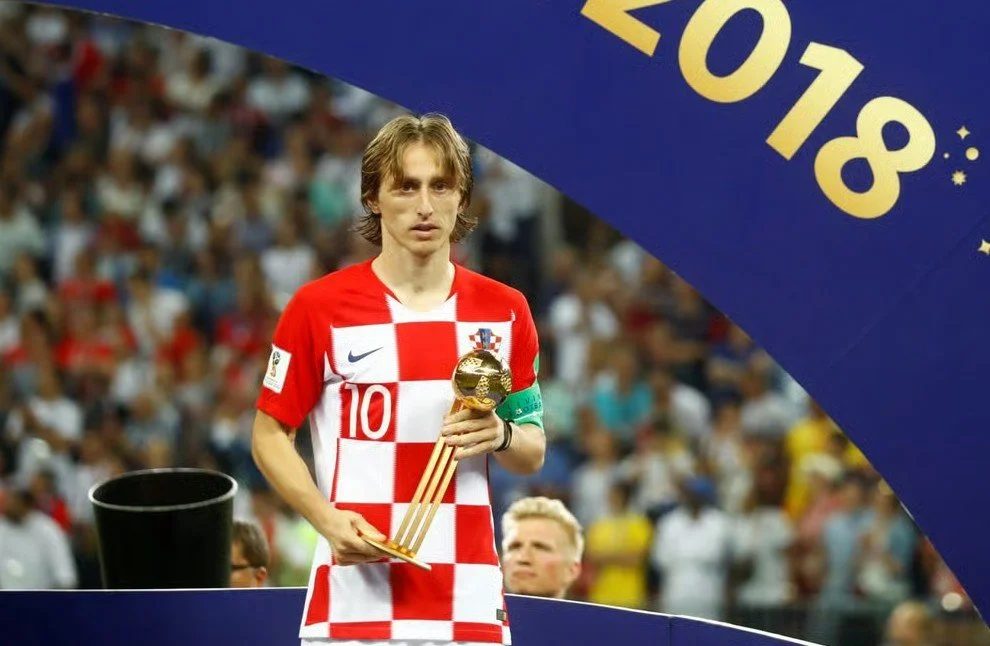
Luka Modrić receiving the Golden Ball award.
Photo Credit: Evening Standard
The Croatian squad returned home to scenes that resembled a national festival. Hundreds of thousands of supporters filled the streets of Zagreb to welcome the players back. The celebrations lasted for hours as the team travelled through the city on an open-top bus, surrounded by crowds chanting and waving flags.
The moment represented more than sporting success. It was a celebration of national pride, collective identity, and the power of football to bring people together.
Croatia’s achievement also carried broader implications for the world of football. In an era increasingly dominated by financial power and large footballing nations, their run to the final served as a reminder that the sport still retains the capacity for surprise. A small nation, united by determination and belief, had challenged the established hierarchy of international football.
The story resonated particularly strongly with supporters from other smaller countries. Croatia’s success suggested that size alone does not determine destiny in football. With talent, organization, and belief, even a relatively small nation can compete at the highest level.
Yet perhaps the most enduring legacy of Croatia’s 2018 campaign lies in the emotional connection it created between the team and its supporters. Football has always been a game of stories and narrative. Croatia’s journey to the World Cup final added another remarkable chapter to that tradition.
For many fans, the tournament served as a reminder of why football continues to captivate the world. The sport’s greatest power lies not only in the matches themselves but also in the narratives that emerge around them. Croatia’s run combined elements of history, identity, and collective aspiration in a way that few sporting moments can replicate.
Even in defeat, Croatia left Russia with a legacy that will endure in the country’s football heritage for generations. The players had demonstrated that the dreams of a small nation could reach the grandest stage in world sport. It was a story of perseverance, unity, and belief—a reminder that in football, as in life, the size of a nation does not limit the scale of its dreams.
In many ways, that moment marked the beginning of the team’s transformation into a lasting symbol within the country’s sporting heritage. Football in Croatia had already carried historical significance since independence in the early 1990s, but the events of the 2018 World Cup elevated the national team to a new cultural status. For many Croatians, the tournament represented something deeper than sporting achievement. It became a collective memory—one of those rare moments when the entire country seemed to move together, united by a single narrative of hope, pride, and resilience.
In a nation shaped by a turbulent recent history, moments of unity are particularly meaningful. Croatia’s modern statehood emerged from the violent dissolution of Yugoslavia and the subsequent Croatian War of Independence. The scars of that period still linger within the national consciousness, even as Croatia has moved forward politically and economically as a member of the European community. In this context, football has often served as a vehicle through which Croatians express both national pride and a sense of shared identity. The national team’s success in 2018 tapped into this emotional landscape in a powerful way.
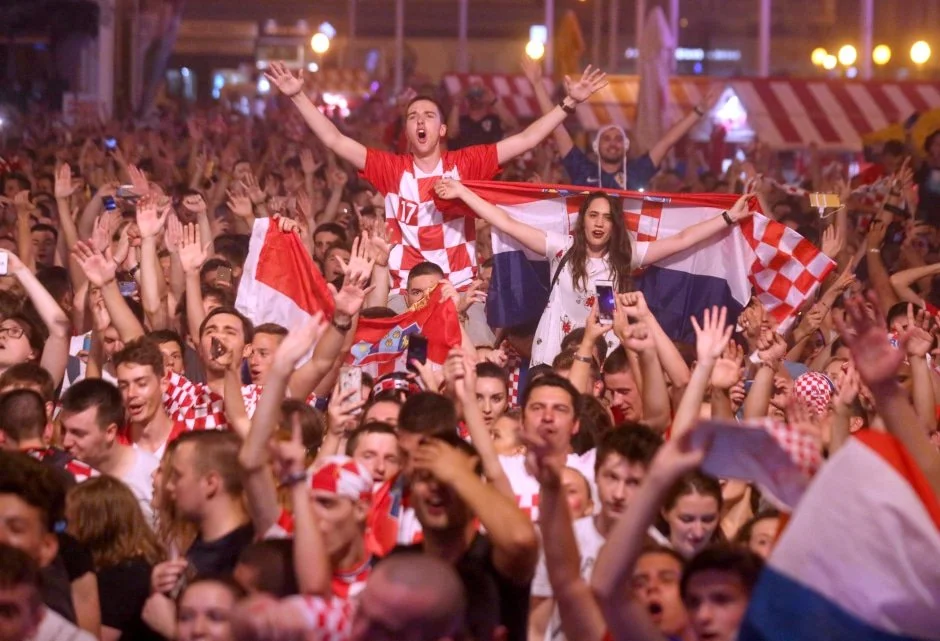
Croatian fans celebrate after beating Argentina 3-0.
Photo Credit: Sky News
Throughout the tournament, Croatian players were frequently asked about what the competition meant to them personally. Many spoke about representing a country that had experienced hardship and transformation within living memory. For players like Luka Modrić, the connection between football and national identity was particularly profound. Modrić’s childhood had been shaped by the violence of the early 1990s, when his family was forced to flee their home during the conflict. Stories of him practicing football as a young boy in refugee hotels became widely circulated during the World Cup, turning him into a symbolic figure whose personal journey mirrored the broader narrative of the nation.
This relationship between individual biography and national history added emotional depth to Croatia’s success. The team was not simply winning matches; they became a vehicle to spread their story of perseverance and survival. For supporters watching from home, each victory seemed to carry echoes of a broader national journey from uncertainty toward recognition on the world stage.
At the same time, Croatia’s achievement also highlighted the role that football plays in shaping international perceptions of smaller nations. In global sports culture, countries with large populations or powerful domestic leagues often dominate the conversation. Nations like Brazil, Germany, and Argentina have long been associated with footballing greatness. Croatia, by contrast, remained something of an outsider despite producing world-class players.
The 2018 tournament challenged that perception. Croatia’s performances demonstrated that a relatively small country could compete with—and defeat—many of the traditional powers of international football. Their victory over the Argentina in the group stage, for instance, was widely interpreted as one of the defining results of the tournament. The emphatic nature of the win surprised many observers and established Croatia as a serious contender.
Yet the deeper fascination with Croatia’s run came not only from the results but from the narrative structure of their journey. Each knockout match seemed to introduce a new test of endurance and character. Through their campaign, especially in the dramatic matches against Denmark, Russia, and England, again and again the team found ways to survive.
Much of the credit for this resilience was given to goalkeeper Danijel Subašić, whose performances during those decisive moments were widely praised. Subašić’s composure under pressure became a symbol of the team’s collective spirit.
The team’s semifinal victory over the England proved to be the defining moment of the tournament for many Croatian supporters. England had entered the match with renewed optimism, supported by a passionate traveling fan base and the sense that their own long wait for success might finally be ending. When England took the lead early through a free kick from Kieran Trippier, the momentum appeared to be firmly on their side.
But Croatia responded with determination. The equalizing goal from Ivan Perišić shifted the emotional balance of the match, and when Mario Mandžukić scored the decisive goal in extra time, Croatian players collapsed to the ground in disbelief and exhaustion. The image of Mandžukić sprinting toward the corner flag before being engulfed by teammates quickly became one of the iconic moments of the tournament.
The distinctive pattern of the Croatian jersey itself carries historical meaning. Known as the “šahovnica,” the red-and-white checkerboard design reflects a symbol that has appeared in Croatian heraldry for centuries. During the World Cup, this pattern became instantly recognizable across the globe. Images of Croatian supporters wearing the checkered shirt appeared in stadiums and fan zones throughout Russia, turning the jersey into one of the visual symbols of the tournament.
When Croatia reached the final, the scale of international interest in the team had grown dramatically. Neutral supporters around the world found themselves drawn to the underdog narrative. In a competition that often highlights the dominance of major footballing nations, Croatia’s presence in the final introduced an element of unpredictability that captured global imagination.

Croatia's post-match huddle after the 2018 World Cup final.
Photo Credit: Wikimedia Commons
France, their opponents, represented a different footballing tradition. France possessed one of the most talented squads in the tournament, including emerging stars such as Kylian Mbappé. The French team also carried its own historical significance, having previously won the World Cup in 1998 on home soil.
The final at the Luzhniki Stadium therefore brought together two distinct narratives: France’s pursuit of a second world title and Croatia’s attempt to complete one of the most remarkable journeys in the history of the competition. Although France ultimately prevailed, Croatia’s performance ensured that their story remained central to the tournament’s legacy.
For many Croatians, the moment carried a significance that transcended sport. It represented a collective affirmation of national identity and pride. The players had become ambassadors not only for Croatian football but for the country itself.
The long-term impact of the 2018 World Cup run also became visible in Croatia’s football culture. Interest in youth football increased, and the national team’s players became role models for a new generation. Young supporters who had watched the tournament began to imagine themselves wearing the checkered shirt one day, continuing the tradition established by earlier Croatian footballing heroes.
In this sense, the legacy of the 2018 team extends far beyond the tournament itself. Football heritage is not only about victories and trophies; it is about the stories that shape how a nation understands its relationship with the sport. Croatia’s journey to the World Cup final has already become part of the country’s collective sporting memory, passed down through conversations, documentaries, and the recollections of those who experienced the tournament.
Even within the broader history of the World Cup, Croatia’s run occupies a distinctive place. International football has occasionally produced surprising finalists, but few stories combine so many elements of drama, endurance, and emotional resonance. The sequence of extra-time matches, the symbolism of the players’ personal histories, and the unity of the supporters all contributed to a narrative that felt larger than the competition itself.
Ultimately, Croatia’s 2018 campaign illustrates one of the most compelling aspects of football as a global cultural phenomenon. The sport provides a stage on which nations, communities, and individuals can express their identities and aspirations. For a few weeks in the summer of 2018, Croatia stood at the centre of that stage.
Their journey reminded the world that football is not merely a contest of skill or tactics. It is also a storytelling medium—one capable of producing moments that resonate far beyond the pitch. Croatia’s run to the World Cup final became one of those stories: a tale of resilience, pride, and the enduring power of belief.
Long after the tournament ended, the image of the Croatian team walking onto the field in Moscow, wearing the red-and-white checkered shirt, remains one of the defining memories of modern football. It represents the idea that in this sport, even the smallest nations can dream on the grandest stage—and sometimes, against all expectations, those dreams can carry them all the way to the final.