

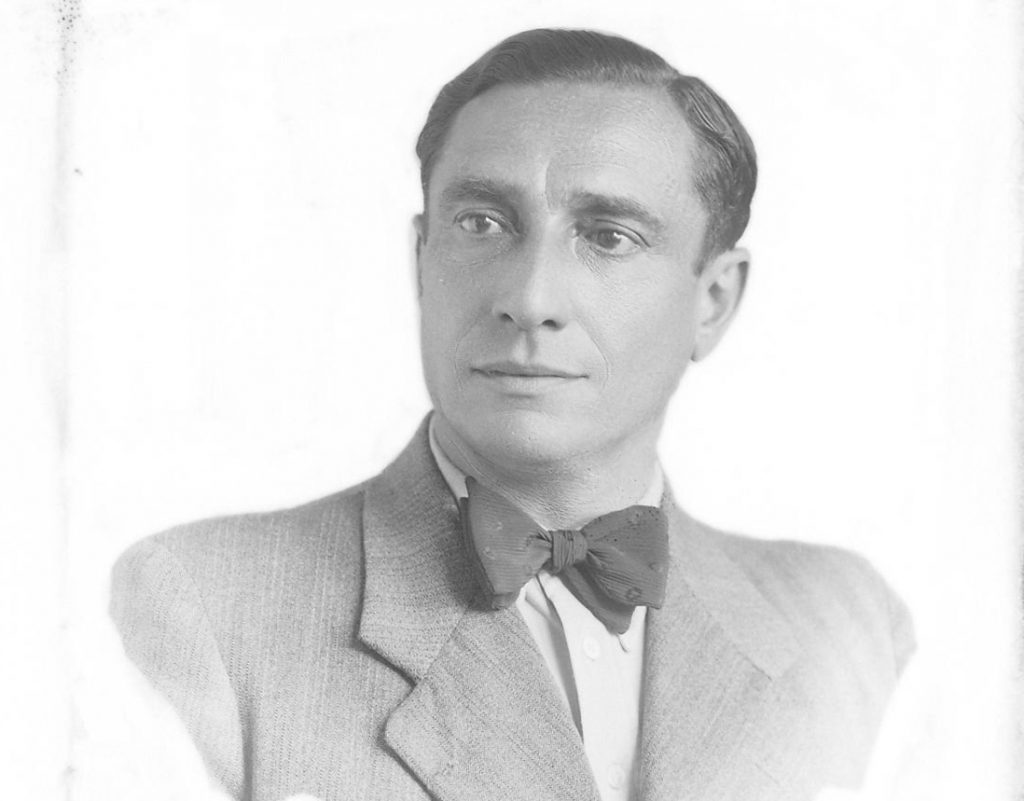
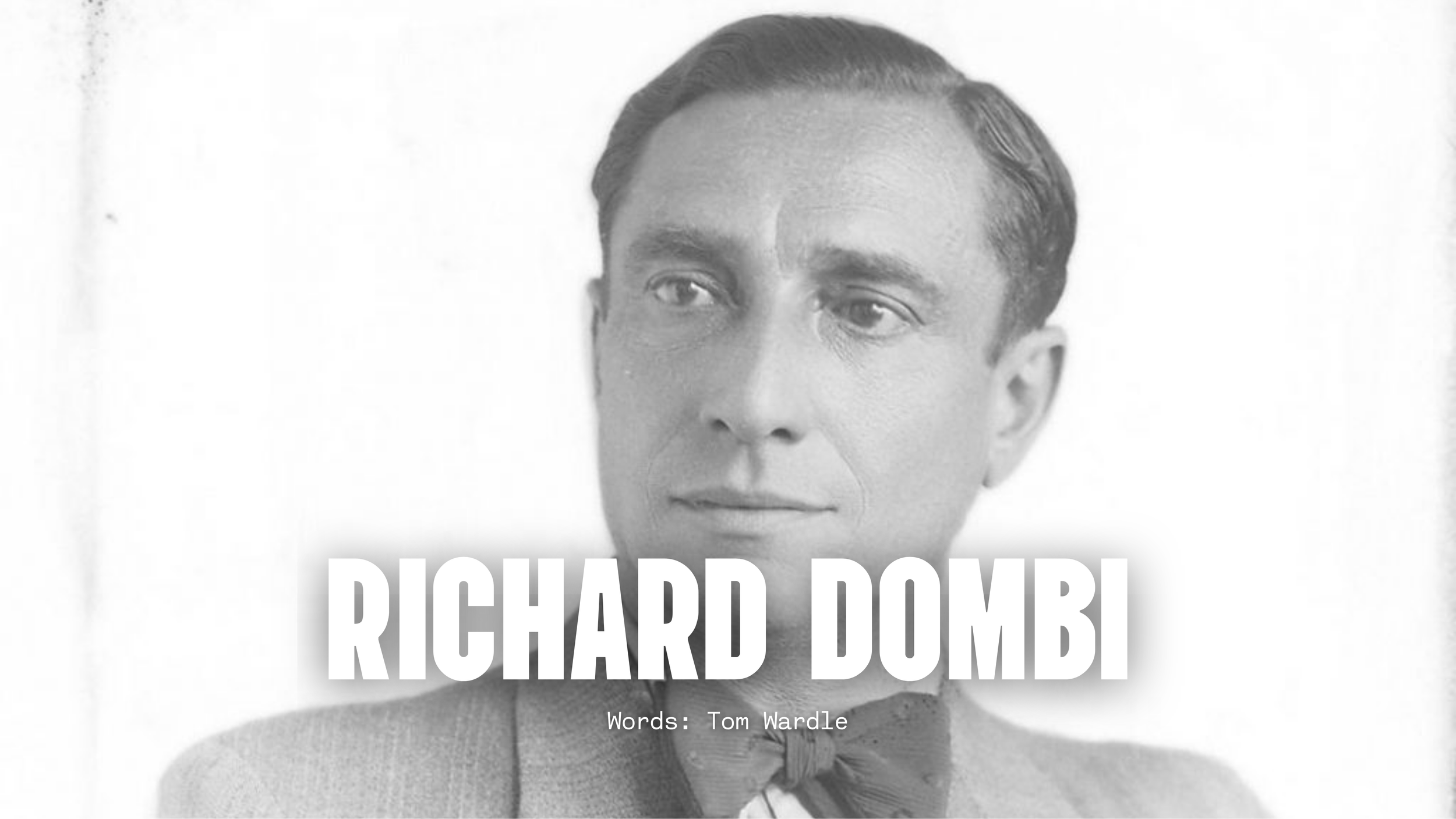
Words by Tom Wardle | Published 16.05.2026In the summer of 1942, the Gestapo began to round up hundreds of thousands of Jews in the Netherlands, intending to deport them to concentration camps in Eastern Europe. Remarkably absent was Richard Dombi, the title-winning Feyenoord coach. Born Richard Kohn, Dombi had successfully masked his Jewish origins, continuing to go about daily life in Rotterdam as a football coach, hiding in plain sight.
Dombi’s playing days began in his hometown of Vienna, debuting for Wiener AC in 1904. He took part in an unprecedented episode of player power in 1910, establishing a new club, Wiener AF, in which the players had greater control. Dombi, then a silky dribbler known as ‘Little’, was an Austrian international but paid the price for WAF’s rebelliousness, as he and other WAF players were left out of the 1912 Olympics squad following another disagreement.
Like so many others, Dombi’s career was interrupted by the outbreak of the First World War. Serving in the Austro-Hungarian army, the 28-year-old Dombi was awarded a silver medal for bravery. Worse still, an injury sustained in conflict curtailed his playing career prematurely.
After the war, Dombi worked as a bank clerk in Budapest, until he turned to coaching on the recommendation of Hugo Meisl. This took him firstly to Hertha Berlin in 1923 and then to HŠK Građanski Zagreb, a forerunner of Dinamo Zagreb, who he took to the Yugoslavian cup final in 1925. Later that year, Dombi returned home to take the reins at First Vienna.
Whilst touring Spain with First Vienna over the Christmas of 1925, the Austrians’ passing football left such an impression that FC Barcelona took notice, eventually luring Dombi to Catalunya.
Dombi joined Barça as they were in a precarious position, trailing in the Catalan Championship. The club and its offices had been ordered to close for six months after supporters had booed the Spanish national anthem. Nevertheless, Barça were a powerful club, holding the Copa del Rey and many stars of the era, such as Josep Samitier and Paulino Alcántara.
Dombi guided the club through the tumult to the final of the Copa del Rey, notably overcoming Real Madrid 8-1 on aggregate in the quarter-finals.
In the final at Mestalla, Dombi’s Barça faced Fred Pentland’s Athletic Madrid side. Athletic, the underdogs that day, took a 2-0 lead in the 58th minute but just five minutes later, Barcelona levelled. In extra time the iconic forward Paulino Alcántara bravely scored the decisive goal that saw the trophy return to Barcelona.
The Culers would also reclaim top spot in the Campionat de Catalunya. In a 10-month spell, Dombi not only stabilised the club but delivered two trophies.
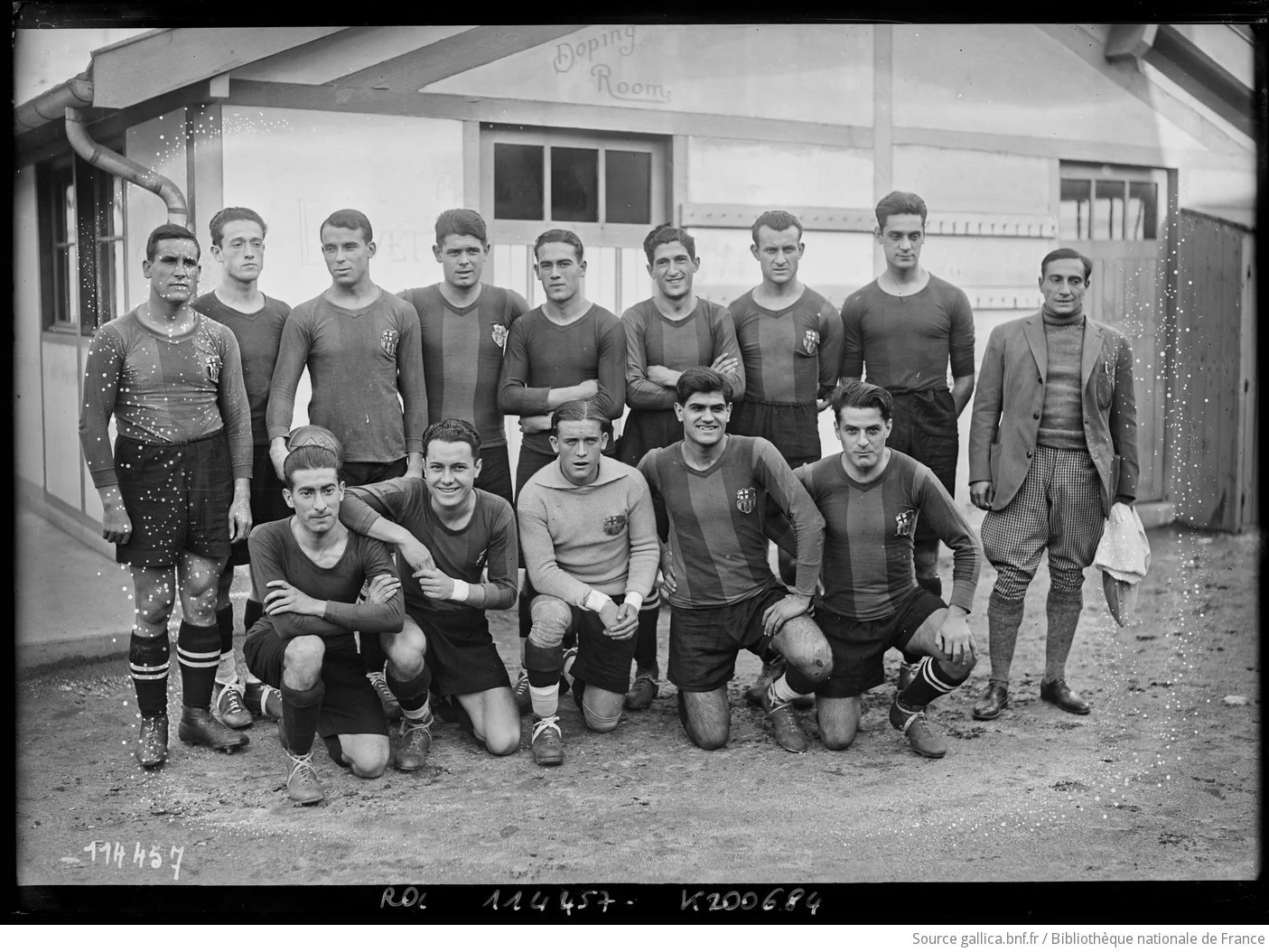
Richard Dombi's Barcelona side of 1926.
Photo Credit: Gallicia
By 1927, Dombi had returned to Germany via a short stint in Warsaw. He was praised for immediately reversing the ailing fortunes of Stuttgart Sportfreunde. A spell at 1860 Munich followed, as well as time at SV Mannheim, with whom Dombi won the regional Bezirksliga.
These accomplishments earned him the post at Bayern Munich in 1930. The Bavarians were not the juggernauts they are today but Dombi laid important foundations at the club. Going far beyond his coaching brief, Dombi effectively became a Director of Bayern, running the club from an office he had established, as well as a masseur and physio.
Dombi’s side had a vision for the beautiful game. In a 1932 interview with Der Rottumbote, Dombi outlined his preference for the Viennese passing style of play, rather than the popular ‘kick and rush’ style. Dombi expanded, “The flat pass is superior to any other because of its shortness, speed, simplicity and safety.” Bayern defender Sigmund Haringer similarly recalled that, “We wanted to play football, to attack, not to have to toil and struggle.”
Over the course of May 1932, Bayern negotiated their path through the German Championship, reaching their first ever final. Meeting Bayern in the final in Nuremburg was Eintracht Frankfurt, who had beaten Bayern 2-0 in the South German Cup final just five weeks earlier, providing a chance to exact revenge.
Bayern were awarded a penalty in the first half, which Oskar Rohr, Dombi’s protégé who had he had controversially brought with him from Mannheim, dispatched. In the second half, Krumm beat two defenders and found the bottom corner, to put the final to bed.
Dombi had delivered Bayern Munich the first of their 55 national titles. The team and the Viktoria trophy were paraded through the streets of Munich to the Löwenbräukeller beerhall.
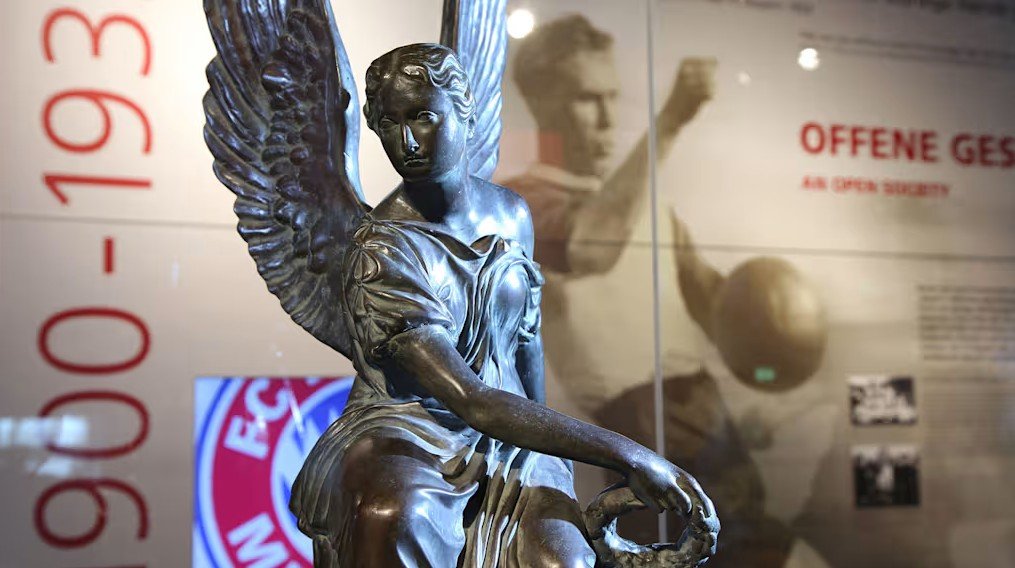
The Victoria trophy, awarded for winning the German Championship from 1903 to 1944.
Photo Credit: FC Bayern
In 1933, little over a year after that momentous cup final in Nuremburg, hundreds of thousands of Nazis rallied in the parade grounds to celebrate Adolf Hitler and his National Socialist Party’s ascent to power.
That summer, after months of Nazi rule, Richard Dombi left FC Bayern. Austrian newspaper, Telegraf, refuted the notion that he was dismissed for being Austrian, observing, ‘It is therefore quite clear that Dombi is not being dismissed for sporting reasons, but simply because he no longer fits in with the Nazi athletes. Dombi is Jewish.’
Also forced out of the club because of their Jewishness were Bayern’s President, Kurt Landauer, and a youth coach, Otto Albert Beer. Landauer was transported to Dachau in 1939 before later finding sanctuary in Switzerland, whilst Beer and his family were murdered in a concentration camp in Lithuania in 1941.
The opportunity arose shortly afterwards for Dombi to return to Barcelona, where he had enjoyed such success seven years previously. Dombi, living at Les Corts stadium, was to be assisted by his former forward Alcántara.
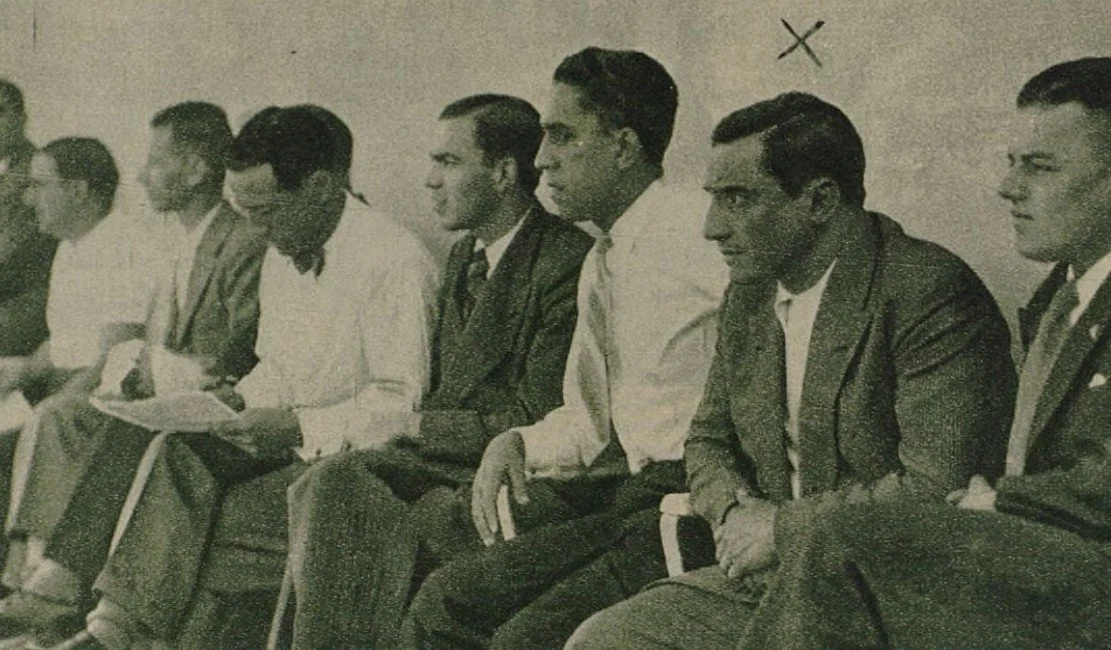
Dombi returned to Barcelona in 1933.
Photo Credit: AS MadridTo this day, FC Barcelona have never been relegated from La Liga but 1933/34 was the closest they have come, finishing second-to-last. So catastrophic were results that Barcelona’s players and Dombi wrote to club directors requesting a wage cut. Dombi was shown the door before the end of the season, with players accusing him of not adapting his fluent style to meet the league’s demands.
Journeying to Switzerland amidst his exile, Dombi subsequently took the reins at FC Basel in summer 1934. After a strong start, Basel struggled to pick up points, finishing in 5th place and Dombi parted ways with Basel in the summer.
In 1935, Dombi would make his most pivotal career move, joining Feyenoord (then Feijenoord), an ambitious club in Rotterdam. Dombi was to implement a new football ideology in a country dominated by English coaches.
Dombi’s impact was immediate. His side won their regional group at a canter, scoring 59 goals in 18 games. In the play-off league, Feyenoord beat hated rivals Ajax both home and away, eventually winning the Dutch championship at Dombi’s first attempt.
In 1937, the roles were reversed, with Ajax winning the championship, leaving Feyenoord as runners-up. Importantly, that season saw Feyenoord move to De Kuip, a mammoth stadium for the time. The first goal in De Kuip was scored by Leen Vente, a young forward Dombi had signed in exchange for remedying Vente’s injuries.
Feyenoord would reclaim their crown in 1938, emerging unbeaten from the play-off round. Dombi remarkably remains the only coach to won the national championship twice with Feyenoord.
These two championships were predicated on a new tactic concocted by Dombi: the ‘Slingerback’, or Pendulum system. In those days, teams played with two defenders and five forwards. In Dombi’s tactic, rather than both remaining central, one defender would take sole responsibility for the centre forward, whilst the other defender would scuttle from left to right, like a Pendulum, aggressively challenging both inside-forwards.
In the 1938-39 season, Feyenoord missed out on the national play-off, after having been allocated to the same regional group as Ajax. At the conclusion of the humbling season, Dombi tendered his resignation.
Seven years after Richard Dombi was forced out of Bayern for being Jewish, the Nazis were now at the gates of his new homeland. The Dutch swiftly surrendered in just 10 days in May 1940, overrun by the Blitzkrieg. Rotterdam had been razed to the ground by the Luftwaffe.
Football continued amidst the Nazi occupation and wartime scarcities. Dombi also subsequently re-surfaced, this time managing SC Emma, in the nearby town of Dordrecht. Although Dombi led Emma to promotion to the top-flight in the summer of 1941, he was made to leave Emma on account of being a ‘foreign’ manager.
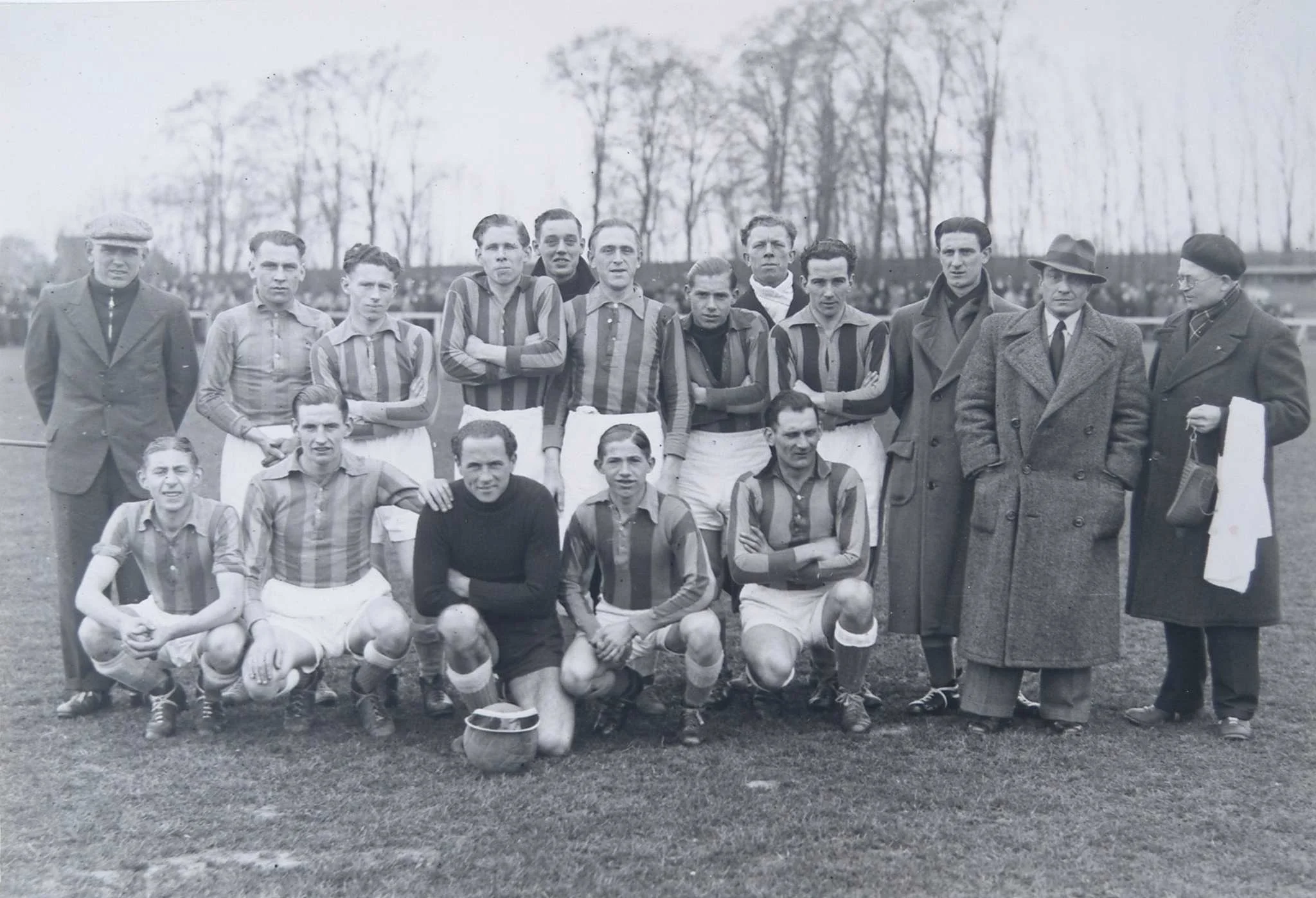
Dombi's SC Emma side, 1941.
Photo Credit: Dordrecht Regional Archive
Anti-Jewish measures intensified, including the forced wearing of yellow stars to identify people of Jewish faith or heritage. Before the start of the 1941/42 season, Jews were banned from entering sports grounds. Perhaps determined to keep a low profile, Dombi seems to have not taken on any work that season.
In the summer of 1942, the Nazis began to deport the Netherlands’ Jews to death camps.
Árpád Weisz was, like Dombi, born in Austria-Hungary. He was also a Jewish coach working in the Netherlands when the Nazis invaded. Little did it matter to the Nazis that Weisz had won two league titles in Italy with Bologna. Weisz, his wife, son and daughter were deported and murdered in Auschwitz-Birkenau.
Dutch football figures were also killed by the Nazis, such as Eddy Hamel, a former Ajax player. An estimated three quarters of the Dutch-Jewish population was killed in the Holocaust, considerably higher than other Western European countries.
How then did Richard Dombi evade capture? Simply put, he effectively covered his own tracks.
On his Dutch identity card, issued in 1941, he gave his name as Richard Dombi. Indeed, Richard Kohn had changed his name to Richard Dombi in 1917, probably seeking to avoid the growing antisemitism in Hungarian society.
He may have used his ambiguous Austro-Hungarian nationality to his advantage. He also stated that he was born in Vienna but left Hungary in 1935 to come to Rotterdam.
Crucially, Dombi lied about his religion, stating that he was a Protestant. Dombi had indeed married a Catholic, Hedwig Rotter, in Budapest in 1919.
In Rotterdam, he lived with Pietertje Groenendijk, the sister of one of his players and later his assistant coach, Wim Groenendijk. No marriage certificate exists but Pietertje was later described as Dombi’s wife.
Though Dombi was a prominent figure in Munich and therefore his Jewish faith public knowledge, he was able to fly under the radar in the Netherlands.
In 1944, Dombi began to actively engage with public life again, perhaps judging that hiding might raise even more suspicion. He returned to coaching with Neptunus, a Rotterdam side, which he led to promotion. Incredibly, Dombi was portrayed in a newspaper cartoon drawn by a Jewish artist.
That same year, Dombi joined the growing Dutch resistance, buoyed by the D-Day offensive. As part of the Domestic Armed Forces (Binnenlandse Strijdkrachten), he likely would have helped prepare for liberation, which would arrive in May 1945. Dombi was naturalised as a Dutch citizen in 1955 as reward for his involvement with the resistance.
With the war over, Dombi returned to coaching, principally at amateur sides, helping SC Emma reach the First Division once more in 1950. Feyenoord turned to their talismanic coach twice, in 1951 and again in 1955. In 1956, Dombi announced his retirement: ‘He feels that he has roamed the sport of football long enough. His name has already become legendary at Feyenoord and everywhere in the football world’, Het Vrije Volk proclaimed.
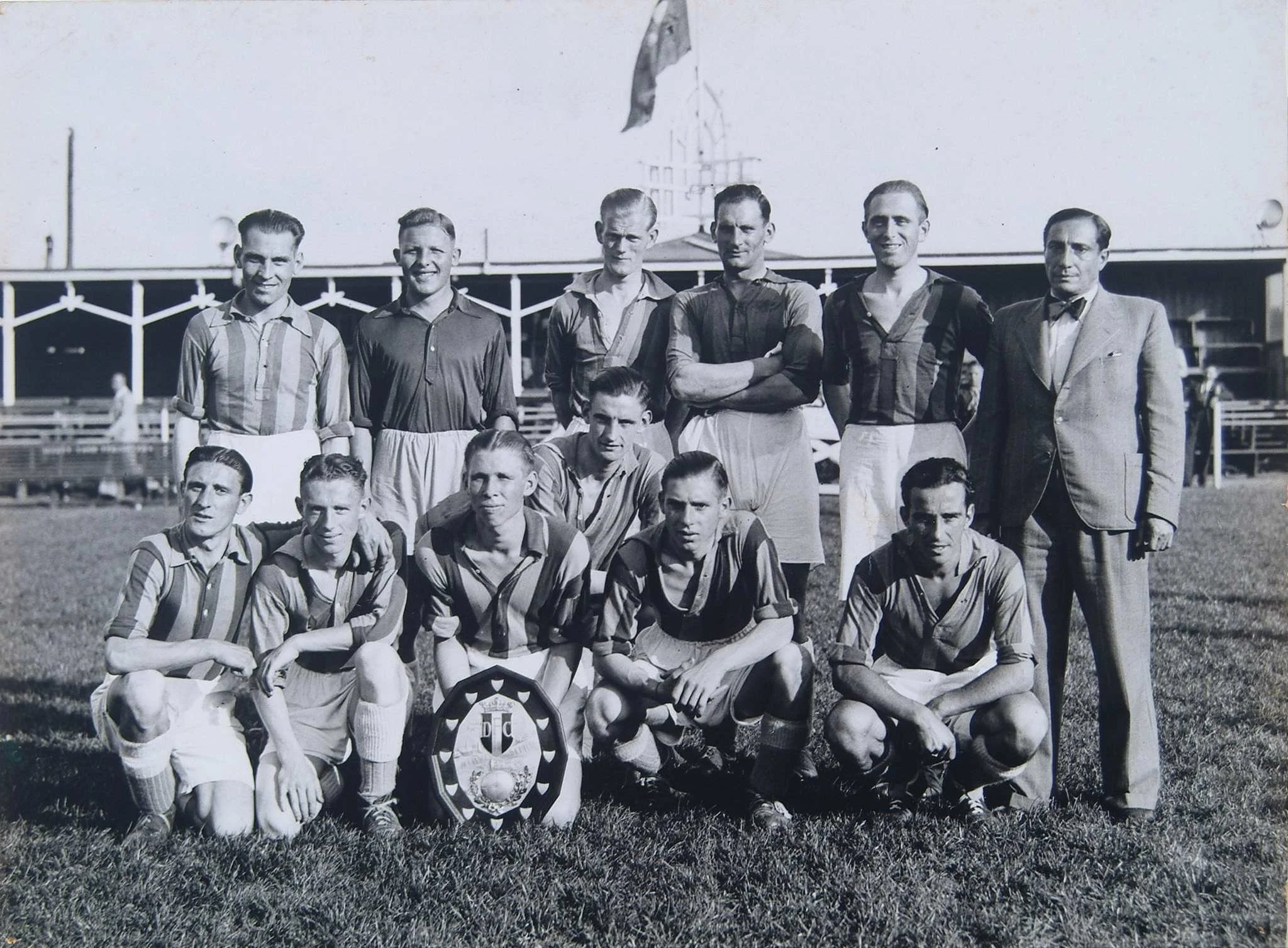
SC Emma's Merweschild winning side, 1950.
Photo Credit: Dordrecht Regional Archive
Besides his coaching, Dombi earned wide acclaim as the ‘Hungarian Wonder Doctor’, helping numerous players return expediently from injury through unorthodox concoctions and treatments.
Dombi died in 1963 at the age of 74, leaving behind Pietertje as his widow. At the cremation, Feyenoord’s chairman, Kieboom, eulogised Dombi’s willingness to make sacrifices for others.
In 1997, a street was named after Dombi, fittingly in the Feyenoord district where he had etched his name into history.
Richard Dombi should be remembered as a bona fide football pioneer; an international football player who challenged authority, a tactical innovator who believed in the beauty of the game, a globetrotter, and a ‘Wonder Doctor’. His striking achievements have been largely overlooked considering he won a Copa at Barcelona, guided Bayern Munich to their first national title, and is Feyenoord’s greatest ever coach.
Antisemitism trailed Dombi for much of his life, leading him to conceal his family name, Kohn. Nazi persecution influenced his football career too, forcing him out of Bayern where he laid the foundations for Bayern’s dynasty today. Eventually finding sanctuary in the Netherlands, Dombi was able to obscure his Jewish background but witnessed the subjugation and murder of many of his contemporaries in the Holocaust, motivating him to join the resistance. Football ultimately proved to be Richard Dombi’s salvation, actively coaching as a means of hiding in plain sight.
Sources
‘Little Richárd? Magasságos Dombi! – a magyar mágus, aki a Barcelonát és a Bayernt is irányította’, Nemzeti Sport, Tamás Hegyi, 2022
‘Dordtse voetbaltrainer Richard Dombi verborg zich met succes voor de nazi’s’, Stolpersteine Dordrecht
‘Richard Dombi’, Kurt Landauer Stiftung, 2024