Words by Christos Kazantzoglou | Published 17.02.2026One of England’s oldest and most distinctive sporting traditions is revived every year in Alnwick, Northumberland: the Shrovetide football match, also known as Scoring the Hales.
The game is played on the Tuesday before Lent and has been officially recorded as far back as 1762, though many believe its roots reach much deeper into the medieval period. It is one of the very few surviving forms of medieval football in England, a living link to the town’s history and identity.
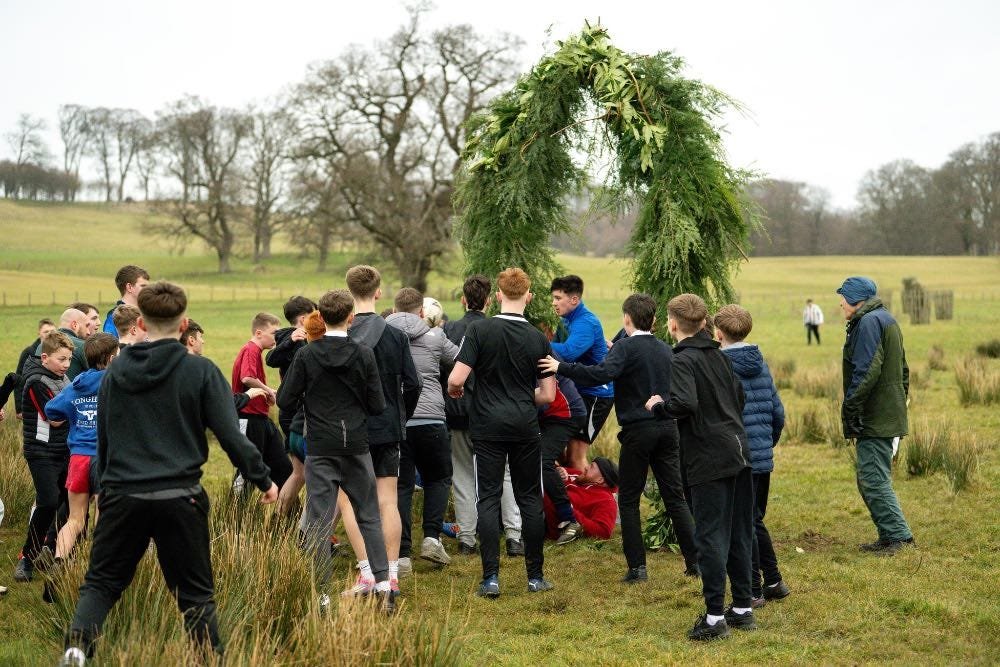
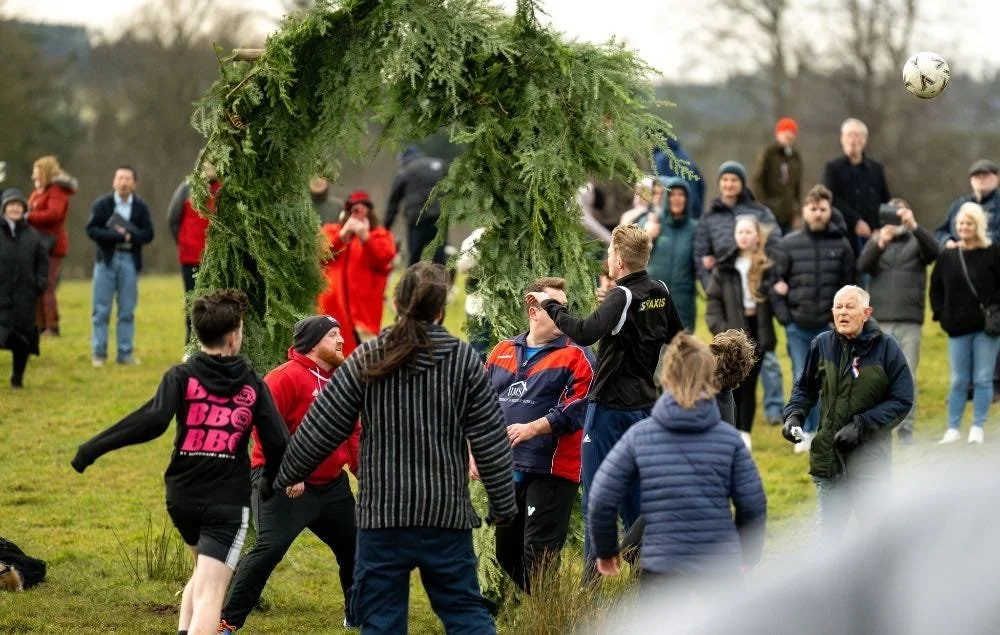
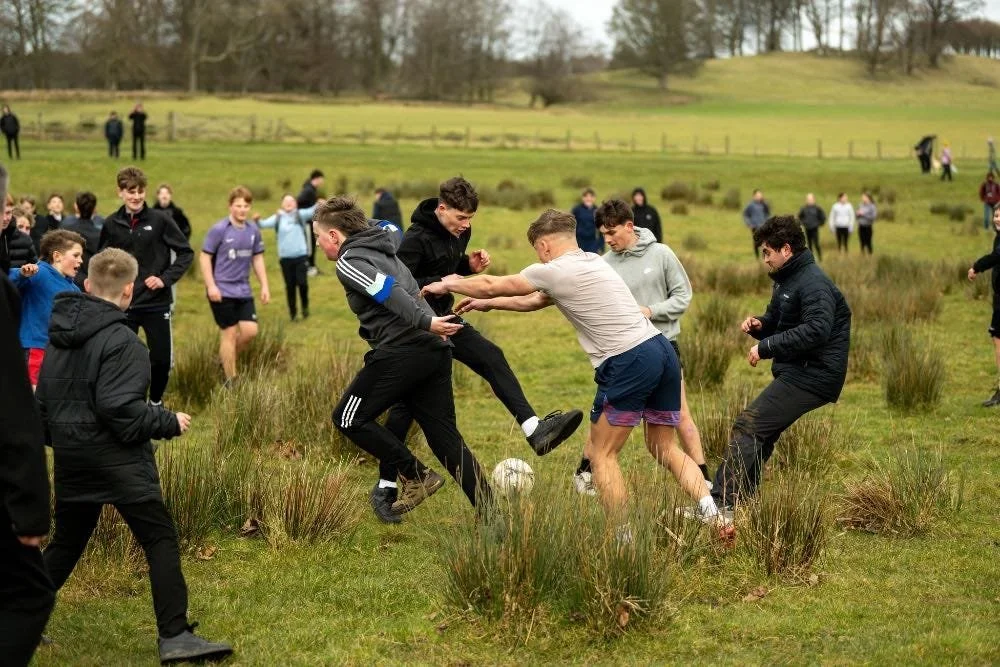
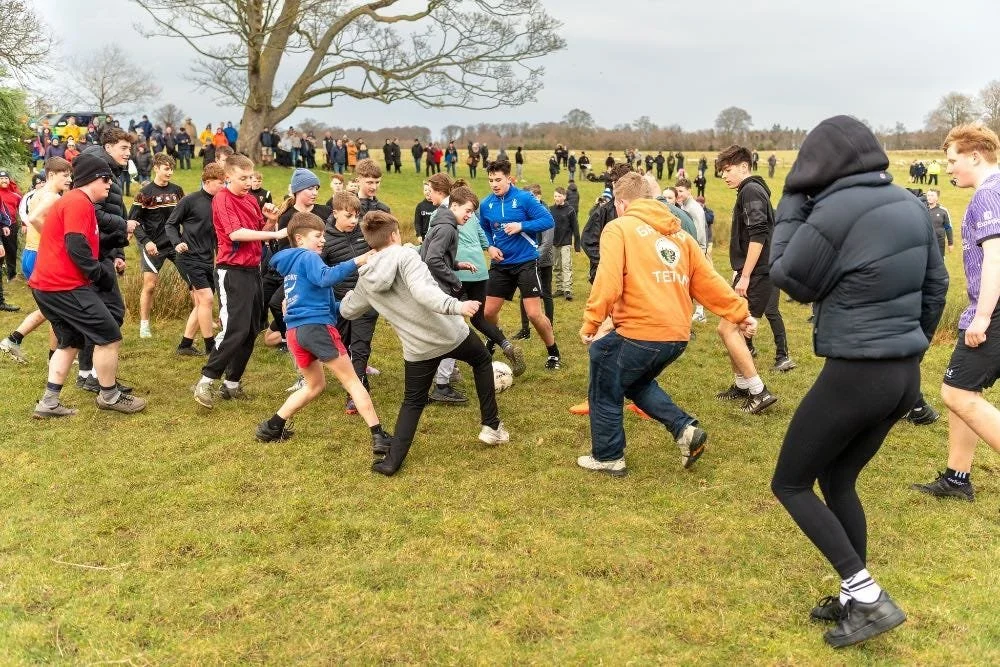
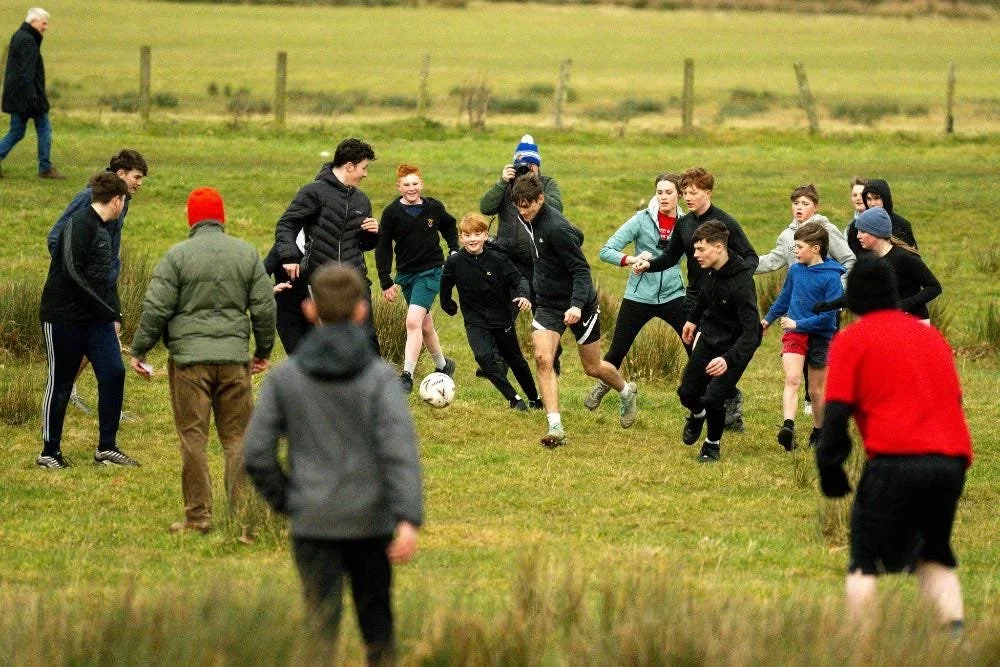
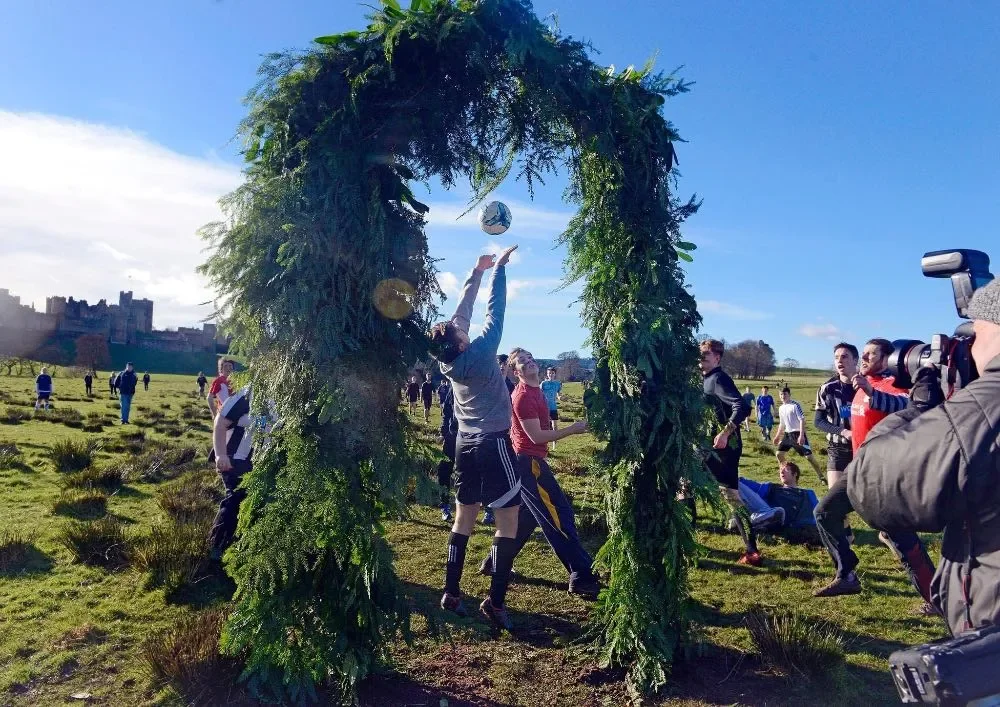
Unlike modern football, the match has no referees, official kits, or rigid rulebook. Two large teams—around 150 players each—take part, representing the parishes of St Michael and St Paul. The contest unfolds in the open fields known as The Pastures, with the aim of being the first team to score two “hales,” or goals, at posts set roughly 400 metres apart.
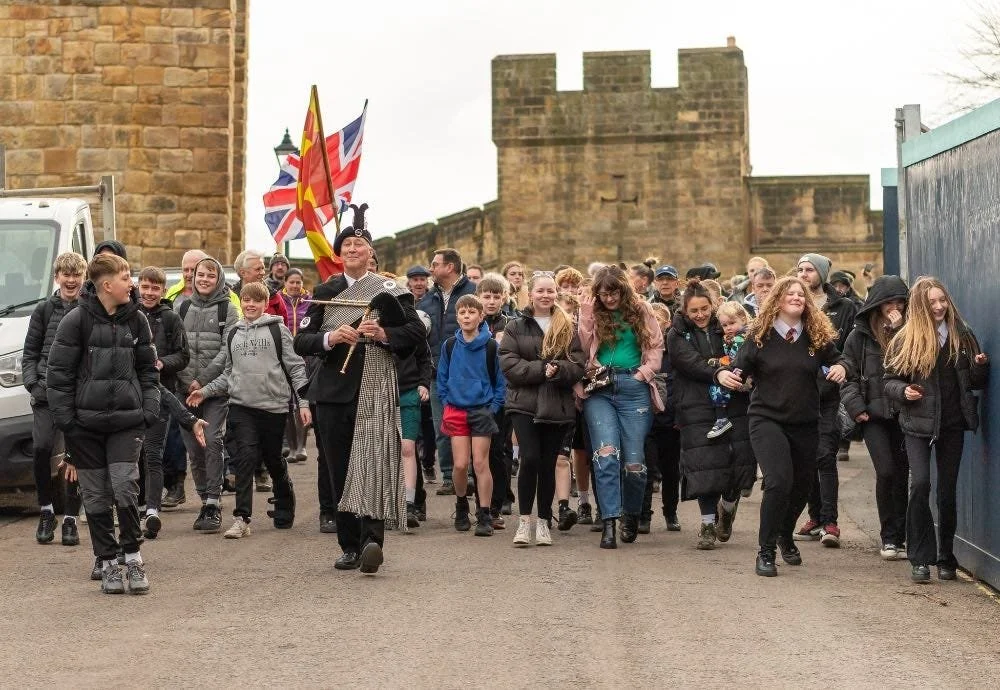
The start of the game is marked by the ceremonial throwing of the ball from the walls of Alnwick Castle, traditionally by the Duke of Northumberland or a member of the Percy family, following a procession led by bagpipers.
Each year, hundreds of spectators gather to watch the match, which is organised entirely by a volunteer committee working year-round to keep the tradition alive.
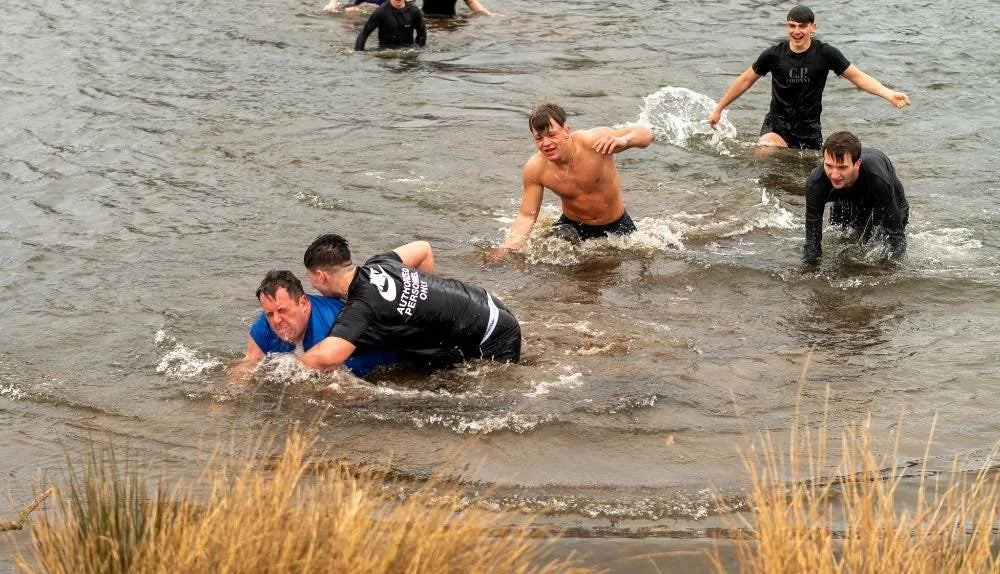
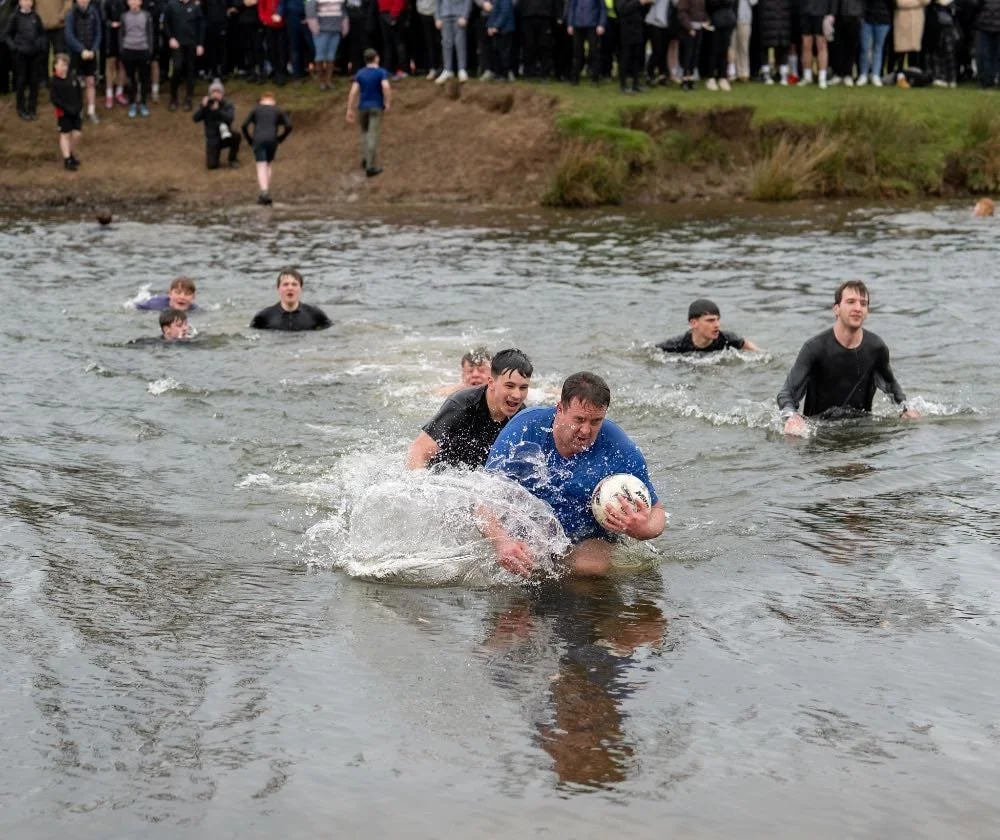
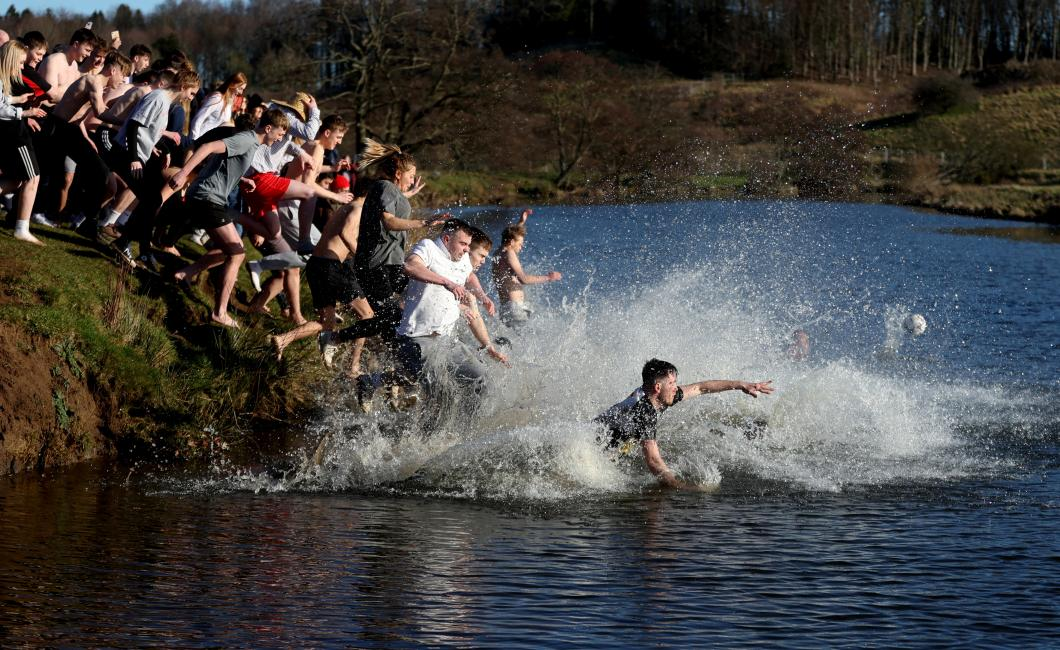
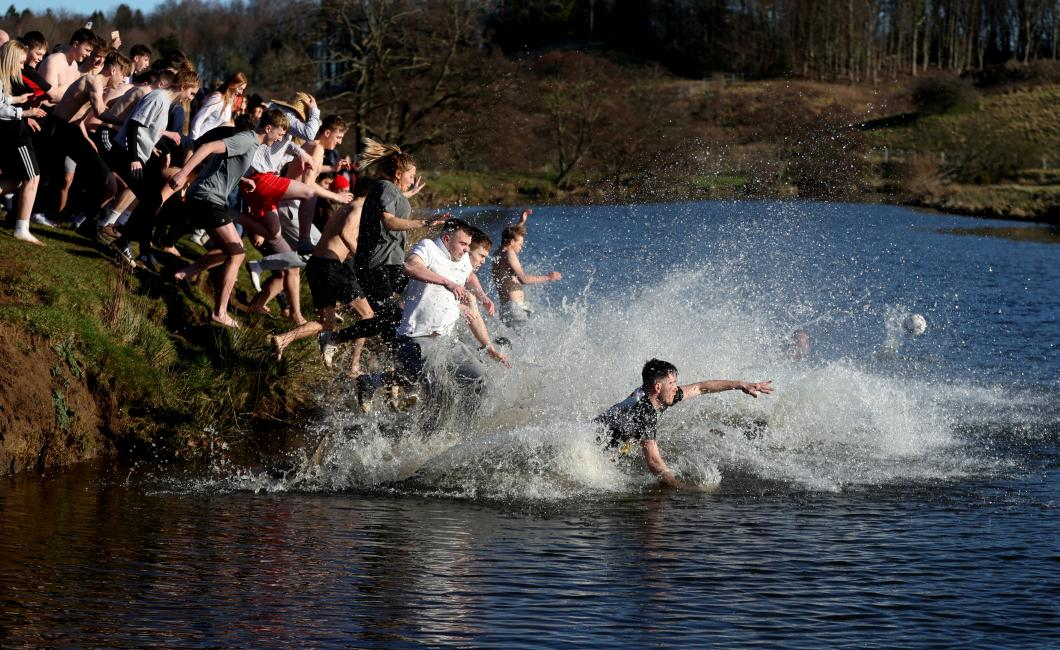
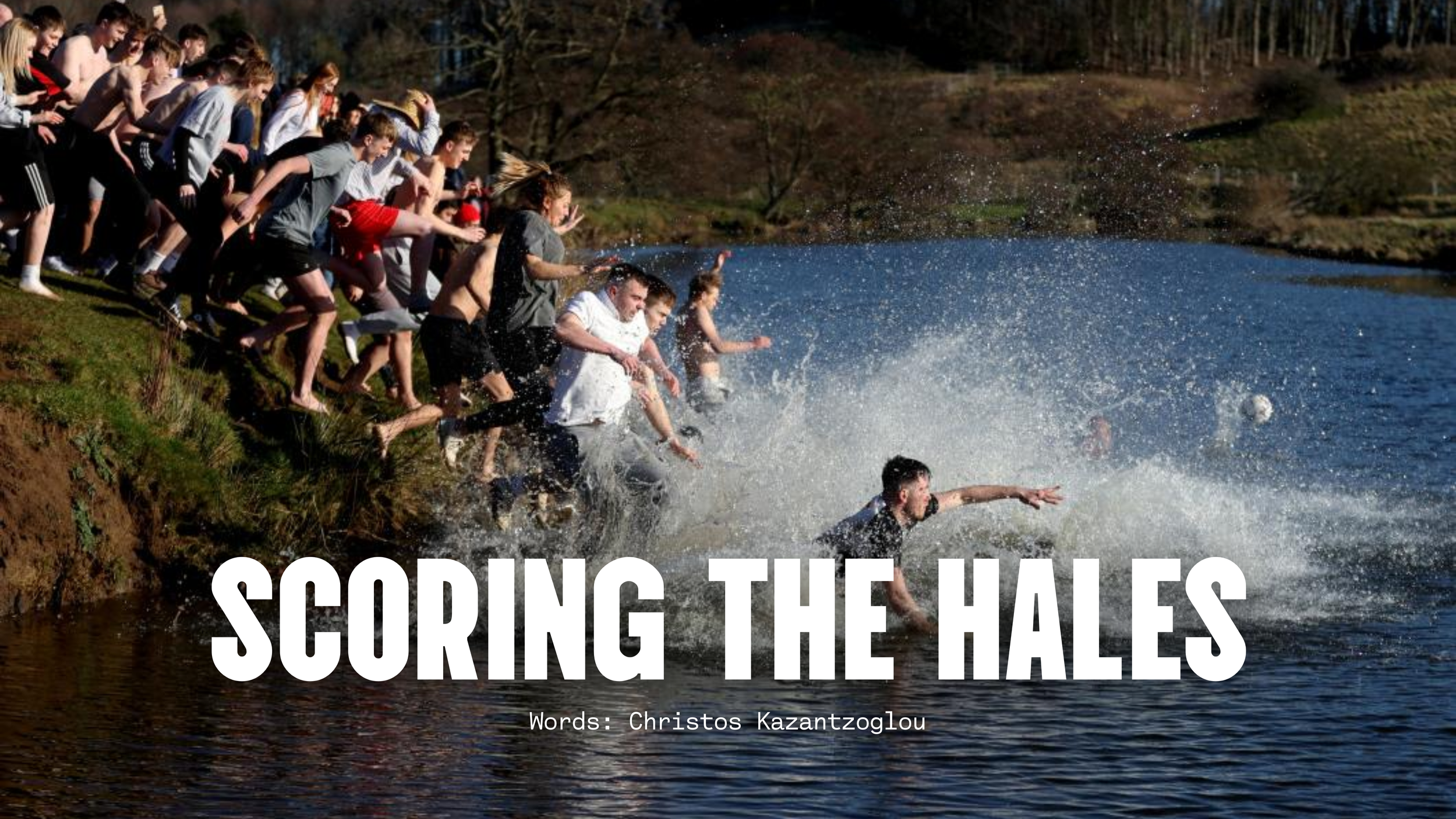
Once the winning hale is scored, the ball is thrown into the River Aln, and whoever manages to swim across and retrieve it from the opposite bank gets to keep it as a souvenir. A custom once common in many English towns, this tradition now survives almost exclusively in Alnwick—preserving a rare and tangible connection to a long-lost sporting past.
All photos by BBC Alnwick Shrovetide Football