

Words by Jonee | Published 14.03.2026The football world has always functioned as a microcosm of the real world, both in its good and bad aspects. So, it is only natural that superstition has found its way into the sport. Superstition is everywhere; it is part of everyday life for many people.
It just happens to be far more visible in sport.
We’ve all seen player X or Y pray before a game, or a manager looking up at the sky as if asking for divine help. But superstition in football also appears in smaller rituals: how players wear their socks, how they tie their boots, or what they eat before a match. Supporters have their own rituals too — praying, visiting the local church before kick-off, or perhaps having a pint at that specific pub. In their minds, the one time they went somewhere else before the game was the day their team completely lost its way on the pitch. It doesn’t matter how reasonable you think you are; there’s a strong chance that when your team is playing, you will have some kind of superstition that you believe might help those players.
My father, who is not a religious man at all, has always said that God is a supporter of our team. Which is odd, because our team doesn’t win all the time — if only it did — so something doesn’t quite add up in his theory. As far as I can remember, I don’t believe in any superstitions myself, but I’m perfectly happy for others to believe in them and respect them. If it helps FC Porto, then go for it.
Footballers themselves are perhaps the most superstitious people of all. At the elite level, where the difference between victory and defeat can be decided by the smallest margin, players often cling to routines that give them a sense of control. Some insist on putting on their boots in a specific order, others always step onto the pitch with the same foot first, and many follow identical pre-match routines week after week. To an outsider it may look irrational, but for the players these rituals provide comfort in an environment where so much is uncertain. Many famous players have been open about the strange routines they follow before stepping onto the pitch. Some refuse to change anything if their team is on a winning run, convinced that altering even the smallest detail might break the spell. Others are meticulous about their matchday preparation, repeating the same warm-up movements, listening to the same music, or sitting in the same seat on the team bus. Whether these rituals actually influence performance is another question entirely, but in a sport driven so heavily by confidence and mentality, believing that something is on your side can sometimes be enough.
If you look closely at football history, you quickly realise that even some of the greatest players the game has ever seen were deeply attached to their rituals. The legendary Johan Cruyff, for instance, had a particularly unusual routine before matches during his time at Ajax.
Before kick-off he would lightly slap his goalkeeper in the stomach, then walk across the pitch and spit his chewing gum into the opponent’s half. It may sound bizarre, but Cruyff believed he could only fully concentrate once the ritual had been completed. On one occasion before the 1969 European Cup final against AC Milan, he realised he had forgotten his chewing gum. Ajax went on to lose the final 4–1, which of course only reinforced the feeling that something had been missing from his preparation that night.
Another famous example came during the triumphant run of France at the 1998 FIFA World Cup. Before every match, defender Laurent Blanc would kiss the bald head of his goalkeeper, Fabien Barthez, just before the team walked onto the pitch. It started almost as a joke between teammates, but as France kept winning, the ritual became untouchable. By the time the tournament reached its climax in Paris, nobody would have dared interrupt it. France eventually lifted the trophy after beating Brazil. You make your own mind up on whether Blanc’s routine was the reason.
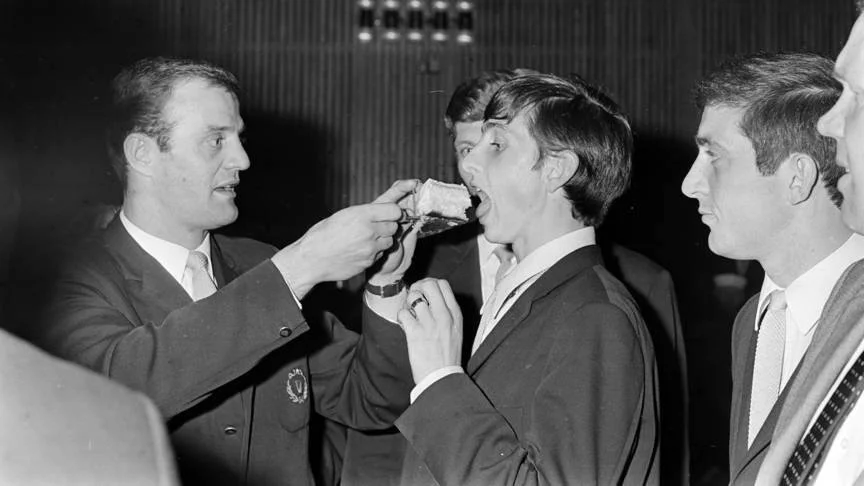
Gert Bals feeding Johan Cruyff some cake at a title-winning party in 1968.
Photo Credit: NOS Nieuws
Superstitions are not limited to older generations either. Modern footballers continue to follow their own rituals, even in an era dominated by sports science and data analysis. Lionel Messi has his own pre-kick routine when standing over a free kick, taking deep breaths and carefully measuring his steps before striking the ball. To some observers these actions look like simple concentration techniques, but for many players the line between routine and superstition is often very thin.
Perhaps that is the fascinating thing about superstition in football: the game is played by elite athletes operating at the highest possible level of professionalism, yet many of them still cling to rituals that would not look out of place on a Sunday league pitch. In a sport where a single bounce of the ball can decide everything, a small personal ritual might just provide the feeling that fate is leaning ever so slightly in your favour.
If superstition is common among outfield players, it often reaches another level entirely when it comes to goalkeepers. Perhaps it is the nature of the position itself. A goalkeeper spends long periods of a match isolated from the action, yet in a single moment they can become the most important player on the pitch. That combination of solitude and responsibility has produced some wonderfully peculiar habits over the years. One of the most famous examples belongs to former England goalkeeper David James, who was known for placing objects inside his goal during matches, including bottles of water or small items he considered lucky. The idea was simple: the objects brought him good fortune, so they stayed in the net. Whether they had any real influence is debatable, but it certainly did not stop James from enjoying a long career at the highest level.
Another legendary goalkeeper, Fabien Barthez, was famous not only for the pre-match ritual mentioned earlier with Laurent Blanc, but also for his own unusual sense of calm before games. Barthez often appeared almost carefree before kick-off, joking with teammates or smiling broadly as he walked onto the pitch. For some players that relaxed attitude might have been unsettling, but for Barthez it was part of his mental preparation. Rituals do not always have to be complex; sometimes the superstition lies in recreating the same emotional state before every match.
Then there is the famously eccentric Colombian goalkeeper René Higuita, a player who seemed to blur the line between confidence and superstition. Higuita was known for his flamboyant style and his willingness to leave his goal line to join the attack, but he also believed strongly in maintaining personal rituals before and during matches. His most famous moment, the audacious “scorpion kick” save against England in 1995, perfectly captured the strange mixture of showmanship, belief and instinct that defined both his personality and his preparation.
Perhaps none of this should be surprising. A goalkeeper lives in a world where a single mistake can undo ninety minutes of work, and where luck — good or bad — often seems to play a role. In such a position it is easy to understand why rituals develop. If touching the crossbar before kick-off, adjusting the gloves in a particular way, or stepping onto the pitch with the same foot first provides even the smallest sense of reassurance, many goalkeepers will happily repeat those habits for the rest of their careers.

René Higuita, the original sweeper keeper.
Photo Credit: These Football Times
Superstition does not stop with the players. Managers and coaches, despite often presenting themselves as calm strategists guided by tactics and analysis, are just as prone to rituals and lucky habits. In fact, the pressure of the touchline can sometimes make those habits even more visible. Managers cannot influence the game directly once the whistle blows; they cannot make a tackle, take a shot, or clear a ball off the line. In many ways they are spectators with responsibility, and that helplessness can easily give rise to superstition.
Some managers develop simple routines that they refuse to break. Carlo Ancelotti has spoken in the past about repeating the same matchday schedule and preferring familiar patterns before games. For others, the ritual is more visible. Marcelo Bielsa, famous for his meticulous preparation, became almost as well known for watching matches while sitting on a small cooler beside the pitch. The position itself was not necessarily a superstition at first, but once it became part of his routine, it followed him from club to club and became inseparable from his image on the touchline.
Clothing has also played a role in the superstitions of several coaches. During successful runs, some managers refuse to change what they wear on the sidelines. Roberto Mancini was known during his time at Manchester City for favouring his distinctive scarf. Similarly, Sir Alex Ferguson once famously abandoned a particular grey kit worn by Manchester United during a match in 1996, believing the players could not see each other properly in it. While that decision was partly practical, it also revealed how quickly football can slide into the territory where small details begin to carry symbolic weight.
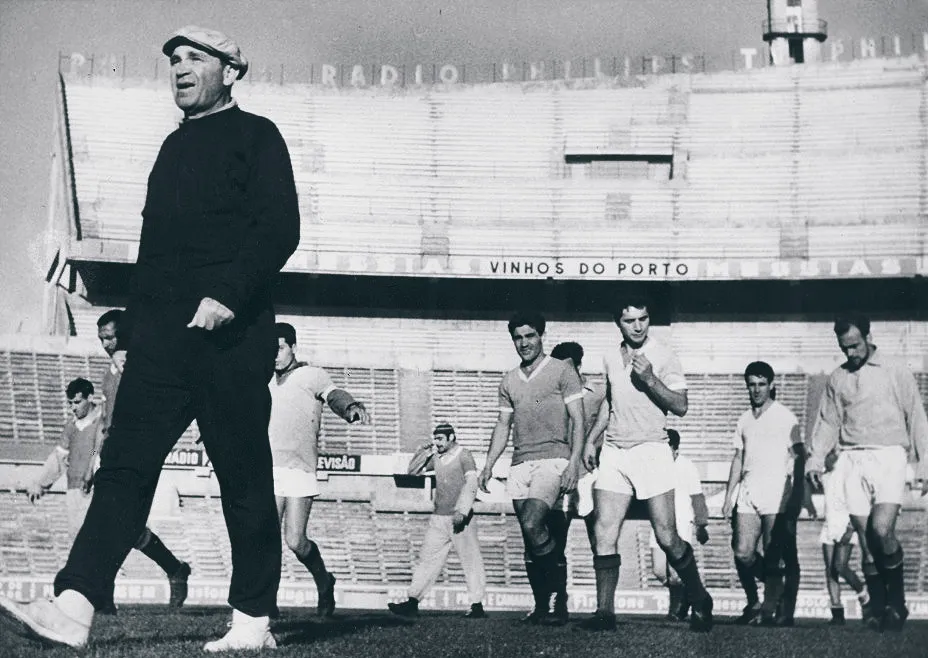
Yet while individual routines are fascinating, football history also contains something even more dramatic: the idea of a curse. And perhaps the most famous of them all is the one associated with the Hungarian coach Béla Guttmann and the Portuguese giants S.L. Benfica.
Guttmann was one of the great tactical innovators of the twentieth century and enjoyed enormous success with Benfica in the early 1960s. Under his leadership the club won back-to-back European Cups, first defeating Barcelona in the 1961 final and then beating Real Madrid in 1962. The latter match was particularly memorable, featuring a young Eusébio announcing himself to the world with a brilliant performance. At that moment Benfica appeared destined to dominate European football for years to come.
However, the story took a dramatic turn shortly after the second triumph. According to football folklore, Guttmann requested a pay rise following the club’s European success. When the club’s directors refused, the Hungarian coach reportedly left in anger and declared that Benfica would not win another European Cup for a hundred years. Whether those exact words were truly spoken remains a matter of debate, but the legend of the “curse” quickly became embedded in football culture.
What followed only added fuel to the myth. Since Guttmann’s departure in 1962, Benfica have reached numerous European finals but have repeatedly fallen just short. They lost the European Cup final in 1963 to AC Milan, again in 1965 to Inter Milan, and once more in 1968 against Manchester United at Wembley. Decades later the pattern continued in other European competitions, with defeats in the UEFA Cup and Europa League finals. Each new loss seemed to strengthen the belief that something larger than footballing logic might be at work.
The story became so ingrained that, before the 1990 European Cup final, Benfica legend Eusébio reportedly visited Guttmann’s grave in Vienna to ask for forgiveness and symbolically lift the curse. Benfica still lost the final that year, again to AC Milan. Whether coincidence or not, the narrative has endured ever since, passed down through generations of supporters and repeated whenever the club approaches another European final.
Of course, from a rational perspective the explanation is much simpler. European competitions are extremely difficult to win, and many great clubs have experienced long waits between trophies. Yet football has always thrived on stories, myths, and traditions, and the idea that a frustrated coach could leave behind a century-long curse is simply too compelling to disappear. In a sport built on emotion as much as logic, such legends become part of the game’s fabric.
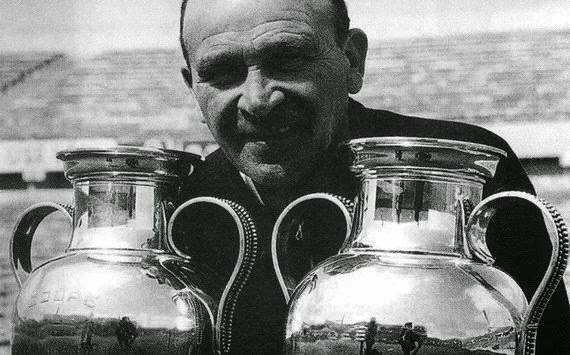
Béla Guttmann won two European Cups with Benfica.
Photo Credit: The 1888 Letter
The legend of the so-called curse has grown so powerful over the decades that it has almost taken on a life of its own. Every time Benfica reach another European final, the story inevitably resurfaces. Statistically, the club’s run of near misses can be explained by the brutal difficulty of European competition, but football is rarely a sport that lives comfortably within statistics alone. The longer the sequence continued, the more the myth hardened. Each defeat seemed to echo the words attributed to Béla Guttmann, turning what may have begun as a frustrated remark into one of the most enduring legends in the game.
The idea of a curse also reveals something important about football culture itself. Supporters are storytellers by nature, constantly searching for meaning in results that are often decided by little more than a fortunate bounce or an unfortunate deflection. When Benfica lost another European final in 2014, this time in the Europa League against Sevilla FC, the narrative once again returned to Guttmann’s famous words. Whether anyone truly believes in the curse is almost beside the point. The story has become part of Benfica’s identity, woven into the club’s European history in a way that statistics alone could never achieve.
And in many ways, this is where superstition becomes most visible in football: among the supporters themselves. Fans may laugh at the idea of curses or lucky rituals when they hear about them in other clubs, but when their own team is involved the logic often changes. Suddenly the lucky scarf must be worn again, the same route to the stadium must be taken, and the same pub must be visited before kick-off. Just like players and managers, supporters develop their own matchday traditions, convinced — at least somewhere deep down — that repeating the ritual might just help tip the balance in their team’s favour.
For supporters, football is rarely just ninety minutes of entertainment; it is routine, identity, and a form of belonging that stretches across generations. Because fans have no direct influence over what happens on the pitch, rituals often become their way of participating in the match from afar. They cannot score the winning goal or make the decisive save, but they can wear the same scarf, sit in the same seat, and follow the same matchday routine they have followed for years.
Across the football world, these rituals take countless forms. Some supporters insist on wearing a particular “lucky” shirt that they believe must not be washed during a winning run. Others refuse to change their seat in the stadium, convinced that moving even a few rows could disturb the delicate balance of fortune surrounding the team. In many stadiums, fans deliberately arrive at the same turnstile every week, take the same route through the concourse, and stand in the same place on the terrace. Over time these habits become so ingrained that they feel almost sacred, passed down like traditions rather than simple preferences.
Pre-match routines away from the stadium are just as important. In many football cities, the journey to the ground is a ritual in itself. Supporters gather in the same pubs, cafés, and meeting points long before kick-off, repeating the same conversations and drinking the same pre-match pint that they have shared with friends for years.
Stadium traditions add another powerful layer to these rituals. At Liverpool F.C., for instance, the singing of “You’ll Never Walk Alone” before kick-off at Anfield has become one of the most famous pre-match moments in world football. Supporters raise scarves above their heads and sing together in a ritual that has been repeated for decades. Similarly, fans of Borussia Dortmund gather behind the goal in the enormous “Yellow Wall” at Signal Iduna Park, turning the act of supporting their team into a choreographed display of colour, sound, and unity. While these traditions are not superstitions in the strictest sense, they share the same emotional roots: the belief that collective support can influence what happens on the pitch.
Even fans watching from home are not immune to such habits. Many supporters refuse to move from a particular seat if their team is playing well on television, or insist that someone else must not enter the room during a crucial moment in the match. Others jokingly blame themselves if they stop watching and their team suddenly scores. These behaviours might sound irrational, yet they are remarkably common, and psychologists have long noted that they arise from a simple human instinct: when faced with uncertainty, people look for patterns and actions that make them feel less powerless.
And football, perhaps more than any other sport, thrives on uncertainty. A title race can be decided by a single point, a cup tie by a penalty kick, and an entire season by a moment of brilliance or misfortune. For supporters who invest enormous emotional energy into their teams, rituals become a small way of managing that tension. The scarf, the pub, the seat, the lucky shirt — none of them can truly influence the outcome of the match, yet abandoning them somehow feels wrong, as if breaking the routine might tempt fate.

Hibs CCS is the Penny Black pub in Edinburgh - one of many pre- and post-match rituals.
Photo Credit: Hibernian Retro
In the end, these matchday rituals reveal something fundamental about football culture. The sport is built on skill, tactics, and physical ability, but it is also sustained by belief, emotion, and tradition. Superstitions may not score goals or prevent them, but they help create the sense of connection that keeps supporters returning week after week, season after season. In that sense, the rituals surrounding football are not merely odd habits; they are part of the invisible thread that binds clubs, players, and fans together. They embody the differences between the tangible and intangible.
If we widen the lens beyond Europe, superstition becomes even more deeply intertwined with football culture in many parts of the world. In large parts of Africa, Central America, and South America, football is not only a sport but also a powerful social and cultural force, and within that environment superstition often occupies a central place.
In countries where spiritual traditions and everyday life are closely connected, it is not unusual for players, coaches, and supporters to turn to rituals, blessings, or spiritual guidance before important matches. In Brazil, for instance, players have long been known to combine Catholic practices with elements of Afro-Brazilian religious traditions, reflecting the country’s unique cultural landscape. Even icons of the game such as Pelé occasionally spoke about lucky items or routines that accompanied them onto the pitch.
In Argentina, the relationship between football and superstition has been visible for generations. Supporters and players alike often talk openly about “la mufa”, a colloquial term referring to bad luck or a jinx that might affect a team. The legendary Diego Maradona was famously superstitious throughout his career, following carefully structured routines before matches and insisting that certain patterns not be broken if his team was performing well. Teammates have recalled how he would repeat the same warm-up habits, listen to the same music, and avoid anything that might disturb the rhythm he believed brought success.
Across parts of Africa, the relationship between football and spiritual belief can sometimes be even more explicit. Stories frequently circulate about teams seeking blessings from spiritual leaders before important matches, or about protective rituals performed in stadiums or training grounds. While such accounts are sometimes exaggerated in popular media, they reflect a deeper cultural reality: in many communities, sport is not separated from spiritual life. Football victories can carry enormous symbolic meaning for supporters, and it is therefore not surprising that traditional beliefs occasionally intersect with the game.
Central America and the Caribbean offer similar examples. In countries where football and religion often sit side by side in everyday life, players may pray together before matches or visit churches and shrines during important tournaments. For supporters, these acts are not unusual; they simply represent another expression of the passion and hope invested in the team. When the stakes are high, belief — whether spiritual or superstitious — becomes part of the emotional landscape surrounding the match.
What makes these traditions particularly fascinating is that they reveal how football adapts to the cultures in which it is played. In Europe, superstition often appears through routines and rituals: lucky clothing, familiar seats, or repeated pre-match habits. In other regions of the world, the same underlying instinct may take on a more spiritual form. Yet the motivation is essentially the same everywhere: the desire to influence an unpredictable game and to feel, even in the smallest way, connected to the outcome.
And perhaps that is the real thread linking all these stories together. Whether it is a goalkeeper touching the crossbar before kick-off, a manager refusing to change his matchday jacket, a supporter wearing the same lucky scarf, or a team seeking a blessing before a decisive match, superstition ultimately reflects the same simple truth. Football inspires such deep emotion that people will look for meaning, protection, and hope wherever they can find it.
Behind all of these stories lies an important psychological explanation. Superstition tends to flourish in environments defined by uncertainty, pressure, and limited control — three elements that perfectly describe competitive sport. In football, even the most talented team cannot control every variable: refereeing decisions, injuries, the weather, or the unpredictable bounce of the ball can all influence the outcome of a match. In such situations, the human mind instinctively searches for patterns and behaviours that appear to produce success.
Psychologists refer to this as an “illusion of control”, the tendency to believe that certain actions can influence events that are largely determined by chance. For players, repeating the same warm-up routine or stepping onto the pitch with the same foot first may provide a sense of stability before a high-pressure match. For managers on the touchline, a familiar jacket or a particular seat in the dugout can create a feeling of continuity in an otherwise chaotic environment. And for supporters, the lucky scarf, the pre-match pub, or the unwashed shirt worn during a winning streak can serve as emotional anchors during moments of tension.
What makes these rituals psychologically powerful is not necessarily the belief that they will directly change the result, but the sense of confidence and focus they create. When athletes follow consistent routines, it can reduce anxiety and help them enter the mental state required for high-level performance. In that sense, some superstitions function almost like informal psychological tools. Even when the underlying belief may not be rational, the routine itself can calm nerves, sharpen concentration, and provide a feeling of readiness before the contest begins.
At the same time, superstition also reflects a deeper emotional connection to the sport. Football is unpredictable by nature, and that unpredictability is part of what makes it so captivating. If every match could be explained purely by tactics and statistics, much of the drama would disappear. Superstitions, rituals, and myths fill the spaces that logic cannot fully explain, allowing players and supporters alike to believe that something beyond pure calculation might still influence the outcome.
In the end, superstition is unlikely ever to disappear from football. It is woven into the very fabric of the game, from the obsessive rituals of players and goalkeepers to the quirky habits of managers, and from the pre-match routines of supporters to the deeply spiritual practices seen in Africa, Central, and South America. Football is a sport defined by uncertainty and passion, and where emotion runs this high, humans naturally seek ways to influence the outcome, however small or symbolic. Even the most rational players, managers, and fans often cling to routines or lucky charms, not necessarily because they believe in magic, but because those rituals provide comfort, focus, and a sense of connection to something larger than themselves.
Perhaps that is why the stories endure — each ritual becomes part of the shared narrative of the game. Football is not just a contest of skill; it is a theatre of belief, emotion, and tradition. And as long as humans continue to care so deeply about what happens on the pitch, superstition will remain at the heart of the sport, inescapable, unshakeable, and endlessly fascinating.

An advert for The Athletic indulges football fans' superstitions.
Photo Credit: Hibernian Retro
What makes football superstition truly remarkable is its universality. Superstition forms a common thread connecting players, managers, and supporters alike. While the rituals themselves may differ, the underlying impulse is the same: to assert some measure of control over a wildly unpredictable game. In this way, superstition is not a regional curiosity but a fundamental part of football culture worldwide, revealing how passion, hope, and belief are as integral to the sport as skill, tactics, and physicality. No matter where you watch the game, from a crowded South American stadium to a quiet living room in Europe, the echoes of ritual, routine, and superstition are always present, shaping the emotional experience of the sport and reminding us that football is as much about what happens off the pitch as on it.
Part of the reason superstition holds such a strong presence in football may lie in the role the sport plays in people’s lives, particularly in regions where it transcends mere entertainment. For millions around the world, football functions in many ways like a secular religion. Stadiums become cathedrals, players and managers are treated like saints or prophets, and matchdays are ritualised events, complete with processions, chants, and offerings.
Just as religion offers structure, comfort, and a sense of control in an uncertain world, football provides a similar framework for millions of believers: a space where hopes are projected, victories celebrated, and losses mourned with almost spiritual intensity. Within this context, superstition is not merely eccentricity; it becomes a natural extension of faith. From fans invoking divine favour in Africa and South America, to goalkeepers following pre-match routines with almost ceremonial precision, to managers who treat lucky rituals as essential to the club’s fortune, the act of believing in small, symbolic gestures is part of what makes football feel sacred. In other words, the sport’s quasi-religious significance amplifies superstition, creating a culture in which rituals, charms, and even curses are not only tolerated but deeply embedded in the game’s emotional and cultural fabric.
Football is full of stories that, at first glance, seem almost comical, but which reveal just how deeply superstition permeates the game. Supporters take superstition to an even more vivid level. It’s common for supporters to carry religious icons to the game for protection and luck. Even historical moments in football have been shaped — or at least celebrated — through superstition. The infamous “Hand of God” goal scored by Diego Maradona in 1986, for instance, has taken on almost mythic status. Across continents, levels, and generations, these stories demonstrate that superstition is far more than a quirky aside; it is woven into the emotional DNA of the sport. Players, managers, and supporters all cling to small rituals, lucky items, and patterns because they provide a sense of agency and connection in a game where control is fleeting and outcomes are never guaranteed. From touching goalposts to following the same pre-match routine, carrying charms, or refusing to wash a winning shirt, superstition is a lens through which the uncertainty of football can be managed, celebrated, and even mythologised.
In the end, superstition is not just a quirk of football; it is part of what makes the game feel alive, emotional, and profoundly human. From a goalkeeper tapping the crossbar, to a manager refusing to change a winning routine, to supporters clutching scarves, following familiar paths, or visiting sacred pre-match spots, these rituals reveal a shared desire to connect, to influence, and to find comfort in the unpredictable. Across continents — in Africa, South America, Europe, and beyond — football mirrors the intensity of belief that once belonged solely to religion, offering its own form of ritual, faith, and devotion. And perhaps that is why stories like the curse of Béla Guttmann or the unbroken traditions of supporters endure: they are not just about luck or magic, but about hope, identity, and the human need to feel part of something greater. As for me, I may not follow these rituals myself, but I understand why they matter, and I can see that, for millions around the world, football would not be football without them. In a game defined by uncertainty, superstition is the thread that binds players, managers, and fans together — a reminder that while skill wins matches, belief keeps the spirit of the game alive.
Football is, if nothing else, passion. It has never been purely rational; it has always existed in the realm of the supernatural, the emotional, and the deeply human. Even today, with the advent of advanced statistics and software capable of analysing the game down to the smallest detail, football remains a sport influenced by sheer luck (and perhaps superstition) — and that will never change. And I, for one, am perfectly happy for it.
This article was featured on Cultured Football 254 by Paul Grech.