

Words by Corey Almond | Published 18.04.2026The end of WWII marked the beginning of a period of peace for the United States of America. A new and emerging middle class, the product of the post-war boom, now possessed an economic stability that flourished with the rise of modern consumerism.
This prosperity benefitted corporate America, who were now able to test their ideas, products, and offbeat ventures against a largely comfortable market.
Sport was an industry being transformed during this period, partly thanks to the technological advances of television. As TV sets became a household staple, sport became a bigger spectacle.
A 1967 estimate reported by the New York Times put colour television ownership at around 32 million households. This figure was double the year before and at a time when live sport was steadily transitioning to colour only. Black and white was fading, yet if the spectacle was compelling enough, viewers would still tune in.
In 1966, and for the first time ever, a World Cup final was transmitted to an American audience. There was a slight delay in the black-and-white satellite broadcast sent over by the BBC, but a reported 10 million viewers tuned in to NBC for a famous English victory against West Germany.
While these figures weren’t comparable to that of the Super Bowl, the excitement of the game was apparent, leaving some scratching their heads as to why the US lacked a professional league of its own. Given they had famously beaten England at the 1950 World Cup, the creation of a domestic league felt long overdue.
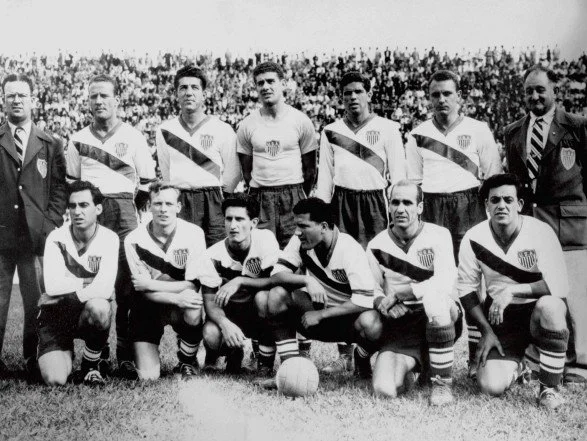
The U.S. team who beat England 1-0 at the 1950 World Cup.
Photo Credit: CNN
Though contrary to popular belief, and well noted in Dennis J. Seese’s book ‘The Rebirth of Professional Soccer in the United States', the groundwork for a domestic league had been laid long before the 1966 final.
Soccer had been played for decades in the US, most notably through the American Soccer League. Play was often regional and unstable, lacking the professionalism to call itself an elite entity. The question of whether a nationwide, professional, and well-attended league could prosper in a country where other major sports were already competing for the same market was divisive.
One man who believed it was possible was sports executive Bill Cox. He was impressed by the top-level European football he had witnessed in the late 1950s and returned to his native New York with a vision to bring that same excitement back to American shores.
In 1960, he formed the International Soccer League (ISL), which consisted of imported foreign teams competing against each other during their domestic off-season. Cox lamented the quality of American soccer and saw overseas teams, which included Bayern Munich of Germany and Sporting CP of Portugal, as the only way to get locals out to stadiums. He deliberately based the league in New York in the hope of attracting local immigrants to games that featured clubs from their home countries. Early games were well attended, though numbers soon declined.
Throughout his career as a sports executive, Cox was as opportunistic as he was ambitious. In 1943, he was given a lifetime Major League Baseball ban for placing bets on the team he owned, the Philadelphia Phillies.
He pleaded his innocence, but to no avail; his disdain for bureaucratic control in sport was set. When he entered the world of soccer, his contentious nature soon made its mark. A series of disputes with the USSF (United States Soccer Federation) reached a climax in 1965 when the federation blocked his league from importing foreign teams.
Without players, the ISL was finished, leaving Cox irritated but undeterred. Just over a year later, and with the help of a group of hopeful investors who possessed varying levels of wealth, Cox announced plans for a new, nationwide, television-backed league that was to be known as the NPSL - National Professional Soccer League).
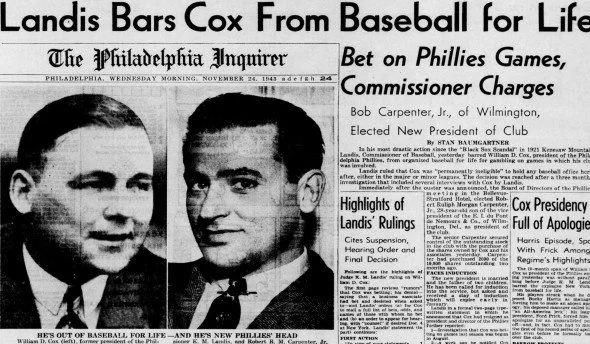
Philadelphia Inquirer front page, November 24th, 1943.
Photo Credit: Philadelphia Inquirer
Cox had company in his pursuit of capturing the soccer market. At the same time, and after failed merger discussions with the NPSL itself, a separate consortium announced plans for its own nationwide domestic league. They were the boldly named United Soccer Association, or the USA for short.
Leading the USA consortium was Toronto native Jack Kent Cooke, a sharp-suited workaholic whose early fortunes were made flipping local radio stations in Eastern Canada. It wasn’t until the 1960s that Cooke became a serious name in the sports world.
His ownership roles at the NBA's Los Angeles Lakers and the newly established NHL team, the Los Angeles Kings, gave him mogul status among his peers and allowed him to lead new ventures; hence, his commitment to the impending USA league.
A country with no soccer league now had two. Though only one could be sanctioned by the USSF. This decision was made easier by the fact that only one was willing to pay the $25,000 franchise fee that they demanded.
Stubborn, and continuing his feud with the federation, Cox and the NPSL refused to pay, leaving the USA free to pay the fees and get sanctioned, to which they obliged.
Despite the NPSL now being classified as an 'outlaw' league, it had secured the most valuable asset of all: CBS television rights. This development concerned the USA camp, whose inaugural season wasn’t due to start until 1968. They feared losing ground on their rival and took drastic action to change course.
Through the contacts of various prominent foreign football figures, including British journalist Brian Glanville, who connected Cooke with Wolverhampton Wanderers for his Los Angeles franchise, a total of 12 overseas squads were secured to fill the rosters, and a year earlier than expected, the USA was ready to go.
Other investors in the league included former mayor of Houston Roy Hofheinz, who took the reins at the Houston Stars and provided them with modernity in the shape of the Astrodome, the world’s first fully enclosed stadium.
Also present was American Football League founder Lamar Hunt, who launched the Dallas Tornado in what was his first foray into professional soccer, a sport he became synonymous with in the decades to follow.
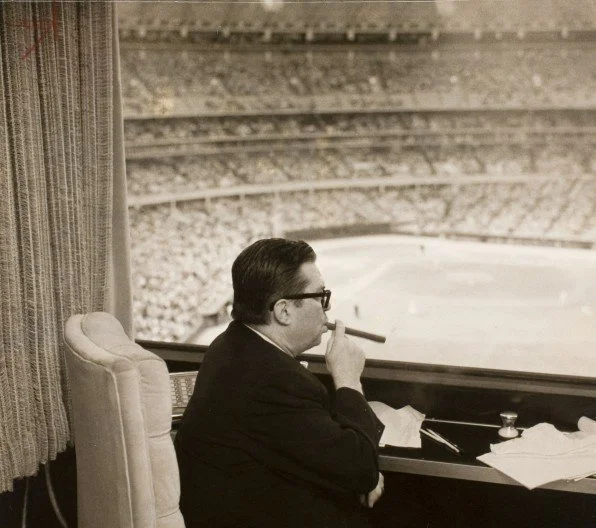
Houston Stars owner Roy Hofheinz watches from the house he built within the Astrodome.
Photo Credit: Houston Public Library
With approval from the USSF, the USA had adopted Cox’s ISL importation tactics without any issues. Cox too utilised foreign stars in the NPSL, though without the organisation of the USA, who were able to import entire squads rather than just a mix of overseas professionals. In what was billed as the start of truly professional soccer in the United States, the NPSL featured just eight American citizens, while the USA contained none at all.
United Soccer Association 1967
Boston Rovers (Shamrock Rovers)
Chicago Mustangs (Cagliari)
Cleveland Stokers (Stoke City)
Dallas Tornado (Dundee United)
Detroit Cougars (Glentoran)
Houston Stars (Bangu)
Los Angeles Wolves (Wolverhampton Wanderers)
New York Skyliners (CA Cerro)
San Francisco Golden Gate Gales (ADO Den Haag)
Toronto City (Hibernian)
Vancouver Royal Canadians (Sunderland)
Washington Whips (Aberdeen)
Notable Players
Gordon Banks
Roberto Boninsegna
Josef Masopust
Paulo Borges
Derek Dougan
Jimmy McIlroy
Włodzimierz Lubański
National Professional Soccer League
Atlanta Chiefs
Baltimore Bays
Chicago Spurs
Los Angeles Toros
New York Generals
Oakland Clippers
Philadelphia Spartans
Pittsburgh Phantoms
St Louis Stars
Toronto Falcons
Notable Players
Pat Jennings
Cesar Luis Menotti
Salvador Reyes
Dennis Viollet
Ruben Navarro
Ron Newman
Many of these players came to North America off the back of long and tiring seasons, with some playing their last games just two weeks prior to the season opener. The workload was intense, but supporters were happy to see their teams embark on foreign adventures as international exposure was rare.
“Several of our players were contracted to call home to various Scottish newspapers so that our fans could be kept up to date with our games,” says Bobby Clark, whose Aberdeen team played as the Washington Whips for the 1967 USA season.
“The opportunity to play against a Brazilian team, a Uruguayan team, a Dutch team, an Italian team, three English teams, two Scottish teams and two Irish teams was something very special for the players and our supporters.
“And the novelty of travelling to play our games by plane was very different from Scotland, where we went everywhere by bus and train.”
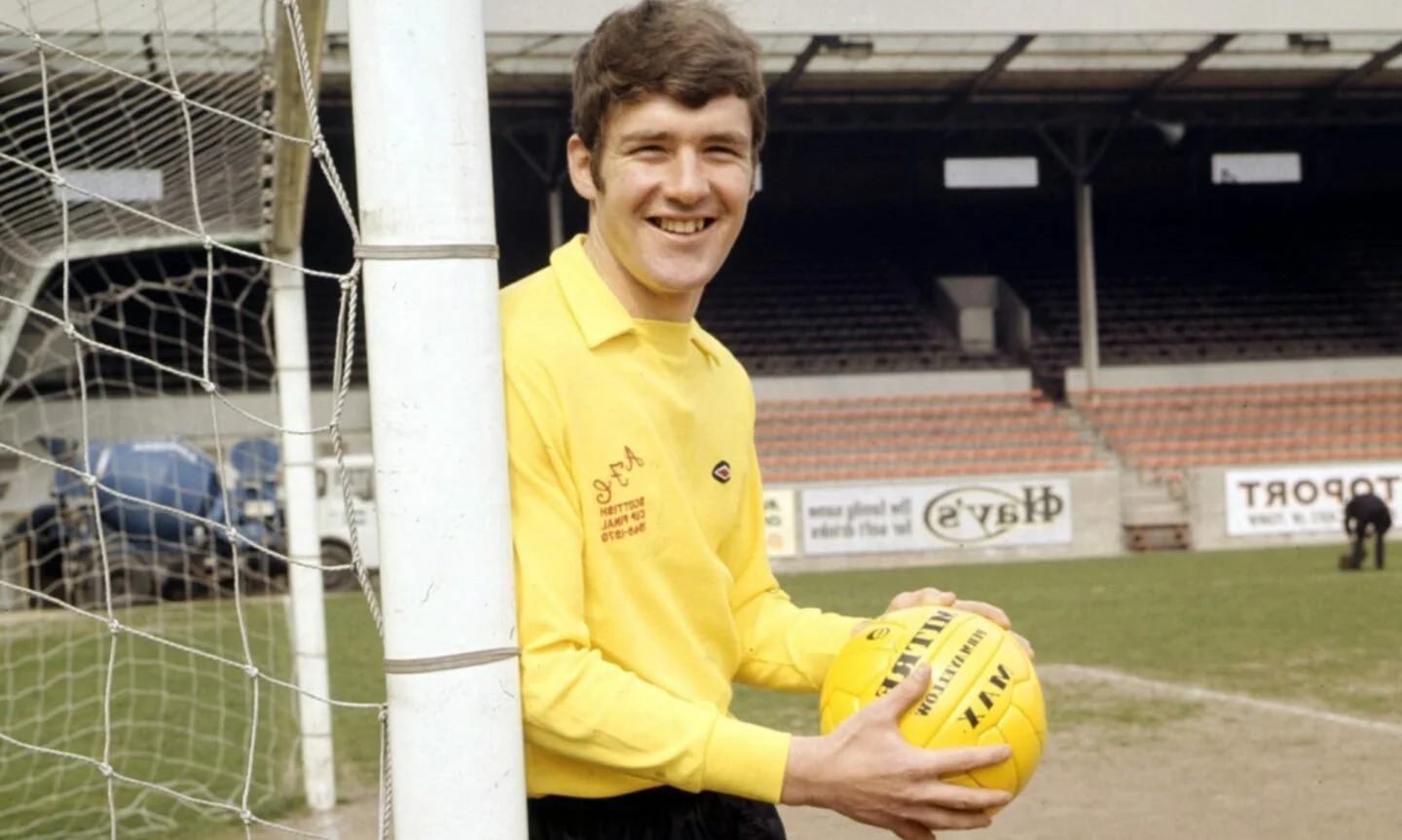
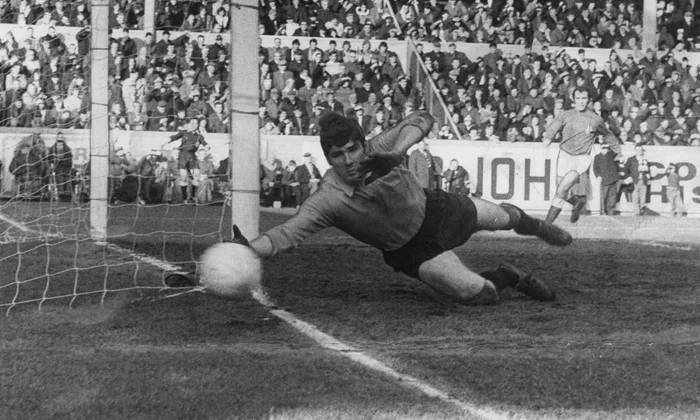
Legendary Aberdeen goalkeeper and member of the 1967 Washington Whips team, Bobby Clark.
Photo Credit: Press and Journal
In the United Soccer Association, each team played 12 games during a regular, but often turbulent, season.
Players and coaches who were used to professional officiating consistently complained of substandard American referees. In one tight affair between the Houston Stars and the Cleveland Stokers, the referee blew the full-time whistle five minutes early with the Stars leading 2-1. The visiting Stokers were furious, but the game was over. No post-match explanation was given by the officials, but the most coherent one points to a mix-up between the referee's watch and the stadium clock, on which everyone but the referee relied.
In another game featuring Houston, this time against the Detroit Cougars, a fight broke out between opposition players, resulting in players wielding corner flags as spears as riled-up members of the crowd entered the pitch and joined the violent chaos.
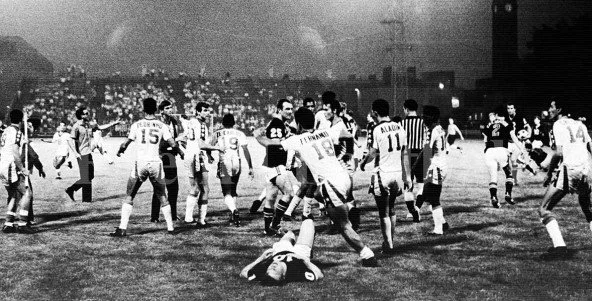
A mass brawl erupts at the end of Houston Stars v Detroit Cougars.
Photo Credit: SB Nation
Crowds had been dwindling as the USA season pushed on. An all-Irish affair between the Detroit Cougars (Glentoran) and Boston Rovers (Shamrock Rovers) drew a lowly crowd of 684, the lowest-attended match of the entire season and a complete failure in attracting a sizeable local Irish community.
The novelty of watching uninspired foreign players had simply worn off. Efforts were made to entertain bored spectators with off-pitch entertainment, but to no avail; the league was crumbling, and without a single American player in the ironically named USA, any suggestion that this format was good for the future of North American soccer was dismissed.
The season did at least end with a dramatic finale. A straightforward playoff campaign consisted of a single-leg tie between the Los Angeles Wolves, winners of the Western Conference, and Clark’s Washington Whips, winners of the Eastern Conference.
“Getting to the final was nice, and it turned out to be an amazing game,” says Clark. “Los Angeles Wolves beat us 6-5 at Memorial Coliseum Stadium in a game that went to three overtimes and that we played all but 30 minutes a man down."
An unfortunate own goal by the Whips’ Ally Shewan gifted Wolves the championship as a fiery affair came to an abrupt end. In his book, ‘Summer Of '67’, Ian Thomson describes the game as “the greatest soccer final played on American soil”.
Despite missing out on the President’s Cup, Clark’s excellent goalkeeping earned him league MVP, capping off a memorable season where experiences off the pitch included visits to the Golden Gate Bridge, Disneyland, and Capitol Hill, complementing good performances on it.
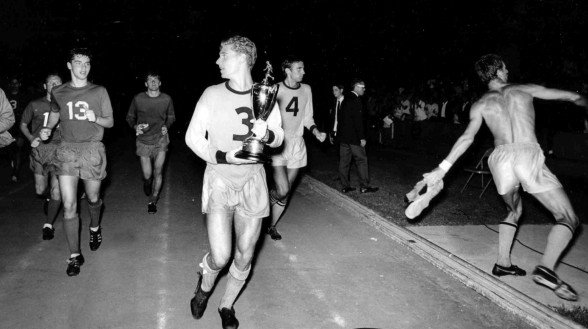
Los Angeles Wolves, champions of the 1967 United Soccer Association.
Photo Credit: Wolverhampton Wanderers
Despite its entertaining climax, the USA had no long-term plan once the foreign teams had departed. Investors in both the USA and the NPSL had absorbed significant financial losses and had little appetite for further risk.
In December 1967, in a bid to stabilise costs and salvage whatever future may remain of domestic soccer, the rival leagues merged to form the North American Soccer League (NASL), beginning a new chapter in American soccer, albeit with problems of its own.