

Words by Ivan McDouall | Published 11.04.2026The River Trent is the third longest in England at over 185 miles in length and curiously the only one to flow North. As a flowing mass of water, the Trent has its origins in the Ice Age although its name originates from Pre-Roman Britain, believed to be an amalgamation of two words - Tros (over), and Hynt (way).
Depending on which niche avenue of history you find yourself in, this could allude to a tendency to ‘strongly flood’ or, alternatively, a reference to fords and allusion of the river flowing ‘over the way’ of road routes. Both have merit but given there are still eighty crossings of the Trent it is the latter which more naturally comprehends.
One of the crossings is the ornate iron and stone Trent Bridge in Nottingham, the latest (but certainly not the first) structure being completed in 1871. Standing on the bridge now, looking North-East with the flow of the river, the city’s two major football clubs are visible: to the right Nottingham Forest and their City Ground and to the left, Meadow Lane, home of Notts County.
Both clubs are institutions of the city and form a part of Nottingham’s cultural fabric, both being older than the Trent Bridge itself. County maintain a denotation as ‘the oldest professional football club in the world’ which probably is based largely on fact, although the custodians of the club’s history seem slightly uncertain themselves.
The ‘oldest’ tag relies on County being formed sometime in 1862 although a plaque on the George Hotel in the city centre commemorates the ‘electing of officers and committee’ on the site in December 1864.
Either way, Notts County pre-date their near neighbours and rivals Nottingham Forest who were founded in a pub, on what is now Shakespeare Street in 1865, a site again marked with a Nottingham Civic Society plaque.
The early Forest team switched to football from shinty, and it has been suggested that in the beginning, Forest’s founders were lower working-class and founded the club to represent their compatriots as such, in direct contrast with the well-to-do middle-class Notts County founders.
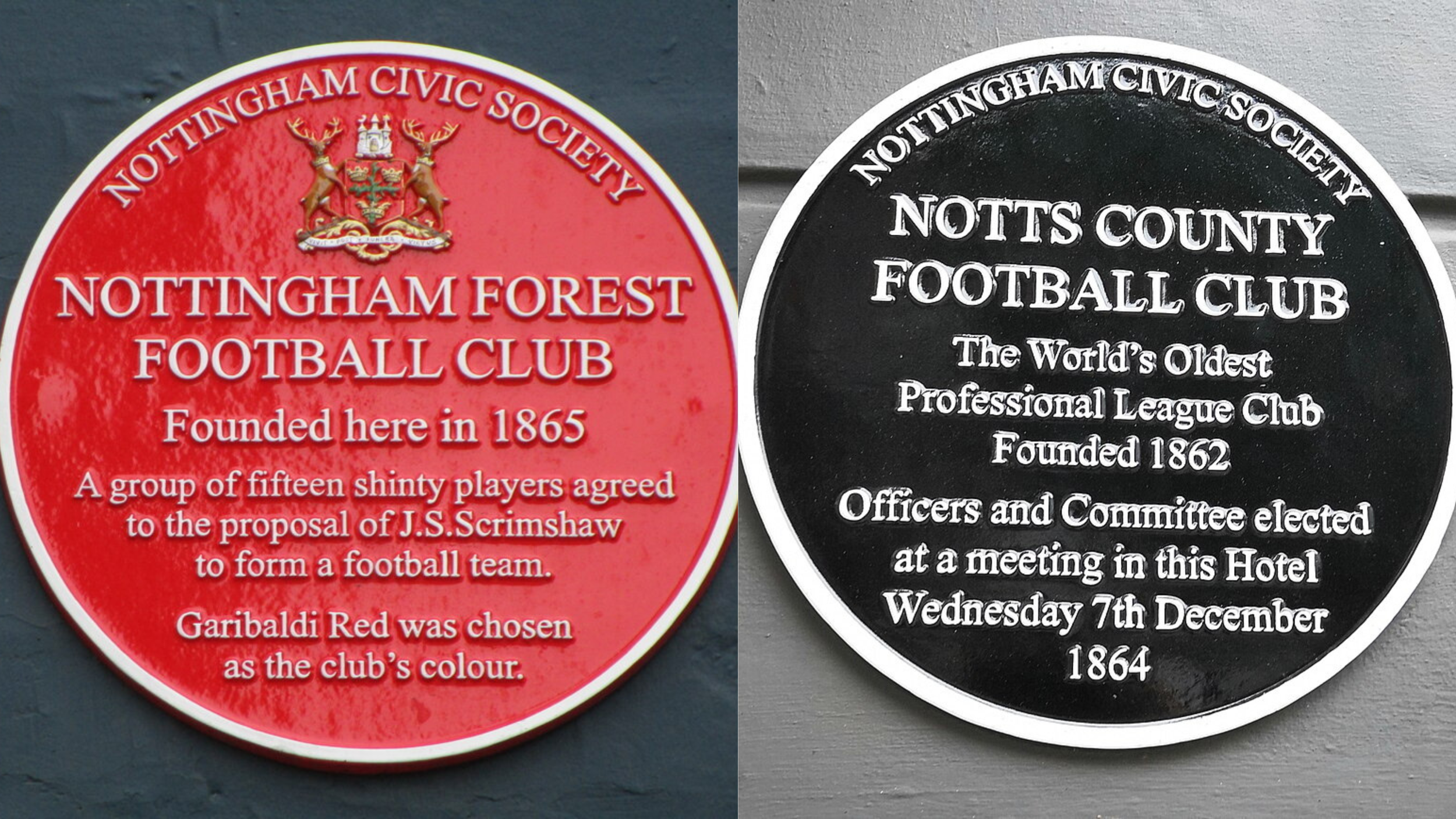
Plaques commemorating the founding of each club can be found across Nottingham.
Photo Credit: Wikimedia Commons
Whatever the genealogy, the fact that both clubs were formed so early is testament to the history and impact of football in the city, a history that pervades to this day in terms of a relatively friendly rivalry between two well supported football clubs. By contrast, down the road in Birmingham, Aston Villa and Birmingham City didn’t exist until 1874 and 1875 respectively, whilst it was only in 1878 that Manchester United were formed, followed two years hence by Manchester City.
County and Forest’s formations in the 1860s take us back to a tumultuous time for English land and people where much was at stake, but much was also in flux. Nottingham at the time has been described as ‘fast sprawling and slum ridden’, and life was dangerous.
The Cholera epidemic of 1849 just one example of how disease and death infiltrated the city. Yet, whilst suffering was prevalent, advances were also beginning to be made in how local and national authorities managed the ever-growing industrial towns and cities – both through legislation and expectation.
The various Enclosure Acts that were passed leading up to the 1860s created an environment where sports clubs could prosper, as they empowered civil authorities to ‘enclose’ certain areas and manage them for municipal use – the result being green leisure and recreational spaces viewed as having the potential to raise health and wellbeing amongst industrial populations.
In Nottingham, the enclosure of land dovetailed neatly with the deforestation of Sherwood Forest to create the Forest Recreational Ground, where early iterations of Nottingham Forest trained and played, and most likely bestowed the club its name.
Notts County benefitted in similar ways, using green spaces around the Park Estate and playing early games on the now permanently shuttered Meadows Cricket Club on the banks of the River Trent. Added to the availability of municipal grounds as a result of enclosure was a growing enfranchisement of working men, a process that was sparked by the 1832 Reform Act and consolidated by 1867.
Whilst the Reform Acts’ impact was wide ranging, it began to shift the balance of power for workers in opposition to the landed elite who had prior dominance of decision and control of workers, who were often not only their employees but their tenants too.
As the dynamic shifted, more and more working-class men found themselves with increased ‘leisure’ time where shift patterns were reduced, and the early musings of Employment Law came into view.
This free time tended to fall on a Saturday afternoon, and whilst football clubs were not the only recreational pursuit to benefit, for both Nottingham Forest and Notts County the growing market of participants (on and off the field) was a catalyst first for establishment and then growth.
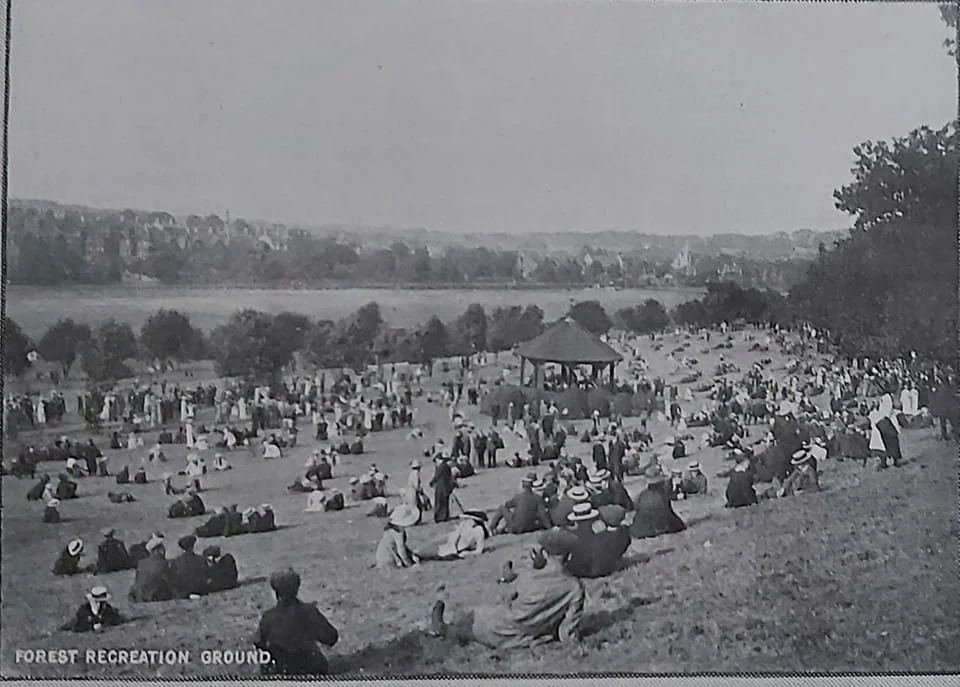
The Forest Recreation Ground, 1914.
Photo Credit: Nottinghamshire History
The initial founding of both Nottingham clubs is rooted in an English sensibility and, standing back on the Trent Bridge looking at the two clubs and their homes, gives a sense of provincial Englishness that is in contrast to other footballing centres across the Country. Walking the perimeters of Meadow Lane and The City Ground, that provincial localism is not lost – these are not modern super-stadia, but well-loved and valued institutions rooted in their communities.
The names that adorn stands and statues are classically English footballing heroes – Jimmy Sirrell and Brian Clough – and cob shops reign over street food. A cursory look down the ‘Honours Board’ for both clubs shows that County won an FA Cup in 1894 and Forest did so four years later – these are both standard bearers of the English game, even if it was just County who were a Founder Member of the Football League.
However, both for the City of Nottingham and its football teams, there were early influences at play beyond the local and obvious, and an Anglo-Italian thread exists between and amongst Forest and City, that for all its curiousness is an important pillar of the story of football in Nottinghamshire as a whole.
A key driver in global influence within Nottingham was the burgeoning lace industry, prompted initially by the invention of the knitting frame by William Lee followed by the upspringing of small cotton mills around the Hockley area of Nottingham.
By the 1840s, the area now known as the Lace Market was a bustling industrial centre of global significance – looking up at the old lace warehouse and showroom that is the Adams and Page Building bears this out, an austere pointer to the wealth and status that lace brought to Nottingham. Inevitably global trade saw an exchange in skills but also people, as Nottingham based businesses made links with international fashion houses like Christian Dior.
A standout example of this ‘exchange’ centres on the story of Herbert Kilpin. Born in 1870 in Nottingham, Kilpin was the son of a butcher who held premises on Mansfield Road leading out of the city.
As a young school leaver Kilpin was employed in the lace industry but was also a keen amateur footballer, so when an opportunity to move to Italy to work with Edoardo Bosio (an Italian merchant who Kilpin had met through Nottingham textiles magnate Thomas Adams) arose, his love of football followed.
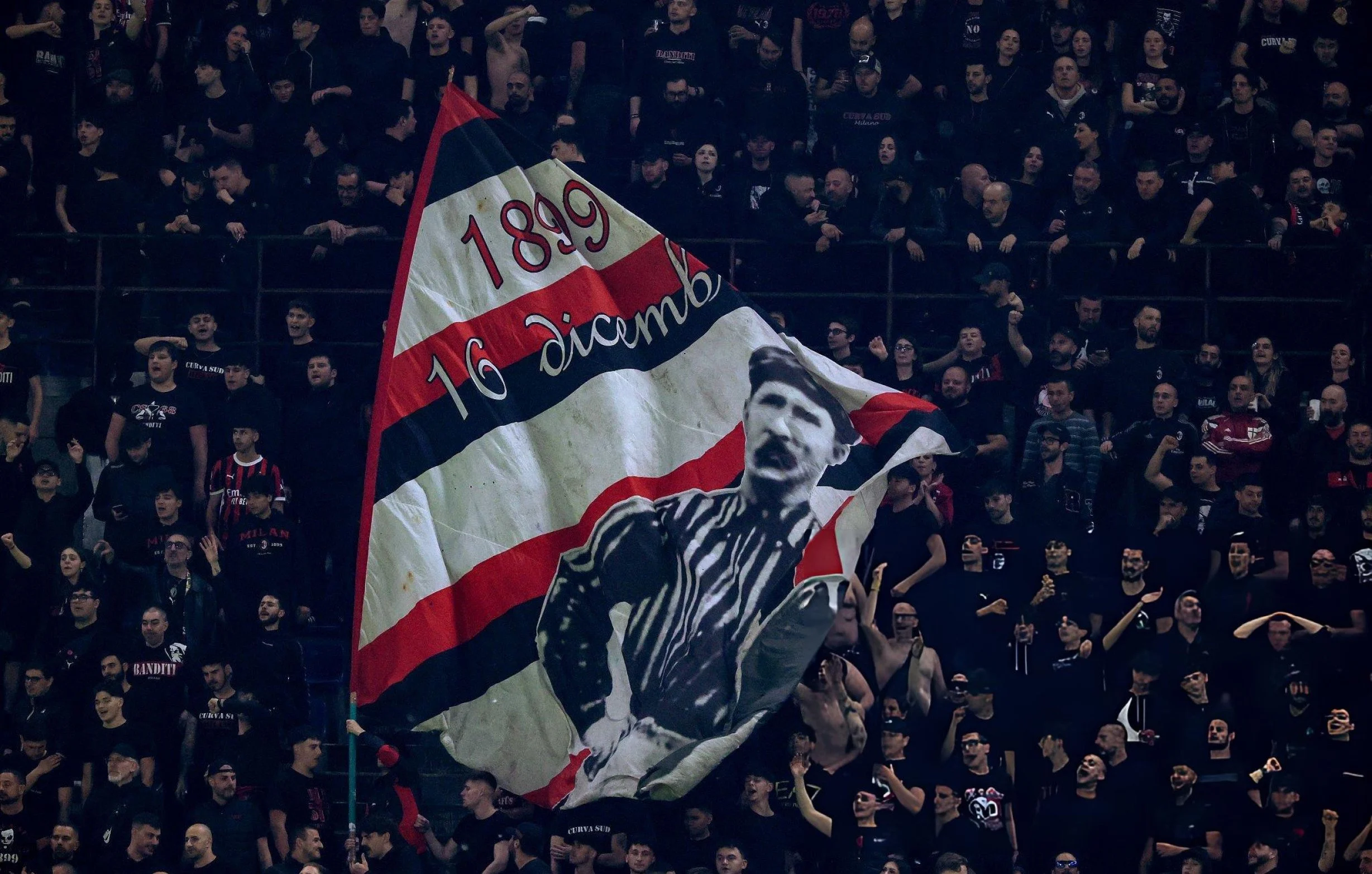
In 1891 Bosio founded Internazionale Torino, arguably the first fully fledged Italian football team, and Kilpin played for them. Towards the end of the century, Kilpin had relocated to Milan where he, quite remarkably, became one of the founding members of AC Milan, then operating under the moniker Milan Football and Cricket Club.
In 1901, only their second year of existence, the Rossoneri won the Scudetto, and under Kilpin’s stewardship (seemingly in a player–manager type role) did so again in 1906 and 1907.
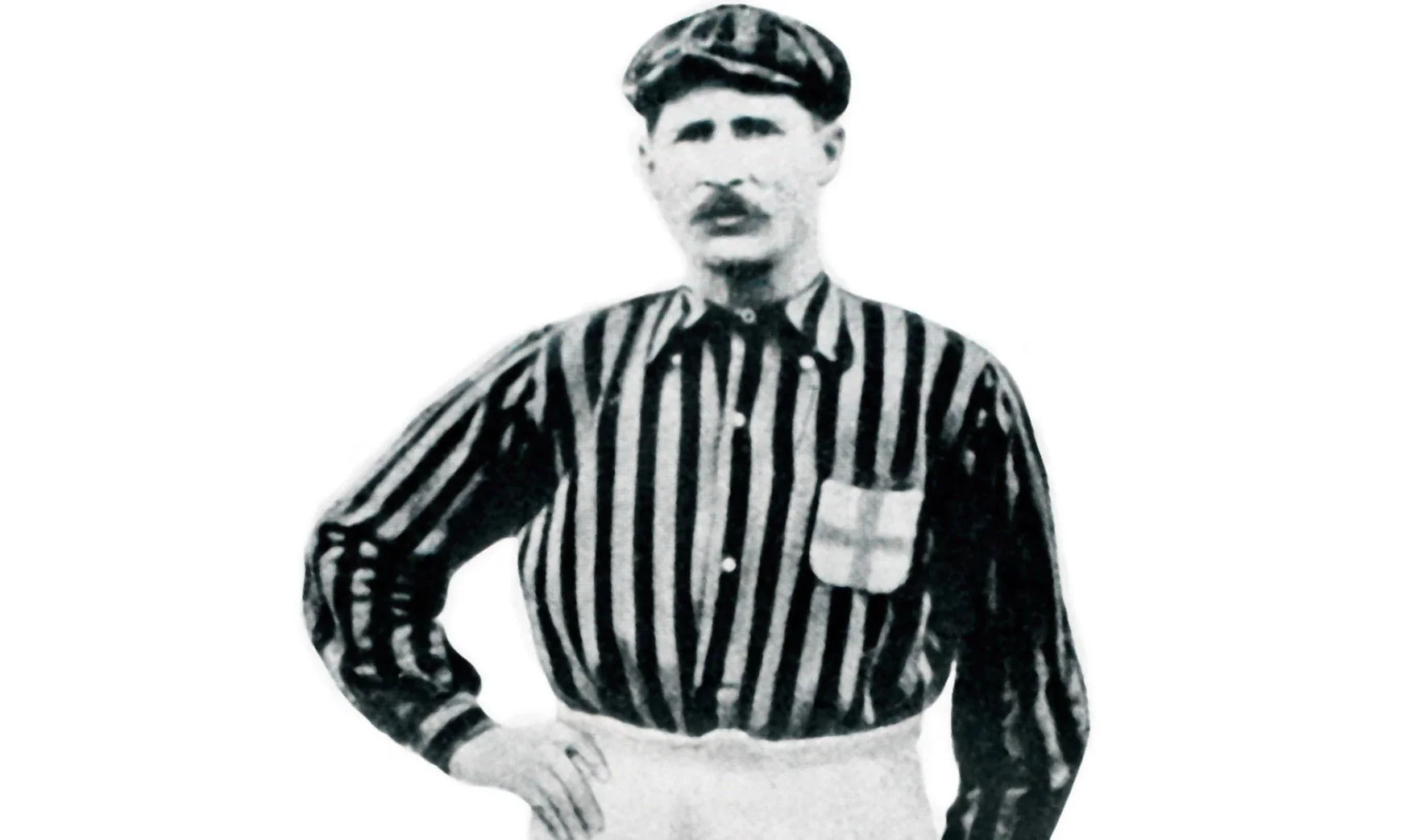
Herbert Kilpin, one of the founders of what would become AC Milan.
Photo Credit: The Guardian
The rest, as they say, is history, and ever keen to pay homage to their footballing past, Nottingham Civic Society have installed a commemorative plaque on Kilpin’s birthplace on Mansfield Road alongside a looming AC Milan crest.
Italian culture – of a political bent – played an overt part in Nottingham Forest’s formation, or at least the aesthetics of that formation. Over the food and ale back in 1865, that early incarnation of Nottingham Forest had to decide on their new club colours, and they were inspired by Italian freedom fighter and patriot Giuseppe Garibaldi and his volunteer forces.
Garibaldi was hugely popular in Britain, a romantic and dashing figure who captured imaginations at a time when working people were beginning to develop their own consciousness. Garibaldi had been in England in 1864, although the Government and Queen Victoria’s concern over his radical bent meant he didn’t leave the capital, despite invitations to do so (including from Nottingham MP Robert Clifton).
Groups of Nottingham workers came together to construct an address to Garibaldi, praising him for ‘undoing the chains of oppressed nationalities, and helping to sweep away the wrong, and establish freedom’.
Given this passionate popularity it makes sense that Garibaldi’s red was adopted by Forest (and other teams across the world), and his legacy remains around the club and its supporters today. One fan group, Forza Garibaldi, is explicit in its aims to reinvigorate support within the aesthetics of Garibaldi and the club’s history.
Forest fan and photographer Simon Bristow publishes his work under the signature ‘Our Glorious Banners’ in reference to a Garibaldi quote where he, whilst talking about those on the front line said ‘apart from these, let all others remain to guard our glorious banners’.
Across the Trent, Notts County also have an early and plain link to Italian culture, but from a footballing sense as opposed to political, although again linked heavily to appearance and aesthetics. In their earliest days County had dalliances with various colours and nicknames – amber and ‘the lambs’ to name a few – but by 1890 had adopted the black and white colours that we have associated with the club ever since.
As much as we view the black and white in association with Notts County, there are bigger clubs with whom that association is greater – one example being Turin giants Juventus. However, this wasn’t always the case. Juventus initially played in a pink and grey combination, but the intervention of an Englishman with strong connections to lace and Nottingham would change that.
A friend of Kilpin, Tom Gordon Savage, was acting as a quasi-technical advisor for Juventus and made various changes and interventions in the club’s early runnings, the most significant being changing their colours.
Savage utilised his contacts in Nottingham to refresh the Turin club’s look, and in doing so mirrored the colours of Notts County, believing the new colours to be ‘aggressive and powerful’, an ideal that sustains within Juventus and their supporters to this day.
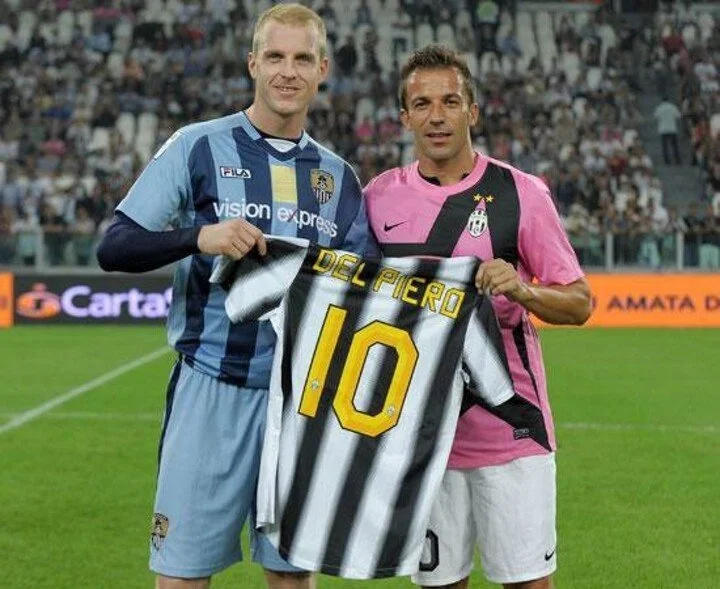
Juventus and Notts County played a friendly in 2011 to honour their connection.
Photo Credit: La Stampa
The change of colours could be some minor quirk of historical connection, but the relationship and significance was acknowledged in September 2011 when Juventus invited Notts County to play a game to open their new stadium. A 1-1 draw was played out, possibly the only time Luca Toni and Lee Hughes shared a pitch never mind a scoresheet, and the black and white connection between ‘Le Zebre’ and ‘The Magpies’ was sealed for eternity.
As American academic David McCullough reminds us ‘history is who we are and why we are the way we are’ and the Anglo-Italian tales of Kilpin, Garibaldi and Juventus are all defining opportunities to interrogate the deep past.
Nottingham football’s more recent history is dominated by one man, Brian Clough, who transformed Nottingham Forest from provincial outlier to continental force, winning unprecedented back-to-back European Cups in 1979 and 1980. Former Guardian journalist Daniel Taylor tells a marvellous story about Eusebio, who, on discovering Taylor was from Nottingham, decided all he wanted to talk about was John Robertson and the glorious European campaigns under Clough.
A century on from the lace boom heightening Nottingham’s global reach, Clough did the same through football – or disappointingly for any symmetry within this article, across neither 1979 nor 1980 did Nottingham Forest have to play an Italian side. Their near neighbours did have some continental success against Italian sides, in the now defunct Anglo-Italian Cup.
Having finished as runners up in 1993-94 to Brescia, Notts County then defeated Ascoli in the 1995 Final at Wembley. Goals from Devon White and the erstwhile Tony Agana gave Howard Kendall’s team a 2-1 win and some well needed silverware. Forest fans might well have rolled their eyes at the validity of the Anglo Italian Cup triumph, in comparison to their own continental success but one suspects Kendall and all those Notts fans at Wembley didn’t give a jot.
Nottingham is a wonderful football city. And how equally wonderful to uncover these Anglo-Italian links and legacy that only add to this unique football heritage.