

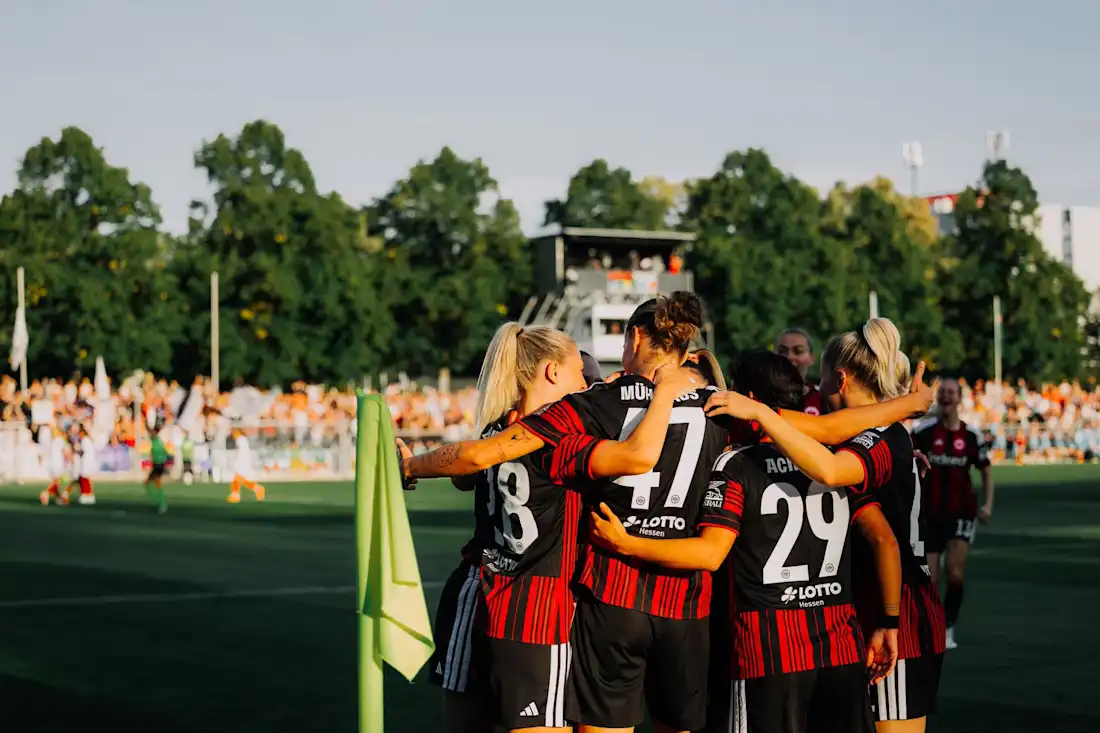
Words by Tom Schmitter | Published 12.12.2026There are stadiums that want to impress. Huge arenas with glass facades, corporate lounges, and giant video screens that look as if they could broadcast a moon landing.
And then there is the Stadion am Brentanobad. This beautiful place in Frankfurt is primarily used by the women’s team of Eintracht Frankfurt, as well as by SG Rot-Weiss Frankfurt and ESV Blau-Gold Frankfurt for their home matches, training sessions, and regular sporting activities.
The Brenti doesn’t try to be anything. It simply exists, nestled between a swimming pool, patches of greenery, residential streets, and everyday Frankfurt life.
Maybe that’s exactly why I love it. People arriving for the first time might not immediately understand what makes this place special. The main stand is not spectacular. Capacity is modest. Distances are short. Everything feels pleasantly unassuming.
And yet the stadium possesses something many modern football venues have long since lost: proportion.
To me, it offers the perfect balance between density and openness. Enough room for fan culture, enough room for architecture, and exactly the right degree of closeness for great emotions, community and intimacy.
The Brenti is the perfect size for just over 5,000 people. Not too small, not too big. Large enough for top-flight football, but small enough that you can hear the committed players, the focused referees, the chanting supporters, and the quieter spectators alike. Small enough to absorb it all, feel it, and file it away in your personal archive of football memories.
You do not sit or stand somewhere inside a concrete mountain. You are right there, next to the game.
The renovations carried out in the mid-2010s transformed the venue into a proper football stadium. The stands moved closer to the action.
Suddenly, that rare combination of openness and intimacy emerged. You watch football here, not event management.
I like stadiums that look as though they were built for people rather than business plans. The Brenti is one of those places.
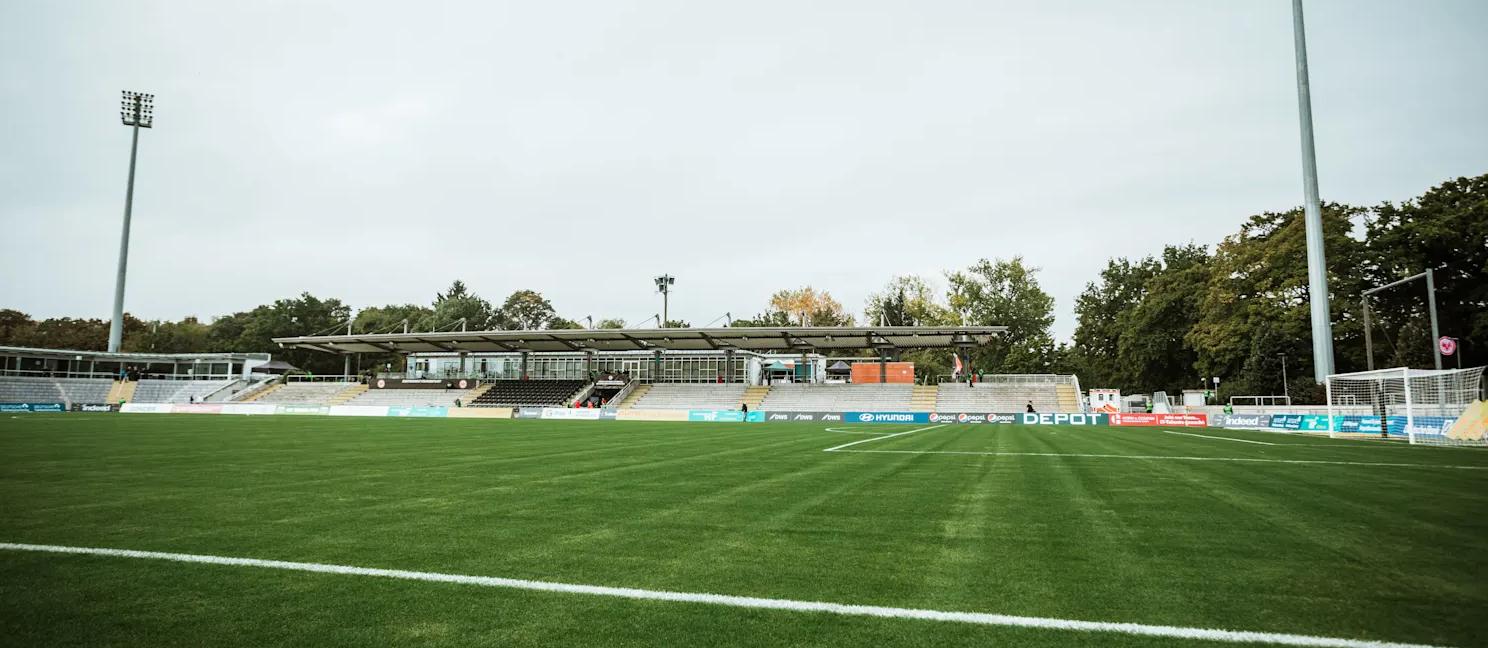
The Stadion am Brentanobad
Photo Credit: Eintracht Frankfurt
The first time I was there with my buddy, a die-hard Eintracht Frankfurt fan. Songs by Lauryn Hill and Bob Marley, among others, were blasting from the speakers during the warm-up. The weather was absolutely perfect for football.
Then, during a build-up play in the middle of the first half, a British-sounding and British-looking supporter loudly shouted the players‘ names, clearly audible to everyone in and around the stadium.
That iconic fellow is there almost every match, by the way. I only have a vague idea of what he looks like, but his voice is unmistakable, and I’m happy every time I hear it.
And whenever Remina Chiba, the player I adore most on the Eintracht Frankfurt women’s squad, has the ball at her feet, I feel that especially strongly.
There are players who come across as purely professional athletes,and then there are players who simply feel like football itself.
For me, Chiba belongs firmly in the second category, although she has mostly made an impact as a substitute. There is something beautiful about her presence, something calming.
Maybe it is the way she perceives space. Maybe it is her acceleration or the movements of the roughly 1.60-metre striker that somehow appear both light and purposeful at the same time. Maybe it is because she never looks as if she is forcing anything.
Some players play a game. Others paint a picture for football lovers through their technical ability, their peripheral vision, and their art of anticipation.
That is what Remina Chiba is to me. In fact, the entire team possesses something genuinely pleasant.
Of course, football is about goals, points, and securing places in European competition. And who would not enjoy evening home matches against FC Nordsjælland from Copenhagen or Vålerenga IF from Oslo?
Then we might even get the chance to have a conversation with Agnes Nærland Viljugrein, politician and wonderfully loud Vålerenga ultra, perhaps discussing how the responsibilities of a Scandinavian capo differ from those of a German one.
Speaking of football culture and politics, there is another essential part of the furniture here in Frankfurt-Rödelheim: the Nutria Bande.
The name alone is magnificent. Other clubs and supporter groups have birds of prey, lions, or some kind of martial fantasy creature.
The supporters of Eintracht Frankfurt Women have a fan group named after a semi-aquatic rodent. That is about ten times more charming.
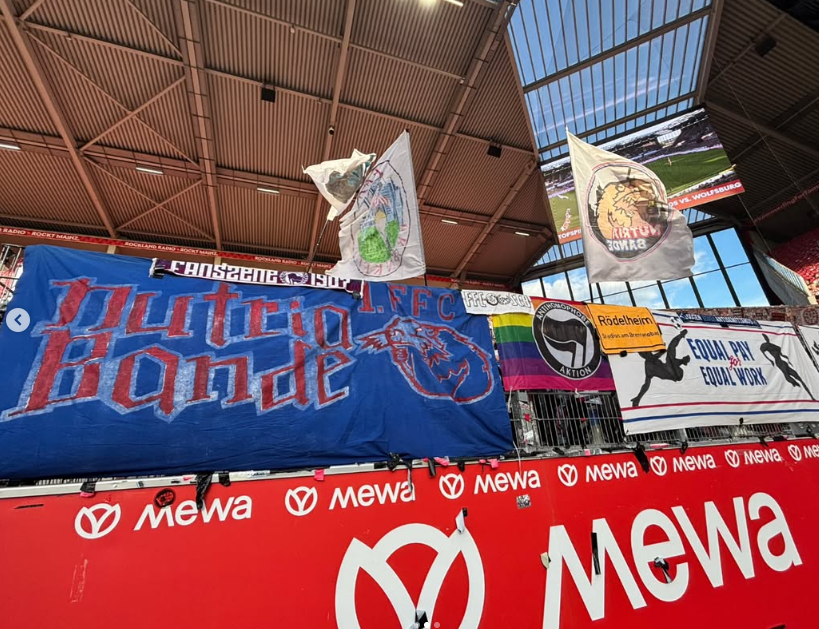
The Nutria Bande - 1. FFC Frankfurt's vibrant supporters group.
Photo Credit: Nutria Bande
Anyone who reads their fanzine, the Nutria Botin, quickly realises that something has emerged here that has become rare in modern football: Authenticity.
Not the marketing version of authenticity, but the real kind. Self-made, self-organised, and self-determined. The Nutria Bande understands football not merely as entertainment but as a social space.
A place for encounters and community. For participation and discussion: “No, nobody wants Bundesliga football on a Monday night!“
Issues such as F.L.I.N.T.A. visibility, gender equality in sport, and discrimination-free fan culture are not treated as branding exercises but as a natural part of what football ought to be.
Maybe that is exactly what appeals to me. Because it shows that football can be more than results. And because that attitude fits the Brenti remarkably well.
The stadium does not feel like a product, it feels like a place. That is a difference.
After all, the history of Eintracht Frankfurt Women did not begin with Eintracht Frankfurt.
Anyone watching the Eagles today is also looking at the legacy of 1. FFC Frankfurt, one of the most important clubs women’s football has ever produced in Germany.
Long before many Bundesliga clubs even took women’s football seriously, 1.FFC Frankfurt was winning league titles, cup competitions, and European trophies.
German internationals and iconic figures such as Birgit Prinz and Steffi Jones shaped not only a club, but an entire generation.
They turned Frankfurt into one of the centres of German women’s football.
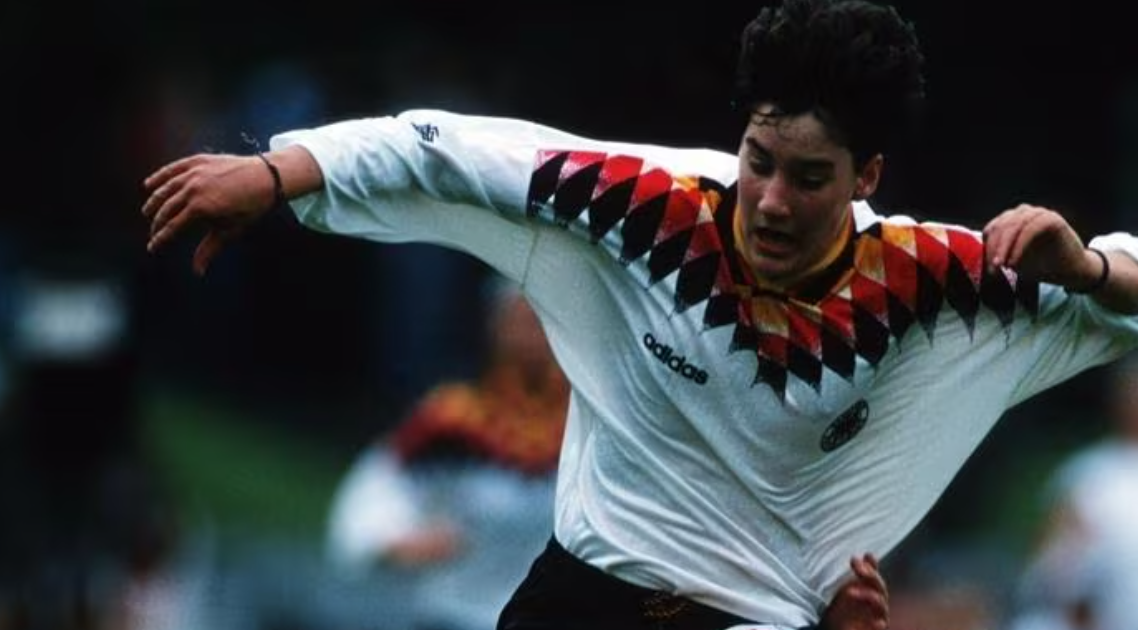
Birgit Prinz won five UEFA European Women's Championship titles in as many attempts in her career.
Photo Credit: UEFA
It is remarkable, really, how casually that history is sometimes treated today, as if success in women’s football had always been there.
It had not. It had to be built by volunteers, players and coaches. By people who often received far less recognition than their male counterparts.
Perhaps that is why I still sense something of that organically developed culture around the Brenti. Very little feels artificial. Very little feels imposed. Much of it seems to have grown naturally.
Even Eintracht women head coach Niko Arnautis somehow fits the picture. Before becoming a Bundesliga manager, he worked extensively in youth development and was long regarded as someone who valued growth more than quick results.
Maybe that explains why so much around this club feels the way it does.
Not assembled. Grown. Sometimes I wonder how long places like this can continue to exist. Women’s football is growing. That is a good thing.
It is receiving more attention. That is also a good thing.
But growth always brings change. Bigger stadiums, more commercialisation, and more professionalism. More numbers, more strategies, more optimisation.
All of that has its place.
And yet I hope that something of the Brenti survives. It’s closeness. It’s honesty. That feeling that football here has not yet been fully designed and packaged. Because sometimes you do not need an arena with 50,000 seats.
Sometimes a stadium in Rödelheim is enough. One stand. A few thousand people beneath the floodlights. The shrill shouts of encouragement from the British bloke. A nutria on a flag. And the ball at Remina Chiba’s feet.
Then, suddenly, football feels exactly the way it should.