

Words by André Encarnação | Published 28.04.2026Contemporary football is a social, cultural and economic phenomenon of great relevance in several European societies. Football clubs often play a central role in the collective identity of the communities where they operate, functioning as symbols of belonging, territorial representation and historical memory.
For many fans, the local club is not just a sports organisation, but an institution with deep emotional and cultural significance that passes from generation to generation.
Several clubs with a historical presence in professional championships faced serious financial difficulties that culminated in insolvency proceedings, administrative dissolution or legal disappearance.
The increasing professionalisation of football, coupled with the intensification of the economic demands of the competition, has contributed to increasing the risks of financial instability in a number of sports organisations.
When a club disappears, the fan community faces a loss that goes beyond the competitive plan. The extinction of an institution with decades of history often represents a symbolic break with the past.
As a reaction to these losses, initiatives aimed at preserving the sporting heritage and identity of the original club often arise, and one of these responses is the creation of a new club, usually called "phoenix club".
The concept of a phoenix club refers to an organization founded after the collapse of a previous club, seeking to recover its historical identity, its symbols, and the connection with the fans.
Such a process implies a complex path of institutional reconstruction, marked by economic, social, sporting and organizational challenges.
This article analyses the main challenges faced by phoenix clubs in the context of European football, also using some concrete examples that illustrate different trajectories of institutional reconstruction.
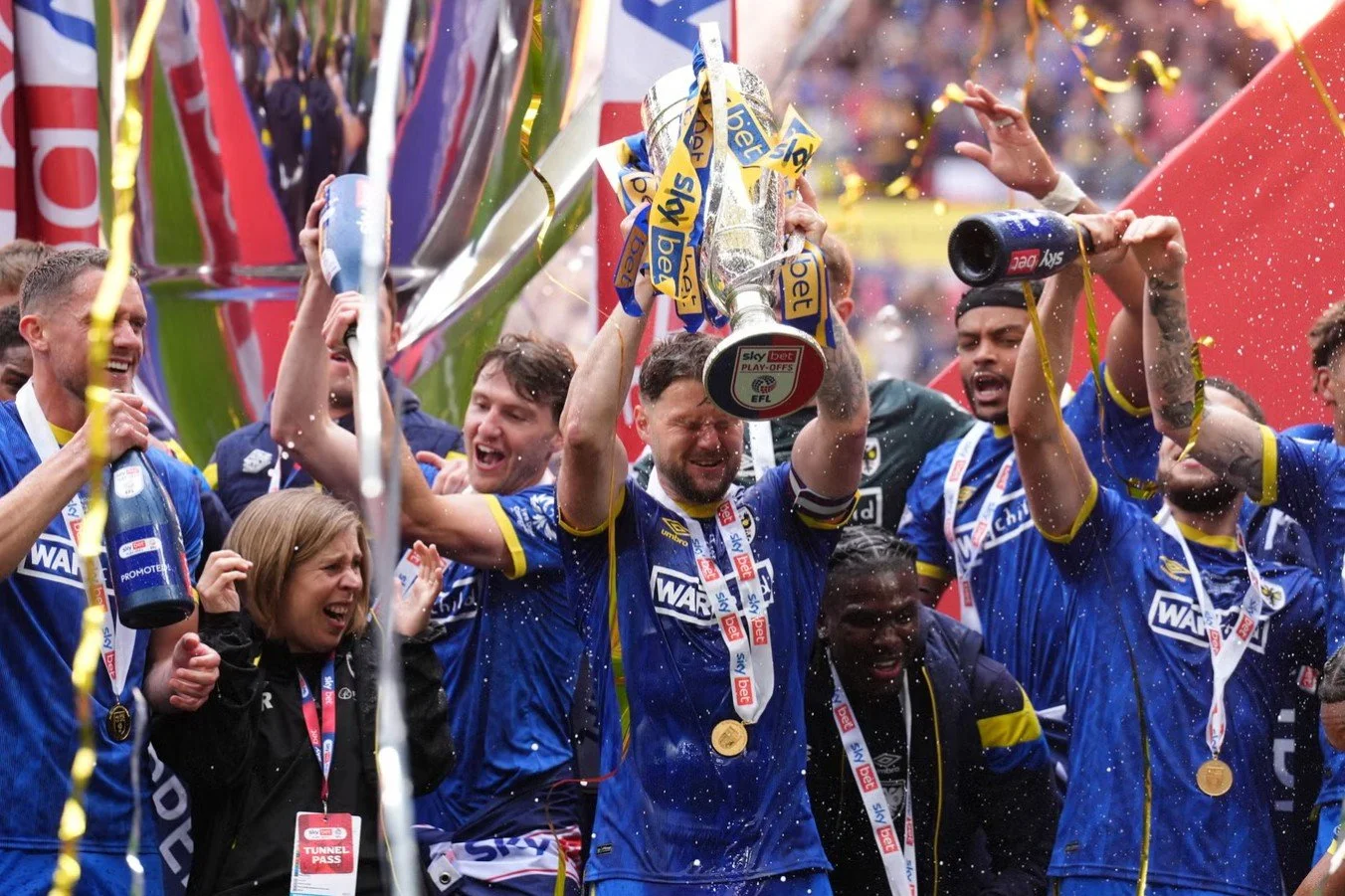
FC Wimbledon - one of the best examples of a modern day phoenix club.
Photo Credit: The Independent
Context: Institutional Collapse
The bankruptcy of football clubs is often the result of prolonged processes of economic fragility and unsustainable management models.
The increase in expenses associated with professional activity, especially in player salaries, infrastructure and operating charges, has placed several organizations in the face of significant financial pressures.
In many cases, the attempt to achieve immediate sporting success leads to investments that exceed the actual financial capacity of the clubs. Dependence on external investors, the accumulation of tax debts and the lack of financial control mechanisms contribute to aggravating situations of budgetary imbalance.
When difficulties reach critical levels, clubs can enter into insolvency proceedings that culminate in the loss of legal personality or administrative dissolution.
The disappearance of a club often provokes a mobilising reaction from fans and local communities. The creation of a phoenix club appears as an attempt to preserve the symbolic continuity of the disappeared institution, even though legally it is a completely different and new entity.
Economic Sustainability and Financial Reconstruction
Financial sustainability is one of the biggest challenges faced by phoenix clubs, and it starts its activity without much of the material and financial resources that supported the previous club.
Infrastructure, commercial contracts and assets may have been disposed of or lost during the insolvency proceedings. Participation in the lower divisions of the competitive system implies very low or often non-existent revenues.
TV rights become non-existent, there is less media visibility and reduced commercial attractiveness, which in turn limit the sources of funding available.
Faced with this reality, many clubs adopt financing models based on a strong participation of the members and fans of the previous insolvent club.
Through associative membership campaigns, community initiatives and partnerships with small local businesses and former members/supporters, which become key elements to ensure initial financial sustainability.
The experience of the previous institutional collapse tends to profoundly influence the organizational culture of these clubs. Financial prudence and budgetary balance and rigour are now a strategic priority.
The construction of a sustainable economic model is often based on principles of transparency, financial accountability and strict control of expenditure.
The social component plays a decisive role in the consolidation of a phoenix club, since the emotional connection between club and fans is often the main driver of the institutional reconstruction process.
Fans are not just consumers of a sporting spectacle, as they represent a community of belonging that identifies with the club's values, symbols and history. The disappearance of a sports institution therefore has a significant impact on the collective identity of many communities.
The phoenix club emerges as a social reconstruction project that seeks to preserve this identity. The active participation of fans in the founding process contributes to strengthening the legitimacy of the new club.
In several European cases, adherents played a central role in the creation or recovery of these organizations.
A particularly relevant example can be observed in England with the foundation of AFC Wimbledon. After the transfer of the former Wimbledon FC to the city of Milton Keynes in 2002, a group of supporters decided to create a club that would preserve the historical identity of the original institution.
The project began in the lower echelons of English football and, over the years, has managed to reach the professional divisions, becoming one of the most emblematic examples of reconstruction based on the mobilization of fans.
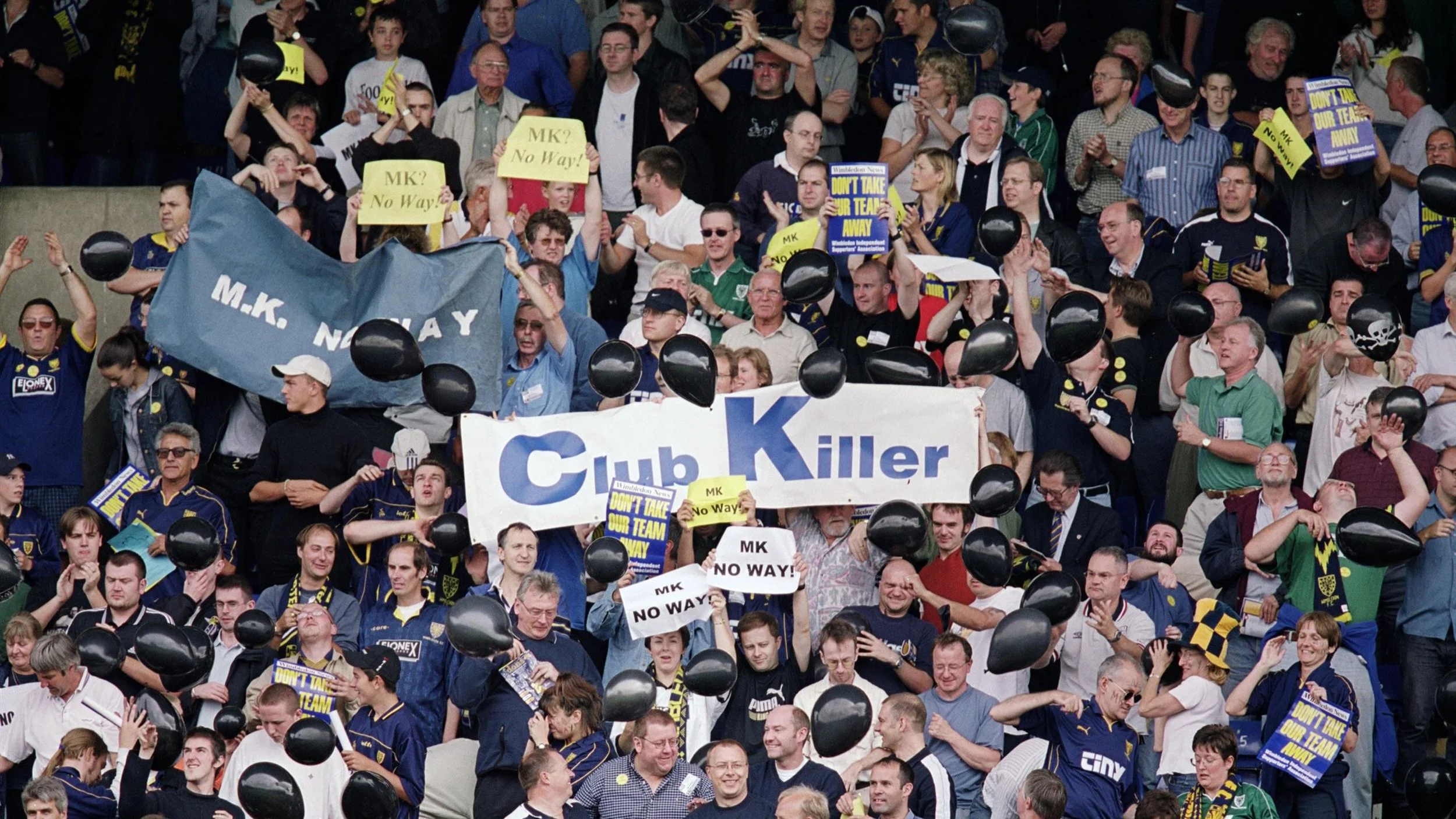
Wimbledon FC fans protest against the theft of their football club and it's transformation into MK Dons.
Photo Credit: TNT Sports
Sports Challenges and Competitive Progression
The sporting dimension represents one of the most visible faces of the reconstruction of a phoenix club, and most of these organizations start their activity in the lower divisions of the national championships, regardless of the competitive history of the previous club.
It implies a gradual progression, which can extend over several years or even decades. Building competitive teams with extremely limited financial resources requires a very well-structured sports strategy.
The investment in the training of young players is one of the most common approaches, with a view to valuing local athletes, which in turn allows reducing costs and simultaneously strengthening the connection between the team and the community.
Technical stability also plays an important role, the continuity of the technical teams facilitates the consolidation of game models and sports development processes.
A relevant example of sporting reconstruction occurred in Italy with the case of Fiorentina, which after the bankruptcy of the historic club in 2002, an entity initially called Florentia Viola was created, later renamed ACF Fiorentina.
The new club began its activity in the lower divisions of Italian football and quickly managed to return to the professional ranks, regaining its presence in Serie A and reaffirming its role in Italian football.
In Scotland, Rangers FC, the historic Glasgow club, faced a liquidation process in 2012 after serious financial and fiscal problems. A new business entity acquired the club's sports assets and allowed the continuity of competitive activity.
Rangers were reintegrated into the Scottish competitive system in the lower divisions and began a process of progressive recovery, later returning to the top division of Scottish football.
The case of Parma Calcio 1913 is also a significant example of sporting reconstruction. After the bankruptcy of the historic Parma FC in 2015, a new club was created and started activity in Serie D, the fourth tier of Italian football.
Through a strategy of gradual growth and strong mobilization of fans, the club managed to return to the professional divisions in a few years.
The creation of a phoenix club also offers an opportunity to reshape institutional governance models, as many of the clubs that collapsed had significant weaknesses in terms of administrative management and financial control.
The new organisation can adopt more transparent and participatory governance structures. Clear statutes, financial oversight mechanisms and active participation of members contribute to strengthening institutional legitimacy.
The gradual professionalization of management also becomes necessary as the club grows, adding functions related to financial administration, marketing, communication and sports planning require specialized technical skills.
Extremely limited access to adequate infrastructure is one of the main challenges. Many phoenix clubs do not initially have their own stadium or permanent training centers. The use of municipal facilities or the sharing of infrastructures with other sports entities represents a common solution in the early stages, which in turn delay the sporting development of clubs.
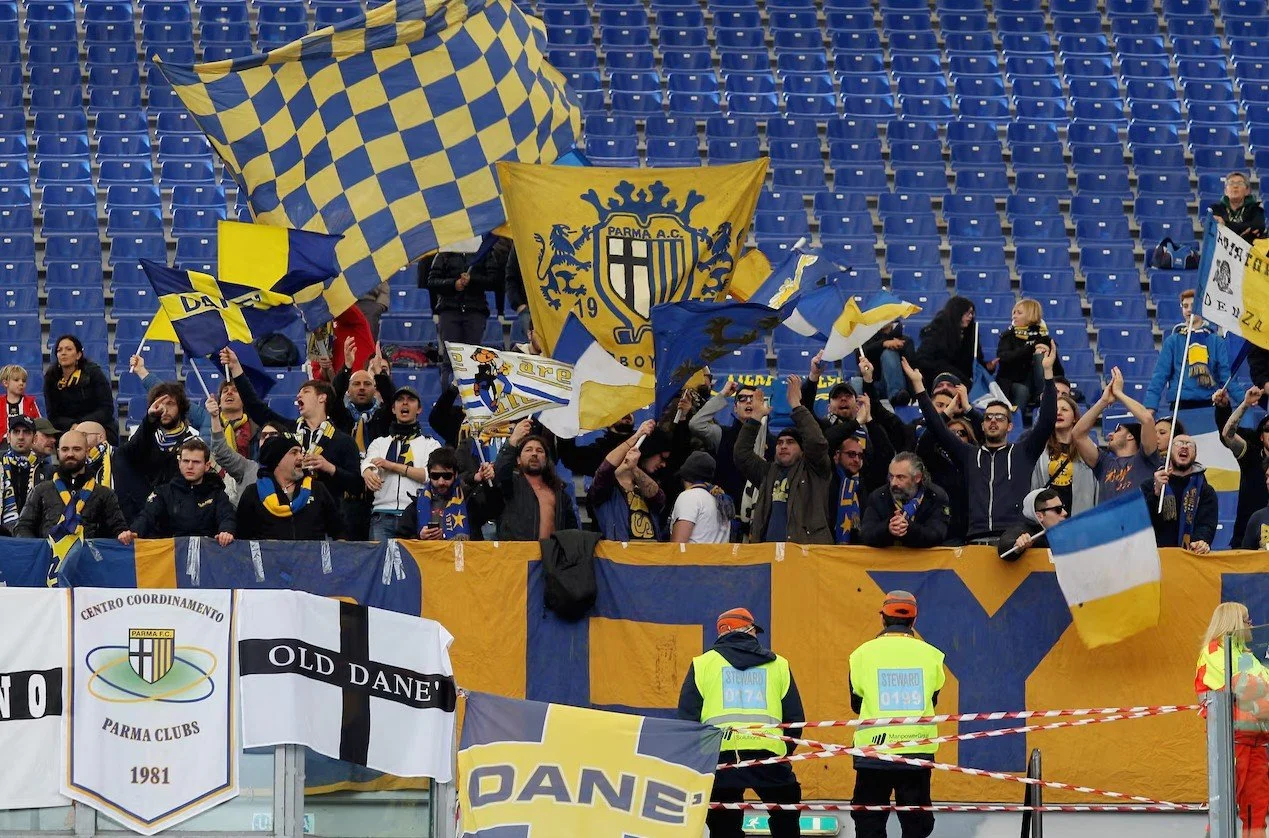
Parma fans support their team against Roma in Serie A on February 15, 2015 - one of the clubs last matches before bankruptcy.
Photo Credit: Bleacher Report
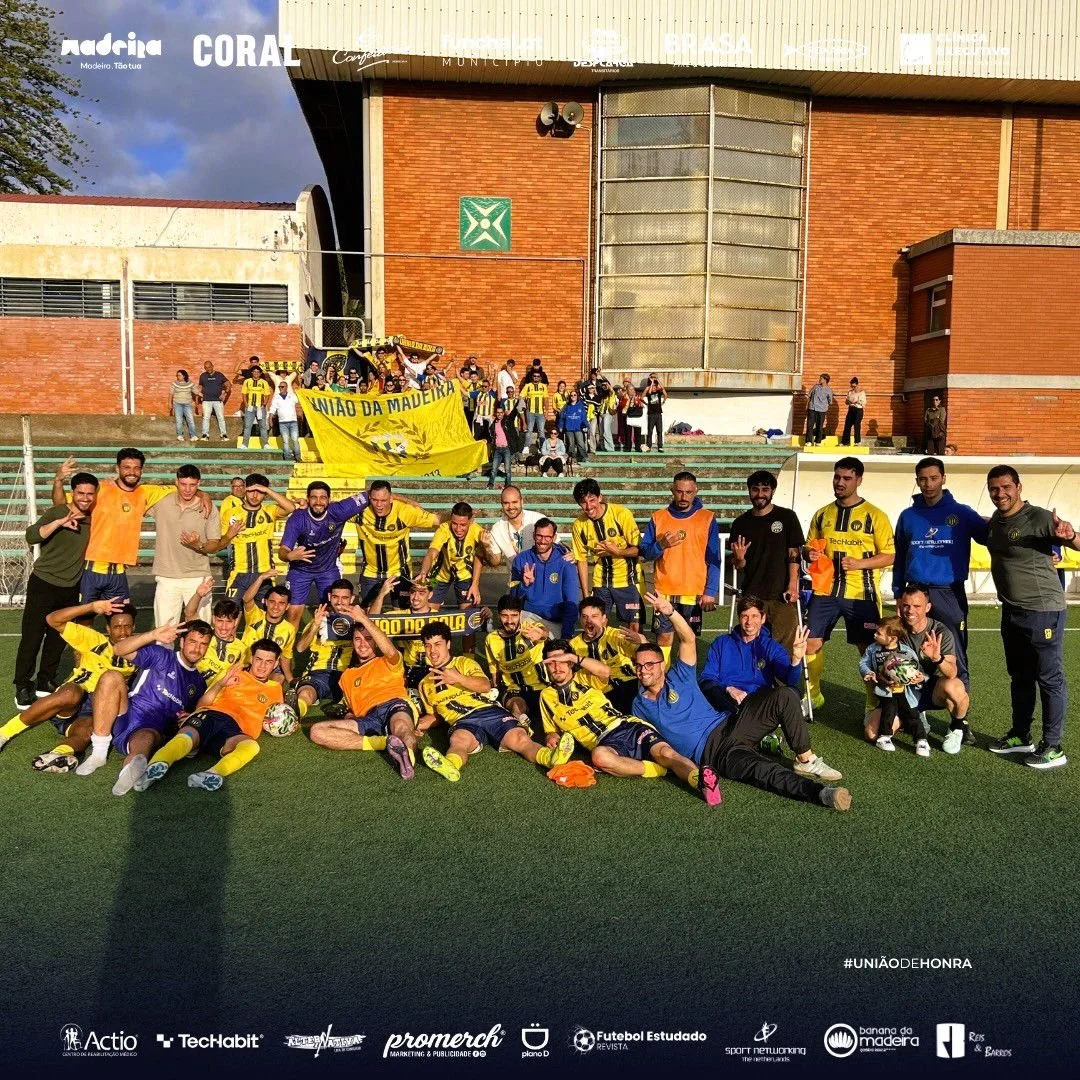
União da Madeira and the União da Bola
Portuguese context also offers relevant examples of institutional reconstruction processes associated with the disappearance of historic clubs. A particularly significant case occurred in the Autonomous Region of Madeira with the decline of the historic Football Club União da Madeira.
Founded in 1913, União da Madeira has built a relevant presence in Portuguese football over several decades, including participations in the Primeira Liga. The club played an important role in the sporting life of the city of Funchal and in the training of generations of fans.
But, financial difficulties accumulated over the years gradually led to a situation of institutional decline that eventually resulted in the interruption of competitive activity.
The loss of organizational capacity and economic problems prevented the continuity of the sports project in the previously existing molds.
Faced with this reality, a new project emerged in 2022 aimed at preserving the spirit and identity associated with the Unionist universe.
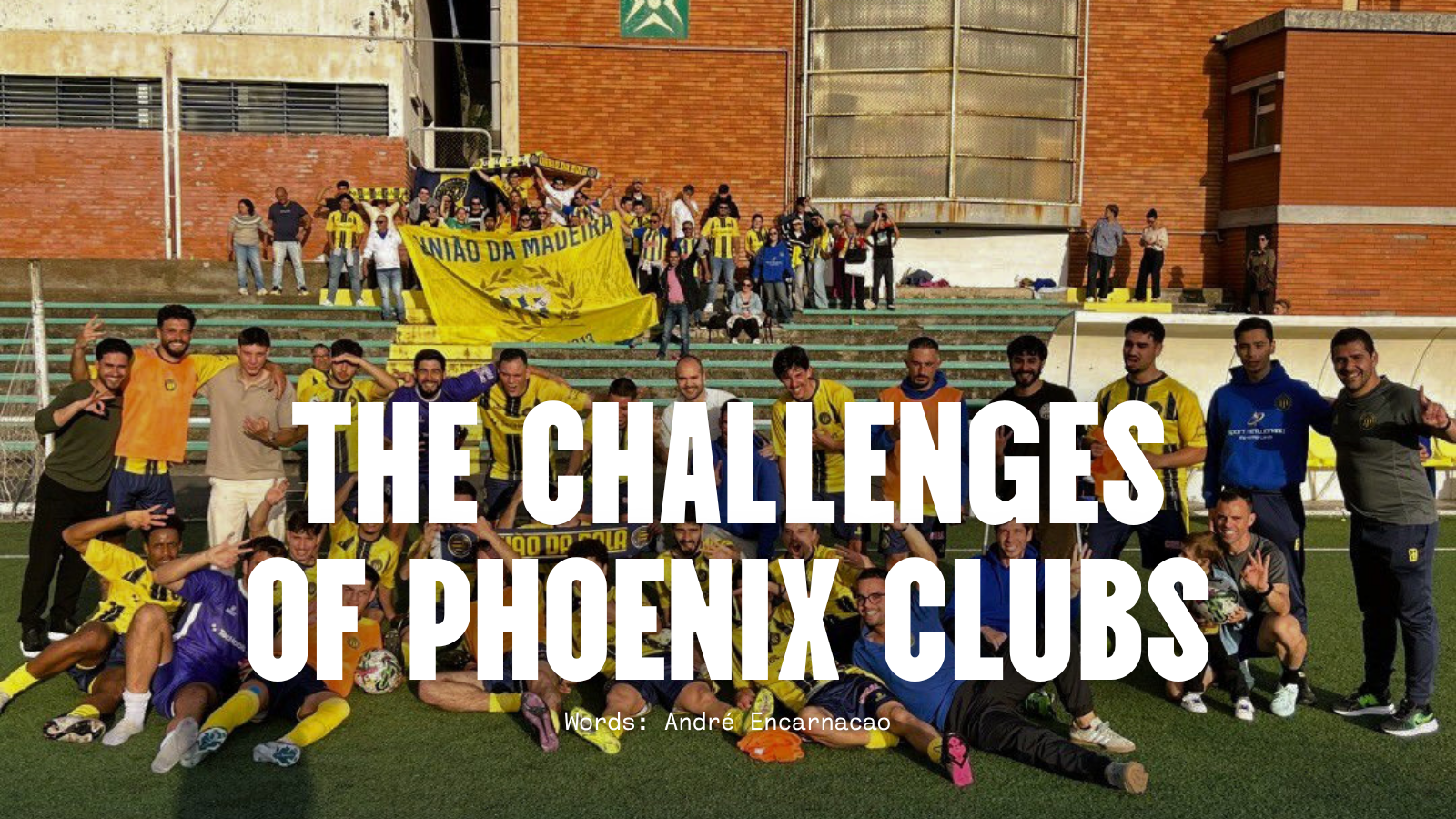
União da Bola Futebol Clube was then founded, inspired by the historical heritage of União da Madeira. The new club began its activity in competitions organized by the Madeira Football Association, starting in the lower echelons of regional football.
The initial competitive path showed a gradual evolution. In the 2024/25 sports season, the club achieved promotion from the Regional First Division to the Division of Honor of the Madeira Football Association, the level in which it currently competes.
The case of União da Bola Futebol Clube highlights several of the challenges characteristic of phoenix clubs, and institutional reconstruction requires dedication to the existing structure, rigor and sacrifice, mobilization of fans, creation of stable organizational structures and consolidation of a sports project capable of growing progressively in the regional competitive context.
The preservation of the historical memory of União da Madeira continues to play a relevant role in the symbolic identity of the new club. The emotional connection of the fans to the Unionist history contributes to sustaining the project and reinforcing the feeling of continuity between past and present.
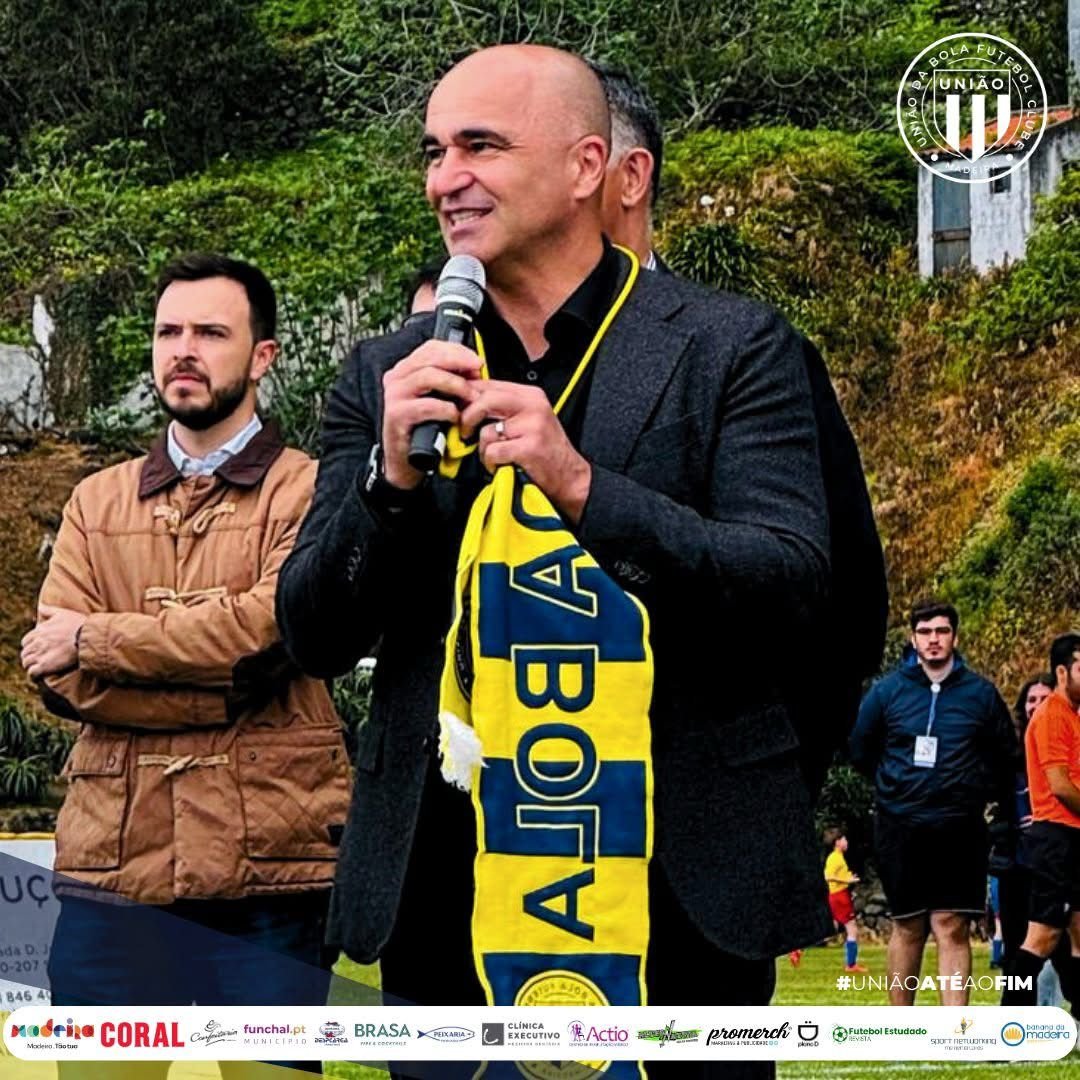
Portugal National Team manager Roberto Martinez speaking at União da Bola wearing a club scarf.
Photo Credit: União da Bola
Conclusion
Phoenix clubs represent a significant phenomenon in the contemporary football landscape, as their emergence simultaneously highlights the structural weaknesses of some sports organizations and the ability to mobilize communities that seek to preserve their symbolic institutions.
The reconstruction of a club after a process of collapse involves complex challenges that cover multiple dimensions of organisational life, from economic sustainability, the reconstruction of the social connection with fans, the development of transparent governance structures and the consolidation of sporting competitiveness are fundamental elements of this process.
Several clubs demonstrate that trajectories of institutional rebirth are possible when there is a mobilized social base and a sustainable development strategy. The example of União da Bola Futebol Clube in Madeira also highlights the presence of this phenomenon in the Portuguese context, illustrating the reconstruction effort associated with the heritage of União da Madeira.
The path of a phoenix club is rarely immediate or linear. Reconstruction requires time, organizational stability, dedication, commitment, a lot of rigor and strong community involvement. The persistence of the boards, structures, fans and the capacity for institutional development can transform an episode of collapse into an opportunity for structural renewal, allowing the club to be reborn and gradually regain its place in the sporting panorama.
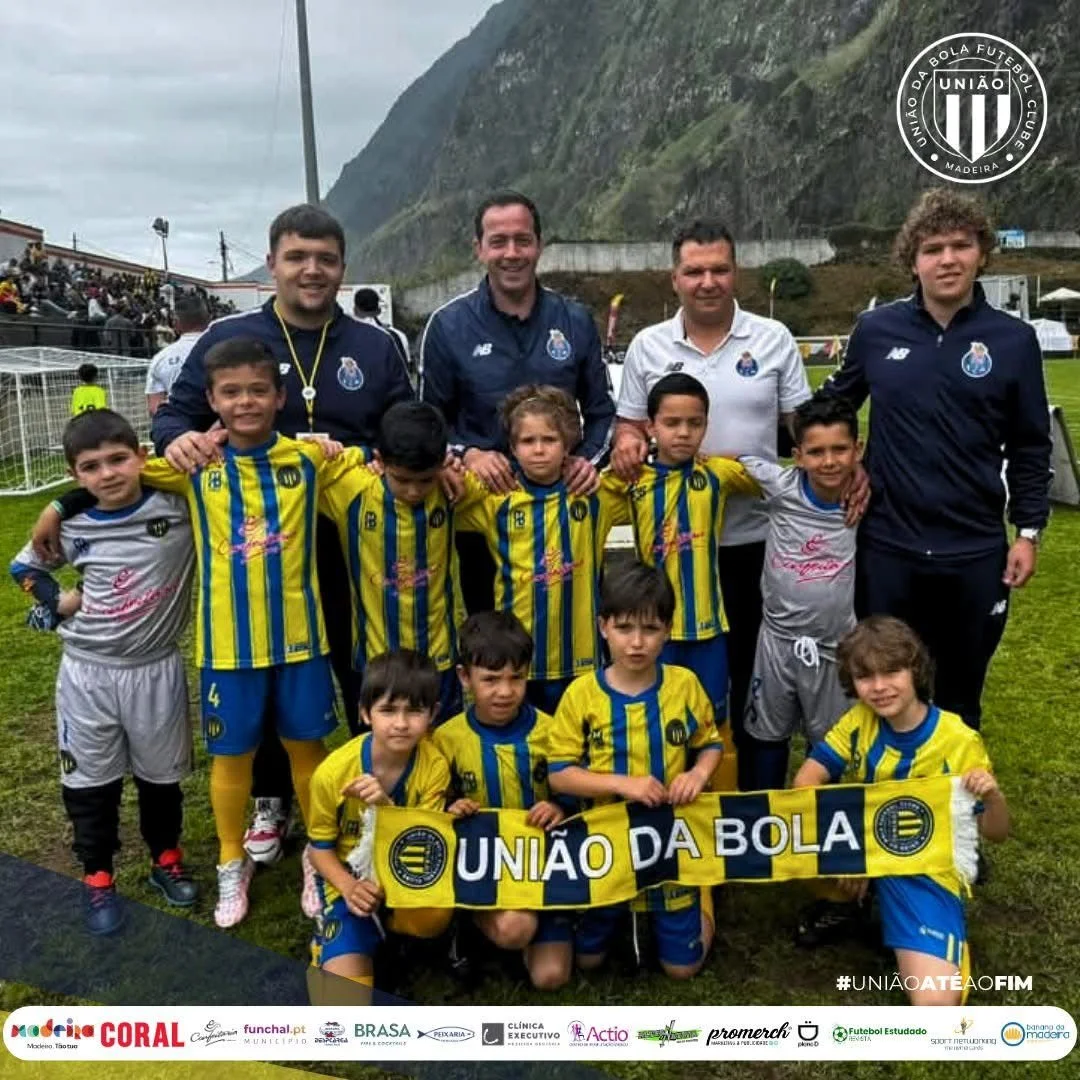
União da Bola and other phoenix clubs offer places for children and young footballers to play.
Photo Credit: União da Bola
Written by André Encarnação.
This article was featured on Cultured Football #258 by Paul Grech.