

Words by Dave Proudlove | Published 20.06.2026Although the 1982 World Cup finals in Spain is the first World Cup I can remember, the following tournament in Mexico was the first I was genuinely excited about. Led by Bobby Robson, England had a squad imbued with genuine talent – the likes of Gary Lineker and Bryan Robson – while both Northern Ireland and Scotland qualified, meaning that there was a lot of domestic interest.
Though the World Cup finals have always been greatly anticipated in England since 1950, interest in the 1986 finals was perhaps increased by the lack of European football following the banning of English clubs in the aftermath of the Heysel Stadium disaster the previous year.
My own interest was heightened as the 1985/86 season came to a close through my avid collecting of Panini football stickers, and before things got underway, I experienced my own little triumph when I filled a Panini album for the very first time: the Mexico ‘86 collection. By the end of May, I was fit to burst and ready to go.
Some World Cup finals are about teams, and some are about individual players. Think the 1958 finals and the emergence of Pelé. Witness Johan Cruyff’s dominance of the 1974 finals. And then there is Mexico ‘86, a tournament so inseparable from one player that it felt less like a competition and more like a coronation. Diego Maradona did not simply win the World Cup for Argentina that summer; he bent the finals to his will, shaped its narrative, and etched his name into footballing immortality. Mexico ‘86 was not just Argentina’s triumph; it was Maradona’s stage, and ultimately, his masterpiece.
But originally, the 1986 FIFA World Cup finals were not meant for Mexico at all. Colombia had been awarded hosting rights in 1974, with the expectation that it would showcase the tournament 12 years later. By the early 1980s though, Colombia was struggling with economic instability, infrastructure limitations, and escalating internal conflict. The demands of hosting a modern World Cup proved too much. In 1982, Colombia officially withdrew, unable to meet FIFA’s requirements.
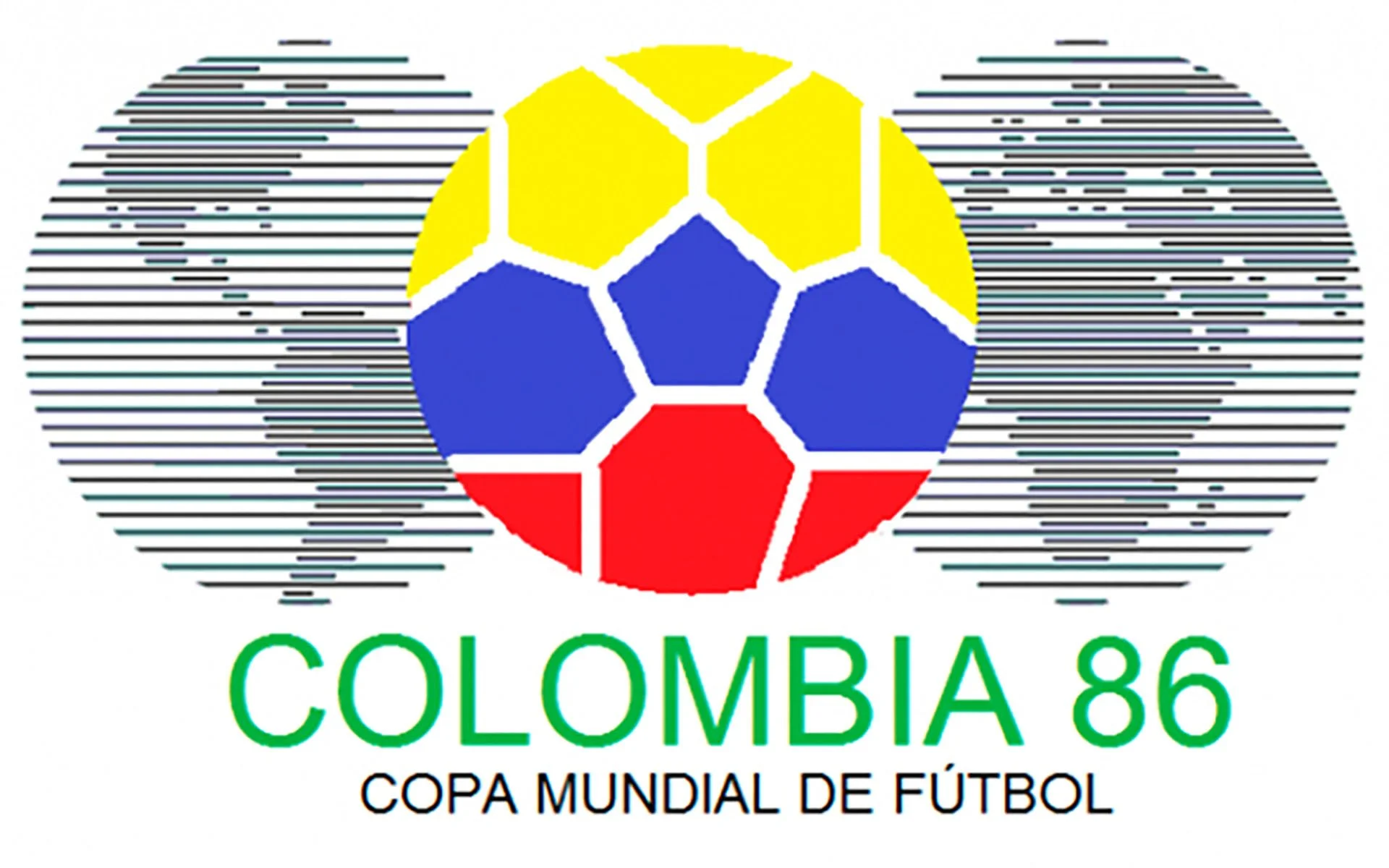
The proposed logo for Colombia '86.
Photo Credit: WikiMedia Commons
Mexico stepped in, but in controversial circumstances, fending off bids from both Canada and the USA, thus becoming the first nation to host the World Cup finals twice having previously staged the iconic 1970 tournament which left a profound mark on football history.
Mexico ‘70 was a celebration of artistry and attacking brilliance, immortalised by Pelé’s Brazil and the introduction of global television coverage in colour. It set a standard for spectacle and romance. By contrast, Mexico ‘86 would be shaped not just by footballing beauty, but by resilience, both on and off the pitch.
Less than a year before the tournament, disaster struck. In September 1985, a devastating earthquake hit Mexico City, killing thousands and leaving vast swathes of the capital in ruins. The tragedy cast doubt on whether the country could still host the World Cup. Infrastructure was damaged, resources were strained, and the emotional toll on the nation was immense.
Yet Mexico persisted. Reconstruction efforts were rapid and determined, and hosting the World Cup finals became a symbol of recovery, pride, and unity. When the tournament kicked off in June 1986, it carried with it a deeper significance: football as a vehicle for healing.
And into all of this stepped Diego Maradona.
By the time the tournament began, Diego Maradona was already a global superstar, but his career had been anything but smooth. He had emerged in Argentina as a teenage prodigy with Argentinos Juniors, dazzling with his balance, vision, and audacity, and a move to Boca Juniors followed, where he won the Argentine title and confirmed his status as the nation’s golden boy. But it was his transfer to Europe that truly defined his next chapter.
In 1982, Maradona joined Barcelona for a then world-record transfer fee. Expectations were enormous, yet his time in Spain was turbulent. Injuries, illness, and fierce defensive tactics took their toll. A brutal tackle by Athletic Bilbao’s Andoni Goikoetxea in 1983 left him with a broken ankle, sidelining him for months, while off the pitch, tensions grew between Maradona, the club hierarchy, and the Spanish media.
The breaking point came at the 1984 Copa del Rey final, a match played out before King Juan Carlos I. A mass brawl erupted after the final whistle, with Maradona at its epicentre, while fans hurled missiles from the stands leading to injuries to 60 people.
In the aftermath, the club’s hierarchy washed their hands of Maradona with one official commenting that “when I saw those scenes of Maradona fighting and the chaos that followed I realised we couldn’t go any further with him.
It was a chaotic end to a strained relationship. Barcelona had seen flashes of genius, but not the sustained brilliance they had hoped for, and the parting of the ways seemed best for all concerned.
That same year, Maradona moved to Napoli in Italy, for another world record transfer fee. It was a transfer that seemed – at the time – almost puzzling. Napoli were not among Italy’s elite clubs. They had never won the Serie A title and were overshadowed by northern giants like Juventus, AC Milan, and Inter.
But in Naples, Maradona found something different: devotion. The city embraced him not just as a footballer, but as a messiah, and a symbol of defiance against northern dominance; as a local newspaper put it, Naples may have been missing a “mayor, houses, schools, buses, employment and sanitation, none of this matters because we have Maradona."
He, in turn, began to rediscover his joy, his confidence, and his sense of purpose. By 1986, Maradona was ready – not just as a player, but as a leader.
Argentina entered the finals in Mexico with cautious optimism. Their squad was not considered among the strongest, while manager Carlos Bilardo favoured a pragmatic, disciplined approach, and was subsequently often criticised for being overly cautious. But at the heart of his system was Maradona. Everything revolved around him.
Bilardo built the team to maximise Maradona’s influence, handing him freedom, responsibility, and trust, while handing him the captain’s armband. Consequently, the expectations of a nation rested on his shoulders. However, Maradona was to take it all in his stride.
Argentina’s group stage performances were solid rather than spectacular. They defeated South Korea, drew with Italy – in which Maradona scored his first goal of the tournament to salvage a draw – before beating Bulgaria to top their group, setting up a clash with old rivals Uruguay in the round of 16. Maradona was already showing glimpses of his brilliance, orchestrating play and drawing defenders like a magnet.
But the real story was yet to unfold. Maradona led Argentina to a tight 1-0 victory over Uruguay to clinch a place in the quarter-finals where they inevitably came face-to-face with England.
The showdown with England was more than a football match; it was loaded with political and emotional weight. Just four years earlier, Argentina and the United Kingdom had fought the Falklands War, a brief but intense conflict over the disputed islands in the South Atlantic.
The war had ended in British victory after just 74 days, but it cost the lives of 649 Argentinians, 255 Britons, and three Falkland Islanders, and the scars remained fresh. For many Argentinians, the match carried symbolic significance.
Though it wasn’t an opportunity for revenge in a literal sense, the game was charged with national pride, memory, and emotion. Maradona himself would later describe it as a match played “with the soul.”
On 22 June 1986, Argentina and England met at Mexico City’s Azteca Stadium, and Diego Maradona delivered one of the most extraordinary performances in football history.
The match was tightly contested until the 51st minute when chaos unfolded. After a run from Jorge Valdano broke down, Maradona chased a sliced Steve Hodge clearance into the penalty area, leaping alongside England goalkeeper Peter Shilton who stood eight inches taller than him.
In that split second, Maradona extended his left arm and punched the ball into the net.
Maradona wheeled away in celebration, offering cautious glances at the officials. Incredibly, the referee allowed the goal to stand, sparking a furious reaction from England’s players led by Shilton, while around 5,500 miles away in Packmoor, as we were watching events unfold on our Amstrad TV set, my dad offered up his own commentary on Maradona’s opening goal: “you cheating little bastard!”
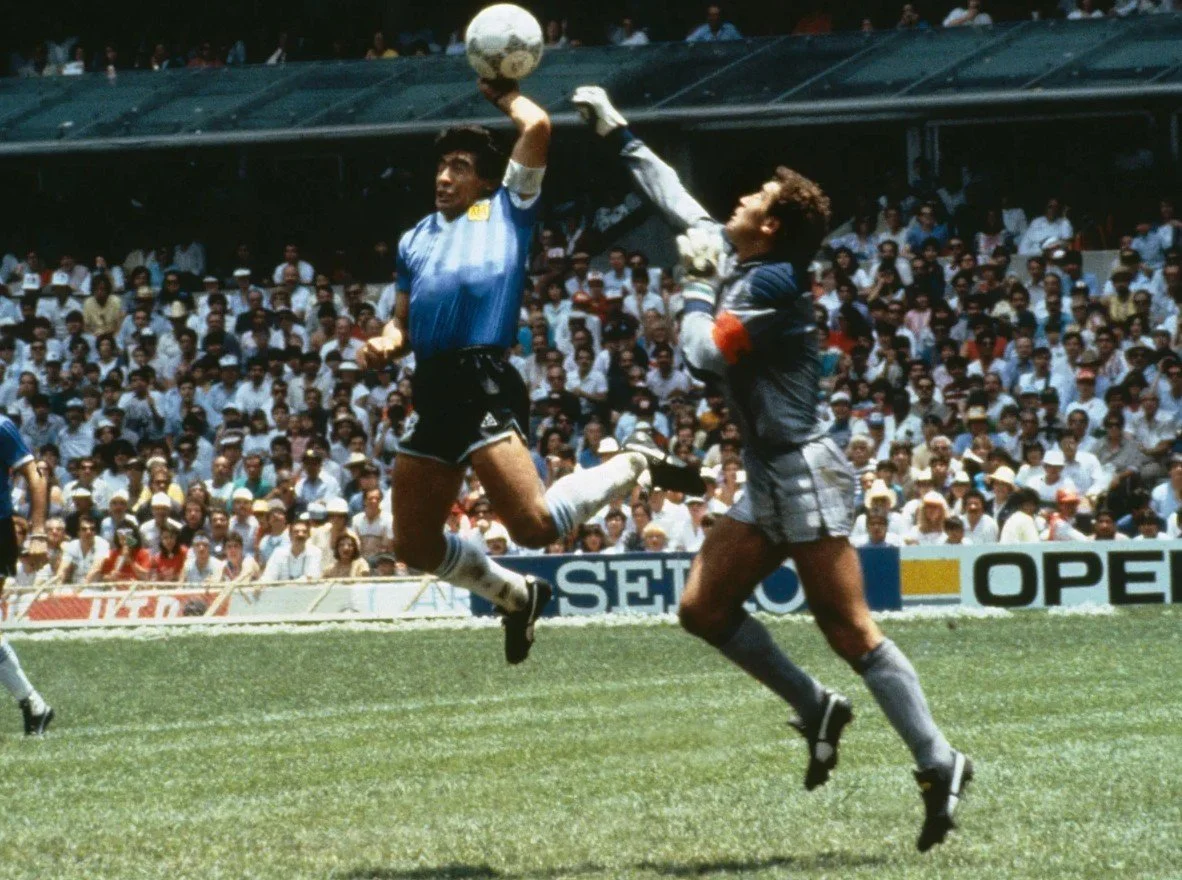
Diego Maradona's infamous 'Hand of God' goal.
Photo Credit: The Guardian
Controversial, infamous, and endlessly debated, the goal symbolised cunning and audacity. When Maradona was asked if he’d handled the ball, he described it as “un poco con la cabeza de Maradona y otro poco con la mano de Dios” (“a little with the head of Maradona and a little with the hand of God.”) From then on, it became known as the ‘Hand of God’ goal.
But if the first goal was contentious, Maradona’s second just four minutes later was genius.
Picking up the ball in his own half, Maradona took off on a 60-yard run that defied logic and physics. He glided past Peter Beardsley, Peter Reid, Terry Butcher – not once, but twice – and Terry Fenwick before selling Peter Shilton a dummy and slotting the ball home into an empty net.
It was perfection, though the response in Proudlove Towers was less appreciative, with Dad raging that “someone should’ve kicked the little twat in the air.” The goal was badged the ‘Goal of the Century,’ encapsulating everything that made Maradona special – balance, vision, acceleration, and an almost supernatural connection with the ball.
England pulled one back late on through Gary Lineker, but Argentina held firm to advance to the semi-finals. And Maradona had cemented his place in World Cup folklore.Following the final whistle, England’s Steve Hodge approached Maradona to swap shirts, a common gesture of respect in football. At the time, it was a simple exchange, a memento of an historic game.
But decades later, that shirt would become one of the most valuable pieces of sports memorabilia in history, Hodge selling it at auction for £7.14m, a testament to the enduring significance of that match and Maradona’s performance. The shirt was more than fabric; it was a relic and symbol of Diego Maradona’s genius.
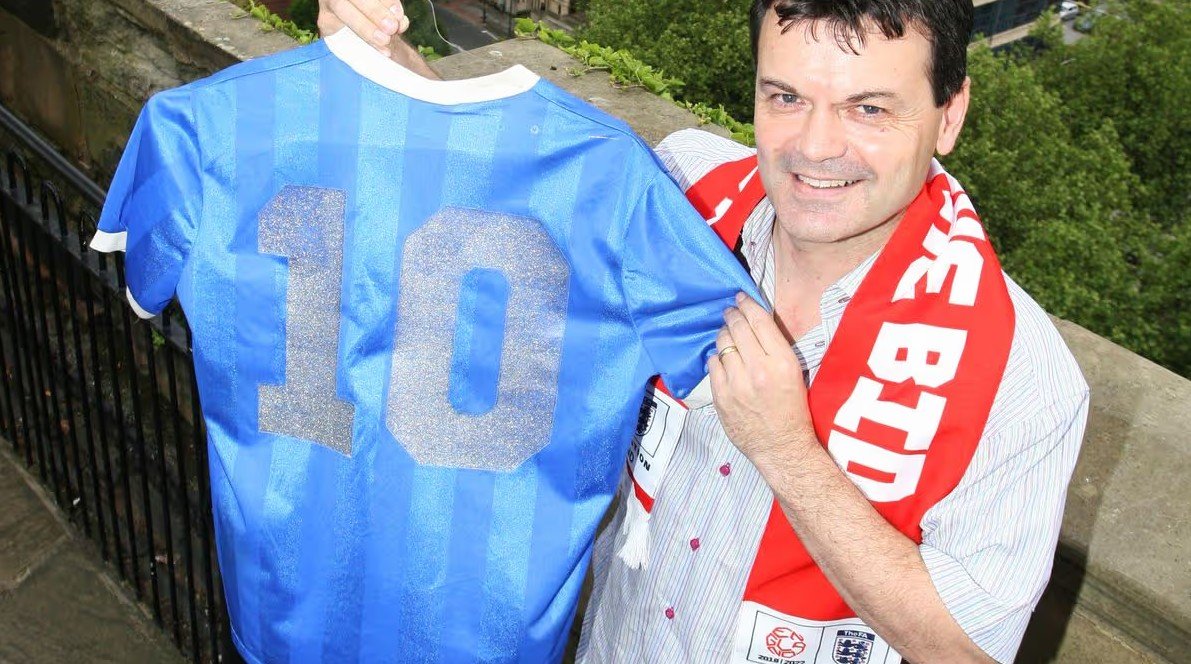
Steve Hodge - the man who got Maradona's shirt.
Photo Credit: Nottinghamshire Live
Argentina and Maradona carried their momentum into the semi-finals, where they faced a vibrant Belgium side, and once again, Maradona was unstoppable, scoring both goals in a 2–0 victory. His creativity and composure were unmatched, and he’d taken Argentina all the way to the final almost singlehandedly.
And awaiting them in the final was West Germany, who stood between Argentina and a second World Cup triumph. The match, played once again at the Azteca, was dramatic and tense. Argentina took a 2–0 lead, only for Germany to fight back and pull themselves level.
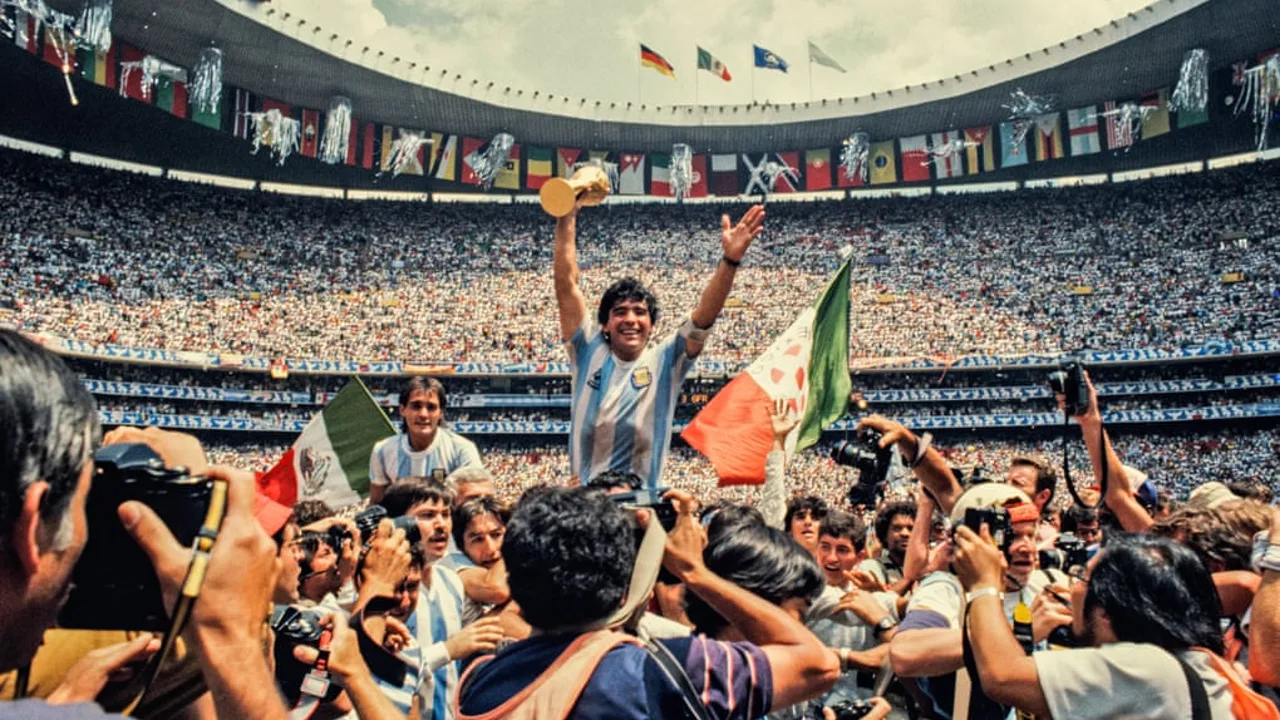
With the game hanging in the balance and around five minutes left on the clock, Maradona produced one final moment of magic, threading a perfectly weighted pass through the German defence to Jorge Burruchaga, who raced through and scored the winning goal. Argentina were world champions, and Maradona was a World Cup winning captain.
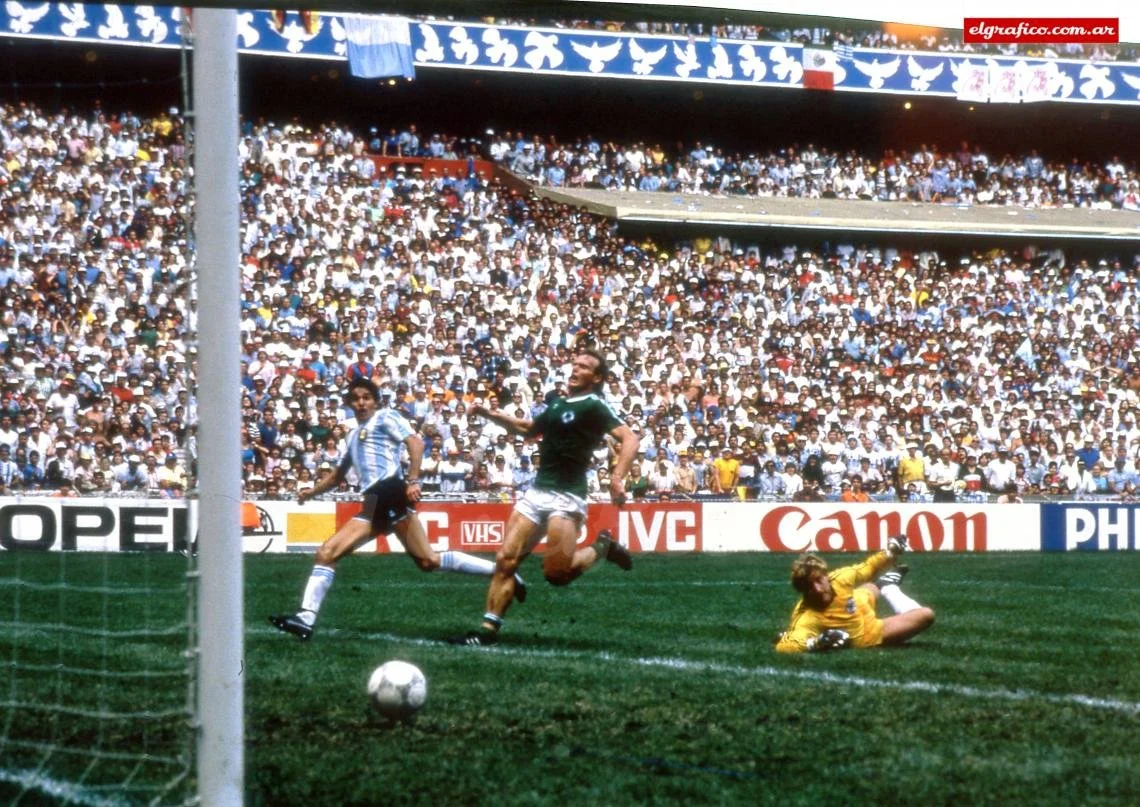
Jorge Burruchaga scores the goal that clinches the 1986 World Cup for Argentina.
Photo Credit: Wikimedia Commons
Maradona finished the tournament in Mexico with five goals and five assists. But statistics alone cannot capture his impact. He was involved in almost every meaningful moment of Argentina’s campaign, dictating tempo, inspiring teammates, while he carried the weight of expectation with amazing grace. And much more than that, he defined the entire tournament.
Mexico ‘86 was not just about victory. It was about expression, about the beauty and unpredictability of football. Maradona embodied that spirit. He was flawed, controversial, and human, and yet capable of moments that felt divine.
In the years that have followed, debates about the greatest footballer of all time have continued. Names are compared, eras contrasted, achievements measured. But Mexico ‘86 remains a singular argument in Maradona’s favour. No player has ever so completely dominated a World Cup finals.
There is something almost mythical about Maradona’s journey in 1986. From his struggles in Barcelona and the brutal end to his time at the Camp Nou to his rebirth in Naples, from the political tension of the quarter-final with England and the controversy and artistry of his two goals, it all culminated in a triumph that felt destined to be his. Maradona stood at the edge of heaven and, for a fleeting moment, seemed to touch it.
Mexico ‘86 was Diego Maradona’s tournament. Not because he scored vital goals or wore the captain’s armband, but because he transformed the game into something unforgettable. He made football feel infinite. And in doing so, he ensured that his legacy would be too.
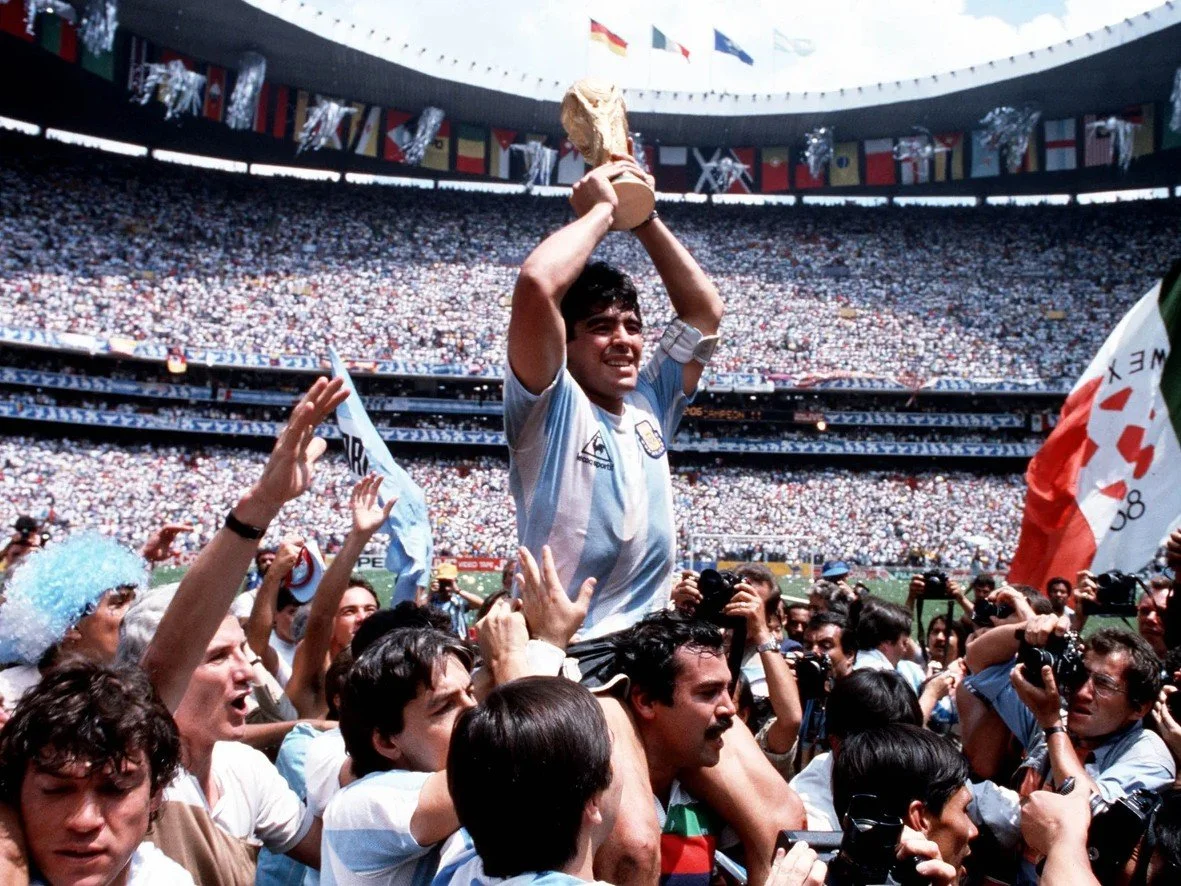
Maradona lifts the World Cup at the Azteca Stadium.
Photo Credit: Bob Thomas