

Words by Dave Proudlove | Published 10.12.202522 October 1972. It was a Sunday afternoon, and Stoke City and England’s number one Gordon Banks had been in to the Victoria Ground for treatment on a minor injury picked up during a 2-1 defeat to Liverpool at Anfield. Banksy was driving home on the A525 through Madeley Heath – a small village a few miles outside Newcastle-under-Lyme in North Staffordshire – when he approached an idling car on his left. Approaching the parked car, Banksy slowed down before manoeuvring to overtake it. And disaster struck. Banksy had pulled in front of an oncoming van, and the two collided. The impact was horrific; the accident left the world’s greatest goalkeeper in hospital with serious facial and eye injuries. Fragments of glass had perforated his right eye and seriously damaged the retina, which required 100 micro stiches, while the facial damage required 200 stitches. He didn’t know it at the time, but Gordon Banks had played his last game for Stoke City, and his last in English football.
The previous campaign had been a long and gruelling one for Stoke City and Gordon Banks, but ultimately it had been a successful one. Due to lengthy cup runs and the number of competitions that the club played in, Stoke City’s 1971/72 season saw them break the English record for the number of games played in a single domestic season. But the club won their first major honour, defeating Chelsea 2-1 at Wembley to lift the League Cup, while they also reached the FA Cup semi-finals. On signing for Stoke City in March 1967, Banks had said, “I’ve not come here to retire you know. I’ve come here to win something”, and he delivered on that pledge, playing a key role in Stoke’s League Cup campaign, not least in the semi-final with West Ham United when he pulled off a stunning save in denying his England team mate Geoff Hurst from the penalty spot, a save that Banksy considered to be better than the one he famously made to deny Pelé at the 1970 World Cup finals in Mexico. And Banksy’s achievements that season were recognised when he was named the Football Writers Association Footballer of the Year for 1972.
The Potters’ League Cup triumph handed them their first ever European campaign, as they qualified for the UEFA Cup. But it was over quickly, as they lost 5-3 on aggregate to German side 1. FC Kaiserslautern. Their European exit was sandwiched in the middle of a dreadful start to their First Division campaign which – by the time of their visit to Anfield on 22 October – saw Stoke win just three times in 13 games. Their poor run continued with another defeat on Merseyside, though their performances were starting to turn. But the loss of their talismanic goalkeeper was a huge blow.
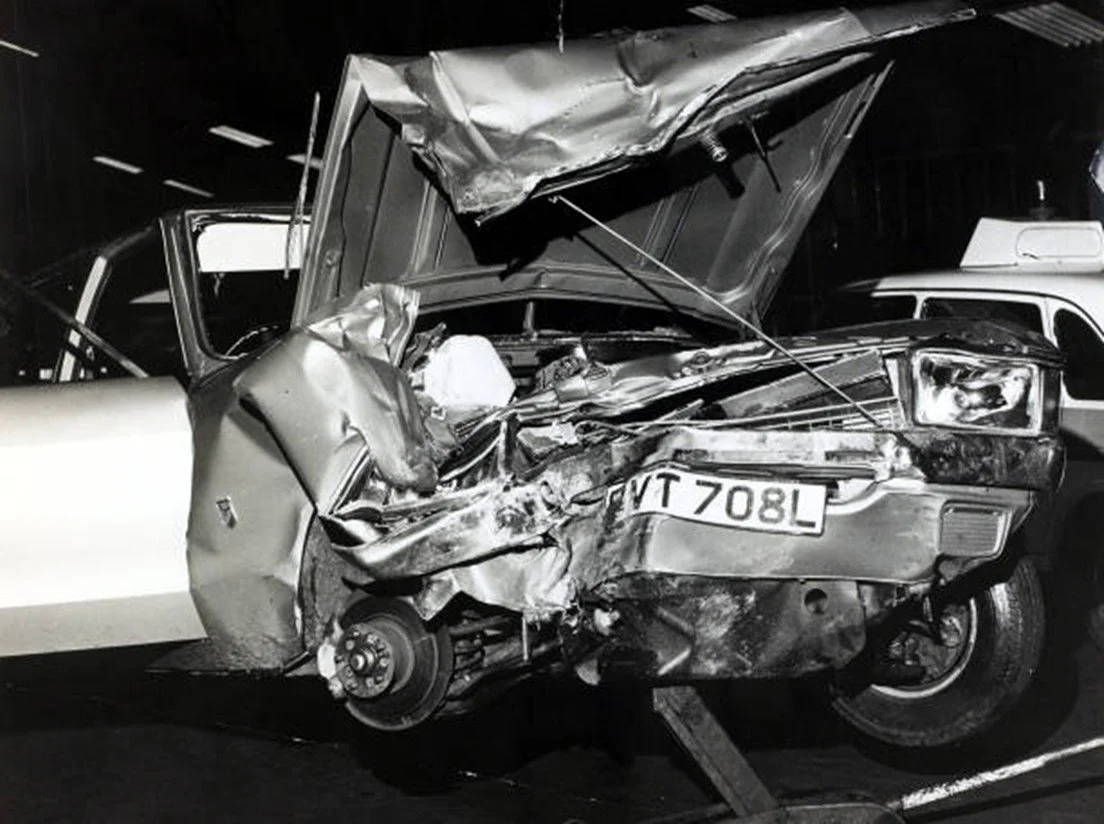
Gordon Banks’ written-off Ford Consul.
Photo Credit: The Sentinel
Banksy’s place was taken by his understudy John Farmer, who Banksy had replaced when arriving at the Victoria Ground back in 1967. Farmer had remained loyal to the Potters, and he grasped the chance to re-establish himself with both hands, helping to steer the club away from trouble at the bottom end of the table. Stoke lost just once in their last eight games winning six, though their 15th place finish was still a disappointment.
Despite John Farmer’s steady performances, Stoke manager Tony Waddington was desperate to see Gordon Banks return. Banksy had returned to first team training but was obviously well short of match fitness, and so at the end of the season, Waddington arranged for the club to go on a tour of the Middle East and Oceania – proving that overseas tours from top flight English clubs is not a new phenomenon – only this tour wasn’t about money; it was about helping Gordon Banks back to match fitness.
Following on from a 48-match domestic season, the Potters’ tour was extensive and saw them play ten friendlies, winning seven, drawing two, with just one defeat. They began their tour in Iran, playing out a 1-1 draw in Tehran with Persepolis, before flying out to Australia and New Zealand where they played a further seven fixtures. Their Australian fixtures were concluded with a 3-1 victory over New South Wales at the Sydney Sports Ground, and they immediately flew to New Zealand.
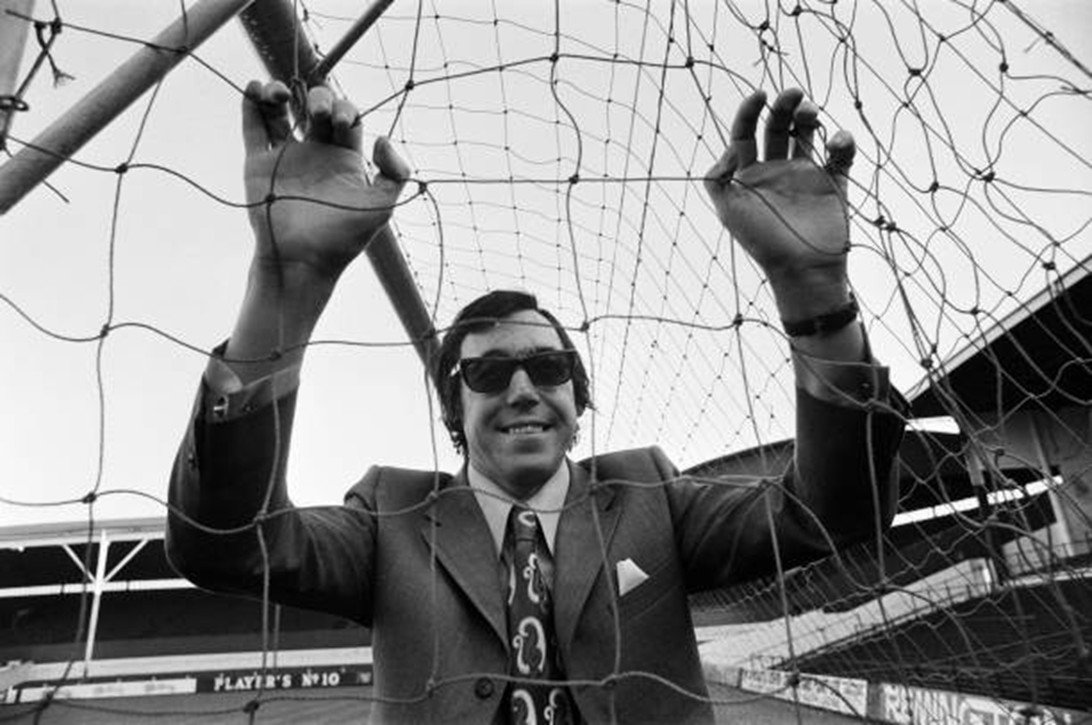
A recovering Banksy 24 hours before Stoke’s 1-1 draw with Chelsea that he watched from the stands, 1 December 1972.
Photo Credit: Getty Images
On arriving in New Zealand, the Stoke squad located themselves in Auckland on New Zealand’s northern island, using New Zealand’s ‘home of football’ Newmarket Park as their base. Newmarket Park had initially been used as an athletics track, and later for midget car racing and a golf driving range until it was leased by the Auckland Football Association in 1962, who built a football stadium. It became the home of the New Zealand national team, and remained so until 1979 when a major landslide destroyed a stand and part of the playing pitch.
And it was at Newmarket Park where Stoke City opened the New Zealand leg of their tour when they faced Auckland just 24 hours after arriving from Australia. Although Stoke were playing part-timers, they were humbled at Newmarket Park, losing 3-1.
The Potters soon got into the swing of things in New Zealand though, bouncing back to win four out of four following their defeat to Auckland – including an 8-1 demolition of Otago – before ending the tour with victories over New Caledonia and Tahiti.
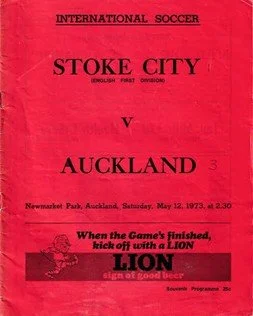
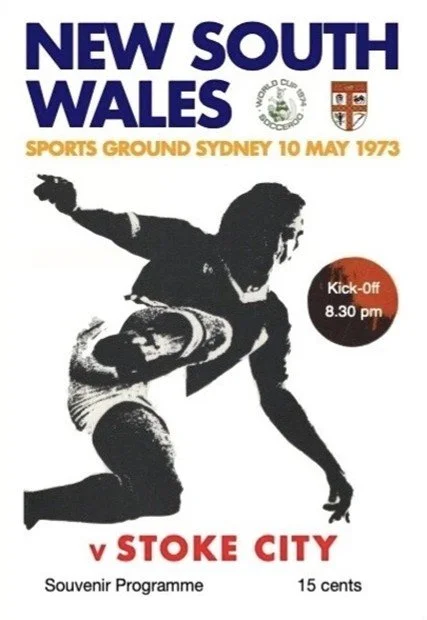
Programmes for Stoke City’s tour of Oceania.
Photo Credit: Stoke City Heritage
Ahead of the 1973/74 season, Stoke manager Tony Waddington was optimistic, but he was still keen to understand whether or not Gordon Banks would be his number one. As the new campaign approached, Waddington sat down with Banksy and asked if he thought that he could return to the fold, adding that he felt that he could. But Banksy had been harbouring doubts, and was brutally honest, responding that “I could, but not the job I used to do. I don’t want that Tony. I have to be honest with you, with the club and myself. If I can’t meet the standards I set for myself, I’m going to have to call it a day.”
Gordon Banks was just 34 years old. It was a huge blow for Waddington, the club, and Banksy personally. Reflecting on his decision to retire, Banksy said “one day I leaned over to pick up a cup of tea on my bedside table and was shocked to grasp thin air. That’s when the reality of my situation hit home. I remember thinking if I can’t even get the angle right to pick up a cup of tea, how will I ever judge the flight and speed of a football again?”
In the run-up to the new season’s opener, the Potters took part in the Watney Cup, and on 18 August, faced Hull City in the final at the Victoria Ground. Two goals from Jimmy Greenhoff saw Stoke lift the trophy, but the triumph was tempered by the announcement that Gordon Banks would be retiring to take a place among the club’s coaching team.
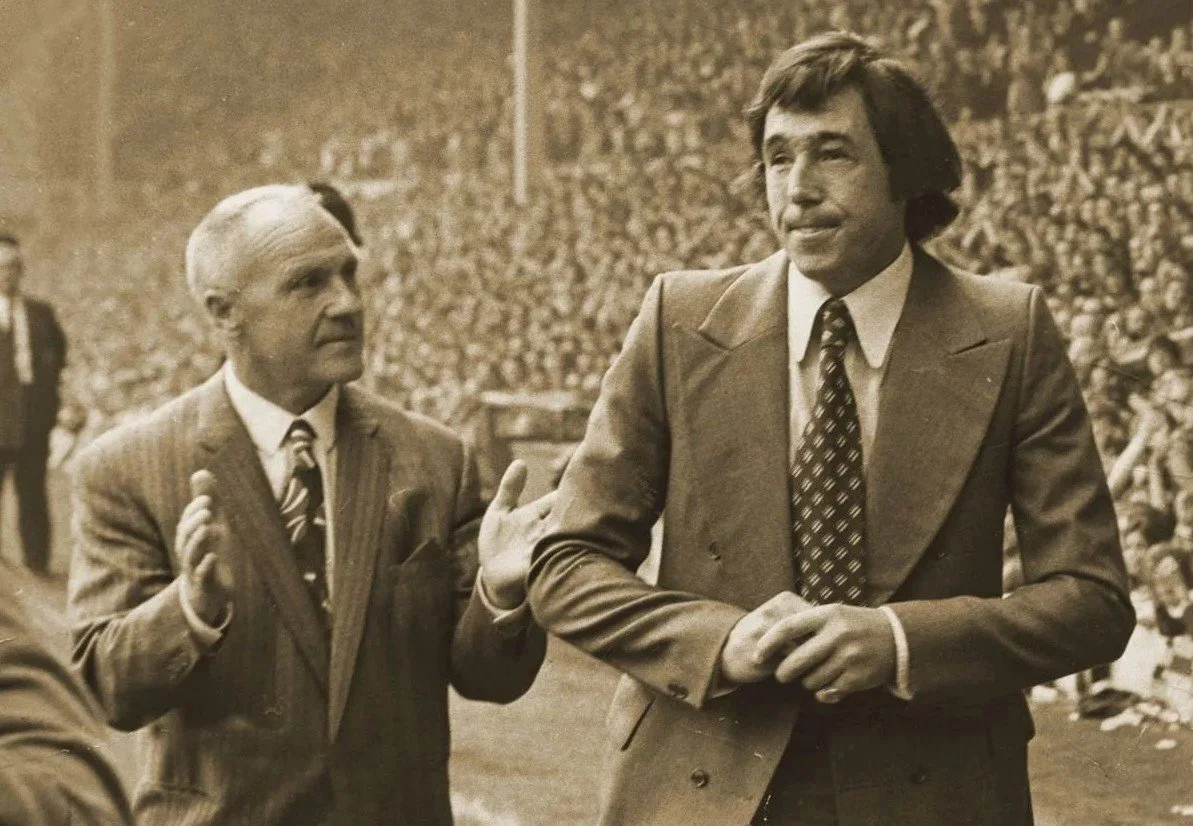
A week later, Stoke found themselves at Anfield to face champions Liverpool in the season’s curtain raiser, the scene of Gordon Banks’ final game in English football that fateful weekend the previous October. Banksy was to travel to Merseyside with the first team squad once again, but this time as a mere spectator. Prior to kick-off, Liverpool manager Bill Shankly – who was entering his final season in charge at Anfield – led Banksy on a lap of honour where he was given a huge ovation by a crowd of more than 52,000. Shankly had been a big admirer of Banks for years, and indeed, wanted to take him to Anfield when Leicester took the decision to sell him in 1967 only to be foiled by the Liverpool board. This was his way of paying a personal tribute to England’s greatest goalkeeper.
Liverpool began their title defence with a tight 1-0 victory over the Potters, though the campaign turned out to be a good one for Stoke, as they finished fifth to qualify for the UEFA Cup, despite failing to win any of their opening eight games.
While Banksy had been appointed coach to Stoke’s youth team, the board took the decision to grant him a testimonial, and on 12 December 1973 – a cold, wet and windy night in Stoke – a Stoke City XI faced a Manchester United XI before a crowd of just over 21,000. Ahead of kick-off, a number of tributes were paid to Banksy, including from his former England manager Sir Alf Ramsey who said, “Gordon Banks will have a permanent place among the greatest players of soccer. I consider him to be the finest keeper of his period, not only in England, but throughout the world.”
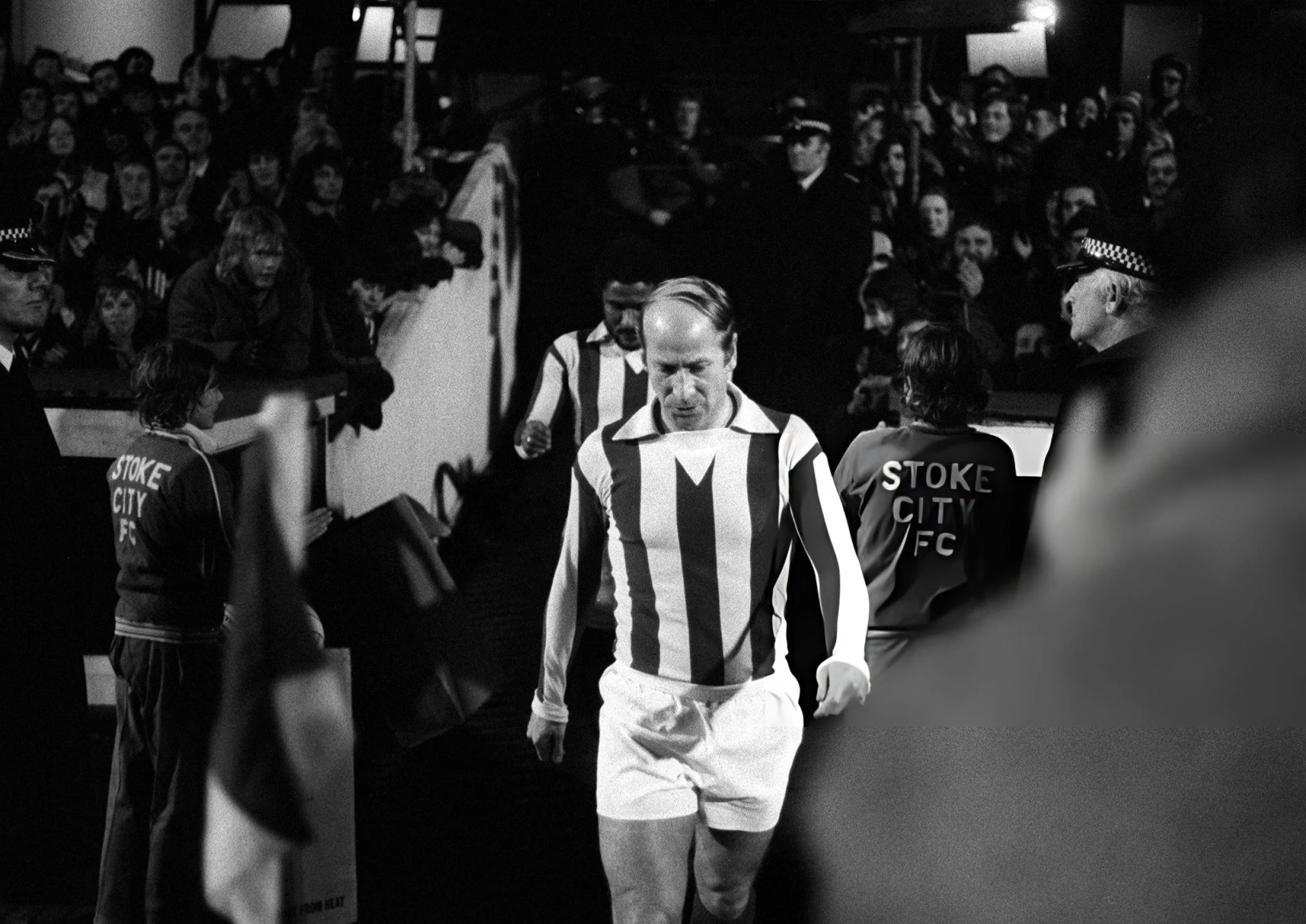
Bobby Charlton and Eusebio take to the field for Gordon Banks’ testimonial.
Photo Credit: Getty Images
Lining up alongside Banksy and his old Stoke team mates Jimmy Greenhoff and Geoff Hurst were none other than Bobby Charlton and Portuguese superstar Eusébio. And it was Eusébio who gave the Stoke side lead after 25 minutes, playing a one-two with full-back Mike Pejic before dispatching a thunderous shot past United keeper Alex Stepney. But George Best was part of the Manchester United side, and a brace from him sealed a 2-1 win.
At the full-time whistle, Gordon Banks left the Victoria Ground pitch for the final time, waving to an adoring Stoke crowd, his face beaming with his famous toothy smile, surrounded by some of football’s biggest names.
But although time had been called on Banksy’s playing career in England, in April 1977 after an absence of almost five years, he crossed the Atlantic to join Fort Lauderdale Strikers of the North American Soccer League. His debut season in the USA was a great success; the Strikers won their division with the best defensive record, no doubt thanks to Gordon Banks, who was named the NASL Goalkeeper of the Year.
On 2 October 1977, Banksy found himself in Ireland where he made a solitary appearance for St. Patrick’s Athletic, keeping a clean sheet in a 1-0 win over Shamrock Rovers, before returning to the States to rejoin Fort Lauderdale Strikers for the 1978 season, where he made another 11 appearances. At the end of the campaign, Banksy this time really did call it a day.
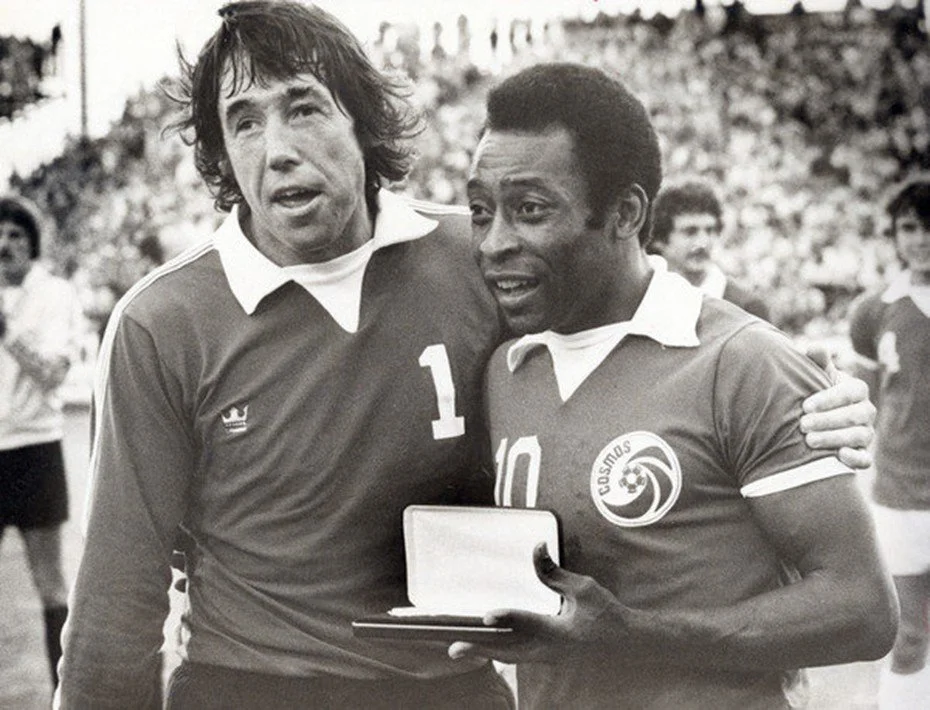
Gordon Banks and his friend Pelé during their time in the NASL.
Photo Credit: Getty Images
Football is littered with ‘what if…?’ moments. They are the heartbeat of every nostalgic conversation, every pub debate, and every late night Instagram reel rabbit hole. They are the sliding-door junctures – not always goals or trophies, but tiny decisions and strokes of luck – that could have rewritten football history. These counterfactuals remind us that football, for all its planning and analytics, is still a sport ultimately shaped by chaos, instinct, and split-second fate.
What if Steven Gerrard hadn’t slipped in 2014? That single moment against Chelsea is remembered not just as a mistake, but as a turning point that shifted the Premier League title away from Liverpool. Had he kept his footing, perhaps Liverpool’s long-awaited league triumph would have arrived years earlier, reshaping the careers of Brendan Rodgers, Luis Suárez, and even the club’s recruitment strategy.
What if Zinedine Zidane hadn’t headbutted Marco Materazzi in the 2006 World Cup final? France were level, Zidane had already scored, and he was their calmest penalty taker. Without the red card, do France go on to win? Does Zidane retire as a two-time World Cup winner? Such moments highlight how emotion can sometimes eclipse even the greatest careers.
And what if Gordon Banks hadn’t suffered his car accident? Would Stoke City have gone on to build on their 1972 League Cup triumph and secure more silverware? Banksy himself thought so. Could they even have gone on to become First Division champions? Stoke supporters from that era believe so, arguing that during the 1974/75 season when they went close, the club would not have had to spend a world record transfer fee on Peter Shilton and instead could have pursued a goalscorer. And if England had still had Gordon Banks to call upon, would they have qualified for the 1974 World Cup finals? There are many that think so.
That fateful Sunday afternoon in October 1972 changed a lot. As well as effectively ending the playing career of England’s greatest goalkeeper, it also impacted on the trajectory of Stoke City, and contributed towards England’s 1970s spell in the international wilderness.
I never have been a fan of cars.