

Words by Richard Mulligan | Published 31.05.2026The Italian captain places his hands on his hips and crouches. The ground dispersed in uneven clumps of deep green turf, he looks above at Mexico City’s midday sun. His hand goes to his brow and he rises back to his feet. Stoic, proud, even in defeat. Magnanimous too as he searches out his friend.
It’s 17 June 1986 and Gaetano Scirea has played his 77th and final game for Italy – a 0-2 defeat to France that sees them eliminated from the 1986 FIFA World Cup. Italy’s skipper embraces his opposite number, Michel Platini, captain of France and his Juventus teammate. They share a few words. Scirea is deflated at Italy’s round-of-16 loss but not surprised. He wishes his friend well.
For the Azzurri it has been a poor few weeks tagged on the end of a poor few years. Italy arrived in Mexico as world champions, but they have been a shadow of themselves since that glorious night in Madrid in 1982 when Scirea and his teammates watched Dino Zoff lift the FIFA World Cup trophy. They are dreadful in qualification for Euro 84 and there is no opportunity for coach Enzo Bearzot to blood a new team for Mexico with Italy hamstrung by automatic qualification.
So Bearzot brings what remains of his España 82 team, but the likes of Paolo Rossi and Marco Tardelli – thirtysomethings unable to adapt to the intemperate conditions of Mexico City and Puebla – don’t kick a ball. Scirea isn’t at his best but plays every minute. While Alessandro Altobelli scores against Bulgaria, Argentina and South Korea, there is little else to cheer. They are swept aside by European champions France at the Estadio Olímpico ’68 in the first knockout round and that’s that.
Juventus’ captain – the man who lifted the European Cup trophy in 1985 in the wake of the Heysel Stadium disaster – plays another full season for the Bianconeri and then the odd game in 1987/88 before hanging up his boots at 35. After winning seven Scudetti and playing more than 500 games for the club, he stays on as staff, working as a coach under his former teammate Zoff.
In September 1989, Scirea – now 36 – is sent on assignment. Juventus have a European game upcoming against Polish side Górnik Zabrze and Scirea is entrusted with a scouting role. At 4am on a Friday morning he says goodbye to his wife, Mariella, and departs for the airport. He’s wearing a blue suit with a white shirt – Azzurri colours. Gai looks sad, Mariella thinks.
In Łódź, on Saturday afternoon, the Italian World Cup winner is one of 6,700 who see Górnik continue their good start to the season with a 2-1 away win. One of Europe’s great defenders of the last decade, he makes a note of the Poles’ dangerman Ryszard Cyroń, who scores twice. During the game, in a conversation with former international goalkeeper Jan Tomaszewski, Scirea learns of the tragic news that the former Polish World Cup star Kazimierz Deyna has been killed in a car crash in the USA, aged 41.
Late Sunday morning, on September 3, Scirea sets off for Warsaw’s Chopin Airport and home. He is to be accompanied by a Górnik club official, with the Polish club also providing a driver and a translator. The flight is at 2pm and Scirea has already made arrangements to dine with his wife, Zoff and others in Turin that evening.
An hour out of Łódz, their Fiat 125P reaches roadworks near the small village of Babsk. The road is down to a single lane. Conscious of time, driver Henryk Pająk attempts to overtake a lorry, but in carrying out the manoeuvre drives head on into an oncoming truck. Scirea, Pajak and translator Barbara Jarnuszkiewicz are all wearing seatbelts and survive the crash. Gornik official Andrzej Zdebski is not wearing a seatbelt and is hurled through the windscreen.
Then, an explosion. Suddenly the car is engulfed in flames, accelerated by four canisters of fuel carried in the boot – common cargo at the time in Poland because of the unreliability of petrol supplies. Three passengers, including Scirea, are killed. Only Zdebski, watching on in terror, survives.
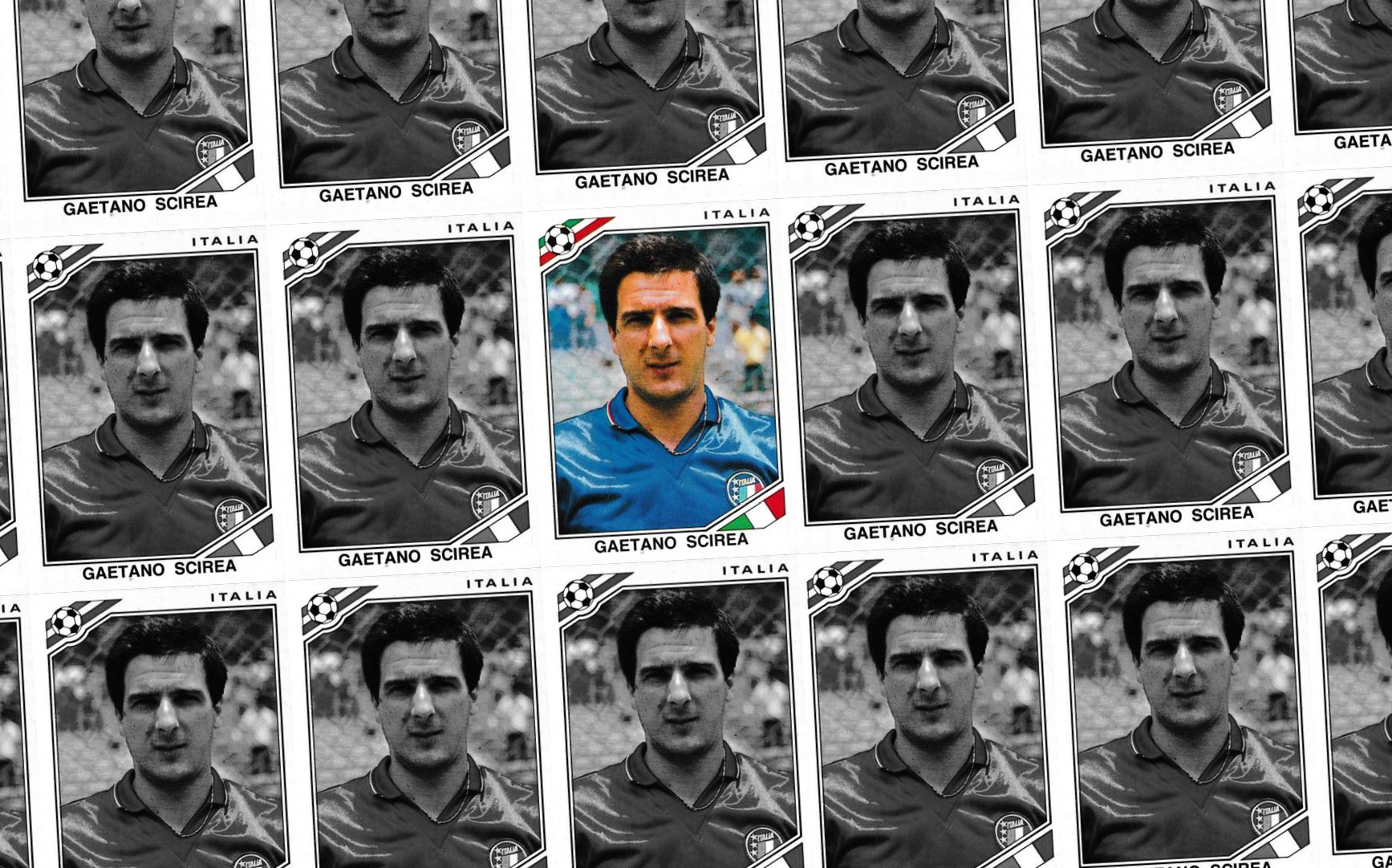
Gaetano Scirea from the Mexico '86 sticker album.
Photo Credit: Euro Soccer Cards
In the pre-internet days, the awful news spreads slowly. Juventus win away at Hellas Verona that afternoon unaware of the tragedy that has befell their coach and club legend. In the afternoon, Mariella Scirea is with Anna Zoff, Dino’s wife. Anna takes a call and tells Mariella it may be best to go home.
An hour later, Mariella is told of the crash by Juventus president Giampiero Boniperti, but still details are sparse. Later still, Dino Zoff holds her as he delivers the horrific news that the love of her life has been killed.
Italian football is rocked by Scirea’s death. The great Italian commentator Sandro Ciotti interrupts the Domenica Sportiva show that Sunday evening to announce the devastating news. Amongst the panellists that day happens to be Marco Tardelli – the great midfielder who enjoyed so much success alongside Gai with Juventus, and on that glorious night in Madrid seven years previously.
In shock and with tears in his eyes, Tardelli departs the studio as his fellow panellists and the audience break out in spontaneous applause for his friend.
Three days later, Juventus fans hold a 10-minute silence during their game against Fiorentina. An estimated 15,000 mourners line the streets of Turin on the day of Scirea’s funeral. The great libero is never far from people’s thoughts when the World Cup is staged in Italy the following year, with the media headquarters bearing his name in tribute.
To this day, Juventus still celebrates his life on the anniversary of his death each September. While Juve moved to the Allianz Stadium more than two decades after his death, the south stand of their home is named Curva Scirea.
“Scirea was a gentleman, a true sportsman, inside and out of the pitch,” a Juventus statement read in 2024. “Even today, Scirea remains a symbol of an era and an outlook on life that made him a pillar of both Juventus and the Italian national team.”
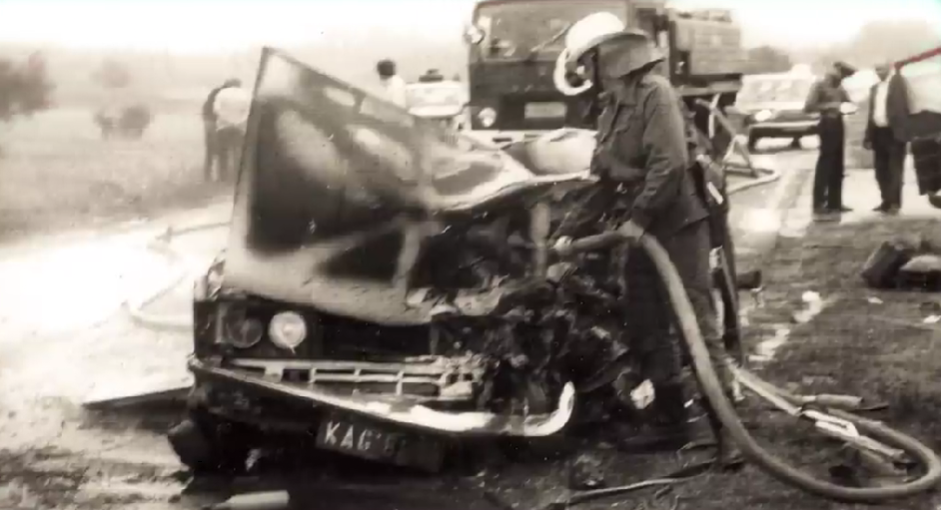
The wreckage of the Fiat 125P and the crash which killed three people.
Photo Credit: La Gazetta dello Sport
Just three years before his tragic death, when Scirea was Italy’s captain at Mexico 86, he was also one face among many in that year’s Panini sticker album. That tome includes only his name, his club in 1986 and his date and place of birth. Anyone casually perusing the pages might wonder what became of him – how many more years did he play for, did he become a great coach, did he leave football?
Indeed, what became of all those hundreds of players so many of us once collected, swapped and stuck in our albums? It is that curiosity that was the driving force behind my new book The Heroes of Mexico 86.
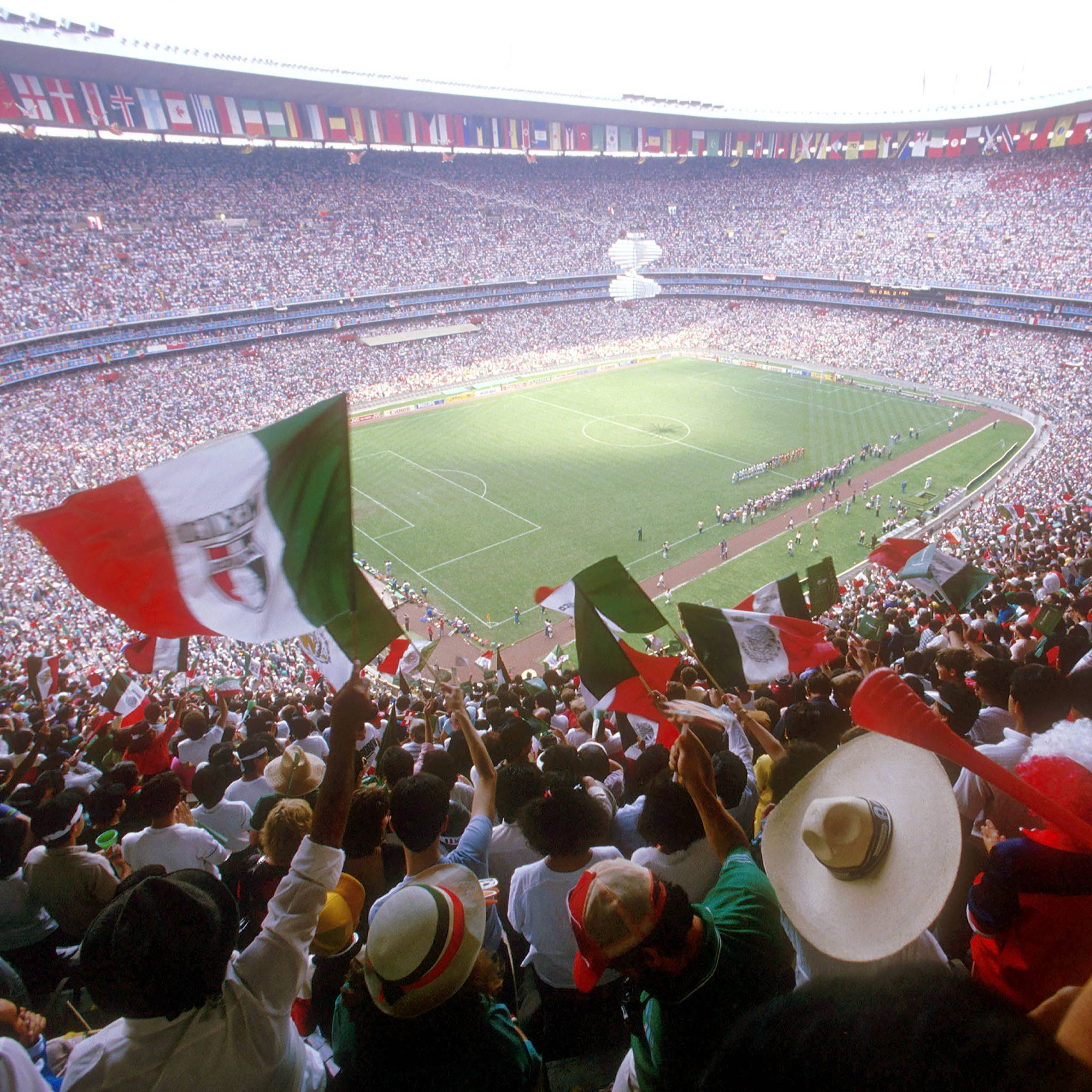
It comes exactly 40 years after the 1986 World Cup and marks the return of the competition to the magical Estadio Azteca – the arena where Diego Armando Maradona scored the two most famous goals in World Cup history against England and, a week later, lifted the trophy following the most dramatic of finals.
The book seeks to discover who exactly were the men behind the hundreds of faces captured for a split-second four decades ago: where did they come from, what did they achieve in their career, what became of their lives?
Its pages introduce a remarkable band of brothers born between the mid-1940s and mid-1960s. Some arrived in Mexico at the height of their powers, others at the end of glittering careers, and a few at the very beginning of journeys that would stretch into the next century.
Northern Ireland goalkeeper Pat Jennings was the oldest and most experienced player at the tournament. More than 20 years into his international career, he won his 119th and final cap in defeat to Brazil on 12 June 1986 – his 41st birthday.
Jennings had made his debut for his country in April 1964, before many of his fellow players in Mexico had even been born. One of those youngsters was Portugal’s Paulo Futre – still only 20, yet already three years into his international career and regarded as one of Europe’s brightest emerging talents.
The youngest player in the sticker album was West Germany’s Olaf Thon, born on 1 May 1966. The midfielder made his name the day after his 18th birthday two years before when he scored a hat-trick for Schalke 04 in a crazy DFB-Pokal semi-final against Bayern Munich that finished 6-6.
Thon would still be playing for Schalke into the 2000s, and his retirement in 2002 came almost 40 years after Jennings’ English league debut in 1963. Thon was one of a small group of players who appeared at both Mexico 86 and France 98, along with teammate Lothar Matthäus, Belgium’s Enzo Scifo and Franky van der Elst, Italy’s Giuseppe Bergomi, Denmark’s Michael Laudrup, Bulgaria’s Borislav Mihaylov, Scotland’s Jim Leighton and Spain’s Andoni Zubizarreta.
At the other end of the scale, Brazil’s veteran third-choice goalkeeper Émerson Leão had also been a member of their Mexico 70 squad.

Jim Leighton at Mexico '86.
Photo Credit: Getty
Players reached Mexico via very different paths. Hungarian striker Márton Esterházy came from one of the country’s most distinguished aristocratic dynasties, with his grandfather having served as Prime Minister during the First World War. Denmark’s Michael Laudrup and Portugal’s António Morato, meanwhile, grew up following fathers who had also worn their national colours on the international stage.
Spain’s Julio Alberto came from entirely different circumstances. As a child he was abandoned by his parents and raised in social care, where he was sexually abused. While reunited with his mother and father as a teenager, his life remained complicated. He tried his hand at being an insurance agent, a bellboy and labourer before almost accidentally falling into a football career with Atlético Madrid and then Barcelona.
His goal against Juventus helped Barcelona to reach the 1986 European Cup final, and when he was a key man for his country in Mexico, many may have expected that Julio Alberto was living the dream. However, all was not well underneath. After his playing career ended, his troubles led to drug abuse, homelessness, a spell on a psychiatric ward and numerous attempts to take his own life. Happily, he was able to turn his life around and for more than two decades he has counselled young people and used his profile to warn of the dangers of addiction.
Of course, the tournament’s superstar, Maradona, was never far from controversy. Born into poverty, by the age of 11 his astonishing talent meant he was making headlines across Argentina. At 15, he was playing for Argentinos Juniors, and at 16 years and four months he won his first cap for La Albiceleste in February 1977. In his 20s he twice broke the world transfer record when he moved to Barcelona and then Napoli, with his career peaking during that magical month in Mexico. After a disappointing Italia 90, Maradona’s life drifted ever deeper into chaos and controversy.
There was a 15-month ban for cocaine use, a brief and unhappy spell at Sevilla, a return to Argentina and criminal charges after he fired at journalists with an air rifle outside his home. Yet he still made Argentina’s squad for USA 94 and thundered home a brilliant strike against Greece – his first World Cup goal since the two against Belgium eight years earlier. Within days, though, the comeback had collapsed. Maradona was expelled from the tournament after testing positive for performance-enhancing drugs.
The years that followed brought repeated stories of ill health, addiction and decline, interrupted only briefly by Maradona’s spell as Argentina coach at the 2010 World Cup, where his side reached the quarter-finals. Then, in November 2020, football lost one of its most iconic and complicated figures – perhaps the greatest player the game has ever seen. Maradona died at the age of 60, prompting an outpouring of grief across Argentina and beyond. His body lay in state at the Presidential Palace during three days of national mourning, while tens of thousands filed past to pay their respects.
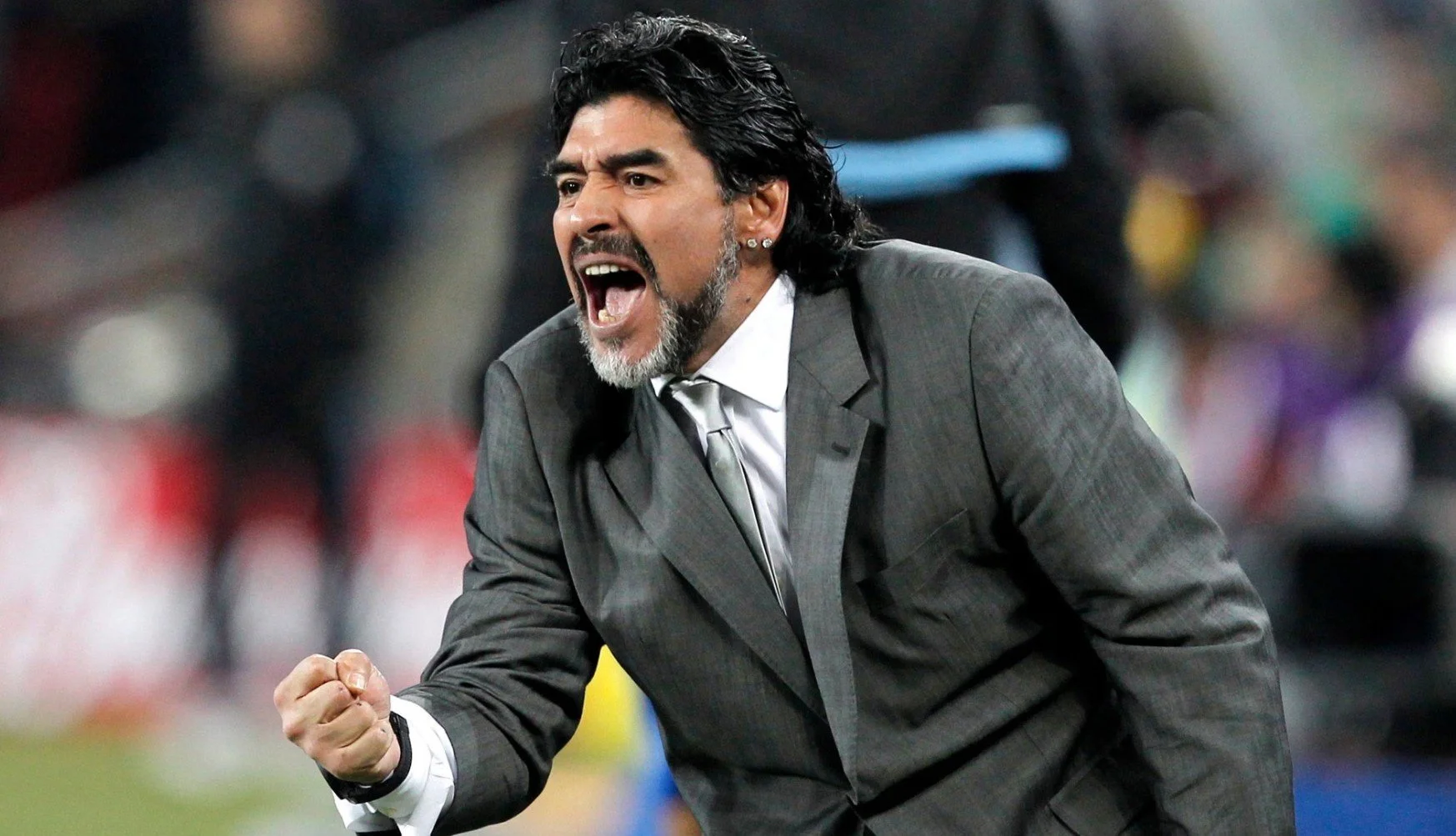
Diego Maradona in 2010, during his time as manager of Argentina.
Photo Credit: The Guardian
The player profiles in The Heroes of Mexico 86 reveal many individuals grappling with financial hardship, personal turmoil and substance abuse. Some would spend time in prison for offences ranging from drink-driving to fraud, drug dealing and violent crime.
However, for some, life after playing football brought remarkable success. Carlo Ancelotti, an unused squad member for Italy in 1986, became one of the most successful managers in European football history.
Ancelotti endured an unlucky streak at World Cups as a player, missing España 82 through injury and then struggling to adapt to the climate and altitude in Mexico. Four years later, on home soil, Ancelotti started his nation’s opening game at Italia 90 but picked up a knock and missed most of the tournament.
He was part of Italy’s coaching staff at USA 94 and went on to win league championships with Milan, Chelsea, Paris Saint-Germain, Real Madrid and Bayern Munich. After winning a third UEFA Champions League title in 2024 with Madrid he left the post to become the head coach of the Brazilian national team and will lead them at the 2026 World Cup.
Two other Mexico 86 veterans will also take charge of teams this summer. Mexico’s Javier Aguirre is set to manage his country at a World Cup for the third time, while Hugo Broos – a veteran defender for Belgium in 1986 – masterminds South Africa’s return to the finals.
Felix Magath was another who enjoyed a long managerial career. Following a glorious career as SV Hamburg’s talisman, his playing days concluded when he left the field after around an hour of the 1986 World Cup final.
He initially became a director at Hamburg, but would go on to be named Germany’s football manager of the year three times and led both Bayern Munich and VfL Wolfsburg to the Bundesliga title in the 2000s.
Away from the dugout, several players moved into leadership roles within the game. France’s brilliant captain Michel Platini did initially move into the dugout, but his only role was as Les Bleus’ national team coach between 1988-92.
After a mediocre Euro 92, Platini moved into football administration, becoming head of the organising committee for the 1998 FIFA World Cup. The former Juventus star was elected UEFA president in 2007 and looked set to become a future leader of FIFA before corruption allegations forced his removal in 2015.
Poland’s Zbigniew Boniek and Bulgaria’s Borislav Mihaylov later headed their national federations, while Iraq’s Raad Hammoudi became president of his country’s National Olympic Committee. Karl-Heinz Rummenigge, Emilio Butragueño and Enzo Francescoli have all held senior executive roles at Bayern Munich, Real Madrid and River Plate respectively.
Francescoli also forged success outside of the game, co-founding and leading media company Tenfield with former Uruguay teammate Nelson Gutiérrez.
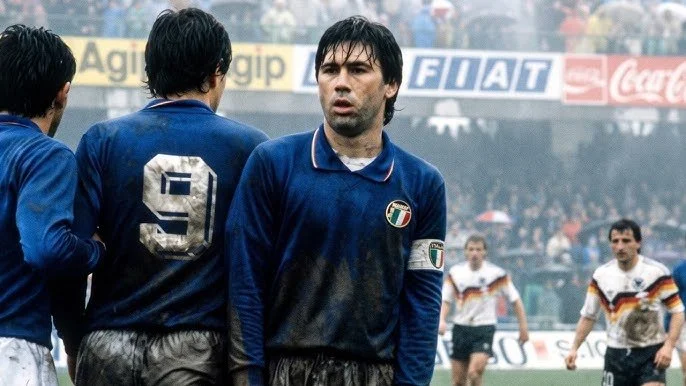
Carlo Ancelloti played in a friendly for Italy against Germany before Mexico '86. The above photo is from the 1988 European Championship.
Photo Credit: Football Legends
While some remained in the public eye after Mexico, many tournament veterans quietly stepped away from it. Mexican defender Armando Manzo cut ties with football to cut meat, running a small butcher’s shop in Playa del Carmen.
Northern Ireland’s John McClelland worked as a postman, while the USSR’s Sergey Gotsmanov (in the sticker album but not selected for Mexico) drove a school bus after emigrating to the US. Swapping boots for boilers, Denmark’s giant defender Ivan Nielsen – who scored for PSV Eindhoven in the 1988 European Cup final penalty shoot-out – returned to plumbing, which had been his trade before his football career began.
While French star Dominique Rocheteau has held senior roles in football since retiring, he has also tried his hand at various other pursuits. Once an exciting attacker for Saint Etienne and Paris Saint-Germain, he would go on to write a music magazine column and even appeared in a Gerard Depardieu movie.
After hanging up his gloves, Belgium’s Jean-Marie Pfaff would also head in a different direction. Once dedicated to shutting out forwards, he welcomed the TV cameras into his life as his family became the subject of the weekly docu-soap De Pfaffs on Belgian and Dutch TV between 2002 and 2011.
So many different lives. So many different stories marked by tragedy and joy, success and anguish, the ordinary and the extraordinary. Some 528 footballers were selected for Mexico in 1986, with 384 appearing in the sticker album and in The Heroes of Mexico 86.
Each followed a different pathway to the World Cup; each had a life beyond it. As that golden summer in Mexico slips further into history, this book seeks to shine a light on those players and their stories.
The Heroes of Mexico 86 is available via Curtis Sport and Amazon