

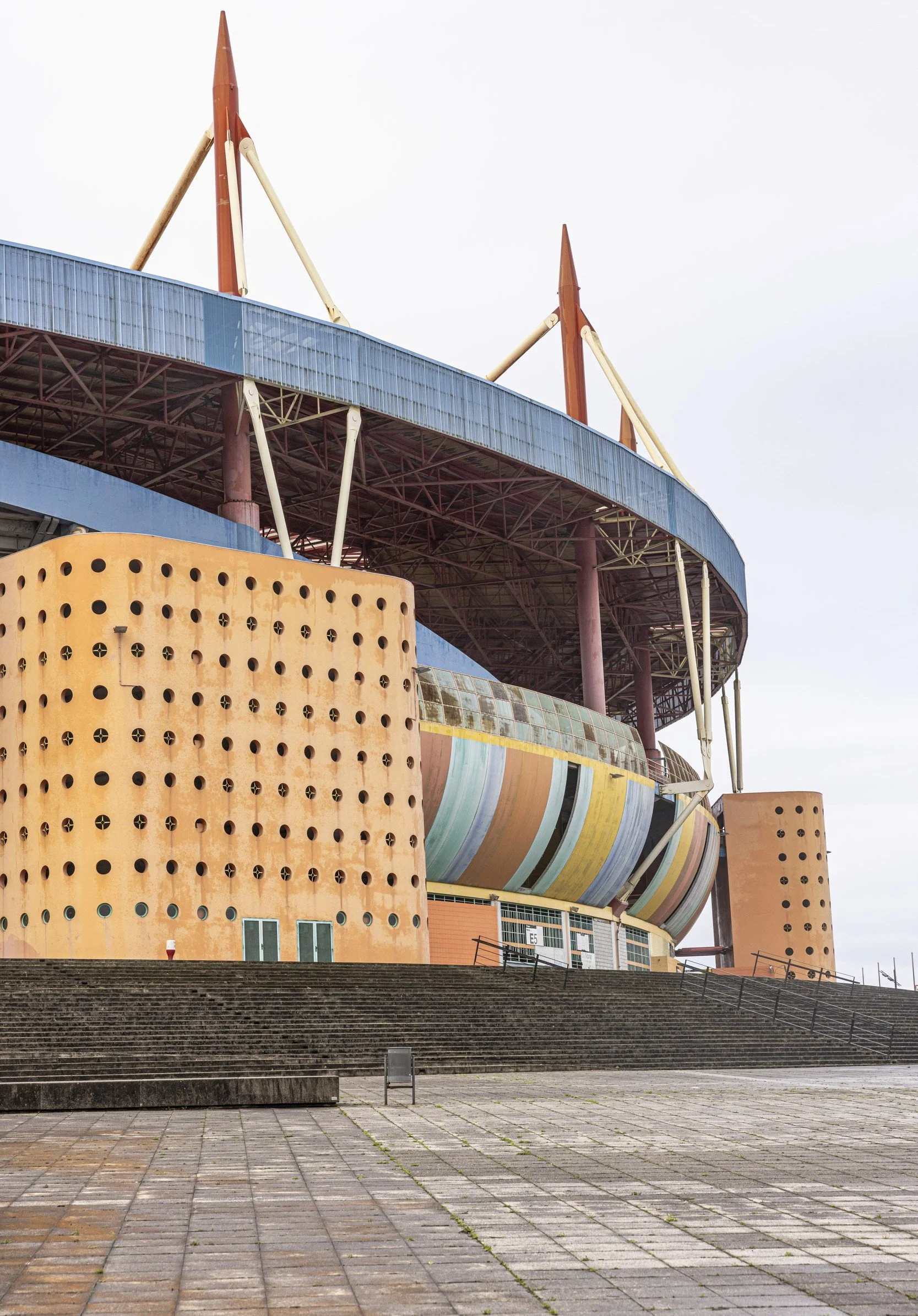
Words by Jonee | Published 08.04.2026In the summer of 2004, Portugal stood at the centre of the footballing world. The UEFA European Championship brought with it a wave of optimism, international attention, and a sense of national pride. From Lisbon to Porto, and crucially across smaller cities such as Coimbra, Aveiro, and Leiria, the tournament was framed as a transformative moment — not just for Portuguese football, but for the country’s infrastructure and global image.
For a brief moment, it worked. The tournament was widely praised, the national team reached the final, and the country basked in the glow of a successful mega-event. Yet, in the years that followed, a more complicated and less celebratory story began to emerge — one that continues to shape Portuguese football today.
Beneath the architectural grandeur and the memories of packed stands lay a quieter reality: the long-term financial and cultural consequences of building stadiums that far exceeded the needs of the clubs and communities they were meant to serve.
Nowhere is this more evident than in the so-called Zona Centro, where clubs like Académica de Coimbra, S.C. Beira-Mar, and União de Leiria have spent the past two decades grappling with a reality that feels increasingly distant from their past ambitions.
Once regular competitors in Portugal’s top flight, and at times participants in European competitions, these clubs now find themselves navigating a far more precarious existence — marked by relegations, financial instability, and a growing disconnect from their own communities.
In the 1990s and early 2000s, all three clubs experienced periods of relative success that, in hindsight, make their current struggles all the more striking. Académica de Coimbra, deeply rooted in the identity of its university city, maintained a strong presence in the Primeira Liga and cultivated a distinct cultural following. S.C. Beira-Mar enjoyed one of its golden eras, even qualifying for European competition — a remarkable achievement for a club of its size.
União de Leiria, perhaps the most surprising of the three, rose to prominence with competitive league finishes and appearances in UEFA tournaments, establishing itself as a credible force in Portuguese football.
These successes, however, were built within a certain scale — modest stadiums, manageable budgets, and a close relationship between club and community. Euro 2004 disrupted that balance.
The construction of new, significantly larger stadiums in Coimbra, Aveiro, and Leiria introduced a new economic reality, one that would prove difficult to sustain once the spotlight of the tournament faded.
The issue was not the initial investment, though that alone was substantial. It was the long-term burden of maintaining these large, modern, and expensive venues in cities where average attendance figures could not justify their scale.
Week after week, vast sections of seats remained empty, transforming what had once been intimate and vibrant matchday environments into spaces that felt hollow and disconnected. A crowd of five or six thousand supporters, which might have generated a strong atmosphere in a smaller ground, became diluted in stadiums built to hold tens of thousands.
This mismatch between infrastructure and reality had both financial and cultural consequences. On a practical level, the cost of maintaining these stadiums — from staffing to utilities to general upkeep — placed pressure on municipalities and, indirectly, on the clubs themselves.
Revenue streams that might have supported sporting investment were instead absorbed by operational expenses. For clubs already operating with limited resources, this created a structural disadvantage that was difficult to overcome.
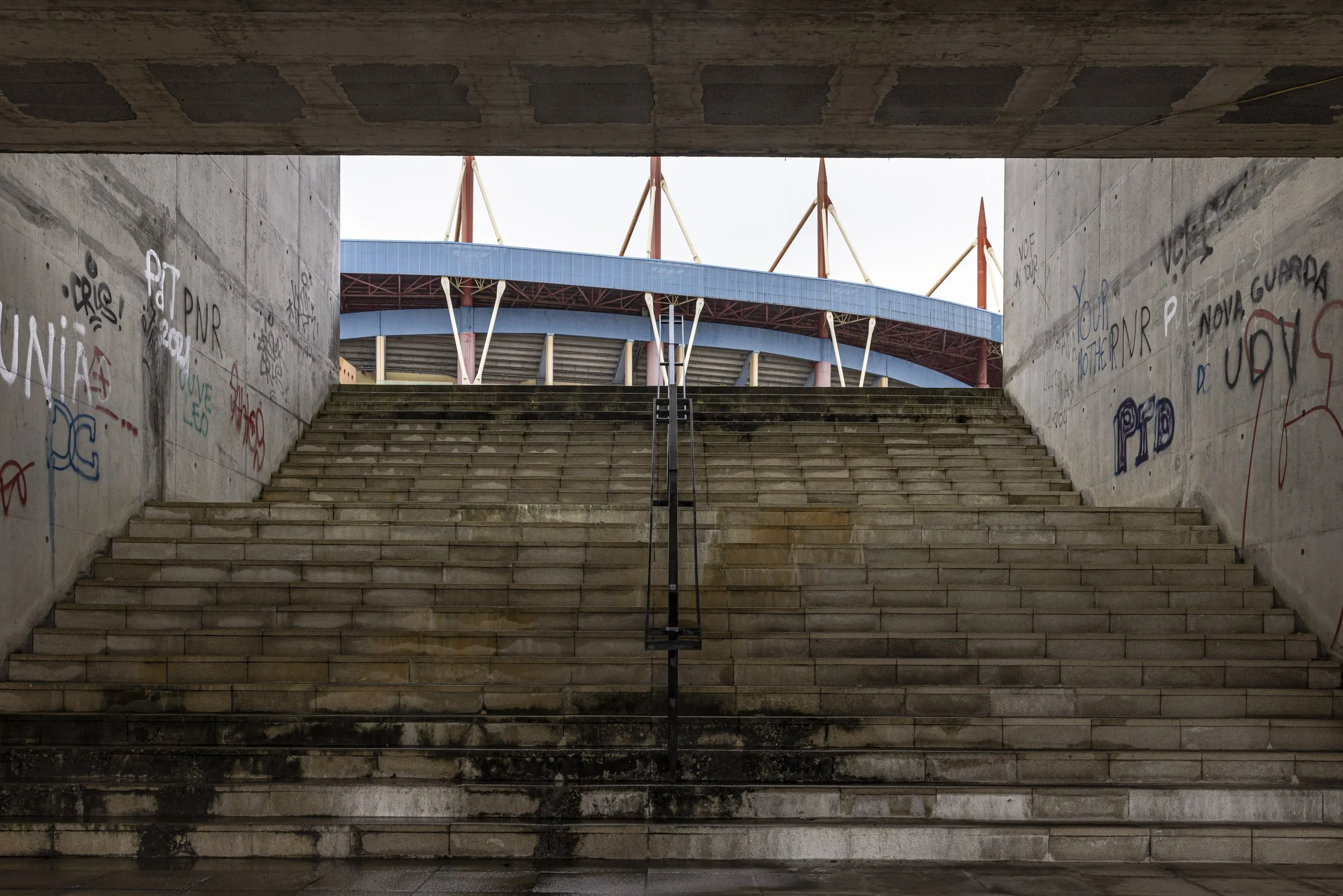
Staircase leading to the Estádio Municipal de Aveiro in Portugal.
Photo Credit: White Elephants
But the deeper impact may have been cultural. Football clubs like Académica de Coimbra have historically drawn strength from their identity and their connection to place. Moving into larger, more impersonal stadiums disrupted that relationship.
The sense of proximity between supporters and players diminished, and with it, part of what made attending matches meaningful. Over time, this contributed to declining attendances — not just as a financial issue, but as a symptom of a weakening bond between club and community.
In Aveiro, the case of S.C. Beira-Mar illustrates how quickly sporting and financial challenges can become intertwined. The club experienced significant difficulties in the years following Euro 2004, including relegations and administrative issues that eventually saw it drop into non-professional tiers.
While these problems cannot be attributed solely to the stadium, the broader economic context — shaped in part by the costs and expectations associated with the new infrastructure — created an environment in which stability was harder to maintain.
Leiria offers perhaps the starkest example of the long-term consequences of overexpansion. União de Leiria went from competing in the Primeira Liga and European competitions to facing severe financial distress, including insolvency and a dramatic fall through the divisions.
At one point, the club was forced to play matches in front of almost empty stands, a powerful visual representation of the gap between the ambitions of the early 2000s and the realities that followed. The stadium, once a symbol of progress, became instead a reminder of a scale that the club could no longer sustain.
Even in Coimbra, where Académica has maintained a more stable institutional presence, the broader trends are similar. Relegations, fluctuating performances, and persistent challenges in attracting consistent crowds all point to a club operating within constraints that did not exist prior to Euro 2004.
The stadium, while architecturally impressive, has not translated into a competitive advantage; if anything, it has reinforced the structural limitations faced by a club of Académica’s size.
It would be overly simplistic to argue that Euro 2004 alone caused the decline of these clubs. Football is shaped by a complex interplay of factors. However, what the tournament did was introduce a new set of structural pressures — particularly in the form of oversized, costly stadiums — that amplified existing vulnerabilities.
Moreover, the psychological dimension should not be overlooked. The expectations created by hosting a major international tournament, and by playing in modern, high-capacity stadiums, may have subtly shifted perceptions of what these clubs were or should be. When those expectations were not met — in terms of attendance, revenue, or sporting success — the contrast may have contributed to a sense of underachievement, further eroding engagement.
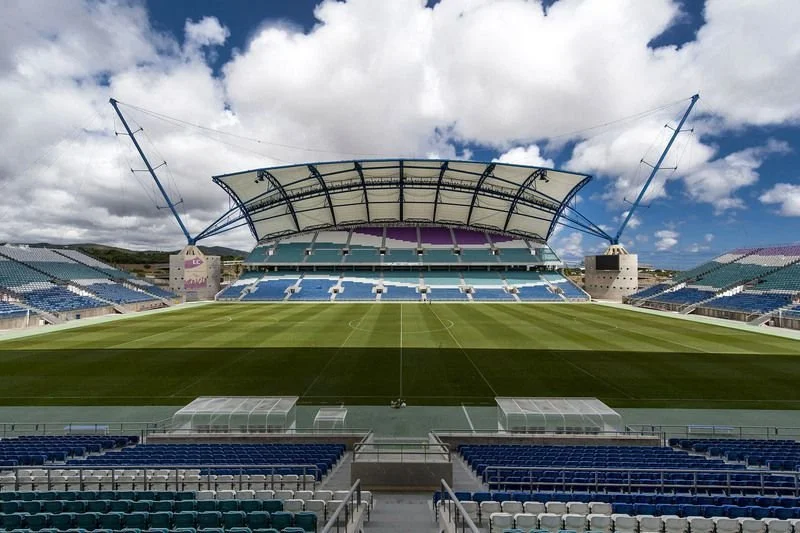
The Estádio Algarve is often considered a White Elephant.
Photo Credit: Portugal News
Two decades on, the legacy of Euro 2004 in Portugal remains visible not only in the physical landscape, but in the trajectories of clubs like Académica de Coimbra, S.C. Beira-Mar, and União de Leiria. Their struggles reflect a broader tension between ambition and sustainability, between the short-term gains of hosting a mega-event and the long-term realities of maintaining its legacy.
What was once presented as an investment in the future of Portuguese football has, in these cases, become a cautionary tale. The stadiums still stand, but they do so in a context that feels markedly different from the one in which they were conceived. Instead of driving growth, they have often constrained it; instead of strengthening community ties, they have, at times, weakened them.
This is amplified by some municipalities refusal to accept that some of these grounds have essentially become white elephants.
The hidden cost of Euro 2004, then, is not easily captured in financial statements alone. It is found in the empty seats, in the distance between pitch and stands, in the quiet erosion of matchday rituals that once defined these clubs. It is measured in relegations, in lost momentum, and in the gradual fading of a connection that was never meant to be stretched across so much space.
And perhaps most importantly, it serves as a reminder that in football, as in urban planning, bigger is not always better — and that the true legacy of any grand project is determined not in the moment of its unveiling, but in the years, and decades, that follow.
That imbalance was never just about football. To understand why the burden of Euro 2004 weighed so heavily on clubs in Portugal’s central region, it is necessary to step back and consider the broader geography of power within the country itself. Portugal has long been shaped by a dual sphere of influence, anchored in Lisbon and Porto, where political authority, economic activity, infrastructure investment, and cultural capital are heavily concentrated.
Between these two poles lies the Zona Centro — a region rich in history and identity, yet structurally disadvantaged in ways that extend far beyond the football pitch.
Cities such as Coimbra, Aveiro, and Leiria occupy an ambiguous position within the national landscape. They are neither peripheral in the traditional sense nor central in terms of influence. They possess universities, industry, and cultural heritage, but lack the scale and concentration of capital that define the country’s two main metropolitan areas.
This intermediate status has long translated into a quieter form of economic marginalisation — not dramatic enough to attract urgent policy intervention, but persistent enough to shape long-term outcomes.
One of the clearest manifestations of this imbalance lies in infrastructure. While Portugal as a whole has invested significantly in road networks since the late twentieth century, connectivity in the Zona Centro has historically lagged in both density and integration.
Rail links, in particular, have not developed at the same pace or with the same strategic coherence as those serving Lisbon and Porto. More symbolically — and practically — the absence of a major international airport in the region reinforces its secondary status.
For businesses, investors, and even visiting supporters, accessibility matters. The lack of a direct aviation hub limits the region’s attractiveness and, by extension, its ability to generate the kinds of economic ecosystems that sustain higher levels of sporting investment.
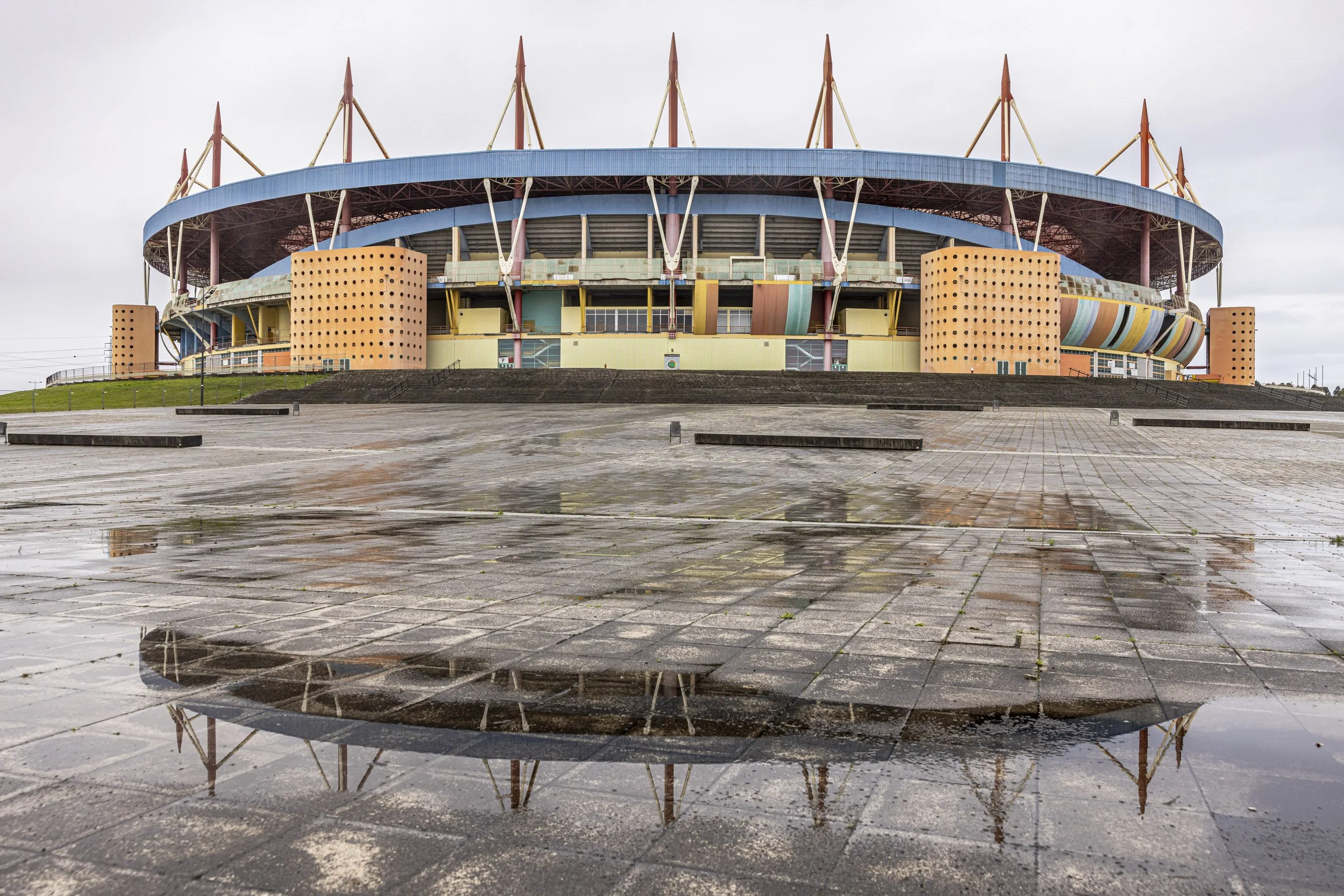
The Estádio Municipal de Aveiro has never achieved its potential since Euro 2004.
Photo Credit: White Elephants
These structural limitations feed directly into the financial realities faced by local football clubs. Teams like Académica de Coimbra, S.C. Beira-Mar, and União de Leiria do not operate in a vacuum; they are deeply embedded in their local economies. Smaller corporate bases mean fewer sponsorship opportunities.
Lower population density and purchasing power translate into reduced matchday revenue and merchandising potential. Media visibility, too, tends to skew toward clubs in Lisbon and Porto, reinforcing a cycle in which financial disparities are both a cause and a consequence of competitive imbalance.
In this context, the construction of large, modern stadiums for Euro 2004 appears less like a forward-looking investment and more like a misalignment between national ambition and regional capacity.
The expectation — implicit or explicit — was that these new venues would catalyse growth, attract larger audiences, and elevate the status of local clubs. But without the underlying economic infrastructure to support such growth, the stadiums became isolated upgrades rather than integrated components of a broader development strategy.
The contrast with Lisbon and Porto is instructive. In those cities, new or renovated stadiums were absorbed into dense urban and economic networks. Higher population numbers, stronger tourism flows, and greater corporate presence provided multiple revenue streams that helped offset construction and maintenance costs.
Clubs based there could rely not only on loyal fanbases but also on a steady influx of visitors, sponsors, and media attention. In the Zona Centro, by contrast, the same scale of infrastructure was introduced into environments that lacked these supporting conditions.
This disparity intensified the challenges already facing local clubs. For Académica de Coimbra, the move to a larger stadium coincided with a period in which maintaining top-flight competitiveness required increasing financial outlay, yet revenue growth remained limited.
The club’s identity — historically tied to the student population and the intimate atmosphere of its old ground — did not seamlessly translate into the new setting. The result was not an expansion of its support base, but rather a dilution of its existing one.
In Aveiro, S.C. Beira-Mar faced an even harsher reality. The local economy, while dynamic in certain sectors, did not generate the consistent, large-scale backing necessary to sustain both a professional football club and the operational demands of a Euro-standard stadium.
Financial instability, once introduced, proved difficult to contain, and the club’s sporting decline mirrored its economic struggles. Relegations were not isolated events but part of a broader pattern in which structural limitations constrained recovery efforts.
The case of União de Leiria further underscores the point. Leiria’s proximity to Lisbon might suggest an advantage, but in practice it often functioned as a disadvantage — close enough to fall within the capital’s sphere of influence, yet not central enough to benefit fully from its economic power.
The club struggled to carve out a distinct and sustainable niche, and the stadium, rather than serving as a bridge to greater prominence, became an additional weight on already fragile finances.
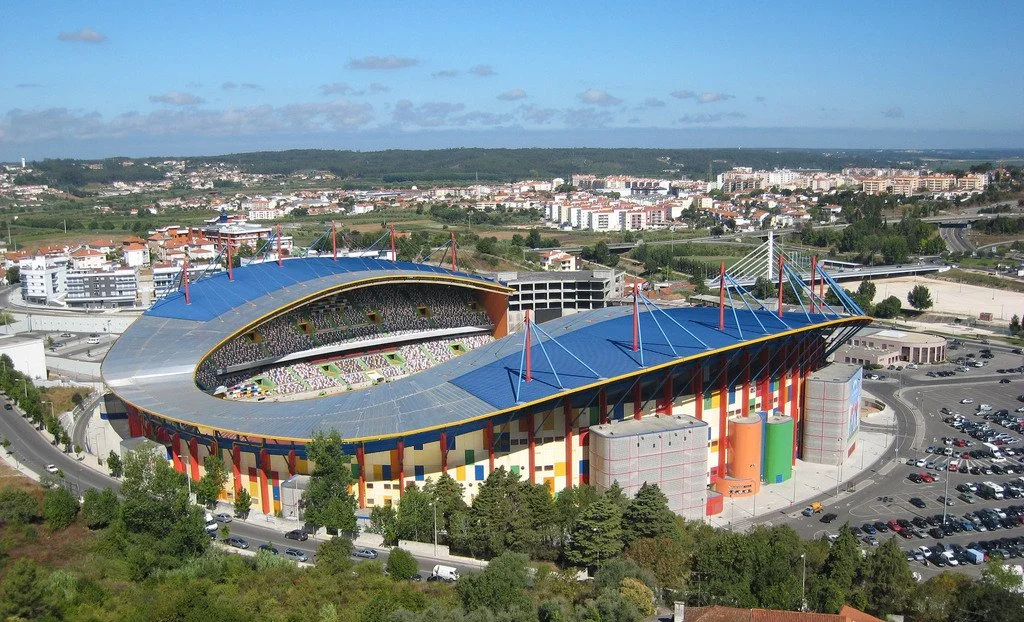
The Estádio Dr. Magalhães Pessoa is the home of União de Leiria.
Photo Credit: Stadium Guide
What emerges from these examples is a pattern in which infrastructure alone cannot generate growth in the absence of supportive conditions. The stadiums built for Euro 2004 were, in many respects, uniform solutions applied to non-uniform contexts.
They assumed a level of demand, investment, and engagement that existed in Lisbon and Porto, but not necessarily in Coimbra, Aveiro, or Leiria. When that demand failed to materialise, the costs remained, creating a structural imbalance that clubs have been navigating ever since.
This also helps explain why the issue of low attendances is not merely a symptom of poor sporting performance, but part of a deeper cycle. In smaller markets, fan engagement is closely tied to identity, accessibility, and habit. When matches move to larger, less intimate venues, the experience changes.
When teams struggle on the pitch, occasional supporters are less likely to attend. When attendances drop, revenue declines, limiting the club’s ability to invest in players and facilities, which in turn affects performance. The stadium, in this cycle, is not a neutral backdrop but an active part — shaping the conditions under which the club operates.
Over time, this dynamic has contributed to a widening gap between the Zona Centro and the rest of Portuguese football. While the country’s biggest clubs have continued to consolidate their position, clubs in the Zona Centro have found it increasingly difficult to keep pace.
The legacy of Euro 2004, in this sense, is not only a story of financial strain, but of divergence: a moment that, rather than levelling the playing field, may have inadvertently reinforced existing inequalities.
And yet, the story is not entirely deterministic. The very factors that limit economic scale in the Zona Centro are also the source of its distinctiveness. Clubs like Académica de Coimbra still carry cultural significance that cannot be measured solely in financial terms.
The challenge, then, is not simply to overcome the legacy of Euro 2004, but to rethink how these clubs can align their infrastructure, ambitions, and identities with the realities of their environment.
What Euro 2004 revealed, perhaps unintentionally, is that development in football cannot be divorced from development in society. Stadiums do not exist in isolation; they are embedded in economic systems, cultural practices, and geographic hierarchies. When those underlying structures are uneven, even the most impressive architectural projects can become burdens rather than assets.
In the Zona Centro, that lesson has been learned not in theory, but in practice — over twenty years of adaptation, struggle, and, at times, decline. The hidden cost of Euro 2004, when viewed through this wider lens, is not just the price of concrete and steel, but the consequence of building for a reality that never fully arrived.
Two decades on from that summer of optimism, the reality facing Académica de Coimbra, S.C. Beira-Mar, and União de Leiria is shaped as much by the economics of modern football as by the legacy of Euro 2004. If the early 2000s represented a moment when infrastructure briefly outpaced reality, the present moment reflects a different kind of imbalance — one in which financial power has become the single most reliable predictor of sporting success.
In today’s game, the connection between money and performance is no longer subtle. Television rights, sponsorship deals, player trading networks, and access to international markets have created a stratified ecosystem in which clubs with greater financial resources are better equipped not only to succeed, but to remain competitive over time.
The gap between those at the top and those below has widened across Europe, and Portugal is no exception. Within this system, clubs operating outside the gravity of Lisbon and Porto face structural disadvantages that are increasingly difficult to overcome.
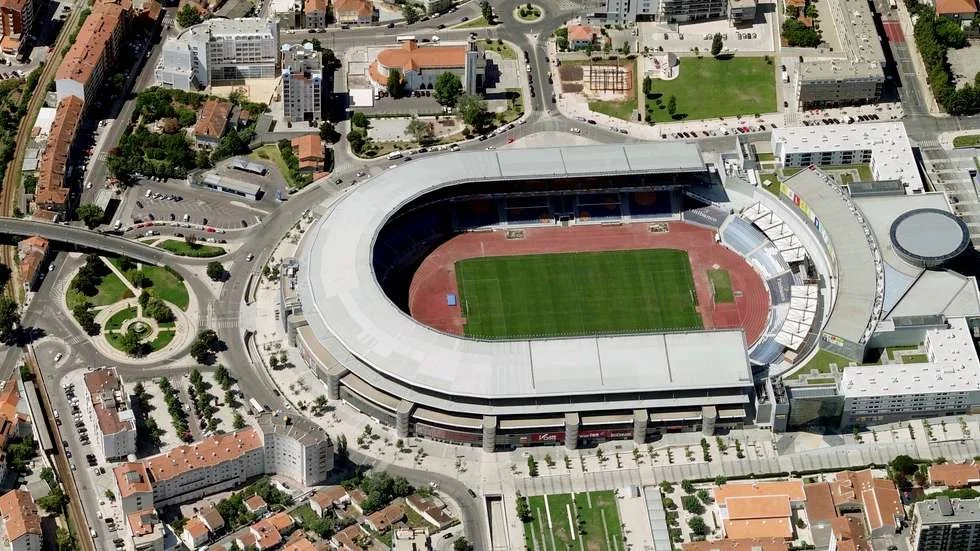
Estádio Cidade de Coimbra, home to Académica de Coimbra.
Photo Credit: BeSoccer
For clubs in the Zona Centro, this reality has translated into instability on the pitch. Académica has in recent years struggled to re-establish itself at the top level, with relegations reflecting not only sporting decline but also the fragile financial framework within which it operates.
S.C. Beira-Mar has experienced an even more dramatic downfall, spending extended periods outside the professional tiers altogether — a fate that would have seemed almost unthinkable during its more competitive years. Meanwhile, União de Leiria has undergone cycles of collapse and stability, its trajectory marked by financial difficulties and gradual attempts to regain stability.
These sporting outcomes cannot be separated from the economic context in which they occur. Lower revenues limit the ability to attract and retain quality players. Reduced competitiveness leads to fewer wins, which in turn affects attendance, media visibility, and commercial appeal.
The cycle is self-reinforcing, and for clubs already operating at a disadvantage, breaking out of it requires either exceptional management or an external injection of resources — both of which are difficult to sustain over time.
Within this already challenging landscape, the stadiums built for Euro 2004 remain a constant presence. They are no longer new, no longer symbols of future potential, but fixed factors of the clubs’ reality — ageing assets that require increasing levels of care.
What was once a question of upkeep is gradually becoming a question of maintenance in the more demanding sense: structural repairs, technological updates, compliance with evolving safety and accessibility standards. As with any major piece of infrastructure, the cost curve does not remain static; it tends to rise as the facility ages.
This transition is significant. In the immediate aftermath of Euro 2004, the primary concern was how to justify the operational costs of large, underused stadiums. Today, the concern is more complex. It involves not only keeping these venues functional, but doing so in a way that does not further strain already limited resources.
For municipalities and clubs alike, this creates a long-term financial obligation that is difficult to avoid. Unlike other investments, a stadium cannot simply be downsized, relocated, or easily repurposed without substantial additional cost.
And yet, abandonment is not a realistic option. These stadiums, for all their cost, remain central to the identity and functioning of their clubs.
They host not only football matches but also occasional events, community activities, and, at times, serve as symbols of civic pride — however complicated that pride may be. The challenge, therefore, is not whether to maintain them, but how.
For Académica de Coimbra, there remains a sense of cultural resilience. The city of Coimbra, with its historic university and student population, still offers a potential for renewed engagement, particularly if the club can reconnect with its traditional identity.
But doing so within a bigger stadium requires creativity — rethinking how space is used, how atmosphere is generated, and how supporters are drawn back into reconnecting with their club.
In Aveiro, the future for S.C. Beira-Mar is arguably more uncertain. Rebuilding from outside the professional tiers demands patience, stability, and a careful alignment between ambition and means.
The stadium, in this context, can feel less like an asset and more like a distant reminder of a scale the club has yet to recover. And yet, it also represents a latent opportunity — a reminder that, if reactivated effectively, could support a return to higher levels of competition.
For União de Leiria, recent years have shown that recovery is possible, even after severe financial collapse. The club’s gradual improvements suggests that, under the right conditions, it can rebuild a competitive structure.
But the financial underlying constraints remain. The stadium still exists, the economic environment has not fundamentally changed, and the broader dynamics of Portuguese football continue to favour those with greater financial power.
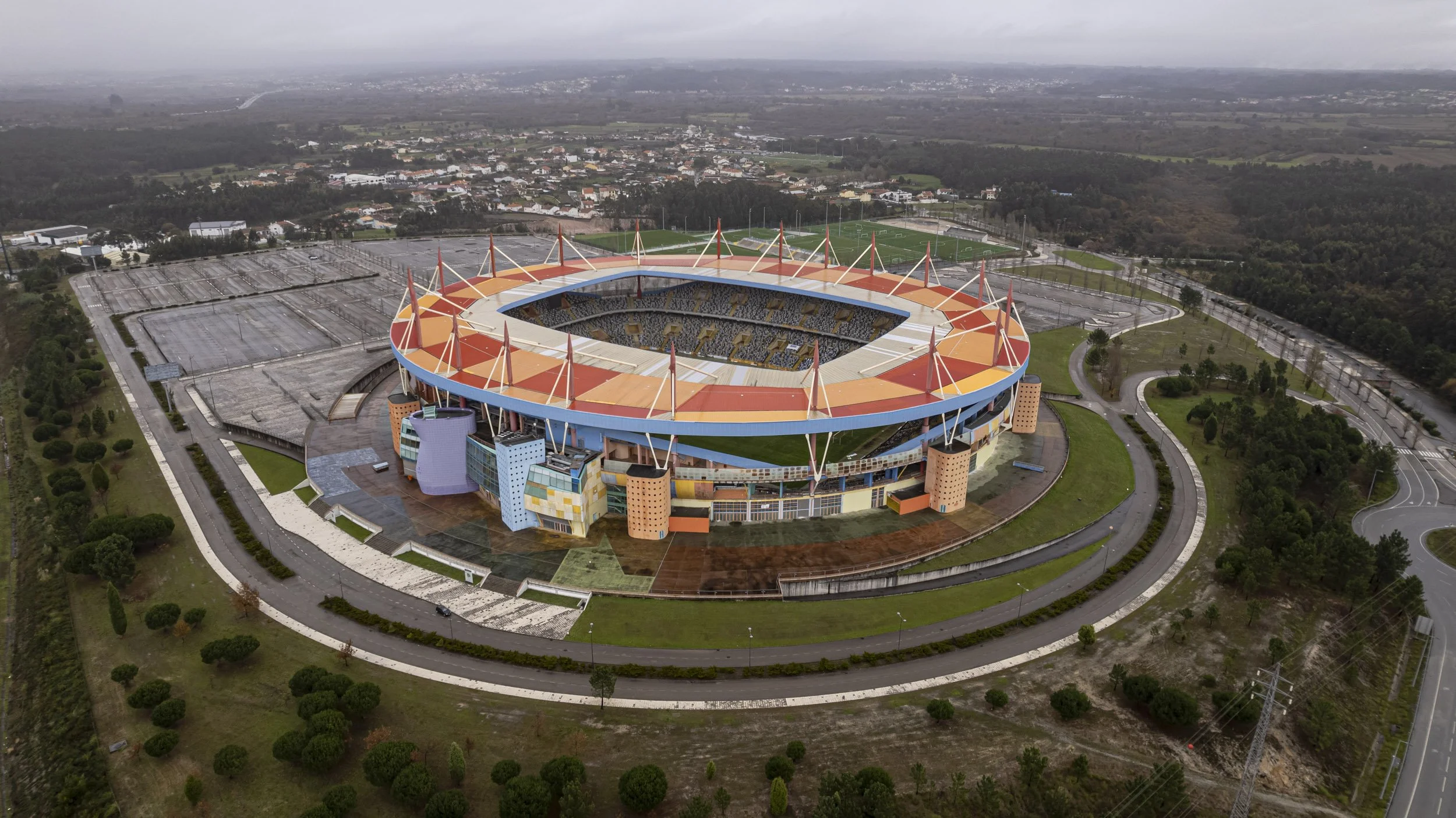
The Estádio Municipal de Aveiro lies largely unused and often appears abandoned.
Photo Credit: White Elephants
What unites these three cases is a shared sense of ambiguity about the future — a mixture of cautious hope and persistent apprehension. Hope, because football has always allowed for cycles of renewal, for unexpected upturns in luck, for moments when careful management and collective effort can overcome structural limitations.
Apprehension, because the conditions that shaped the past twenty years have not disappeared. If anything, they have become more entrenched.
The stadiums stand at the centre of this tension. They are, in a sense, both the problem and part of any future solution.
Properly integrated into broader urban and economic strategies, they could still serve as hubs of activity, financial investment, and community engagement. Left as they are, they risk continuing to grow as financial drains and symbols of unchecked ambition.
Ultimately, the current state of Académica de Coimbra, S.C. Beira-Mar, and União de Leiria reflects a broader truth about modern football: that success is rarely accidental, and decline is rarely caused by a single factor. It is the product of systems — economic, geographic, cultural — that interact over time.
As these clubs look to the future, they do so with the knowledge that one of the most defining elements of their present was built for a moment that has long since passed. The stadiums of Euro 2004 are no longer promises; they are inheritances. And like all inheritances, they come not only with value, but with responsibility — a responsibility that grows heavier with each passing year.