

Words by Adam Turner-Heffer | Published 12.09.2026It is 4 am on a mid-June Sunday morning in Bermondsey, South London, and the sun is well on its way to rising. Emerging from a dark train archway, some friends and I reflect on Scotland’s first World Cup victory in 36 years, joyous and a little delirious from such a mega shift before parting ways.
A considerable number of the sold-out bar’s attendees are less gleeful, more concerned with how frustrating a victory Scotland seemed to conspire to throw away against relative minnows Haiti. But we head home beaming while needing our beds.
It turns out, the doubters were right to be cynical, as two weeks later we would watch, in slow motion, us whimper out of qualification as subsequent results saw Scotland tumble down the best 3rd-place finisher table.
Matters weren’t helped by the frankly embarrassing way we shot ourselves in the foot (repeatedly) against a weakened multiple former world championship-winning Brazil side, but perhaps most frustrating of all was our failure to react to a Morocco team who, at the very least, a point was for the taking against.
However, regardless of the result, one thing that remained constant was the incredible support from the Tartan Army in London across our three group stage games.
For the Morocco fixture, a friend and I headed to a nightclub in Tottenham that had been specifically booked as a Tartan Army fanzone, and the atmosphere was electric throughout, even in losing.
While the mood soon turned sour at the dedicated (and excellent) football bar The Volley in central London for the Brazil game, there was a comfort and camaraderie of being in a safe space well behind Auld Enemy lines despite the disappointment.
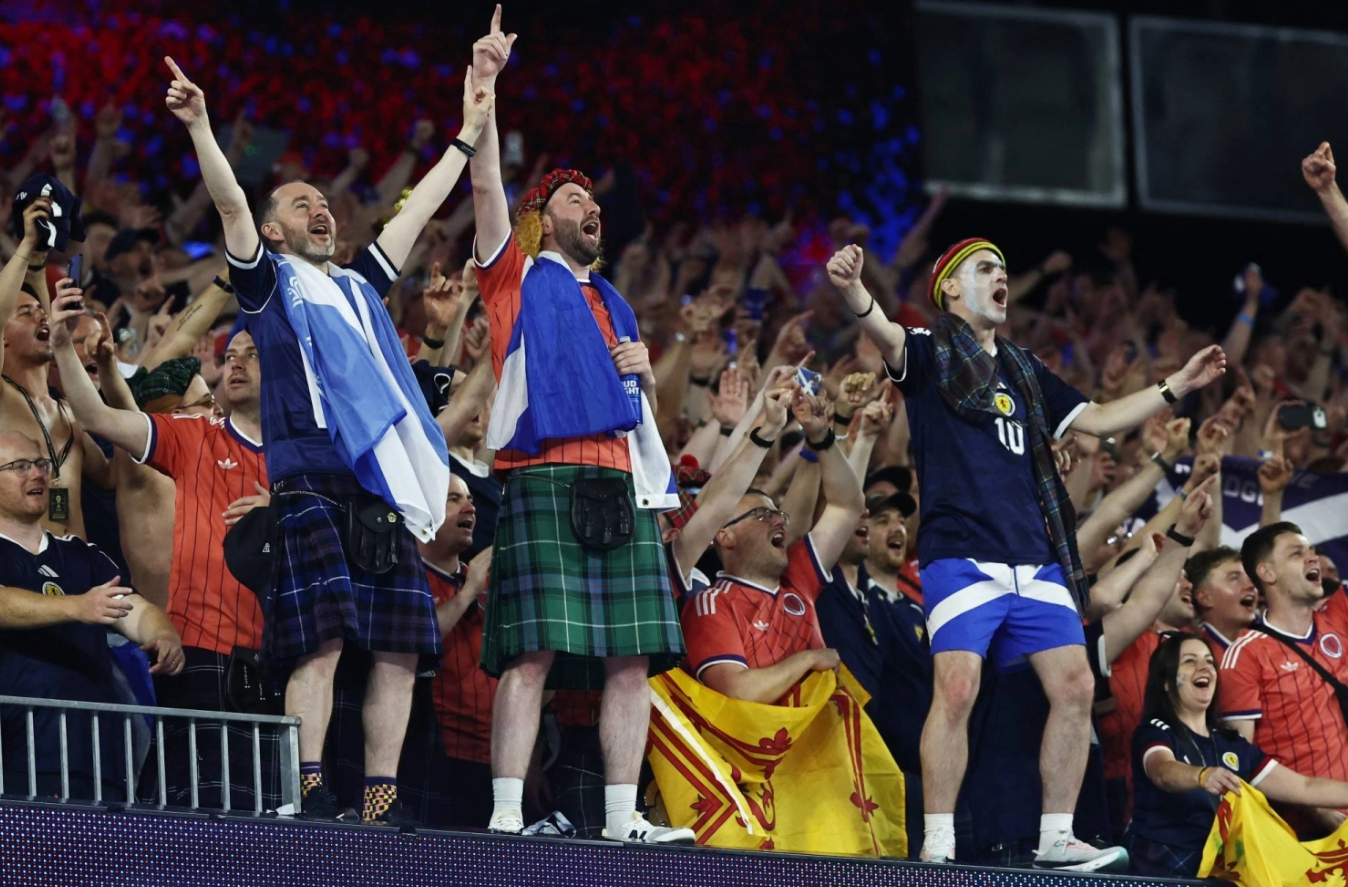
The Tartan Army earned plaudits during the 2026 World Cup.
Photo Credit: The Guardian
It was a long route to get here. 12 years earlier, two friends and I had been stood outside a pub near Baker Street station after the incredible 2013-14 FA Cup semi-final between Sheffield United and Hull City (5-3 to the Tigers) talking to a stranger; a middle-aged, husky Blade.
“So you’re a Jock, and you’re a Jock?” he said to Chris and Johnny. Then he turned to me. “And you’re a plastic Jock?! And you’ve come down to Wembley to see United play?!”
The three of us had met as former colleagues of a veritable Glasgow arts institution, with Chris a born-and-bred Glaswegian and lifelong Blades fan by way of a Sheffield-born father.
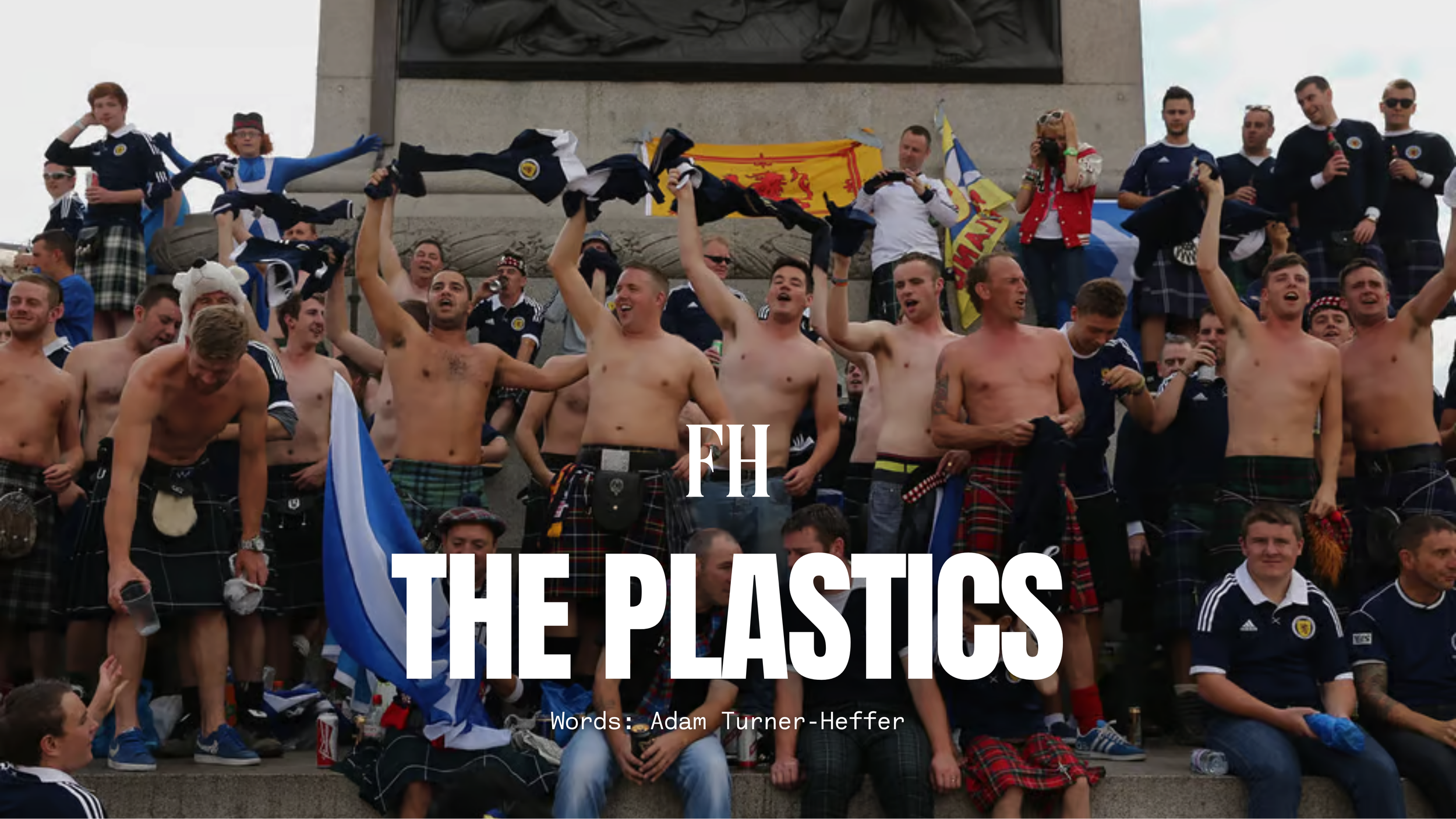
I often reflect on this interaction, not just because I believe “The Plastic Jocks” would make an excellent name for a punk band, but because it summarises my experience as a lifelong Scotland fan, despite growing up in Norwich.
As a child, I somewhat shamefully supported both Scotland and England, the former because of my mother’s side of the family, the latter my father's.
But I was also obsessed with football despite my earliest memories being of USA ‘94, a tournament neither Scotland nor England qualified for. I was obsessed with the colours, the noise, the flags, and the clash of cultures that an international football tournament brought together.
I remember feeling as deeply conflicted as a seven-year-old can muster as Scotland played England at Euro ‘96, yet disappointed when England crashed out on penalties to Germany. I remember the sadness of Scotland’s failure at France '98; unknowingly, we would have to wait a long time after, and the fury directed at David Beckham for his provoked moment of madness by Argentina’s Diego Simeone.
Somehow, I have absolutely no memory of Scotland and England’s two-leg playoffs for Euro 2000, I think, because my interest in football briefly waned as I approached puberty, despite my parents getting season tickets for us at Carrow Road around this time.
I do, however, remember Beckham’s free kick against Greece coinciding with my birthday party in 2001. I remember watching Ronaldinho’s incredible free kick on a TV-on-wheels in my maths class. I remember Rooney announcing himself in Portugal until he got kicked off the field against the hosts.
But I also remember increasingly feeling less and less about it.
World Cup 2006 was the coming-of-age moment. I distinctly recall feeling disgusted as Portugal’s dark arts won out again, not because of the result, but because of the behaviour of the blood-baying England fans around me who, in retaliation for the result, caused violence towards the Portuguese diaspora of nearby Thetford.
Coupled with the media fawning, English exceptionalism and the generally dislikable “Golden Generation”, this was the moment I fully dedicated myself to Scotland despite not following much of the national team’s exploits in the early 2000s.
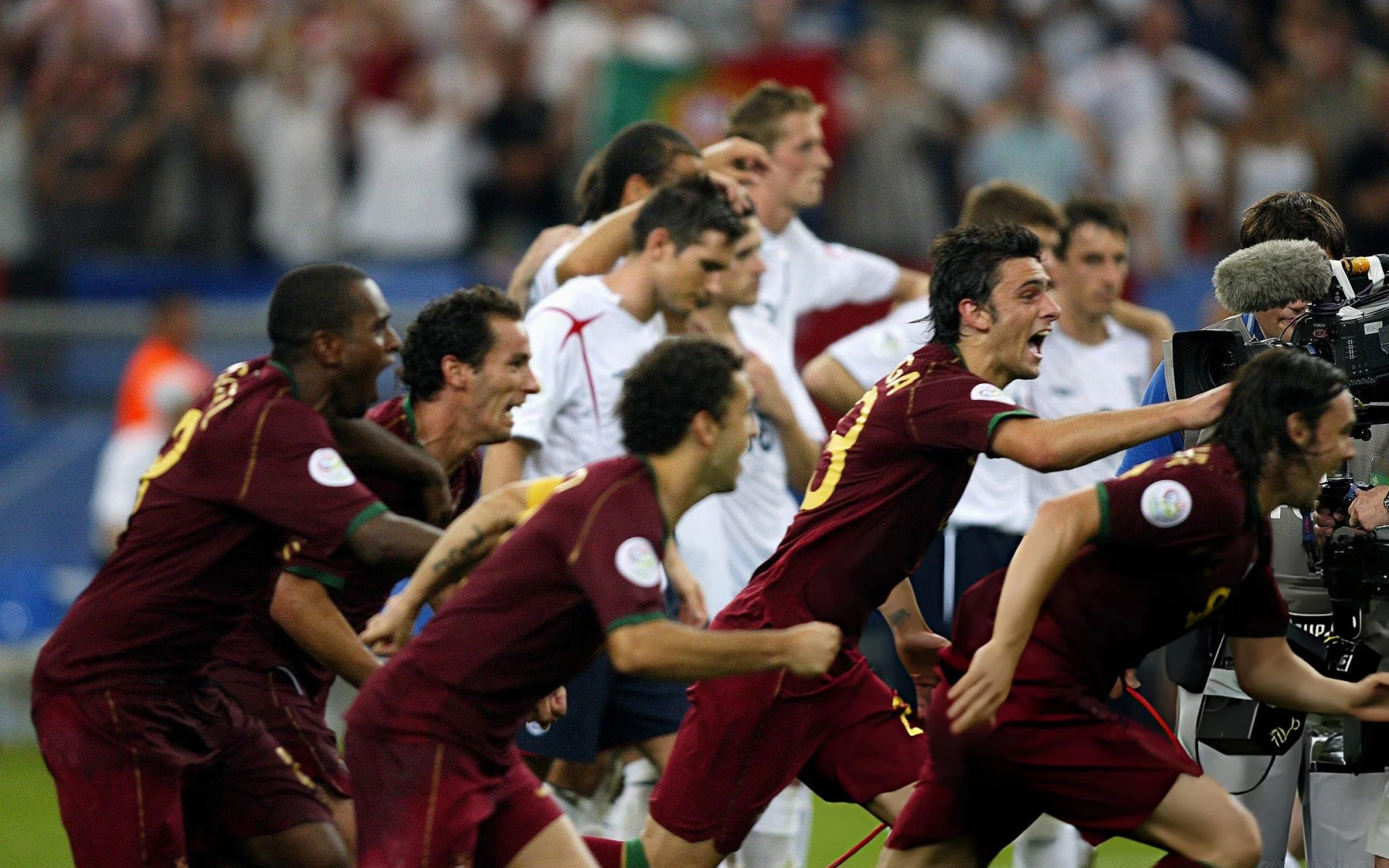
Portugal celebrate after knocking England out of the 2006 World Cup.
Photo Credit: Getty
The timing couldn’t have been better. It’s been somewhat forgotten now because of the current team’s relative success, but Scotland’s Euro 2008 campaign, in which we took 6 points off France (featuring “that” McFadden goal) and were desperately unlucky against then world champions Italy, was incredibly inspiring to watch.
I was hooked. Furthermore, my partner at the time’s Scottish family had taken me in with open arms as we laughed at Steve McLaren’s brolly together, and I had just been accepted to Strathclyde University in Glasgow. I was going to explore this for real.
Within months, I was attending my first Scottish men's national team game at Hampden Park. Rather fittingly, it was a goalless draw against Norway, punctuated by Chris Iwelumo’s infamous miss.
And yet despite the disappointment and confusion from one nearby spectator of “what’s (Kris) Boyd got tae do to get a game?!”, it was an incredible experience. I had never felt anything like the noise and passion of the Tartan Army, and it certainly wouldn’t be my last.
The love affair only deepened from there. I adopted Partick Thistle as my local team (or perhaps they adopted me) through my ex-partner’s family, who still treat me as one of their own to this day, even though by all familial rights on my mum’s side, I should have been Hearts.
While Thistle are currently most famous for their heartbreaking five consecutive unsuccessful attempts at promotion to the Scottish Premiership via the play-offs, the historic, unseasonably warm April Friday night at Firhill when we beat Greenock Morton 1-0 to effectively clinch the 2012-13 Championship title remains one of my favourite footballing memories.
For the majority of the last decade, broken up by a year’s studying in Berlin and a brief return to Glasgow after a failed first attempt, I have been based in London. Supporting Scotland with my fairly neutral English, Scottish-inflected accent has raised eyebrows on both sides of the border.
Generally met with indifference by other Scots, once explained, it can be a source of contention from a few English commentators, much more likely to contest my sense of belonging, identity and pride.
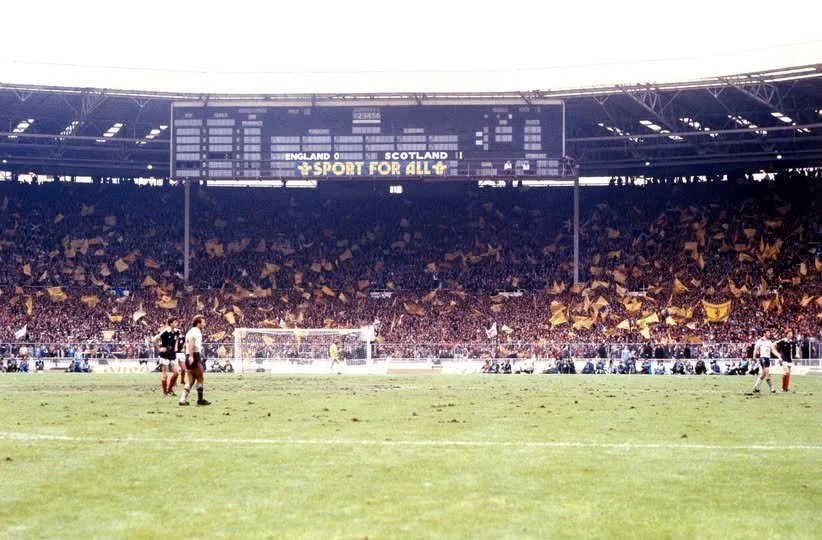
Scotland's supporter base has always been a broad church.
Photo Credit: The Herald
Across the world, nationalism can be an extremely sticky subject, one that is especially called into question during international tournaments, for better or for worse.
However, it is mostly played as friendly banter between rivals, particularly while watching the most successful Scottish national team in decades while living in England’s capital.
For Euro 2020, two other Glaswegian expats and I stood and celebrated our COVID-delayed successful penalty shootout against Serbia, our first qualification in 22 years, on our phones outside Queens Road Peckham station after the pub closed early due to the complicated licensing at the time.
At the tournament itself, I was running a new Czech bar and restaurant in Farringdon, a tournament that saw Scotland, England and Czechia all drawn together in the same group, and I swelled with pride being with the Tartan Army in Piccadilly Circus.
During Euro 2024, I travelled with one of my best friends – a fellow Scot I’d met on the terraces of south London non-league side Dulwich Hamlet – to Cologne in the rather ambitious hope that Scotland would finally make the round of 16.
We may have missed the party, but the goodwill gained by the Tartan Army the week earlier meant we were well looked after during our stay.
And this summer, while yet another disappointing campaign has led to the end of an era with Steve Clarke, to whom the majority of us are eternally grateful for reinstilling belief, the huge amount of Scottish support in London for all three games - played at sleep-cycle-shattering kick-offs, no less - was incredibly inspiring.
Ultimately, while Scotland may never compete on the same level as England, the immense source of pride and unity of the Tartan Army, wherever we may go, makes me glad I made that life-altering decision 20 years ago.