

Words by Christos Kazantzoglou | Published 02.08.2026There are two ways to understand just how deeply football has embedded itself in everyday culture.
The first is to turn on the TV during the World Cup and inevitably land on a match, a pundit panel, a tactical breakdown, or at the very least someone shouting about a penalty. The second is to look beneath the TV at a friend’s house and see whether there is a console and two controllers.
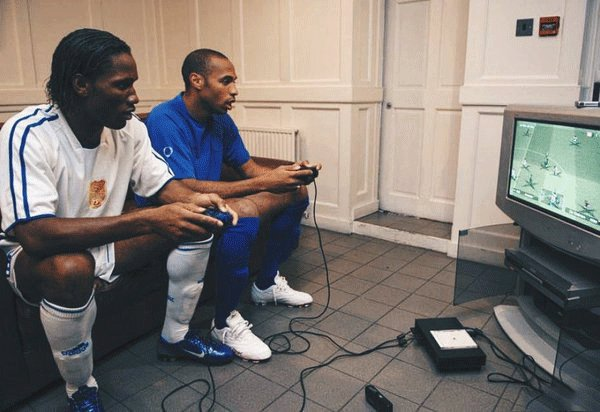
For millions of people, football is not played only on pitches. It is played in living rooms, bedrooms, internet cafés — back in the day — on consoles, computers, handheld devices, and online lobbies, where a digital goal in the 90th minute can trigger almost the same level of emotion as a real one.
That is why the genre still feels personal to so many players today.
The history of football video games is, in many ways, a parallel history of the video game industry itself: from the earliest experiments of the 1970s to today’s hyper-realistic stadiums, licensed leagues, motion-captured players, and professionals publicly complaining because their in-game stats do not flatter them.
The first attempts to bring football to the screen were primitive. In the 1970s, early gaming devices featured variations of Pong, Atari’s arcade phenomenon. Among those games were versions of tennis, squash and, in theory, football.
“In theory” is the key phrase. The result looked rather less like a football match and rather more like a few blocks bouncing a square object around the screen. There were no tactics, no formations, no sense of space, and certainly no sweeping cross to the far post.
In countries where football had limited appeal, such as the United States, the very same game could easily be rebranded as hockey. And so, the first steps of football video games came with a very clear lesson: marketing often gets there before reality.
In 1979, Mattel’s Intellivision Soccer brought colour to the experience, while in 1980 Atari’s Pelé’s Championship Soccer offered an early glimpse of the commercial power of famous names.
The game was, of course, simplistic, but it had something historic about it: it was one of the first times an active superstar put his name to a video game. Pelé did not just represent football. He represented legitimacy. If Pelé was on the box, the game could claim to be more than a toy.
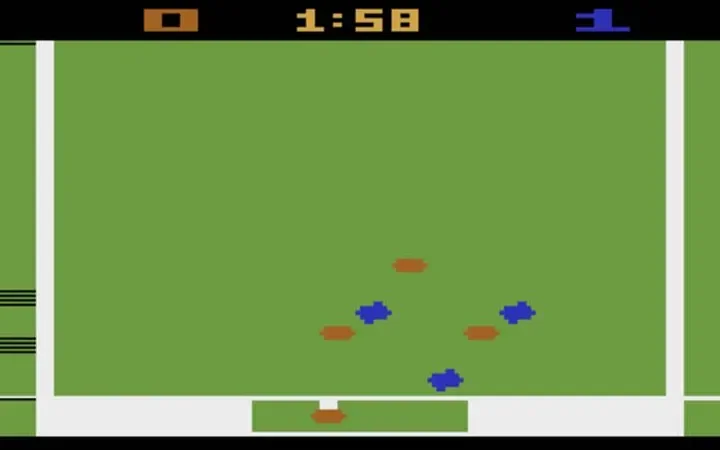
Gameplay from Pelé’s Championship Soccer.The success of Pelé’s name paved the way for a tradition that would last for years: mediocre, and sometimes downright bad, football games with the names of great players on the cover.
The thinking was simple. If the game itself does not play well, at least put someone famous on the box.
That is how we got titles that today feel more like time capsules than serious releases. Games such as O’Leary Manager for the Game Boy Color capture a very specific moment, when David O’Leary was seen as a rising star in management.
Others, like Chris Kamara’s Street Soccer for the PlayStation, used the names of well-known football figures almost entirely as cover appeal. They promised personality, glamour, and connection to the real sport. What they often delivered was something much rougher.
There were, of course, some bright exceptions. Emlyn Hughes International Soccer, released in 1988, is considered one of the best football games of the Commodore 64 era. It understood that a football game needed rhythm. It needed responsiveness. It needed to make the player feel that goals were earned rather than randomly granted by the machine.
But the general rule was fairly brutal: many of these licensed games suggested that the footballers lending their names to them had probably never touched them.
Had they done so, some of those titles might never have been released at all. This was an era when the cover could be more convincing than the gameplay, and when a famous face could hide a lot of technical sins.
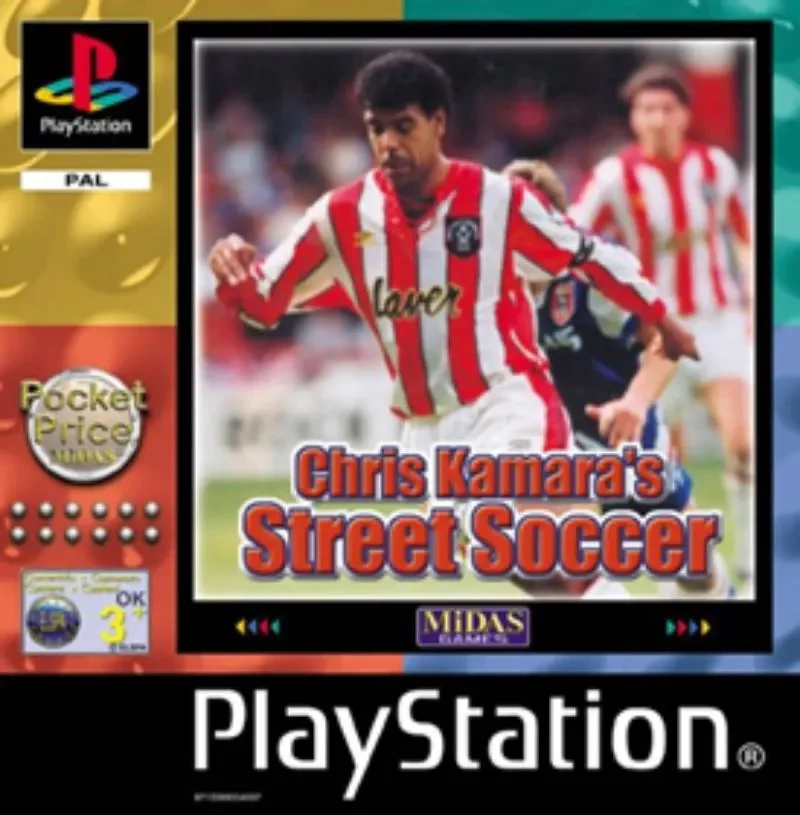
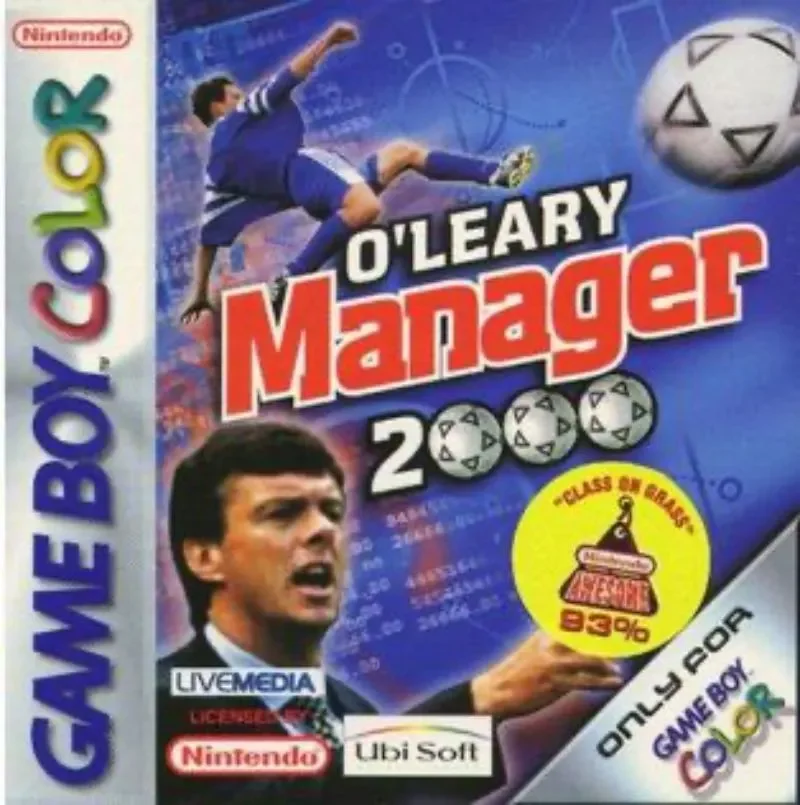
O'Leary Manager for the GameBoy Colour and Chris Kamara's Street Soccer, a Playstation title.As technology advanced, developers began moving closer to something that actually resembled real football.
RealSports Soccer, released in 1982, made one rather odd choice: it had no goalkeepers. Even so, for its time, it offered an early sense of football action. The very fact that players could identify the idea of a match on screen showed that developers were getting closer, even if they were still miles away from authenticity.
In 1985, Tehkan World Cup introduced an overhead camera and used a trackball, an innovation for arcade machines. The overhead view was important because it gave players a better understanding of positioning.
Suddenly, football was not just two shapes chasing a ball. It had width, movement, and the beginning of tactical awareness. The problem was that the trackball on those cabinets often crashed. Anyone who has ever seen an arcade machine being treated with the delicacy of a demolition site will understand why.
The real breakthrough came in 1989 with Dino Dini’s Kick Off. The game changed the way players understood digital football. The ball was no longer glued to the players’ feet. You could dribble, turn, and put curve on the ball.
That sounds obvious now, but at the time it was revolutionary. The separation between player and ball created risk. It made control feel like a skill rather than a button press.
Kick Off demanded practice, but once you mastered it, it rewarded you. It could be unforgiving. It could be chaotic. But it felt alive. Suddenly, the best player was not simply the one who pressed shoot first. The best player was the one who understood timing, angles, momentum, and how to turn a loose ball into a chance.
Kick Off 2 added goal replays and a link with Player Manager, a football management game by the same creator. For the first time, football on screen seemed to have depth, continuity, and personality. It was not just a match anymore, but an ecosystem.
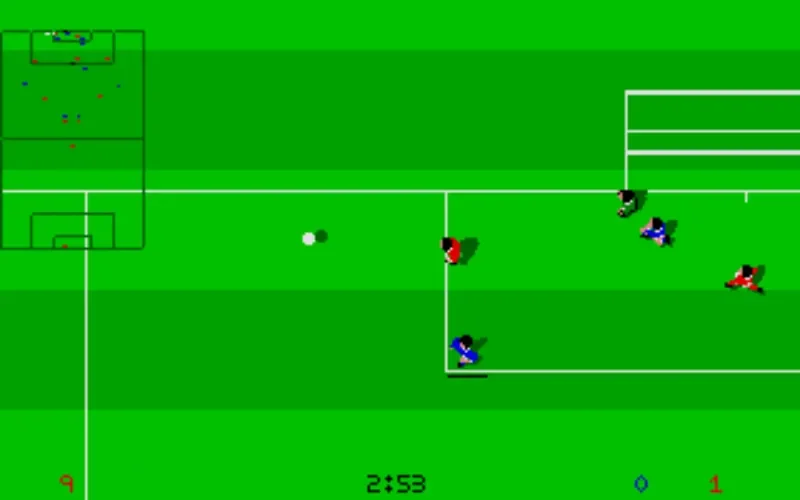
Gameplay from Dino Dini's Kick-Off.In 1992, Sensible Software released Sensible Soccer, known to its loyal fans simply as Sensi.
Sensible Soccer took the ideas of earlier titles, simplified them, and made them genuinely fun.
The overhead camera, pulled further back, allowed players to see a larger part of the pitch. Passes, crosses, and shots no longer felt quite so blind. The game had pace, clarity, and an addictive quality that turned it into a benchmark.
Its genius was that it did not try to simulate every detail of football. Instead, it captured the feeling of football. Matches were fast, sharp, and dramatic.
You could understand what was happening immediately, but mastering the game took time. That balance — easy to play, difficult to master — is one of the hardest things for any sports game to achieve.
In 1994, Sensible World of Soccer went even further. It offered the player the ability to play as teams from all over the world and perfectly captured a moment when European football was beginning to become a more global product.
The Premier League had only just been born, foreign leagues were entering fans’ homes through television, and players wanted to compete not only with the biggest clubs, but also with teams from every corner of the planet.
Before FIFA became the empire we know today, Sensible World of Soccer had already understood something important: football fans do not simply want to play a match. They want to live inside an entire world. They want leagues, squads, transfers, rivalries, and the possibility of taking a modest team somewhere ridiculous.
In other words, they want the fantasy that every football supporter secretly carries around.
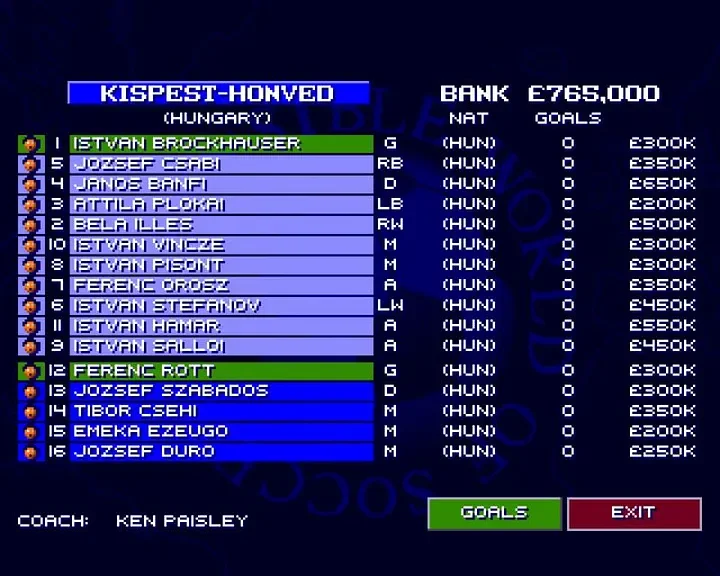
The playable squad for Kispest-Honved in Sensible World of Soccer.In 1993, amid all the noise surrounding the rivalry between Kick Off and Sensible Soccer, FIFA International Soccer appeared more quietly — also known as FIFA 94. Its isometric camera and official FIFA branding gave the game prestige, but not immediate dominance.
It looked different, it sounded important, and it carried the weight of a global football institution. But greatness in football games is never guaranteed by a logo.
The major push came with the PlayStation era and the rise of more powerful consoles. FIFA 96, with real player names, became a serious contender for the title of best football video game.
That was a major step. Real names changed the emotional relationship between player and game. Controlling fictional approximations was fun; controlling actual footballers felt closer to living the sport.
International Superstar Soccer, and later Pro Evolution Soccer, gave players an experience that was seen as more realistic, more fluid, and more genuinely “football-like”.
In the early 2000s, Pro Evo was not just a rival to FIFA. For many, it was the best football game in the world. It had weight. It had unpredictability. It had that wonderful feeling that a goal could come from something improvised rather than something scripted.
Konami’s problem was licensing. However much fun it was to score with players who resembled the real thing but had altered names, authenticity eventually started to matter. FIFA had the teams, the kits, the leagues, and the names. And EA Sports had a marketing machine behind it that few could compete with.
EA’s decisive counterattack came in the mid-2000s. FIFA 07 is seen by many as the point at which the series truly began to turn the tide against Pro Evolution Soccer. With improvements to gameplay, more natural movement, and a more serious approach to realism, FIFA stopped relying only on licences and started winning on the pitch as well.
A key role was played by the Scottish software engineer Gary Paterson, who worked at EA and made a major contribution to improving the gameplay.
The series began to change philosophy. Less arcade, more control. Less “run and shoot”, more build-up play. From that point on, the balance shifted. FIFA became a global cultural product, not just another football game.
The arrival of online play made that shift even more powerful. Football games were no longer limited to the sofa.
You could now face strangers, friends, rivals, and people who celebrated every goal as if they had personally invented arrogance. Online play changed the emotional temperature of the genre. Winning felt bigger. Losing felt more personal. Lag became the new bad referee.
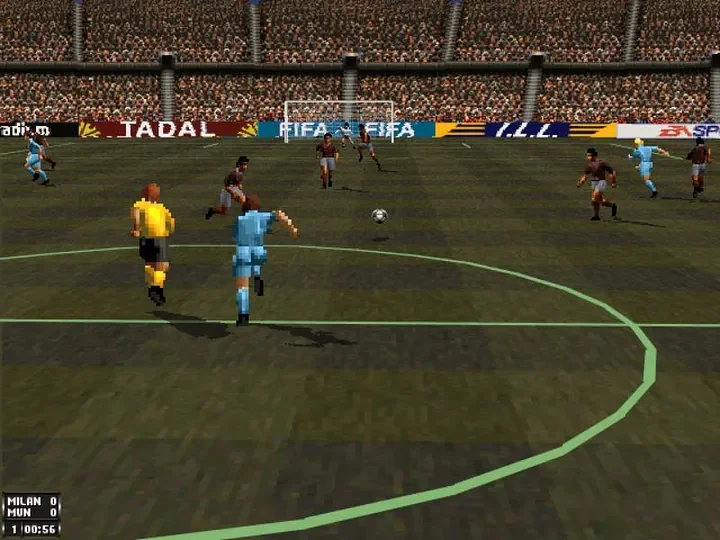
FIFA 96 was the beginning of a dynasty, but it didn't happen overnight.The history of football video games is full of strange ideas, technical limitations, licences used rather clumsily, and developers trying to create something with very few tools and very few pixels.
It includes games that were brilliant, games that were terrible, and games that are remembered fondly mostly because people played them at the right age.
And yet, out of all that, the genre evolved into something huge. From the earliest games that barely resembled football, we have arrived at titles where players compete with real tactics, movements, faces, stadiums, chants, weather, broadcast-style presentation, and tiny details that once would have seemed impossible.
What makes the journey fascinating is not only the technology. It is the emotional continuity. The pixels changed. The controllers changed. The business models definitely changed, not always for the better. But the basic feeling remained.
A last-minute winner is still a last-minute winner, whether it happens at Wembley or on a sofa with someone shouting that the goal was lucky.
Because whether we are talking about a Champions League final or an online match at two in the morning, the essence remains the same: one goal can lift you out of your seat as if you were in the stadium.
And that, ultimately, is the great achievement of football video games.
They did not simply copy football. They created their own way for us to experience it. They turned the sport into memory, competition, routine, comedy, frustration, and joy. They gave fans another pitch — smaller, stranger, digital, but real enough when the ball hits the net.