

Words by Ivan McDouall | Published 28.03.2026To begin to understand Aston Villa in the 1980s you actually have to go back a decade to the beginning of the 1970s. With Tommy Docherty at the helm Villa had just been relegated, for the first time ever, to the third tier of English football. There, they laboured for some time under Vic Crowe before some wise additions in the shape of Ian Ross, Chris Nicholl and Ray Graydon saw the club jump back up to the old Second Division in 1972.
1972 was an annus mirabilis for a number of other reasons for Villa – Bodymoor Heath Training Ground was opened and Villa won the FA Youth Cup with a side that featured Brian Little and John Gidman amongst others. All of these occurrences pointed to an upward trajectory.
But, that trajectory into the 1980s wasn’t quite as clear cut as it may have seemed, and once it became clear Crowe was not the man to take Villa further forward, the club appointed a manager who would be the key driver for Villa in all aspects of the club.
Enter Ron Saunders, a giant of a man who would define a decade of Villa life between 1974 and 1984. By 1975 Saunders had orchestrated Villa’s return to the top flight, an astounding tally of 19 points from their last 20 ushering in promotion. The fact Saunders coupled that with a League Cup win over Norwich at Wembley exalted the adoration of the man from Birkenhead.
On the pitch Saunders was crafting a unique aesthetic that was, with hindsight, far more forward thinking than he was credited with at the time. He employed a 4-3-1-2 formation, with the effervescent Brian Little behind the strikers, a tactic that resulted in 24 goals over the course of 1974-75 for Little. Off the pitch he was wielding his influence to disrupt the boardroom – Saunders wanted complete control, as did then Chairman Doug Ellis.
As soon as Saunders went behind Doug’s back to sign Frank Carrodus the battle lines were drawn, but Saunders’ triumphs coupled with his backroom manoeuvrings meant there was only ever going to be one winner, and Ellis was forced aside in late 1975.
Saunders was never afraid to initiate a grand cull of players, no matter the success they achieved. The epic 1977 League Cup Final against Everton, with Villa triumphing in a third game bears that out. Chris Nicholl, ostensibly Saunders’ key lieutenant had captained the side and scored the eventual winner, but was cast asunder in the aftermath as were many others.
Saunders wanted to create the platform to attack the next decade and higher prizes than the League Cup. Of the League Cup winning side it was only Dennis Mortimer and Gordan Cowans (who didn’t start the original game at Wembley) that would still be front and centre by the Summer of 1981.
One might have expected Andy Gray to have been there too, but his manager had other ideas. Gray had been a revelation since arriving at Villa from Dundee United and his 29 goals in 1976-77 earned the Scottish striker the PFA Player of the Year and Young Player of the Year. Saunders stopped Gray attending the ceremony in London, in a cruel but also contradictory move, the manager himself having flown back and forth from a Caribbean post season tour to collect his own Bell’s Manager of the year trophy in 1975.
To his credit Gray remained resolute in pubic, but in the aftermath of a UEFA Cup tie with Barcelona in 1976, Saunders went too far accusing Gray of cheating the team and feigning injury. Their relationship limped on but as Saunders began adding players who would be the fulcrum of his 1980s sides – Ken McNaught, Kimmy Rimmer, Allan Evans, Tony Morley et al – Gray’s future at the club looked increasingly fragile.
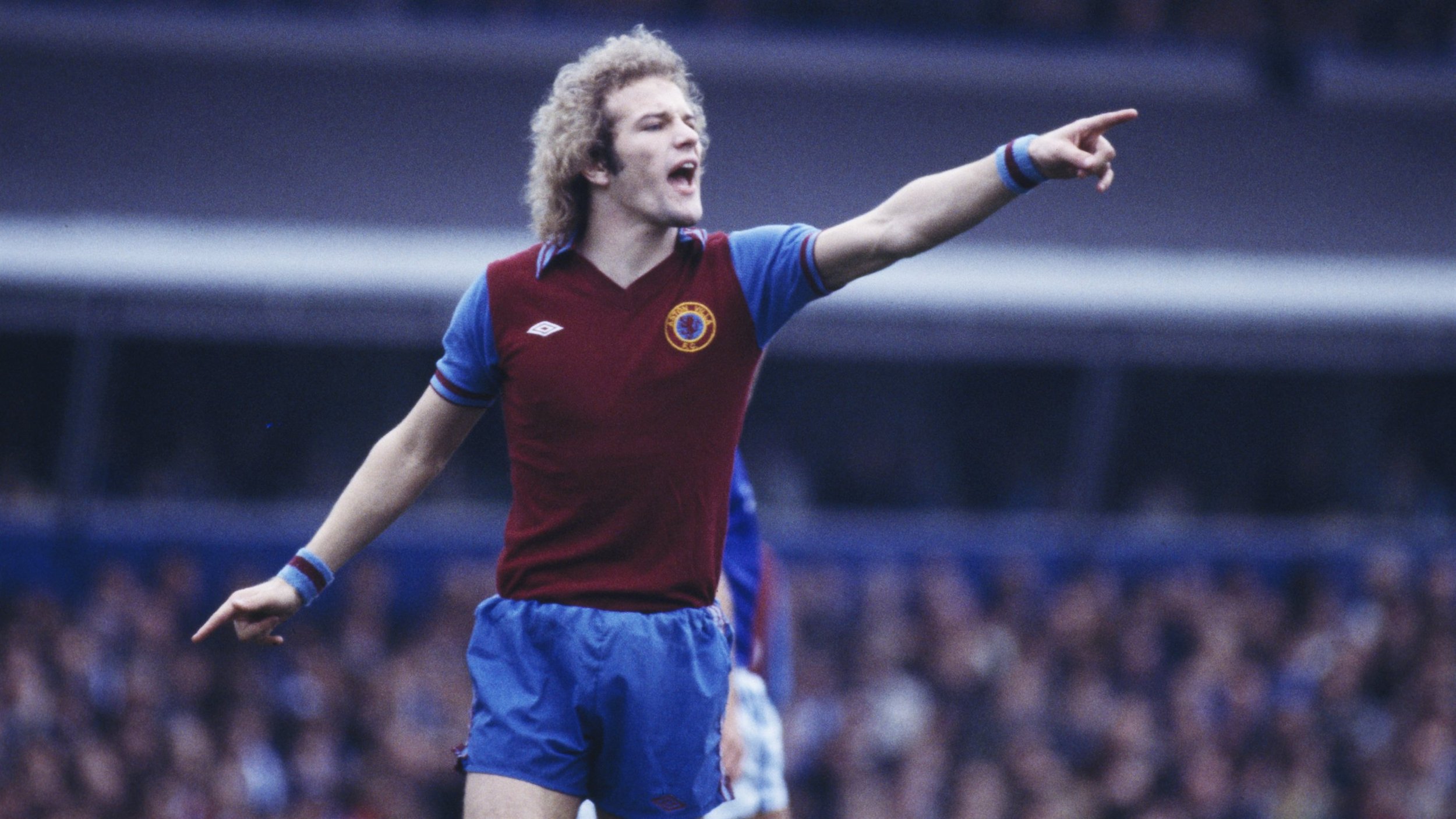
Andy Gray during a match against Birmingham in 1978.
Photo Credit: Aston Villa Football Club
Gray had gone by September 1979 and as the 1980s began Villa found themselves in a slightly odd position in terms of strikers, one that Ron Saunders cannot have predicted. Gray – alongside Brian Little and John Deehan – had formed a feared strike force that was suddenly decimated by the former’s departure and then supplemented by Deehan’s sale to West Brom and then Little’s injury issues and an unbelievable transfer request to join Birmingham City of all clubs!
Little would end up staying but he and the wonderful youth star Gary Shaw were not strikers in the mould of Gray, the type of figurehead Saunders saw as essential. Saunders vigorously pursued Mick Ferguson from Coventry City, whilst Chief Scout Tony Barton (more of him later) recommended a youthful Ian Rush. Neither option progressed so in Summer 1980 there was a degree of settling on Peter Withe, many whom believed was the final piece of Saunders’ jigsaw.
Given Aston Villa finished eighth and seventh in the two First Division seasons leading into the 1980s, few can have predicted that the club would win its first top flight title since 1910 in the 1980-81 season. The wonderful moments that unfolded over the season are an article in itself, but some standouts bear attention.
The emergence of Gary Shaw was one, his 5 goals in August setting the tone for a brilliant season. Peter Withe, as predicted knitted everything together, his hold up play setting the stage for Shaw and the equally dazzling Tony Morley who would score Match of the Day’s Goal of the Season at Everton before flipping a ‘V’ sign in his boss’ direction.
Behind the front three was a spine that will take some beating through the annals of Villa history – Mortimer, Bremner and Cowans in midfield; the concrete pairing of Evans and McNaught at centre back and Jimmy Rimmer ever reliable in goal.
It wasn’t all plain sailing, dumped out of the League Cup by second division Cambridge and beaten three times across the season by a wonderful Ipswich side. The third of those defeats, at Villa Park, prompted Saunders’ famous ‘Do You Want to Bet Against Us’ quote when promoted to suggest a title win was too much for Villa. As it was, Ipswich had only won 1 of their last 5, and Villa, despite a final day cowering at Highbury, were crowned Champions, with due thanks to Middlesborough’s Boško Janković. Saunders had reached the summit – and all, famously, with the use of just 14 players.
Not that Saunders was happy. With only Andy Blair arriving in the Summer of 1981 the manager was on the warpath, accusing the board of misappropriating funds that should have been used to strengthen the team. Saunders’ arguments held weight – Villa had secured £540,000 for sealing European football and a similar amount from insurance payouts following Brian Little’s retirement.
The situation escalated as West Midlands police simultaneously commenced an investigation into the mismanagement of funds relating to the development of the North Stand at Villa Park. All of this came to a head in an explosive board meeting in February 1982 where Saunders lost his power play and then-Chairman Ron Bendall issued his Manager a three year notice on his three year rolling contract. Effectively Saunders was being sacked in advance – to the horror of Villa fans and players Saunders resigned and pitched up, in the ultimate ‘fuck you’, down the road at St Andrews.
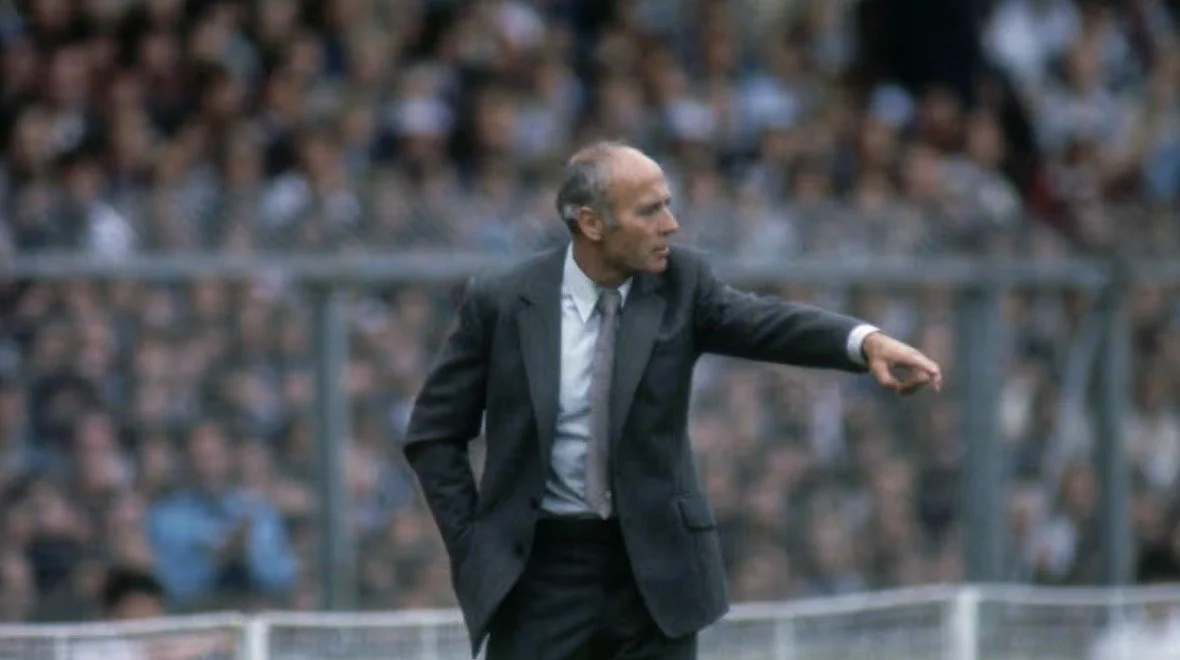
Ron Saunders managed Birmingham City from 1982-1986, before moving to West Bromwich Albion.
Photo Credit: Birmingham Live
Walking away from the reigning League Champions was staggering enough but Villa were also in the midst of their freshman campaign in the European Cup. Under Saunders Villa had breezed past FC Valur and gone behind the Iron Curtain to defeat Dynamo Berlin. Caretaker Tony Barton would oversee another victory against Dynamo Kiev, a key feature in the decision to give him the manager’s job permanently. The Semi Final against Anderlecht was marred by crowd trouble but Villa prevailed 1-0 on aggregate, an astounding Tony Morley goal at Villa Park enough to see them through, and found themselves in a European Cup Final, where they would face the might of Bayern Munich.
What followed is the stuff of quintessential legend – Jimmy Rimmer subbed off for the novice Nigel Spink who fends off relentless Bayern attacks with the aid of the Saunders-curated spine of McNaught, Mortimer et al. And then on 67 minutes Peter Withe scores the winner giving his club the never-to-be-lost stature of European Cup Winners. A decade previously Villa had been a third division side.
The Summer of 1982 saw a World Cup in Spain, where just two of Villa’s League and European Champions were present. Withe played a grand total of zero minutes for England whilst Allan Evans played Scotland’s first game against New Zealand but was never seen again. There are extenuating factors – competition for places, less games to experiment etc – but the likes of Shaw, Morley, Mortimer, McNaught and Bremner could feel very aggrieved at their lack of involvement.
Back in Birmingham bigger ruminations were underway as Doug Ellis was masterminding himself back into the Villa fold. Ellis, aggrieved at missing out on Villa’s greatest triumphs now saw it as his duty to right the ship that he reported was £1.8 million in debt. Ellis’ return would set the tone and the reality for the rest of the 1980s.
The 1982-83 season saw Villa compete in 6 different competitions, that variety proving the spice of life as Villa regularly seemed undercooked in one, having competed hard in another. Added to that was Tony Barton’s failure to establish himself fully in his own style and drive as Manager, not helped by Ellis’ refusal to help him in the transfer market. A defeat to Peñarol in the Intercontinental Cup was balanced with a European Super Cup win against a Maradona-less Barcelona, but simultaneously the league was petering out into a malevolent sixth place finish.
If Barton could not escape the shadow of Saunders, it felt like both men’s eras came to an end as Villa lost a European Cup Quarter Final to Juventus. The Turin giants, with six players from the 1982 World Cup Final in their side, plus the likes of Platini and Boniek, gave Villa a lesson not only in technical brilliance but in the gap that existed between them. Gary Shaw memorably recalled he could still smell Claudio Gentile’s aftershave as they walked off the pitch. Despite the brilliance of Saunders the sort of levels Villa had achieved would be impossible to sustain – borne out by the fact that Villa wouldn’t compete in UEFA’s premier club competition again until 2024.
Barton hobbled into 1983-84, perhaps uncharitably in part because Doug Ellis thought he could manipulate him. Either way, it was unfortunate that Barton, having overseen Villa’s greatest ever achievement would now oversee the beginning of a calamitous decline. Barton did force Ellis’ hand in the transfer market to an extent with a mix of uninspiring (Steve Foster) and more hopeful (Steve McMahon) signings, but he continued to struggle to implement a way of playing or his own style.
He also had rotten luck – Cowans suffered a horrendous leg break in pre-season and Gary Shaw later injured his knee, meaning he not only missed a large part of the season but would never be the same player again. Alongside this was the dismantling of that European Cup winning side, some of it warranted, some of it less so – Exhibit A being Tony Morley’s sale to West Brom.
Whilst Ellis may have been the driver, Barton was the public figurehead. The manager’s sacking brought an unceremonious end to one of the great Villa stories – and it only got sadder, with Barton managing Northampton in the fourth tier before passing away at just 56.
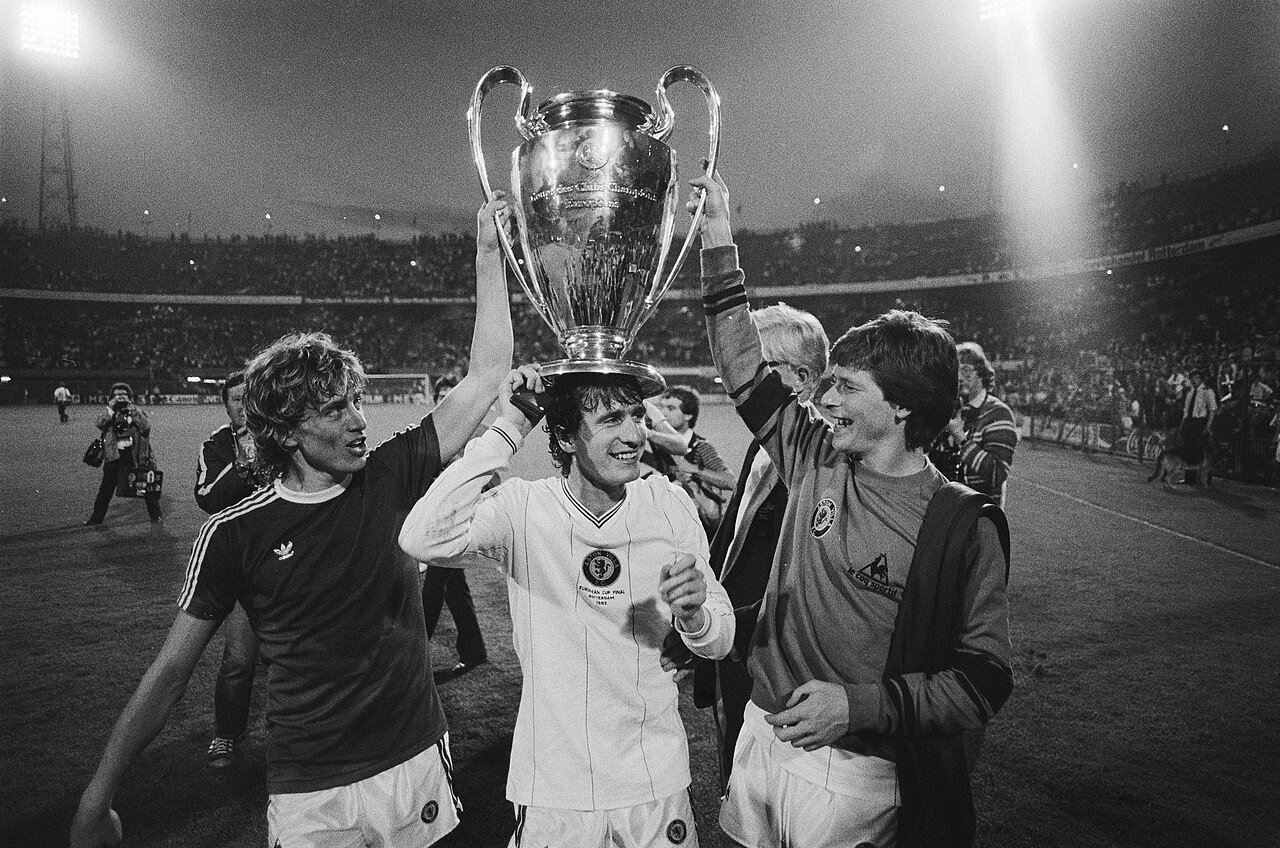
Villa players celebrating their iconic European Cup win in 1982.
Photo Credit: Wikimedia Commons
1984-85 was all change. Managing Villa seemed to be the job that nobody wanted; Ron Atkinson, David Pleat and Keith Burkinshaw all turning down the ‘opportunity’. Those candidates pointed to Ellis’ desire for experience so it was then a surprise that Graham Turner, then a novice manager at Shrewsbury was handed the baton. Turner would always maintain he had full control, but it was difficult not to see the appointment as a chance for Ellis to exert influence.
Turner lacked credibility with the players and found himself at the centre of a perfect storm of decline within the club, to which he had no answers. Ellis would advocate for a younger, hungrier side to play for his equally fresh manager and there was some truth in that as promising young additions like Martin Keown and Steve Hodge would be supplemented by homegrown talents Tony Dorigo, Mark Walters and Tony Daley. For all the youthful enterprise the abiding memory of the season was a sheepish Dennis Mortimer lifting the Birmingham Senior Cup for Villa’s reserve side, three years after lifting the European Cup in Rotterdam.
To understand Villa at this point you have to understand – or try to understand – Doug Ellis. Ellis would vindicate himself on the basis that from a business point of view Villa needed his steadying hand – but that hand, as long-time Villa Secretary Steve Stride has observed, just could not turn down a deal.
Those deals were often contradictory and undermined the manager. Morley’s departure had been a key example, but the trend continued with Paul Rideout, who scored 15 goals in 1984-85 but was then sold to Bari. Steve Hodge was brought in to play with McMahon but then the latter was sold, whilst an offer for the declining Peter Withe was too good to turn down, but then Andy Gray returned to the club. There was no clear direction, and Villa found themselves in an exquisite muddle unbefitting of a recent European Champion.
To great surprise Turner was not sacked amidst a challenging 1985-86 season – saved by a League Cup campaign and the promotion of experienced Ron Wylie to First Team Coach. Wylie helped bring Andy Blair and Steve Hunt into midfield who contributed dramatically to a disappointing 16th place finish. It says much that the high point of the League Cup campaign came crashing down with an unprecedented defeat to Oxford in the Semi Final. Another nail in the coffin of Villa’s fall from grace – the writing was well and truly on the wall.
Graham Turner could not survive losing 5 of the first 6 games of the 1986-87 season and Ellis quickly replaced him with the much-vaunted Billy McNeill. Whatever McNeill’s stature, turning the tide would be an excruciating if not impossible job. As Gary Shaw told newly-signed Garry Thompson – ‘you’re a few years too late big man’.
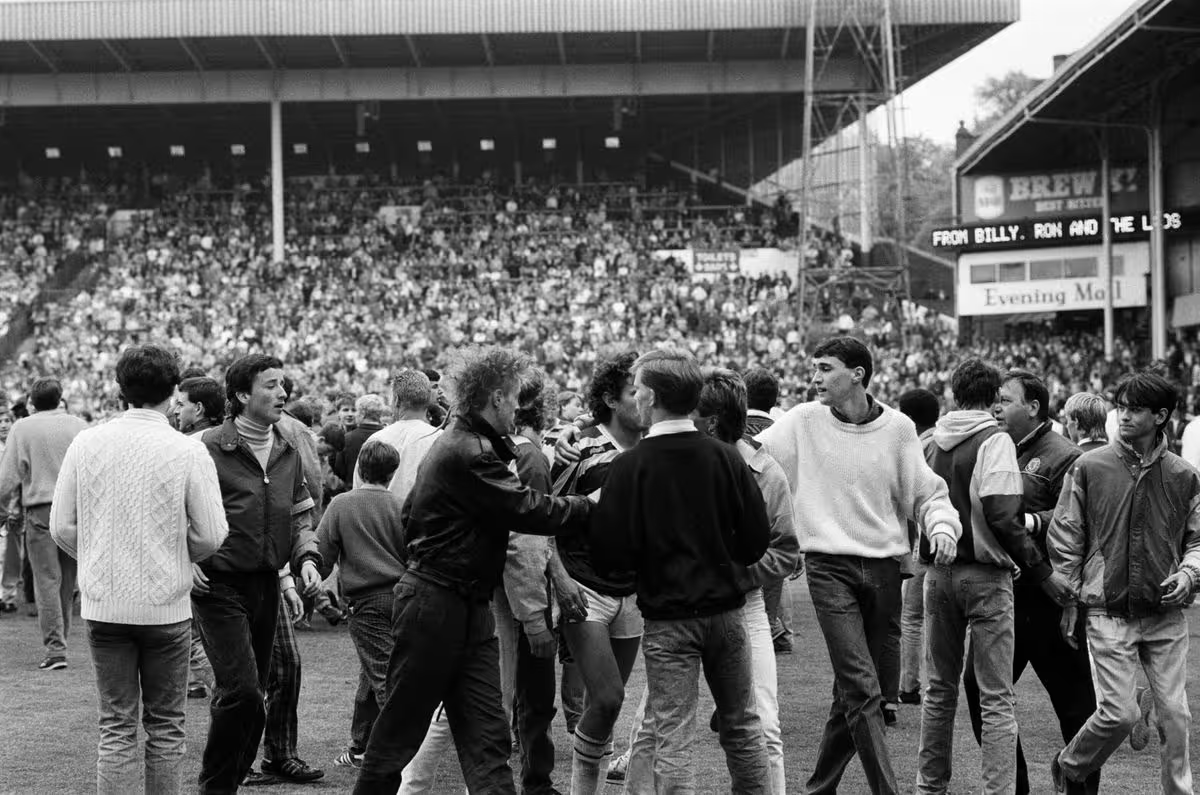
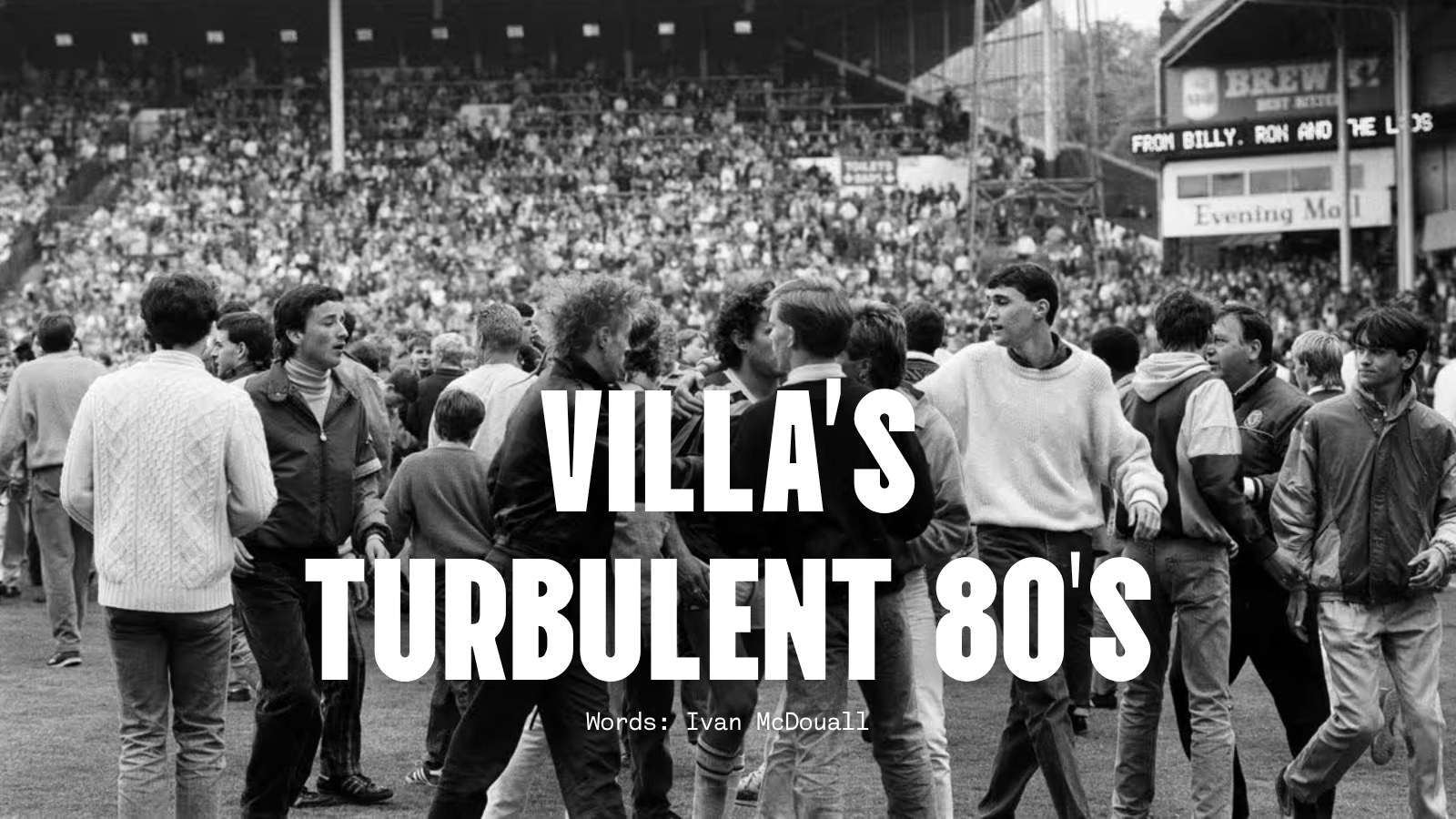
Chaos ensued and McNeill seemed desperately out of control, encapsulated by three sending offs against Southampton in a run of just 2 wins from the final 21 games. McNeill had signed Warren Aspinall, 19, from Everton (but more known for lower league goals in a Wigan shirt) to ‘keep us up’ which neatly summed up the sense that no one at Villa had a clue what was going on. Villa were back to the second tier for the first time since 1975, just 5 years on from the club’s greatest night.
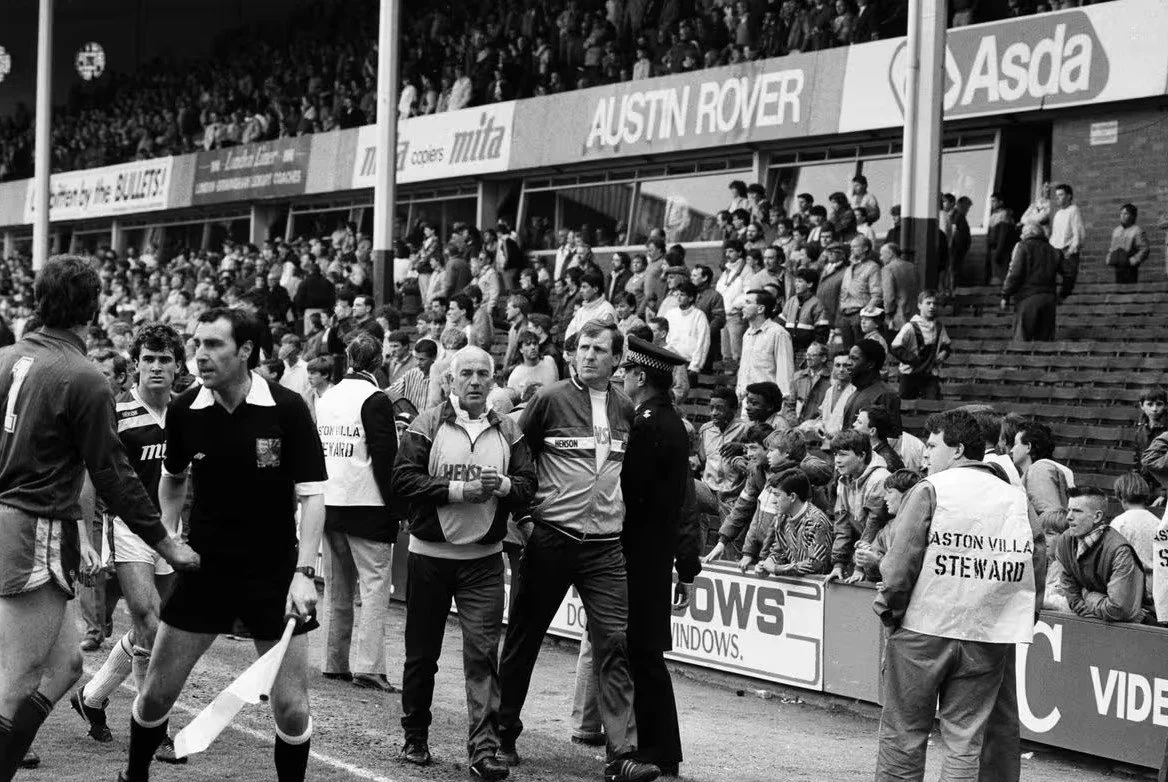
Billy McNeill and Ron Wylie trudge away after the 2-1 defeat to Sheffield Wednesday which saw Villa relegated.
Photo Credit: Birmingham Live
Who would want to take over the wreckage of Aston Villa in the Summer of 1987? The fact that highly-thought of Graham Taylor was keen to do so was a surprise, highlighted by the fact he described the club as a ‘shambles’ on being announced as Villa’s highest paid manager ever.
Taylor was the tonic everyone needed, not least as he stood up to Ellis in a way no one had done since Ron Saunders. Not that Taylor was as forthright, but he played on Ellis’ vanity to get his own way, a tactic that was then re-enforced with strict (but well received) boundaries and expectations on players. The 1987-88 season was certainly one of transition – Taylor would use 26 different players and the arrivals of Alan McInally and – mid season – David Platt would prove pivotal. Villa didn’t always convince over the season, and in fact slipped from top spot relatively late on as Millwall surged past them to make the job of promotion harder than it needed to be.
Ultimately Villa secured promotion with a 0-0 draw away at Swindon on the final day. Taylor had transformed the club, and whilst there was need for realism in the ‘success’ of promotion, the mood across the club and its fanbase was the closest it had been to the successes of 1981 and 1982 as the decade edged to its close.
The following season back in the First Division would be a reality check, but Taylor had enough credit in the bank that his talk of ‘transition’ didn’t seem trite. There were lots of bright spots to 1988-89 that belied the fact Villa finished just a place above the relegation zone, winning just 2 of their last 15 games. McInally and Platt scored 37 goals between them and the signing of Derek Mountfield felt inspired. Villa it seemed had the nucleus around which to build a team.
As the final season of the 1980s drew to a close, Villa could breathe again, Re-established in the top flight with a manager and core group of players who gave hope that the 1990s would be less turbulent.
Does the fact Aston Villa were relegated just 5 years after winning a European Cup undermine that achievement? Of course not. Was it a shock? Yes. Was it avoidable? Possibly. Football is often cyclical and no better do we see that as we look at Aston Villa in the 1980s.