

Words by Cody Aceveda | Published 16.09.2026Every fan of a lower league football club dreams of one day seeing their side rise to the top.
In most cases, it’s a far-fetched dream, but it’s one that football fans can hold onto and one that other sports don’t offer.
On August 20, 2026, Mexican Football Federation (FMF) and Liga MX owners robbed fans across Mexico of that dream.
What’s worse is the way they did it and the pattern it represents across Mexican football and the sport more broadly.
All 18 Liga MX owners have voted unanimously to separate the league from FMF’s existing pyramid — similar to the creation of the Premier League — except this plan would end promotion and relegation.
In its place, the FMF announced plans to create a pyramid of lower leagues, with the Liga de Expansión (Mexico’s second tier) sitting at the top above regional and amateur lower leagues — all detached from Liga MX.
This announcement came six years after FMF announced its decision to “temporarily” suspend promotion and relegation across the entire Mexican footballing pyramid.
This was in April 2020, when the world was coming to terms with the severity of the COVID-19 Pandemic and football leagues were deciding what to do with the remainder of their seasons.
FMF and Liga MX executives cited financial insecurity in the wake of the pandemic. It also came amid increasing insecurity among second-division clubs in the Ascenso MX (literally the promotion league).
The Ascenso MX was scrapped and replaced with a new “development league,” the current Liga de Expansión.
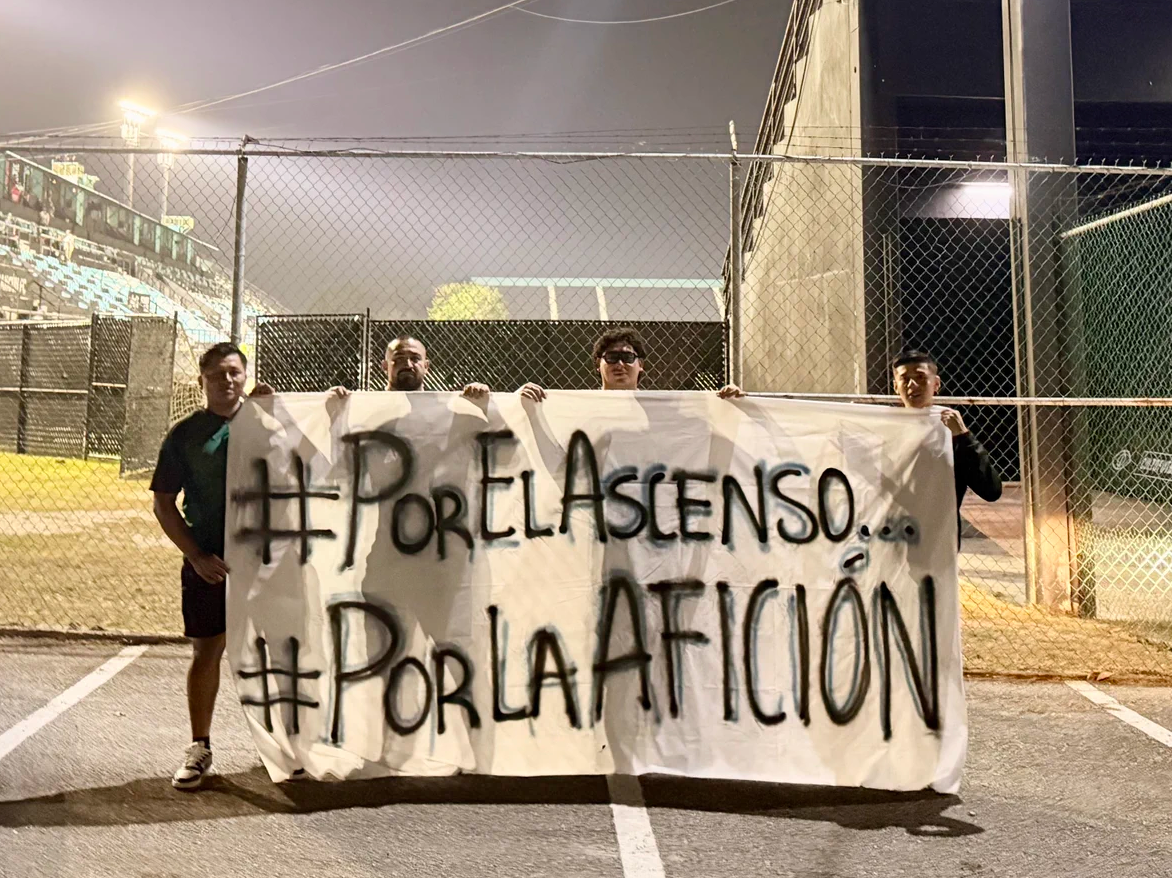
Football players and supporters across Mexico have been protesting for the return of promotion and relegation.
Photo Credit: NTR Deportes
Promotion and relegation in Mexico was formalized throughout the 1950s as football expanded and professionalized beyond regional and local competitions, but pro/rel has been on shaky ground for most of the 21st Century.
Unlike in most European countries, which see the top teams go up and worst teams go down every year, Mexico used a three-year coefficient and only promote/relegate one club per season.
This meant that a team had to be truly terrible in order to be relegated. In effect, it kept big clubs like Chivas and Club América from ever going down. Combined with strict first-division stadium and financial requirements, it also often kept small clubs from coming up.
In years where a team didn’t meet Liga MX requirements, the last-placed Liga MX team would pay a fee to remain in the top flight and some of that money would go to the smaller, second-tier side to help them meet first-division standards in the future.
All of this is to say that Mexican football wasn’t exactly a meritocracy before announcing its temporary pause of promotion and relegation. Even with that being the case, critics called the pause a step too far and rightfully predicted that it would lead to the end of pro/rel in Mexico.
The backlash was so severe that even Carlos Vela — a Mexican footballing icon, who famously doesn’t like football — criticised the move on social media at the time, saying “Without promotion, there is no development. We all support promotion and relegation.”
Cancún FC, Vela’s hometown club, were one of 10 clubs to sue Liga MX and the FMF in 2025.
Four clubs eventually pulled out of the Court of Arbitration for Sport (CAS) suit amid allegations of corruption by league officials.
Cancún and the five remaining clubs (Club Atlético La Paz, Club Atlético Morelia, Leones Negros de la UdeG, Mineros de Zacatecas, and Venados FC) tepidly celebrated a win in September 2025, when CAS dismissed the case, saying that that promotion and relegation should not be immediately reinstated and that the FMF and Liga MX should instead continue with its plans to bring back pro/rel in 2026.
Any illusion of victory came crashing down in July 2026, when Liga MX announced its plans for the upcoming season without promotion and relegation and again in August, when the league announced its separation from the FMF pyramid.
The backlash to these announcements was immediate.

Club Atlético La Paz have been particularly vocal in the fight to restore promotion and relegation.
Photo Credit: Club Atlético La Paz
Teams across the Liga de Expansión used the first minutes of the league season to protest the FMF.
Players from Correcaminos UAT, Mineros de Zacatecas, Leones Negros, Tlaxcala, and other clubs passed the ball around in their own halves without attacking. Leones Negros later took a knee to start a match against Piratas before being forced to play by the referee.
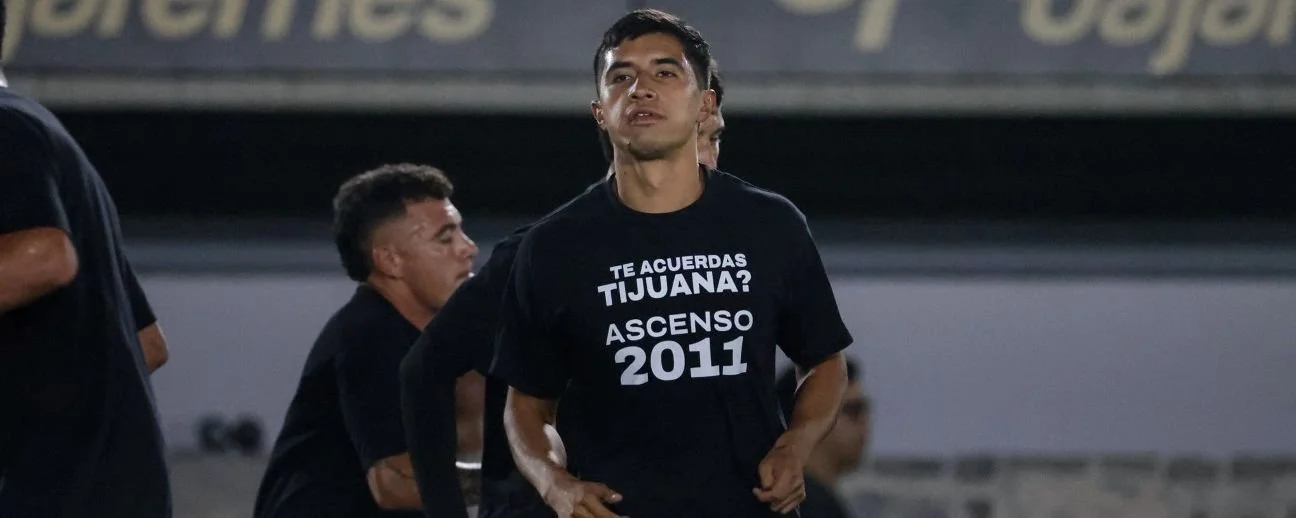
Club Atlético La Paz took an even more direct protest in a match against Cruz Azul Hidalgo (a Cruz Azul reserve team who play in the Liga de Expansión) by wearing t-shirts that provocatively asked “¿Te acuerdas?” (“Do you remember?”) with the names of several Liga MX teams and the year that they were promoted to the top flight.
Players also held a banner pre-match, stating “Without promotion there is no pyramid, there is division.”
Executives from La Paz and other clubs have also taken a stand. The club’s president, Samuel Hernández, said in an interview with El Sudcaliforniano that:
“I believe the message being sent is the wrong one because it is limiting the states, the citizens, the fans, and the children who weren’t born in cities where there is professional or top-flight soccer.
As a result, they’re going to be destined or labeled as belonging to another city because they don’t have that opportunity for growth.
I believe that’s the unfair message. And the other message that, in my opinion, we need to handle very carefully is: What message about the value of hard work are we sending?
Because sporting merit is the most important merit in sports—the very reason sports were created.”
Hernández is exactly right. Without promotion and relegation, there is no meritocracy and without a meritocracy there is no point to sport. Anything below the first division is pointless and the first division itself is corrupted and meaningless without the threat of going down.
The fans recognize this, the players recognize this, and anyone concerned with preserving football heritage recognizes this.
The only people that don’t are the ones who care more about money than the football, which is unfortunately a lot of people in Mexican football — as exemplified by the convoluted old pro/rel system, Liga MX’s inclusion in the Leagues Cup with MLS, and the national team’s “partidos moleros” in the United States over the last two decades.
Five clubs — Leones Negros, Club Atlético La Paz, Club Atlético Morelia, Cancún FC, and Mineros de Zacatecas — have appealed CAS’s decision from September with hopes of reinstating promotion and relegation in Mexico.
If this appeal fails, which it is likely to since the majority of Liga de Expansión clubs voted for the FMF’s new plan, nothing changes.
So, what happens now? In the wake of FMF’s decision, the Mexican National Antimonopoly Commission (CNA) announced plans to investigate possible monopolistic practices in Mexican professional soccer, citing football’s “significant impact on the country's economic activity.”
If found guilty of monopolistic practices, the CNA may impose sanctions of up to 10% of FMF’s annual revenue and order the correction or elimination of the anticompetitive practice.
In theory, this means the CNA could order promotion and relegation to be reinstated. It remains to be seen whether Claudia Sheinbaum's government would be willing to get involved in the FMF’s business.
The Mexican president is a Pumas fan and has commented on football before, saying that she would like to see the return of pro/rel. However, she added that “As president, it’s not my place to interfere in the Federation, but it’s my opinion.”
Actors in football have also turned to the law. Five clubs — Leones Negros, Club Atlético La Paz, Club Atlético Morelia, Cancún FC, and Mineros de Zacatecas — have appealed CAS’s decision from September with hopes of reinstating promotion and relegation in Mexico.
If the CNA decides not to limit Liga MX and the Liga de Expansión’s CAS appeal fails, which it is likely to since the majority of Liga de Expansión clubs voted for the FMF’s new plan, nothing changes.
Promotion and relegation will continue to not exist in Mexico and fans outside Liga MX will never get the chance to see their team play against top-tier competition, unless their owner is one of the few willing to spend hundreds of millions of dollars on expansion fees.
In other words, Liga MX will be another MLS — a closed shop where money rules everything, not merit.
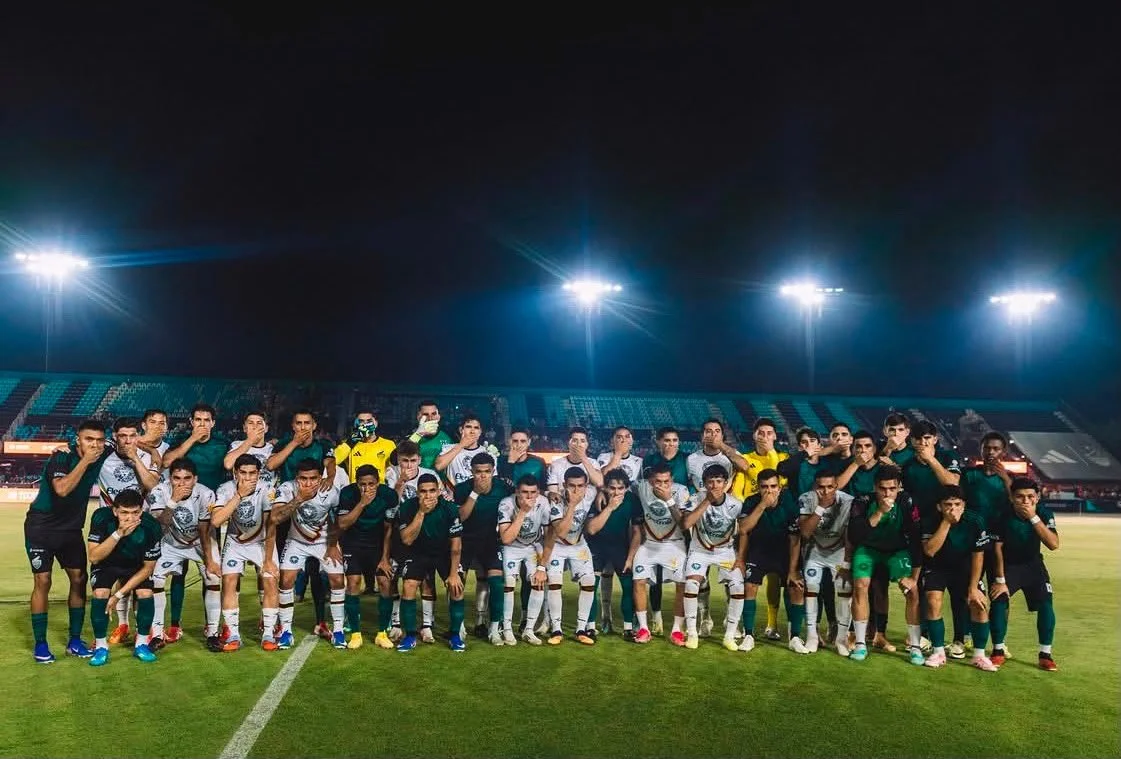
Leones Negros and Cancún payers protest before the end of promotion and relegation at the beginning of a match.
Photo Credit: Titanes