

Words by Marcelo Benini | Published 26.09.2026How do we measure passion and greatness in football?
Although far from being an exact science, certain indicators give us a reasonably accurate idea of a club’s stature: trophies, history, players, support, stadium, and culture for a start.
Sometimes there is not enough consensus to determine the relative position of a particular crest in a ranking, or several candidates are competing for the same seat at the table. For some time now, such discussions have tended to take place on social-media feeds, occasionally with arguments, but more often impulsively.
Whenever disagreement arises, popularity polls seek to define, in a civilised manner, the place certain teams occupy on the football map. But in the days of analogue media, these symbolic duels were usually settled democratically in the pages of newspapers.
Between 23 October 2001 and 6 January 2002, the sports newspaper Olé organised a vote to determine who was the “Sexto Grande” (Sixth Giant) of Argentine football.
That position had historically been assigned to Huracán, which between 1941 and 1955 was one of the six Argentine clubs entitled to three votes because it met all the requirements established in the statutes of the Argentine Football Association: more than 15,000 members, more than 20 uninterrupted years in the top flight and two or more league titles.
However, since its first relegation in 1986, that claim had been challenged by clubs that had grown in stature since 1967, when the traditional hegemony of the giants was broken. Voting was conducted through coupons published in the newspaper, which had to be completed and sent to its offices.
The aim was not only to settle the argument, but also to boost sales of the printed edition at a time when the internet had not yet become widespread.
The paper sold as if there were no tomorrow and supporters mobilised. After 75 days of voting and more than 220,000 votes submitted, Huracán won by a wide margin: 79,184 votes against 47,804 for Chacarita Juniors and 29,838 for Vélez Sarsfield.
Although younger generations regarded its successes as distant and its achievements as a thing of the past, Huracán’s footballing legacy from the pioneering decades allowed it to establish itself behind Boca Juniors, River Plate, Independiente, Racing and San Lorenzo. Six clubs that make up three of the most important derbies in Argentine football.
Further back in time, in 1927, Jornal do Brasil joined forces with the mineral-water brand Salutaris to organise a competition to honour the “country’s most beloved club”.
Offered by the bottling company, the trophy stood one and a half metres tall and was silver-plated. Between 4 October and 30 December that year, each supporter had to write the name of their favourite team on the bottle label or on the coupon printed in the newspaper and send it to the editorial office.
Flamengo and Vasco da Gama supporters monopolised the competition. When they learned that shopkeepers in Rio de Janeiro — many of them of Portuguese origin and Vasco da Gama supporters — had thousands of votes ready for their rivals, a group of Flamengo fans organised a sabotage operation on the final day of voting.
Disguised in the other side’s colours, they waited for Vasco voters outside the newspaper’s offices and persuaded the unsuspecting supporters to hand over their bags full of coupons. Instead of putting them in the ballot boxes, however, they threw them into the lavatories and the lift shaft of the building.
Flamengo won the count with 254,850 votes, against Vasco da Gama’s 183,742. Today, the Salutaris Cup is displayed in the club’s museum.
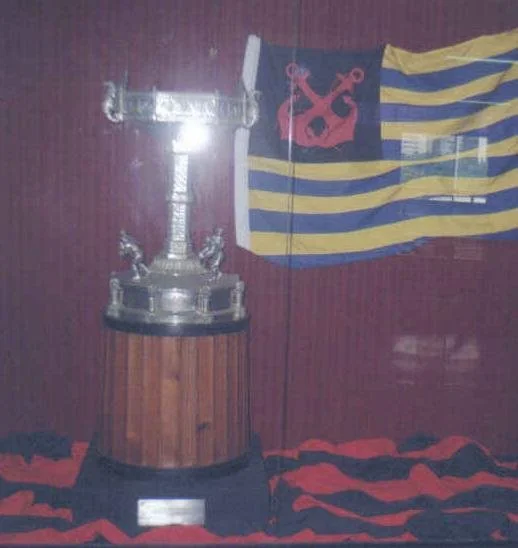
The Taça Salutaris on display in Flamengo's museum.
Photo Credit: Jornalheiros
But long before those two polls, at the end of the nineteenth century, there had been a precedent in the Anglo-Argentine press.
On 25 May 1900, The Buenos Aires Herald, founded in 1876 by Scottish immigrant William Cathcart, became the first newspaper on these shores — and probably anywhere in the world — to organise a football popularity contest.
Its launch coincided with the 90th anniversary of the Argentine uprising against Spanish rule, which would lead to the Declaration of Independence in 1816. Believing that an additional stimulus to the friendly rivalry between the various teams would lead to greater interest in football, as the newspaper put it, the Herald, in the middle of the ninth official season, offered the winner a silver punch bowl and ladle valued at 250 pesos.
“The Herald Trophy will be a prize of which any team might be proud. You may vote as often as you wish. Boys and girls, young and old, and even women, may join in an effort to secure the coveted trophy for this or that particular football team”, the newspaper explained.
From that day onwards — and for more than two months, until 31 July — one of its pages carried a blank coupon which had to be carefully cut out, filled in with the name of the favourite team and then sent to the newspaper’s offices at 554 Cangallo Street.
The newspaper promised that all the coupons would be carefully filed and preserved so that, in the event of a tie, they could be checked. Every safeguard was guaranteed to ensure an impartial and accurate count and record of the votes.
In the event of a tie, the trophy would be awarded to the team that had held the lead for the longest period. For this reason, the standings were regularly published according to fluctuations in the voting.
The organisers warned that, should any dispute arise, the matter would be placed in the hands of an arbitration committee to be agreed upon by the clubs taking part in the competition. That was how seriously the matter was taken.
Day after day, children were urged to go around the city asking their friends for their copies of the Herald after they had read them, in order to accumulate a large number of votes for their favourite team.
Many favourable comments on the initiative were received by post. In the early days of the competition, English High School, Quilmes, Belgrano and Lomas, the four teams taking part in that year’s league, took turns at the top. Banfield, another historic club from southern Buenos Aires, was lurking.
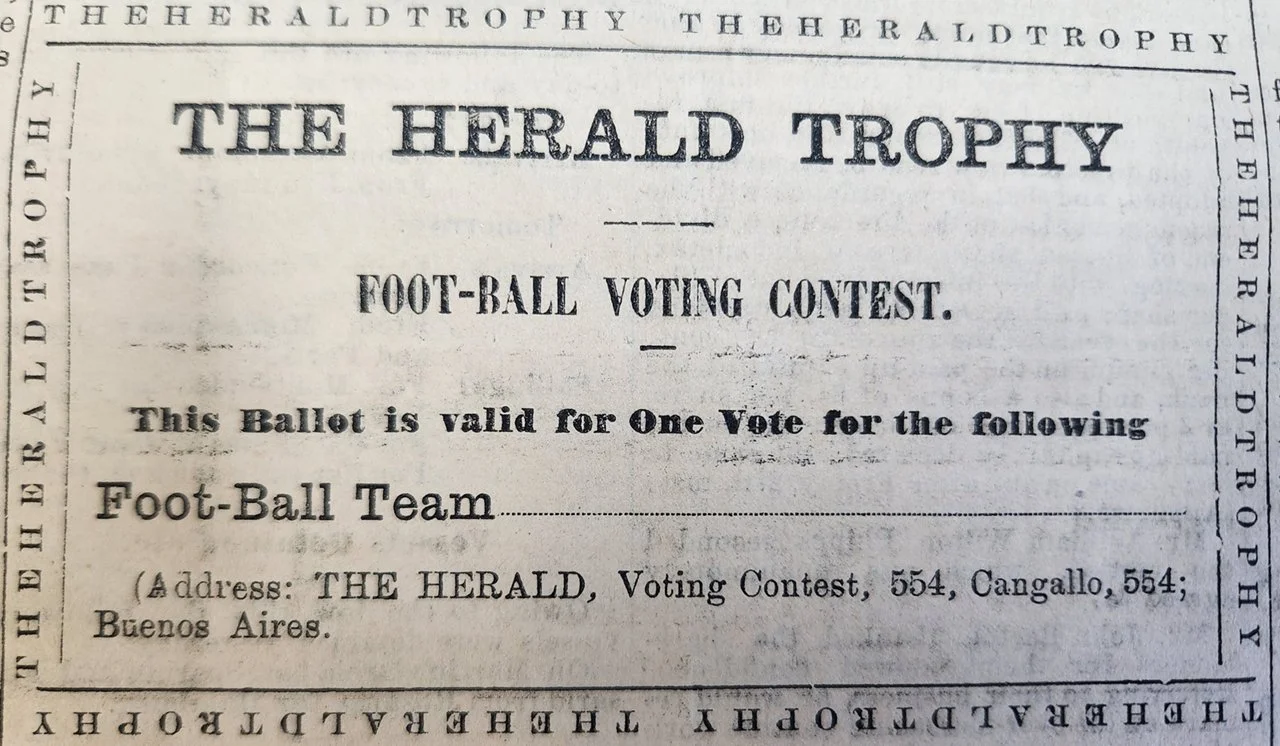
The coupon for The Herald Trophy voting contest.
Photo Credit: Marcelo Benini
By then, the nascent Argentine game had seen four different champions in eight seasons. The Scottish sides St Andrew’s and Caledonians shared first place in the 1891 tournament, the formal starting point of the game in our country.
After a play-off, the medals and title went to the former, which dissolved shortly afterwards. In 1893, 1894, 1895, 1897 and 1898, Lomas AC established a hegemony; its school team, Lomas Academy, also won in 1896. Finally, in 1899, Belgrano prevailed.
But 1900 hinted at a change of paradigm with the emergence of English High School, the team from the school founded in 1884 by Scotsman Alexander Watson Hutton. The previous year it had finished runners-up in the Second Division, while in the current season it was a leading presence in both of the country’s principal divisions.
Francis Hepburn Chevallier Boutell, president of the Argentine Football Association League, said of the contest:
“I think it is a capital idea and I have supported it from the outset. The question now is to see which club will obtain the most votes. I have not seen the bowl because I have been very busy, but I shall take the first opportunity. I have no doubt that it is a trophy worth winning”.
The organisers appealed for healthy competition and urged winners and losers alike to celebrate at the end.
The punch bowl quickly became an attraction and began to tour the leading shops in central Buenos Aires. It was initially displayed in the window of John Hodson’s premises at 127 Florida Street.
The shop sold silverware, fine gifts, tableware and luxury goods. It was later moved to La Casa Amarilla, run by Pratt & Co., on the corner of Florida and Cangallo. From there it went to the English Bookshop and Stationery Store at 102 San Martín Street, on the corner of Piedad.
But this travelling display would soon prove insufficient to satisfy the curiosity of those living outside the capital. The British community was numerous in the suburbs and also in the interior of the country.
Every letter received was eloquent proof that interest in the competition was growing:
“I am sending the votes for the English High School football club that the children in my family collected today. I fear it has been at the expense of their lessons, because all they seem to think about is the Herald competition and how to obtain the coupons that will enable them to vote for the school team”.
With this kind of passion, football was already being experienced on the shores of the River Plate, some years before the criollos adopted it as their favourite sport.
“I know of no other club that could make better use of a punch bowl than the Lomas club”, wrote one participant.
“Here are two ballots for the Banfield club. I am not sending any more because my elder brother will not give me his Herald: he votes for Lomas because his best girl lives there”, lamented another.
A reader signing himself Old Timer expressed his bewilderment at the poll, since for old football followers the winning team was usually the most popular one. He was surprised, on reading the rules, that in this case the winner would be whoever gathered the greatest number of votes. Although he believed it would be fair to award the bowl as a prize to the league winner at the end of the season, he ultimately accepted that this novel twist added extra interest to the healthy rivalry between the clubs.
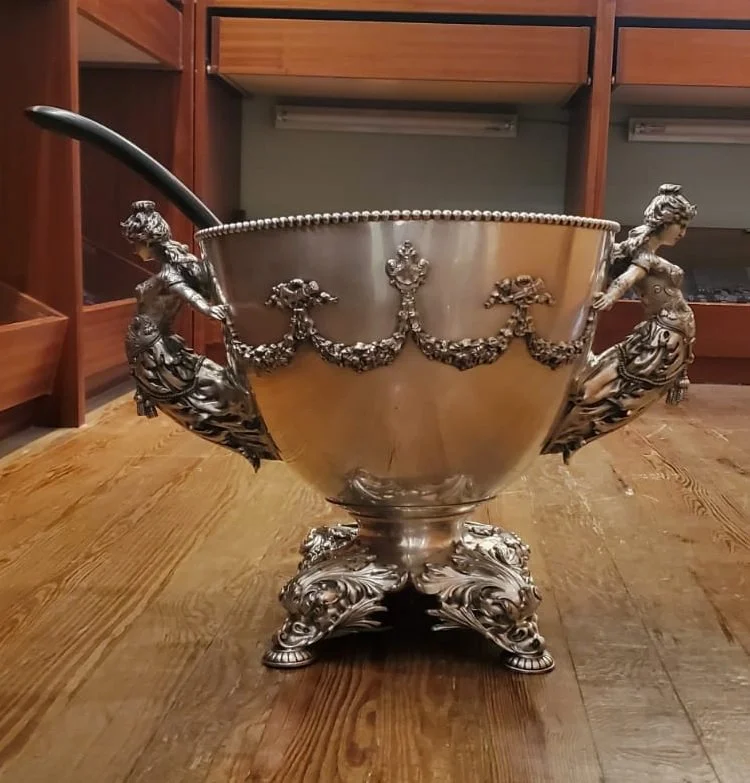
The Herald Football Trophy.
Photo Credit: Martín De Vita
The general view was that stimulating young people’s interest in football would bring renewal in the future, when current players were eventually forced, by age, to turn to golf.
There was, in some way, a fear that the generation of footballers then active would not be replaced by new players. Another reflection arising from the old reports is that it was hoped that the Anglo-Argentines would one day be able “to compete on equal terms with their relatives across the pond”.
Oh! they’re sure to win the day
By their pluck and by their play
And the votes will roll in as they ought to do;
They’ll win the Trophy, I’ll be bound
So, until that day comes round,
Bedford Boys and “Lomas Team”
Here’s luck to you!.
There was no shortage of participants who, influenced by the political and militaristic climate of the time, drew analogies with warfare.
One signed himself Bobs, in reference to Field Marshal Frederick Roberts:
“I have pleasure in sending you 200 ballots to defend Quilmes. It is only part of the advance guard marching towards Pretoria; the main body will follow next week at full strength”.
At the time, the British Empire was engaged in the Second Boer War, a colonial conflict over control of the resources and territory of the Boer republics in southern Africa. Around 28,000 Boer civilians, most of them women and children, died in this infamous armed conflict from hunger and disease.
By July, five candidates were competing for the Herald Trophy: English High School, Quilmes, Belgrano, Lomas and Banfield.
Packages of coupons arrived from the cities of Rosario, Montevideo and Concordia, as well as from the city and its suburbs. Ballots poured in as the competition approached its close.
Although the clubs’ positions were not published for several days, interest remained undiminished. Perhaps precisely because of the intrigue created by the editorial silence. Two weeks before the end, English High School led with 1,390 votes, followed by Belgrano on 1,221 and Quilmes on 1,220.
It was suspected that many supporters were keeping large quantities of votes in reserve to flood the Herald’s offices at the last minute, so the editors warned that the contest should still be regarded as open and that the result was far from decided. Rosario joined the discussion, sending coupons every day. The footballing community remained on tenterhooks.
On 19 July 1900, the photograph of the trophy was finally published, an unusual event for the nineteenth-century press of the Río de la Plata.
Only some advertisements included images, because of the high cost and complexity involved in illustrating their editions. The pages of newspapers were essentially text-based. But the readers’ anticipation and their demand to see the cup were such that the Herald decided to reproduce it.
To do so, it commissioned an engraver, who took more than a week to deliver the image. Alongside the photograph was a complete description of the prize, sparing no detail about the gold, silver and ebony, and including two female figures in flowing drapery.
Three days before the competition closed, something unexpected happened: Quilmes surged into the lead, almost 200 votes ahead of English High School. Its victory seemed assured when the gap widened the following day, but the Herald warned that “nothing was decided yet”.
The uncertainty was based on the fact that more than 2,000 copies had been sold the previous day, and a large number of votes were expected to arrive during the final day of voting.
One may wonder whether the editors knew the truth and were deliberately revealing it little by little to maintain the suspense until the last minute, or whether the response to the competition had simply overwhelmed them.
We do not know. As if it were a parliamentary election, the newspaper argued that the first priority was to ensure accuracy in the count.
With the readers’ anticipation at fever pitch, the final result was announced on 1 August: English High School had captured the Herald Trophy with 6,942 votes, followed by Quilmes with 3,467 and Belgrano with 3,358.
The dramatic late turnaround in the contest was explained by the Herald, figures in hand:
“When a package containing more than 1,200 votes for Belgrano arrived fairly early in the day, it seemed that the trophy was going to that aristocratic suburb. But English High School made a decisive leap in the afternoon when a package containing 3,252 votes arrived”.
With discretion and determination, the school team had surprised its rivals by scoring with the last move of the match.
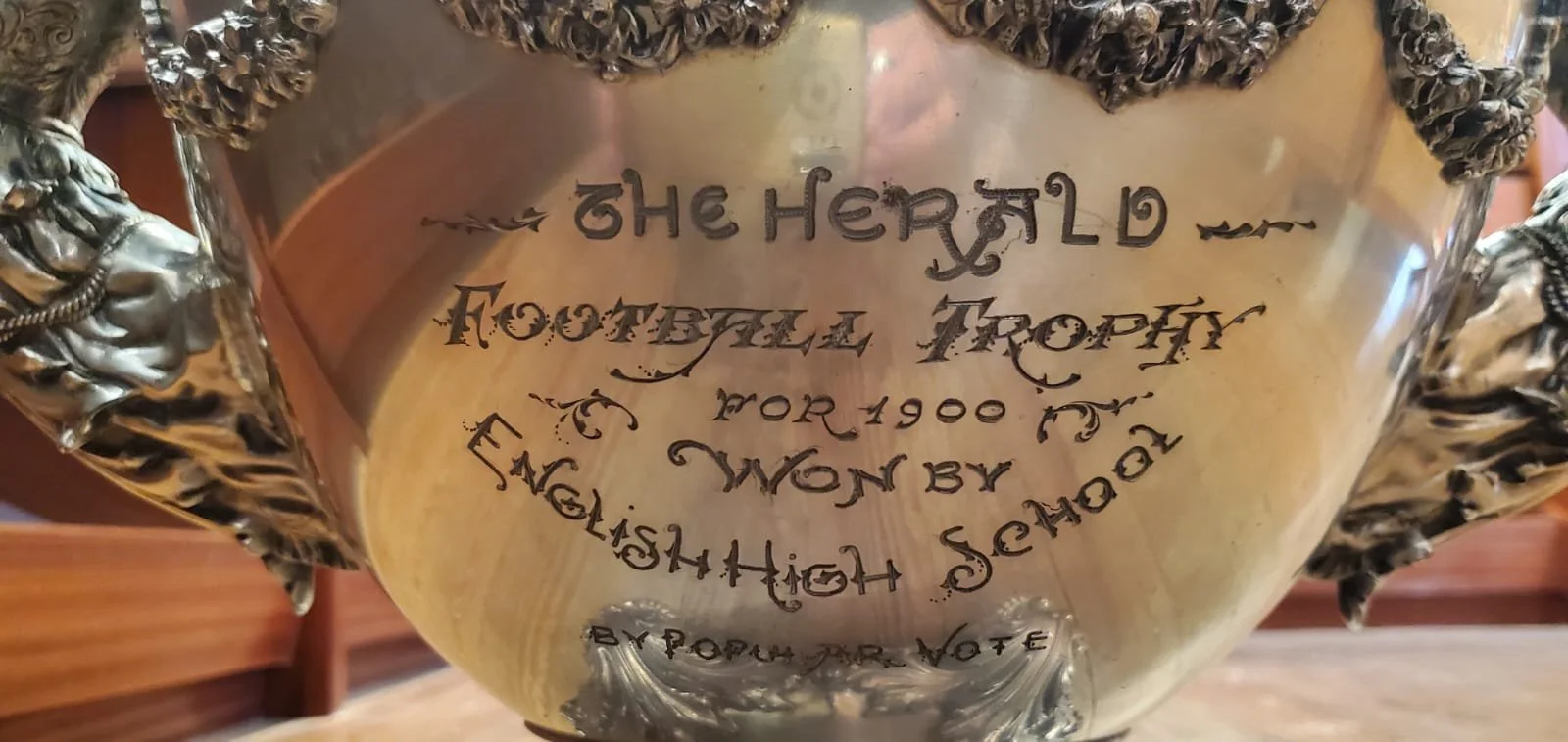
English High School - later known as Alumni - had their name inscribed on The Herald Trophy.
Photo Credit: Martín De Vita
Two weeks before winning the first of its ten Argentine league titles, and any of its other official honours — eight national cups and four Río de la Plata cups — English High School lifted its first trophy.
This achievement did not reward success in a football championship, where the best team prevails according to points, goals and other statistical criteria.
Although the Herald Trophy was also decided mathematically, what was at stake was something more abstract and often debatable among supporters: the loyalty of its followers.
On this particular field of play, too, the future Alumni proved to be the best.
The competition was a success in every sense imaginable. The Buenos Aires Herald boosted its circulation to unprecedented levels and supporters mobilised outside the football grounds for the first time, demonstrating the growing popularity of football in Argentina. Twelve teams received more than 16,000 votes, according to the following breakdown:
6,942 English High School
3,467 Quilmes
3,358 Belgrano
1,393 Lomas
317 Banfield
306 Rosario
116 Buenos Aires
107 Escuela de Comercio
101 St George’s College
29 Porteño
18 Flores
17 Central A.C.
There are several possible explanations for English High School’s emphatic victory. Watson Hutton’s school had a very large enrolment, but the pupils’ families and members of the wider school community were also involved.
Another relevant factor was its status as an advertiser in the Herald. In addition, its school premises — Quinta Garrigós — were located in the central Palermo district, barely three kilometres from the newspaper’s offices.
Delivering the coupons was considerably easier than for clubs such as Quilmes, Lomas and Banfield, based in the suburbs of Buenos Aires, more than 20 kilometres away.
But it would not be fair to attribute its success solely to logistics: Belgrano Athletic Club, the previous year’s champions, had their home just 20 minutes by train from the Herald’s offices. Yet they finished third in the competition.
Watson Hutton himself acknowledged the distinction by sending a brief letter to the newspaper:
“I am very pleased to see, from today’s result, that a very decided majority of votes for the Herald Trophy has been awarded to this club. While thanking you for your generous initiative in providing the much-coveted Cup, allow me also to take this opportunity to thank the voters, known and unknown, for their direct or indirect participation. I personally neither secured nor influenced a single vote”.
In the final line, the school’s headmaster appears to distance himself from any suggestion of advantage, favouritism or influence that may have reached his ears during the competition.
Once the fervour of the competition had passed, and with the football league approaching its conclusion, English High School travelled to Rosario on 12 August to play the semi-final of the Cup Tie Competition against the local team.
They lost 3–1. The Rosario newspaper The Week published the following report, charged with subtle irony:
The most “Popular” of Association teams, proud in the consciousness, that (thanks to the Herald) they had a punch bowl from the depths of which —when there was something in it— they could drink confusion to their adversaries, have been to Rosario, and —gone back again.
They are a smart team, playing in perfect combination and well captained, but the team led by the “Old War Horse” from the Tyneside was one too many for them.
6942 persons recorded their votes for the High School as being the most popular of teams, and we are not disposed to quarrel with the verdict; it is evident however, that popularity is not a sure indication of success, and the poor insignificant Rosario team, whose popularity was measured by 306 votes has laid the Champions low, and on the 26 instant at Buenos Aires will face the Belgrano Club, and will we have no doubt, give a good account of itself.
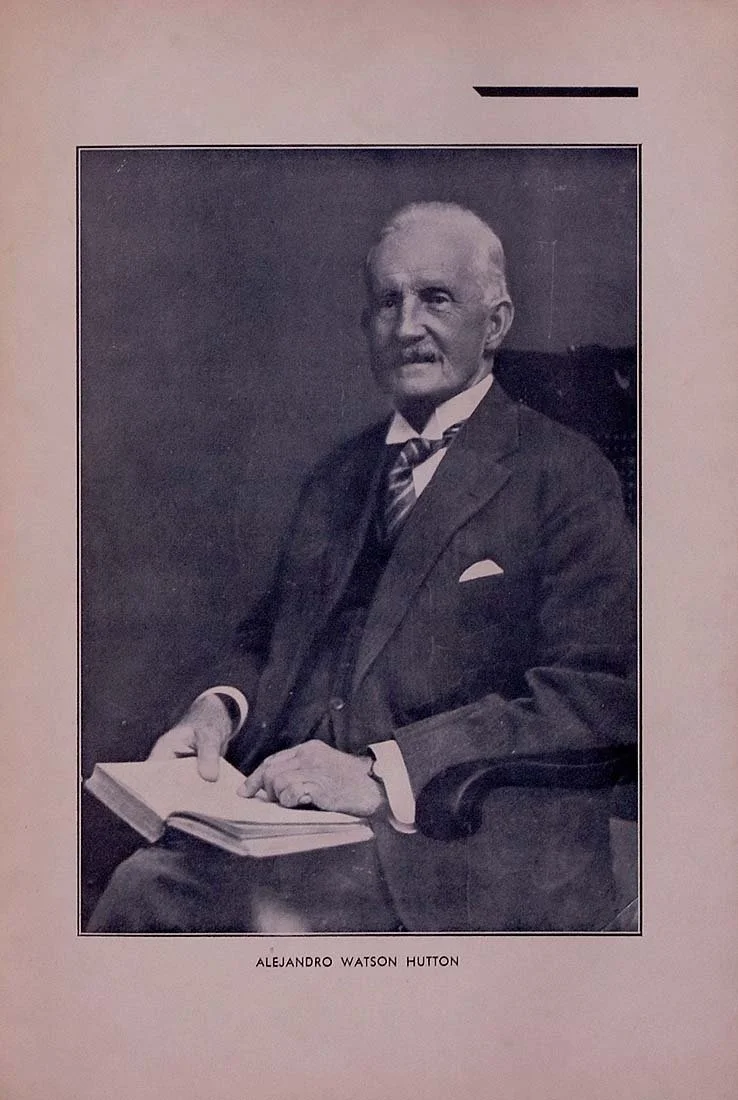
Alexander Watson Hutton.
Photo Credit: AFA
What became of the participants in the Herald Trophy? Surprisingly, the great majority of those institutions still exist.
The great winner disappeared as a football club in 1911 after its glorious period as Alumni, although the school that gave rise to it, Buenos Aires English High School, is still operating in the Belgrano district and still keeps the silver punch bowl.
Quilmes and Banfield, both popular clubs from the southern part of the city, are the only ones that remain active in professional football. Quilmes won the league titles in 1912 and 1978, as well as the Copa de Honor in 1908; it currently plays in Primera Nacional, the second tier of Argentine football.
Banfield, meanwhile, lifted the Copa de Honor in 1920 and won the league in 2009. Of the 30 teams in Argentina’s Primera División, it is the only one to have competed in three different centuries.
Belgrano Athletic Club won three league titles (1899, 1904 and 1908), the 1900 Tie Cup and the 1907 Copa de Honor.
Having just celebrated its 130th anniversary, it is now a very active sporting institution dedicated to rugby, hockey and cricket. Lomas Athletic has a similar profile, centred on rugby and hockey.
Rosario is now Atlético del Rosario, which continues to compete in rugby, but in its early years played football and won three editions of the Tie Cup (1902, 1904 and 1905).
St George’s College remains a prestigious British school, Porteño is a rugby club, and Buenos Aires is the historic Buenos Aires Cricket & Rugby Club, better known as Biei, founded in 1864.
Finally, Escuela de Comercio is none other than the traditional Escuela Superior de Comercio Carlos Pellegrini, founded in 1890. Only Flores and Central A.C. disappeared shortly afterwards.
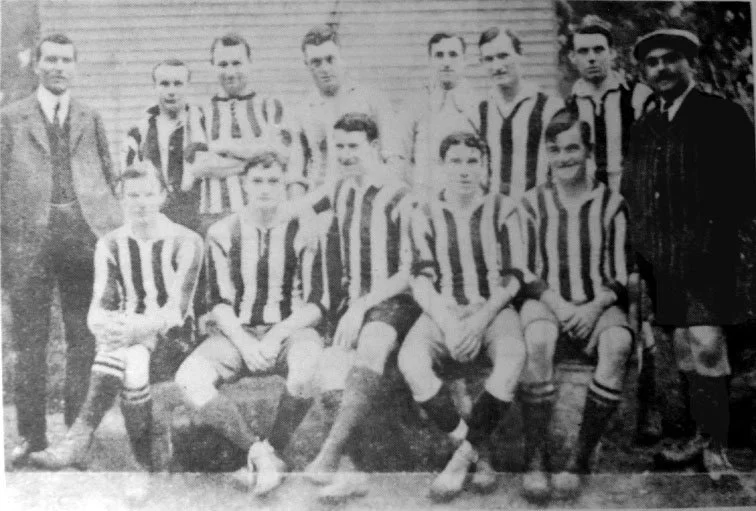
The club that would be renamed Alumni in 1901, following an Argentine league regulation prohibiting concealed advertising in team names from that year onwards, would experience an emotionally charged end to the century.
Two weeks after winning the Herald Trophy, it would become Argentine champions for the first time, after defeating Quilmes 5–0. On the afternoon of 15 August 1900, the team lined up as follows:
Juan McKechnie; Jorge Gibson Brown, Walter Buchanan; Andrés Arturo Mack (capt.), Carlos Buchanan, Ernesto Brown; Heriberto Jordan, Eugenio Moore, Spencer Leonard, Juan José Moore and William Allerton Jordan.
Victory over Belgrano on the final day would be the culmination of an almost perfect campaign, with five wins and one draw, 18 goals scored and just three conceded. Lomas, whom they had drawn with on the opening day, finished second, six points behind.
A few months later, Alumni would suffer a serious setback when it lost its ground in the Coghlan district: the municipality took possession of the land because new streets had to be opened.
Despite being forced to leave, the future could not have been brighter for Alexander Watson Hutton and his players. The clock of history had only just begun to tick.