

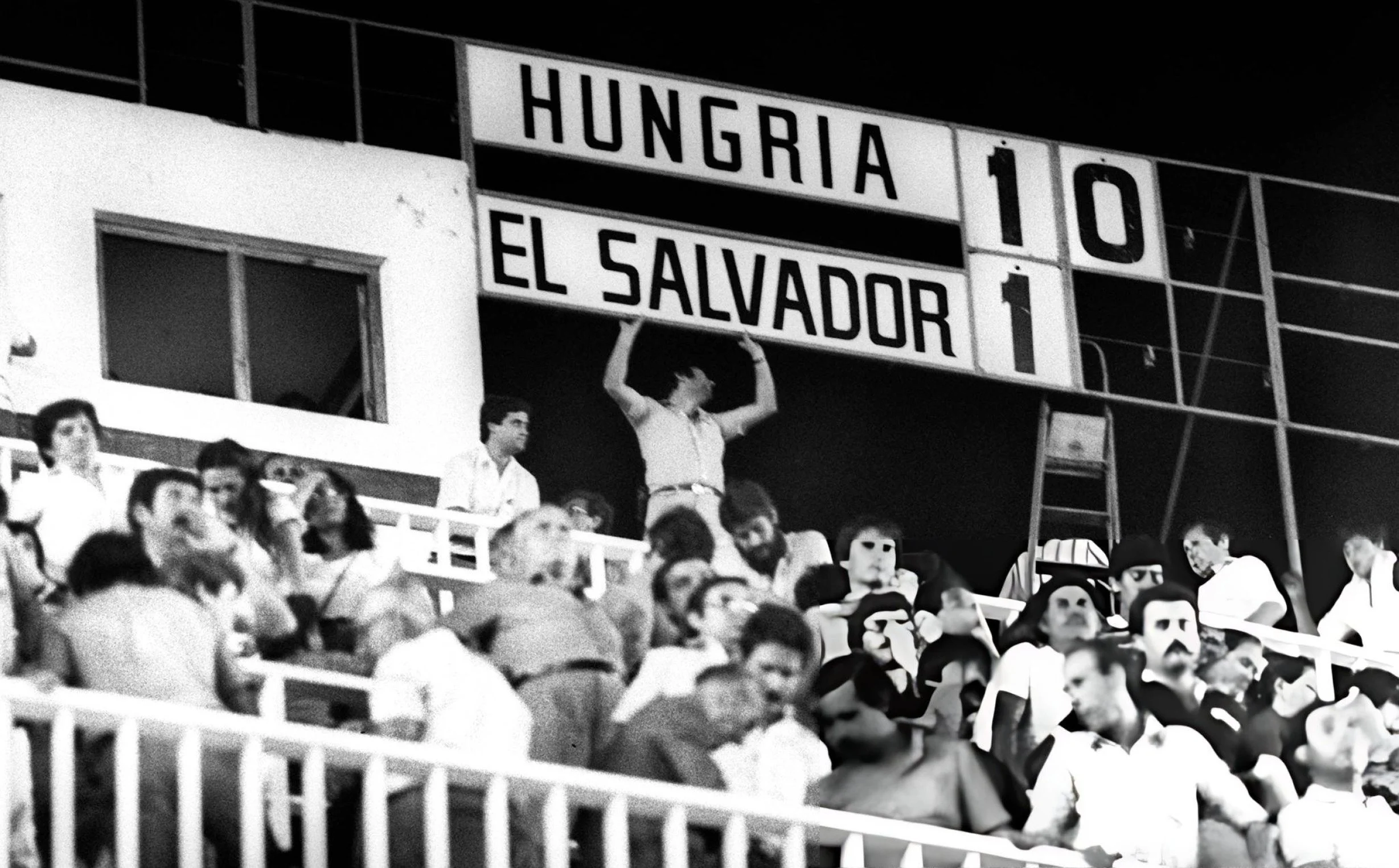
Words by Carlos D. Mojica | Published 01.07.2026Every four years, when the World Cup comes around, there is inevitably a one-sided match where it’s clear after a few minutes who the eventual victor will be.
At some point during this match, the color commentator will casually mention that the most goals against an opponent in a men’s World Cup match occurred in 1982, when Hungary defeated El Salvador 10-1 in a group stage match.
The commentator will then note that the scoreline is tied for the largest margin of victory in a World Cup contest.
For most people, this is a random bit of trivia they may or may not have heard before, and most forget it until it’s brought up again four years later.
But ask any Salvadoran about the “10 to 1” match, and they’ll immediately begin shaking their head.
For them, this score is an inescapable memory of a tale only half told, one that the rest of the world fails to understand beyond a surface level. As the old football adage goes, the final score of the match does not tell the whole story.
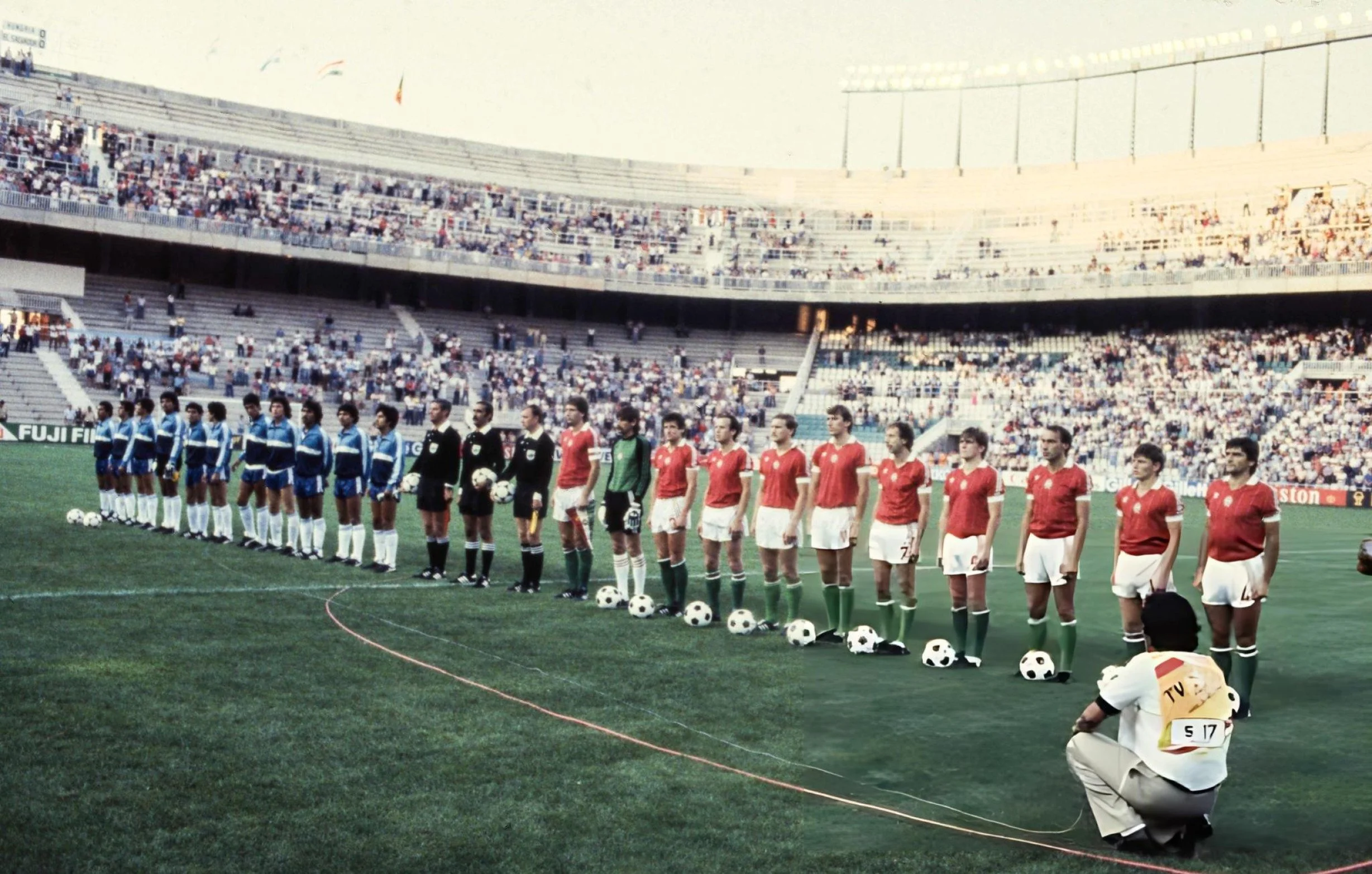
Hungary and El Salvador line up pre-match at the Nuevo Estadio, Elche at the 1982 World Cup in Spain.
Photo Credit: Alain de Martignac
Road to the 1982 World Cup
In 1981, El Salvador was three years into a brutal and bloody civil war that would last 12 years, resulting in over 75,000 deaths and the disappearance of 8,000 people, according to a United Nations report.
Amid the grim reality of war, El Salvador’s national team provided a welcome distraction for the Salvadoran people, with unofficial ceasefires during World Cup qualifying matches. Los Cuscatlecos had qualified for that year’s CONCACAF Championship, a tournament featuring six nations that faced off in November, competing for two spots in the 1982 World Cup in Spain.
Despite opening with a loss against Canada, El Salvador rallied to finish in second place, upsetting CONCACAF powerhouse Mexico 1-0 en route to becoming the first Central American nation to qualify for two World Cups.
The result came just three weeks before the massacre of El Mozote in El Salvador, which left anywhere between 700 and 1,000 people dead – the bloodiest single incident of the Salvadoran Civil War.
La Selecta found itself in Group 3, alongside reigning World Cup champions Argentina, Euro runner-up Belgium, and Hungary. As Los Cuscatlecos geared for the World Cup, they encountered all type of trials – some of their own making.
To begin with, El Salvador’s federation registered only 20 of the possible 22 players, bringing in two officials in their place and leaving the squad short of options. Additionally, while other nations arrived in Spain with plenty of time, El Salvador’s squad barely made it on time.
After a 72-hour trip with layovers in three different countries, the Salvadoran players were the last World Cup team to arrive, landing in Spain just three days before their opening match against Hungary.
Once in the Iberian Peninsula, the logistical challenges continued to stack up. In addition to poor accommodation, El Salvador also lacked training uniforms or even footballs, which they had to borrow from their rivals.
To make matters worse, the technical staff was unable to secure tapes of Hungary until the night before the match, giving the head coach little time to prepare. This series of mishaps and external factors set the stage for what is arguably the most one-sided World Cup match of all time.
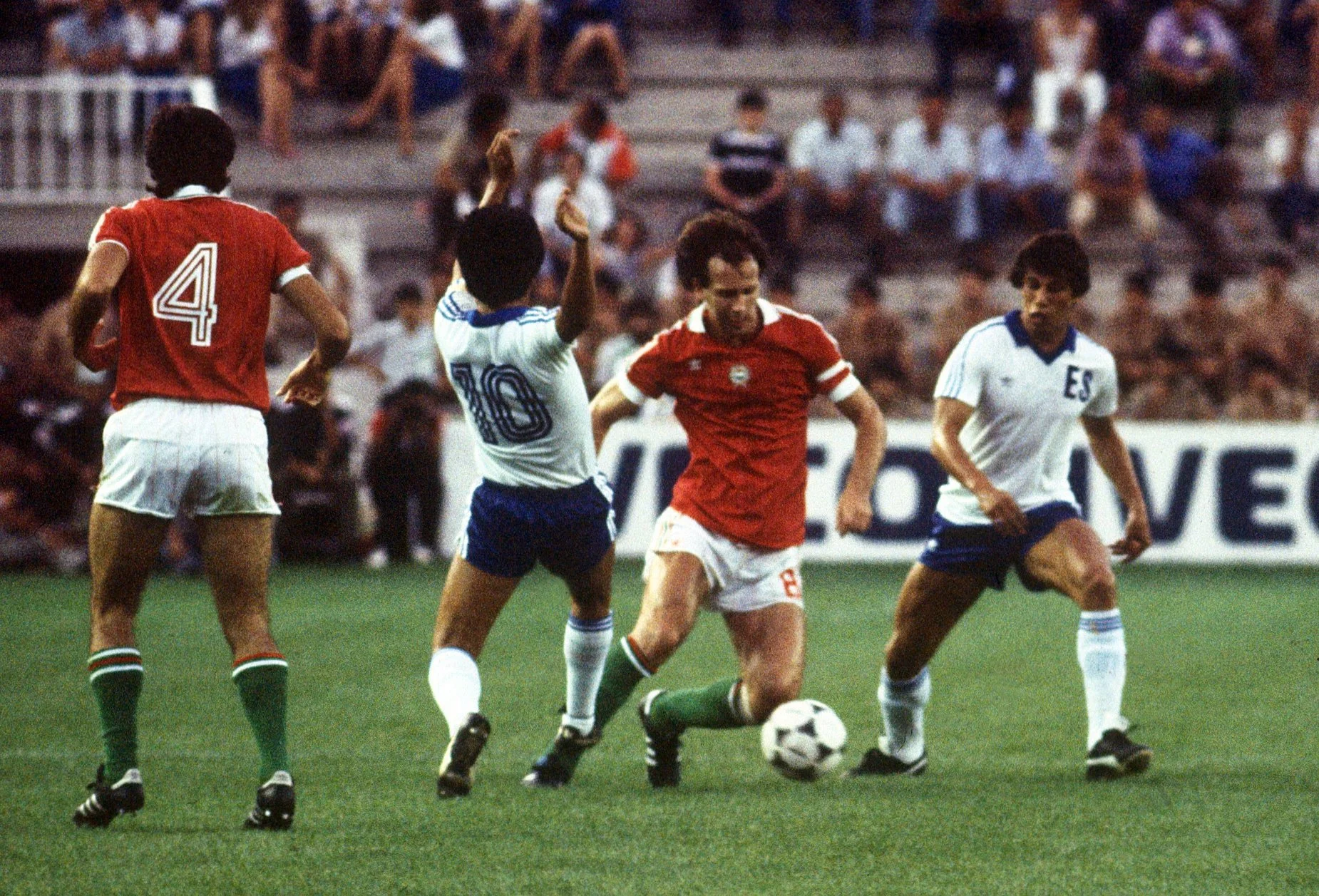
An underprepared El Salvador were put to the sword by a rampant Hungary.
Photo Credit: FIFA
The 10 to 1 Match
On June 15, El Salvador faced off against Hungary at the Nuevo Estadio in Elche. Los Cuscatlecos were the youngest side at the tournament – with an average age of 23.3 – and were coached by Mauricio “Pipo” Rodriguez, who at 36 was the youngest coach at the World Cup.
Rodriguez lined up his side in an attack-heavy formation, certain that Hungary was there for the taking. Unfortunately, this tactic backfired, as Hungary took the lead just four minutes into the match.
The first half saw the Magyars exploit the space left in midfield by El Salvador, and by halftime, the Magyars were up 3-0. Despite trailing by three goals, El Salvador had managed some attacks, with Jorge “Mágico” Gonzalez leading the way and providing a constant threat.
But in the second half, everything fell apart for La Selecta, and the Hungarians went up 5-0 before El Salvador could pull one back. El Salvador’s lone goal came courtesy of Luis Ramirez Zapata in the 64th minute, who sent it to the back of the net after pouncing on a loose ball inside the box.
Even amidst the one-sided scoreline, the goal was wildly celebrated by Ramirez and back in El Salvador, as it marked the nation’s first goal in the World Cup.
But any hope of mounting a comeback was short-lived, as Hungary netted four goals in the 12 minutes following Ramirez’s strike. The Magyars scored once more in the 83rd minute, making the final score a lopsided 10-1.
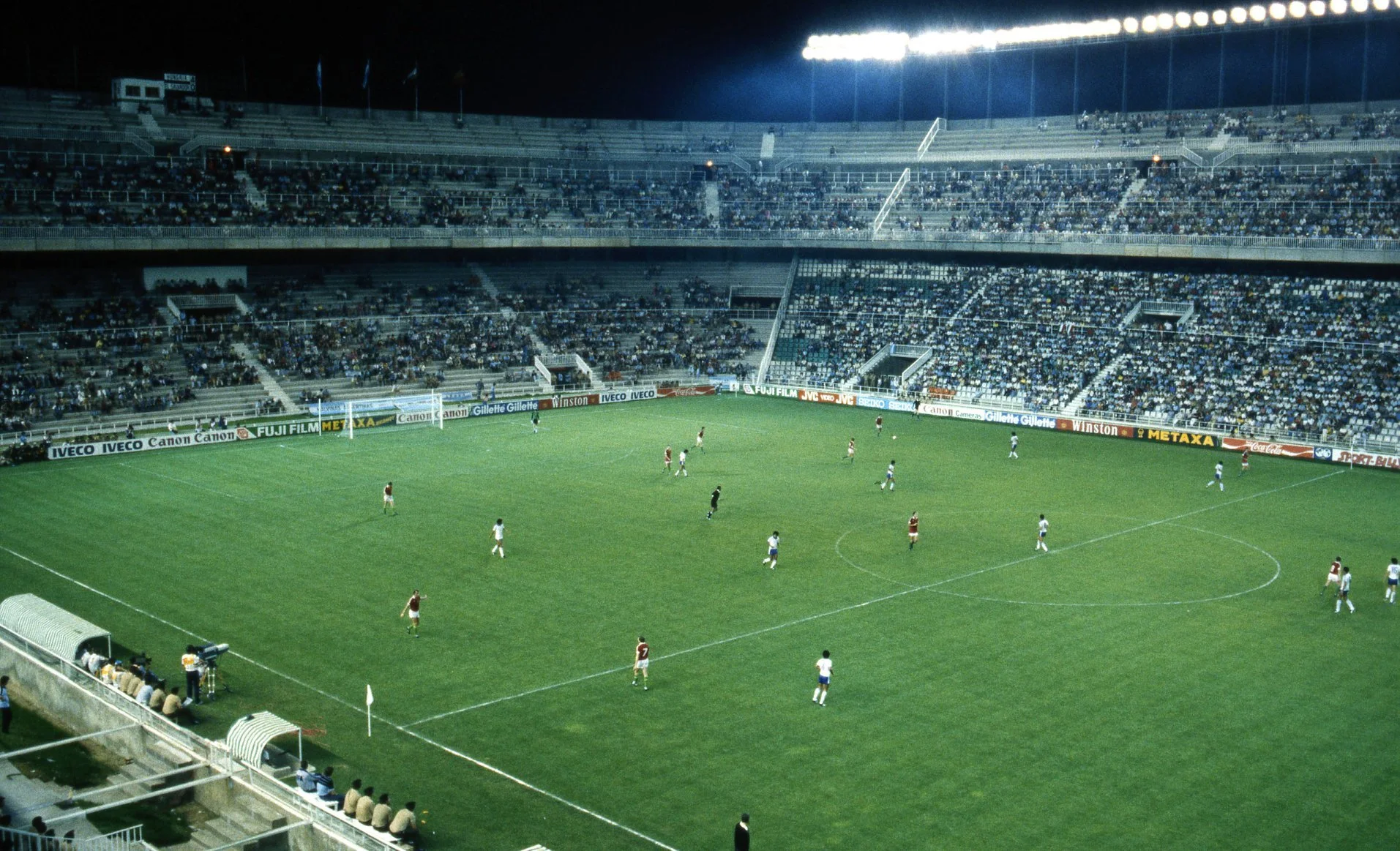
The view from the stands at the Nuevo Estadio in Elche.
Photo Credit: FIFA
The Ensuing Matches
Following the devastating result, the Salvadoran players – led by captain Norberto Huezo - rebelled against their head coach and refused to follow Rodriguez’s tactics. Given the threats posed by Argentina and Belgium, El Salvador instead adopted more defensive-minded tactics.
These tactics made a noticeable difference: although La Selecta lost both matches, they conceded only one goal against Belgium and kept the reigning champion Argentina from scoring more than two goals, even shutting out the legendary Diego Maradona.
Notably, “Mágico” Gonzalez was a constant threat in both matches, terrorizing the Belgian and Argentine backlines with his dribbling skills.
While El Salvador was eliminated due to these results, the team’s performances against the two powerhouses earned it some respect among the other tournament participants.
Even Maradona recognized Gonzalez’s prowess, mentioning him by name in interviews following the tournament.
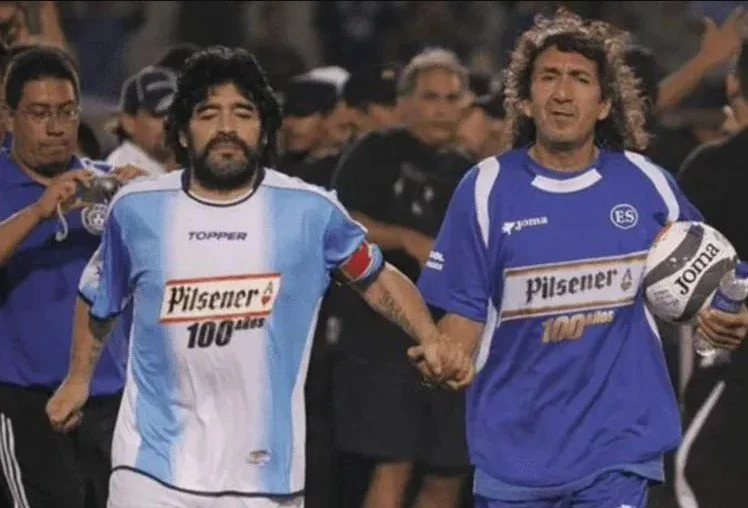
"Mágico" González and Diego Maradona maintained their frienship beyond Spain '82.
Photo Credit: Yahoo
The Aftermath
When the Salvadoran team returned home, they were initially shunned by the Salvadoran public. The 10-1 loss to Hungary became a source of embarrassment for the country, and some players even received death threats in its wake.
Only “Mágico” Gonzalez escaped this type of treatment. The winger’s performance at the World Cup was so captivating that it earned him a move to Spanish top-flight side Cádiz, where he played for 10 years, leaving the club as its greatest player in 1991 before retiring from soccer altogether in 1999. He is widely considered to be the greatest Salvadoran player of all time, and El Salvador has a stadium that bears his name.
Over time, the result against Hungary became part of Salvadoran culture. To this day, when El Salvador’s national team is about to face a strong opponent, supporters take solace in the fact that even if La Selecta loses, the result “can’t be worse than the 10-1.”
But while the loss to Hungary initially had negative connotations, the Salvadoran people have softened their stance on the 1982 squad and have embraced it in the decades since.
For better or worse, the 1982 El Salvador national team remains the last time the nation was present at a World Cup, meaning every Salvadoran squad since has been chasing its shadow.
The team provided hope and brought joy to a nation experiencing its darkest period. History has been kind to the side, as light has been shed on the external factors players had to deal with, helping contextualize the result against Hungary as more of an outlier than a true reflection of the team’s capabilities.
Likewise, Ramirez’s goal against the Hungarians remains El Salvador’s lone goal at the tournament, making it a historic moment.
Now, the next time a color commentator mentions the scoreline of the El Salvador – Hungary game, you can recall the dire circumstances it belies and treat it as more than just a footnote. The 1982 Salvadoran squad deserves that much.
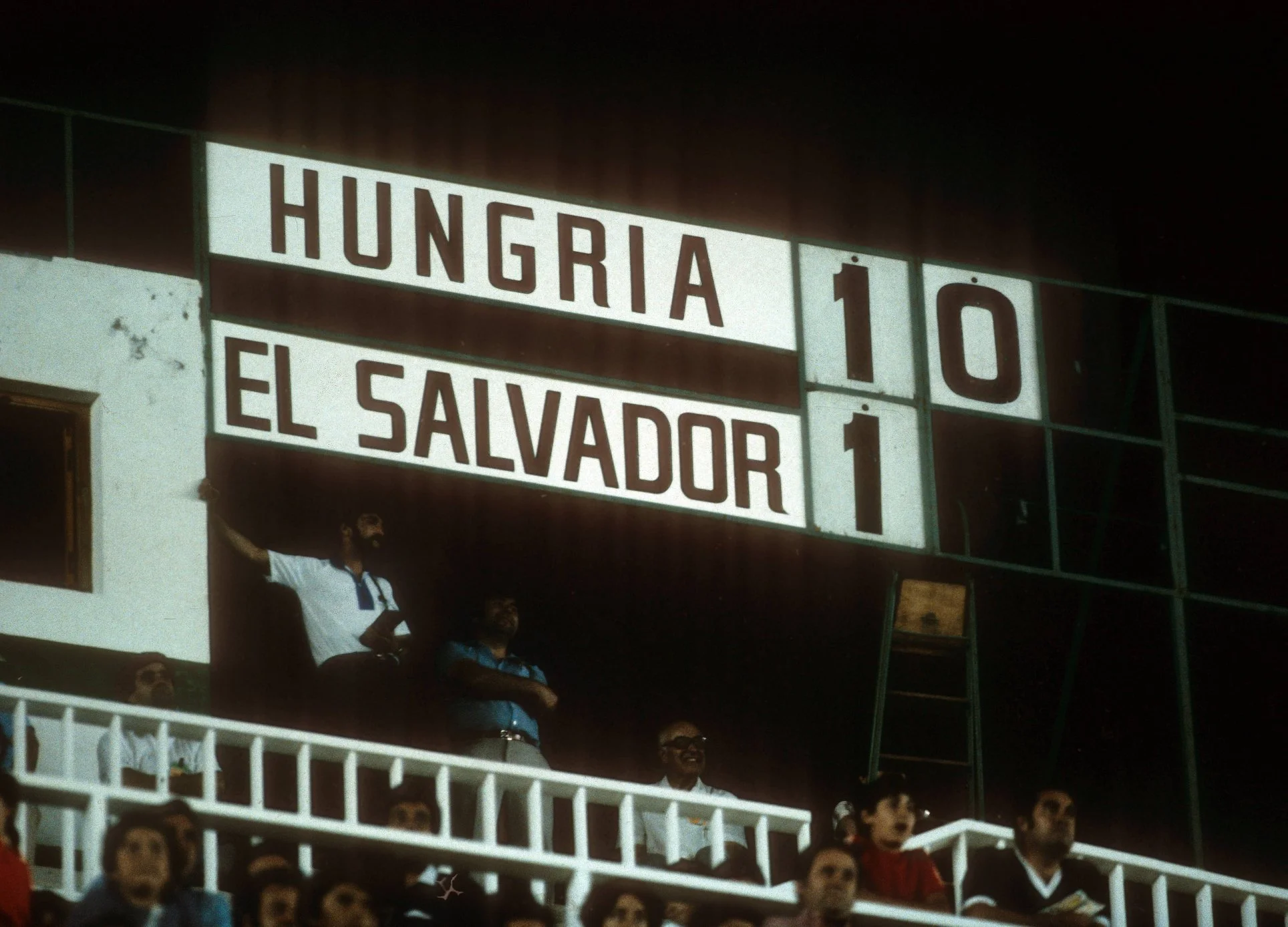
A scoreline to forget, but one that wasn't without context for El Salvador.
Photo Credit: FIFA
El Salvador Roster – 1982 World Cup
Goalkeepers
1- Luis Guevara Mora (Platense Municipal); 19- Eduardo Hernández (Santiagueño); 20- José Luis Munguía (CD FAS)
Defenders
2- Mario Castillo (Santiagueño); 3- José Francisco Jovel (Águila); 4- Carlos Recinos (CD FAS); 5- Ramón Fagoaga (Atlético Marte); 12- Francisco Osorto (Santiagueño); 15-Jaime Rodríguez (Bayer Uerdingen); 18-Miguel Ángel Díaz (CD Chalatenango)
Midfielders
6- Joaquín Ventura (Santiagueño); 7- Silvio Aquino (Deportivo Jalapa); 8- José Luis Rugamas (Atlético Marte); 10- Norberto Huezo © (Atlético Marte); 16- Mauricio Alfaro (Platense Municipal);
Forwards
9- Ever Hernández (Santiagueño); 11- Jorge Gonzalez (CD FAS); 13- José Maria Rivas (Independiente de San Vicente); 14- Luis Ramírez Zapata (Atlético Marte); 17- Guillermo Ragazzone (Atlético Marte)
Head Coach
Mauricio “Pipo” Rodriguez
El Salvador’s 1982 World Cup Campaign
Group 4
June 15, 1982: Hungary 10 – 1 El Salvador
June 19, 1982: Belgium 1 – 0 El Salvador
June 15, 1982: Argentina 2 – 0 El Salvador