

Words by Steve Sharman | Published 10.06.2026The clock stops at 90:00 and all eyes fall on the fourth official. The board goes up, and the number glowing bright on the small LED screen is met with a fervent roar of encouragement, or a nervous groan of protestation.
We’re into added time.
The final roll of the dice, the last chance saloon. Agonising enough in league football but in a knockout game, a cup competition? These minutes can mean everything.
Now or never. All or nothing. Death or glory.
From Ole Gunnar Solskjær’s treble-sealing effort for Manchester United in the 1999 Champions League final to Sergio Aguero’s injury time strike stealing a first Premier League title for Manchester City in 2012, iconic goals scored in added time have shaped the course of football history.
In men’s international football, up to and including Euro 2024 in Germany, there have been 354 knockout stage games at World Cups and European Championships. Those 354 games have yielded just ten game-changing goals scored in added time at the end of 90 minutes - four winners and six equalisers.
All those goals have come since 1998, perhaps a reflection of the ever-increasing amount of time added to the end of matches.
There is no denying that through the associated jeopardy and rewards - from the 90th minute onwards - goals get ever more dramatic.
90+1
The earliest late goal in knockout football came in the 2014 World Cup in Brazil, a game that saw Greece equalise in the 91st minute against 10-man Costa Rica in their Round of 16 tie.
When Keylor Navas, then of Levante, could only parry Theofanis Gekas's shot back into the penalty area, centre-back Sokratis Papastathopoulos - who can count AC Milan, Arsenal, and Borussia Dortmund among his former clubs - was on hand to fire the rebound home for his first international goal.
Despite the numerical disadvantage and the agony of conceding an injury time equaliser, the Gods were shining more brightly on Navas than the Greeks in Recife; the Costa Rica stopper made several more crucial saves in extra-time and one in the resulting penalty shootout as the Central American side triumphed 5-3 on penalties, and Navas’ performances earned him a move to Real Madrid that summer.
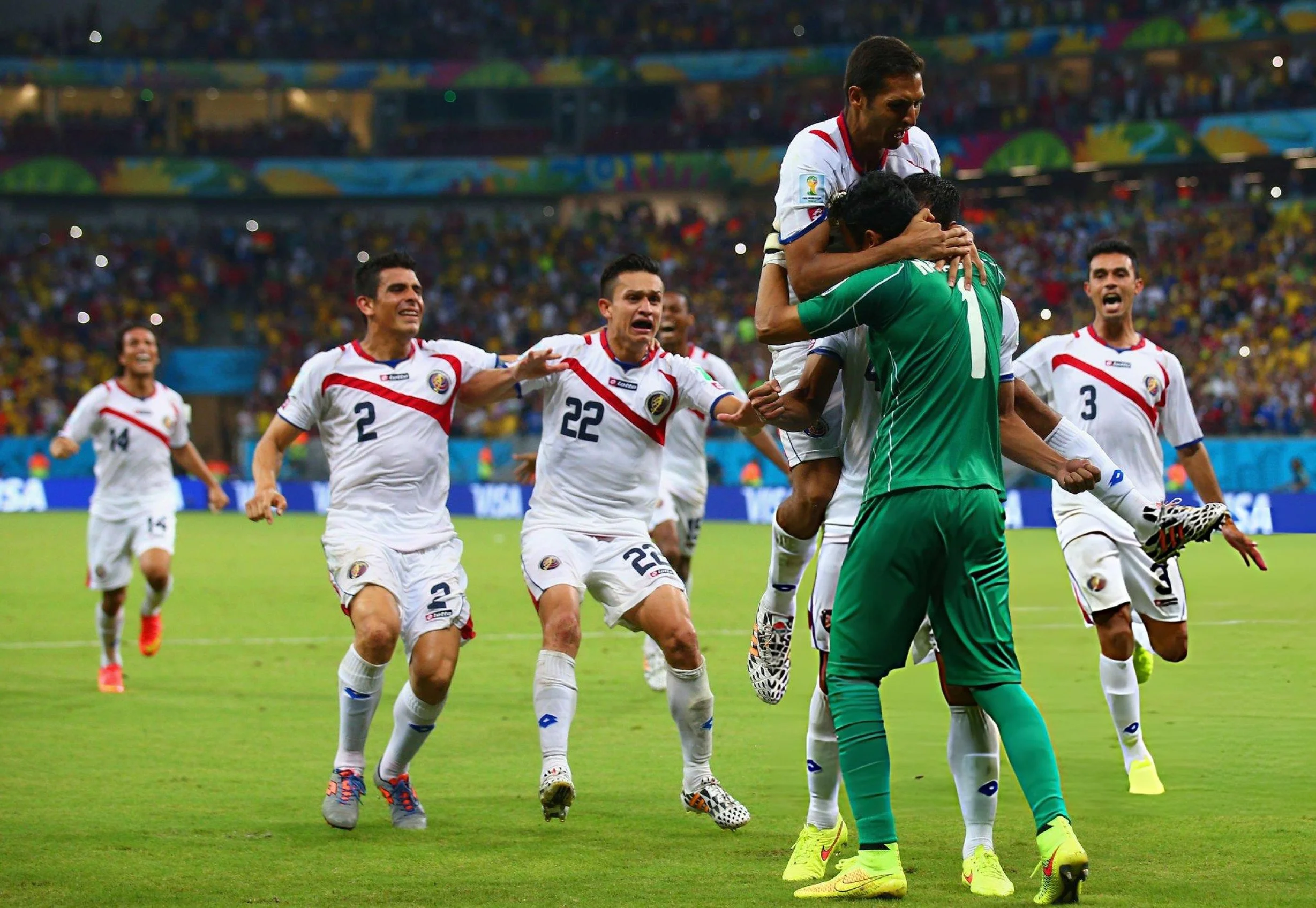
Keylor Navas celebrates with his teammates after defeating Greece in a penalty shootout at the 2014 World Cup.
Photo Credit: Getty
90+2
There have been two games with match-altering goals in the second added minute. In the Round of 16 game in Toulouse in the 1998 World Cup in France, Guus Hiddink’s Netherlands faced a strong Yugoslavian side containing the likes of Siniša Mihajlović, Dragan Stojković, and Predrag Mijatović.
Netherlands went ahead when Dennis Bergkamp struck just before half-time, however the lead was cancelled out when Slobodan Komljenović rose unchallenged to head his side level early in the second half.
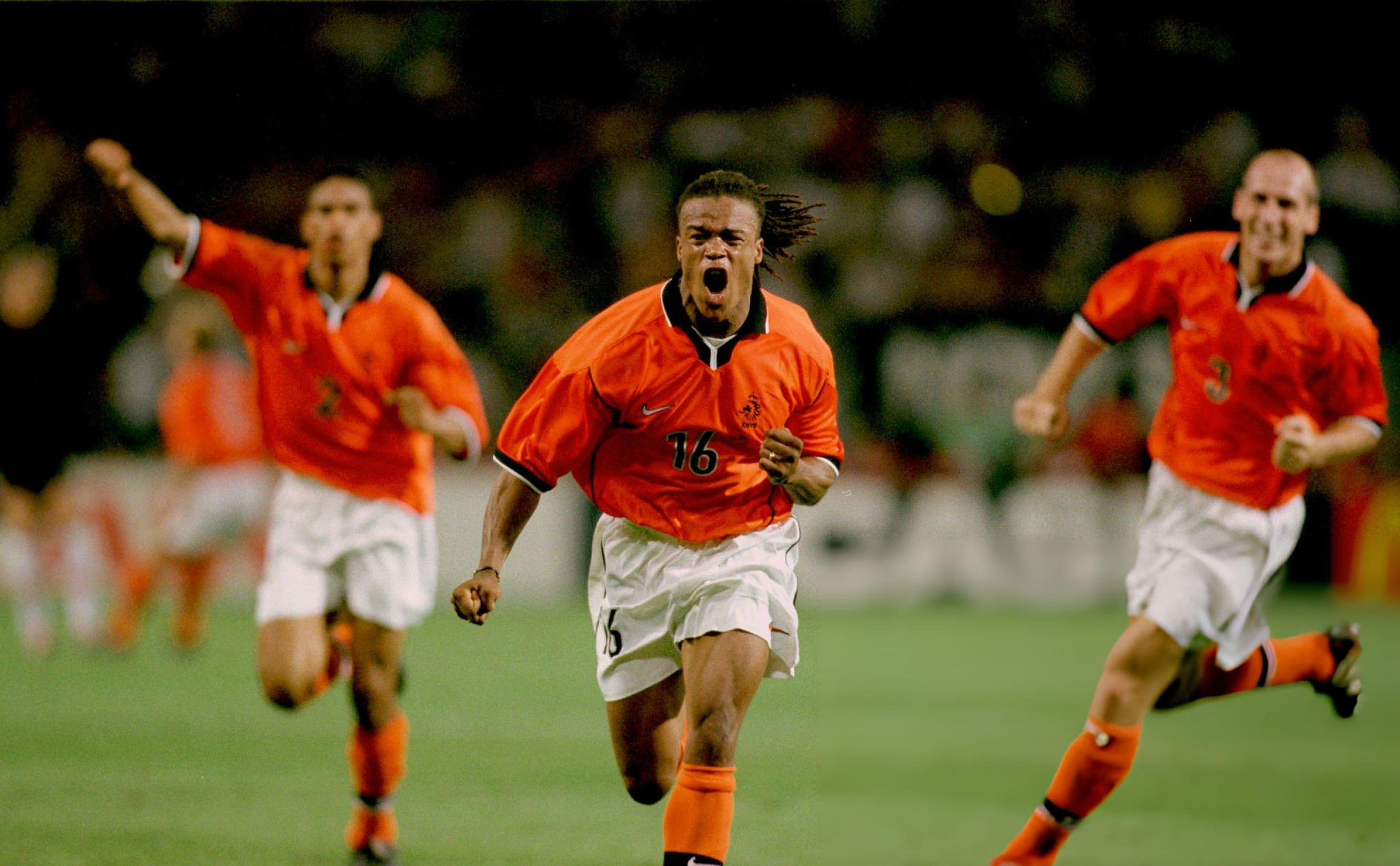
Yugoslavia missed a golden chance to take the lead when Mijatović smashed a penalty into the crossbar, and the Balkan side were made to pay in added time when Edgar Davids picked up a short corner and drilled a deflected left foot shot into the bottom corner, scoring the first added time winner in men’s international tournament knockout football, and breaking Yugoslav hearts in the process.
The 92nd minute Balkan misery changed to delight at Euro 2020 in Croatia’s ripsnorting, last 16, eight-goal thriller against Spain. Seeking to go one better than their impressive performance in Russia (2018), Croatia took the lead in Copenhagen through Pedri’s calamitous long range own goal, before an equaliser from Pablo Sarabia, a header from Cesar Azpilicueta, and a calm Ferran Torres finish after some sorry Croatian defending moved Spain into a seemingly unassailable lead.
Croatia were thrown a lifeline five minutes from time when substitute Mislav Oršić bundled home from close range following a goalmouth scramble. That renewed optimism was turned to elation seven minutes later, when Oršić swung a great ball into the box from the Croatian left and fellow substitute Mario Pašalić rose highest to power home an added time headed equaliser.
Spain were shell shocked and Croatia ecstatic, however the respite was only temporary. Having regained their composure, extra-time goals from Álvaro Morata and Mikel Oyarzabal ensured Spain triumphed 5-3, leaving the best efforts and added time heroics of the Croatians all in vain.
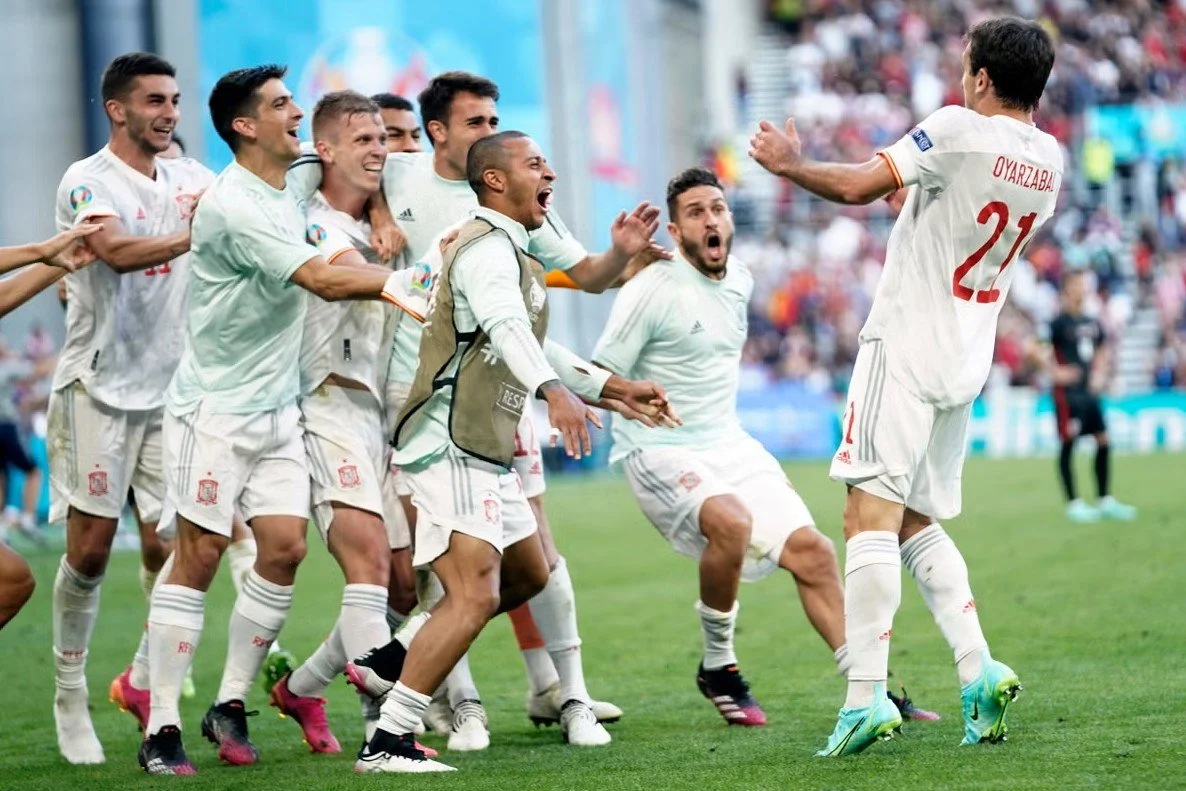
Spain celebrate after knocking out Croatia in a tough contest at Euro 2020.
Photo Credit: The Independent
90+3
When England took on a vibrant Columbia side in Moscow in the 2018 World Cup Round of 16 tie, the sense of expectation was high. Hopes rose higher when Harry Kane scored in a record-equalling sixth consecutive game to put the Three Lions 1-0 up.
However excitement turned to nerves as the clock ticked past 90 and the slender one goal lead looked ever more fragile. Jordan Pickford’s magnificent save off a stinging drive from Mateus Uribe with seconds remaining looked to have put England through, however Juan Cudrado swung in the resulting corner and Yerry Mina soared over Harry Maguire to nod home a 93rd minute equaliser.
The weight of penalty history bears heavy on English hearts, and Mina’s added time equaliser had many England fans casting an eye forward 30 minutes with a habitual sense of trepidation. But among the sense of impending doom, every twist brings a chance at making history, and so it was; extra-time brought no further goals, Pickford saved from Carlos Bacca, and Eric Dier calmly slotted home from 12 yards to bring England a first World Cup penalty shootout victory.

Yerry Mina scored late on against England at the 2018 World Cup.
Photo Credit: Marca
90+4
Deeper into added time we go. The 94th minute has seen more net-bulging action than any other additional minute, and the only added time goal in a final.
In the final of Euro 2000 in Rotterdam, fresh from lifting the World Cup in Paris, a galaxy of superstars lined up for France to face Dino Zoff’s Italy. The Azzurri, who had beaten both co-hosts - Belgium 2-0 in the group stage and the Netherlands on penalties in the semi-finals - took the lead early in the second half when Marco Delvecchio converted Gianluca Pessotto’s teasing cross.
Based on a defensive unit containing Alessandro Nesta, Paolo Maldini, and Fabio Cannavarro, Italy’s famed catenaccio seemed to have bolted the door to Les Blues. That was until Sylvain Wiltord burst into the box and with almost the last kick of the game, fired a left foot shot through the legs of Nesta and under the body of goalkeeper Francesco Toldo.
This 94th minute equaliser led to another moment of history; following Wiltord’s goal, David Trezeguet’s lashed extra-time winner still stands as the only final to be settled by a golden goal.
Two further goals have been scored in the 94th minute, both in the Round of 16. At Brazil 2014, Mexico faced the Netherlands in Fortaleza. The men in green took the lead through a long range strike from Giovani dos Santos and, expertly marshalled by Rafael Marquez, seemed set for a place in the quarter finals.
The Dutch had other ideas. With two minutes left of regular time, Wesley Sneijder ran on to a loose ball on the edge of the box and absolutely smashed a rocket into the bottom corner to draw the Oranje level. With Mexico still reeling from the late equaliser, the Netherlands smelled blood, and when flying winger Arjen Robben went down easily under a challenge from the Mexican captain, Klaas-Jan Huntelaar stepped up to slot the 94th minute penalty into the bottom corner and consign Mexico to a sixth consecutive round of 16 defeat.
Similar heartbreak was experienced by Japan in their last 16 tie against Belgium at the Russia World Cup (2018). After a goalless first half in Rostov, the game burst into life when Genki Haraguchi and a fine strike from Takashi Inui gave Japan a two-goal advantage.
The ocean of blue delirium was soon calmed, as headers from Jan Vertonghen and Marouane Fellani drew Belgium level. As Japan pressed for an added time winner of their own, a poor corner was claimed by Thibaut Courtois who immediately launched the Belgian counter-attack.
When Romuelu Lukaka stepped over Thomas Meunier’s cross to allow Nacer Chadli to complete an astonishing comeback, the 94th minute winner left the Japanese distraught; players in a heap on the turf and supporters in tears in the stands.
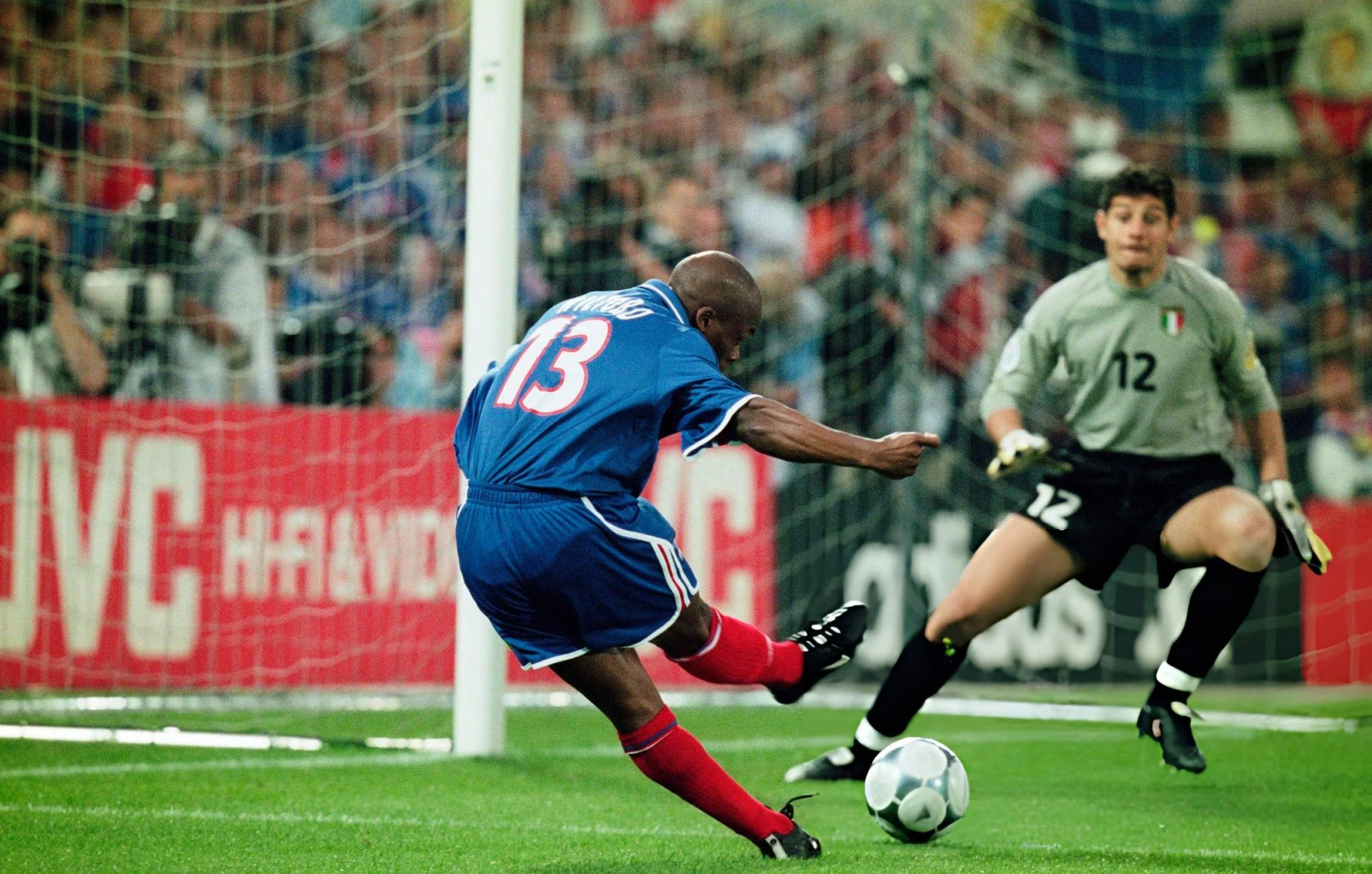
Sylvain Wiltord scored both of France's goals against Italy in the final of Euro 2000.
Photo Credit: Getty
90+5
The 95th minute has seen two last-gasp goals - one winner, and one equaliser. In the 2006 World Cup in Germany, three-time winners Italy faced Guus Hiddink’s Australia in the Round of 16. Italy dominated the first half, but Middlesborough’s Mark Schwarzer kept the Azzurri at bay. The pendulum swung more towards the Socceroos early in the second-half, when serial villain Marco Matterazi was shown a straight red card for a foul on Mark Bresciano, who at the time played his football in Italy, with Parma
Locked at 0-0, the match looked to be heading towards extra time when Italy awarded a controversial penalty. When terzino sinistro Fabio Grosso surged into the box, Australian defender Lucas Neill went to ground early and the flying Italian came crashing down, having seemingly tripped over the defender's prone body.
Amid the ensuing furore, one man kept a cool head; Rome’s favourite gladiator, Francesco Totti, stepped up and smashed the ball high to Schwarzer’s right, sending Australia back home, and Italy into the last eight. The Italians would go on to win their fourth World Cup trophy, beating France on penalties in the final.
More recently, but also in Germany - this time at Gelsenkirchen - England needed a 95th minute equaliser to keep their Euro 2024 campaign alive. After a thoroughly uninspiring group stage which featured a win against Serbia and desperately dull draws with Denmark and Slovenia, the Three Lions were drawn to face Slovakia in the Round of 16. After falling behind to six-way tie golden boot-winner Ivan Schranz’s third goal of the tournament, England huffed and puffed but rarely looked like drawing level.
Then, in the 95th minute, Marc Guehi flicked on a long throw and Real Madrid superstar and pre-tournament golden-boy Jude Bellingham launched himself into the air, firing an acrobatic bicycle kick into the back of the Slovakian net to level the scores. Mere seconds from defeat, England went on to make the final where they were beaten by Spain, bringing an end to Gareth Southgate's tenure as England boss.
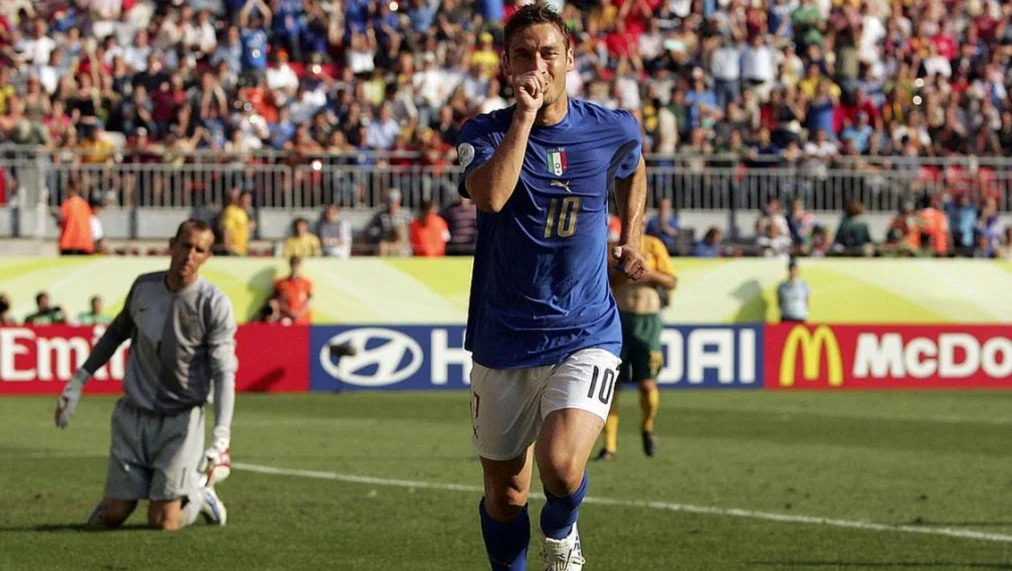
Francesco Totti broke Australian hearts at the 2006 World Cup.
Photo Credit: BBC News
90+11
Games of previous tournaments historically rarely go past 100 minutes. However, in the World Cup in Qatar 2022, the quarter-final draw paired the Netherlands with Argentina in a game that saw the latest meaningful knockout football goal ever scored at a World Cup.
When the Dutch were awarded a free-kick on the edge of the Argentinian penalty area in the 11th minute of added time - the 101st minute - it seemed a direct strike on Emiliano Martínez’s goal was the best and last hope for the men in orange.
Instead, Teun Koopmeiners rolled the ball into the feet of giant striker Wout Weghorst who turned smartly and smuggled the ball past a wrong-footed Martinez, sparking pandemonium among the Dutch fans.
However, the Villa stopper had the last laugh following a goalless period of extra time, saving penalties in the shootout from Virgil Van Dijk and Steven Berghuis to keep Messi’s fairytale alive.
Honorary mentions for late added time goals should also go to Artem Dovbyk who scored a winner for Ukraine against Sweden in 2020, and Semih Şentürk who scored a dramatic late equaliser for Turkey against Croatia in the quarter-finals of Euro 2008 - both in added time on extra-time, but ‘only’ one and two minutes beyond the regulation 15 minutes, respectively.
The Final Whistle
Late goals - efforts that come beyond the end of 90 minutes of battle - can truly shape the course of football history. From the 91st to the 101st minutes, late goals scored at World Cups and European Championships show how players, teams, and fans will never lose faith.
Added time equalisers require a whole mental reset, as the hopes and dreams of players and fans alike are renewed and extended into extra time, and the possibility of penalties looms ever larger whereas scoring a late, late winner will spark joy and delirium for one side, whilst the team that concedes will be left heartbroken, with little time to find a way back.
As we approach the 2026 World Cup in Canada, Mexico, and the United States, late goals give us hope that the course of history can be altered - right up to the last minute, and far beyond the 90 minutes.