

Words by Colin Whelan | Published 14.08.2026“People often ask me why I don’t play as well for Ireland, as I do for Burnley.
It’s simple – Danny keeps me up all night talking”
– Jimmy McIlroy, Northern Ireland and Burnley
There’s no getting away from the fact that Danny Blanchflower could talk for Northern Ireland, as well as he could play football for Northern Ireland. There was a wonderful eloquence when the man spoke; a genuine passion and conviction, rolled into one.
You could easily fill a whole chapter with ‘The Quotes of D. Blanchflower’; and we would all be happy with our efforts, because he was that good with the words.
We heard his verbal eloquence away from the pitch, of course, in his many interviews both during and after his football career. TV producers soon learned that Danny Blanchflower was the ‘go-to’ player when looking for a post-match interview, where they – and TV viewers - were often treated to a takeaway quote, or some great insight into the events on the pitch that day.
And as events would gloriously coincide, Danny Blanchflower just happened to be captain of the greatest club team England had ever seen up until that point; the 1960-61 ‘Double Winners’, Tottenham Hotspur.
But he wasn’t just a great speaker. On the pitch, Blanchflower was known for his vision and movement in the midfield playmaking role. He had that crucial ability to dictate and change the tempo of a game.
He was at least the equal of Mackay and White, the other two pieces of Spurs’ midfield triumvirate, and he was the one who brought the extra guile and awareness to any team he played for.
Blanchflower started his career playing for the Belfast team, Glentoran. But by 1949, he had come to England, to Barnsley, where he began a theme that would run right the way through his career.
He fell out with manager Angus Seed and his training methods, because the team didn’t practise with the ball as often as Danny might have liked. So, by 1951, he had moved to Aston Villa, where he made 155 appearances for the club, before making his career-defining move to Spurs in 1954 – a signing that would cost Spurs £30,000, the most expensive midfielder in Britain at the time.
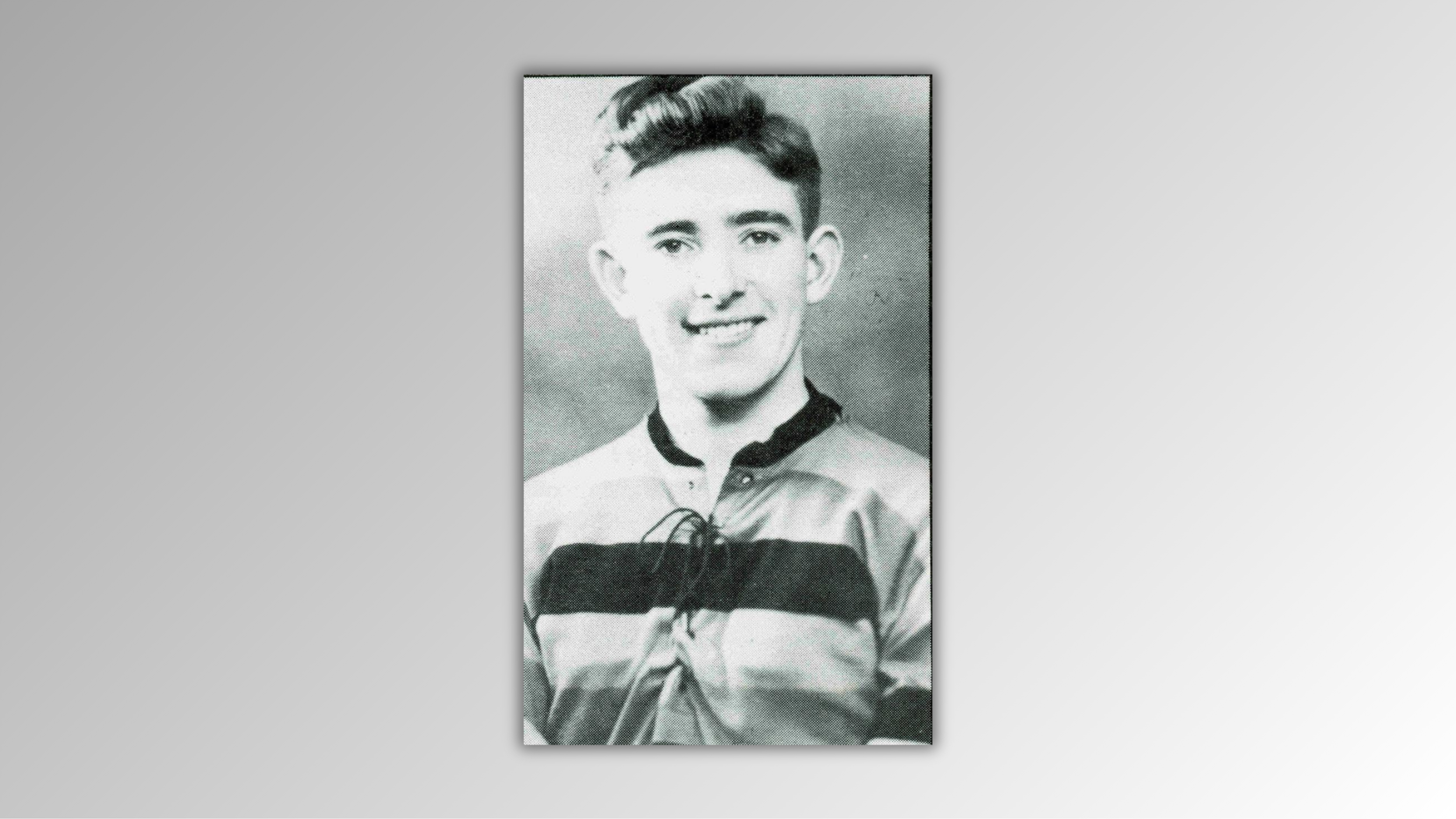
A young Danny Blanchflower during his time at Glentoran where he was nicknamed 'Rabbit'.
Photo Credit: India Spurs
Amazingly, given what he achieved at Spurs, he ran an almost constant, low-level squabble at the club. Manager Arthur Rowe had signed Danny, sharing the same ideals to the extent that the manager immediately wanted him to captain the team.
“He was a natural leader with the kind of commanding personality that compelled respect”. However, Rowe resigned with ill health a season later. This then preceded a damaging internal power-struggle, involving future England manager Alf Ramsey. The result of which led to first-team coach Jimmy Anderson taking over as manager.
He and Danny clashed on several occasions, most notably during the 1956 FA Cup semi-final against Birmingham, where the captain on the pitch assumed the role of the manager, pushing centre-half Maurice Norman upfield to join the forwards, as Spurs were trailing.
That didn’t work, and Danny was dropped for the next match. But, shortly after, the new manager would again resign through ill health.
Up until this time with Spurs, Danny was made and stripped of the captaincy twice, had a transfer request turned down, and had seen two managers retire with ill health. This was no football marriage made in heaven.
But when Bill Nicholson took over as manager in 1958, the penny began to drop for Blanchflower; even though he had been dropped earlier in the manager’s first season.
They reached an agreement on where the demarcation would lie between manager and the captain on the pitch - and once reinstated to the team, it was Danny Blanchflower who assumed the role as captain.
The improvement made in the 1959-60 season carried on through to the following season, with Spurs winning their first 11 games.
And the audacious claim that Danny had shared with his team-mates at the start of the season wasn’t looking quite as fanciful now – the ‘Double’ was on. The league was won at a canter, with Leicester brushed aside in the Cup Final.
The achievement of the 1961 ‘Double’ winning side, should never be under-played. That feat hadn’t been achieved for 64 years in English football.
That’s important context, when we consider that in the 63 years since, the Double has been accomplished on 10 separate occasions.
Spurs’ achievement in 1961 was truly ground-breaking.
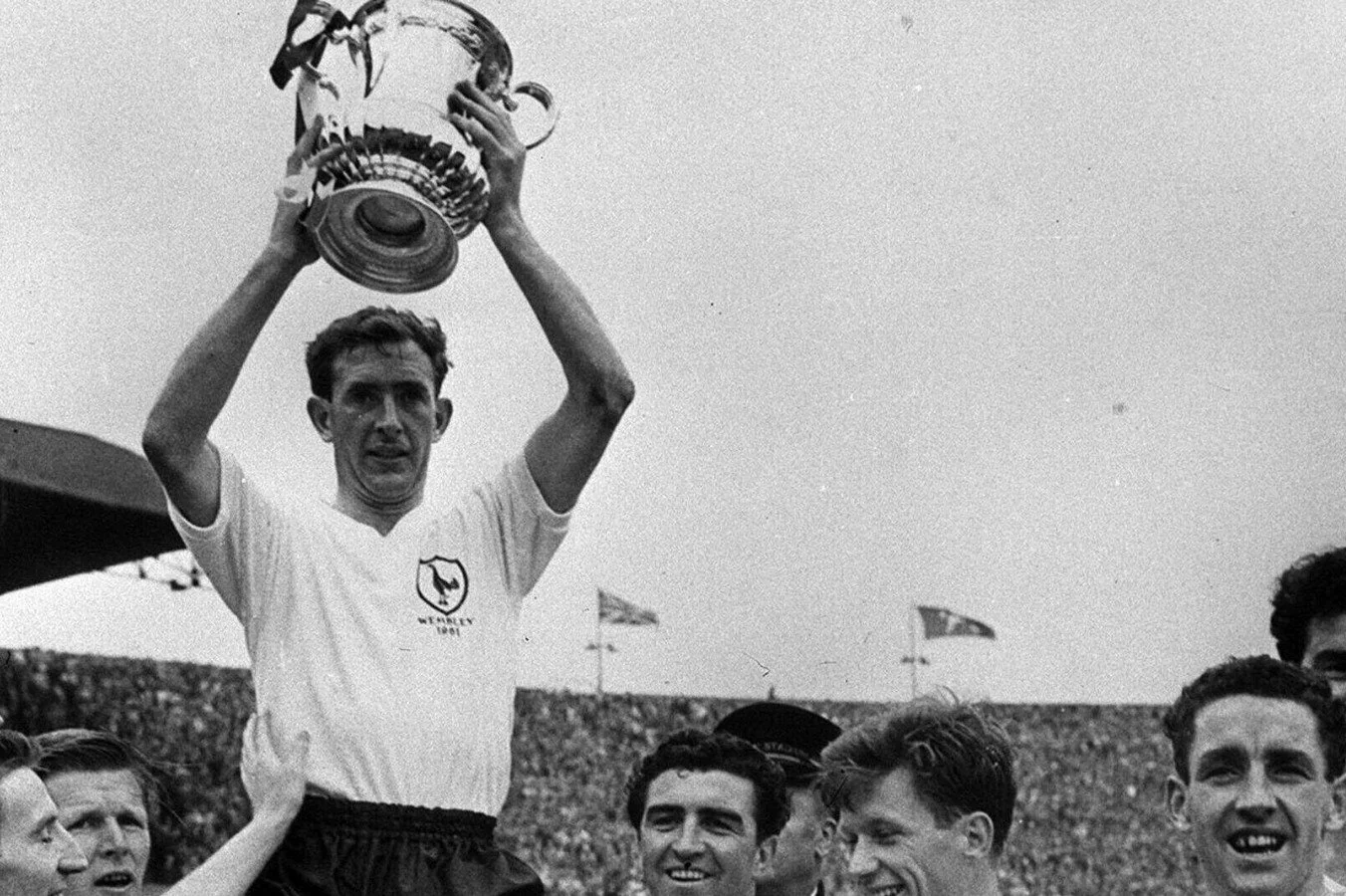
Danny Blanchflower lifts the FA Cup after captaining Spurs to a historic double in 1961.
Photo Credit: Belfast Telegraph
A season later, Danny captained Spurs to win the FA Cup against Burnley, a game in which he scored a penalty. The season after that he again captained Spurs to win the European Cup Winners' Cup – the first English team to win a European trophy.
There was also the small matter of Danny winning the 1958 and 1961 FWA’s Footballer of The Year award. Only eight other players have won the award twice, since its inception in 1948.
He also played 56 times for Northern Ireland, captaining the unfancied team to the World Cup quarter-finals in 1958. He was also chosen for FIFA World Cup All-Star Team in 1958. Only he could have lifted that team to such an elevated status.
Danny was also a thinker and an innovator. “He reckoned he invented the defensive wall because the Northern Ireland goalkeeper was so bad,” his son Richard, once recalled. And he “invented” the passed penalty, long before Johan Cruyff.
In a World Cup qualifier against Portugal in May 1957, he tapped the ball short to Jimmy McIlroy, who scored. The referee, inevitably, ordered the kick to be retaken, because everyone had to have a turn at disagreeing with Danny Blanchflower.
He also famously refused Eamonn Andrews’ grand invitation to appear on ‘This Is Your Life’. “I consider this programme to be an invasion of privacy. Nobody is going to press gang me into anything”. The first person to refuse the invitation, the ground-breaker to a tee.
It seemed totally natural that Blanchflower would assume a managerial career, once his actual football career had finished; but it just never really happened. He did coach at Spurs for several years, and he did manage Northern Ireland and Chelsea briefly in the 70s. His talents, however, were more drawn to commentary, punditry and writing.
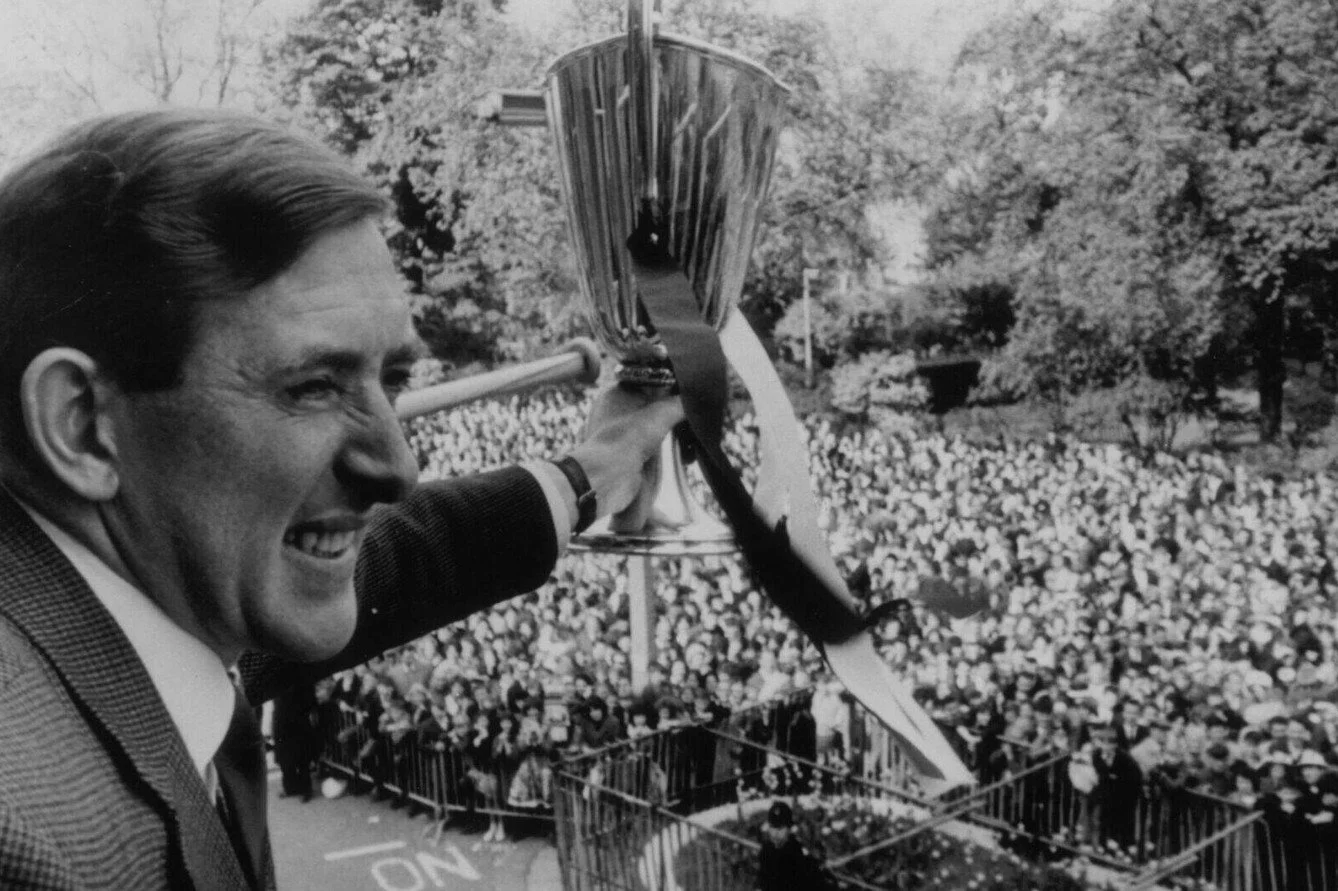
Danny Blanchflower parading the Cup Winners' Cup in front of supporters in 1963.
Photo Credit: Belfast Telegraph
Danny Blanchflower did actually make his unforgettable mark in two separate careers. A cultured, inspiring captain, who led the great Spurs side of the early-60s to the first ‘Double’ of the 20th Century. He then left an equally memorable legacy outside of football, with his eloquence and intellectual grasp, writing a hugely entertaining football column in the Daily Express.
He stood up with the likes of Mackay and White, but he also deserves his place in the company of the likes of McIlvaney and Woolridge. A fantastically talented man in two separate careers.
The great, great tragedy is that Danny Blanchflower lost his life, at the early age of 67. And, in part, this was due to the ravages of Alzheimer’s Disease, that cruel condition that just debilitates and makes a mockery of brain function.
And, probably, the greatest-ever brain in English football belonged to Danny Blanchflower.
“No play, movie or TV programme, work of literature, or music, induces such a polarisation of emotion on a weekly basis.
We curse football for having this power”
– Danny Blanchflower.