

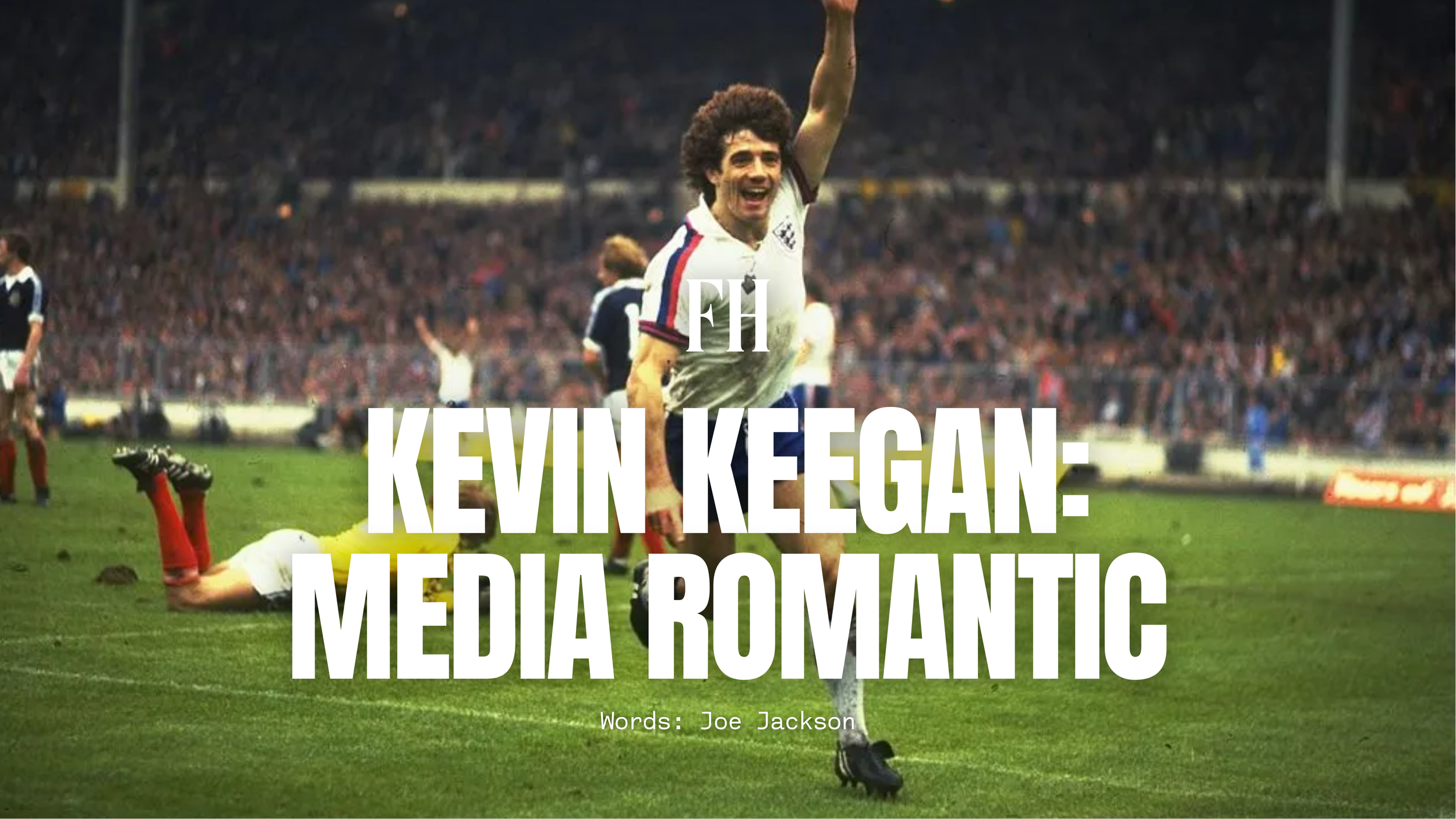
Words by Joe Jackson | Published 02.09.20262026 marks the year football mourned the passing of an icon.
Kevin Keegan won myriad trophies, captained and managed his country, and transformed a struggling Newcastle United squad into title contenders – but one of his greatest contributions to the sport extends beyond the footballing arena.
Keegan stood apart from many of his peers thanks to his dual status as a ‘superstar’ both on and off the pitch.
Before footballers became brands – before rigorous media training and the threat of going viral for the wrong reasons stripped post-match interviews of even the occasional glimpse of the individual behind the mask – Keegan’s public image escaped the confines of the stadium, flowing across television, newspapers, magazines, advertising and (raising a few eyebrows) even music.
This persona rested on something rather unusual for elite sport: emotional transparency, or, perhaps more accurately, as much emotional transparency as one can ever really communicate – or, from the other side, truly glean – through screens and newspapers.
He laughed, cried, sang, celebrated, held his hands up, dug his heels in, and often spoke with a type of disarming honesty that could suddenly verge into over-sharing or teeter towards volatility.
Long before a sterilised neoliberal version of ‘authenticity’ became the currency of celebrity culture, Keegan wore his heart on his sleeve, for better or worse, as opposed to constructing the façade of invincibility.
He was one of football’s first – and, if we take a pessimistic look at the sanitisation of the modern game, perhaps one of its last – media romantics: charismatic, flawed, compelling, everywhere.
A young Liverpudlian is taught how to cross the road safely by Kevin Keegan, one of the city's heroes.Doncaster-born King Kev – or Mighty Mouse, as he was known by the Hamburg SV faithful – was a two-time Ballon d’Or Winner, scoring 204 goals across 592 club appearances alongside 21 goals in 63 caps for England.
He managed three major English teams – Fulham, Manchester City and his beloved Newcastle – as well as (for a fairly short, ill-fated period) his own country, throwing himself into ‘football’s hardest job’ with trademark passion, emotional rawness and – according to naysayers – an all-too-familiar sense of naivety.
Unravelling Keegan’s media presence, then, is a fairly complex task. In the 1970s, he gained national exposure through the mediation of Liverpool’s success via BBC’s Match of the Day programme while, at the same time, becoming a frequent topic of interest in the national tabloids – incessant coverage of transfer speculation, injury news, captaincy questions and the latest updates on his infamous perm hairstyle sold units, as newspaper editors discovered gleefully.
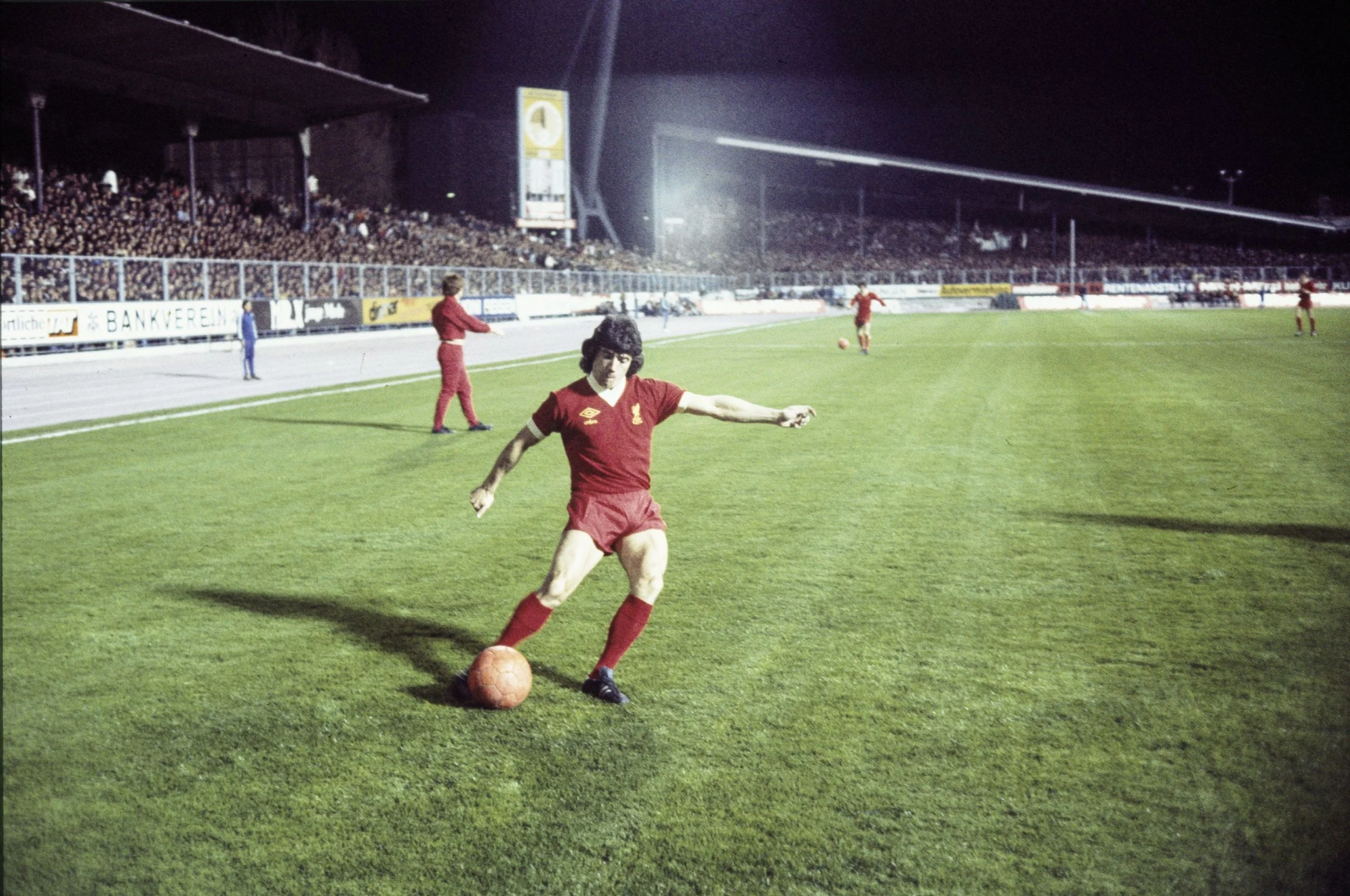
King Kev was, first and foremost, a ferociously talented footballer.
Photo Credit: ETH-Bibliothek Zürich
A public-service television campaign for the UK’s Green Cross Code saw Keegan framed as trustworthy and aspirational for the nation’s children in 1976.
Not long afterwards, he starred in television commercials for Brut aftershave, dancing the tightrope by becoming a lifestyle figure – with all the sex appeal that comes with such status – as well as a role model for young people.
He also appeared on Superstars, a show which pitted athletes from different sports in competition. He infamously crashed during the cycling segment though valiantly got back in the saddle to finish second in the event, eventually winning the steeplechase to claim the overall heat.
In 1977, at a time when it was rare for English footballers to venture abroad, he transferred to Hamburg SV for a British record fee of £500,000, further cementing his (inter)national reputation thanks to extensive coverage from West German television and press. Appearances on ITV’s This Is Your Life with presenter Eamonn Andrews and the BBC’s Blue Peter – alongside his frequent features in the newly-launched kids’ magazine MATCH – consolidated his celebrity image, framing his persona as fun, family-friendly and, crucially, worthy of airtime.
The mediation of Brand Keegan arguably hit overdrive when the footballer released his first single Head Over Heels in Love (1979) with co-writer Chris Norman from the band Smokie. The song peaked at No. 31 in the UK Singles Chart and hit No. 10 in Germany, garnering minimal critical acclaim yet faring much better than his follow-up musical output England (1980).
In the same year as releasing his debut song, the ITV documentary Brian Moore Meets Kevin Keegan commenced with the emphatic declaration that “this is not a film about football,” offering frank discussions of the ups-and-downs of Keegan’s time in Germany and with the national team in an unusually open and raw manner.
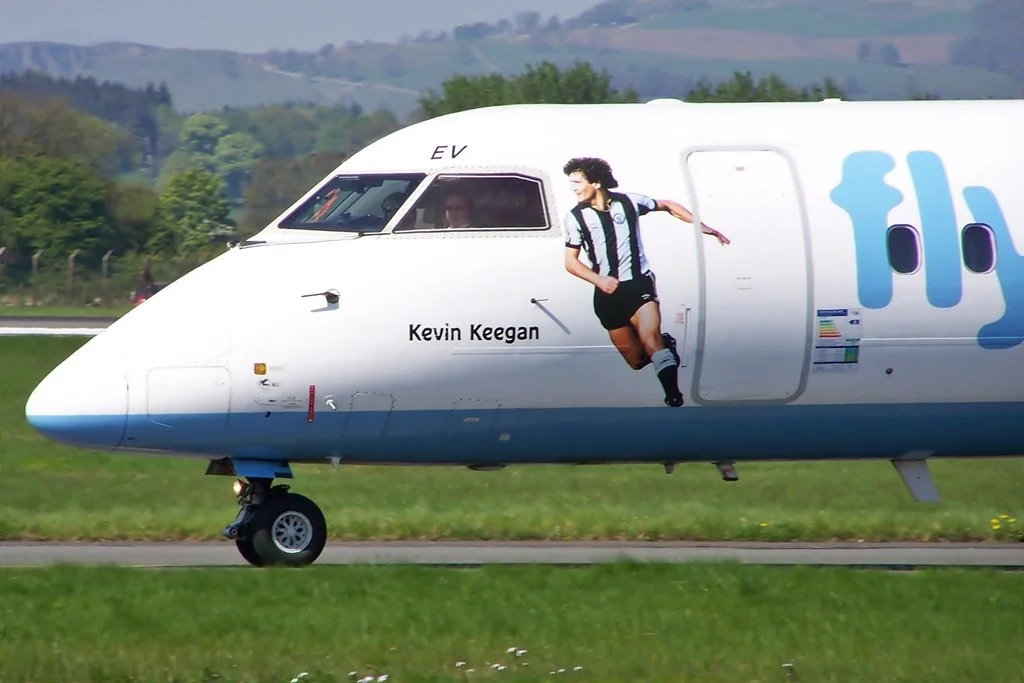
Is it a bird? A plane? Keegan’s presence spreads its wings in unexpected ways.
Photo Credit: Mark Harkin
When he eventually finished playing (firstly, in 1984 for Newcastle; and then again in 1985, after coming out of retirement for one last hurrah with Australia’s Blacktown City) Keegan remained visible to the public through interviews, commentary roles and television appearances (and also the gloriously-titled 1992 VHS documentary Keegan on Keegan) while, in the background, preparing for his next big career move.
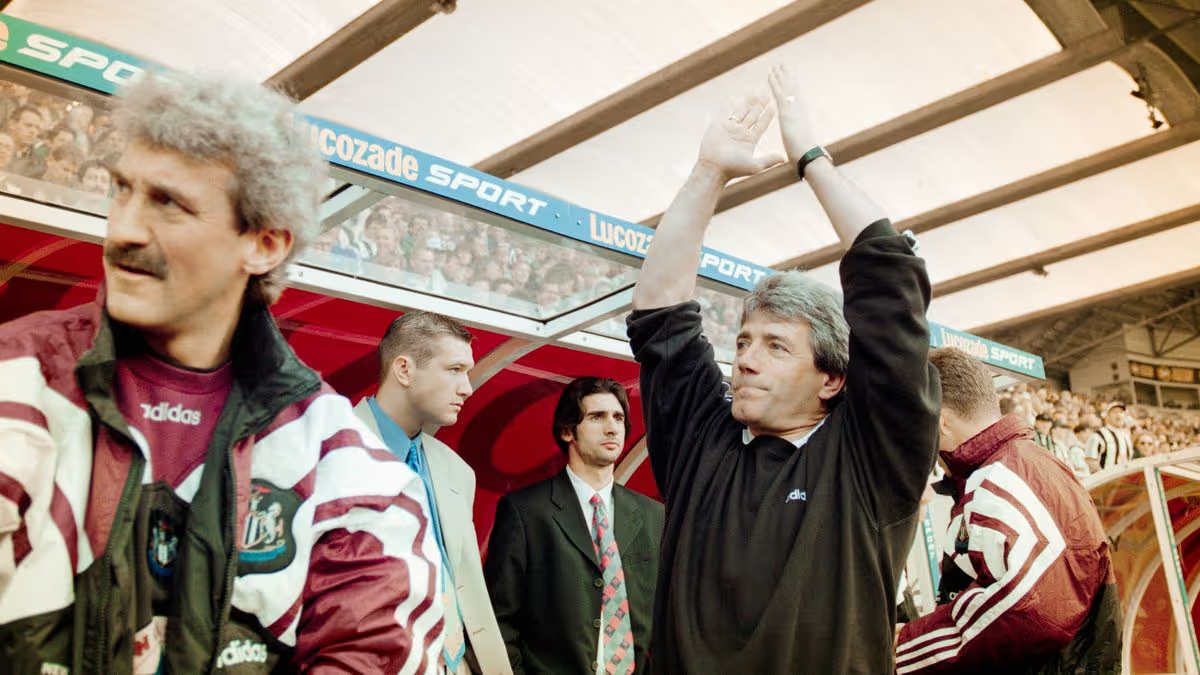
Keegan was given the Newcastle manager’s job in 1992 when the club were (as the saying goes) in crisis.
Newcastle had found themselves in the Second Division, on the brink of relegation in 22nd place out of 24 teams, and with only one win in their previous eleven games. With no prior managerial experience – and with whispers of the club remaining in financial uncertainty despite being rescued by Sir John Hall and the Magpie Group – the King delivered, surviving relegation comfortably. Soon, under the King’s stewardship, Newcastle would play in the newly-formed Premier League.
The Premier League years – turbocharged by the money brought in by Sky Sports’s broadcast coverage – transformed his personality into compelling television.
A key moment arrived in April 1996 with the legendary ‘I would love it’ interview (which should perhaps be known as the ‘I will love it’ incident instead, if we listen closely) during the peak of Newcastle’s title race rivalry with Sir Alex Ferguson’s Manchester United.
A sincere outburst overwhelmed Keegan, his composure crumbled and, eventually, his team were outlasted by their close competitors: and that interview became a defining feature of his career – bleeding into his short and unsuccessful stint as England boss – where emotion and instinct tended to take precedence over calculation and strategy (though perhaps there was a bit of tactical nous at play when Keegan subbed on the Honey Monster in injury time, allowing the talismanic mascot to score a bullet header in a fondly remembered 1996 TV advert for Sugar Puffs).
Keegan's infamous interview.Of course, it is grossly unfair to remember Keegan exclusively for his infamous interview. In a recent Instagram-cut clip, he observes drolly to the BBC that, in spite of all his ferocious talent and achievements as an athlete, he is still remembered for “the perm… and falling off a bike” as well as that outburst, concluding that this imbalance articulates “a lesson in life” for everyone, whether famous, obscure, or somewhere betwixt and between.
Indeed, Keegan exemplified the notion of ‘media convergence’ before Henry Jenkins influentially theorised the idea in his award-winning book Convergence Culture: Where Old and New Media Collide (2006).
Mighty Mouse’s persona was the amalgamation of numerous networked nodes concurrently, allowing a complex, paradoxical figure to express itself in a variety of joyful and, at times, painful ways.
Keegan’s media journey – and far beyond – offers some fruitful insights into the ways in which we build, and attack, public figures. Throughout his career, he faced criticism for selling out as well as for being too emotional, and yet, somewhat remarkably, emerges with a fairly clean record sheet in the grand scheme of things.
His major crime in sport? In life? Loving it. Perhaps a little too much – too sincerely – for us to handle from the other side of the screen.
Farewell, King Kev – football became a richer, livelier, more human space thanks to you, and is now a poorer, emptier one in your absence. Romance only dissipates if we let it slip away: long may football and the media make space for those big personalities who love the game so openly, so fearlessly.
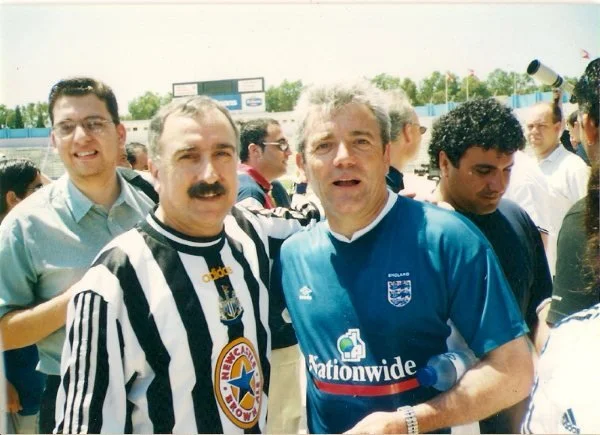
England manager Kevin Keegan with a Newcastle supporter in Malta.
Photo Credit: Titinu
Cometh the hour, cometh the Honey Monster.