

Words by Colin Whelan | Published 04.02.2026“The secret to getting the best out of someone like me? Just don't tell me what to do”
– Stan Bowles
A person’s life is full of turning points, crossroads and ‘sliding doors’ moments. We, all, either choose to ignore them, learn to embrace them; or, sometimes, we live to bitterly regret them. You wonder, 50-odd years later, how Stan Bowles felt about his actions in the immediate aftermath, on Wednesday 15 May 1974, having been substituted in the 55th minute, playing for England against Northern Ireland, at Wembley.
Would he, and should he, have handled things any differently than he did?
Stan Bowles started his football career at Manchester City in 1967, just as they were on the verge of greatness. He scored two goals for City in each of his first two games, and you might easily have predicted that his career at City would have taken off. But no more goals in his next 15 games – spread over the next three seasons – meant that Stan found himself at Fourth Division Bury, swiftly followed by Crewe Alexandra in 1970.
A start had been offered at a top club, but he had failed to take that opportunity. The arrival of Francis Lee had certainly curtailed his first team progression, but neither did Stan particularly get on with City’s managerial partnership of Malcolm Allison and Joe Mercer. A series of off-the-field incidents had sown the seeds of doubt at City, but it wouldn’t be the last time that Stan would come across the avuncular Joe Mercer in his career. And it wouldn’t be the last time that “off-the-field incidents” would be mentioned in any conversation in connection with Stan.
But it was at Crewe that Stan found his way back into football. He found a manager, Ernie Tagg, who loved what Stan could do on the pitch and understood him, granting him the license to do his own thing. A further transfer to second division Carlisle soon followed, before Gordon Jago at QPR brought Bowles to west London for a fee of £112,000 in September 1972. Cue a proper welcome on stage, to one of the greatest players in English football from the 1970s.
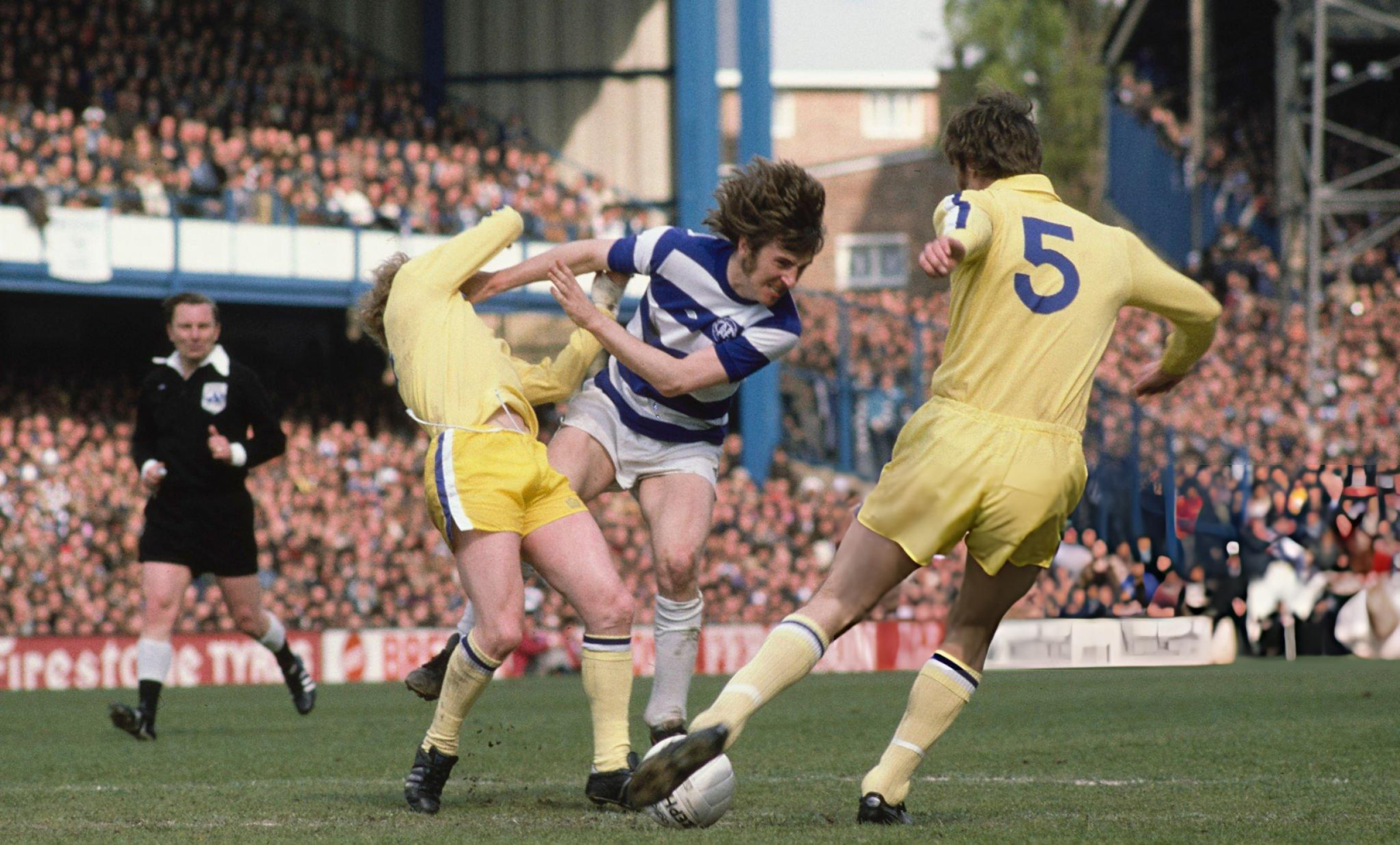
Bought to replace QPR’s original misunderstood maverick, Rodney ‘I’d have had 100 caps with any manager other than Alf Ramsey’ Marsh, Bowles and QPR were back in Division 1 a season later. Once there, they more than held their own, and tv viewers were getting their first glimpse of a talent who was the shining light in a team that blended the experience and nous of Webb, McLintock and Venables, with the exciting youth of Francis, Thomas and Givens. But it was all about Stan – he was the standout player, the one the crowds had come to see.
There is no doubt that, now given the platform he craved, Stan Bowles became one of the most skilful and beautifully-balanced footballers England has ever produced. He had that wand of a left foot, that could unlock most defences; and as he and QPR made their mark in the 1973-74 season, he earned international recognition, making his debut against Portugal in Ramsey’s last game as manager, in April 1974. And QPR further improved, following the appointment of Dave Sexton as manager by the 1975-76 season.
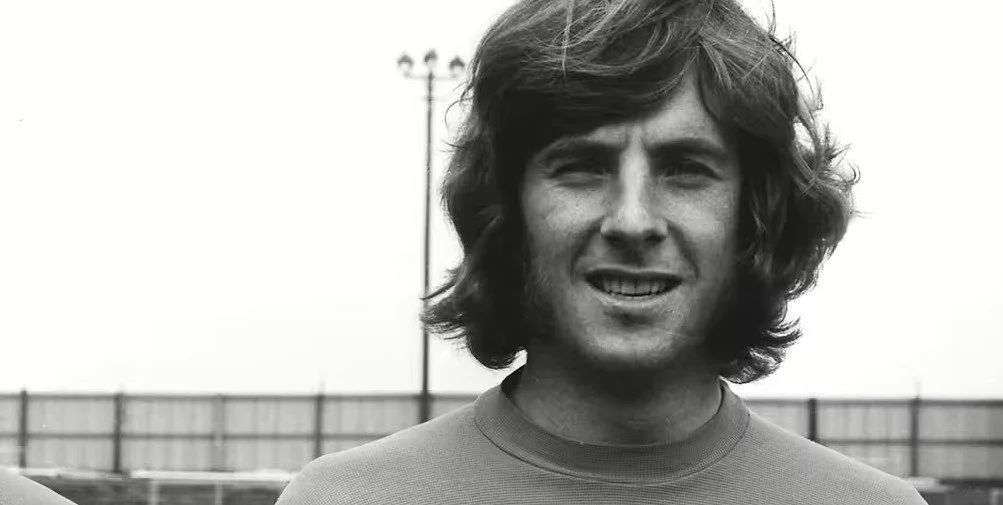
Stan Bowles during his time at Carlisle, 1971.
Photo Credit: Getty Images
That further improvement led to a second-place finish in that season, just one point behind a Liverpool team that were set to dominate English football for the next 15 years. Bowles enjoyed his finest season, as QPR came so close to pulling off such a coup. He played 37 games that season, and you wonder if he’d have played the other five, would Rangers have gained the extra two points to clinch the title? Even a poor gambler would have fancied the odds. Stan would certainly have piled in.
Their star still shone during the following season, as they made their way to the quarter-finals of the UEFA Cup, with Bowles breaking the record for goals scored by a British player in a European campaign with 11 goals. But after that record second position finish in 1976, the path descended quickly for Stan and QPR. As QPR were relegated at the end of the 1978-79 season, Stan left soon after.
But for a few seasons, English football was treated to a true craftsman at work, one who helped to put a small-sized London club on the map. The League Cup Final triumph in 1967 aside – broadcast live on the BBC – QPR had never made their mark. But now earning an extended run in Division 1 meant that we were able to watch this team gradually grow into everyone’s ‘second favourite team’. They were exciting to watch, their free-flowing football never better encapsulated than with Gerry Francis’ goal v Liverpool on the first day of the 1975-76 season, which won Match of the Day’s ‘Goal of the Season’.
Stan left QPR in 1979, having spent six months in the reserves, as he and new manager Tommy Docherty played a game of bluff with one and other. In for a penny, in for a pound, Stan next tested his mental fortitude with Brian Clough at Nottingham Forest. That relationship was only going to end one way, as Stan exited after not being allowed to play in John Robertson’s testimonial. He left, however, not before he’d secured his only major honour of his career, a winner’s medal, after Forest had beaten Barcelona in the European Super Cup final.
He wound down his playing career with Brentford and Leyton Orient, enjoying an end -of career renaissance, which saw him named Brentford’s Player of the Year in 1982. In a recent poll, Stan was still voted the best player in their history by fans of both QPR and Brentford.
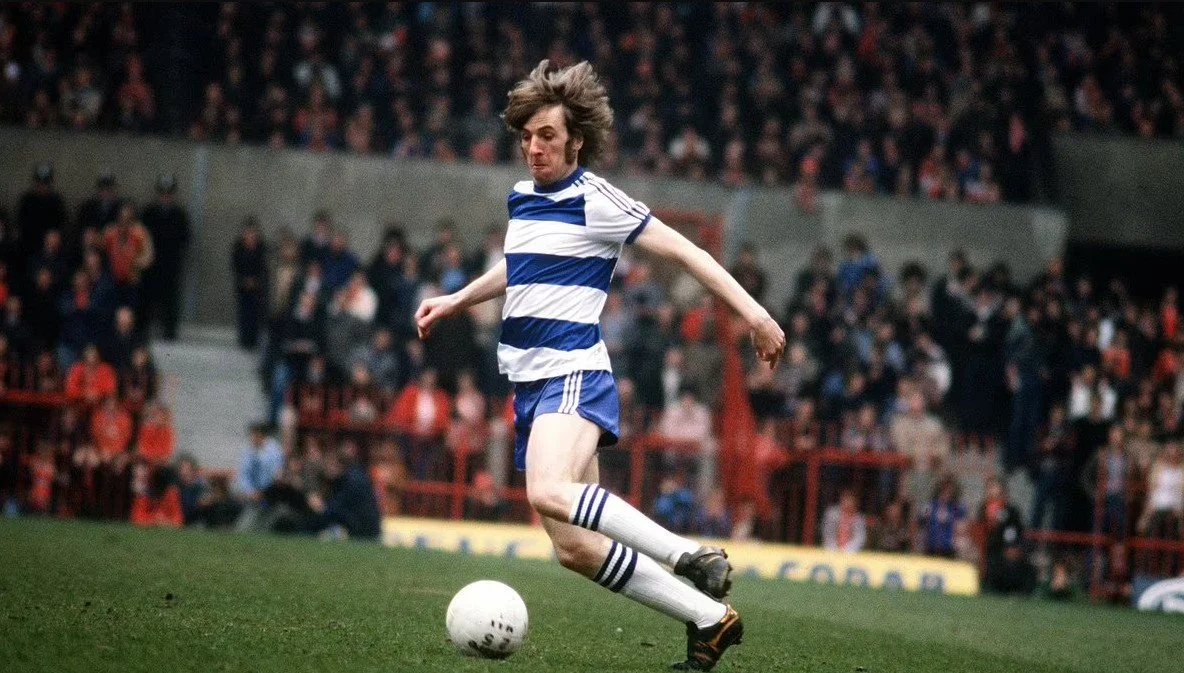
Stan Bowles at QPR, where he enjoyed his best years.
Photo Credit: Getty Images
In assessing Stan’s career, you might inevitably be drawn to a quote from his team mate at Brentford, Bob Booker “We classed players like him as luxury players, as you were essentially playing with 10 men, but if he was on form, you were playing with 12.” Yes, you do sometimes have to remember the rainy Tuesday nights at Stoke, when Stan didn’t fancy it. Football wasn’t the most important thing is Stan’s life, why should he bother his arse 100%?
But, when he did fancy it? We fell in love with football.
And it was because of players like him, you were excited. You suddenly stood up in the front room. You laughed and you cheered. You created a lifetime’s memory. Only footballers like Stan Bowles could do that to you.
And for someone who was never quite in love with football as much as football was in love with him, Stan Bowles still managed to play 507 games over a 17-year career. The problem with Stan – and the reason you either loved the bloke, or you never quite warmed to him – is that he didn’t quite give his all to football.
Admittedly, he took all the kicks, all the hacks, and was still able to survive all those years. It was that supreme balance, that acceleration, which enabled him to move in an instant away from the most ferocious tackles. He still did all these things in the name of football. But he didn’t apply his life and mind wholly to football. There was always something else:
“I take football as an avenue to different opportunities. Football is not using me; I'm using football.” In Stan’s case, the different opportunities were often to be found at White City dog track, or any bookies around Shepherd’s Bush.
Stan Bowles was a prolific gambler and, as is the wont of most prolific gamblers, ended his career with significant gambling debts. In his autobiography, he estimated that he had lost £750,000 to gambling during his career. Bowles’ gambling was known at an early stage of his football career, as QPR attempted to mitigate for it by paying his wife and most of his regular household bills, and granting Stan some pocket money. But Stan’s vice was an addiction; something that was never recognised in the 1970s. It was until Paul Merson’s very public breakdown and confession in 1994, that we saw the very real that harm that gambling could inflict upon a human being, never mind a football career.
As for the “immediate aftermath of Wednesday 15 May 1974”, Stan walked out on England. Caretaker boss, the “avuncular” Joe Mercer, said that any player walking out on England should never be picked again. Apparently, Stan called Mercer a couple of days later, asking for a second chance – but Joe wasn’t for turning. Stan did earn a recall with Don Revie’s England in 1976 and ’77, but Stan’s is an unfulfilled international career. And that wasn’t all of those managers’ making. Stan “should have” let the England manager manage; let him bring on a fellow striker, Frank Worthington, for his debut in international football back in May 1974, without the hullabaloo that followed it.
Stan Bowles is revered by so many, because he was such fun to watch. His and QPR’s is the great ‘nearly story’ of the 1970s. You hear the fans of that era say that were as likely to see Stan in a Shepherd’s Bush pub or bookies, as you were to see him at Loftus Road. He was that footballer off the streets, and he is loved because of that connectivity to the fans.
He couldn’t give his all to football, alas. And that saddens us, because we wonder how good he could have been, to have earned more than five England caps. However, there were other things going on in Stan’s life that we were never privy to at that time.
But what he did every Saturday afternoon was to bring all of who he was – his supreme footballing talent, his mischievousness, his private stresses – onto a football field to show us exactly who he was. And we totally adored him for doing that.
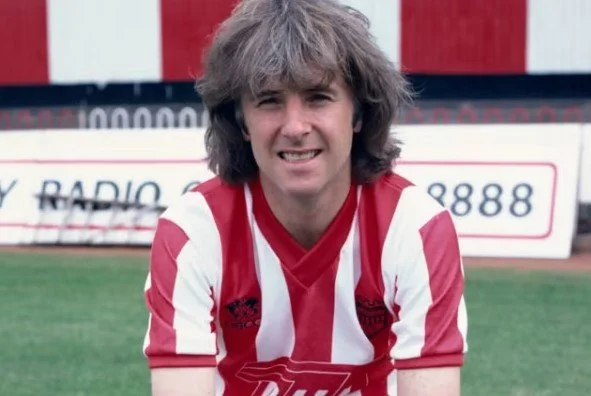
Stan Bowles at Brentford, when he was coming to the end of his career.
Photo Credit: Getty Images