

Words by Tony Topping | Published 06.05.2026A few years ago I enjoyed a volunteer role at the National Football Museum in Manchester for a couple of hours a week; it’s something I may return to one day. There are some fascinating artefacts in the museum and every one of them as a story behind them.
This story features one of those items - the 1966 World Cup Trophy.
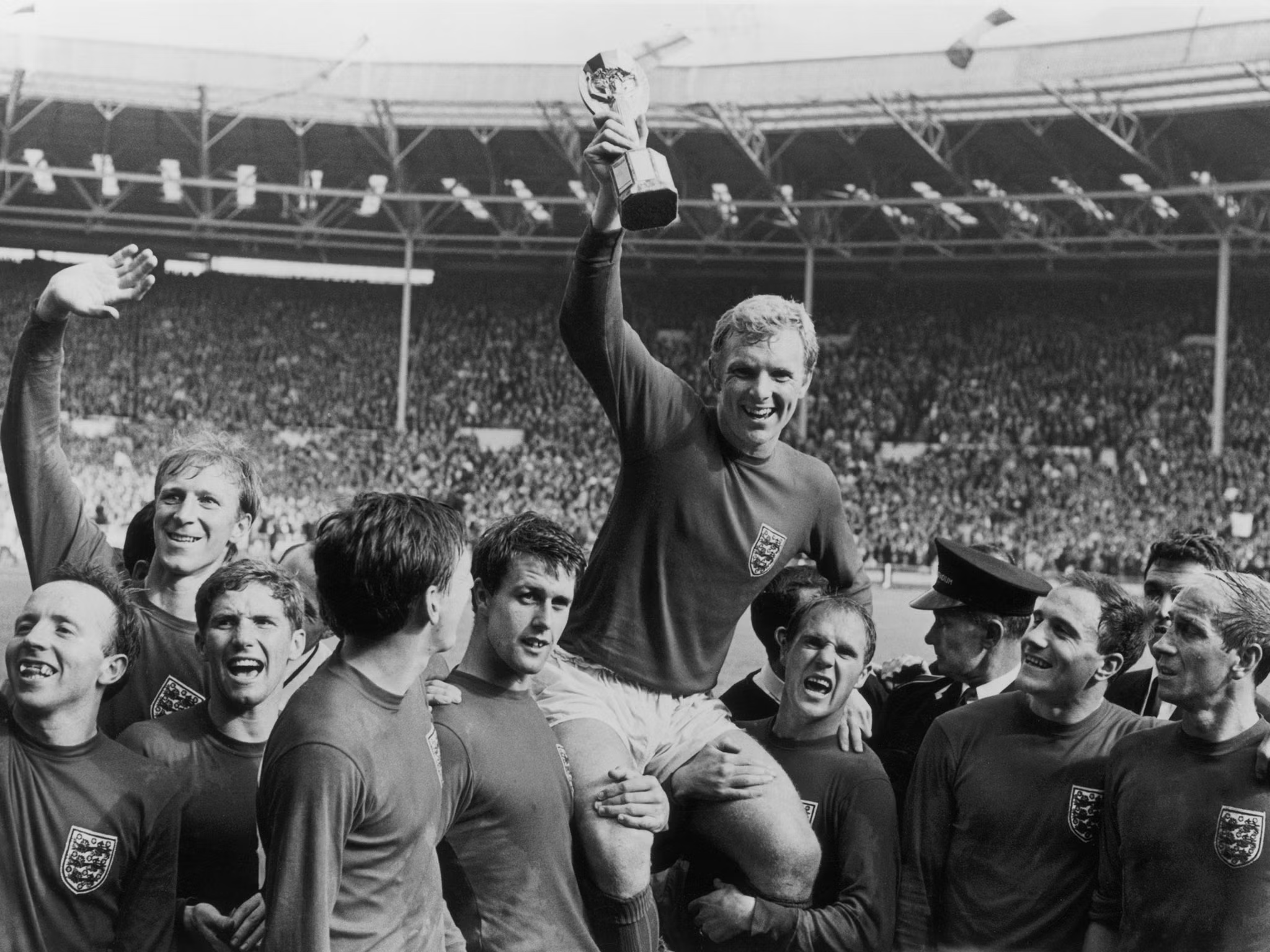
As we all know, the 1966 World Cup was a triumph for the host nation and it heralded a new era for the England football team. Just so happened it was an era of winning bugger all ever again. The Jules Rimet Trophy (Originally the Victory Trophy) was a thing of beauty unlike the ugly leg of Serrano ham they win nowadays.
Prior to the 1966 event the English FA asked FIFA if they could make a replica of the World Cup. FIFA said no, but this was the English so they went and had one made anyway.
The man responsible for creating the replica was the jeweller, George Bird. He fashioned an exact copy to be used in exhibitions instead of the real World Cup which was stolen four months before the tournament but fortunately found by a dog called Pickles.
The trophy had been on display at a Gibbons Stamp exhibition alongside stamps worth ten times more than what the World Cup was valued at. Security at the event could be best described as “lax”; in fact it was at “It’ll be reet” level with one guard reportedly in his seventies.
The petty thief Edward Bletchley was jailed for two years after a gang of kids captured him in a thrilling chase across the rooftops of London. That last bit may not be true but it would have been more fitting. Bletchley always insisted he was just the middle man for a crime kingpin known as “The Pole”.
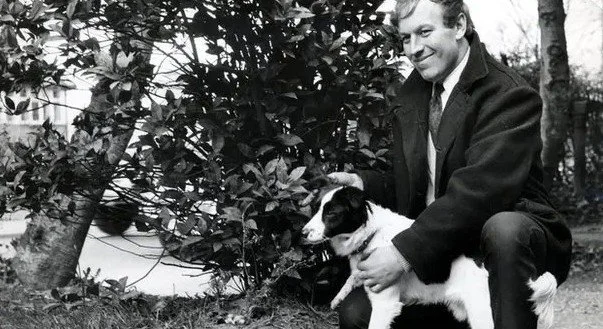
Pickles the dog, who recovered the World Cup trophy.
Photo Credit: Rex Features
Pickles the dog found long-lasting fame and even appeared in a film “The Spy with the Cold Nose” alongside Eric Sykes and June Whitfield. The owner of Pickles, Mr David Corbett, was rewarded £3000 and he used the money to buy a new house in Surrey. Pickles was awarded the silver medal by the National Canine Defence League (I often wonder what you had to do to get the Gold Medal) and he also won a year’s supply of dog food from Spillers.
Sadly, I don’t think Pickles ever got to eat the last tin of that dog food. He was strangled by his choke chain which caught on a tree branch whilst chasing a cat. Pickles was buried in Mr Corbett’s garden where he remains to this day with a little plaque commemorating his place in football folklore.
But what happened to the replica World Cup, and why was it made? Some people say it was made before the trophy was stolen to put in exhibitions instead of the real one. Others say it was made after the genuine one was stolen.
So, was the FA going to present the replica to the World Cup-winning side and say it was the real one? I wouldn’t have been surprised if they had done to save embarrassment.
The fact is that when England left the field that glorious day and returned to the dressing room, the real trophy was never seen again until the next World Cup in Brazil.
None of the England players knew that the trophy they proudly showed to the nation was the replica one. A policeman went into the England dressing room with the replica and took the real one from the exhausted Nobby Stiles who was prone on a bench and placed the fake one into his hand.
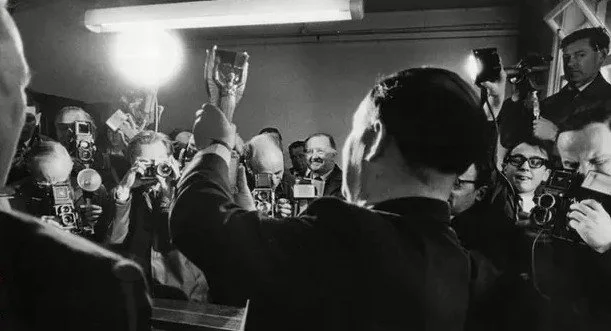
Police display the Jules Rimet trophy to the press in London following its discovery by Pickles.
Photo Credit: Rex Features
The genuine World Cup was then placed in a safe and never shown to the public. Every photograph you see of the cup from the moment the players left the field is of the replica one. Only a handful of people knew this act of subterfuge and all were sworn to secrecy.
In 1970, Brazil won the cup for the third time and were allowed to keep the trophy. Sadly the cup was stolen yet again in 1983 from the Brazil Football Federation headquarters in Rio de Janeiro and was never seen again. It was widely believed to have been melted down but the thieves would have had a shock; the trophy was gold-plated silver, not solid gold as most people thought.
The replica cup lay under George Bird’s bed wrapped up in an old cloth and even survived two burglaries at the house, and there it remained until George passed away in 1995. Clearing his home after his death, his family found the parcel and were amazed when the cloth fell away to reveal the golden figure of the World Cup!
They put the trophy up for auction at Sotherby’s and it was listed as a replica. The family hoped it would sell for around £10,000. That modest figure was surpassed easily and it was eventually bought by a mystery bidder for £254,500!
The mystery bidder turned out to be FIFA under the orders of Secretary Sepp Blatter to win the auction no matter the cost. FIFA couldn’t risk the chance that this was the real World Cup, stolen in 1983. But when they examined the cup it proved to be made of bronze with a gold exterior. They donated the cup to The National Football Museum where it can be seen to this day.
It’s thought that there could be up to five fake World Cups doing the rounds. At the 1954 World Cup people remarked that the trophy looked different from its predecessor in 1950.
It’s possible we will never find out the real story, but God bless old Pickles.
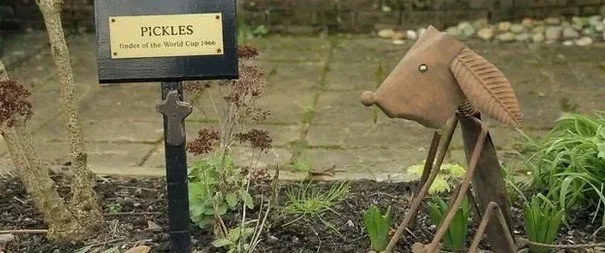
Memorial to Pickles the dog in his owner's back garden.
Photo Credit: BBC