

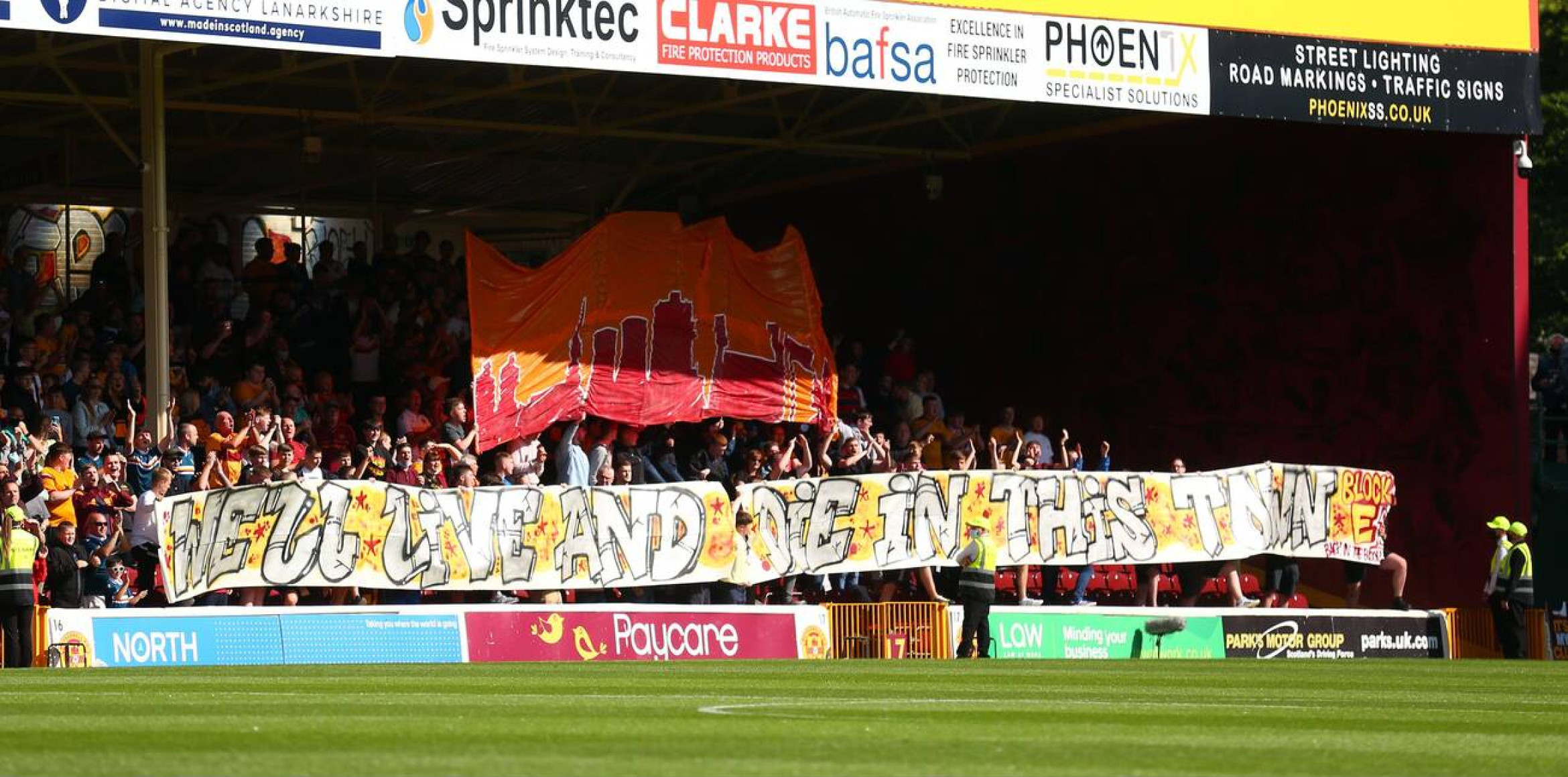
Words by Brian Martin | Published 23.05.2026There is a poem by the British-American poet W.H. Auden, Amor Loci, translated as ‘love of place.’ The poem explores Auden’s love for his childhood landscape, the northern Pennines. In the introduction to John Betjeman’s Slick but not Streamlined, Auden uses the term ‘topophilia’ to describe the nostalgic attachment to specific landscapes, often utilised within the poetry and writings of Betjeman.
Of course, there are other writers and poets who are often associated with specific locations, such as the work of Thomas Hardy, closely associated with Dorset and South West England. Other writers associated with topophilia are William Faulkner and John Steinbeck. Using Faulkner and Steinbeck as examples showcases the deep ties and bonds we form with locations, as each writer is well-known for their writing on specific localities, Faulkner and Mississippi, Steinbeck and The Salinas Valley/California.
In my last piece for Football Heritage, I wrote about my football journey, which was associated with themes of nostalgia. This was wrapped up in my childhood, early memories of football, and locations where I witnessed my first matches. It was the human geographer, Yi-Fu Tuan, who wrote about the "affective bond between people and place" in his 1974 book,Topophilia: A Study of Environmental Perception, Attitudes, and Values.
In my previous article it may be apparent that football, for me, is more than a sport in which two teams participate to score the most goals. It has become intertwined with attachment to the club(s) I support, the areas I grew up in, and my connection to the locations in which I watch these football teams.
Tomaney (2023) describes the topopoetic works of Auden as “his search for affective bonds in a life marked otherwise by placelessness”. However, football stadiums have become sacred sites where we share memories and search for a collective identity and foster a sense of belonging or as Anderson (1983) may state, an ‘imagined community,’ where we may not know each other, but we are in this place and it is ours.
Take the example of Stranraer Football Club. It is a club that I associate with my earliest recollections, my grandmother, summers spent in Dunragit, and childhood friends.
Though I left the area in 1981, these are still treasured memories, that as I mature in age, recall and remember, leaving a smile as I reminiscence of my formative years. Motherwell allows me to recall parts of my misspent teenage years, attending Fir Park with friends, and embracing my youth.
At the heart of these clubs are the locations and ultimately the stadiums I would attend; Stair Park (Stranraer) and Fir Park (Motherwell).
For several years, from my bachelors degree to my current PhD research, I have been trying to further understand this connection between football and identity. During my PhD research I discovered the term topophilia due to my work on Irish football. This was unearthed due to investigating the history of Dalymount Park, home of Bohemian Football Club.
Participants in interviews and focus groups would often criticise old Irish stadiums, but nevertheless reveal a fondness for them often in competition with a desire for improvement, modernising and upgrading of stadiums. Returning to the example of Dalymount Park, this is a stadium currently undergoing a major redevelopment, with a projected cost of €63 million.
The stadium is also known as the “home of Irish football” due to it being the primary ground of the Irish national team up until the 1970’s. The purpose of using Dalymount Park as an example is to highlight that it has also become an iconic element of wider Irish cultural history hosting famous music acts, and hosted World Cup winners and iconic football players such as Bobby Moore and Pelé. While football supporters grow attachment to these sports stadiums, they also come to represent our cultural heritage.
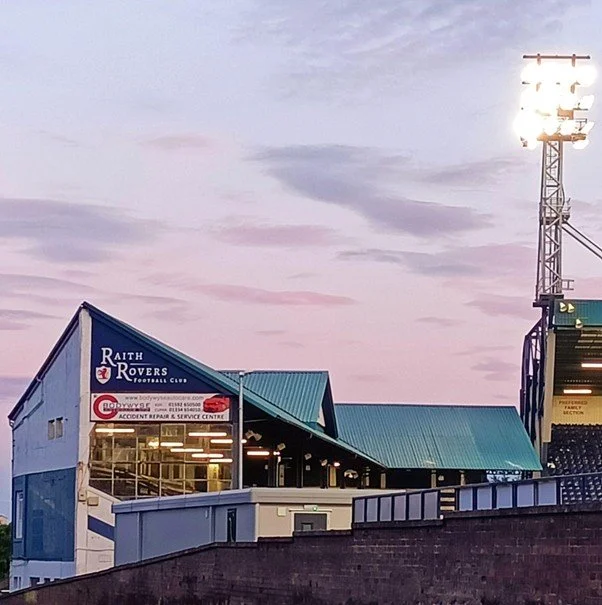
Stark's Park, Kirkcaldy.
Photo Credit: Brian Martin
It was the late academic John Bale who made the link of place being the main identifier of sports teams and how it is impacted by the physical environment in which it exists. In Bale’s The changing face of football: Stadiums and communities, he highlights how football clubs publicise a location “in a way that no other cultural entity can”.
In my research, it was identified that Leeds is mostly known for its football club. We witness this through modern, contemporary football supporters. Due to the globalisation of football and the global powerhouse that is the English Premier League, these locations become places of pilgrimage, where the dream of a contemporary football fan is to visit Liverpool and Anfield or Manchester and Old Trafford. Bale uses the example of Hibernian FC, where their stadium, Easter Road, is the space where people spend their Saturday, also bound with where they go pre-match, post-match, and where they meet their friends. Bale also speaks of Raith Rovers, mentioning that Stark’s Park is “a reference that triggers wider memories of friends, relatives and people living in the urban space that is Kirkaldy”.
Gaffney and Bale suggest that various senses are stimulated when attending football stadiums which combine with individual histories, dispositions and preconceptions to form experiences, the accumulation of these experiences shaping what and who we are.
The more we experience it, the more it shapes our individual identity. Gaffney and Bale further explain this by highlighting the various senses;
1) Sight - the appearance of the stadium; the interior; the façade, its place within space and time, which is meant to be visually consumed; the experience of the crowd, of which we are a part; and the gaze of the building.
2) Sound - gives the experience a fullness, chants and songs are part of the experience, sounds of the stadiums are as varied as the people and places within it, a stadium is empty without it.
3) Touch - implies a limited sense of space, heightens the sense of self, has a significant impact on our experience of the stadium.
4) Smell - evokes memories, the smell of stale beer and cigarettes, burning flares.
5) Taste - related to smell, invoking the senses of carnival and release from the everyday,creates ritual, a departure from habit, and change from stadium to stadium.
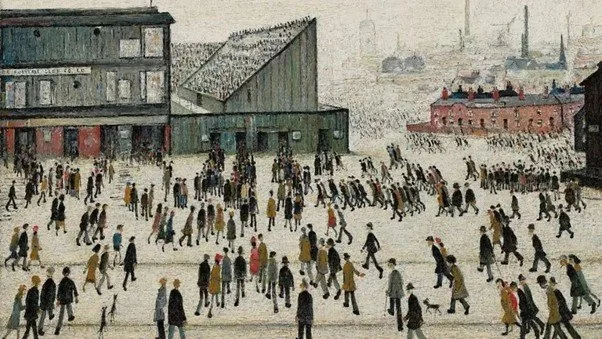
'Going to the Match' by LS Lowry.
Photo Credit: National Football Museum
For Gaffney and Blake there is a sixth sense that departs from the five senses. There is the ‘sense of history,’ in which every event is a historical experience. There are historical documents, memorabilia and mementoes. The ‘sense of belonging to a crowd’; it is a privilege to be part of the crowd, connected to the communal sense of the crowd, belonging to the collective.
This idea of community and social-gathering of the crowd is visually represented in the work of L.S. Lowry and his 1953 painting Going to the Match, described by Edensor and Willington as a:
Glimpse back to a football world untainted by the excesses of the contemporary game, a world where traditional values of community and loyalty are upheld, where routines built up over generations would cumulate on the terraces at 3 p.m. each Saturday.
The quote highlights feelings of nostalgia, though what Edensor and Willington also call attention to is the ritual of match attendance, and its embedding in locale and place.
The authors discuss the broader concept of topophilia, where “these sensations and routines extend out into a wider space of belonging, a space of paths, fixtures, familiar textures and stopping points to and from the match; a space of conviviality and atmosphere”.
Any regular attendees of football matches at their favourite teams stadium may recall a number of experiences described by Gaffney and Blake, and Edensor and Willington. My own early experiences often recall what was happening within the stadium rather than the action on the pitch. However, these attitudes and associations often change when clubs relocate to new modern developments and our sense of place becomes disrupted or eroded.
Feelings, sensations and routines build over time, and when football clubs relocate, they often lose this sense of place, and are left with a sense of placelessness, where the landscape loses its local identity, which results in a standardised, monotonous environment.
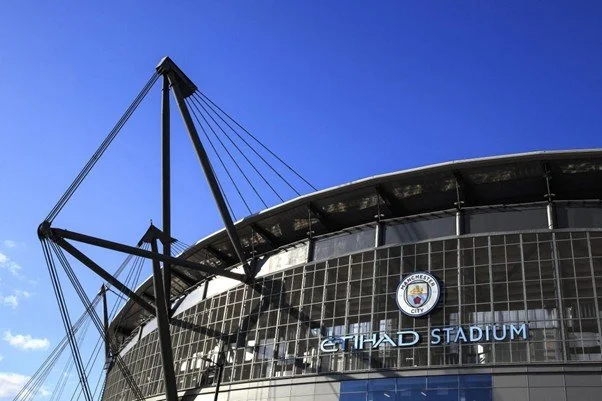
Etihad Stadium, Manchester.
Photo Credit: Manchester City FC
Edensor and Willington use the example of Manchester City and the City of Manchester Stadium, which lacks history, cultural presence, and sensual diversity.
The new stadium “reproduced a particular nostalgic sense of loss associated with long-established routines and tradition”. What we are witnessing within football is a loss of authenticity if clubs continue to relocate to these new contemporary facilities, a by-product of commercialisation.
When these relocations are being considered, then so should the opinions of supporters. They are more than consumers, they are contributors and co-producers, who create an atmosphere and comply with the memories, traditions and rituals of club fan identity.
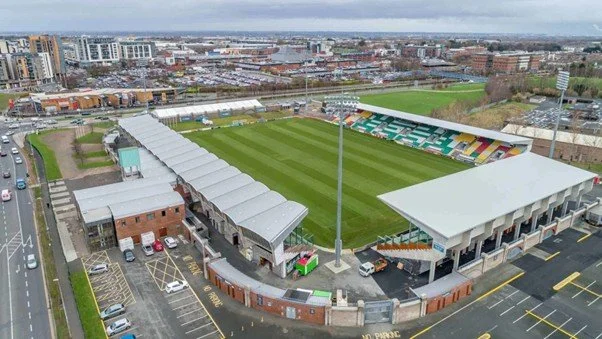
Tallaght Stadium, Dublin.
Photo Credit: Shamrock Rovers FC
A successful relocation has been Shamrock Rovers. The club were homeless for a period of 22 years, finally finding a new home in the Dublin suburb of Tallaght.
Shamrock Rovers have embedded themselves in the local community, creating a football culture in the area and having a positive impact on the local economy. This has also meant a new period of success for the club. However, it wasn’t always as such.
In 1987, the club played their last match at Glenmalure Park, in what had been their home since 1926, after being sold by the Kilcoyne family, who owned the club, selling the ground to property developers. An article by the prominent Irish journalist and authoritative voice on League of Ireland, Daniel McDonnell, emphasises the feelings towards the plan by supporters, who created the KRAM (Keep Rovers at Milltown) campaign, where games were picketed by supporters.
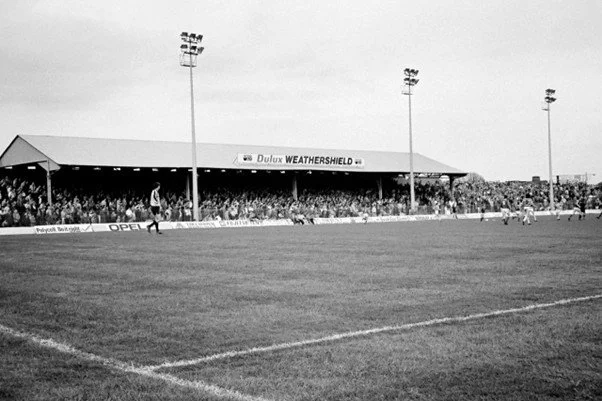
Glenmalure Park.
Photo Credit: Ray McManus
Evidently, Rovers’ supporters had grown an attachment to their old ground. The years between the loss of Glenmalure Park and the relocation to Tallaght Stadium were dubbed the wilderness years.
This suggests years of isolation and exile, and McDonnell states that it brought them to the ‘brink of extinction’ and described it as a ‘dark chapter.’ It may suggest that a permanent location, where fans feel connected with the environment they find themselves within and the stability it brings is vital to the functioning of a successful football club. Of course, it has eventually been a positive experience for the club, though it was a traumatic episode for both the club and their fans which strained club identity and its connection with supporters.
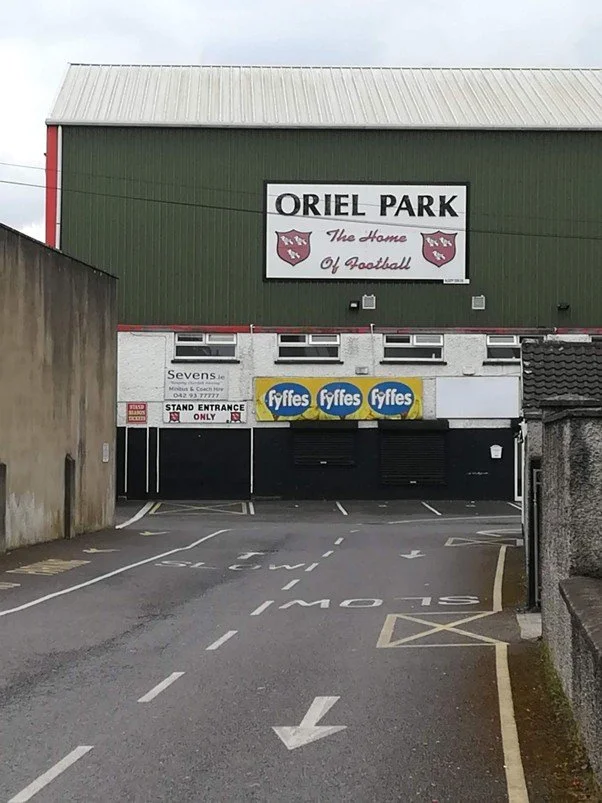
Oriel Park, Dundalk.
Photo Credit: Brian Martin
For the League of Ireland, Tallaght Stadium is what could be. However, during my several years conducting research into Irish domestic soccer, it is an anomaly in a league where reconstruction has become a necessity. Though as many participants within my research testify, there is character, history and an attachment to these old stadiums.
Many would point to grounds such as Dundalk’s Oriel Park and Drogheda’s United Park as prime examples for the necessity of redevelopment within the league. Anyone familiar with domestic football in Ireland will know that it is going through a period of growth, evolution and development. This also includes an increase in attendance numbers. An escalation in interest means larger stadium capacities, and potential relocation.
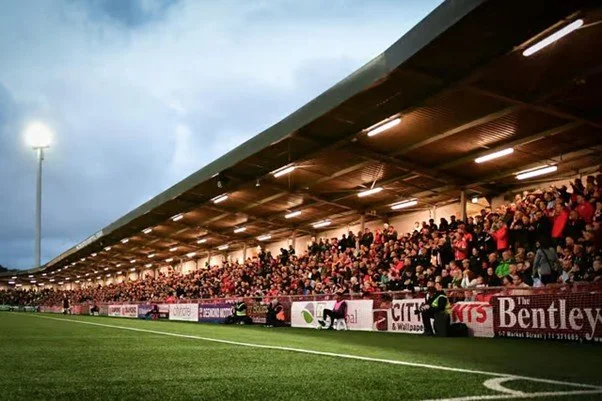
The Ryan McBride Brandywell Stadium, Derry City.
Photo Credit: The Derry Journal
Though, there are examples that highlight that this may not be necessary, grounds like Turner’s Cross, home of Cork City and The Ryan McBride Brandywell Stadium in Derry emphasise that change can occur by revitalising old sports arenas.
The Irish sports journalist James Callan states in a Substack article that the League of Ireland “doesn’t lack passion or people. It lacks places worthy of them. Every wet terrace and flickering floodlight tells a story of endurance, but endurance alone won’t build a future.”
I do agree with this statement, but Irish journalists do tend to have a conflict of interest regarding this topic, as improvement in infrastructure means development in media facilities, and a background that appears better on television screens. Callan does confess that old grounds contain history and memories. Even the renaming of Derry City’s stadium to the Ryan McBride Brandywell is in celebration of a local hero.
This is the balance that Irish domestic soccer must find, upgrading and enhancing infrastructure and facilities while maintaining their character, providing a home for football supporters where this bond between people and place remains.
It is not to dismiss the concept of new modern stadiums that are appropriate to a revitalised league. If Irish football clubs follow modernisation, and construct new stadiums, then they will also have a role to play in the construction of the relationship between fans and these new locations. Arsenal had to confront this issue when moving to the Emirates Stadium from Highbury. The new stadium lacked the emotional memories that had been attached to their old ground.
The club embarked on a process of place-making which they described as ‘Arsenalisation’, conducted via the use of graphic heritage, bridging the emotional gap from the old to the new through the use of iconic moments, players, and custom typography, including the repositioning of the old Highbury clock on the exterior of the Emirates.
The Canadian geographer Edward Relph highlights in Place and Placelessness (1976) that place has a range of significances and identities and is as diverse as ‘human consciousness of place.’ While in The Stadium and The City, Bale states similar, though uses the example of the sports stadium.
In the work of Bale, the stadium is both a prison (symbol of confinement) and a garden (symbol of freedom).
But also a cathedral, a contemporary form of religion, an opiate for the masses. Relph employs the word ‘placelessness’ in his work, also described as ‘sameness,’ where both the place and its characteristics are losing their distinctiveness. Niels Kayser Nielsen states “stadium life constitutes a form of cultural maintenance of the city's representation”.
What is meant by Niels Kayser Nielsen is that these locales and the events within are often representative and reflections of the local and regional locations, and when these events occur within stadiums we are witness to local identity and belonging.
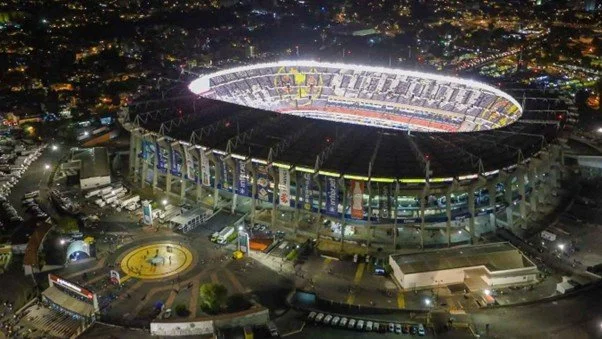
The Azteca Stadium, Mexico City.
Photo Credit: Mexico City Government
No matter how we view these old stadiums, they are a fundamental element of local football and the location. I often visit Mexico, where I have family ties. If anyone has passed through Mexico City, either during daylight or in the evening, then they witness the magnificence of the Azteca Stadium, the home of Club América, and the Mexican national team.
When we fly over cities and towns, sports stadiums are one of the most recognisable locations. These establishments are iconic elements of our skylines and topographies. Additionally, we form deep connections and bonds with these locations. They are places where our heroes battle for the shirts, colours, places and areas that we love, and which form significant parts of our identity.
When clubs are making decisions concerning the future premises of football clubs, then they must consider our relationships with these stadiums and our ‘love of place.’